Rare 1873 Penny Errors (List & Pictures)
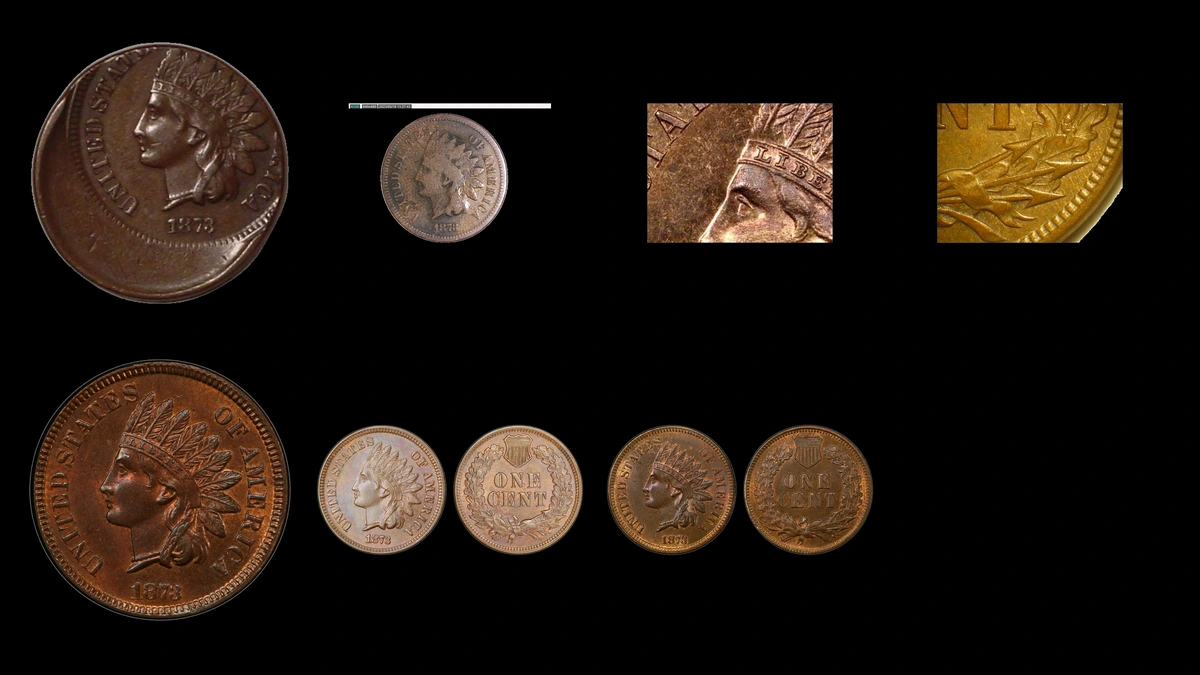
The major Closed 3 Double LIBERTY variety reached $42,000 in March 2025. That result leads the supplied comparisons for 1873 penny errors, whose estimated whole-coin ranges span $15–$50,000.
Identify the date style and manufacture first, then inspect the outline, portrait, and date details. Closely spaced tips identify a Closed 3; wider spacing identifies an Open 3.
Normal bronze cents weigh 3.11 grams and measure about 19 mm, with a plain edge. Proof collector coins require separate comparisons from ordinary strikes.
1. 1873 Penny A Missing Edge Section Interrupts the Border: Clipped Blank Error
An incomplete blank can receive its design after the cutting process leaves a section missing. The reported ordinary 1873 example has a 5% curved clip near 8 o’clock and heavy wear.
A separate Closed 3 coin was listed by GreatCollections as PCGS Proof62 Red. Its specially made Proof finish and its own clip must be assessed independently.
How to Identify
Examine how the struck rim approaches both ends of the gap and look for later filing or cutting. Weakness across the opposite rim can provide supporting evidence, while low weight alone cannot establish when metal went missing.
Keep a certified Proof sealed and use its photographs to determine the gap’s form. The ordinary coin’s 5% size and 8 o’clock position do not describe the separate Proof by default.
What It’s Worth
Estimated whole-coin ranges are $30–$600 for ordinary clips and $500–$5,000 for suitable Proof examples. Much of the difference reflects the coins themselves and their condition.
The worn ordinary coin appeared with a $32 minimum bid in an older dealer auction, not a verified final sale price. No realized price is supplied for the Proof62 Red listing.
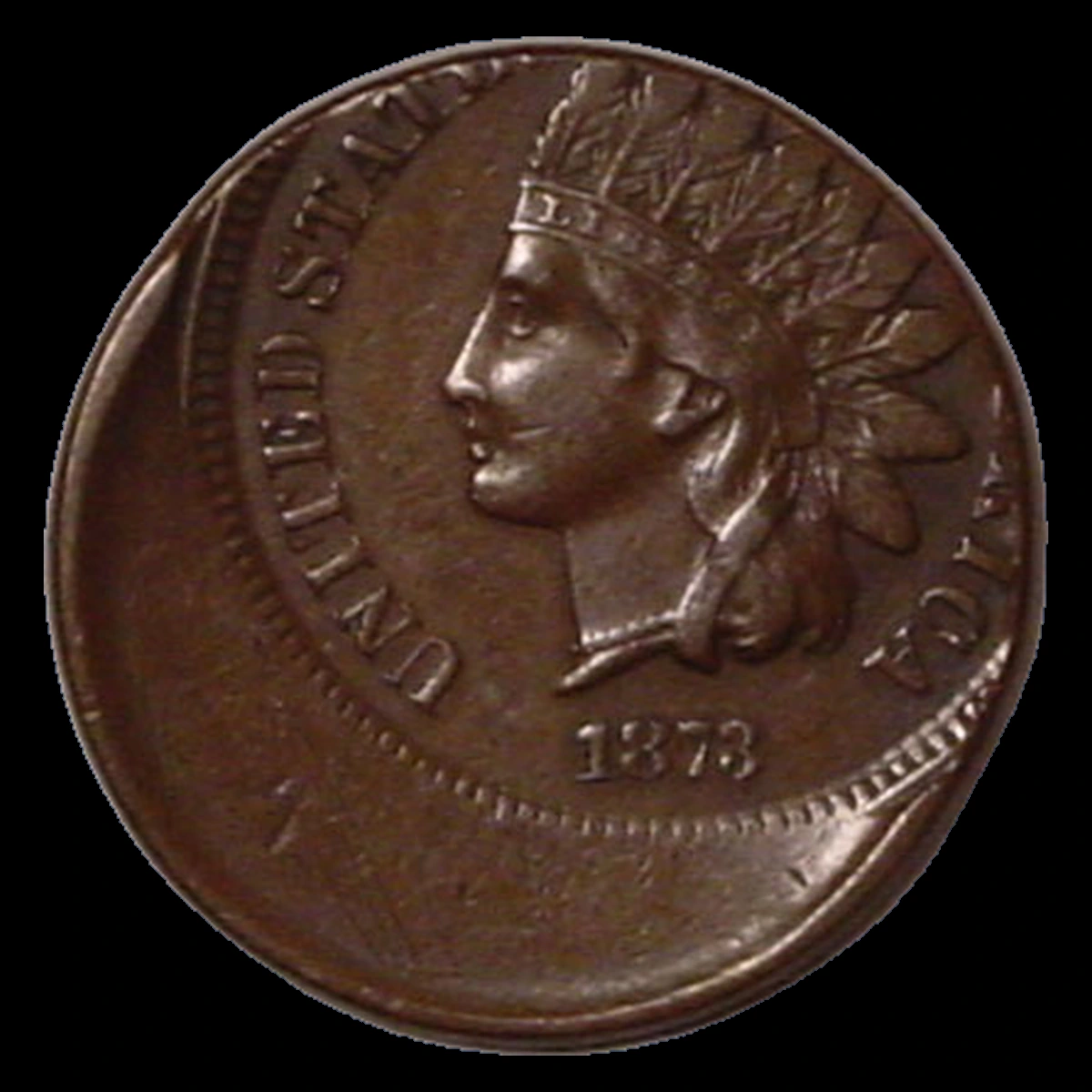
2. 1873 Penny Unused Metal Remains beside a Shifted Design: Off-Center Strike Error
Both date styles occur among the reported off-center examples. The blank’s incorrect position leaves some design beyond its edge and some original metal untouched.
How to Identify
Photograph the design boundaries on both faces and verify that they fit the same displaced blank. Cutting or grinding after striking removes completed metal and does not reproduce an original unused crescent.
Read the 3 before selecting a specimen comparison. Keep each reported percentage, direction, and grade together rather than combining them.
| Date style | Displacement | Recorded grade |
|---|---|---|
| Closed 3 | 25% toward 1 o’clock | NGC AU55 Brown |
| Open 3 | 20% toward 11 o’clock | NGC VF35 Brown |
| Open 3 | 45%, direction not supplied | XF45 Brown |
What It’s Worth
The estimated range is $150–$3,000 for dated examples. The three listed coins have their own preservation levels, with no single supplied realized price shared by them.
A 10% off-center 1897 cent graded AU58 brought $280.60 in March 2026. That later-year, smaller-shift comparison does not override an 1873 coin’s readable date and surface condition.
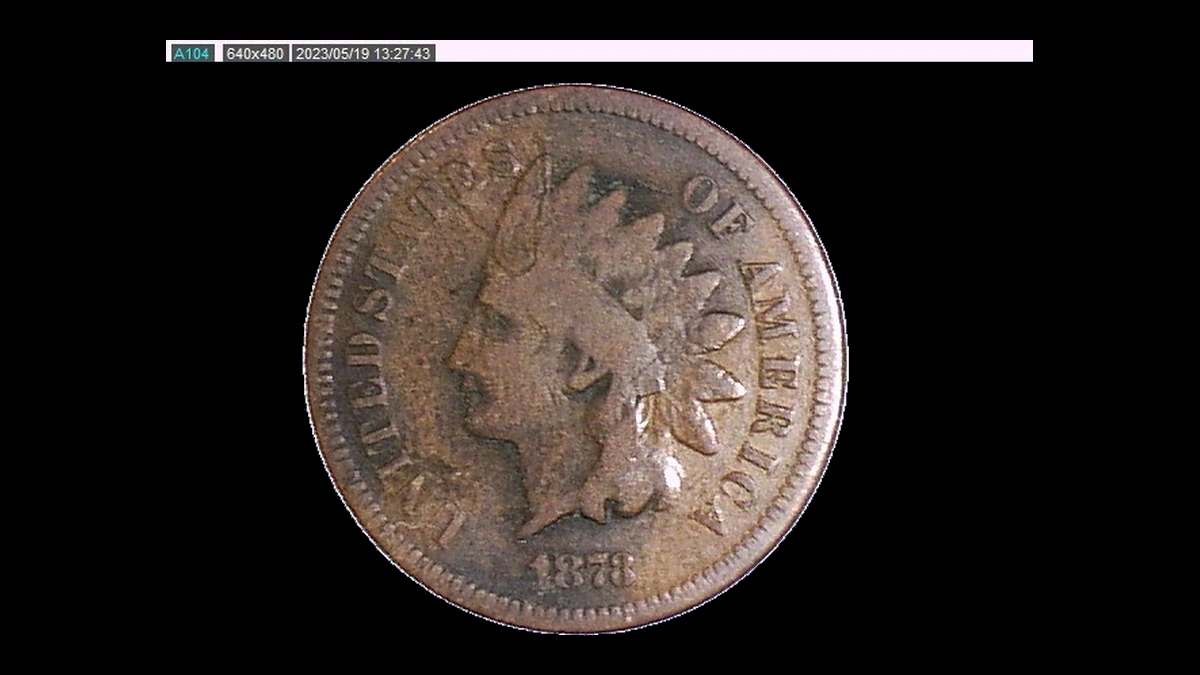
3. 1873 Penny A Local Area Fails to Receive Design: Struck Through Material Error
Material caught between the blank and a die can block a limited area while the surrounding design forms normally. The 1873 catalog reports struck-through effects on both date styles without one fixed location or identified material.
How to Identify
Follow a clear letter or portrait detail into the affected area and determine whether it fades, stops, or was crushed afterward. A dent, circulation wear, and loss of detail from die polishing need different explanations.
Photograph attached material in place without lifting it. Identify Open or Closed 3 separately and keep this obstruction category distinct from the particular Proof polishing pattern below.
What It’s Worth
The estimated whole-coin range is $25–$750. No supplied 1873 transaction establishes a price for every material or appearance.
A 1920 bronze cent struck through a metal fragment sold for $134 in March 2025. Its identified object offers broad context but does not reveal what obstructed an 1873 strike.
4. 1873 Penny Two Portrait Details Are Missing on a Proof: Overpolished Die Error
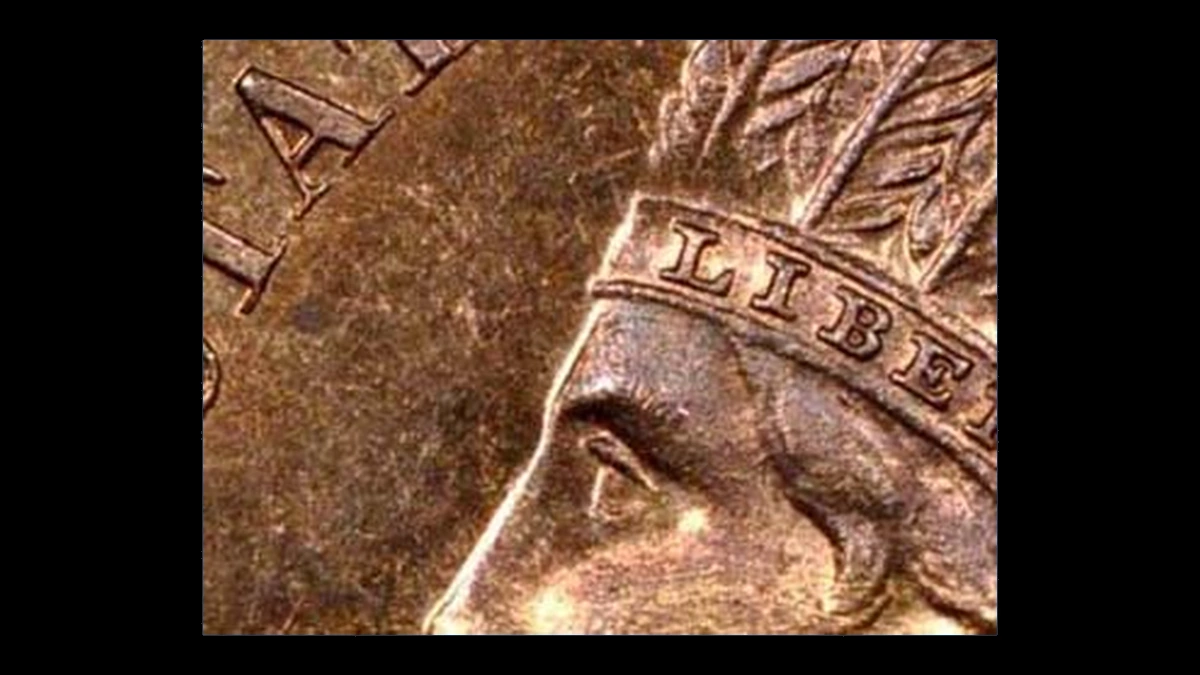
A specific Closed 3 Proof variety loses detail at the first feather’s base and in the eye socket. Excess polishing removed shallow parts of the die’s design before the coins were made.
The absent details therefore could not be transferred to later blanks. This differs from an obstruction covering the surface during one strike or polishing applied to the finished penny.
How to Identify
Establish Closed 3 and Proof manufacture, then compare both missing areas with a normal Proof. Neighboring details should support the particular pattern rather than general wear across the portrait.
Scratches crossing already formed feather detail point to treatment of the finished coin. A polished ordinary cent cannot be assigned the Proof variety because its eye looks weak.
What It’s Worth
Matching Closed 3 Proofs have an estimated whole-coin range of $300–$5,000. Preservation and original color account for much of that value.
An exceptional 1901 repunched-date Proof sold for $8,700 in August 2019. That different-date and different-variety result illustrates the importance of Proof condition, not a sale of this overpolished 1873 die variety.
5. 1873 Penny Raised Metal Appears at the Temple or Rim: Cracks, Chips, and Retained Cuds Error
An Open 3 temple chip forms a raised patch between the eye and hair. It records a small missing piece of the steel die.
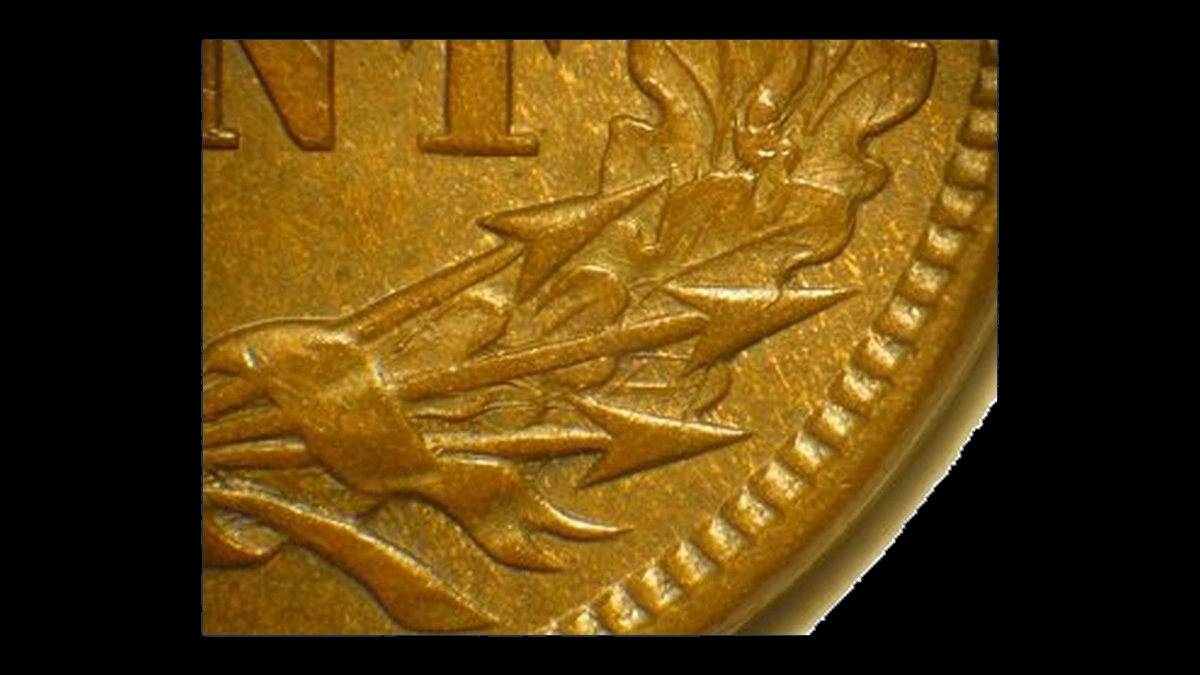
Other examples have thin cracks or larger retained breaks, where fractured steel stayed in place and could still reproduce design within a stepped area. One Closed 3 reverse break spans about 6 to 7:45; Open 3 patterns occupy different positions.
How to Identify
The temple chip is internal, so it should not be matched to a rim-connected cud. For a retained break, inspect the edge and look for original design within the shifted section.
Raised cracks require their own path comparisons through the shield or wreath. A narrow ridge does not by itself show that a die section moved, and a recessed groove suggests a scratch.
What It’s Worth
Modest cracks and chips are estimated at $15–$150, with stronger retained rim breaks around $75–$1,500. These values include the complete coin and its preservation.
A 1946-S Lincoln cent cud brought $288 in March 2021. Its missing die piece differs from the retained sections here, making it a broad comparison rather than an exact match.
6. 1873 Penny Headband Letters Repeat: Doubled Dies and Double LIBERTY Error
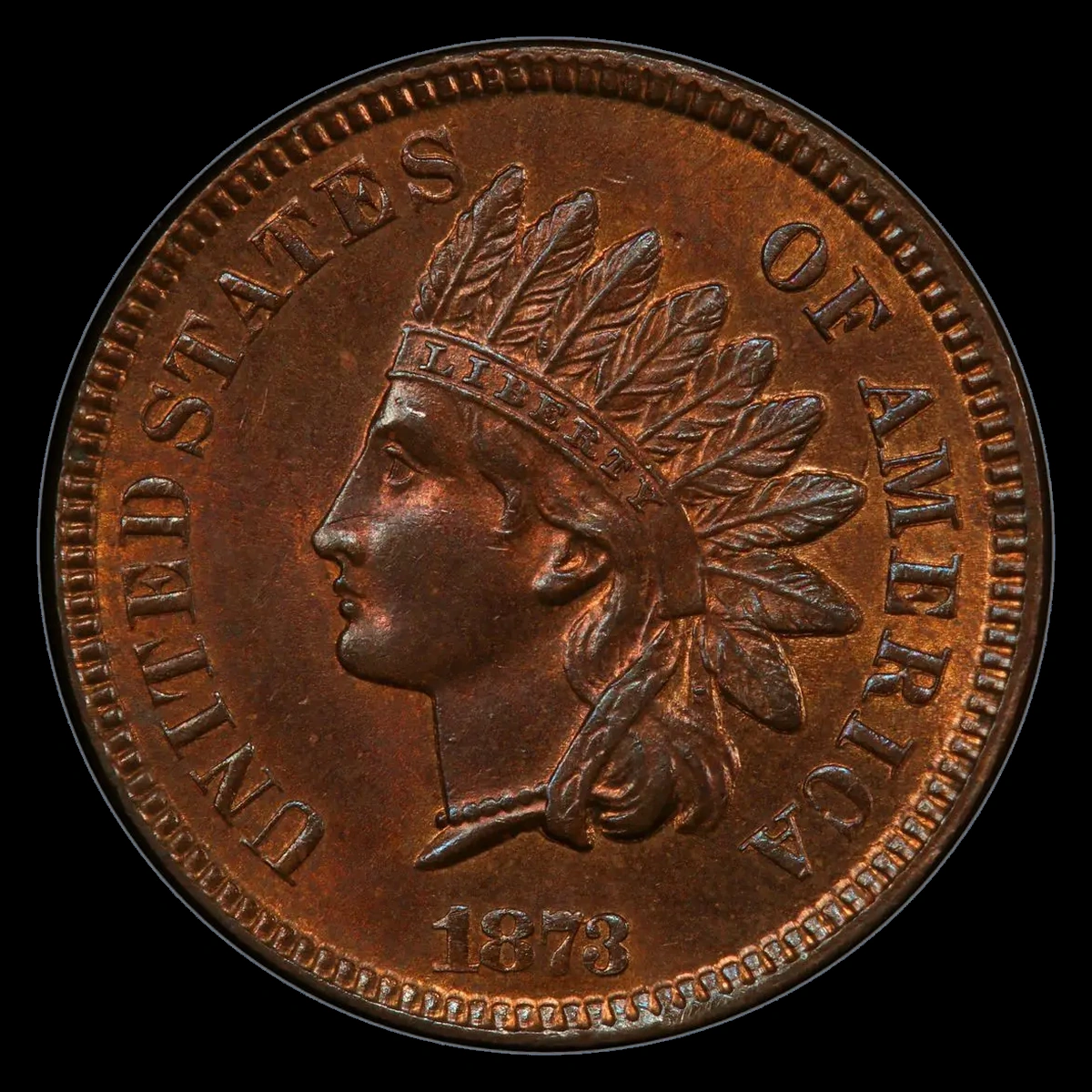
The strongest Closed 3 Double LIBERTY pattern has pronounced repeated lettering already present in the die. A normal strike copied that doubled design.
Other Closed 3 descriptions concern IBERTY, while an Open 3 form focuses on L. These patterns differ in strength and value.
How to Identify
Read the date style, then map the repeated edges across the letters in the matching variety. Strong Double LIBERTY requires agreement throughout its pattern.
A low flat shelf that narrows the main letter can result from movement during striking. Neither that shelf nor an Open 3 L-only feature establishes the major Closed 3 variety.
What It’s Worth
The major Double LIBERTY variety has an estimated range of $200–$50,000 across large condition differences. Smaller documented patterns may fit roughly $25–$1,000.
PCGS records a Closed 3 FS-101 example graded MS65 Red and Brown at $42,000 in March 2025. Its strong pattern, high unworn grade, and remaining red color belong with that result.
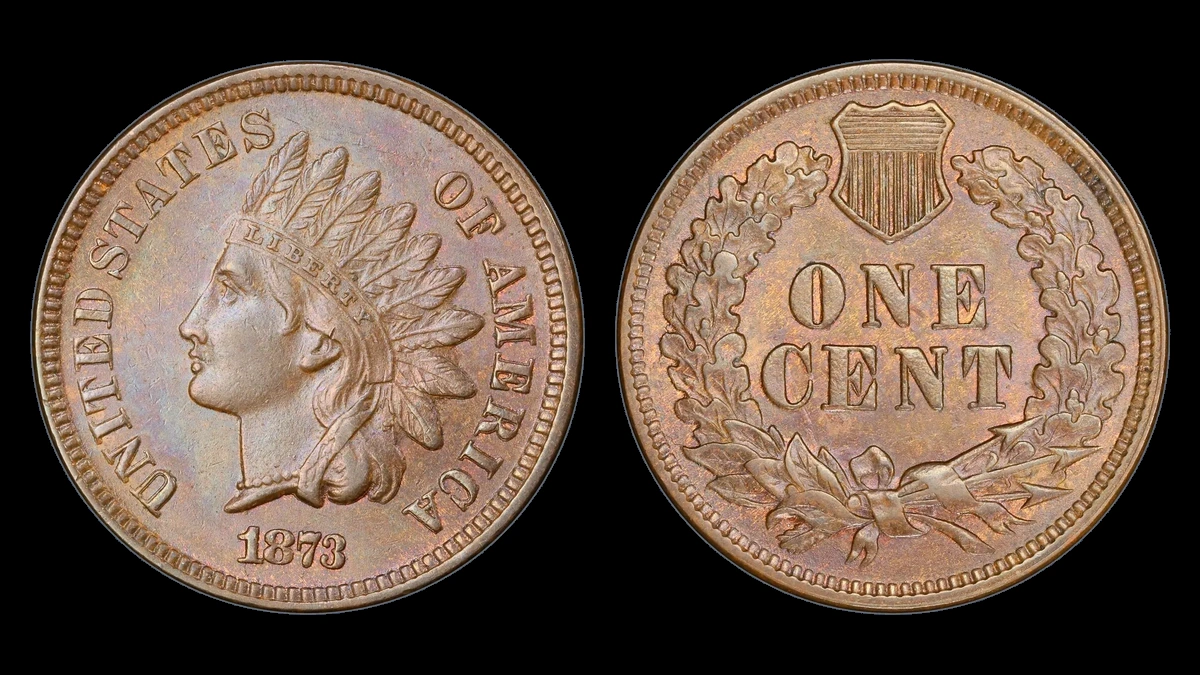
7. 1873 Penny A Fragment Appears beneath the 7: Misplaced Date Error
The documented Open 3 misplaced-date feature lies above the border teeth beneath 7. It comes from the date punch touching the die outside the intended date position, but the catalog does not name the numeral represented.
A possible 1 has separately been suggested at the portrait’s lower edge. That tentative reading should remain distinct from the documented below-7 location.
How to Identify
Compare the raised fragment with the normal date and neighboring teeth kept in view. Do not extend its visible strokes into a complete digit the reference does not identify.
A mark at the portrait base needs the separate possible-1 reference. Damage, a tooth corner, or a scratch cannot connect the two different positions merely because both resemble numbers.
What It’s Worth
A matched Open 3 example has an estimated range of $30–$2,000. That is a complete-coin estimate, not a sale attributed to the suggested portrait-edge mark.
A 1908 misplaced-date cent graded unworn MS65 Red and Brown has a recorded $1,187 eBay result from 2021. It offers comparison context without confirming an uncertain 1873 fragment.
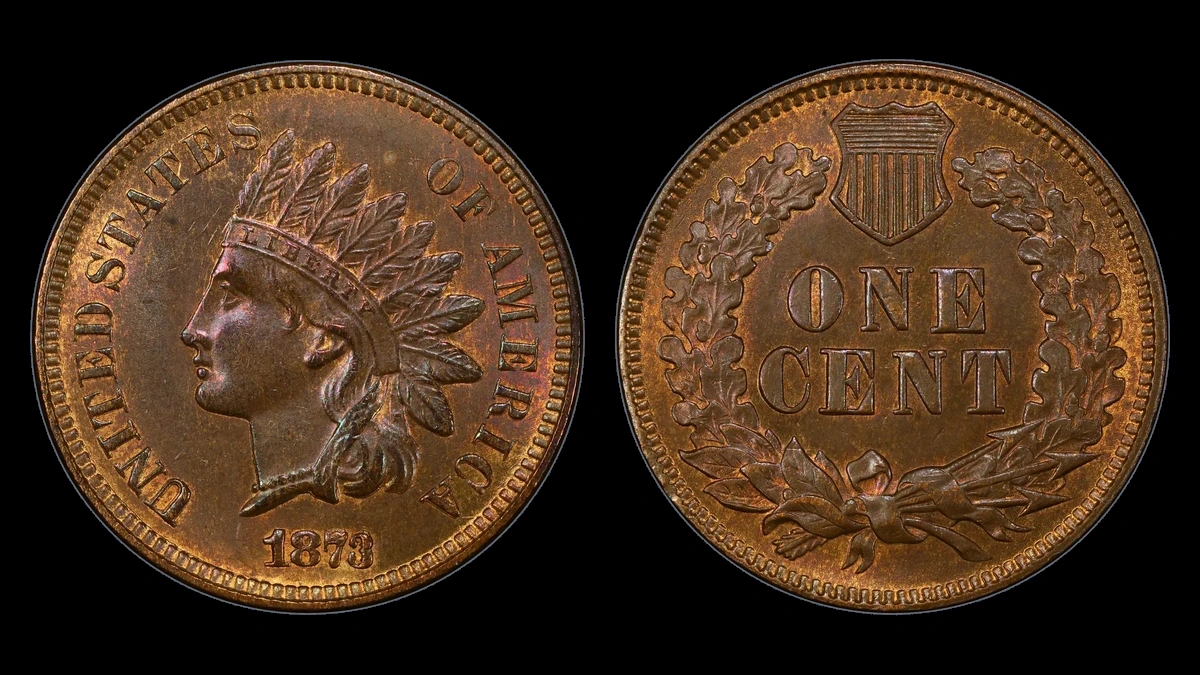
8. 1873 Penny Earlier Strokes Remain beside the Date: Repunched Date Error
Recorded 1873 repunched dates belong to Open 3 coinage. One pattern includes strokes below 1 and above 73, while another leaves a remnant to the right of 3.
The separate date punch was applied more than once to the die, leaving some earlier detail exposed. A coin needed only one strike to copy those numeral remnants.
How to Identify
Confirm Open 3, hold the date upright, and compare one pattern at a time. The below-1 and above-73 description must not be merged with another variety’s right-of-3 stroke.
Look for raised numeral-shaped remnants rather than a dent or shallow shelf. The portrait need not repeat because date repunching concerns the separately applied numerals.
What It’s Worth
The estimated whole-coin range is $25–$1,500. Wear and the clarity of the particular remnants affect the useful comparison.
An 1889 repunched-date cent graded unworn MS64 has a recorded $405 eBay result from May 2015. It is another date’s transaction, not a price assigned to an unidentified corner beside the 1873 numeral.
Conclusion
Open 3, Closed 3, and Proof manufacture help choose the correct reference before any unusual detail is priced. Keep the strongest Double LIBERTY pattern separate from minor letter doubling, and let each off-center or clipped coin supply its own measurements.
A missing feather base, a temple lump, and a stray date fragment point to different causes. Matching those causes and the actual condition is more useful than treating every abnormality as a share of the largest sale.