Rare 1837 Penny Errors (List & Pictures)
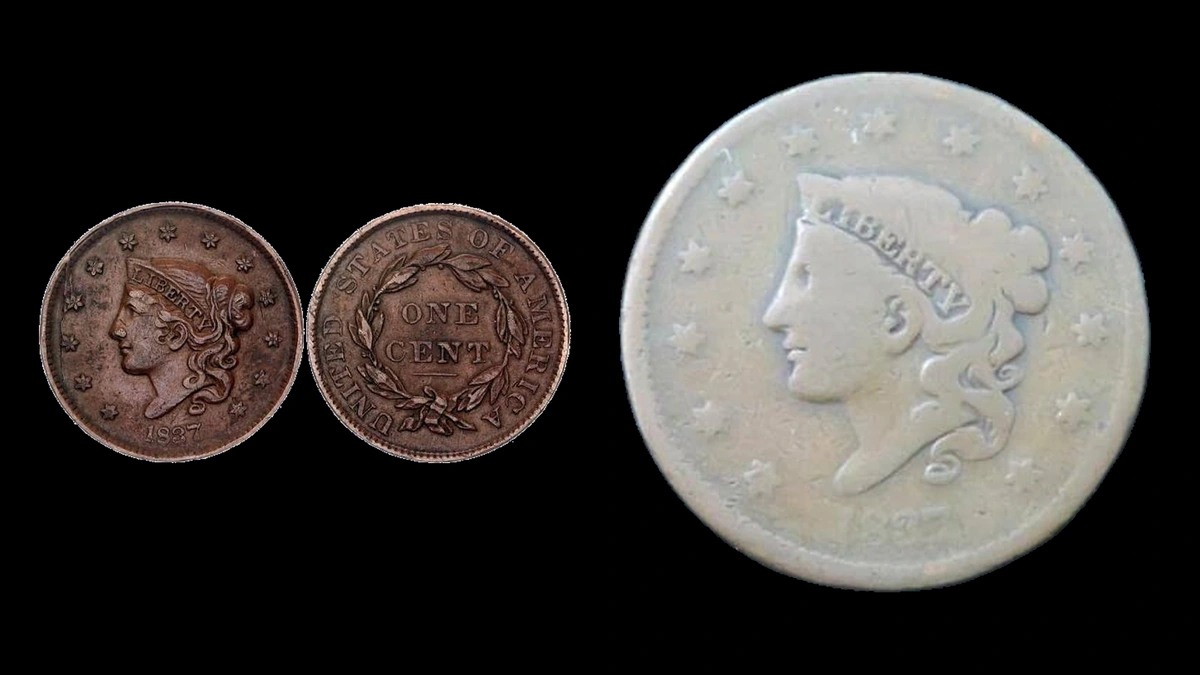
“Head of 1838” on an 1837 cent is a portrait name, not proof that the date is wrong. A faint extra face behind the wreath, however, can be a useful clue to a real minting problem.
These five groups of 1837 penny errors have estimated whole-coin values of $20–$3,500. A rotated 1852 cent sold for $2,350 in November 2014 as a condition comparison; that is a different-year result, not an 1837 sale.
1. 1837 Penny Liberty’s Face in Die Clash Marks Error
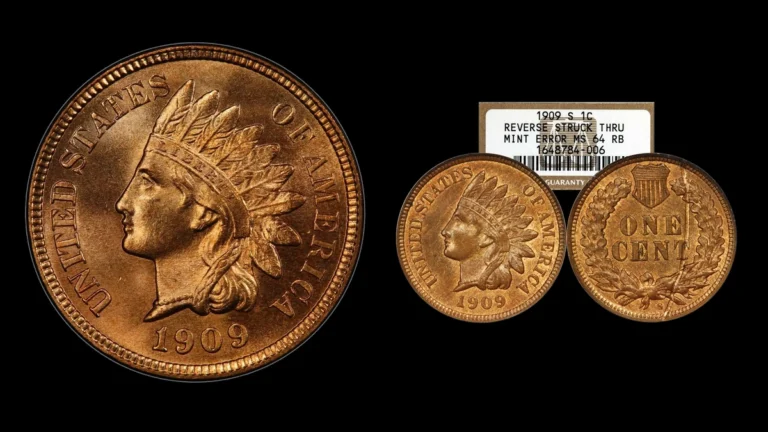
A trace of Liberty’s profile appears among the back design on a described N-11 cent. The two dies, or stamping tools, had hit each other without a blank between them and left marks that passed to later coins.
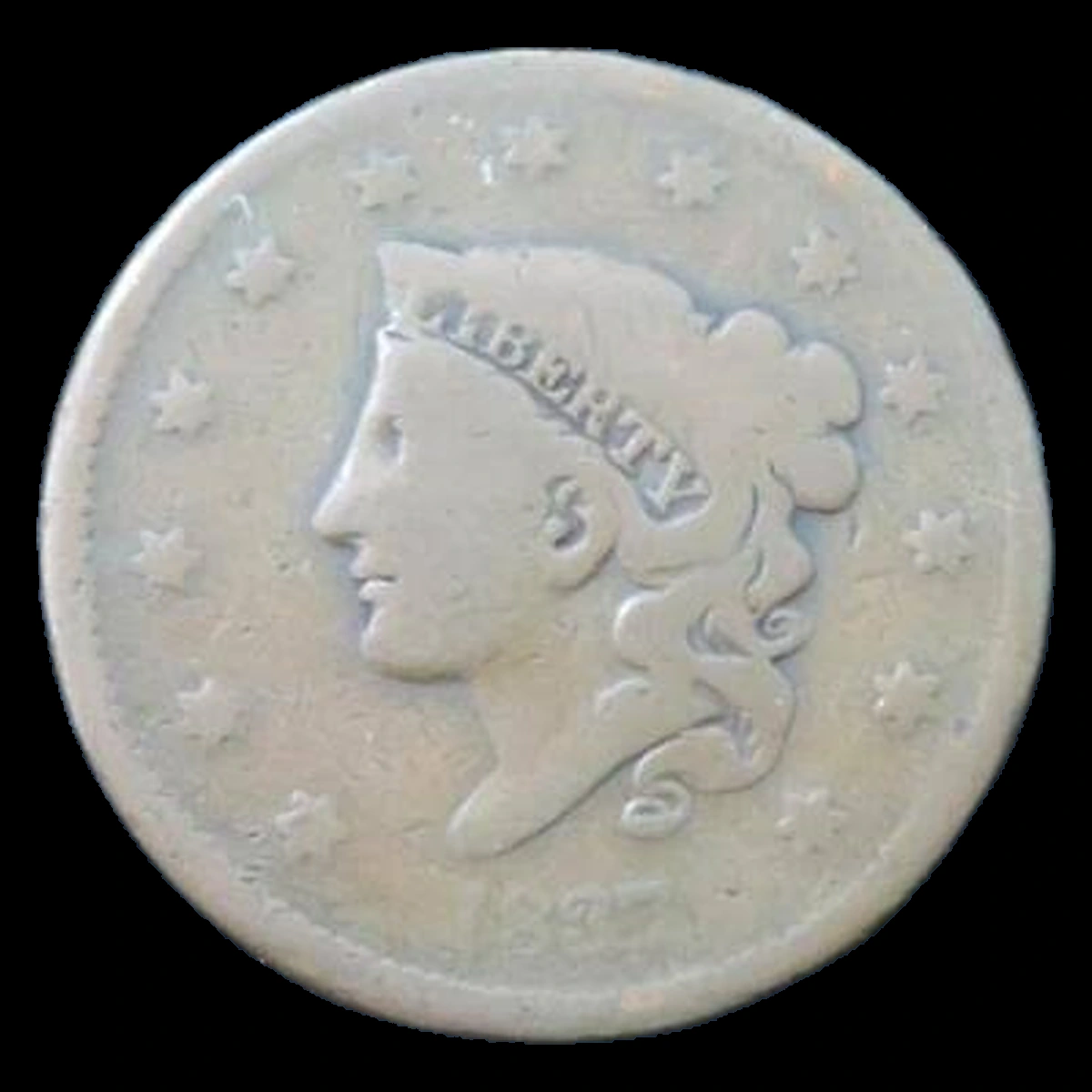
This coin uses the normal Head of 1838 portrait style found in 1837. It also has cracks and a rim break, which are separate visible features rather than parts of the extra face.
How to Identify
Compare the front profile with the back under changing light. A mirrored view of the portrait can help test whether several faint contours belong to the face.
The N-11 catalog account separates the facial outline from lines left by worn tools. One scratch shaped vaguely like a nose is weaker evidence than a connected set of matching contours.
What It’s Worth
$50–$3,000 is the estimated range for identifiable 1837 clash marks. Circulated examples may fit around $50–$300, while clearer unworn examples can range roughly from $300–$3,000.
The described N-11 was graded PCGS MS64 Brown, but no completed sale price for it is assigned here. Its clash, cracks, and small rim break all belong to one coin and should be valued together.
2. 1837 Penny Raised Cracks and Rim Cuds Error
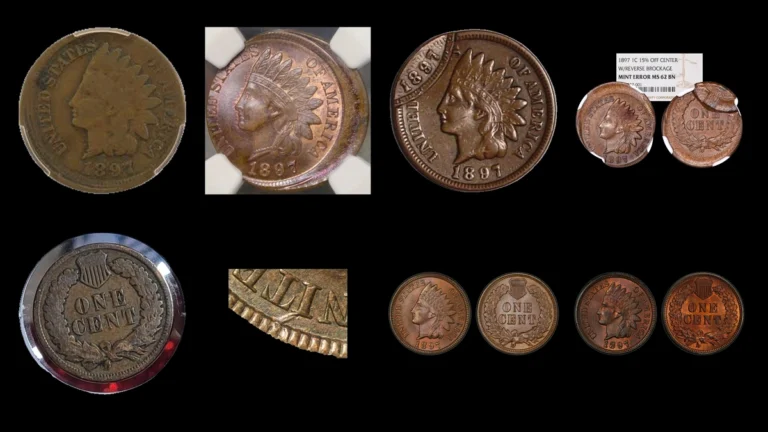
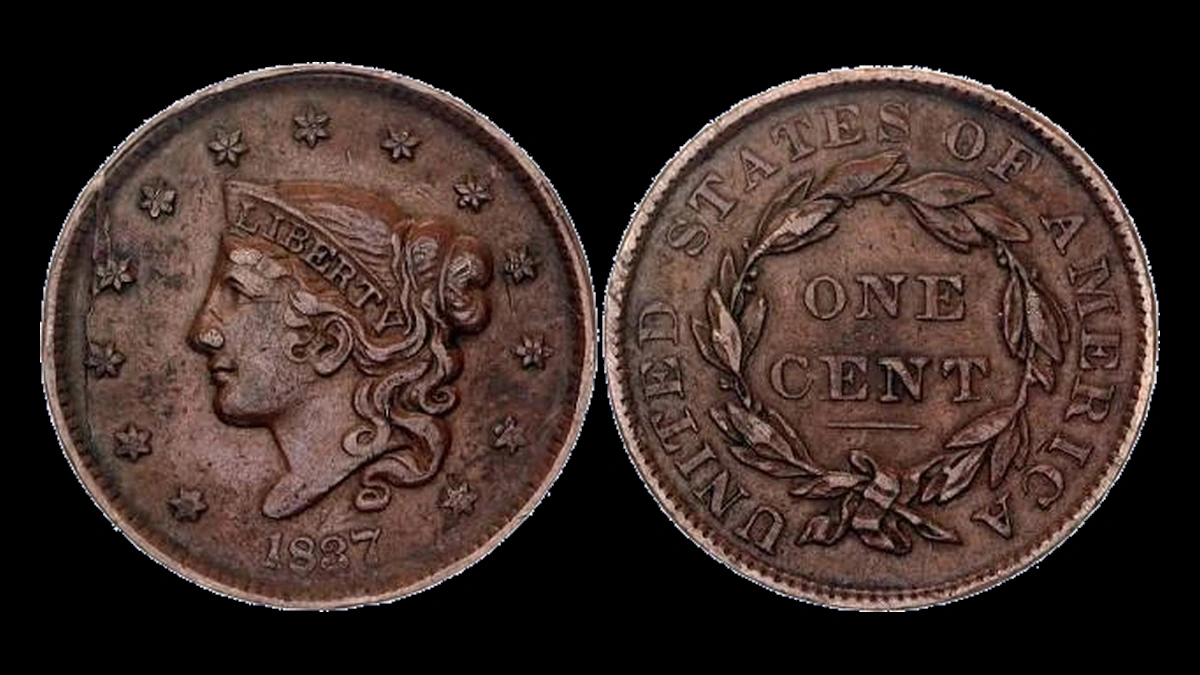
A late N-9 has a horizontal raised crack behind Liberty, while an N-11 shows a line beside the date’s 1. Copper entered cracks in the tools and left ridges on the struck coins.
A larger rim-connected patch is called a cud. Reports place different cuds near stars 3–5, the right edge, the date, or between STATES and OF; these are separate examples.
How to Identify
Follow the particular ridge with a magnifier and light from the side. A die crack rises above the surrounding surface, unlike a scratch cut into it.
For a cud, trace the patch to the original rim and inspect the edge. Folded copper from an impact or added material can imitate a lump without matching a broken die.
What It’s Worth
$20–$3,500 spans modest cracks through stronger cuds. Common circulated cracks may fit around $20–$200, with clear rim breaks around $100–$3,500 across different varieties and conditions.
An 1852 cent with a strong back cud, graded PCGS MS64 Brown, sold for $1,920 in 2021. That unworn coin is a different-year comparison and does not establish a price for an 1837 crack beside the date.
3. 1837 Penny Heavy Lamination on the Back Error
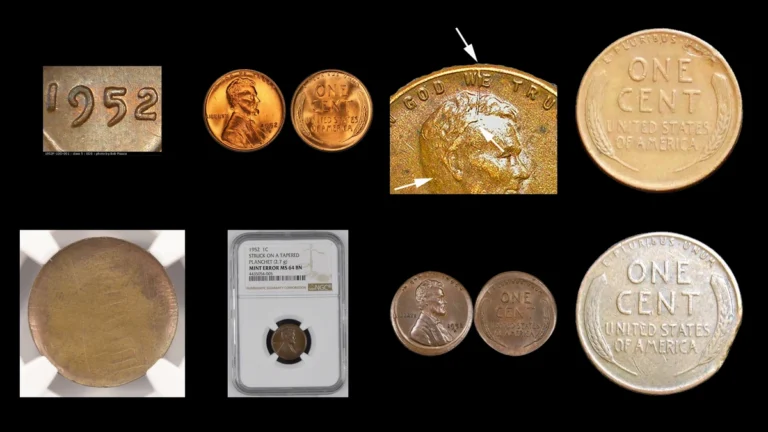
A peeling area can form when a weak copper layer separates from the metal beneath it. Collectors call this lamination, and struck detail may remain on a flap that is still attached.
The Early Copper collection records heavy back lamination on an 1837 cent without naming an exact letter or leaf beside it. Heavy peeling does not by itself establish a coin split completely through its thickness.
How to Identify
Look along the boundary for a thin sheet of copper or a shallow step left by a missing layer. Never pull an attached flap back to inspect underneath.
A normal loose cent is about 10.89 grams and roughly 28 mm across. Lost copper can reduce weight, but pits from corrosion or grooves from scraping need a different explanation from a natural layer.
What It’s Worth
$20–$750 is the estimated range for back lamination. Worn pieces may fit around $20–$150, with larger clear separations on better-preserved cents around $150–$750.
No sale price is assigned to the collection example. For context, an 1840 Large Date cent cataloged as VF30 with lamination and other surface issues sold for $108 including premium in May 2025.
4. 1837 Penny Clipped Rim Error
A missing section in the prepared blank can survive as an opening in the finished penny. The border and nearby design were struck around that already incomplete edge.
GreatCollections lists an 1837 Matron cent rim clip from the Rippere Collection, graded ANACS F12. Matron and Coronet describe this large-cent family; the summary does not specify the clip’s shape or position.
How to Identify
Keep nearby stars or letters visible as you inspect both ends of the opening. A fresh cut through finished detail or file marks along the gap point toward later alteration.
A weak opposite rim can support a clip but may also reflect wear. Combine that sign with the gap’s surface and the way the original struck border ends.
What It’s Worth
$50–$2,000 is the estimated range for original 1837 rim clips. Modest worn examples may fit around $50–$350, with clearer clips on better-preserved cents around $350–$2,000.
The ANACS F12 coin supplies a worn-condition comparison without an individual sale price here. Its grade alone cannot tell how large the clip is or whether it deserves the upper part of the range.
5. 1837 Penny Quarter-Turn and Half-Turn Rotations Error
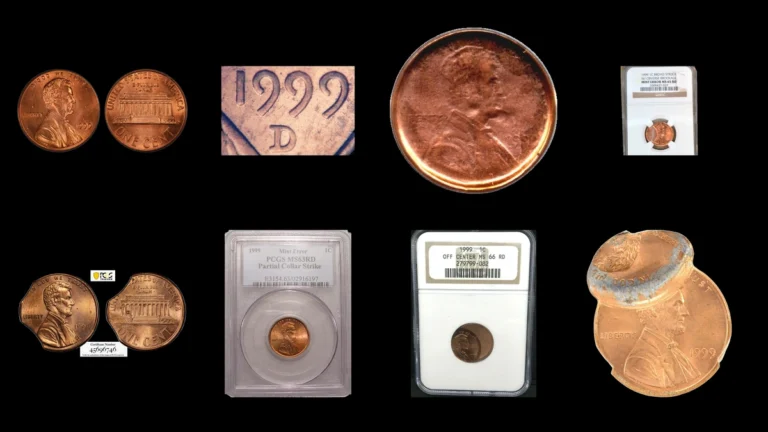
The back may end up sideways or upside down after an upright portrait is flipped top to bottom. This records an unusual angle between the stamping tools.
An Early American Coppers study reports N-9 examples with 90-degree and 180-degree rotations. A quarter turn and a half turn are different alignments, and the report does not give a clockwise direction for every coin.
How to Identify
Hold Liberty upright and flip the cent top to bottom without twisting it sideways. Normal United States coin alignment should leave the wreath upright.
Repeat beside a fixed line before measuring the tilt and direction. Sideways indicates about a quarter turn, while upside down indicates a half turn; separately straightening the two photos hides the evidence.
What It’s Worth
$50–$3,000 is the estimated range for substantial 1837 rotations. Circulated pieces may fit around $50–$400, with better-preserved examples around $400–$3,000.
An 1840 Small Date F15 with a 95-degree clockwise turn sold for $72 including premium in May 2025. A widely rotated 1852 NGC MS65+ Red-Brown cent sold for $2,350 in November 2014.
Those two different-year results show the importance of preservation. Neither is a transaction for one of the reported 1837 N-9 rotations.
Conclusion
A ghostly profile on the back needs a design comparison, while a sideways wreath needs a controlled flip. Peeling copper and an incomplete edge call for close examination of their boundaries instead.
The estimated $20–$3,500 span applies to complete coins of different quality. Keep the normal portrait style, the actual mint feature, and any later damage separate when deciding which example resembles yours.