Rare 1820 Penny Errors (List & Pictures)
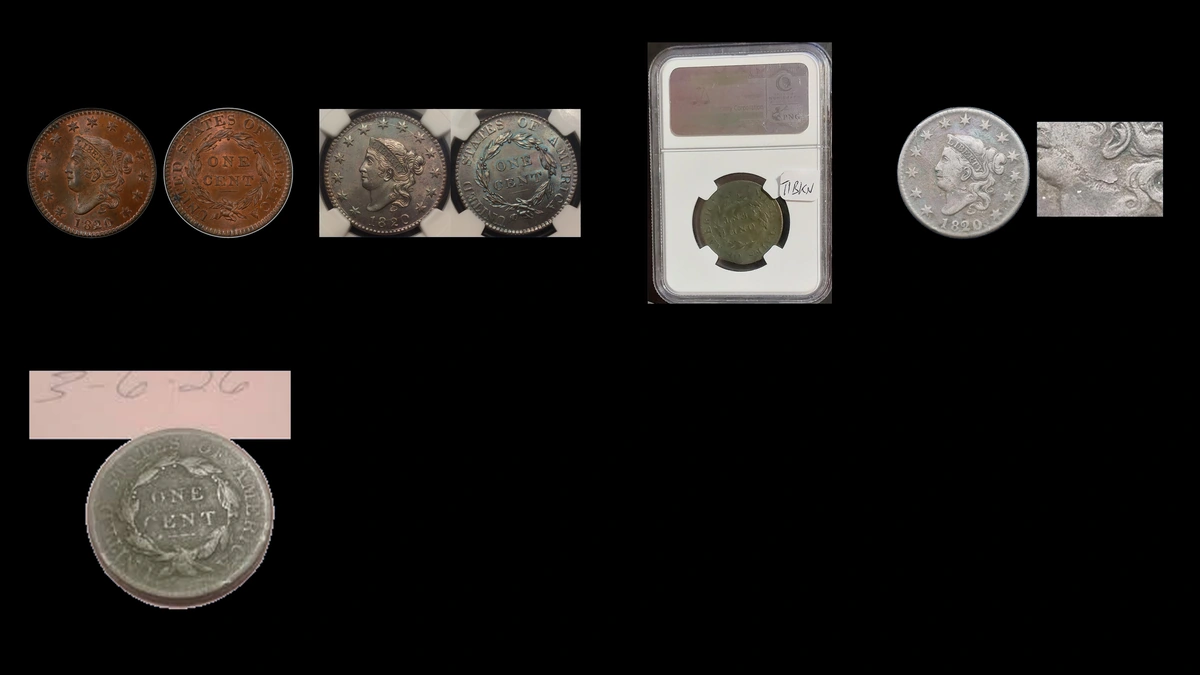
Inspect the 2 and 0 together when a date looks unusual on an 1820 cent. Matching remnants of 19 can establish an overdate, while large or small normal numerals alone cannot.
Estimated whole-coin values for 1820 penny errors range from $20 to $15,000, including an MS65 overdate that sold for $10,925 in February 2009. Begin with date identity, then compare die marks, blank flaws, interrupted design, and alignment.
| Clue | Possible cause | Estimated value |
|---|---|---|
| Older strokes beneath 2 and inside 0 | 1820/19 overdate | $40–$15,000 |
| Raised lines around stars or rim patch | Cracked or broken die | $20–$6,000 |
| Curved missing segment | Clipped blank | $50–$4,000 |
| Separating sheet or interrupted design | Lamination or struck-through error | $25–$3,500 |
| Unused crescent | Off-center strike | $100–$8,000 |
| Consistent reverse tilt | Rotated dies | $20–$2,500 |
1. 1820 Penny A 1 and 9 Survive in the Final Digits: 1820/19 Overdate Error
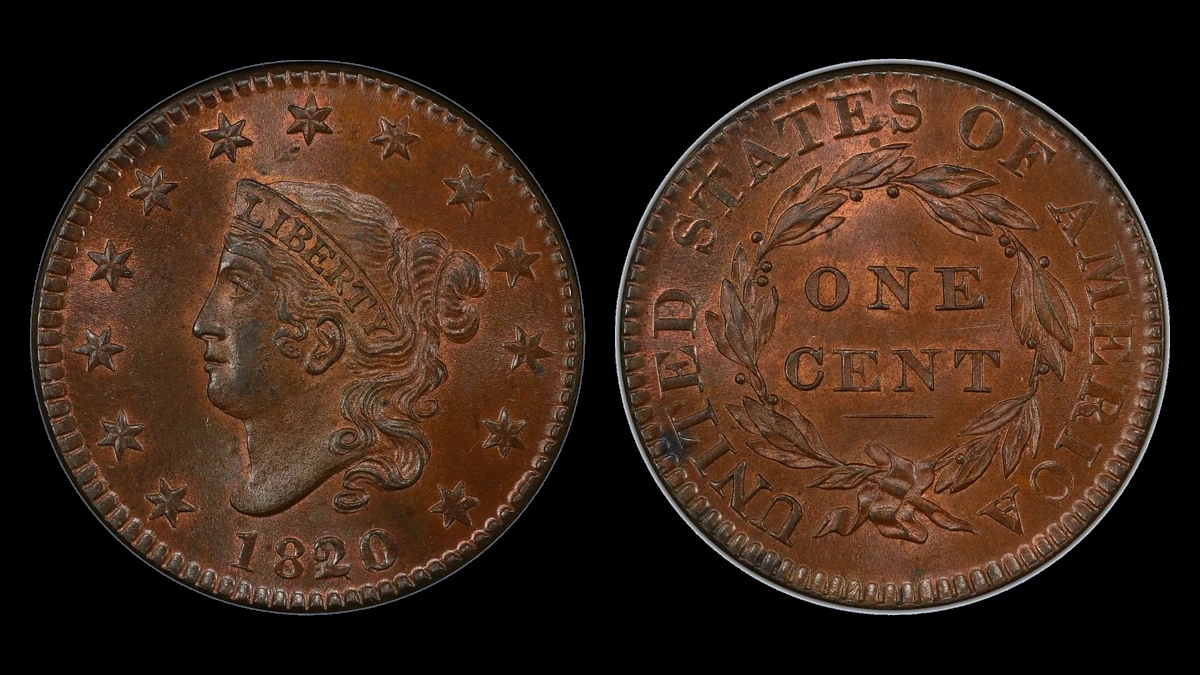
Part of an earlier 1 remains beneath the 2, with a remnant of 9 inside the 0. The date was changed on the die before striking, so a single blow could copy both old and new numeral traces.
How to Identify
Match the remnants in both digits with the appropriate large or small overdate reference. They should make sense as the end of the same earlier date rather than two unrelated marks.
Change the lighting to distinguish raised strokes from dirt, shadows, or engraved cuts. A large ordinary date or flat shelf around a numeral does not establish an overdate, and the coin did not need to circulate as an 1819 cent first.
What It’s Worth
$40–$15,000 is the estimated range for identifiable overdates across worn and exceptional unworn examples. Die variety and preservation explain much of that spread.
An 1820/19 graded MS65 sold for $10,925 in February 2009. That unworn coin’s relatively clean surfaces are part of the result, not a price attached simply to any unusual-looking 0.
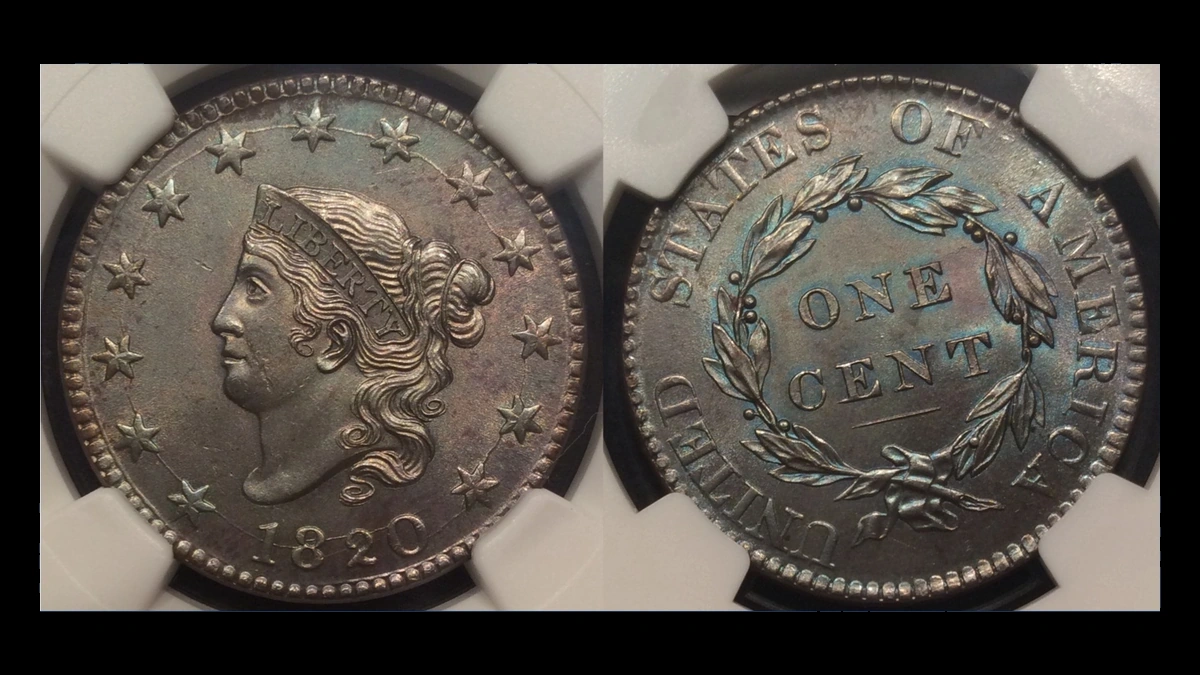
2. 1820 Penny Raised Lines Connect Stars and Date: Die Cracks and Cuds Error
N-13 is associated with connected raised cracks around the front stars and date. The coin’s copper filled narrow openings in the die during striking.
A separate Small Date N-5 is seller-reported with a cud and an ANACS AG3 grade. The cud’s location cannot be inferred from N-13’s ring of cracks.
How to Identify
Match the complete front and date size before tracing individual ridges. A scratch may push up narrow side lips but retains a groove at its center, unlike a raised die-crack line.
For a broader cud, check its natural connection to the rim and surviving surrounding design. Very heavy wear can soften its outline, while folding or added metal can create a false patch.
What It’s Worth
$20–$150 is the estimate for small cracks on worn cents, with distinct cuds and attractive unworn crack examples around $100–$6,000. These figures value complete coins.
An 1836 cent with a front cud and reverse crack, graded PCGS MS65 Brown, brought $2,040 in August 2020. Its unworn quality should not be assigned to the much more worn reported N-5 AG3 example.
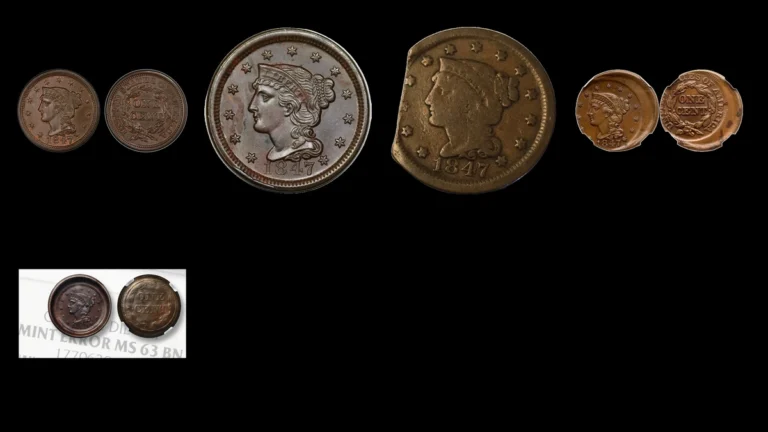
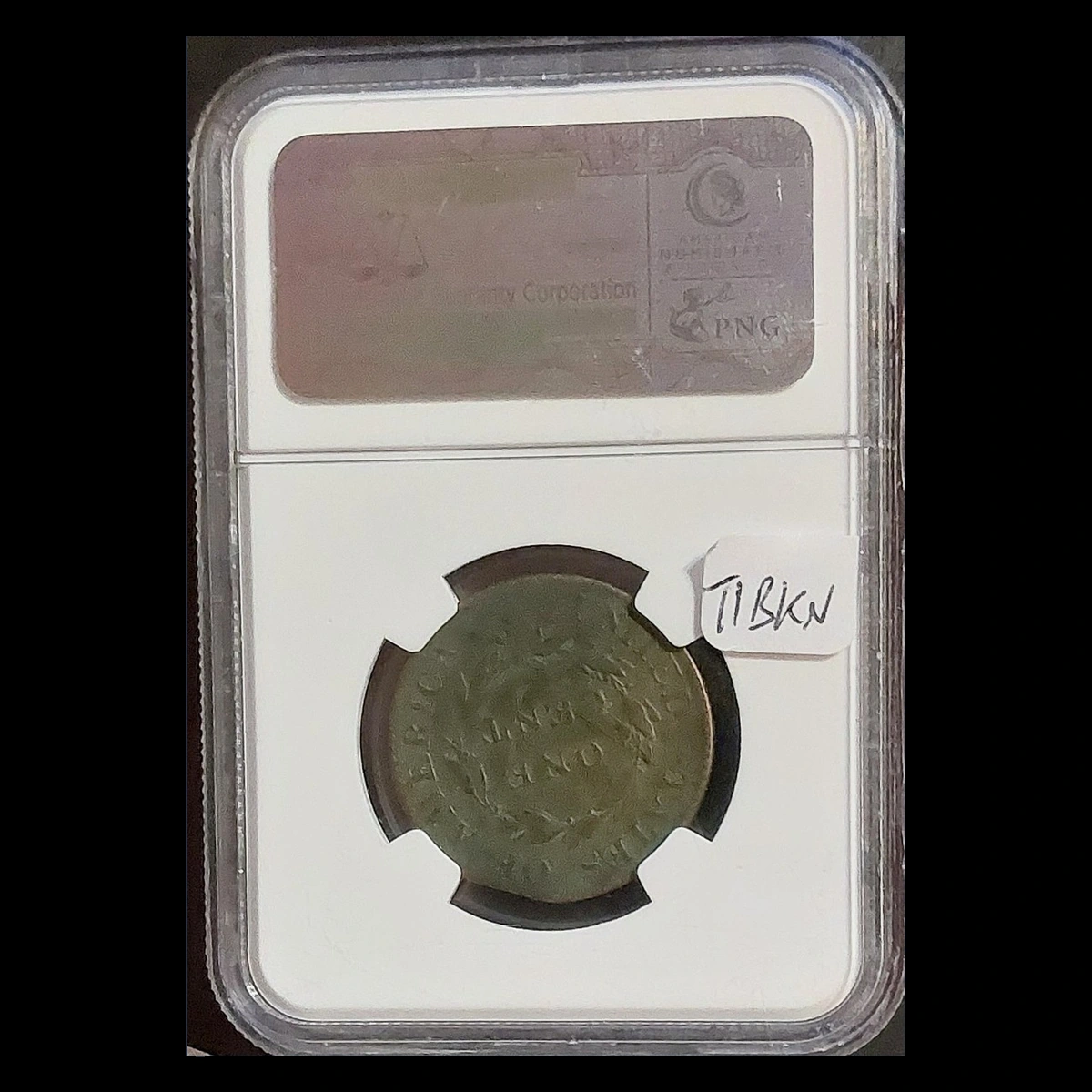
3. 1820 Penny A Curved Gap Lies Near Seven O’Clock: Clipped Planchet Error
The documented PCGS VF30 1820 cent has a dealer-described 5% curved clip near 7 o’clock. A curved clip can begin where the blank-cutting punch overlaps an existing hole in the copper strip.
How to Identify
With the date upright, inspect both ends of the gap and the curved edge between them. Natural rim formation beside an incomplete blank differs from sawing or filing through a completed design.
For safely handled loose coins, compare with the normal 10.89 g and approximately 28 mm, measuring intact spans and allowing for wear or missing copper. Opposite-rim weakness can support the clip when consistent with the gap, while certified coins should remain sealed.
What It’s Worth
$50–$4,000 is the estimated range for genuine 1820 clips. Preservation and original edge evidence matter alongside the amount missing.
The dealer catalog offered its 5% VF30 coin for $250, an asking price rather than a sale. An 1852 clip graded NGC MS63 Brown sold for $384 in June 2024, providing a separate unworn later-date comparison.
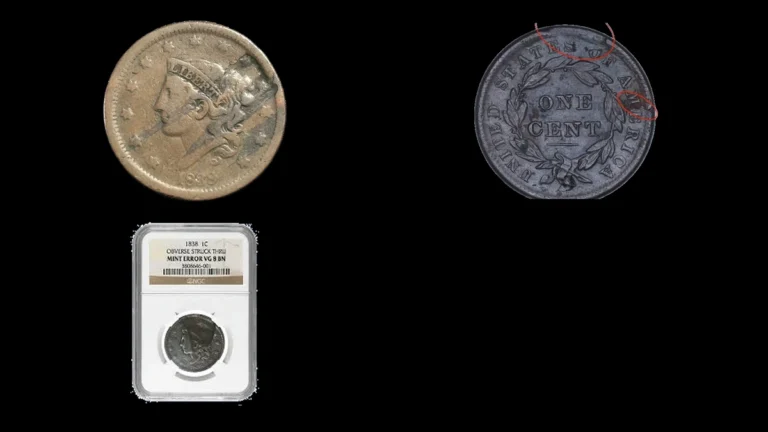
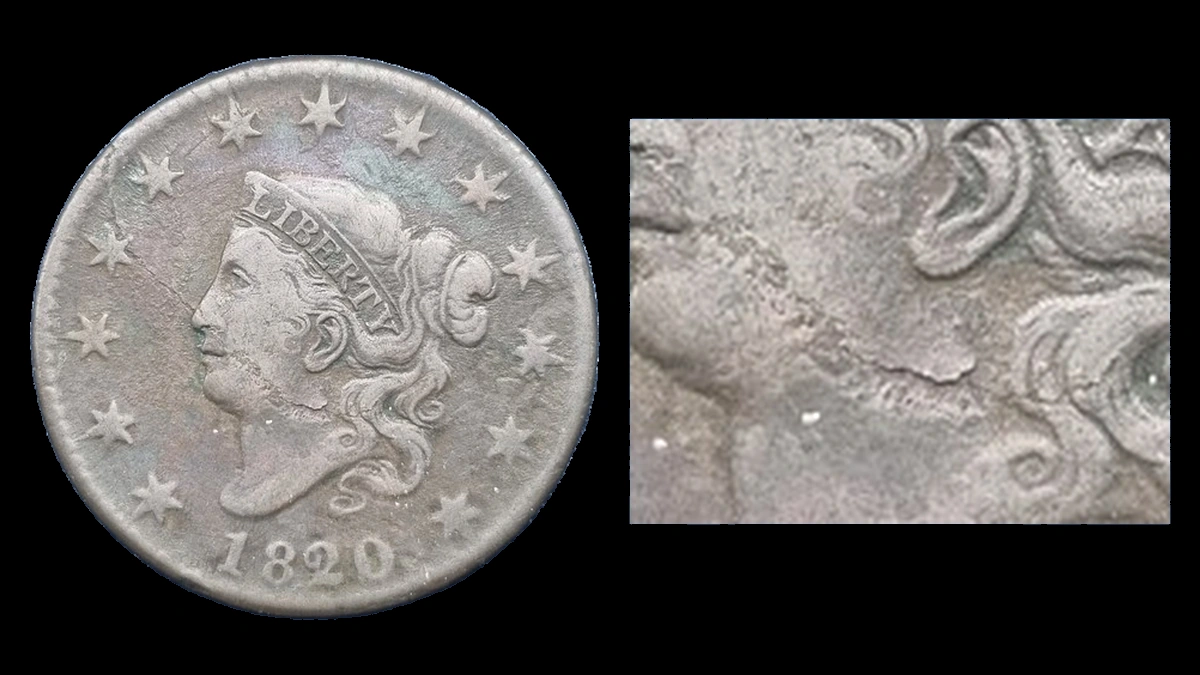
4. 1820 Penny A Thin Sheet Separates Within the Copper: Lamination Error
A lamination forms where the blank’s metal does not hold together evenly and a layer lifts or detaches. The supplied 1820 reference explains the category but does not identify one specimen or fixed location.
How to Identify
Photograph an existing seam from low angles without pressing, cleaning, or unfolding the layer. Follow its continuity with the coin rather than assuming an unrelated piece stuck on top is part of a lamination.
Rough corrosion pits and scraped surfaces lack the required internal-layer evidence. A raised ridge from a cracked die likewise does not demonstrate an opening beneath the copper.
What It’s Worth
$25–$3,500 is the estimate for genuine laminations on normal-date 1820 cents. An overdate with this flaw must be assessed with its own variety value and condition.
An 1839 large cent with two front laminations brought $600 before the buyer’s fee in January 2026, with an auctioneer’s AU50 grade. It illustrates the mechanism on another date rather than establishing an 1820 transaction.
5. 1820 Penny Local Design Is Interrupted by an Impression: Struck-Through Material Error
An object between the blank and die can prevent normal contact and leave an impression or weak detail. The obstructing material may fall away after striking.
This is a generally reported 1820 category without an authenticated specimen in the supplied reference. Its identification therefore depends on physical evidence from the actual candidate.
How to Identify
Trace normal lettering or portrait detail toward the interruption and examine its boundary. A later dent can flatten already finished design and push copper up along its edge.
Name wire, thread, or another obstruction only when its shape or remaining material supports that claim. Leave retained material in place; the location of a dent alone cannot identify its cause.
What It’s Worth
$40–$3,000 is the conditional estimate for authenticated struck-through errors on normal-date 1820 cents. Clarity of the impression and preservation influence the whole-coin value.
An 1843 large cent described as struck through thread was offered for $890 in MS64 Brown. That is a dealer asking price for another date, not a completed 1820 sale or evidence for the same obstruction.
6. 1820 Penny An Unused Crescent Sits Opposite Missing Design: Off-Center Strike Error
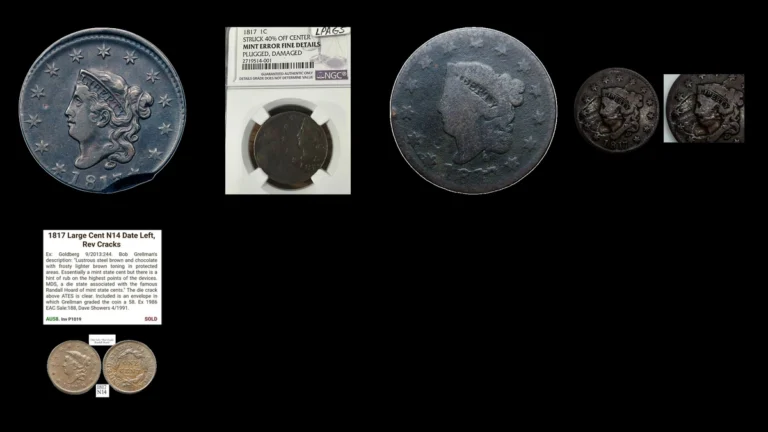
A year guide lists an 1820 off-center example without a supplied displacement percentage. The error places the blank outside its intended position, leaving some metal untouched while outer design misses the other side.
How to Identify
Read the surviving date and compare both complete faces. A broad crescent on an undated early cent cannot establish 1820, and one-face displacement may instead come from a misaligned die.
Inspect the strike-to-blank transition and edge for grinding or cutting. An off-center blow need not remove metal, so marked weight loss requires an explanation such as wear, damage, or another blank defect.
What It’s Worth
$100–$8,000 is the estimate for authenticated normal-date 1820 off-center cents. The guide’s listed $185 amount describes an offer rather than a verified completed sale.
An 1855 large cent struck 70% off-center and graded PCGS Fine 15 sold for $1,092.50 in January 2009. That coin’s different year, wear, and much more specific displacement must remain attached to its result.
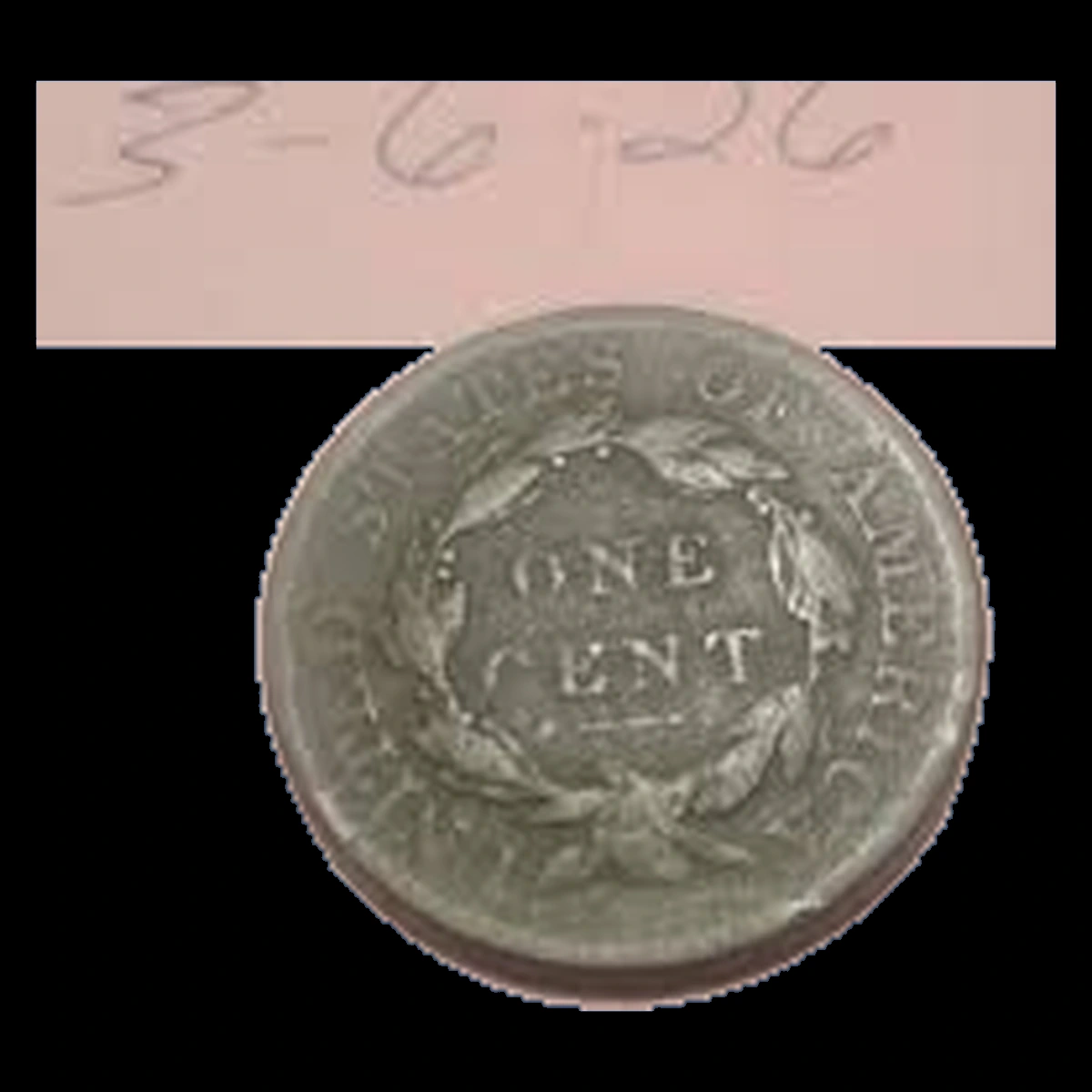
7. 1820 Penny The Reverse Repeatedly Finishes at an Angle: Rotated Dies Error
An 1820 rotation is reported without a specified angle. Its two designs can remain complete and centered while their relative orientation differs from normal.
How to Identify
Start with Liberty upright and flip the coin top to bottom around a fixed axis. Repeat without a sideways twist to establish whether the reverse consistently finishes away from upright.
Record the actual angle rather than assuming 90 or 180 degrees from an independently turned photograph. An edge seam could reveal altered joined faces, and the date should also be checked separately for an overdate.
What It’s Worth
$20–$2,500 is the estimated whole-coin range for confirmed rotations in different conditions and degrees. A small tilt is a different comparison from a large obvious turn.
A year guide reports a $151 result without enough sale detail for a precise condition comparison. It establishes neither the rotation angle nor the price of a different 1820 coin.
Conclusion
The date provides an essential first distinction on an 1820 cent, but an overdate does not explain every unusual edge or surface. Raised cracks, separating copper, an incomplete blank, and displaced striking leave different evidence.
The $20–$15,000 estimates combine broad categories with specific documented examples. Keep general reports conditional, distinguish asking prices from completed sales, and compare the actual variety, visible feature, and preservation of each whole coin.