Rare 1852 Penny Errors (List & Pictures)
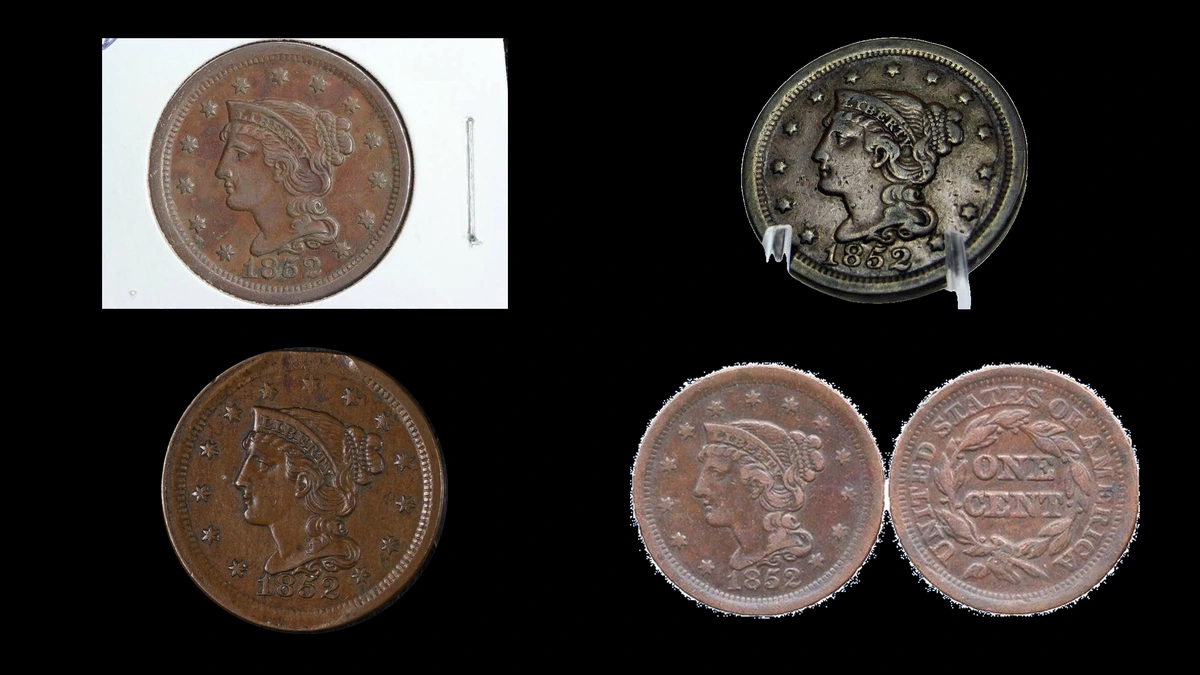
One 1852 cent can have more than one unusual feature. A well-preserved example with a raised crack and a rotated back sold for $2,350 in November 2014, but that does not make every fine line worth thousands.
The eight groups of 1852 penny errors below span estimated whole-coin values of $20–$8,000. Begin with details you can see on one face, then compare both sides to check shifted designs and alignment.
1. 1852 Penny Repunched 1 or 18 Error
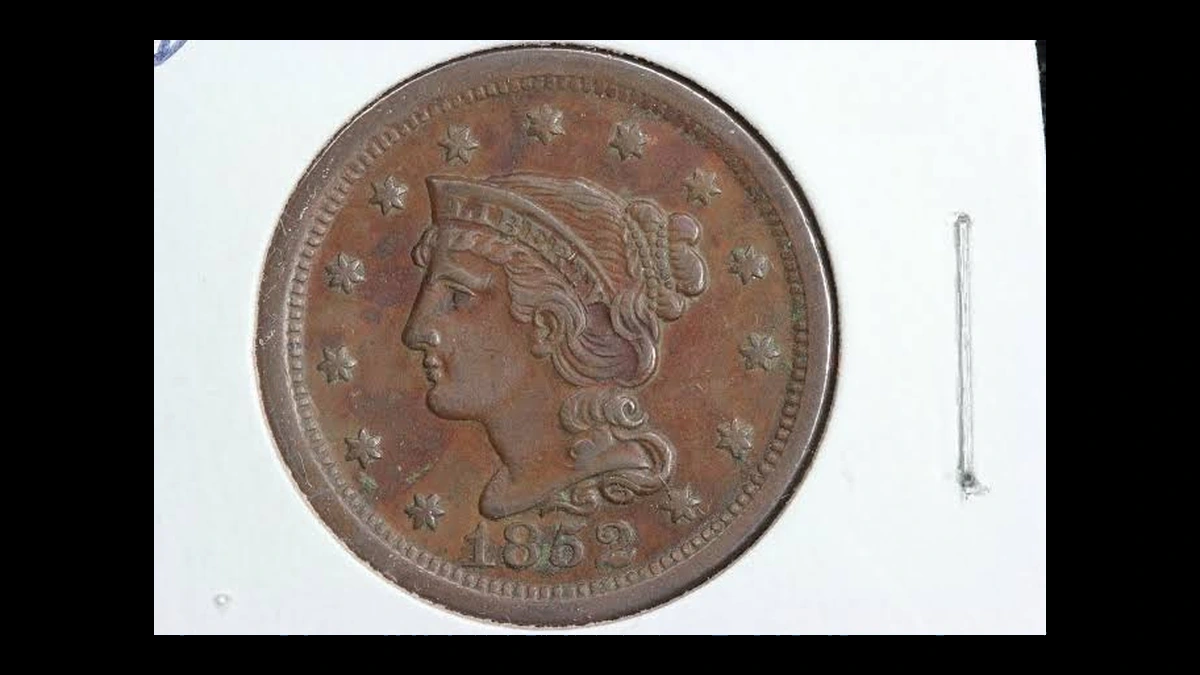
Small extra strokes around the opening digits can be leftovers from an earlier use of the date punch. They became part of the stamping tool and appeared on the cents it made.
Auction descriptions record a repunched 1 and a separate repunched 18. Neither description means a different year lies beneath 1852.
How to Identify
Magnify the first two digits while keeping the complete date in view. Look for raised remnants shaped like parts of the same numerals, rather than sharp cuts made later.
Match the one-digit or two-digit pattern to the appropriate example. The supplied descriptions do not establish the direction of every stroke, so a mark beside a numeral needs more than a nearby bump to qualify.
What It’s Worth
$30–$1,500 is the estimated range, with many circulated examples around $30–$300 and better-preserved coins around $300–$1,500. The strength of the pattern and the copper surfaces affect the comparison.
Early Cents Auctions records show $180 for a pair containing a repunched 1 and $120 for another pair containing a repunched 18. These are two-coin totals, not individual prices for the date varieties.
2. 1852 Penny Raised Cracks and Rim Breaks Error
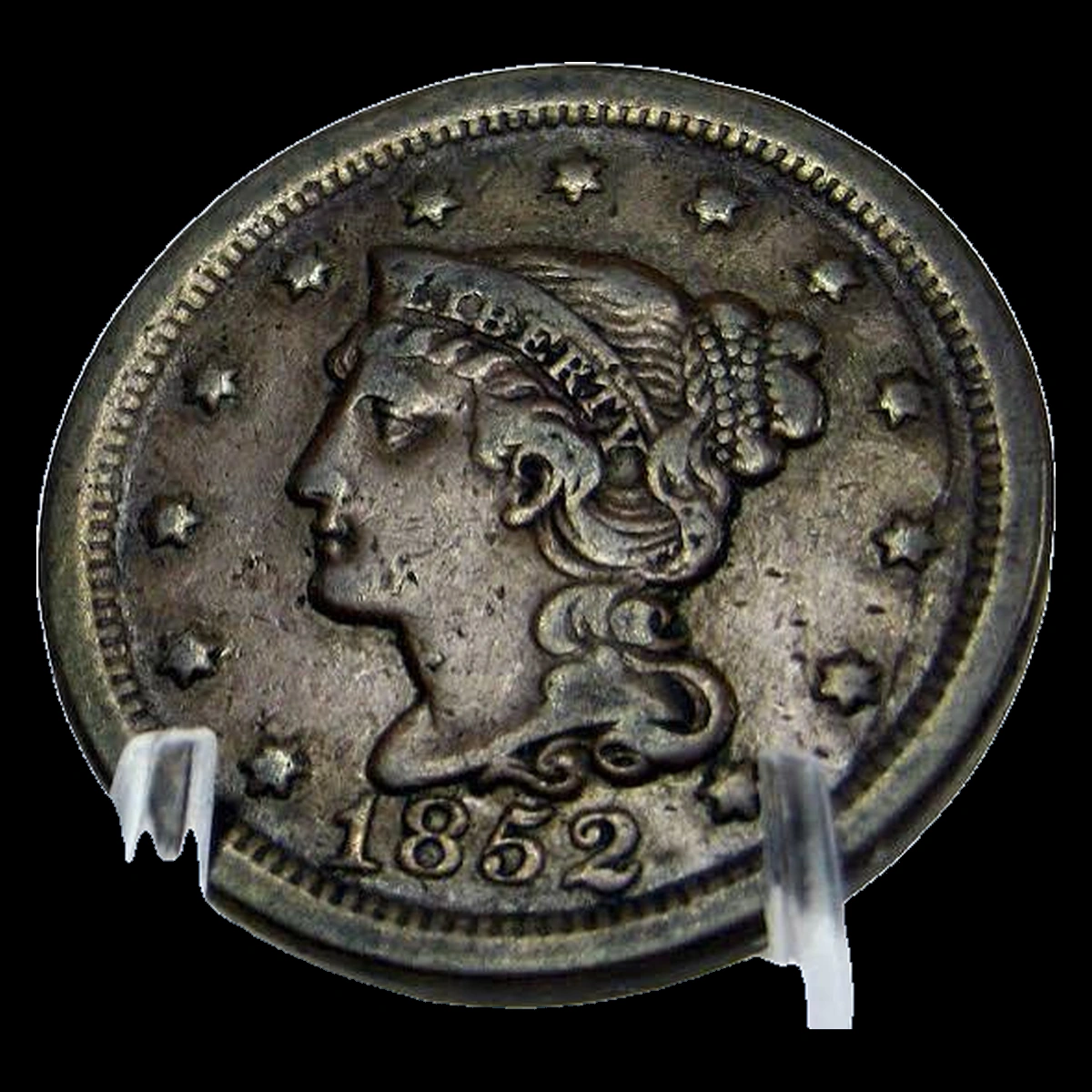
A thin ridge from the C in CENT toward the left rim is recorded on the N-3 variety. The ridge formed when copper entered a crack in the die, the tool that stamps the design.
Larger missing pieces of the die can leave raised rim patches called cuds. Other 1852 examples have breaks below the wreath stem, above AMERICA, or near the front stars, while another has a curved crack near the crown.
How to Identify
Trace one feature at a time under light from the side. The N-3 line travels from C toward about nine o’clock; it is not a map for every 1852 break.
A cud should have an original connection to the rim. Check for folded copper or a seam, since damage or added metal can also create a raised patch.
What It’s Worth
$20–$2,500 covers the estimated group, from modest cracks to more substantial cuds. Many circulated cracks fall around $20–$150, while stronger cuds span roughly $100–$2,500 across different conditions.
A PCGS MS64 Brown N-23 example with a strong lower back break brought $1,920 at Goldberg in 2021. The $2,350 N-3 coin also has a rotated back, and its combined features and fine preservation share that single sale price.
3. 1852 Penny Front Lamination Error
A peeling patch on the portrait side can reveal a weak layer in the copper. This separation is called lamination and may leave a flap attached or expose the metal underneath.
A reported 1852 example is graded ANACS VF20 Details. It has moderate wear and a separate condition problem; the summary does not identify the exact spot beside the portrait.
How to Identify
Move a lamp across the surface and follow the edge of the thin layer. Design detail may remain on a flap or end where the layer has detached.
Leave any loose piece in place. Widespread pits or straight scraping grooves can explain a rough patch without showing a natural layer separation.
What It’s Worth
$20–$500 is the estimated range for this front-side defect. Worn examples generally fit around $20–$150, with clearer flaws on better-preserved coins around $150–$500.
These are whole-coin estimates, not a sale price for the reported VF20 Details piece. Its separate condition issue must remain part of the comparison, even if the lamination is easy to see.
4. 1852 Penny Curved Clip Error
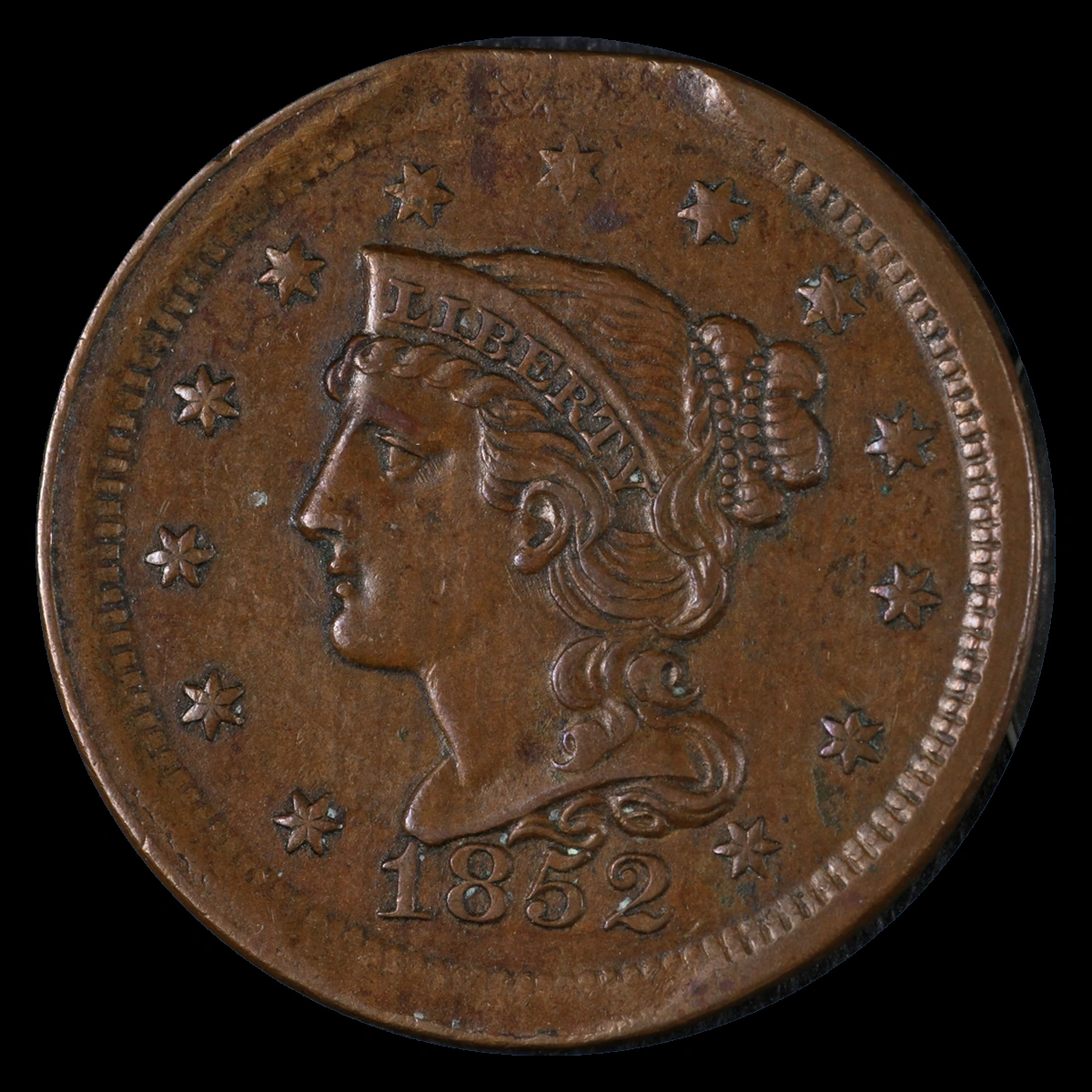
A curved gap can form when a new blank is punched across a hole already present in the copper strip. The incomplete disc then goes through striking with part of its edge missing.
Reports include an NGC MS63 Brown 1852 clip and a separate PCGS example with only slight wear. Those grades do not establish identical gap sizes or locations.
How to Identify
Examine the curved opening and the struck rim beside it together. Natural weakening near the gap, and sometimes across from it, can support a mint-made clip.
A normal 1852 cent weighs about 10.89 grams and measures 27.5 mm across. Measure an intact span and use the weight as supporting evidence, since later cutting also removes copper.
Straight cutting grooves or a fresh wall through finished letters suggest alteration. A dramatic missing segment does not settle when the metal was lost.
What It’s Worth
$100–$3,500 is the estimated range for genuine 1852 clips. Circulated examples may fit around $100–$700, while clear examples with little or no wear can range from about $300–$3,500.
An NGC MS63 Brown clip sold for $384 at Stack’s Bowers in June 2024, as recorded by PCGS. That same-year result belongs to one unworn coin and does not fix a price for every curved gap.
5. 1852 Penny Broad Flat Rim Error
A Newman Collection cent has a flat border about 2 mm wide and a reported diameter of 28 mm. Its auction catalog suggested that the blank missed the preparation step that raises the edge before striking.
That is a proposed explanation for the rim. NGC labeled the coin Damaged, AU Details, while Heritage considered the damage assessment harsh and discussed small marks.
How to Identify
Measure several diameters and examine the entire flat band. A normal 27.5 mm cent provides a size reference, but an extra half millimeter alone cannot establish the cause.
Look for filing grooves, compressed detail, or copper pushed inward from the edge. Keep the damaged grade and the catalog’s proposed explanation together when comparing this specimen.
What It’s Worth
$100–$1,500 is the estimated whole-coin range for similar 1852 cents with a broad original-looking rim after examination. It is not a confirmed premium for skipping the edge-raising step.
The Newman example realized $211.50. That price includes its identity as the NGC Damaged, AU Details coin, rather than establishing a value for a problem-free mint error.
6. 1852 Penny Misaligned Front Die Error
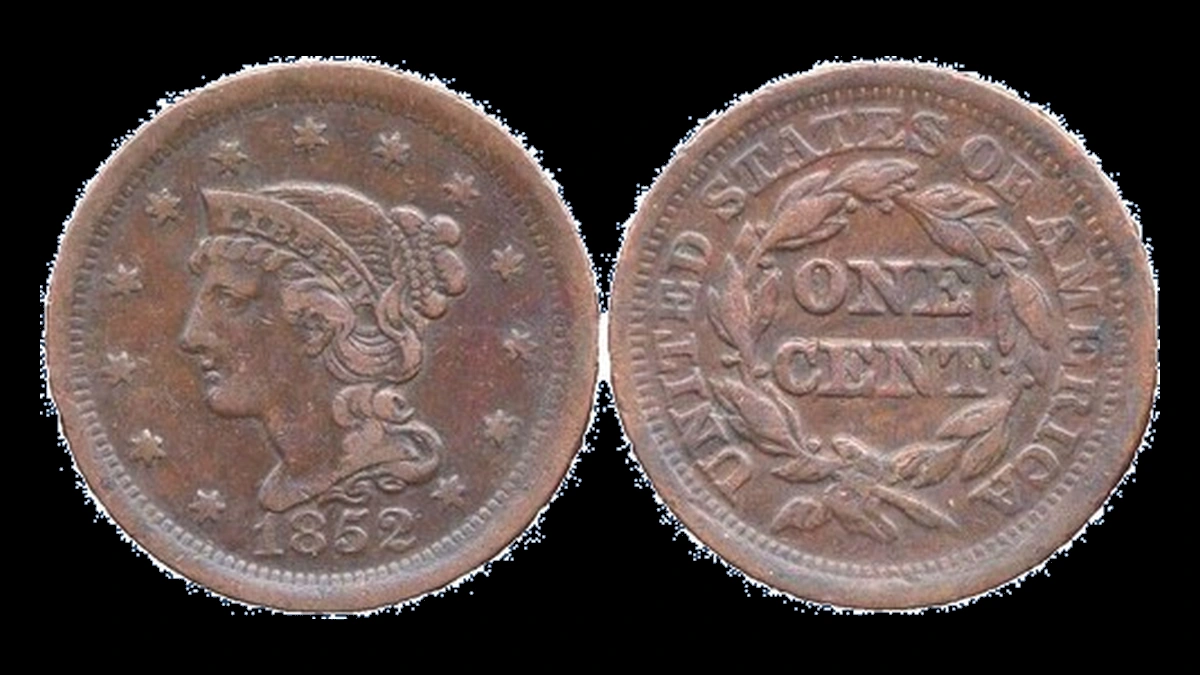
If the stars crowd one edge while the back remains better centered, the front stamping tool may have shifted. The blank itself need not have been in the wrong position.
A seller reports an 1852 front-die misalignment, and a separate Newman N-16 description places the front shift toward seven o’clock. That description also proposes a link between the shift and a raised section of the back edge.
How to Identify
Photograph both faces straight on and compare their border widths. A thin border on the front is more informative when the back does not show the same displacement.
Check the edge for filing, squeezing, or folded metal before attributing uneven spacing to the die. Do not assign the Newman coin’s direction or edge feature to the separate seller example.
What It’s Worth
$30–$750 is the estimated range for recognizable front-die misalignment. Small offsets on worn coins generally belong nearer the lower end.
The Newman archive records an NGC MS64 Brown example at $411.25. Its unworn surfaces contribute to that price and should not be transferred to an ungraded coin in another listing.
7. 1852 Penny Off-Center Strike Error
When the blank sits outside its intended position, both faces can receive a displaced design. Part of the disc may stay bare while part of the design falls beyond its edge.
An 1852 example is reported about 35% off center with an NGC VF Details label. The account leaves the direction and separate condition problem unstated.
How to Identify
Keep the whole coin visible and locate the readable date. Both faces should support the same misplaced blank, rather than one shifted tool against a centered opposite face.
Study the bare area for later grinding or flattening. Missing design does not necessarily mean missing metal, unlike a clip.
What It’s Worth
$300–$8,000 is the estimated range for dated 1852 off-center cents. Circulated pieces may fit around $300–$2,500, with stronger preserved examples around $2,500–$8,000.
No individual sale is assigned to the reported 35% VF Details cent. An 1855 cent struck 15% off center, graded NGC VG10, brought $1,020 in December 2024 as a different-year comparison.
8. 1852 Penny Rotated Back Error
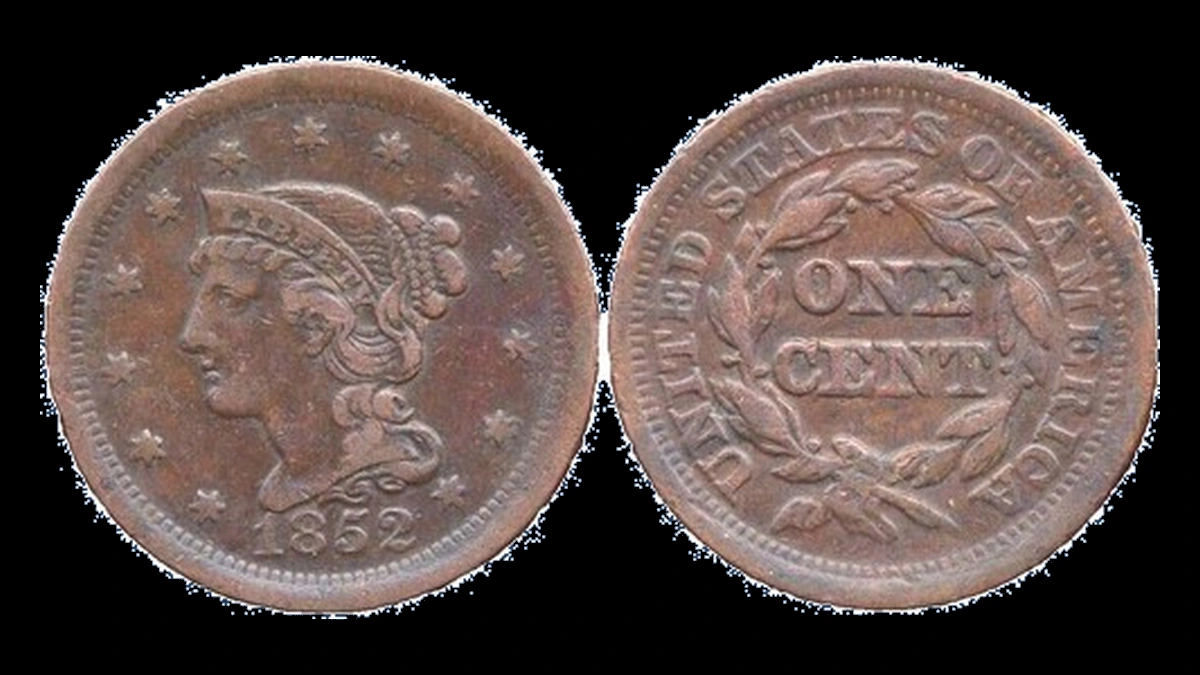
The final check concerns how the two faces line up when the coin is turned over. A rotated die can leave the wreath tilted even though the design on each face looks properly centered.
One N-3 description records a 45-degree counterclockwise turn. Other N-3 coins are described as widely rotated without being assigned that same angle.
How to Identify
Hold the portrait upright and flip the coin from top to bottom. The wreath should be upright on a normally aligned coin.
Repeat against a fixed vertical guide without twisting sideways, then measure the remaining lean. A crack from CENT toward the rim may help match a die variety, but it does not measure the rotation.
What It’s Worth
$50–$3,000 is the estimated range, with circulated rotations around $50–$400 and better-preserved examples around $400–$3,000. The angle must be demonstrated on the actual coin.
Heritage’s November 2014 example, graded NGC MS65+ Red-Brown, sold for $2,350. It also has the C-to-rim crack and is the combined-feature coin mentioned earlier, not a second sale.
The circulated 45-degree example appeared in a two-coin lot. Its individual price and the Heritage coin’s precise angle should not be inferred from that separate record.
Conclusion
An extra date stroke, a flat rim, and a tilted back require different checks. Take a clear detail photo for the first, examine the whole edge for the second, and preserve the relationship between both faces for the third.
The estimated $20–$8,000 span covers complete coins with different features and surface quality. Match those details before treating a reported sale or a lot total as a useful price comparison.