Rare 1875 Penny Errors (List & Pictures)
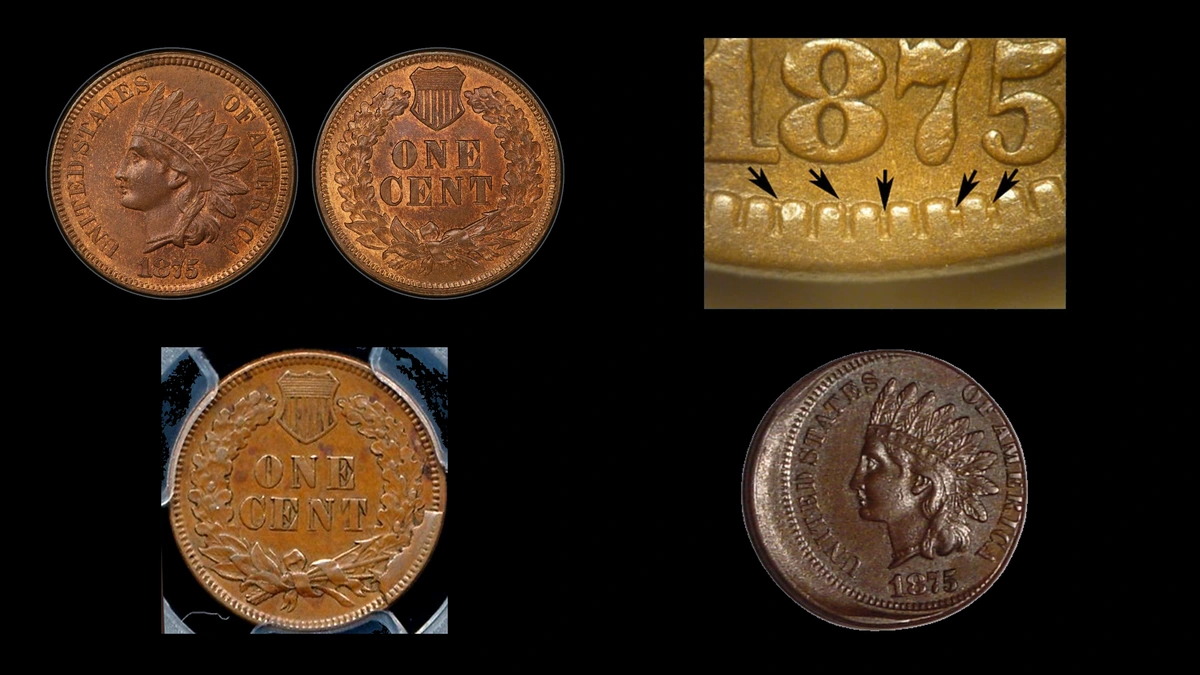
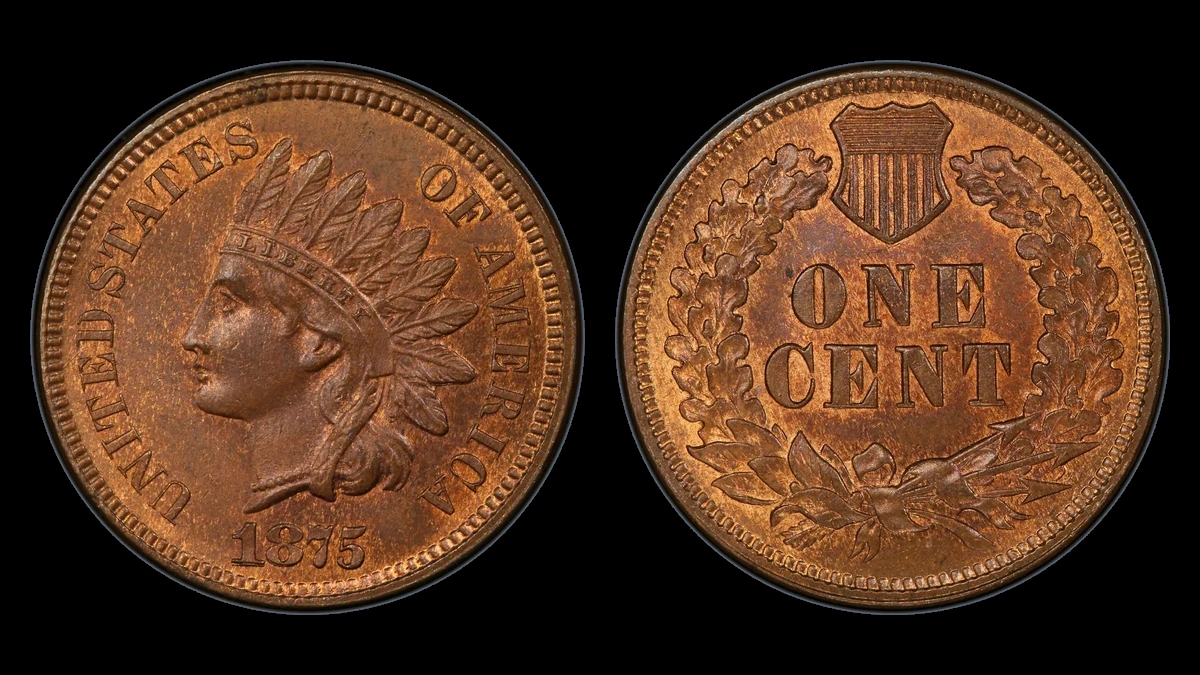
A red, unworn Snow-3a repunched-date cent sold for $5,040 in August 2020. That coin also has a neck chip, so the result covers both features and its exceptional preservation.
Estimated whole-coin values for 1875 penny errors range from $10–$6,000. Examine the date and lower border, turn to ONE on the back, and then assess larger rim or strike abnormalities.
| Location | Feature | Estimated value |
|---|---|---|
| Beside date digits | Repunched date | $30–$6,000 |
| Border below date | Misplaced date | $30–$3,000 |
| Top of N in ONE | Dot-on-N variety | $50–$5,000 |
| Neck, wreath, or rim | Die chip, crack, or cud | $10–$6,000 |
| Whole design | Off-center strike | $150–$5,000 |
A normal bronze Indian cent weighs 3.11 g and measures about 19 mm, with a plain edge. Use a magnifier and changing light for the small raised features without cleaning or scraping them.
1. 1875 Penny Earlier Numeral Edges beside 1875: Repunched Date Error
A date punch applied more than once could leave traces beside the final digits. The die carried those extra strokes, so the coin itself did not need another strike.
How to Identify
Compare all four numerals with the correct Snow variety. Snow-1, Snow-2, and Snow-3 have different arrangements of repeated strokes.
The documented Snow-3a also carries a chip on Liberty’s neck. Match the chip and date together for that variety without requiring the chip on other repunched dates.
A raised remnant should preserve part of a numeral’s shape. Dirt, engraved grooves, and flat shelves beside a digit can mislead a close-up inspection.
What It’s Worth
Estimated values are $30–$6,000, with identifiable circulated examples often around $30–$500. Stronger unworn coins account for the upper part.
The PCGS MS66 Red Snow-3a sold for $5,040 in August 2020. Its neck chip, repunched date, retained red color, and exceptional preservation are included in that one price.
2. 1875 Penny Extra Numeral Tops in the Border: Misplaced Date Error
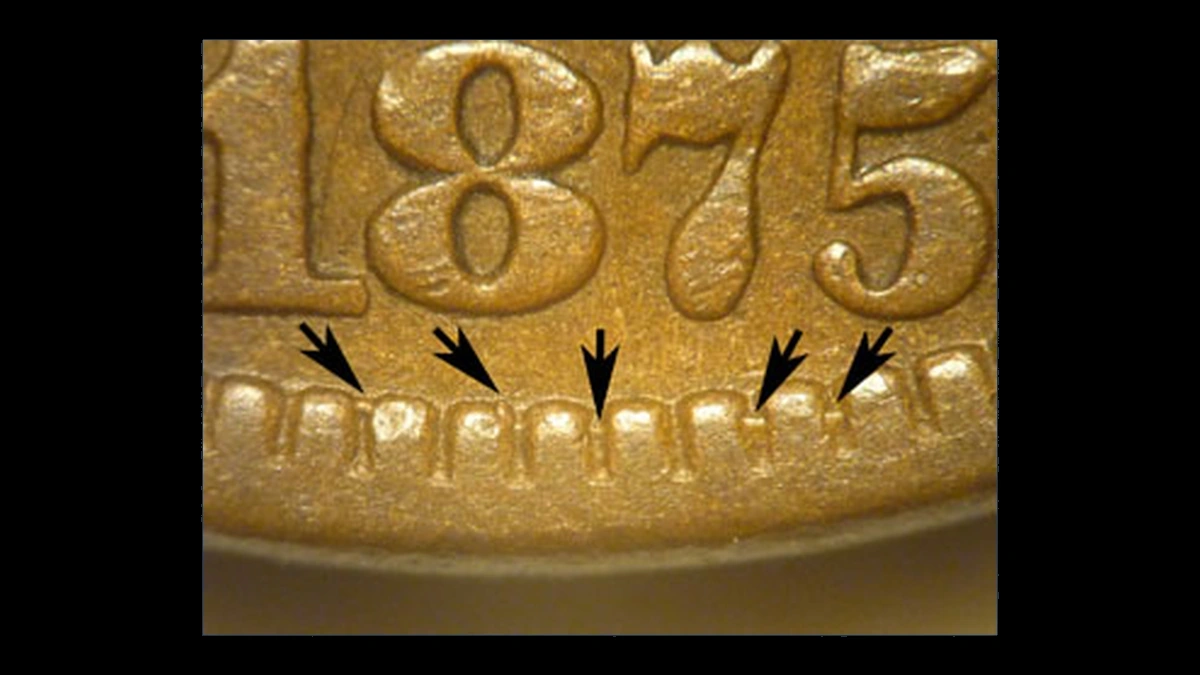
Variety 21 has pieces of 875 among the border teeth below and left of the normal date. The punch touched the die too low and too far left before the final date was placed correctly.
How to Identify
Keep the full date and lower rim in view while comparing the Variety 21 reference. The extra outlines should resemble numeral tops in the documented positions.
A scratch crossing several border teeth is not a displaced digit. Distinguish these separated fragments from repunching immediately beside the main date.
What It’s Worth
Estimated whole-coin values are $30–$3,000, including roughly $30–$300 for readable worn examples. Clearer pieces with stronger preservation need their own grade comparisons.
An 1878 misplaced-date cent graded MS65 Red brought $1,920 in October 2019. Its different numeral arrangement and unworn red surfaces make it context rather than an 1875 sale.
3. 1875 Penny A Raised Dot at the Top of N: Dot-on-N Variety Error
A small dot on the upper part of N in ONE identifies Snow-16, also known as FS-801. A mark in the die produced the feature repeatedly.
Some specialists regard the mark as intentional. The story that it helped catch a Mint thief is not established evidence of how this variety was made.
How to Identify
Compare the whole N and its surrounding field with the specialist’s example. The dot’s position and form matter more than the presence of any isolated bump.
A deposit or metal pushed up by a nick can look raised too. Do not automatically label the variety a die chip, and do not scrape the surface to test the mark.
What It’s Worth
Estimated values range from $50–$5,000, with circulated examples around $50–$800. Strong unworn pieces can bring more because of their preservation.
A specialist dealer listed a PCGS MS63 Red and Brown coin at $1,850. That was an asking price; a later out-of-stock label does not disclose a completed sale amount.
4. 1875 Penny Raised Neck, Wreath, and Rim Marks: Die Damage Error
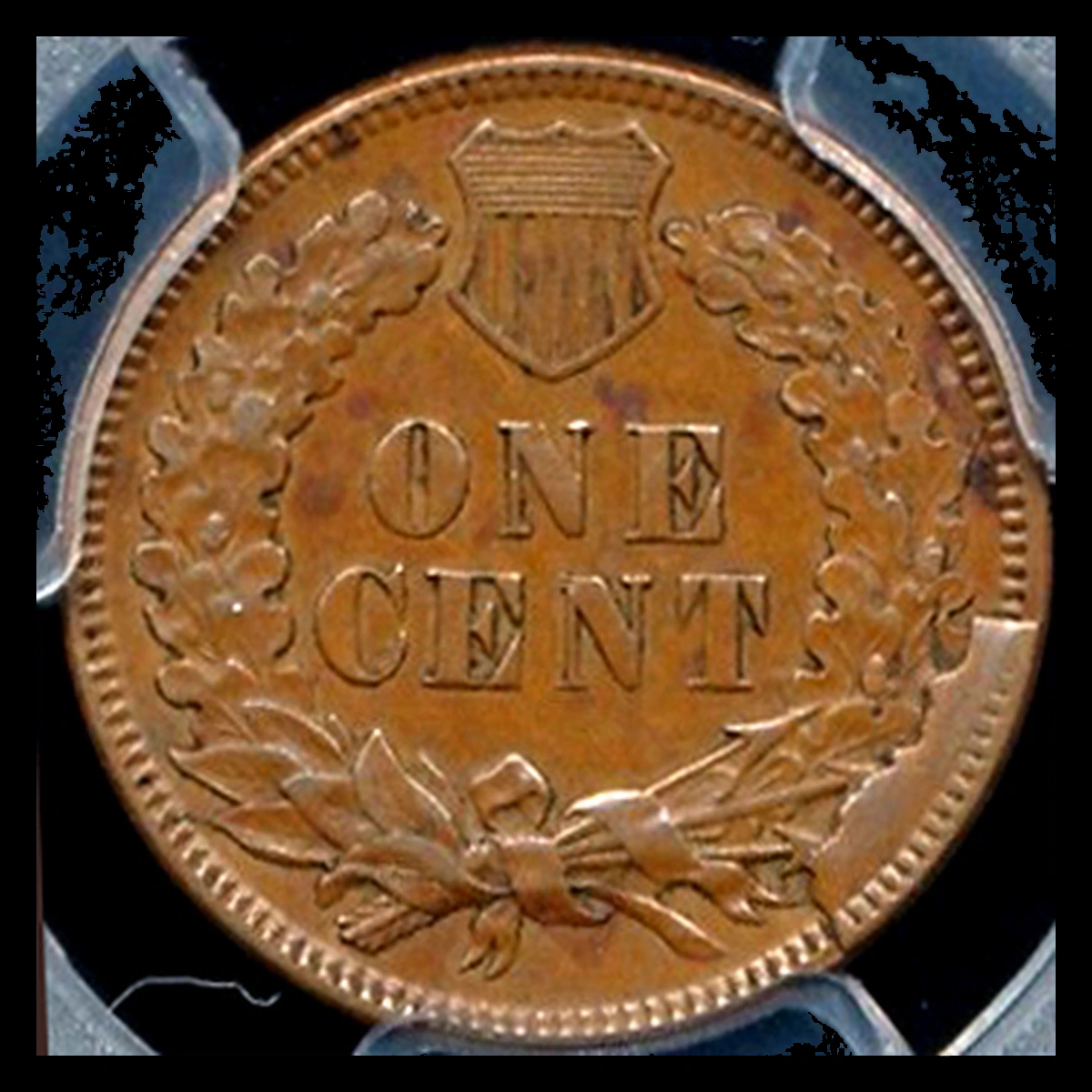
The Variety 21 reverse can show a crack rising from near five-thirty through the left ribbon end and olive leaves. The separate Snow-3a has a chip on Liberty’s neck.
Several rim cud patterns are also recorded for 1875. Cracks, interior chips, and cuds reflect different forms of broken die steel.
How to Identify
A narrow ridge suggests a crack, while an interior bump may reflect a chip. A cud is a broader area of missing design connected to the rim.
Choose a reference for the actual feature rather than expecting the ribbon crack, neck chip, and rim cud together. The Dot-on-N variety requires its separate comparison and has no established accidental-break origin here.
What It’s Worth
Estimated values span $10–$6,000 overall, with small cracks around $10–$150 and clearer chips or cuds around $25–$1,500 in ordinary conditions. Exceptionally preserved varieties account for the higher tier.
The $5,040 Snow-3a sale discussed above already includes its neck chip. It cannot be used as a price for that chip alone or added to the repunched-date valuation.
5. 1875 Penny An Unstruck Crescent beside the Design: Off-Center Strike Error
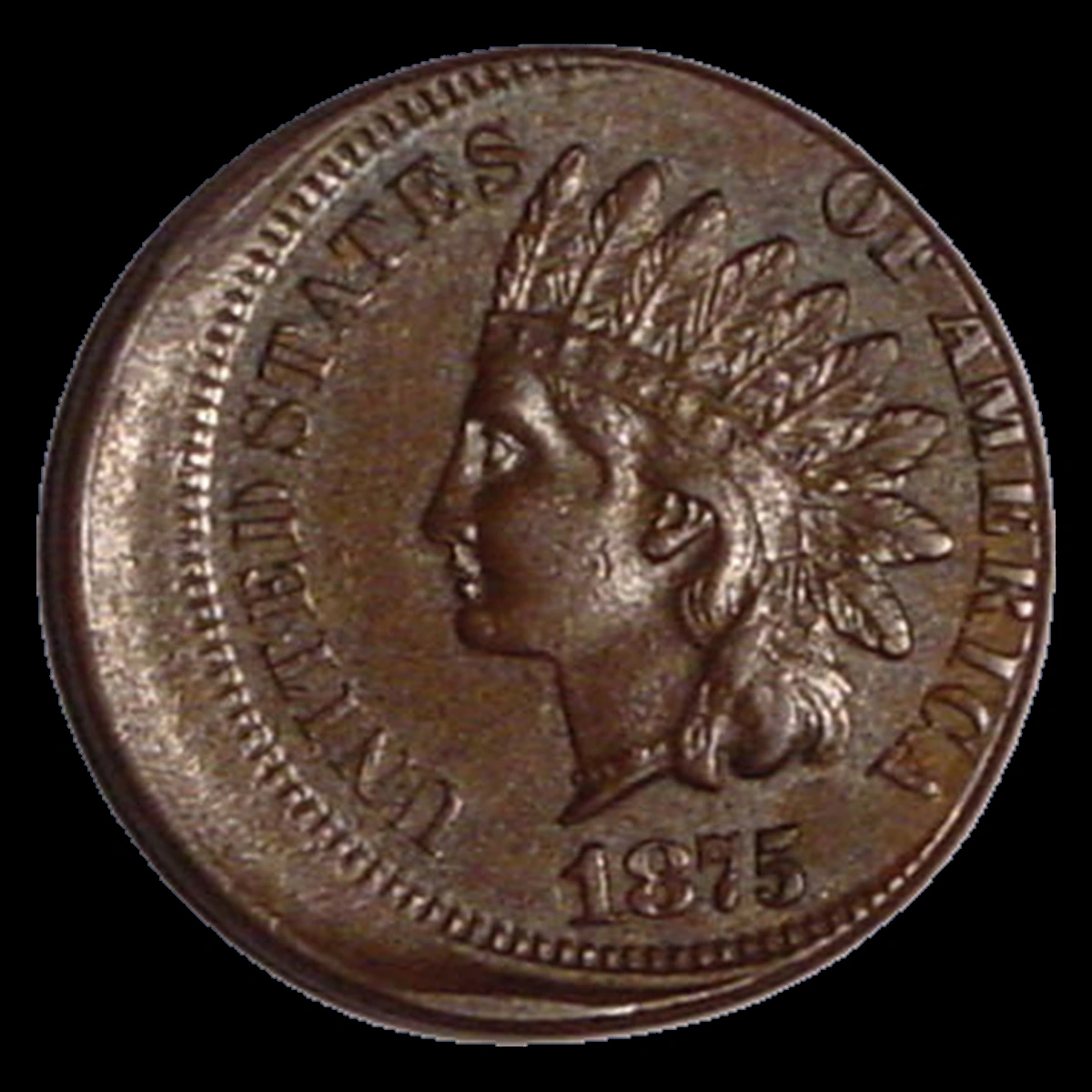
A misplaced blank can leave outer design beyond the available metal and a bare crescent elsewhere. Two recorded 1875 coins illustrate the error in different states of preservation.
How to Identify
An NGC MS61 Brown example is 10% off-center toward three o’clock. A separate PCGS Very Good 8 coin is 12% off-center, but its supplied description does not assign that same direction.
Compare the placement of both designs and the boundary of the untouched blank. A shifted strike does not require copper to be missing, so low weight needs an additional explanation.
What It’s Worth
Estimated whole-coin values are $150–$5,000, with circulated examples often around $150–$1,000. Preservation and the visibility of the date matter alongside displacement.
The 12% off-center VG8 example sold for $391 in February 2005. That result belongs to the worn coin, not the 10% unworn example.
Conclusion
Inspect small marks in their proper setting: repeated strokes beside the date, numeral fragments in the border, or the dot on N. These features have different histories even when they appear equally small.
Condition remains central to the estimated $10–$6,000 range. The high-priced Snow-3a is one exceptionally preserved coin with several features, while the two off-center examples need separate comparisons for wear and displacement.