Rare 1798 Penny Errors (List & Pictures)
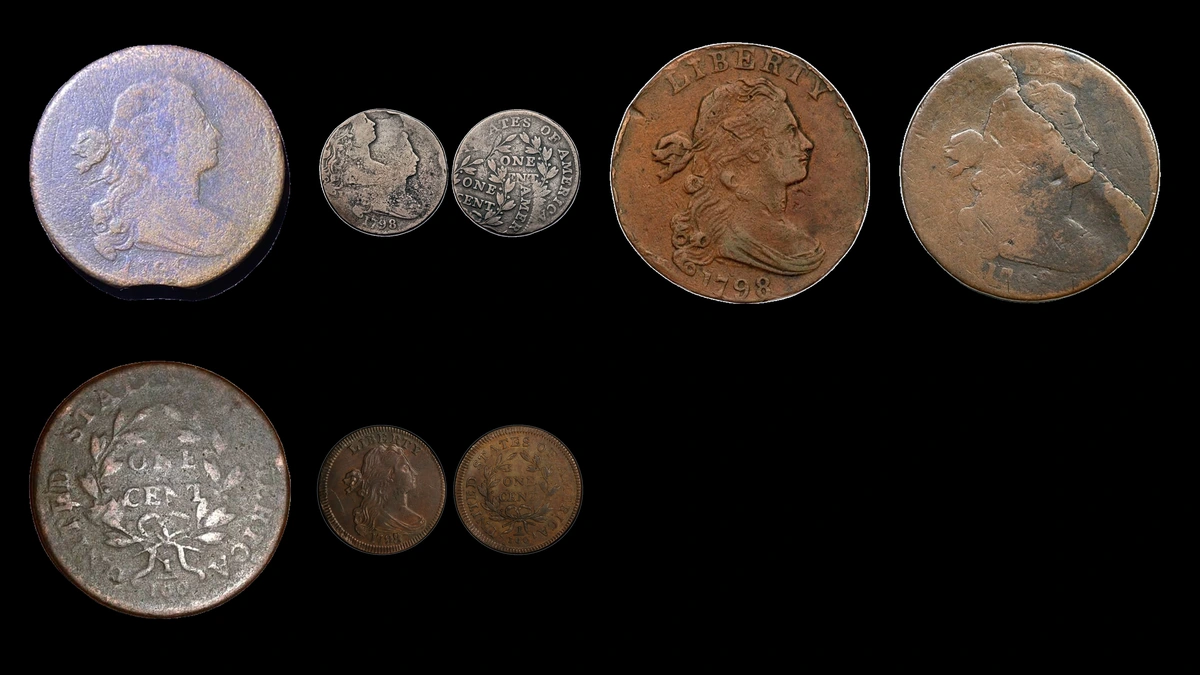
A scarce S-144 cent with small copper flakes sold for $69,000 in February 2008 and $56,400 in January 2025. Those whole-coin results reflect much more than the surface flaws among 1798 penny errors.
Estimated values span $75–$75,000. Inspect the edge and design positions, then distinguish metal separation, die marks, and an older numeral.
Nominal specifications are 10.89 grams and about 29 mm. Many examples have plain edges, but S-144’s diagonal edge grooves are normal for that variety.
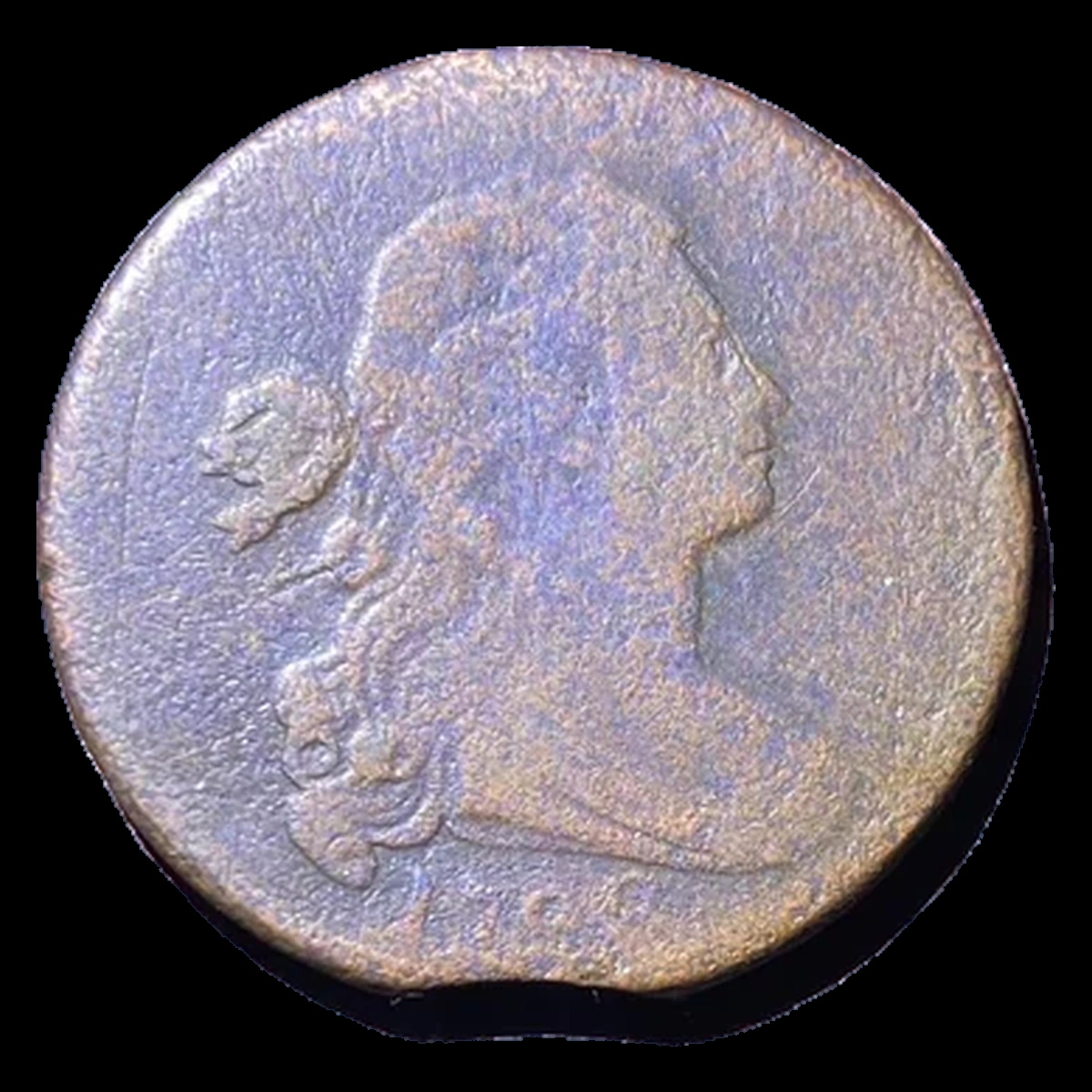
1. 1798 Penny A Tiny Edge Segment Is Missing: Clipped Planchet Error
The American Numismatic Society’s recorded S-171 example has a very small clip. No dramatic crescent or exact clock position is supplied.
The planchet, the prepared copper disc, was incomplete before striking. With so little metal absent, the rest of the coin can look nearly ordinary.
How to Identify
Inspect the whole edge before enlarging the gap and study how the struck border approaches it. Fresh filing, a folded lip, or a deep impact favors later damage.
The remaining S-171 edge should be plain. Opposite-rim weakness can provide supporting evidence, but the small gap itself must show convincing original formation.
What It’s Worth
The estimated whole-coin range is $100–$3,000, including the underlying variety and condition. It is not a sale assigned to the museum’s example.
A minor clip on an 1851 large cent graded NGC AU58 brought $159 in January 2022. That later lightly worn coin is a modest-clip comparison, not a direct price or grade for S-171.
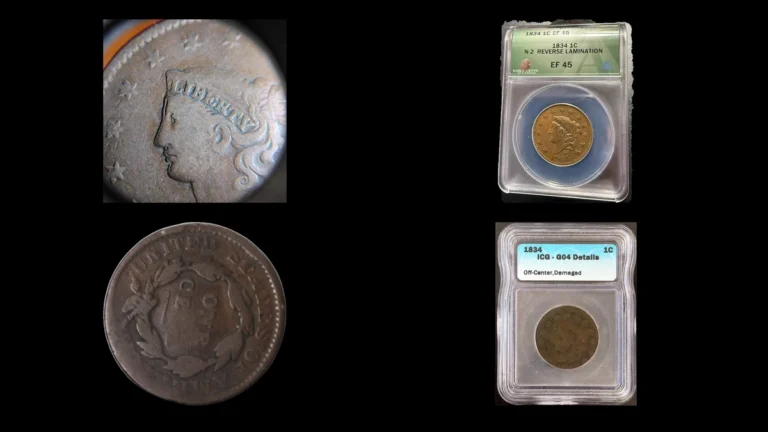
2. 1798 Penny More than One Design Position Survives: Multiple Strikes and Combined Effects Error
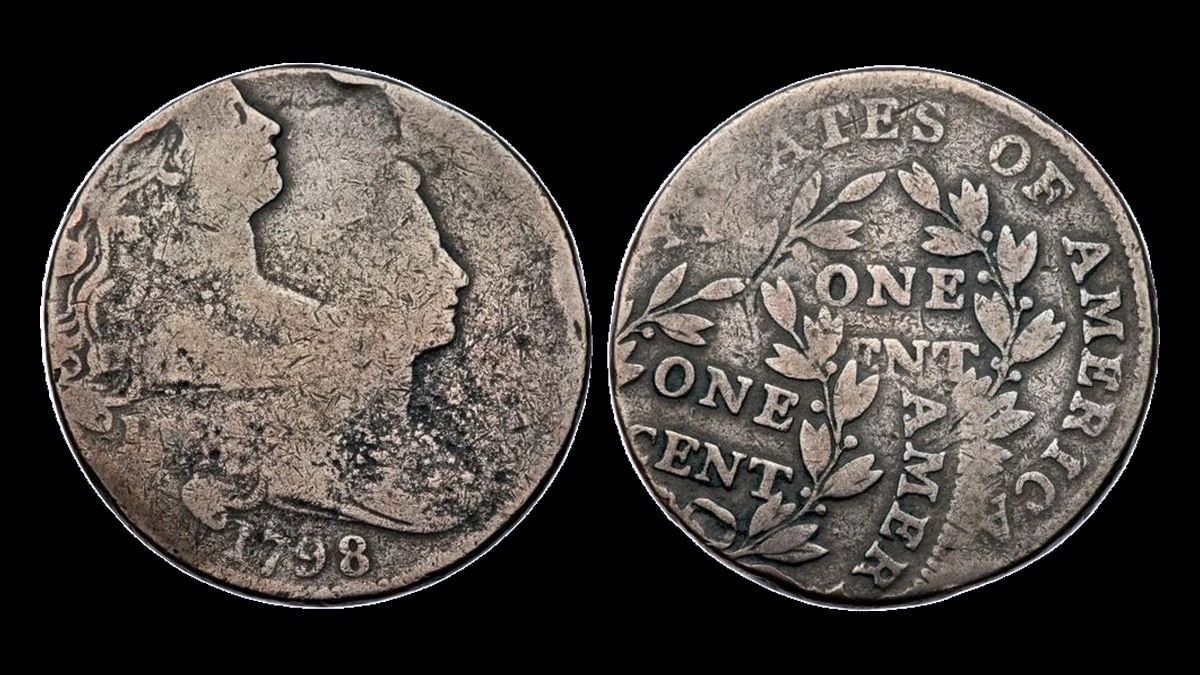
One reported coin has a second strike shifted slightly more than 5% toward 12 o’clock, together with a smooth reverse indent from an overlapping disc. Another began with a strike about 60% off center toward 8 o’clock.
A separate brockage overstrike shows three dates, including a sunken mirror date. These descriptions represent different coins and must not be joined into one striking sequence.
How to Identify
Map normal raised dates separately from recessed backward dates. Multiple raised impressions indicate repeated blows, while a mirror date adds evidence of contact with a previously struck coin.
For the slightly upward second strike, compare the repeated front with its smooth back indent; that indentation need not contain lettering. Inspect the edge and overlap for later squeezing or added metal.
What It’s Worth
Clear multiple strikes and stronger combinations have an estimated range of $500–$25,000. Visibility, preservation, and the actual combination determine the useful comparison.
A double-struck S-149 graded NGC VG8 drew a $1,350 winning bid before fees in January 2016. An 1811 double strike brought $16,200 in September 2025, a different-year comparison rather than a result for every 1798 compound error.
3. 1798 Penny A Backward Portrait Is Pressed into the Reverse: Brockage Error
The recorded Second Hair Style coin has a normal raised Liberty on the front and a recessed mirror portrait on the back. Even the small mark beneath the chin appears in both images.
A previously struck coin stayed in the press and transferred its raised design into another blank. This brockage replaced the expected reverse design with an incuse, or sunken, mirror copy.
How to Identify
Match the front’s chin mark with its reversed recessed counterpart and examine the portrait’s actual depth. Reversing a photograph cannot demonstrate a sunken impression.
Later squeezing of two coins can also transfer backward detail, so the whole surface and edge need authentication. A faint die clash is not equivalent to the clear mirror portrait on the recorded piece.
What It’s Worth
Authenticated examples have an estimated range of $3,000–$40,000. Mirror-image clarity, wear, and copper surfaces strongly influence the comparison.
Mint Error News reported a $27,600 sale for the PCGS AU50 reverse brockage. Its repeated chin mark is an identifying detail within that whole-coin value, not a separate priced error.
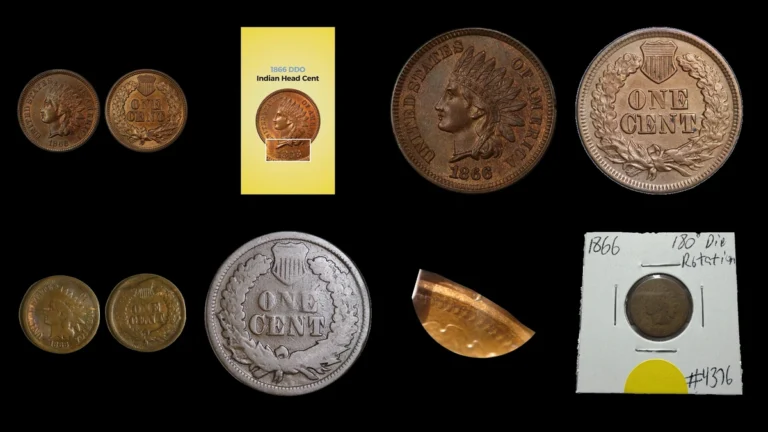
4. 1798 Penny The Reverse Turns Counterclockwise: Rotated Dies Error
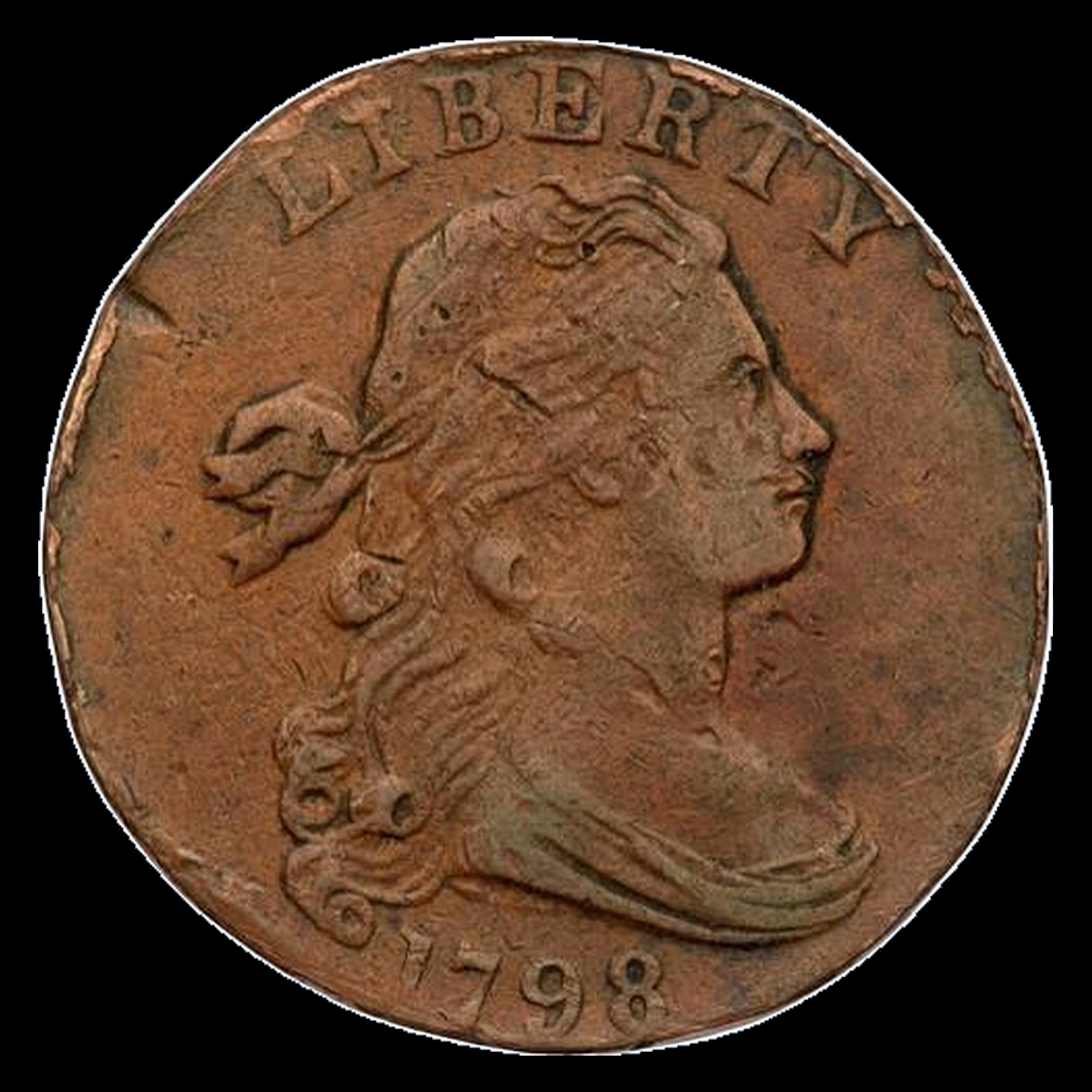
The recorded S-173 coin has a 60-degree counterclockwise reverse rotation. Each face can retain a single complete impression because the error concerns the relative positions of the dies.
NCS described the example as Fine Details with corrosion. The alignment arose during manufacture, while the rough dark surfaces and green corrosion are separate condition problems.
How to Identify
Set the portrait and date upright rather than aligning the plastic holder, then flip top to bottom without twisting. Repeat the motion and measure the reverse’s consistent departure from upright.
The recorded S-173 should show the same 60-degree counterclockwise turn each time. Leave certified holders sealed, and do not treat a separately rotated display photograph as proof.
What It’s Worth
The estimated whole-coin range is $100–$4,000 for authenticated rotated examples. A corroded coin should not receive the same comparison as an original-surface piece with similar detail.
A better-preserved 1831 cent with a documented 15-degree rotation brought $920 in 2010. Its smaller angle and different date make it context rather than a sale of the S-173 example.
5. 1798 Penny Shallow Flakes Affect the Cheek and Forehead: Defective Planchet Error
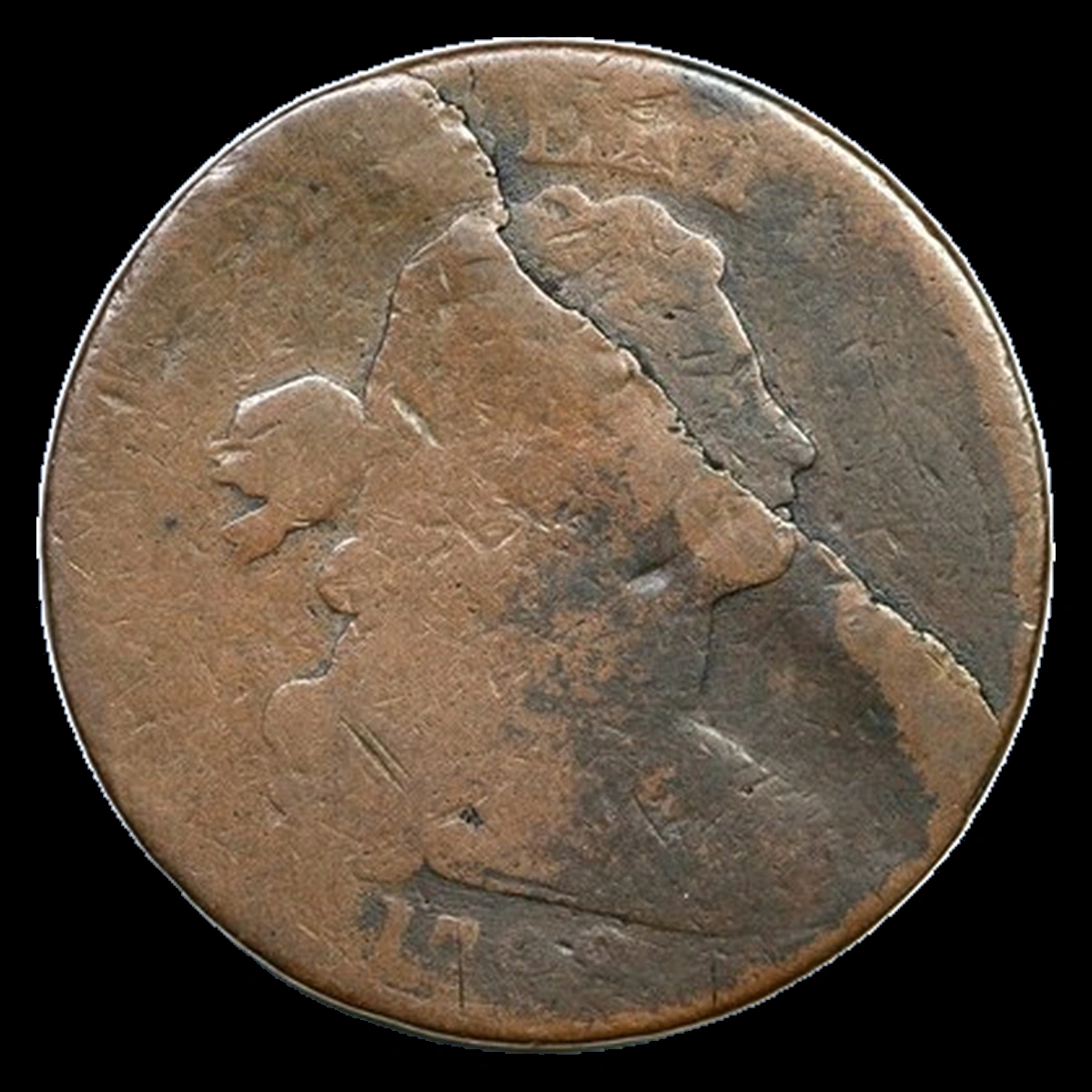
The scarce First Hair Style S-144 has small copper flakes on the cheek and bust, with a larger flaw above the eye. Weak areas in the original metal allowed shallow pieces to separate.
The recorded example is graded PCGS AU50. Its diagonal edge grooves are a normal S-144 feature and should not be counted as another accidental defect.
How to Identify
Trace each shallow separation boundary under side lighting, distinguishing it from corrosion pits or fresh cuts. A small flake need not produce a dramatic weight loss.
Keep any attached copper in place and photograph the affected areas without brushing them. Match the cheek, bust, and forehead locations to the documented specimen rather than assigning its identity from one rough patch.
What It’s Worth
Ordinary worn coins with genuine copper flaws are estimated at $100–$3,000. Exceptional scarce varieties comparable to the AU50 S-144 can occupy a $30,000–$75,000 whole-coin tier.
The recorded S-144 coin sold for $56,400 on January 9, 2025, following a $69,000 sale in February 2008. Rarity, preservation, and collector history explain far more of those results than the flakes alone.
6. 1798 Penny Raised Cracks or Patches Interrupt the Design: Die Cracks and Cuds Error
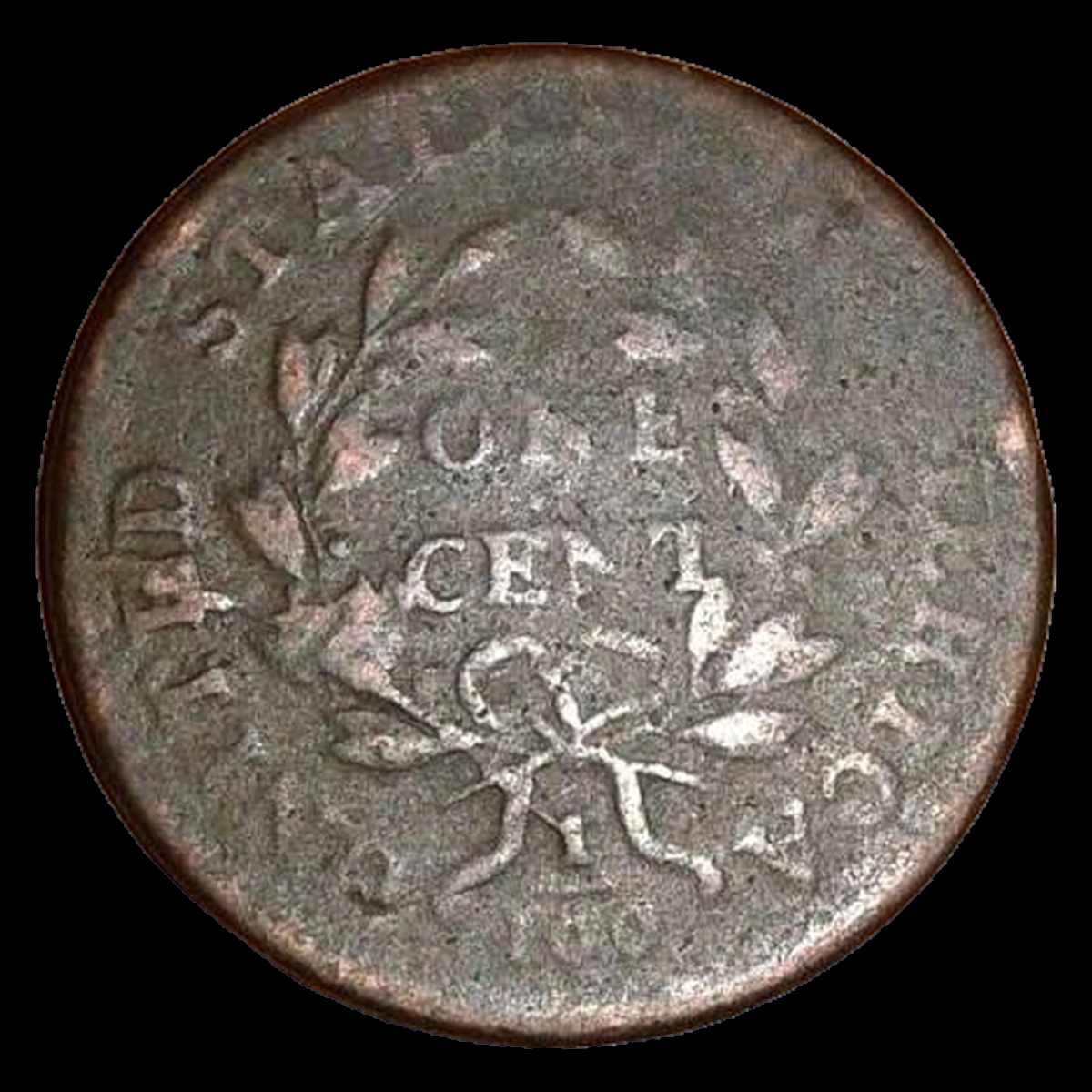
S-155 has front cracks through the 7 into the hair, from 7 toward 9, and through LIBERTY’s L. Those lines reproduce openings in its steel die.
Other reverse dies have larger breaks around UNITED, including a separate S-175 patch near U. A missing edge piece creates a cud; a fractured piece that remains in place may preserve design inside a retained break.
How to Identify
Identify the relevant front or reverse before selecting a reference and follow the precise raised path. A recessed scratch or corrosion trench cannot substitute for a crack.
Inspect a rim patch’s connection to the edge for impact or added metal. Surviving letters within a retained section do not rule it out, because the broken steel could still carry design.
What It’s Worth
Worn cracked or cud-bearing coins have an estimated range of $75–$5,000, while exceptional unworn varieties may fit $15,000–$50,000. These are full-coin tiers rather than defect premiums.
The S-155 graded PCGS MS63 Brown sold for $40,800 in January 2022. Its rare Reverse of 1796 and unworn preservation account for much of the amount, and its clash marks are included in the same sale.
7. 1798 Penny Transferred Traces Appear at the Lower-Right Reverse: Clashed Dies Error
The S-155 coin also has extra traces at the lower right of the back from contact between the dies without a blank. Later coins copied the resulting marks beside their normal design.
Repeated die contact can leave several sets of traces. Other 1798 varieties have transferred border-tooth marks near lettering, with positions that require their own references.
How to Identify
Keep the reverse letters and wreath visible while comparing an unexpected shape with the front design. The relationship should extend beyond an isolated line.
Change the light to separate shadows and scratches from the physical trace. Do not borrow border-tooth locations from another variety to complete an S-155 match.
What It’s Worth
Worn examples with clear clashes are estimated at $75–$4,000; exceptional unworn varieties may reach a broader $15,000–$50,000 whole-coin tier. Rarity and preservation are central to the higher comparison.
The January 2022 $40,800 S-155 result is the same transaction cited for its front cracks. It cannot be counted again as an independent clash sale.
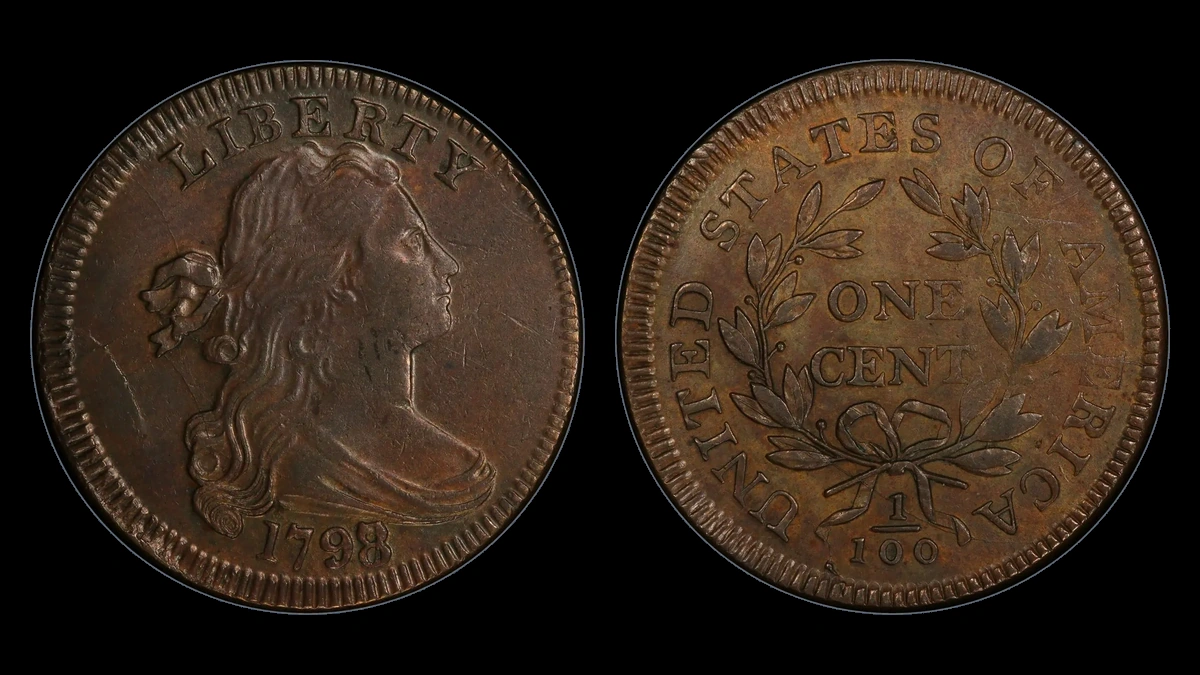
8. 1798 Penny An Older 7 Remains within the Final 8: 1798/7 Overdate Error
The 1798/7 designation records a die changed from 1797 to 1798 without removing every stroke of the former 7. Its remnants were present before each coin was struck.
Wear and the particular pairing affect how much of the older digit survives. A rough ordinary 8 does not establish an overdate.
How to Identify
Compare the final 8 with an identified overdate photograph and trace straight or angled parts of the underlying 7. Keep the rest of the date visible to establish the proper variety.
A second complete date elsewhere suggests another strike instead. Overdate evidence remains within and around the original final numeral, rather than becoming a separate design position.
What It’s Worth
Identifiable examples have an estimated range of $150–$20,000. The range varies with the specific variety and the whole coin’s preservation.
An NGC AU58 S-152 drew a $10,000 winning bid before fees at Goldberg in January 2016. A worn example assessed Good 6 drew $100 before fees in the same sale, illustrating that actual results can fall outside broad estimates.
Conclusion
Compare each 1798 feature on its own terms: a reversed recessed portrait, a raised die line, a thin copper loss, and an older digit provide different evidence. Keep percentages and strike sequences attached to the specimens that establish them.
The strongest records belong to scarce varieties in desirable condition. S-144’s normal diagonal edge and S-155’s combined cracks and clashes show why a complete identification matters more than pricing an isolated mark.