Rare 2019 Nickel Errors (List & Pictures)
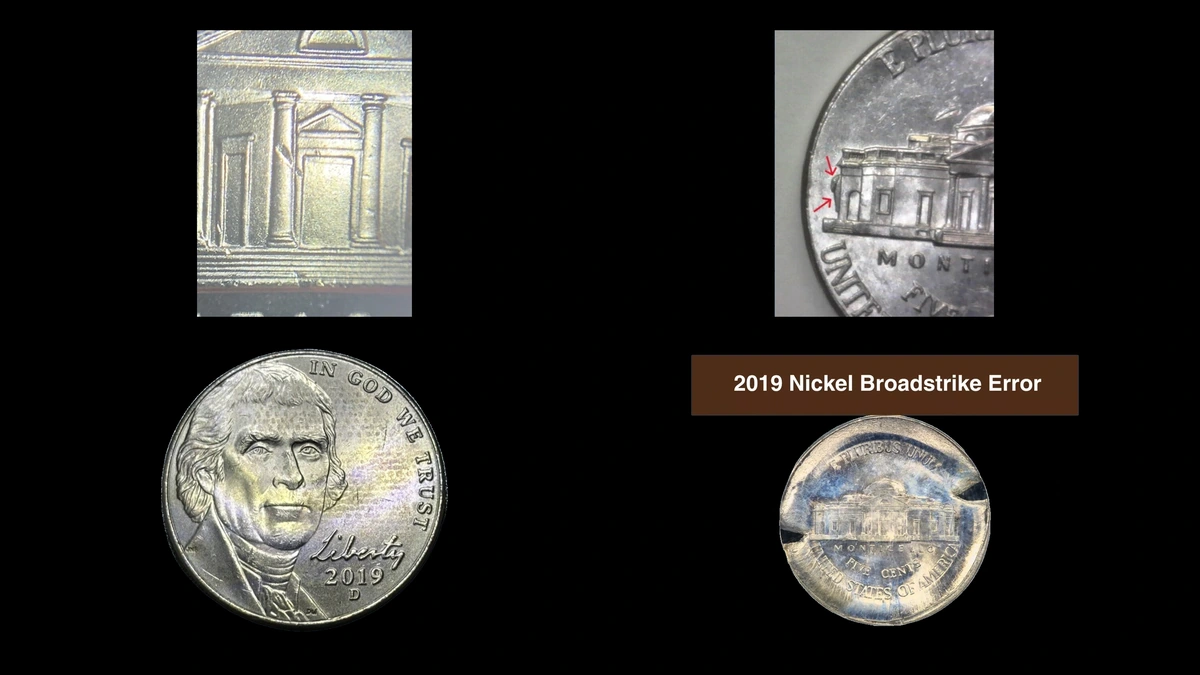
Monticello’s doorway, Jefferson’s eyes, and the edge offer different clues when checking 2019 Jefferson nickel errors. A nickname can describe the appearance without identifying the cause.
Estimated values span $3–$500. The highest supplied completed comparison is $119 for a 2005-D heating-treatment error, a different category from a verified alloy mistake; use the local design checks first, then examine missing detail, metal separation, outline, and composition.
| Visible feature | What to investigate | Estimated range |
|---|---|---|
| Extra doorway shapes | 2019-P doubled reverse | $5–$75 |
| Filled-looking eyes | Unconfirmed cause of a named appearance | $3–$20 if mint-made |
| Raised blobs or parallel lines | Die damage or reported feeder-finger marks | $3–$40 |
| Weak detail or peeling metal | Struck-through error or lamination | $3–$200 |
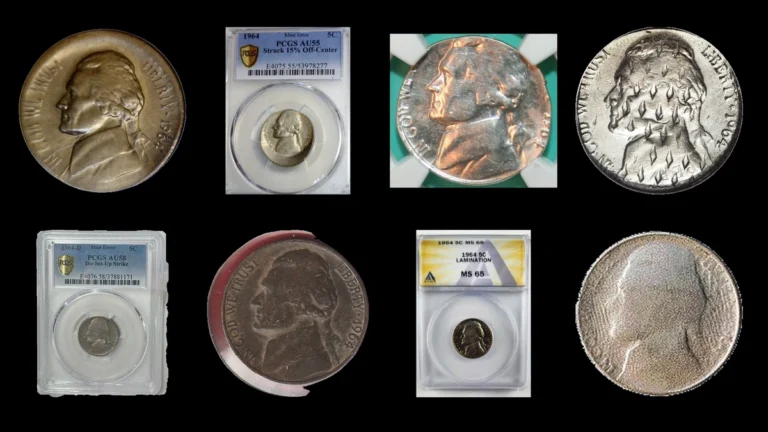
| Expanded or displaced design | Broadstrike or off-center strike | $25–$500 |
| Brass-like color | Possible incorrect alloy | $100–$500 only if verified |
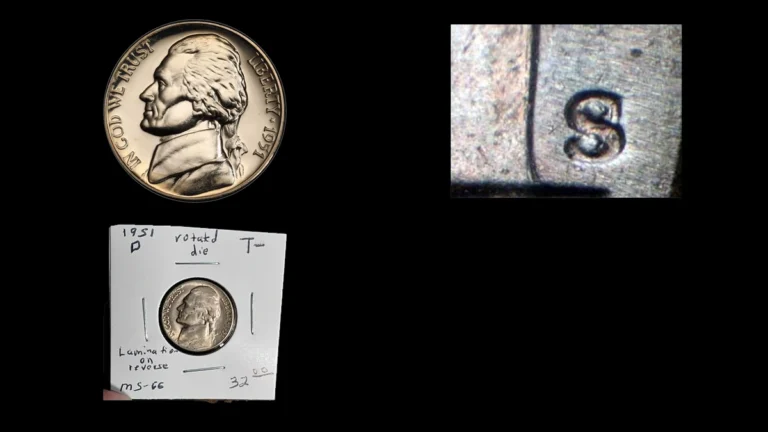
1. 2019 Nickel Extra Raised Shapes Surround the Doorway: Doubled Die Reverse Error
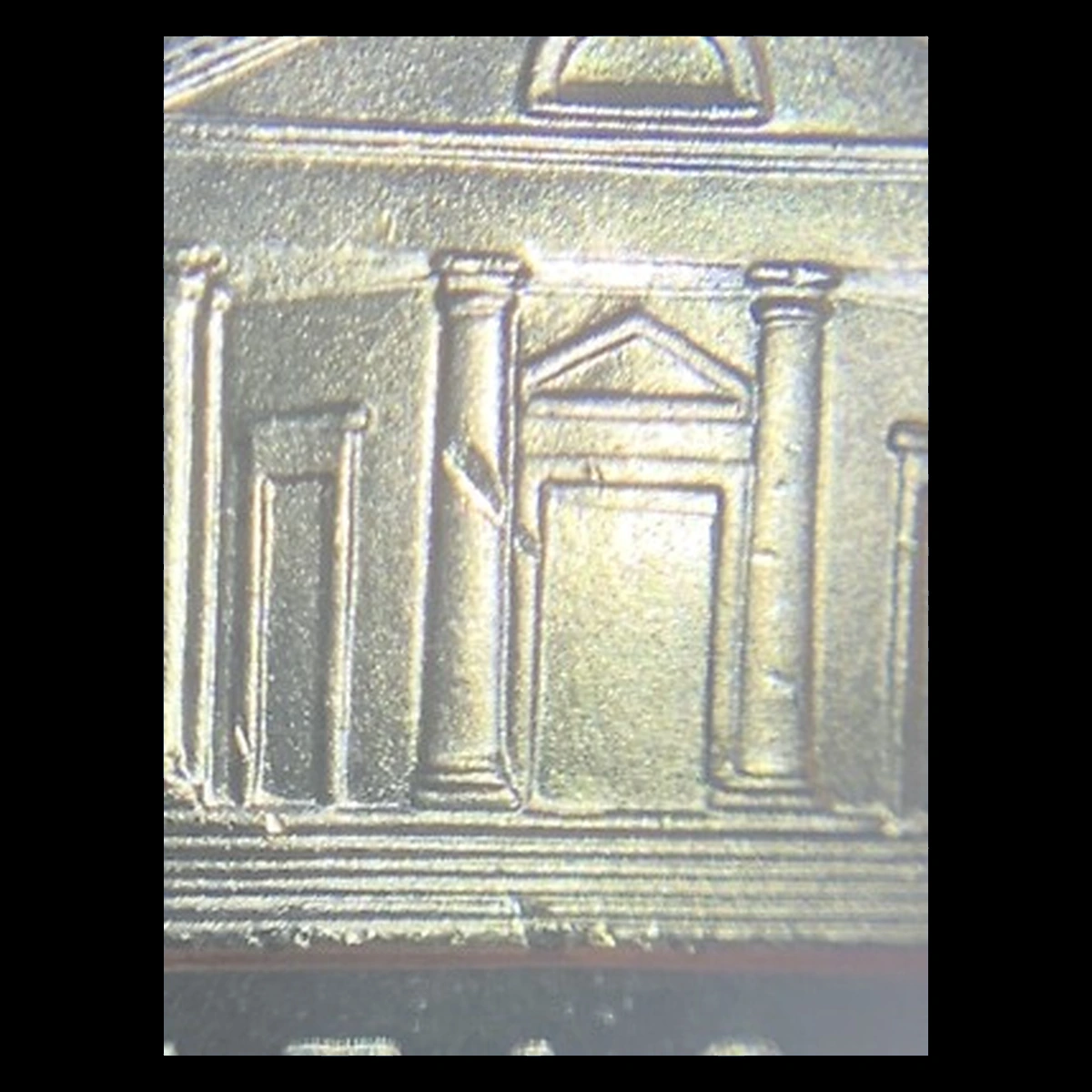
The listed 2019-P varieties show small additions near Monticello’s central doorway. Recorded areas include beneath its upper-left portion, the triangle above it, and the inner space beside the left column.
How to Identify
Confirm the P mintmark, then compare the actual additions with the 2019 variety photographs. Keep the ordinary column edges in view so a normal architectural detail is not mistaken for an extra one.
Move the lamp to distinguish fixed raised shapes from shifting reflections. A doubled die carries duplicated detail in the tool itself, while a flat mechanical shelf during striking needs a different explanation.
What It’s Worth
$5–$75 is the estimated range for a matched 2019-P doubled-doorway variety. Unworn surfaces can make the tiny additions clearer.
No specific completed sale is supplied for these modern varieties. Their small doorway features should not inherit prices for dramatic doubled designs on older nickels.
2. 2019 Nickel Jefferson’s Eyes Look Filled or Swollen: Reported Eye Feature Error
“Zombie eyes” groups together an appearance rather than proving one minting mechanism. Weakly formed detail, die wear, raised metal, and material added after minting can produce different eye changes.
How to Identify
Compare both eyes with an ordinary 2019 portrait under identical lighting. Establish whether the suspicious area is actually raised, shallow, weak, or occupied by material with a separate boundary.
The forward-facing portrait naturally creates small shadows that change with viewing angle. Do not pick at a possible deposit; preserve several clear views before treating the appearance as part of the struck design.
What It’s Worth
$3–$20 is the modest estimate for a repeatable mint-made eye feature. It describes a visible collector curiosity rather than a rare variety with an established auction record.
A nickname or blurry photograph alone adds little to a normal five-cent coin. Glue, dirt, and other attached material fall outside the estimated mint-error range.
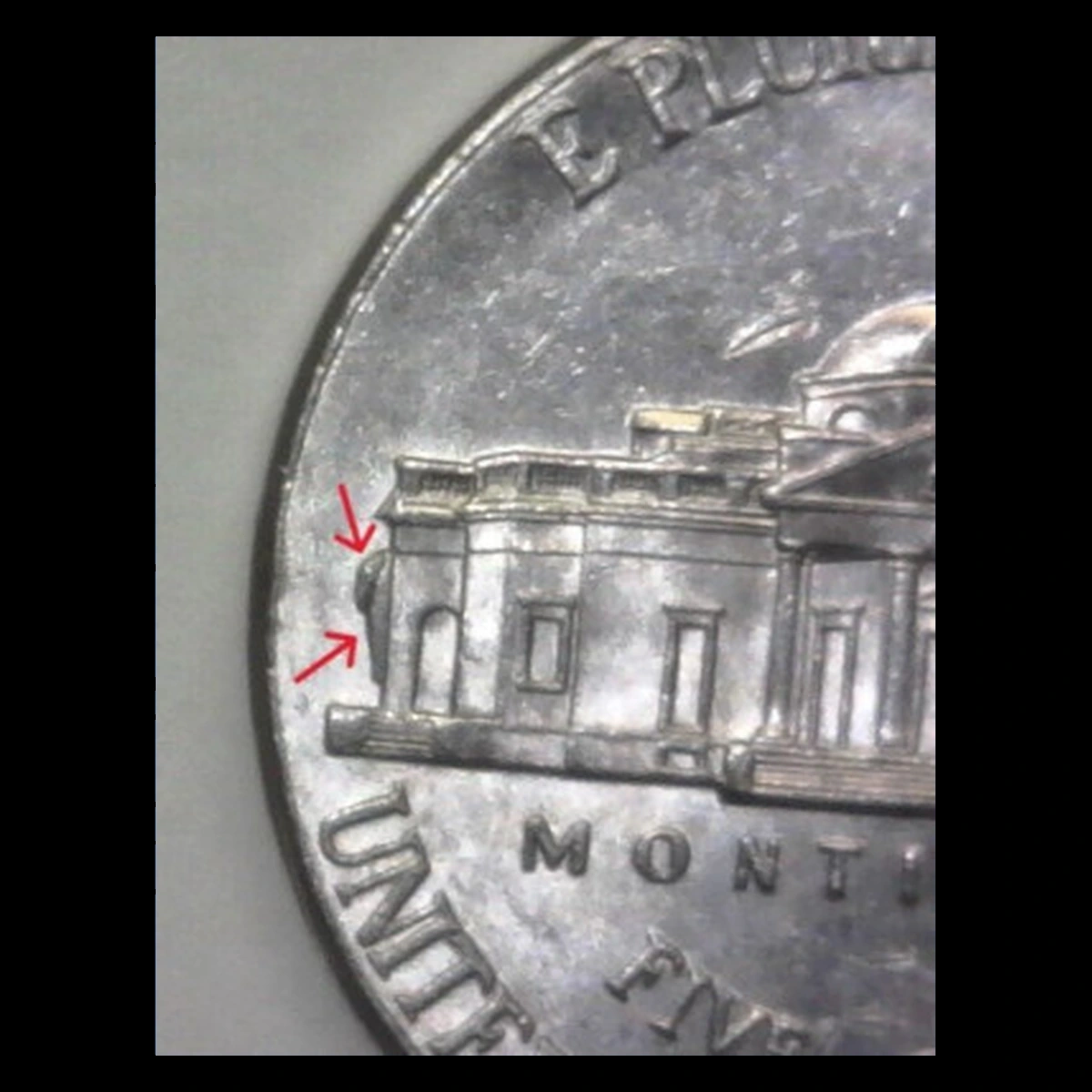
3. 2019 Nickel Small Blobs or Ridges Interrupt the Building: Die Chips and Cracks Error
Extra raised metal can fill spaces around Monticello’s columns or steps. A small missing piece of the die leaves an opening into which coin metal can flow during striking.
How to Identify
Find the corresponding column or step on a normal nickel before outlining the extra shape. A genuine raised feature should blend with the struck surface rather than show glue, a seam, or a flaking coating.
Trace any ridge leading into the blob, distinguishing a narrow die crack from an interior chip. A cud is a larger rim-connected die break, so that name does not fit every small lump inside the design.
What It’s Worth
$3–$40 is the estimate for recognizable small chips and crack lines on 2019 nickels. A distinct shape against crisp building detail can be more appealing than a tiny dot hidden by wear.
No exact auction result is supplied for these minor defects. Ordinary architecture, attached material, and dents pushing metal sideways do not receive the same comparison.
4. 2019 Nickel A Narrow Band of Lines Stands Above the Surface: Reported Feeder-Finger Marks Error
The reported 2019-P feature is a band of parallel lines crossing design. A feeder finger moves blanks into position, and grooves it scrapes into a die can later appear as raised lines on coins.
How to Identify
Use low-angle light to establish whether the lines rise above the field or cut into it. Direct contact with a finished coin creates scratches instead, while cleaning and die-polishing marks can introduce other line patterns.
Compare the band’s width, direction, and endpoints with another documented example. Repetition of one specific raised pattern is more useful than finding several unrelated parallel marks.
What It’s Worth
$5–$30 is the estimate for a convincing band of mint-made raised lines. An unworn coin that shows the whole band clearly makes a stronger comparison.
This range is not a completed-sale record for a particular 2019-P specimen. A feeder-finger label does not give incuse cleaning scratches a mint-error premium.
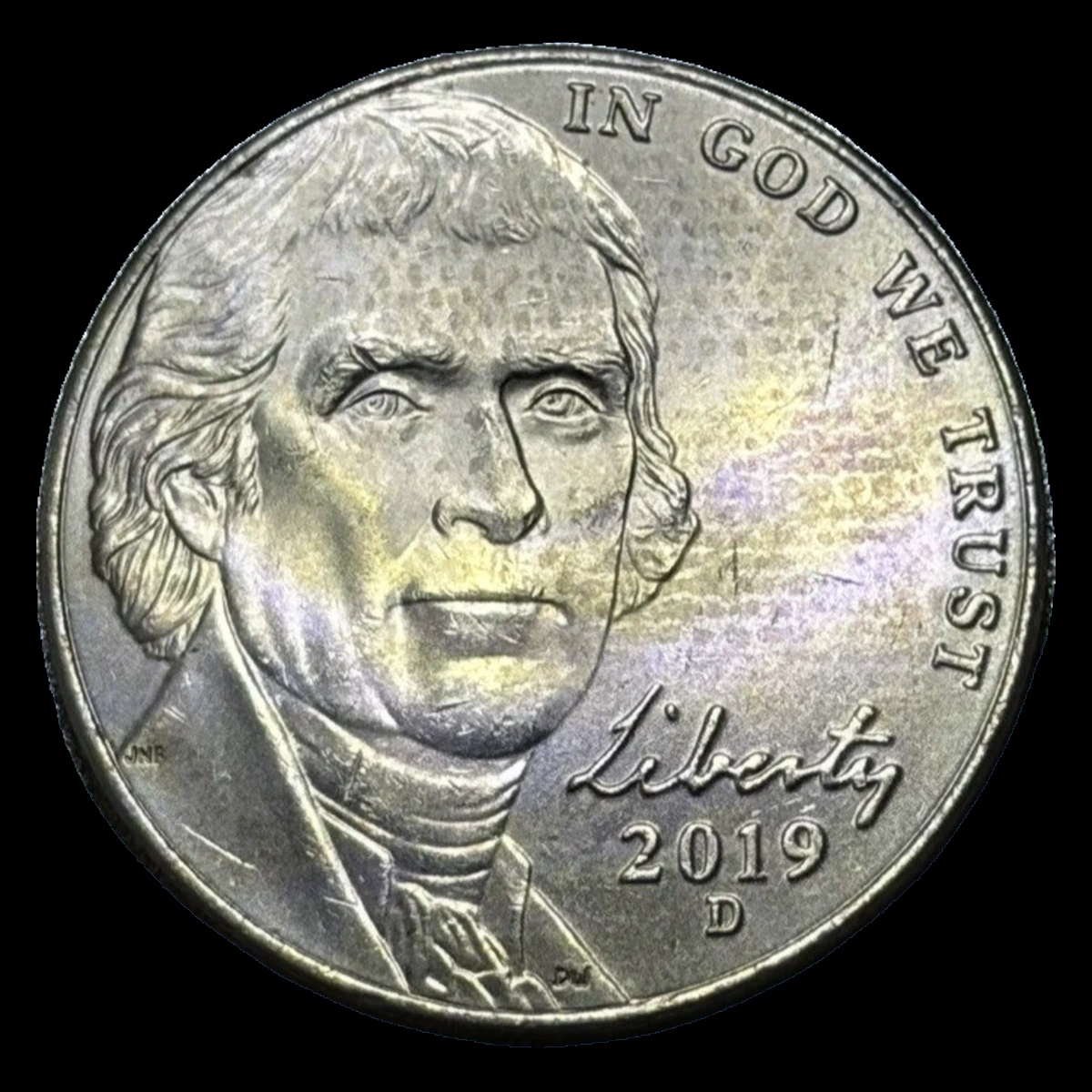
5. 2019 Nickel A Detail Fades or an Object Leaves a Depression: Struck-Through Material Error
Soft missing detail and a clearly bounded impression need separate descriptions. Grease blocking a die recess can weaken a letter, while a solid object between the die and blank can leave a more definite shape.
How to Identify
Compare weak areas with nearby lettering and the portrait’s wear. At a distinct depression, inspect whether the original design was interrupted or later gouged away with displaced metal beside it.
“Smoking Jefferson” names an appearance near the mouth without proving a material or cause. A raised mouth-area line may need a die-crack explanation rather than a grease attribution.
What It’s Worth
$3–$25 is the estimate for small grease-filled effects, with clearer object impressions roughly $25–$200. Size, shape, and remaining original detail guide the comparison.
A 2000-D nickel struck through a coin covering the die sold for $84 in September 2025. That different obstruction and year provide only broad context for the actual 2019 feature.
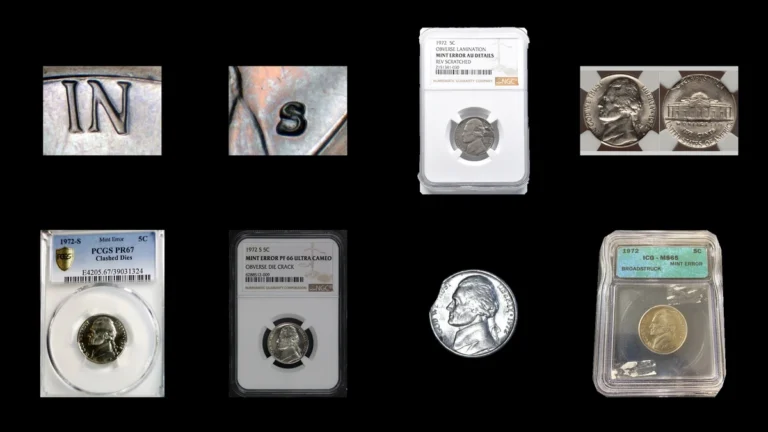
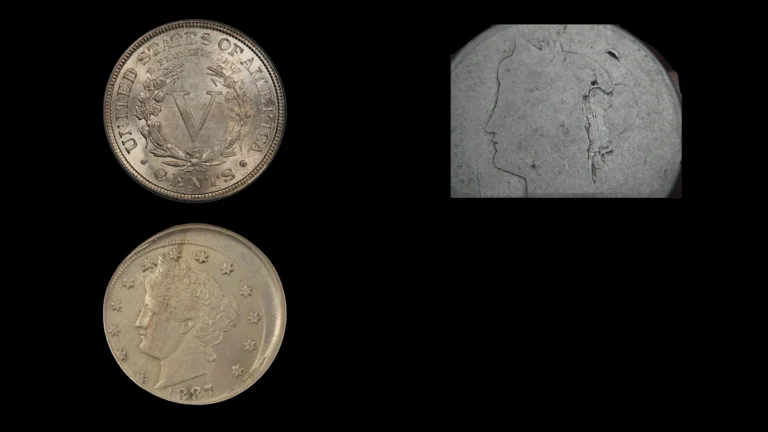
6. 2019 Nickel A Thin Flap Separates From the Front: Lamination Error
A weak area inside the metal can allow a sheet to lift or detach, leaving a shallow patch. Jefferson nickels are 75% copper and 25% nickel throughout, so this is not loss of a clad layer from a copper core.
How to Identify
Inspect the layer’s existing connection from the side without lifting or flattening it. Peeling coating across several letters, corrosion pits, and scrape ridges are different evidence from separation within the coin’s alloy.
Normal loose-nickel references are 5 g and 21.2 mm, useful alongside full-face and edge photographs for these surface and outline checks. Keep calipers off fragile metal, and leave encapsulated coins sealed; an attached flap may leave the weight unchanged.
What It’s Worth
$10–$100 is the estimate for this modest 2019 surface-layer error. An intact attachment and readable neighboring design can help demonstrate it.
No completed sale is supplied for a specific example. A larger defect can still reduce appeal, and the reported surface peeling does not establish that the entire coin split into two discs.
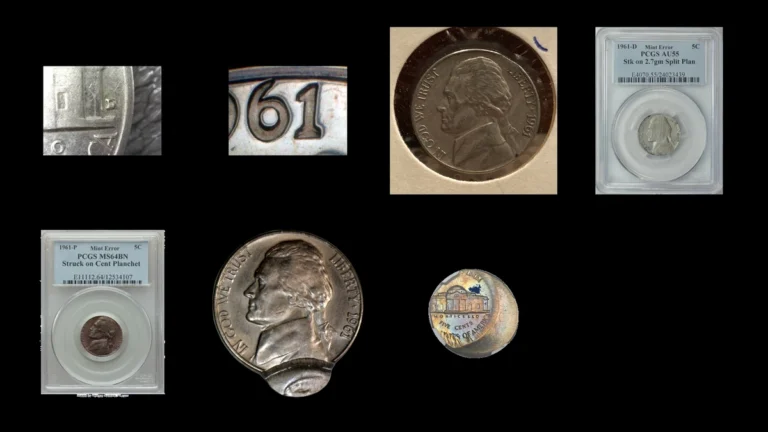
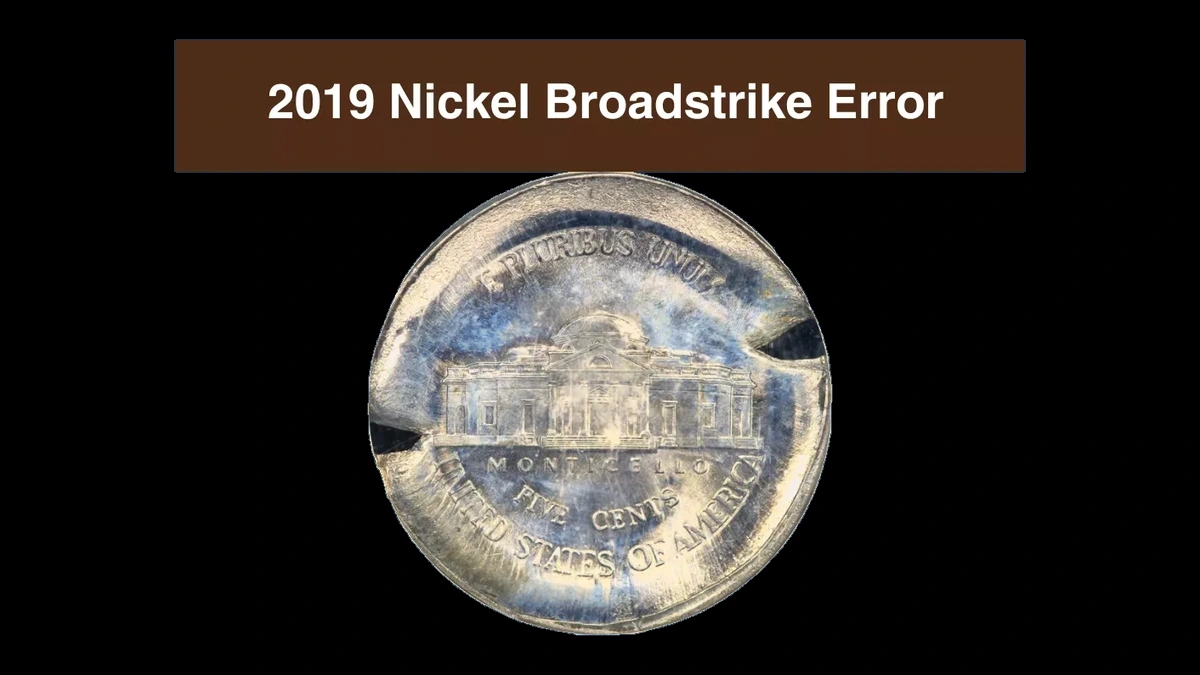
7. 2019 Nickel The Coin Widens Around Complete Design: Broadstrike Error
A broadstrike occurs when the collar fails to contain metal during the blow. The nickel can spread into an enlarged or uneven border while retaining its complete intended design.
How to Identify
Inspect the outer lettering on both faces and measure the outline in several directions. Natural outward flow should fit the strike, rather than general crushing of portrait and letters from later squeezing.
A Jefferson nickel normally has a plain edge, so the absence of grooves proves nothing here. Missing design beyond the available metal instead requires considering an off-center strike.
What It’s Worth
$25–$250 is the estimate for genuine 2019 broadstrikes. Clear expansion and attractive original surfaces strengthen the comparison.
A 1999-P broadstrike graded PCGS MS63 sold for $89 in March 2025. That earlier unworn nickel is a practical mechanism comparison rather than a documented 2019 sale.
8. 2019 Nickel Missing Design Faces a Blank Crescent: Off-Center Strike Error
The blank can enter the press far enough from the center that parts of both designs miss its edge. Original unused metal remains on the opposite side, unlike a clip where metal is absent.
How to Identify
Read enough of the date to establish 2019, since the modern portrait alone covers other years. Compare both full faces to see whether one displaced blank explains their missing design.
Inspect the transition into the unused crescent for grinding or artificial flattening. An uneven rim on only one face may reflect die misalignment, and no universal percentage is supplied for the 2019 category.
What It’s Worth
$30–$500 is the estimated range for genuine 2019 off-center strikes. A readable date and clean original crescent improve the display and comparison.
A 1999-P nickel described as 15% off-center brought $64 in March 2025. Its percentage belongs to that coin, and a modest shift should not automatically receive a large-error price.
9. 2019 Nickel Brass-Like Color Suggests a Different Mixture: Reported Incorrect Alloy Error
A reported 2019 nickel was described as having an incorrect alloy because of its unusual brass-like appearance. A real alloy error would involve an abnormal mixture within the coin, which color alone cannot establish.
How to Identify
Inspect worn high points and the edge for a coating boundary, exposed underlying metal, or chemical damage. Plating, soil, chemicals, and heating can change appearance without proving a different alloy.
Professional nondestructive testing at multiple locations can help distinguish surface treatment from original composition. Normal weight and size do not settle that question, and the coin should not be scratched or cut to investigate it.
What It’s Worth
$100–$500 is the conditional estimate for a verified composition error. A brass-colored photograph, ordinary staining, or plating does not qualify on appearance alone.
A 2005-D nickel with a heating-treatment error sold for $119 in December 2022. That result concerns another cause of unusual color and is not a completed sale for a confirmed 2019 alloy error.
Conclusion
The useful distinction on a 2019 nickel is what the feature physically does: adds raised detail, removes design, opens a metal layer, changes the outline, or alters the verified composition. A nickname cannot answer those questions.
The $3–$500 estimates mostly concern modest modern errors. Match the mint and exact doorway or line pattern, preserve fragile material, and keep a conditional alloy claim separate from an ordinary color change.