Rare 1841 Penny Errors (List & Pictures)
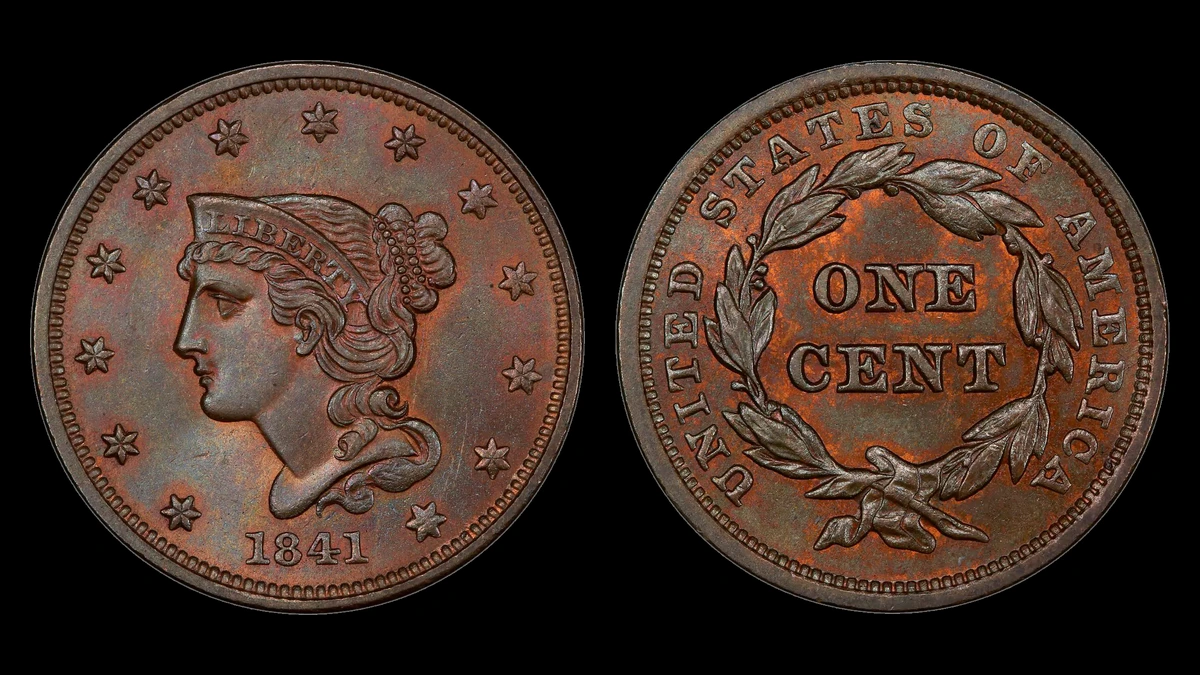
An 1841 cent with front laminations brought $564 in December 2021. For a larger striking error comparison, a scratched 1856 double-struck cent sold for $2,640 in January 2023.
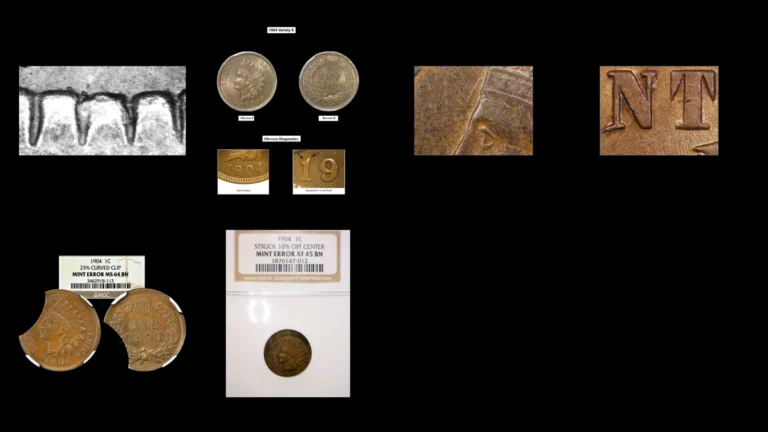
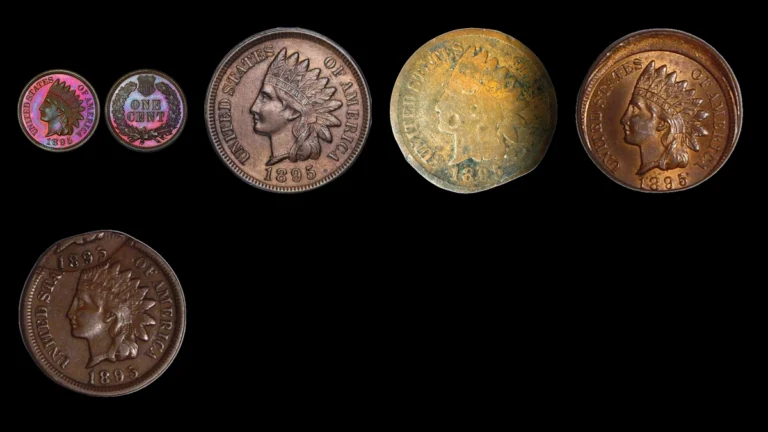
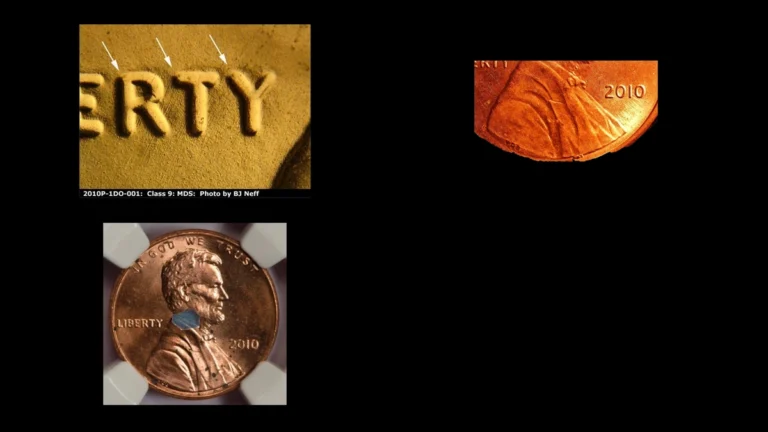
Estimated whole-coin values for 1841 penny errors range from $30–$8,000. Compare peeling metal and raised lines first, then decide whether an unusual design position involves one die, the blank, or another blow.
| Visible feature | Category | Estimated value |
|---|---|---|
| Thin copper layer separates | Lamination | $50–$1,000 |
| Raised lines or rim patch | Die crack or cud | $30–$2,000 |
| Faint opposite-side shapes | Die clash | $30–$500 |
| One face sits off-center | Misaligned die | $50–$1,500 |
| Both designs miss part of the blank | Off-center strike | $250–$5,000 |
| Two design positions overlap | Double strike | $500–$8,000 if confirmed |
A standard copper Braided Hair cent weighs 10.89 g and measures about 27.5 mm, with a plain edge. Newcomb numbers such as N-2 and N-7 identify particular pairs of stamping dies.
1. 1841 Penny Copper Separates on the Front: Lamination Error
An N-7 cent graded ANACS MS62 Brown has front laminations. Thin layers separated within the copper, leaving surface openings or attached flaps.
The auction places this coin early in the dies’ use. The large portrait crack seen on later N-7 coins had not yet formed.
How to Identify
Inspect where a layer meets the sound surface, using side lighting without lifting the metal. Scattered corrosion pits and scraped channels lack the same continuous sheet boundary.
Keep the whole portrait side visible in photographs. Do not require a late die crack to accompany an earlier-stage lamination example.
What It’s Worth
Estimated values are $50–$1,000, with worn local laminations often around $50–$300. Attractive unworn coins occupy the higher range.
The ANACS MS62 Brown example sold for $564 at Heritage in December 2021. That amount values the complete unworn coin, not its peeling copper alone.
2. 1841 Penny Raised Lines Connect Stars or Cross the Portrait: Die Cracks Error
Strong N-5 cracks run through the date and most stars, with star four excepted. A later N-7 line crosses the portrait from near star one toward star eight.
These raised paths copy openings in cracked steel. They belong to different die pairs and should not be combined into one required pattern.
How to Identify
Count stars from the lower left with Liberty upright and compare the appropriate path with the early-copper guide. Side lighting should show a ridge rather than a scratch cut into the surface.
The general year discussion also includes cuds, broader breaks connected to the rim. A suspected cud needs its own evidence; the documented thin cracks do not establish every reported rim patch.
What It’s Worth
Worn cents with clear cracks have estimated values of $30–$750, while a confirmed broad rim break on an attractive coin may fit $150–$2,000. These ranges include condition and the underlying cent.
An 1845 cent with two pronounced rim breaks and a fine lamination had a catalog estimate starting at $400. That is a different-year estimate, not an 1841 sale.
3. 1841 Penny Faint Outlines Belong to the Opposite Face: Die Clash Error
The year guide reports clashes on the N-2 die pair. These marks originated when the dies met without a blank and transferred parts of their designs to each other.
How to Identify
Compare the suspected shape with the opposite design while retaining full views of both faces. A real transferred fragment should reproduce something recognizable.
The report supplies no complete extra portrait or precise location to require. Reflections, scratches, and pressure damage from another coin need separate explanations.
What It’s Worth
A worn 1841 cent with recognizable clash traces has an estimated whole-coin value of $30–$500. Smooth copper and clear shapes make better comparisons.
No named 1841 auction sale accompanies this report. A faint clash may contribute less than the coin’s ordinary grade and surface quality.
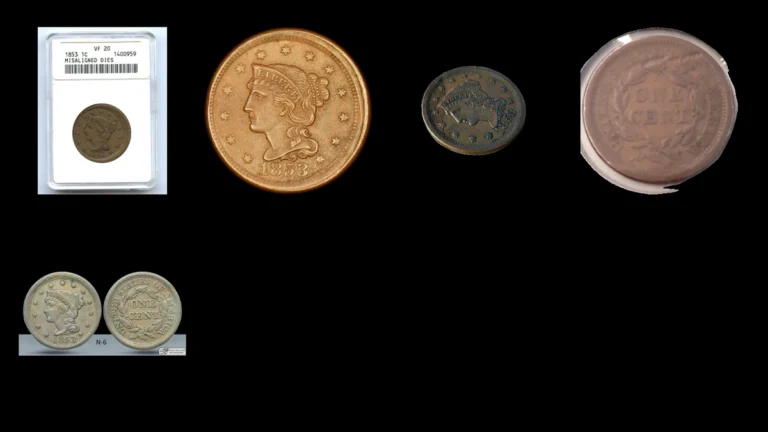
4. 1841 Penny Unequal Borders on Only One Face: Misaligned Die Error
A die sitting out of position can shift one design while the opposite die remains centered. The supplied guide includes this category without naming a certified 1841 specimen.
How to Identify
When one border looks crowded, compare the other face immediately. Both designs must be assessed against the same physical outline.
No direction or amount is established by the general report. Filing or a rim dent can also narrow a border, so include an edge view rather than relying on one enlarged face.
What It’s Worth
Estimated values are $50–$1,500, with confirmed worn one-sided shifts around $50–$400. Stronger unworn examples require matching preservation.
An 1853 N-19 graded PCGS AU58 Brown sold for $110 in August 2018. That slightly worn coin supplies a different-year comparison for the mechanism.
5. 1841 Penny Bare Copper Accompanies Missing Outer Design: Off-Center Strike Error
A misplaced blank can sit partly outside the area struck by the dies. Metal remains present in the unstruck section even though intended details fall beyond another part of the edge.
How to Identify
Compare both design boundaries with the full outline and readable date. If only one face shifts, reconsider the possibility of a misaligned die.
The year guide supplies no measured specimen, so no percentage or direction is assigned here. Ground-away lettering can imitate a blank area but may leave scratches or flattened design traces.
What It’s Worth
Estimated whole-coin values range from $250–$5,000, with worn examples around $250–$1,500. Clear dates and healthy surfaces strengthen comparisons.
No sale is attached to a particular certified 1841 example in the supplied evidence. An unidentified year or heavy corrosion can outweigh the appeal of a large displacement.
6. 1841 Penny Two Impressions Overlap: Double Strike Error
A cent that remains in the press can receive another blow after moving. Surviving parts of both impressions may overlap closely or extend toward the edge.
The supplied 1841 guide includes double strikes without identifying a certified specimen. An actual candidate needs visible evidence of two design positions.
How to Identify
Trace one recognizable letter or portrait fragment from each impression. At their intersections, examine whether a later blow flattened earlier details.
The reverse must also fit the proposed sequence. A thick letter, flat shelf, or later squeezing does not establish two original strikes by itself.
What It’s Worth
For a confirmed 1841 double strike, estimated values are $500–$8,000, with worn examples around $500–$3,000. Attractive coins with clear overlapping designs can support the higher range.
A scratched 1856 Braided Hair cent with an off-center second strike sold for $2,640 in January 2023. That different-year result does not establish a specific sequence or price for an undocumented 1841 candidate.
Conclusion
Height and shape help separate the 1841 features: a layer opens within the copper, a die crack rises above it, and a clash copies a fragment of the opposite design. Larger errors require both faces and the entire outline.
Keep the early N-7 lamination coin separate from later N-7 cracks. For generally reported strike categories, establish the actual coin’s evidence before applying a value estimate.