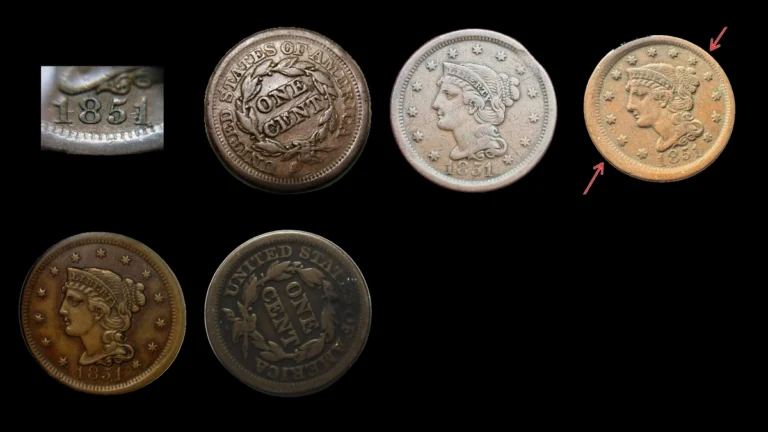
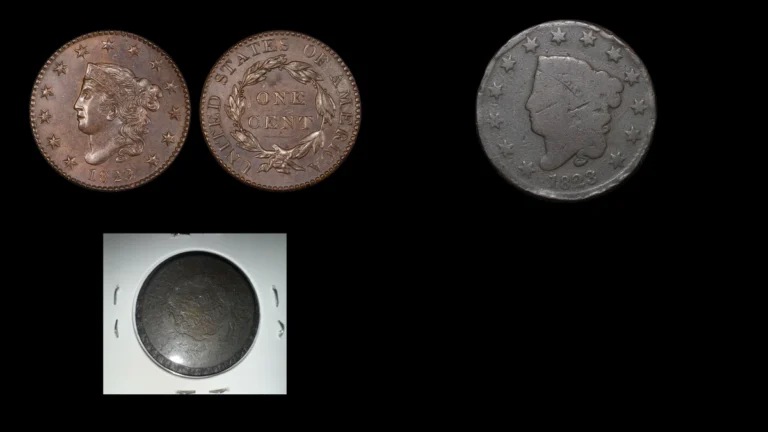
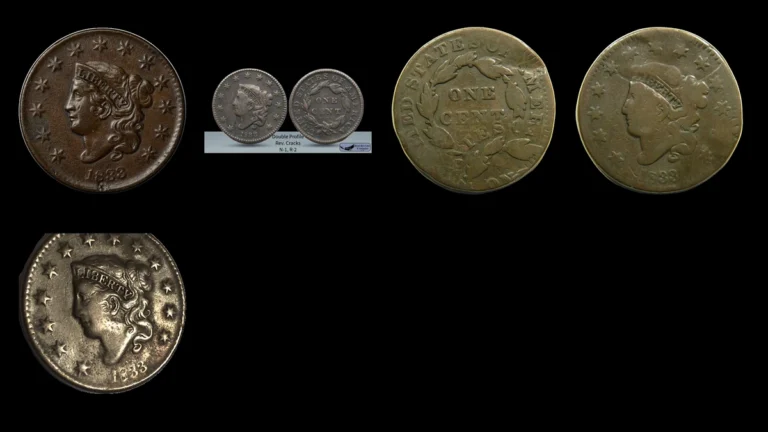
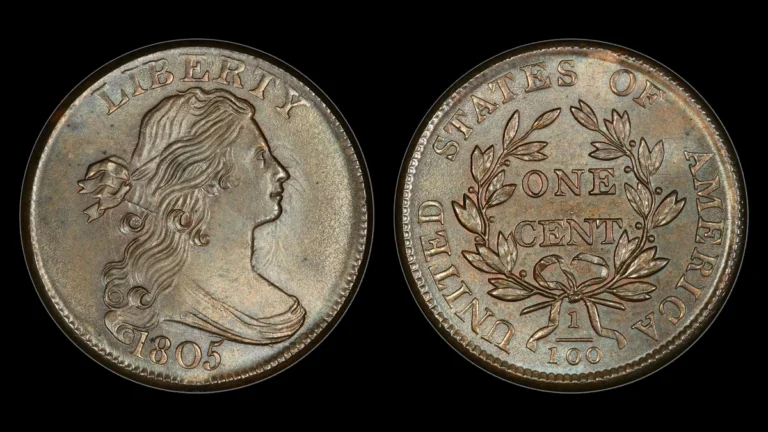
Rare 1895 Penny Errors (List & Pictures)
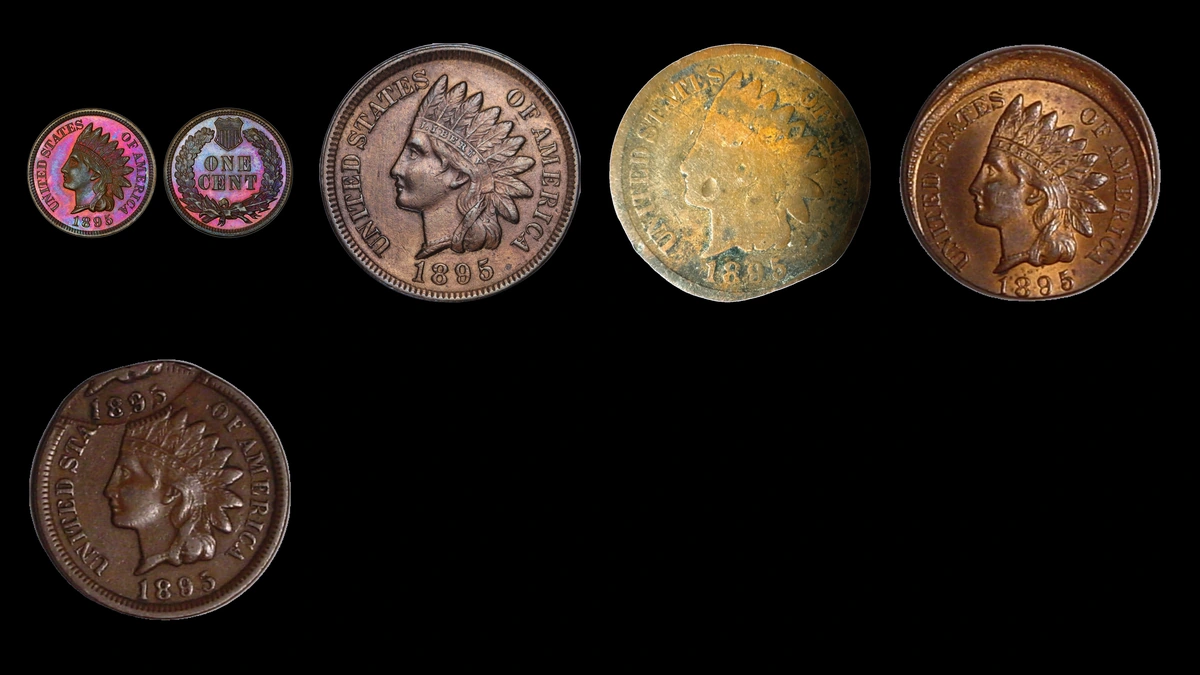
An 1895 Snow-1 repunched date sold for $264 in November 2022. For a larger striking-error comparison, an 1899 double strike brought $632.50 in July 2007; that is a different-year result.
Estimated whole-coin values for 1895 Indian Head penny errors span $15–$5,000. Inspect the date and lower hair curl, then check the rim and whole outline before deciding whether the design shifted or repeated.
| Visible feature | Possible error | Estimated value |
|---|---|---|
| Earlier strokes beside digits | Repunched date | $15–$5,000, including Proofs |
| Small 5 fragment in a curl | Misplaced date | $25–$2,500 |
| Raised rim patch | Die break or cud | $25–$1,000 |
| Curved gap | Clipped blank | $40–$1,200 |
| One incomplete shifted image | Off-center strike | $150–$2,500 |
| Two design positions | Double strike | $300–$5,000 |
A normal bronze cent weighs 3.11 grams and measures 19.05 millimeters across, with a plain edge. Measurements support a physical examination but cannot identify a tiny date variety or authenticate a clip on their own.
1. 1895 Penny Small Earlier Strokes Follow 895: Repunched Date Error
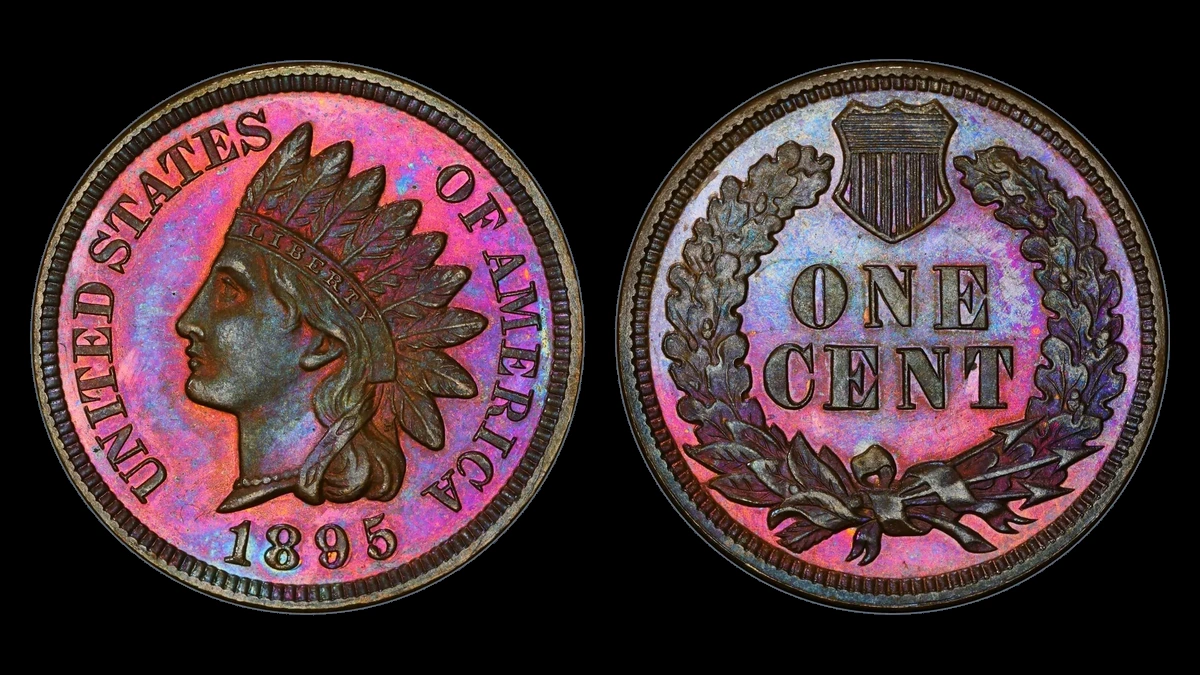
Snow-1 preserves earlier date strokes toward the right in the lower loops of 895. The date punch entered the die more than once, leaving parts of its previous position uncovered.
How to Identify
Compare all four digits with the correct variety rather than choosing one thick-looking curve. A flat shelf caused during striking does not establish a rounded earlier numeral.
Separate Proof patterns include repeated parts of 895 and another with an earlier 1 above and 9 below. Some Proof dies later struck ordinary coins, so date detail alone cannot establish the specially prepared Proof finish.
What It’s Worth
The estimated whole-coin range is $15–$5,000: ordinary repunched dates about $15–$2,000 and matched Proofs about $300–$5,000. Finish, exact variety, and preservation all contribute.
A Snow-1 MS64 Brown coin sold for $264 in November 2022, as recorded by PCGS. It was an unworn ordinary-strike comparison, not a Proof sale.
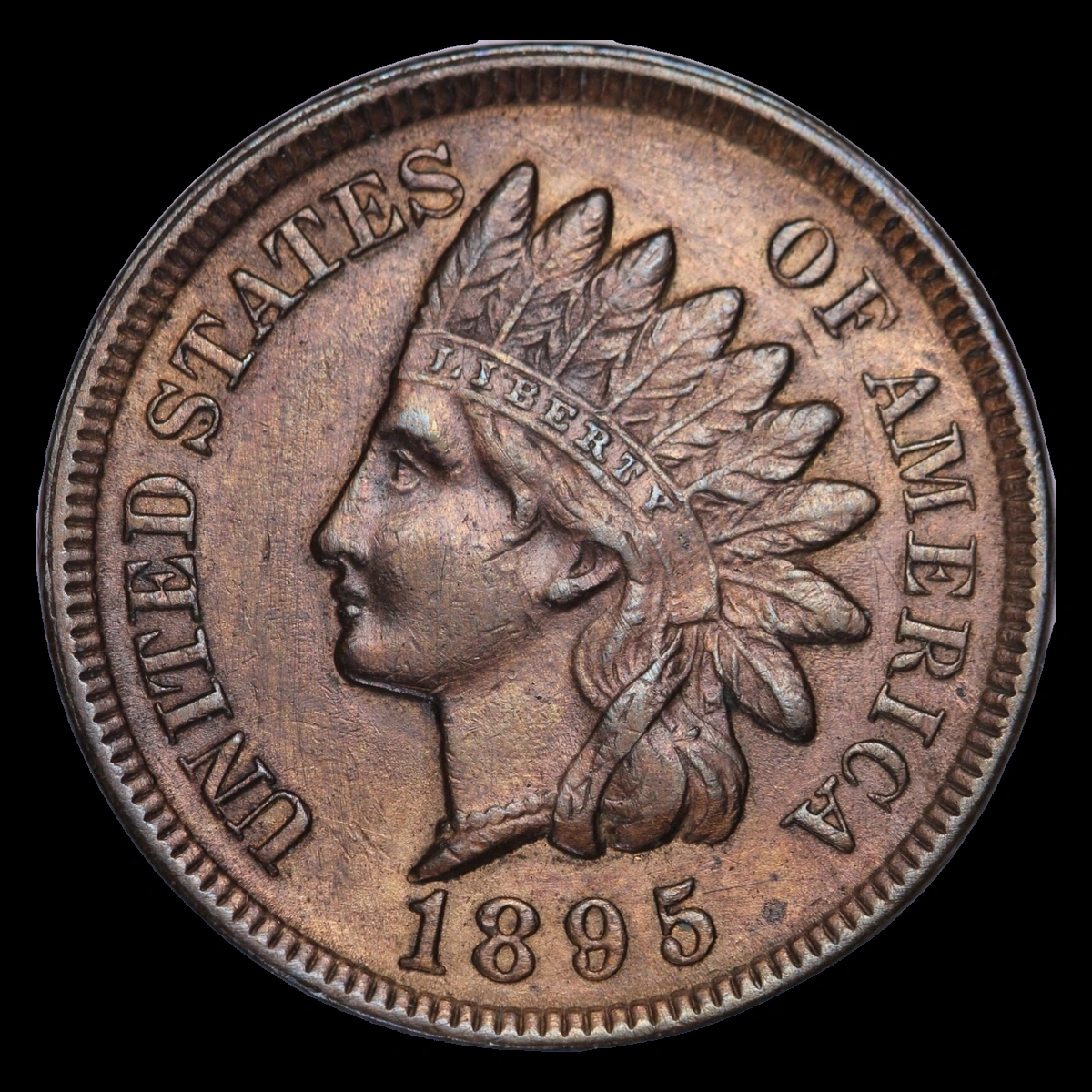
2. 1895 Penny A Tiny 5 Tip Appears in the Hair: Misplaced Date Error
On Snow-29, the top of the lower hair curl contains a small straight-topped fragment of 5. It originated when the date punch touched the die outside its intended location.
How to Identify
Keep the entire lower curl in the magnified view and compare its top with the Snow-29 photograph. The fragment need not form a complete numeral, but its raised shape and exact placement must agree.
A normal strand follows the expected hair design, while a scratch cuts into the surface and may push copper beside it. Neither automatically identifies the misplaced 5.
What It’s Worth
Matched Snow-29 examples are estimated at $25–$2,500 as whole coins. Preservation and how clearly the fragment survives guide the comparison.
A 1908 misplaced date graded MS65 Red and Brown has a recorded $1,187 eBay result from 2021. Its different date, location, and grade do not establish a Snow-29 price.
3. 1895 Penny A Raised Patch Connects to the Edge: Rim Breaks and Cuds Error
A missing section of a die can let metal rise where ordinary design should appear. The recorded reverse cud lies along the lower-left rim from about 7:15 to 8:15.
How to Identify
Inspect the patch’s rim connection and surface for added metal, a seam, or folding. A genuine die break should merge with original struck detail rather than look attached afterward.
Later-stage Snow-1 coins have separate front border damage from 9:30 to 11:30. That narrower border feature should not be described as the same broad reverse cud.
What It’s Worth
Authenticated 1895 rim breaks are estimated at $25–$1,000. Small border flaws generally require a more modest comparison than a substantial clear cud.
An 1866 reverse-cud cent graded MS62 Brown sold for $504 in March 2021. That other-year unworn example provides context, while the 1895 coin’s date variety and condition remain part of one overall price.
4. 1895 Penny A Curved Gap Interrupts the Rim: Clipped Blank Error
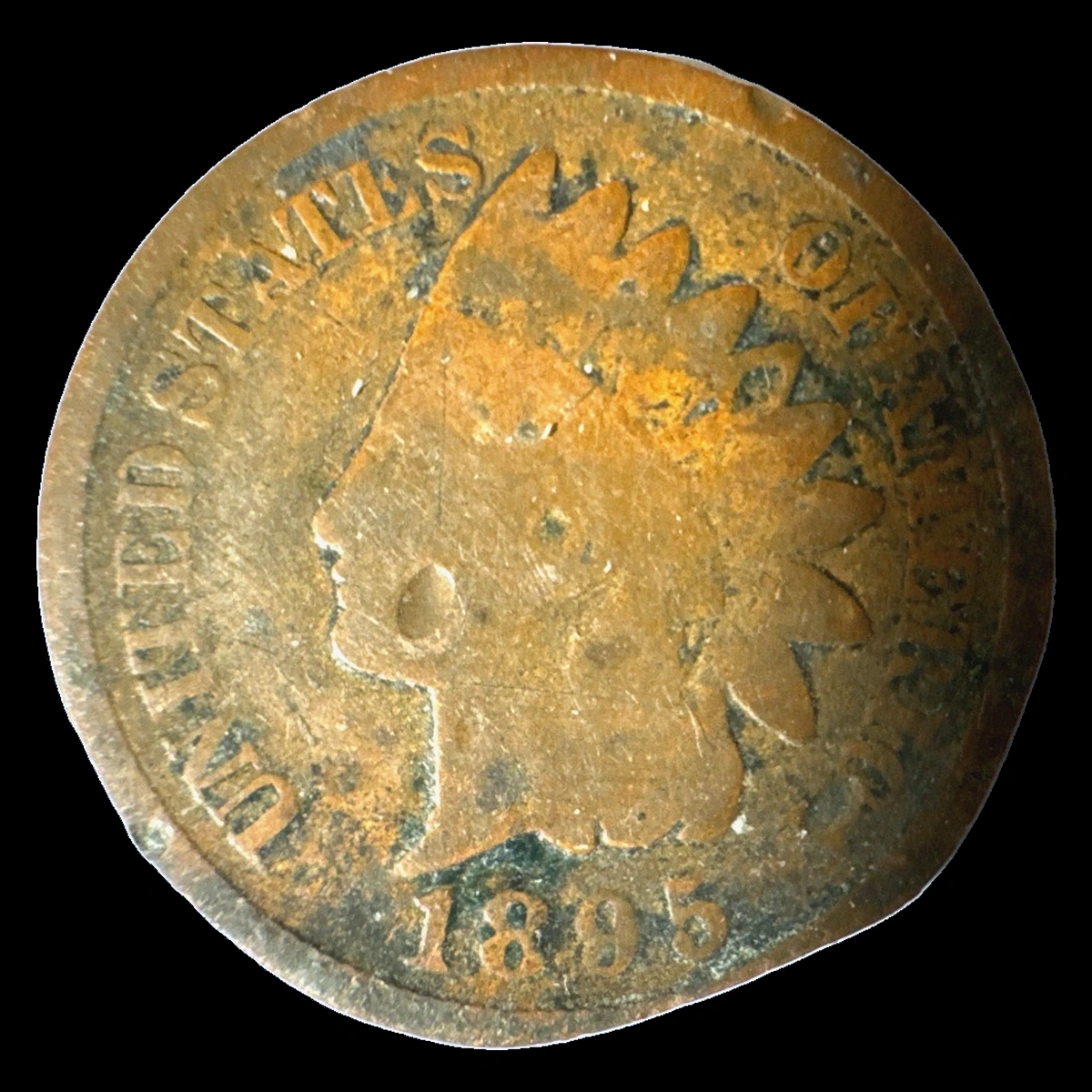
A blanking punch overlapping a prior hole in the strip can produce a disc with a curved section missing. The design then forms around that pre-existing gap.
How to Identify
Examine both ends of the curve for natural rim transitions and inspect the exposed edge for saw grooves or a fresh lip. Possible weakness opposite the gap is supporting evidence, not a complete test.
The GreatCollections ANACS example lists 3.14 grams, slightly above the normal 3.11-gram standard. That recorded number cannot prove missing metal by itself or serve as a target weight for other clips.
What It’s Worth
Genuine curved clips are estimated at $40–$1,200. The original gap, preservation, and any cleaning or corrosion determine the useful comparison.
A 1910-S Lincoln cent clip graded MS63 Red and Brown sold for $134 in March 2025. Its later date and different design make it a mechanism comparison, not a sale for the reported 1895 ANACS coin.
5. 1895 Penny Blank Metal Borders an Incomplete Image: Off-Center Strike Error
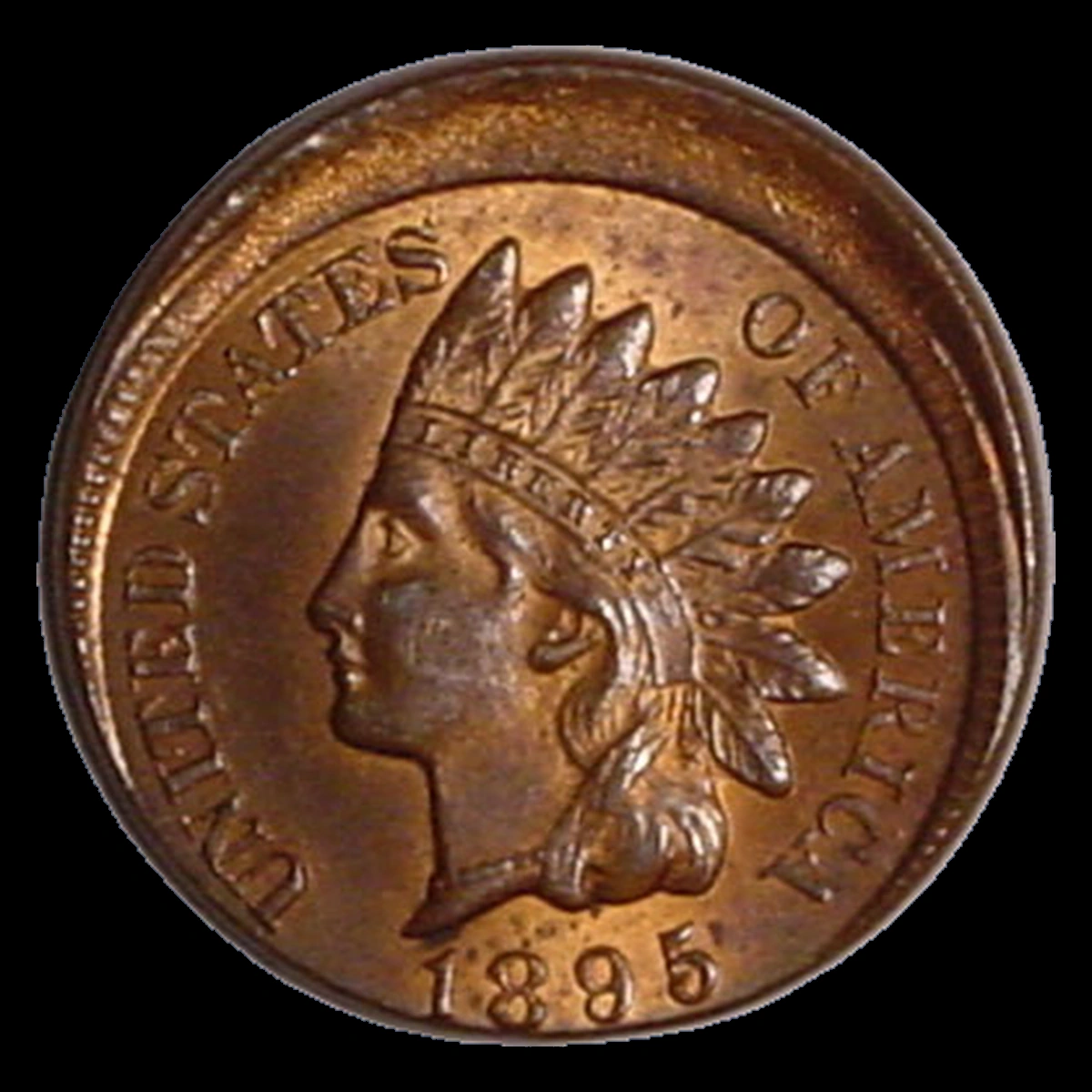
The planchet can sit partly outside the dies’ center, leaving unused metal opposite missing design. The documented NGC AU58 1895 example has a 10% displacement.
How to Identify
Read the actual full date and compare both faces with the same misplaced blank. A shifted image on one face opposite a centered one may involve a misaligned die instead.
Inspect the unused crescent and edge for grinding or flattening. Its metal remains part of the disc, so a simple off-center strike does not necessarily reduce the weight.
What It’s Worth
Genuine dated off-center cents are estimated at $150–$2,500. Readability, amount of displacement, and original surfaces matter together.
The NGC AU58 10% example sold for $231.80 at Heritage on March 23, 2026. Its very slight circulation wear should not be transferred to a heavily worn coin with a similar shift.
6. 1895 Penny Both Impressions Miss the Center: Double Strike Error
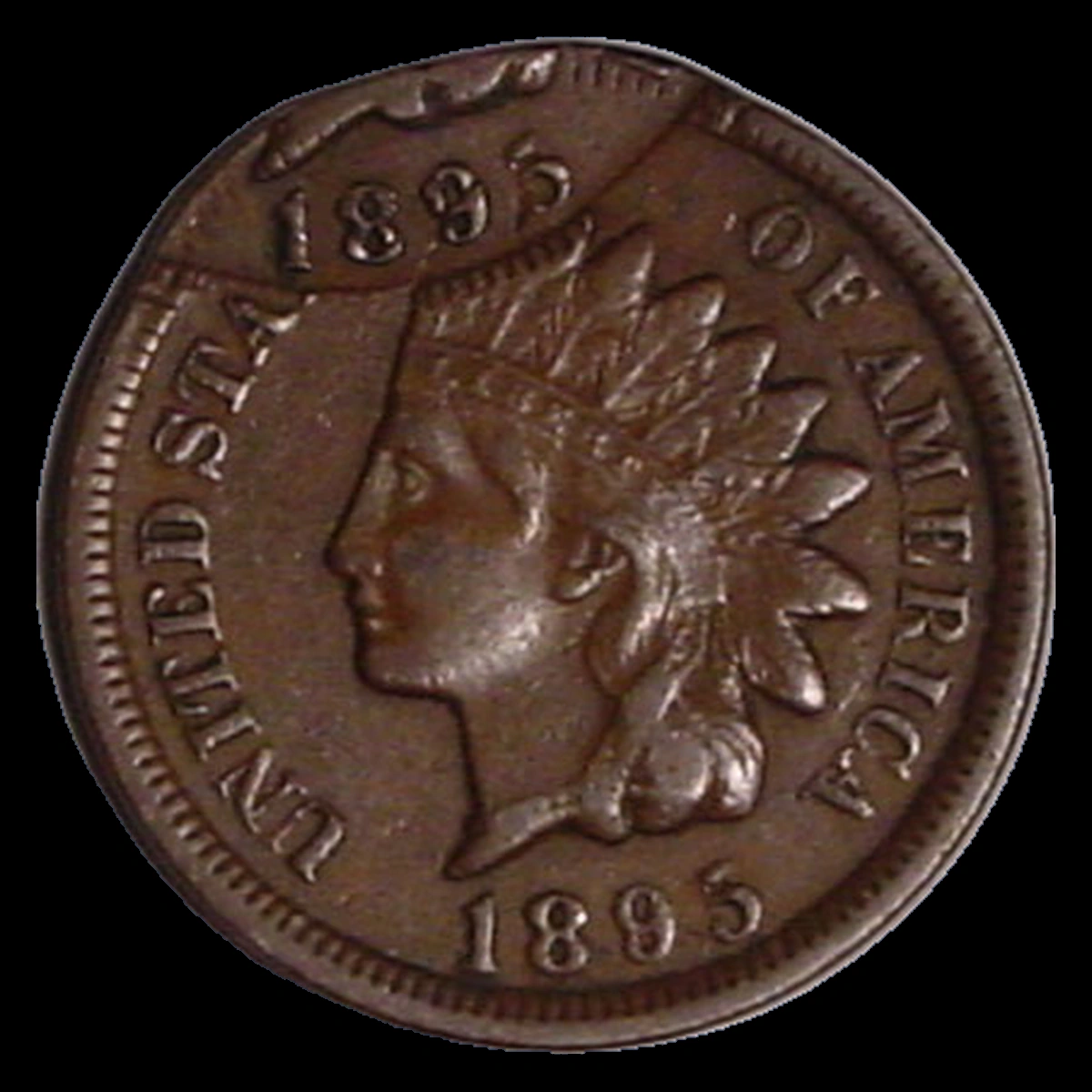
The Charmy Harker collection’s PCGS AU50 Brown cent has reported off-center strikes of 15% and 90%. The coin moved between blows, allowing two design positions to survive.
How to Identify
Trace the portrait, date, and letter groups belonging to each impression and compare both faces. Where they overlap, the later strike can flatten earlier detail.
The 90% figure describes how much of the later blow missed the coin, not how much metal broke away. A separate example with a 75% second strike has its own measurements and must not be merged into this sequence.
What It’s Worth
Identifiable 1895 double strikes are estimated at $300–$5,000. The clarity of both images, surface quality, and wear influence the whole-coin value.
The collection photograph supplies no completed auction result. An 1899 cent with an 85% off-center, one-sided second impression sold for $632.50 in July 2007; its different strike details are not established for the 1895 piece.
Conclusion
The position of a small extra mark is often the best starting point on an 1895 cent. A date remnant, hair-curl fragment, and raised border break each need their own comparison.
The $15–$5,000 estimates include ordinary coins, Proofs, and repeated strikes. Keep finish and grade attached to each recorded price, and evaluate a double strike as one coin rather than adding two off-center estimates.