Rare 1987 Nickel Errors (List & Pictures)
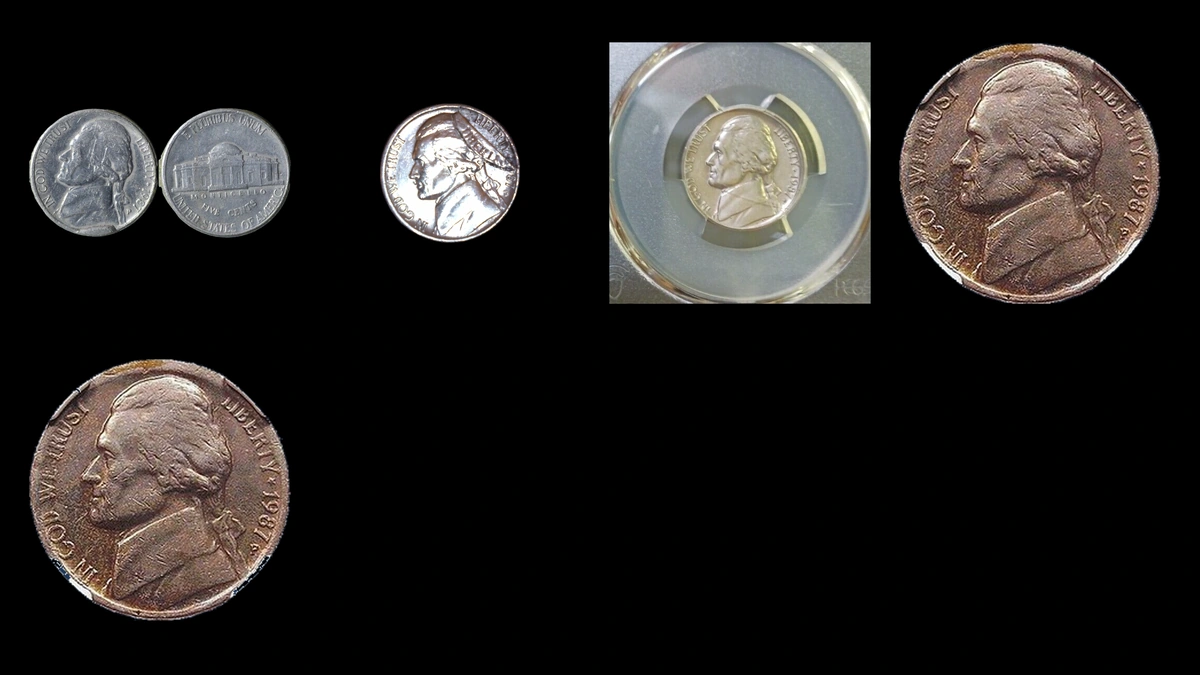
Two nickels can weigh 3.7 grams and still represent different mint errors. Among 1987 Jefferson nickel errors, one documented lightweight coin was struck on a rolled-thin blank and another on an unidentified foreign blank.
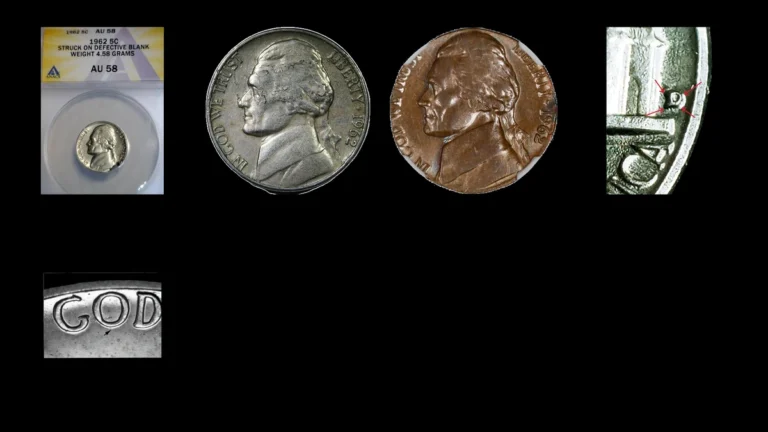
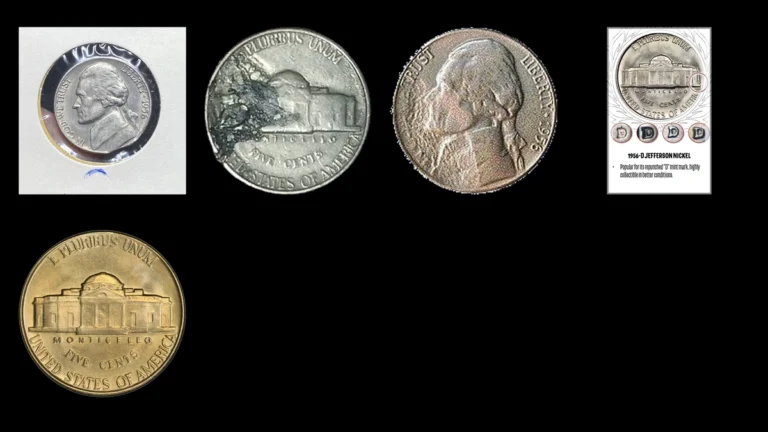
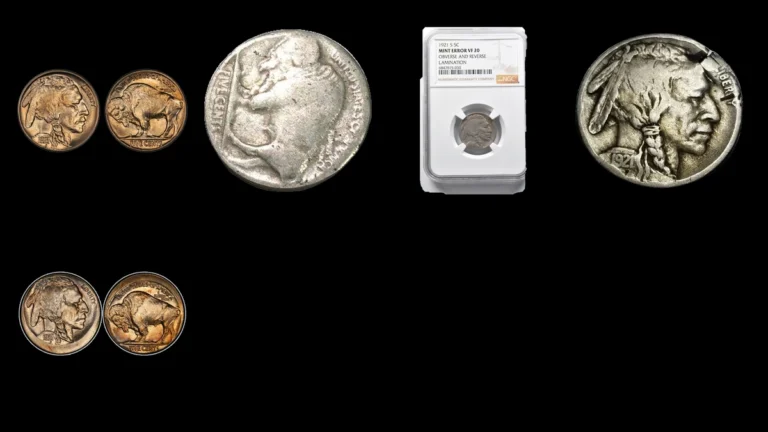
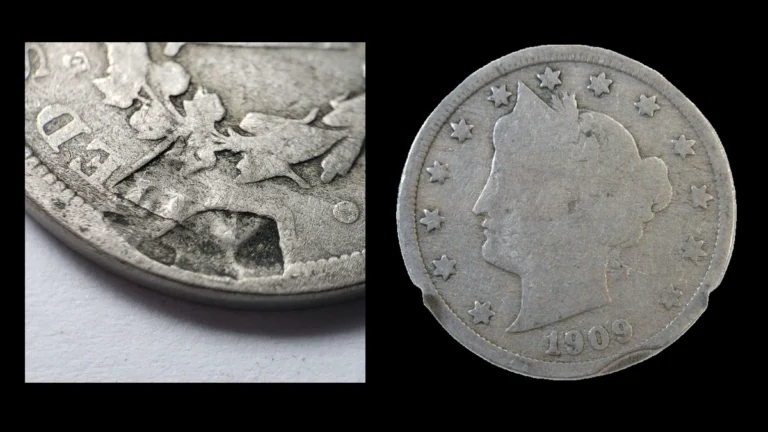
Estimated values run from $3 to $3,000, with a nickel cut from quarter metal reaching $1,753.75 in August 2010. Start with the mintmark and raised details, then compare the complete designs, outline and edge construction.
| Clue | Error category | Estimated range |
|---|---|---|
| A second D outline | Repunched mintmark | $10–$150 |
| Extra portrait or lettering contours | Doubled die | $10–$150 |
| Raised lines or rim-connected patch | Die crack or cud | $3–$300 |
| An attached thin metal flap | Retained lamination | $15–$200 |
| Unevenly formed detail across one face | Tilted die | $25–$300 |
| Complete design within an expanded border | Broadstrike | $25–$300 |
| Bare metal beside partly missing design | Off-center strike | $25–$500 |
| Large impressions overlap | Double strike | $50–$1,500 |
| Low weight and thin nickel metal | Rolled-thin planchet | $50–$300 |
| Nickel design on another country’s blank | Foreign planchet | $300–$1,500 |
| A layered edge on a nickel-sized coin | Wrong metal stock | $600–$3,000 |
1. 1987 Nickel Another Outline beside the D: Repunched Mintmark Error
The D below the date is the area to examine for the reported Denver repunched mintmark. A second placement of the mintmark punch in the die could leave portions of an earlier D visible beside the final one.
The broad 1987 reports supply neither a specific catalog number nor a confirmed direction of overlap. Those details must come from a match to the actual pattern.
How to Identify
Trace the suspected extra curve to see whether it resembles part of a second D. An isolated bump, a shadow or a damaged letter edge is less persuasive.
Check neighboring date and portrait details for similar flat ledges from movement during striking. That effect can alter the mintmark without involving a second punch into the die.
What It’s Worth
$10–$150 is a conditional estimate for clearly confirmed repunching. Strong separation and attractive surfaces support better comparisons than a worn, indistinct outline.
No specific cataloged specimen sale is established here. Flat doubling or later alteration should not receive the same variety premium.
2. 1987 Nickel Extra Contours on Letters or the Portrait: Doubled Die Error
Philadelphia and Denver reports include front-side features around the date, LIBERTY, IN GOD WE TRUST and Jefferson. Reverse reports concern MONTICELLO, FIVE CENTS and E PLURIBUS UNUM.
These are areas for separate comparisons, not a claim that every feature appears on one coin. A doubled die already carries its extra detail and can transfer it in a single blow.
How to Identify
Choose one clear letter or contour and compare it with an ordinary coin of the same mint. Follow genuine raised metal rather than a bright border that moves with the light.
Rounded extra outlines differ from low, flat mechanical shelves. General thickness can also come from die wear, and a front-side pattern does not establish a reverse variety.
What It’s Worth
$10–$150 is an estimate for confirmed die-made doubling. The recognizable pattern and condition matter more than the number of doubled-looking areas mentioned in a listing.
A Full Steps designation describes the preservation of Monticello’s steps. It does not authenticate a doubled die or create an additional doubling premium.
3. 1987 Nickel Raised Lines or an Edge Patch: Die Crack and Cud Error
Thin raised lines come from coin metal entering cracks in a die. A larger piece missing at the die’s edge produces a rim-connected raised patch called a cud.
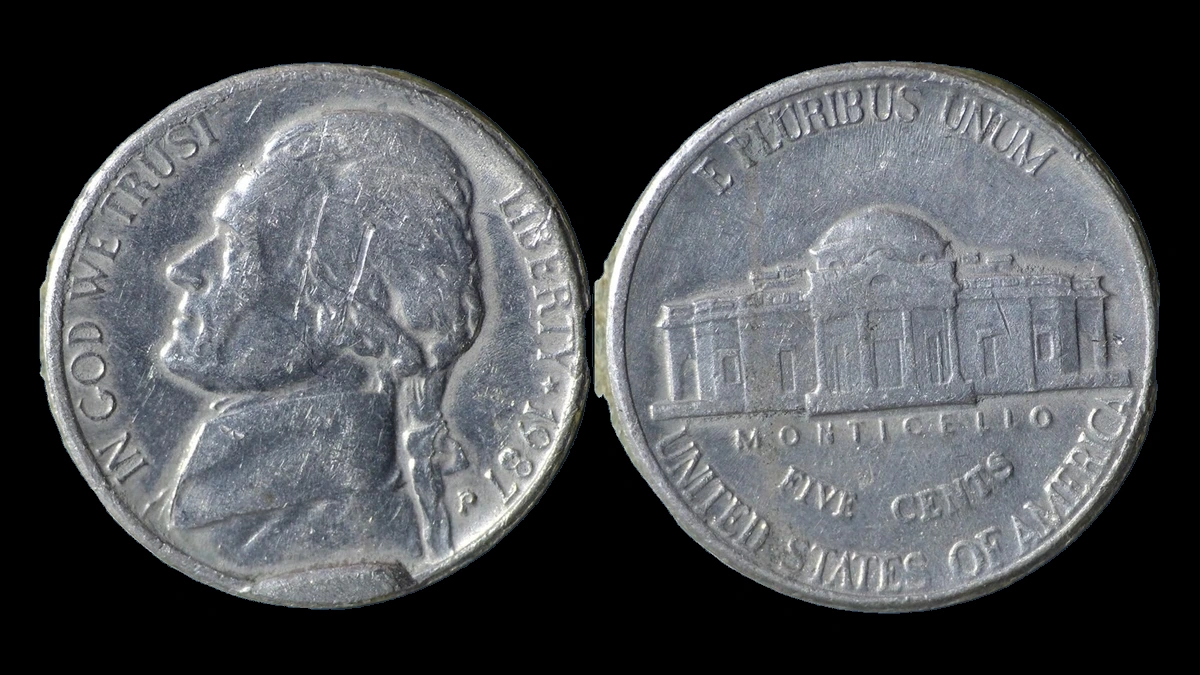
A documented 1987-P cud was graded PCGS MS64. Its identification does not place every 1987 crack or rim break on the same face or at the same clock position.
How to Identify
At a proposed cud, inspect the neighboring edge for a dent that pushed metal over the face. The patch should fit a die break rather than a folded rim or attached material.
For a narrow line, establish that it rises above the original surface. A scratch with a sunken center is a different feature even if metal stands up along its sides.
What It’s Worth
$3–$30 is estimated for small cracks, with $30–$300 for clear rim-connected breaks. The PCGS MS64 Philadelphia cud sold for $57 in May 2021.
That direct example shows that an unworn cud need not be exceptionally expensive. The size and clarity of the break still have to be considered alongside the surrounding surfaces.
4. 1987 Nickel A Metal Flap Remains Attached: Retained Lamination Error
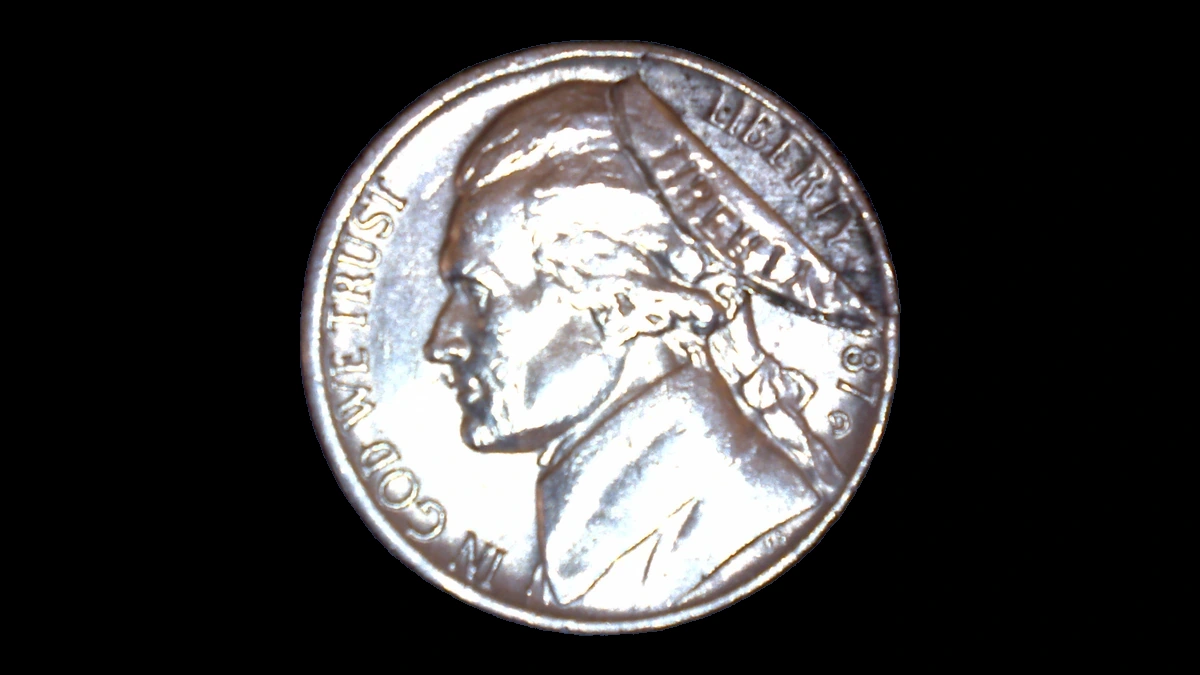
A reported 1987-D has a thin layer folded above its front surface. It is described as a retained lamination because the separated metal remains connected to the coin.
The folded position does not establish when the flap bent. Later handling can change the position or size of an original metal separation.
How to Identify
Study the attachment and visible layered boundary without lifting or repositioning the flap. Original internal separation should be distinguished from a neat cut or an object added to the surface.
Normal nickels have a uniform copper-nickel alloy, rather than bonded sheets like a quarter. A genuine lamination is a split within that alloy, and its folded appearance alone does not prove it was struck down at the Mint.
What It’s Worth
$15–$200 is an estimate for a genuine retained lamination with a stable, visible connection. It is not a recorded sale price for the photographed Denver coin.
No extra premium is assumed for an unproven fold before striking. Later tearing or bending may reduce appeal even when the original separation was mint-made.
5. 1987 Nickel Detail Strength Changes across the Face: Tilted Die Error
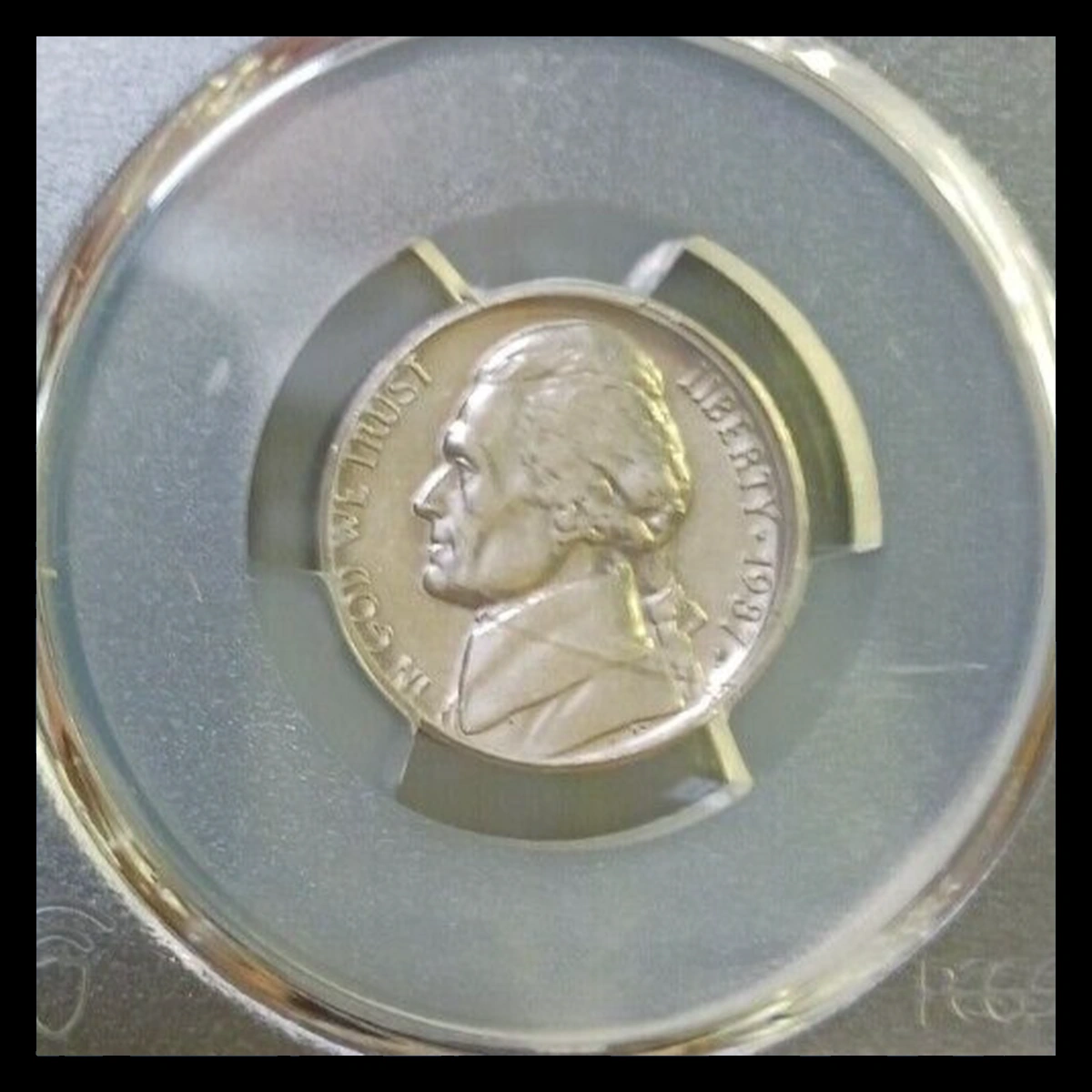
A certified 1987-P was struck with a tilted, misaligned die, producing uneven contact across the blank. Its PCGS label also notes cleaning and AU detail, meaning the coin retains only light wear but has altered surfaces.
How to Identify
Compare stronger and weaker design areas with the changing rim height. The arrangement should fit angled die contact rather than detail flattened by later pressure.
View the edge on a soft support without pressing the coin flat to check for bending. A tilted die concerns the angle of contact, not rotation between the front and reverse designs.
What It’s Worth
$25–$100 is estimated for recognizable worn or cleaned examples, rising to $100–$300 for clearer coins with better surfaces. The cleaned Philadelphia specimen sold for $32 on July 5, 2022.
That completed result should remain separate from a later offer price. The mint error and subsequent cleaning both contribute to the value of the same coin.
6. 1987 Nickel Complete Design inside a Wider Border: Broadstrike Error
The ANACS MS64 1987-P broadstrike is a specific unworn example of metal spreading beyond its usual outline. The collar, which normally surrounds the blank during striking, did not properly contain that outward movement.
How to Identify
Check that both faces preserve the intended design inside the expanded perimeter. Missing design beyond the blank instead calls for an off-center explanation.
For loose coins, the normal references are about 5 grams and 21.2 millimeters, with a plain edge. Measure the actual outline and inspect for crushed lettering, hammer marks or folds that could explain later widening.
What It’s Worth
$25–$150 is estimated for clear worn or marked broadstrikes, with $150–$300 for more attractive examples showing strong expansion. The ANACS MS64 1987-P sold for $53 in December 2011.
A 1999-P broadstrike graded PCGS MS63 brought $89 in March 2025. Neither record should be treated as the price of the separate 1987 repeated-strike coin below.
7. 1987 Nickel The Strike Covers Only Part of the Blank: Off-Center Strike Error
An NGC MS64 Philadelphia example is described as 35% off center. A different dealer specimen is 40% off center toward 12:30 with Jefferson upright.
Both involve a blank positioned partly outside the dies’ striking area. The empty crescent still contains metal, unlike an edge section missing from an incomplete blank.
How to Identify
Read the actual date before using a photograph from a mixed-year auction lot. Then compare both faces to see whether the lost design and bare area fit the same displaced blank.
Check that the unstruck area is original surface rather than flattened lettering. Keep the dealer coin’s 12:30 direction and 40% displacement separate from the 35% auction specimen.
What It’s Worth
$25–$200 is an estimate for recognizable off-center nickels, with $200–$500 for particularly attractive examples retaining a clear date. Preservation can matter as much as the amount of displacement.
The 35% 1987-P appeared in a five-coin lot that sold for $138 in August 2010. That total is not its individual sale price.
As an individual different-year comparison, a 1999-D nickel struck 65% off center sold for $75 in September 2024. It illustrates why a larger percentage does not guarantee a larger price.
8. 1987 Nickel One Large Impression Crosses Another: Double Strike Error
On one broadstruck 1987-P, a later rim impression crosses the earlier WE, with a broad unstruck area near five o’clock. Those intersections provide evidence that the coin received more than one blow.
A separate NGC AU58 example has an off-center second strike. Another dealer description specifies an 80% second strike toward three o’clock, with the date and mintmark in that later impression.
How to Identify
Follow substantial surviving letters, rims or portrait outlines from each impression. A vaguely thick edge around a single letter cannot demonstrate the same sequence.
Keep each coin’s photographs with its own description, especially the 80% and three-o’clock details. They should not be assigned to the AU58 auction specimen without a demonstrated match.
Inspect both faces and the changed outline for later flattening or cuts. Do not try to reshape an expanded coin to make it round.
What It’s Worth
$50–$500 is estimated for clear ordinary combinations, with $500–$1,500 for stronger displacement and attractive preservation. These figures cover each complete coin without adding a separate broadstrike maximum.
The AU58 off-center double strike sold for $159 in March 2025. The older broadstruck example appears in 2004 auction records at $34 and $38, showing the wide range within repeated-strike errors.
9. 1987 Nickel A Thin, Lightweight Nickel: Rolled-Thin Planchet Error
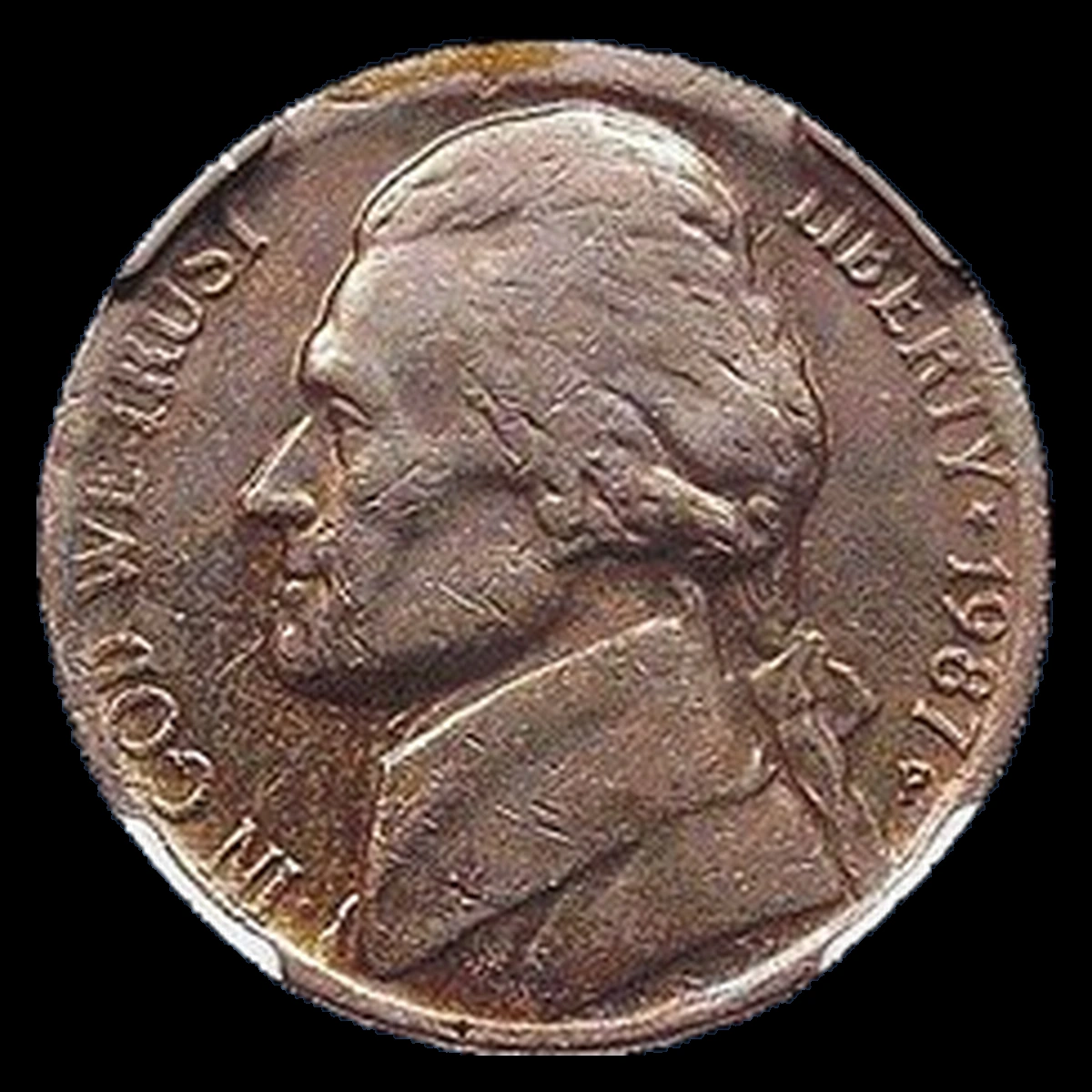
The documented 1987-D rolled-thin example weighs 3.7 grams and is graded PCGS AU50. Its blank came from strip rolled thinner than intended, leaving too little metal before the blank was cut.
How to Identify
Compare thickness, diameter and weight with an ordinary nickel, then examine the finished design for metal removed afterward. Parallel grinding marks, filed edges or porous chemical damage can explain low weight without a thin original strip.
No exact thickness is supplied for the documented specimen. Its 3.7-gram weight also matches a separate foreign-blank coin, so composition and the certification evidence remain essential.
What It’s Worth
$50–$150 is an estimate for clear circulated rolled-thin pieces, with $150–$300 for attractive unworn examples. The PCGS AU50 Denver coin sold for $73 on September 16, 2024.
AU50 denotes circulation wear. Neither a foreign-blank attribution nor its higher estimate follows automatically from another coin weighing the same 3.7 grams.
10. 1987 Nickel A Nickel Design on a Foreign Blank: Wrong Planchet Error
A separate 3.7-gram 1987-D is identified as struck on a foreign blank and graded NGC MS61. It received the American nickel design before any design of the foreign denomination.
The supplied listing does not name the country, denomination or alloy. A matching weight from a foreign coin catalog would not establish those missing details.
How to Identify
Compare the NGC MS61 foreign-blank record with the separate PCGS AU50 rolled-thin example. Their equal weights do not make their blanks or minting problems identical.
The metal, dimensions and strike must support the proposed wrong blank after filing and chemical thinning are excluded. A plain edge by itself cannot identify a foreign country.
What It’s Worth
$300–$1,500 is an estimated range for the reliably identified foreign-blank type. No completed price for the recorded 1987-D is supplied here.
A 1995-P nickel on a dime blank sold for $336 in July 2022. That domestic wrong-planchet example offers context but cannot establish the unnamed foreign blank’s identity or value.
11. 1987 Nickel Gray and Copper-Colored Edge Layers: Wrong Metal Stock Error
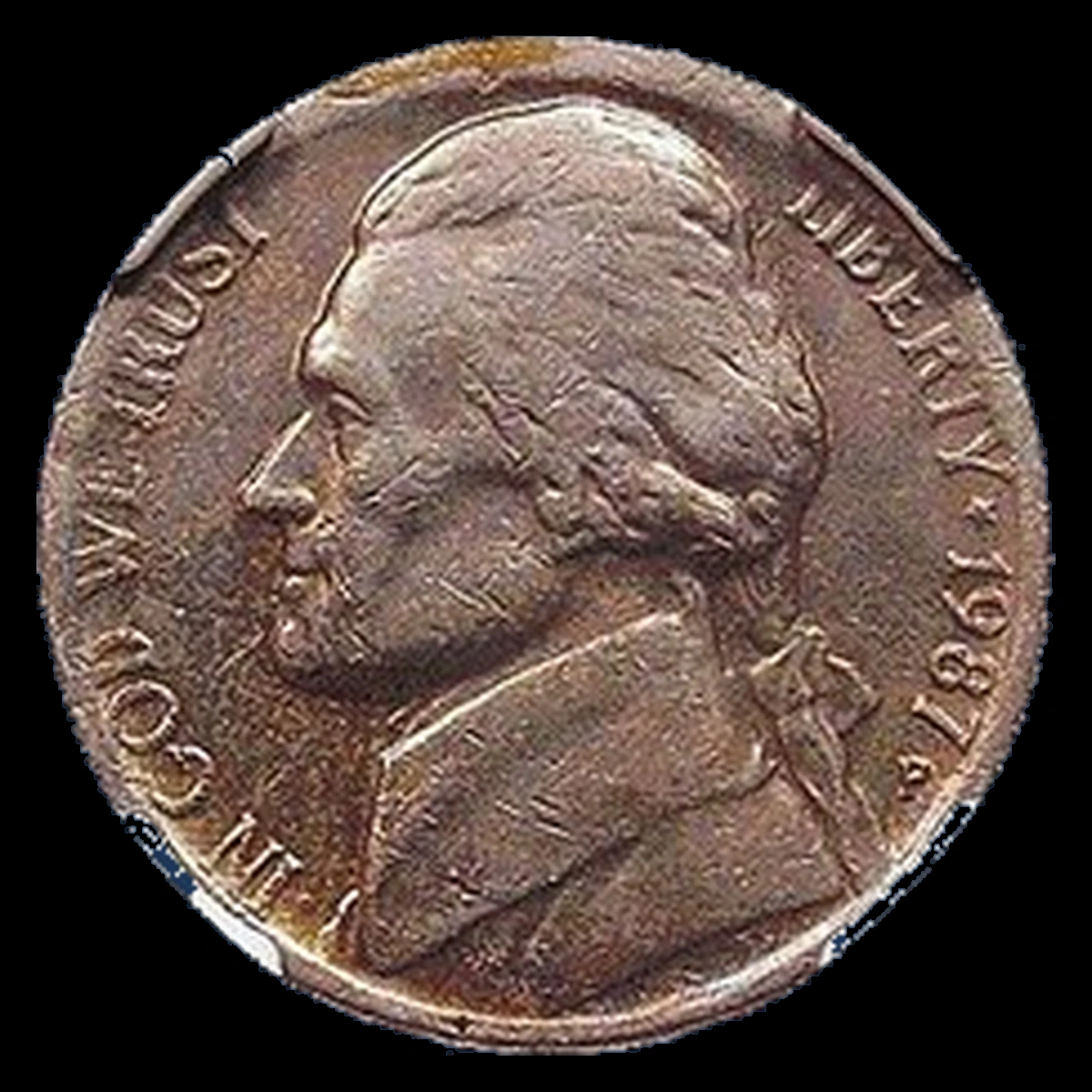
A recorded 1987-P has a nickel-sized outline but the layered construction of quarter stock. The wrong strip was used to cut nickel blanks, rather than an entire quarter blank being fed into the nickel press.
The NGC AU58 example weighs 4.22 grams and has weak left-side rims. Its copper-colored and gray edge bands provide more useful material evidence than surface color alone.
How to Identify
Examine the exposed edge layers and compare the nickel-sized diameter with the actual weight. An ordinary nickel has uniform alloy throughout, while a full quarter blank represents a different size and error.
Check both faces for added plating, staining or chemical damage that might imitate the colors. A specialist can assess composition without cutting into the coin, and weak rims alone do not establish the metal.
What It’s Worth
$600–$3,000 is an estimated range for a clearly identified wrong-stock nickel. An AU58 example brought $1,753.75 in August 2010, while another AU58 auction record shows $1,175 in October 2012.
The Heritage clad-stock record documents the 4.22-gram specimen. These values depend on demonstrated layered metal, not merely a discolored nickel.
Conclusion
The unusual edge and low-weight examples show why one measurement rarely completes an identification. A rolled-thin nickel, a foreign blank and a nickel-sized disc cut from quarter stock each need their own material evidence.
Keep price records equally specific: the five-coin lot total belongs to the lot, and a cleaned error retains its surface problem. Clear photographs of both faces and the edge help connect the correct comparison to the actual coin.