Rare 1793 Penny Errors (List & Pictures)
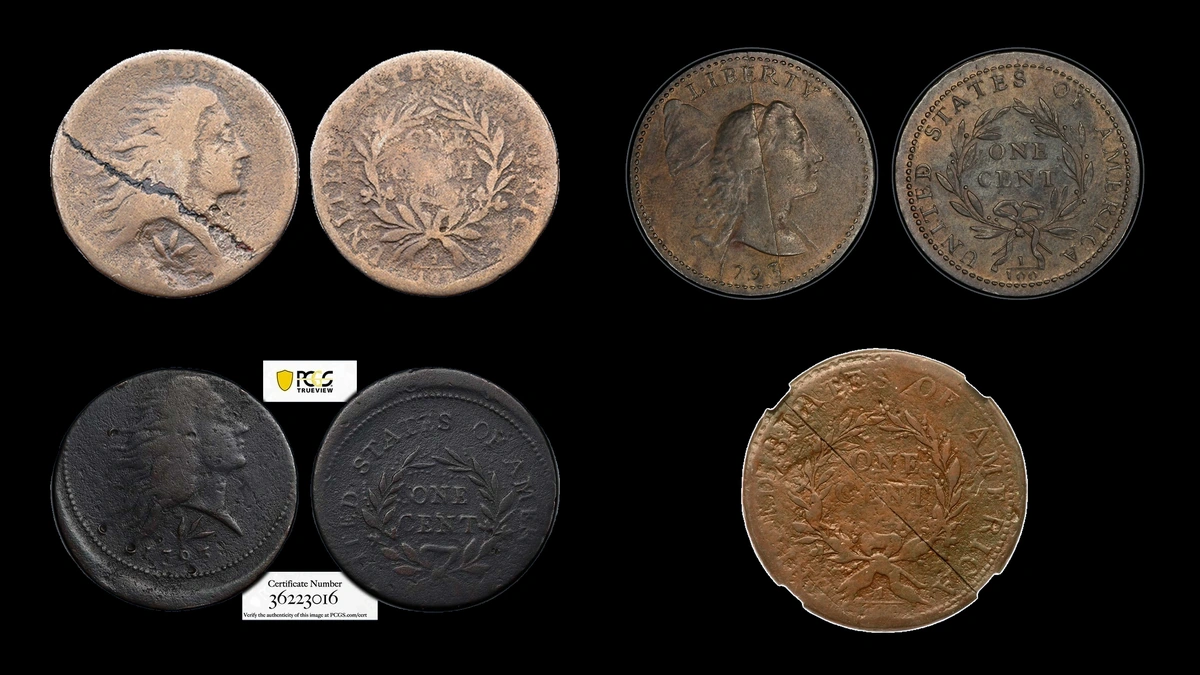
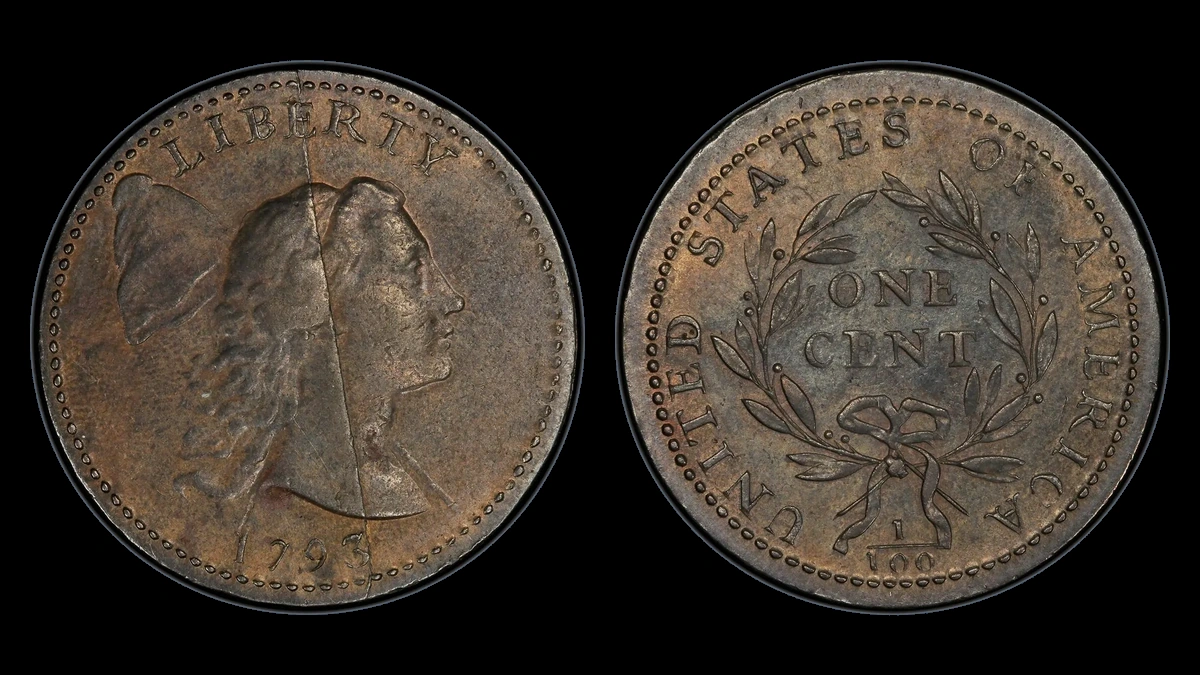
A lightly worn Chain cent with cracks and clashes sold for $132,000 in August 2020. Its scarce AMERI. reverse and preservation contribute heavily to that price.
Estimated whole-coin values for 1793 penny errors range from $1,000–$150,000. Identify the Chain, Wreath, or Liberty Cap design first, then examine the edge, surface, and placement of both designs.
| Observation | Category | Estimated value |
|---|---|---|
| Missing edge segment | Reported clip | $3,000–$30,000 if confirmed |
| Unexpected smooth edge | Omitted Wreath edge decoration | $10,000–$60,000 |
| Peeling strip near STATES | Lamination | $2,000–$40,000 |
| Raised lines or transferred shapes | Die cracks, cuds, or clashes | $1,000–$150,000 |
| Displaced or repeated design | Off-center or double strike | $5,000–$60,000 |
| Sunken backward impression | Brockage | $15,000–$80,000 if confirmed |
Original large cents began near 13.48 g and roughly 27–29 mm, depending on design. Match the surviving edge decoration or lettering to the specific variety instead of assuming all 1793 edges are alike.
1. 1793 Penny Part of the Copper Outline Is Missing: Reported Clip Error
The supplied year guide reports clipped blanks without identifying a particular 1793 design or specimen. An original clip means the shortage existed before striking.
The blank punch may have overlapped a previous hole or the strip’s edge. A later cut can imitate the resulting outline.
How to Identify
Establish the large-cent type before examining the gap. A clipped half cent or modern copy does not document this error on an original large cent.
Inspect the gap for file marks, saw lines, or fresh exposed copper, together with the adjacent struck design. Any remaining edge treatment must fit the coin’s variety.
What It’s Worth
A confirmed worn 1793 large-cent clip has an estimated whole-coin value of $3,000–$30,000. Design, surface quality, and remaining detail strongly influence the result.
No specific 1793 clip sale is supplied. A heavily worn 1796 Draped Bust cent with a small clip and shallow flake sold for $408 including fees in January 2023, a different-date comparison.
2. 1793 Penny The Expected Edge Decoration Is Missing: Plain-Edge Wreath Cent Error
A documented Wreath cent has a plain edge where its variety should carry vine-and-bars decoration. The auction attributed this to a missed edge-preparation step, supported by normal size and weight.
How to Identify
Photograph the whole edge in overlapping views and look for surviving decoration or removal marks. One smooth patch can reflect ordinary wear rather than a completely omitted treatment.
Some legitimate Wreath varieties have lettered edges instead of vine-and-bars decoration. Neither normal treatment should be confused with an untreated plain edge.
The same coin was also double struck. Preserve the association between its edge and both face photographs without removing a certified example from its holder.
What It’s Worth
A confirmed original plain-edge Wreath cent has an estimated whole-coin range of $10,000–$60,000. Correct variety identification and confidence in the edge examination are essential.
The NGC XF45 Star example sold for $32,900 in January 2014. That price includes its double strike and condition; there is no separate transaction for the missing decoration.
3. 1793 Penny A Thin Strip Crosses the Upper Wreath: Lamination Error
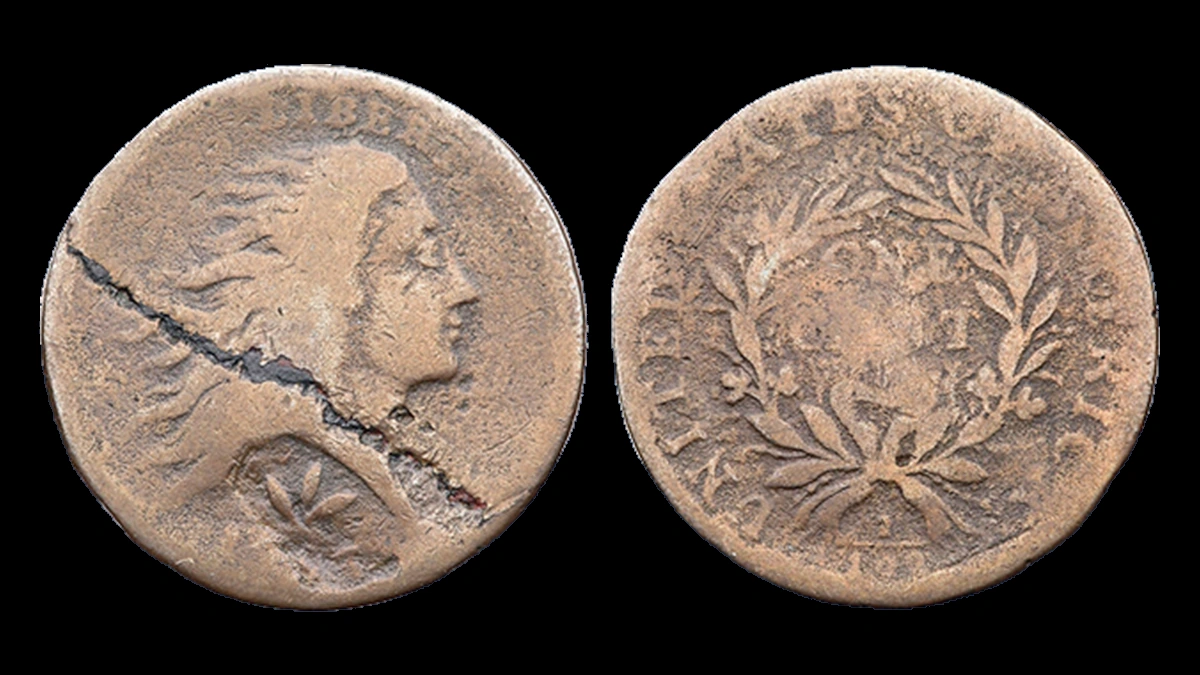
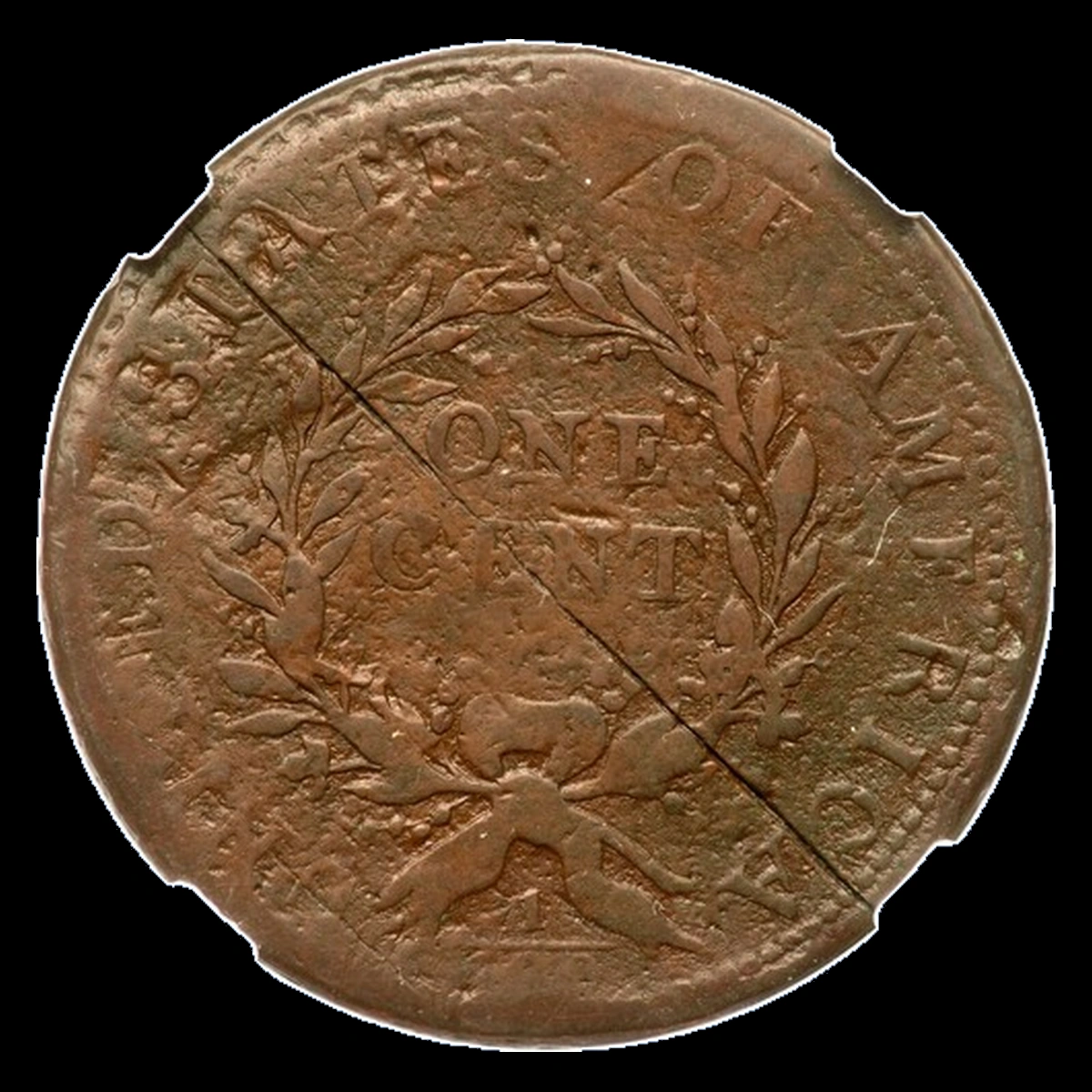
A recorded S-9 Wreath cent has a separation through the top leaves and TE in STATES. The auction described the flaw as present when the coin was struck.
NGC graded the example AU50. Its reverse die had not yet developed a crack, and a separate rim bruise lies left of the fraction.
How to Identify
Follow the thin boundary from TE toward the leaves without disturbing any attached layer. Do not extend the supposed lamination to include the unrelated rim bruise.
This S-9 uses vine-and-bars edge decoration. Its local peeling strip is not evidence that the entire coin split into two thinner discs.
What It’s Worth
Estimated values are $2,000–$40,000, including roughly $2,000–$10,000 for worn examples and $10,000–$40,000 for attractive lightly worn coins. Much of the price belongs to the scarce first-year issue.
No completed sale is assigned here to the AU50 reference. Its identified flaw cannot be priced independently of the entire cent.
4. 1793 Penny Raised Lines or Small Rim Patches: Die Cracks and Cuds Error
A Chain cent has a reverse crack near the first T in STATES. The double-struck Wreath example instead has a crack through Liberty’s lower lip.
Another Wreath cent shows a narrow cud above IT in UNITED. The general Liberty Cap crack report needs its own evidence rather than a route borrowed from either earlier design.
How to Identify
Select the same design and follow the raised feature’s full path. A scratch or a split in the blank cuts into the copper instead.
For the Wreath IT cud, inspect the rim connection and exclude a dent pushing metal upward. That coin’s smoothed surface is a separate condition issue.
What It’s Worth
Estimated values range from $1,000–$150,000, with worn Wreath die-break examples around $1,000–$15,000. Scarcer designs and superior preservation occupy the higher tier.
The IT-cud Wreath coin was described as XF Details with smoothed surfaces and a catalog estimate starting at $4,000. That is an estimate, not a completed sale.
The Chain cent brought $132,000 in August 2020 at PCGS AU53. Its scarce AMERI. reverse and lightly worn preservation matter much more than a small crack alone.
5. 1793 Penny Chain or Wreath Shapes Appear near the Portrait: Die Clash Error
Dies that meet without a blank can transfer portions of their designs to each other. Subsequent coins then receive the unintended traces.
Chain descriptions locate marks near the mouth, chin, neck, and below the bust. A separate lettered-edge Wreath example has traces below the neck and above the sprig.
How to Identify
Compare suspected Chain marks with actual chain-link shapes. A Wreath coin requires its own opposite-design comparison rather than a chain outline.
Follow a recognizable transferred fragment under side lighting. Faint scratches without a design match should not be labeled clashes.
What It’s Worth
Estimated whole-coin values are $1,500–$150,000, with worn examples around $1,500–$20,000. Scarcer types or unusually strong preservation can bring substantially more.
The PCGS AU53 AMERI. Chain cent sold for $132,000 in August 2020.
It is the same cracked coin discussed above, not another sale to add to its value.
6. 1793 Penny Bare Copper beside a Shifted Design: Off-Center Wreath Cent Error
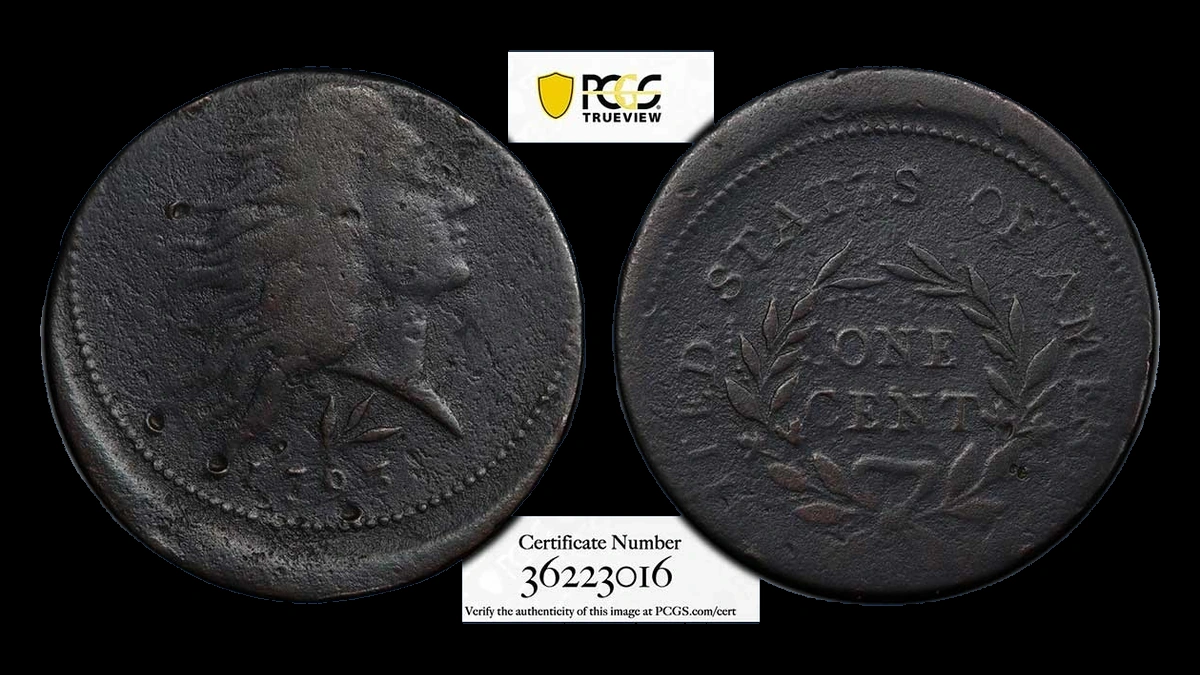
A published illustration shows a Wreath cent described as 10% off-center. The supplied text establishes neither a clock direction nor a certified grade.
How to Identify
Compare both designs against the same outline to establish one displaced blank. An unequal border on only one face can have another cause.
Examine the transition to unstruck copper for grinding or removed lettering. Identify the surviving date and full design before accepting an original 1793 attribution.
What It’s Worth
Estimated values are $5,000–$50,000, including approximately $5,000–$25,000 for recognizable worn examples. Better preservation and especially clear displacement support stronger comparisons.
No sale is assigned to the illustrated 10% piece. An 1808 Classic Head cent described as AU55 and 30% off-center sold for $6,462.50 in February 2018, offering a different-design comparison.
7. 1793 Penny Two Fractions Survive on the Back: Double Strike Error
The documented double-struck Wreath cent retains one fraction in the main design and another below the right ribbon. Other repeated details appear at the neck, LIBERTY, and reverse border.
How to Identify
Trace the two fractions separately, then check that other displaced details fit the same sequence. The lower-lip crack is a die feature and does not itself prove another blow.
NGC’s discussion of double strikes distinguishes repeated blows on a coin from design doubling already present in a die. Keep the actual overlapping impressions visible when comparing this example.
What It’s Worth
A recognizable Wreath double strike has an estimated whole-coin value of $10,000–$60,000. Wear, surfaces, and readable overlaps influence the comparison.
The XF45 Star specimen brought $32,900 in January 2014. This is the same plain-edge coin described earlier, so the edge error must not receive another copy of the full auction amount.
8. 1793 Penny A Backward Design Is Sunken into the Copper: Reported Brockage Error
A struck coin can impress its raised design into a fresh blank, leaving a recessed mirror image. This minting error is called a brockage.
The early-cent reference records an observed Chain example and another historical 1793 report. The second record’s design needs separate confirmation.
How to Identify
Identify the normal face before selecting a comparison for the backward impression. Do not assign Wreath or Liberty Cap to an incompletely described historical report.
Confirm both reversal and depth with angled light. Later pressure between coins can imitate a mirror image and requires examination of the ordinary face and edge for damage.
What It’s Worth
A confirmed, clearly identified 1793 large-cent brockage has an estimated value of $15,000–$80,000. Type, condition, and completeness are major factors.
No sale is assigned to either historical report. A dateless brockage attributed as a 1796 Draped Bust cent, graded VF35 with a backward wreath, sold for $5,280 in December 2018.
Conclusion
The design and correct edge treatment come before error attribution on a 1793 cent. A plain edge has meaning only after its expected decoration is established, and a clash must match the appropriate chain or wreath design.
Several features can share one coin and one price. Keep the $32,900 double-struck plain-edge Wreath and $132,000 cracked, clashed Chain examples intact as individual condition comparisons.