Rare 1963 Nickel Errors (List & Pictures)
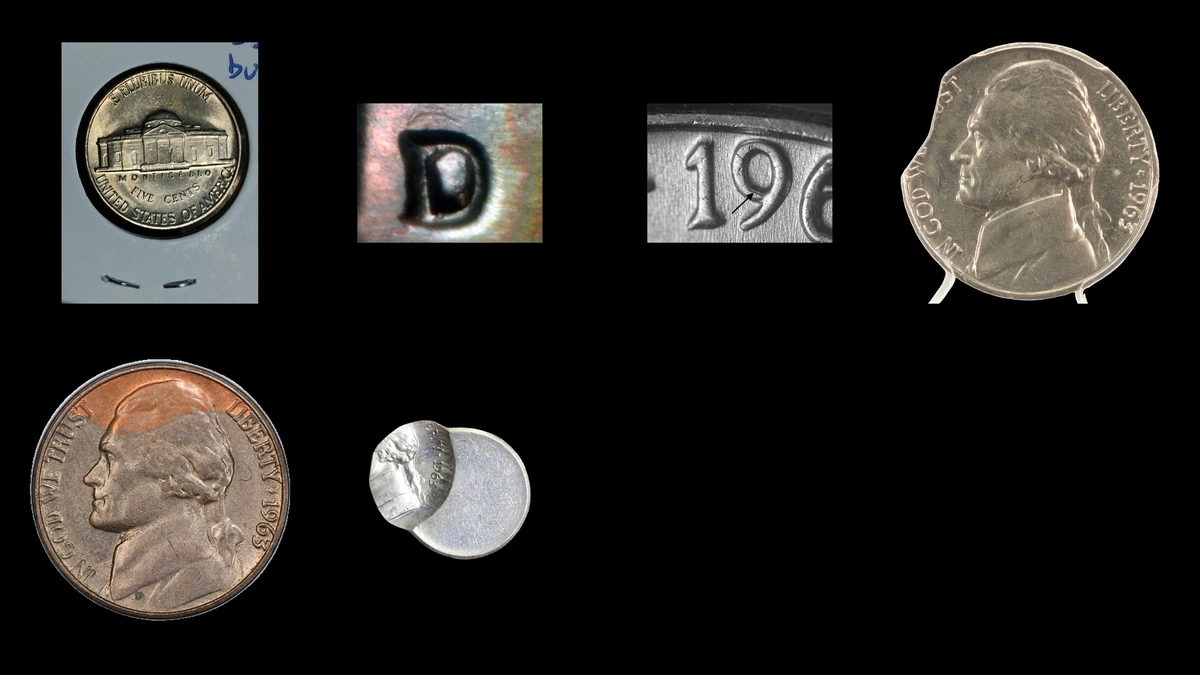
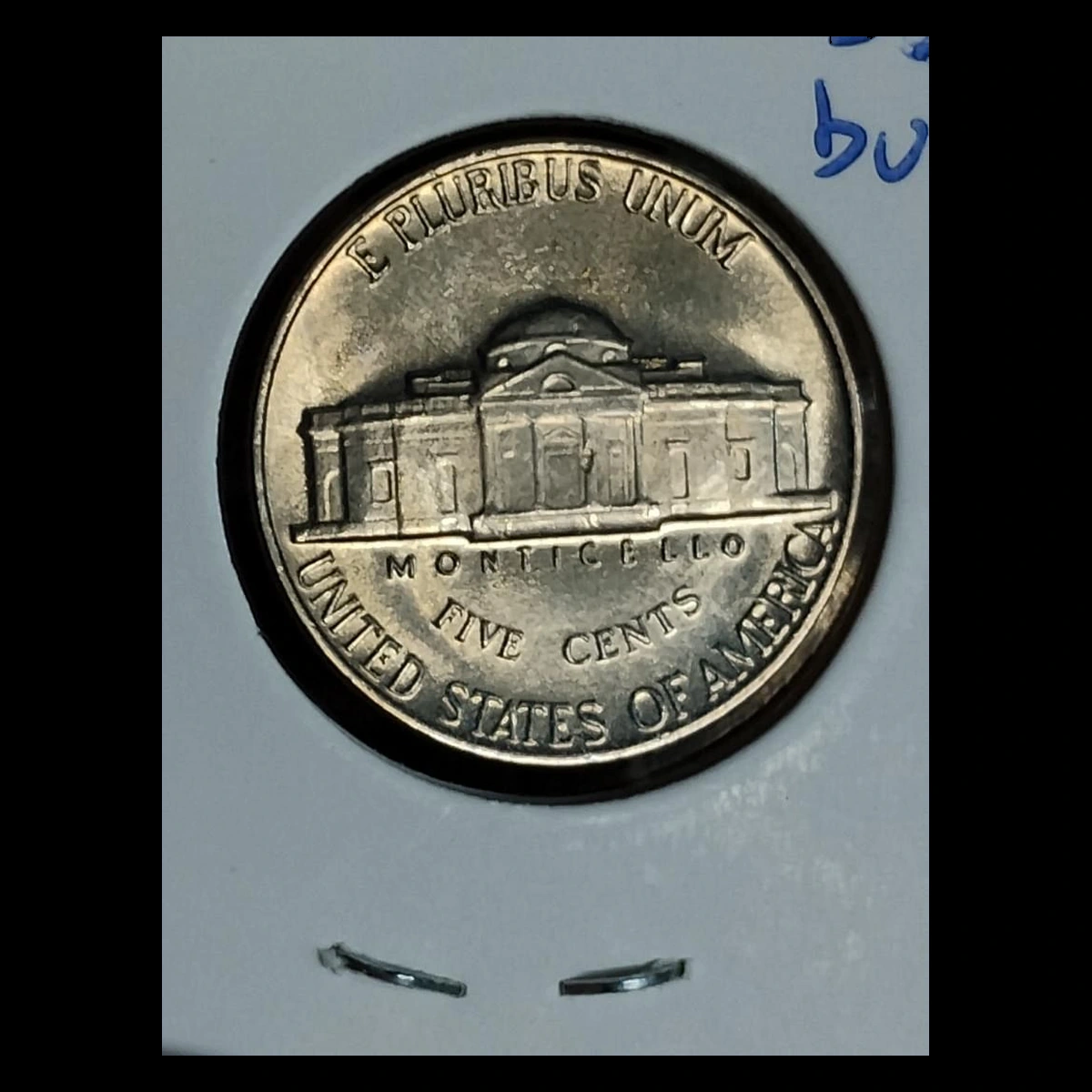
A staple still trapped in a nickel helped one 1963-D example sell for $552 in October 2017. Other finds require a magnifier rather than such an obvious foreign object.
This guide to 1963 nickel errors covers estimated values of $10–$1,500. Begin with raised and repeated details, then check missing metal, unusual color, and the relationship between the two sides.
1. 1963 Nickel A Staple Still Embedded: Retained Strike-Through Error
A staple caught between the blank and a die can become pressed into the coin during striking. On the documented 1963-D example, the object remained in place.
Collectors call this a retained strike-through. The ANACS AU50 grade describes a coin with some wear, showing that the error remained collectible after circulation.
How to Identify
Examine where the staple meets the nickel without moving it. Interrupted design and metal pressed around the object help explain whether both received the same strike.
Look for glue, fresh gouges, or a later impact on the other face. Pulling out the staple would remove important evidence and change the error.
What It’s Worth
$300–$1,000 is a working range for an authenticated nickel with a securely retained staple. The 1963-D ANACS AU50 coin sold for $552 on October 31, 2017.
The object’s visibility and the surrounding surface matter. An empty depression or a staple attached after minting does not provide the same comparison.
2. 1963 Nickel A Second D below the Mintmark: Repunched Mintmark Error
The D to the right of Monticello identifies Denver. On WRPM-001, an earlier D impression survives below the main letter because the mintmark was punched into the die more than once.
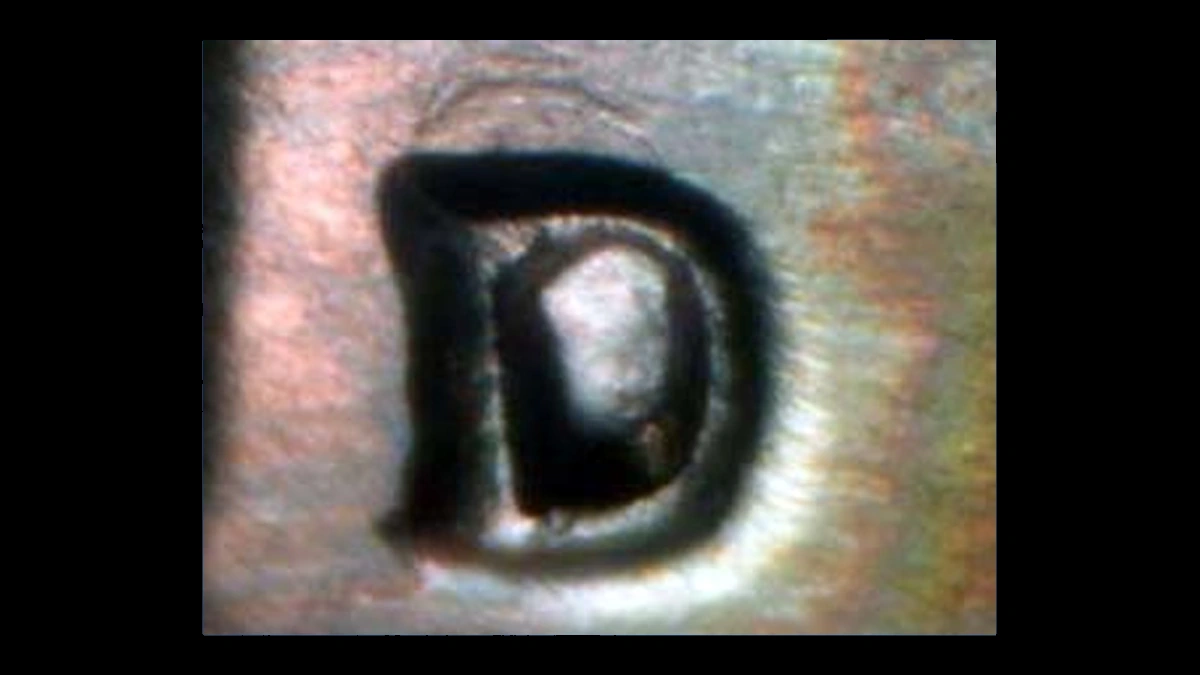
How to Identify
Focus on the lower outline of the D and compare it with Wexler’s WRPM-001 images. The shape and position need to agree, not just the letter’s thickness.
Check for a scratch or pushed metal beside the letter. Philadelphia coins have no mintmark in this location and cannot match this Denver variety.
What It’s Worth
$10–$100 spans worn identifiable examples around $10–$40 and sharper unworn coins around $40–$100. These are estimates for correctly matched pieces, rather than a supplied WRPM-001 auction result.
Wear can hide the smaller impression. Clear separation gives a buyer something definite to see and compare.
3. 1963 Nickel Repeated Letters or Date Details: Doubled and Tripled Dies Error
The Philadelphia FS-801 has strong tripling in E PLURIBUS UNUM and additional repeated back details. Denver WDDO-001 instead shows separation at the upper curve of the date’s 6.
These features were already on their dies before striking. Proof collector coins have separate varieties, so they need separate comparisons.
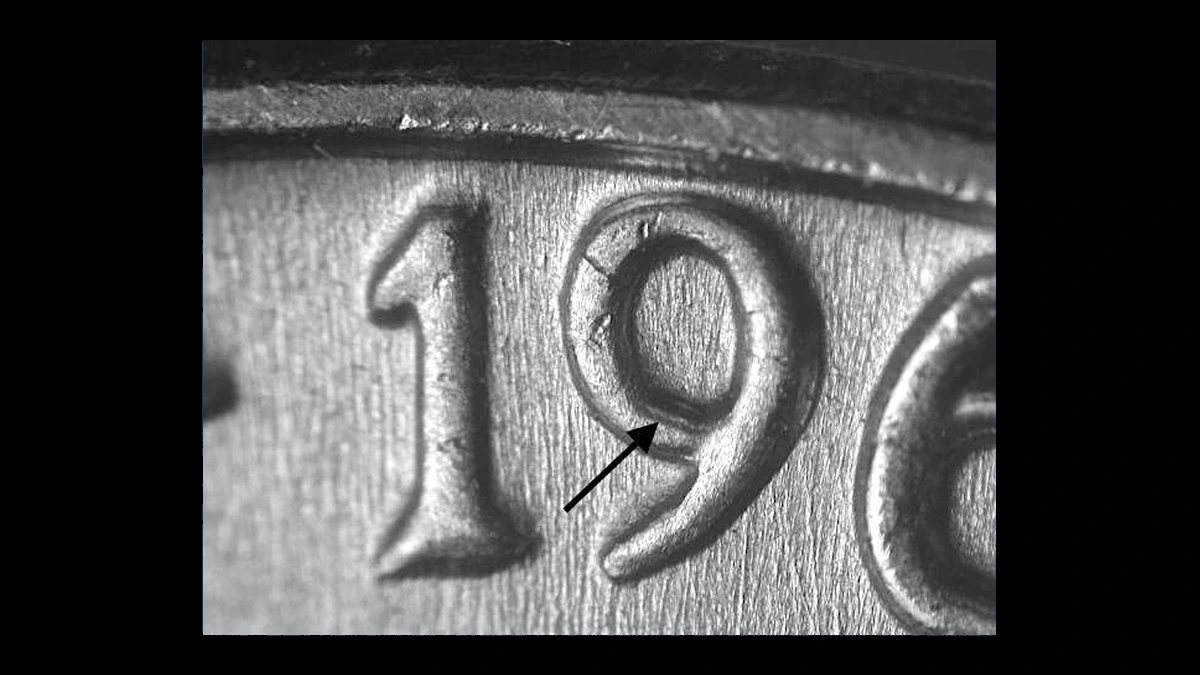
How to Identify
For FS-801, inspect the back motto and then compare the extra outlines in AMERICA. For WDDO-001, examine the front date rather than borrowing the Philadelphia back pattern.
Match the finish as well as the mint and design. Both ordinary Philadelphia coins and Philadelphia Proofs lack a mintmark, so the empty space alone cannot distinguish them.
Flat shelf-like edges may result from movement during striking. Follow the rounded extra shapes in the correct variety photographs instead of relying on thick letters.
What It’s Worth
$10–$400 covers minor identified examples at $10–$75 and stronger attractive varieties at $75–$400. Tiny shared design features need not command a large premium.
A Philadelphia FS-801 graded MS64 brought about $277 in October 2014. That record applies to its variety and finish, rather than every 1963 coin with extra outlines.
4. 1963 Nickel A Large Missing Crescent: Curved Clip Error
A recorded 1963 nickel is missing a 40% curved section and carries an NGC MS64 grade. The gap began before striking, when blank cutting overlapped an existing hole in the metal strip.
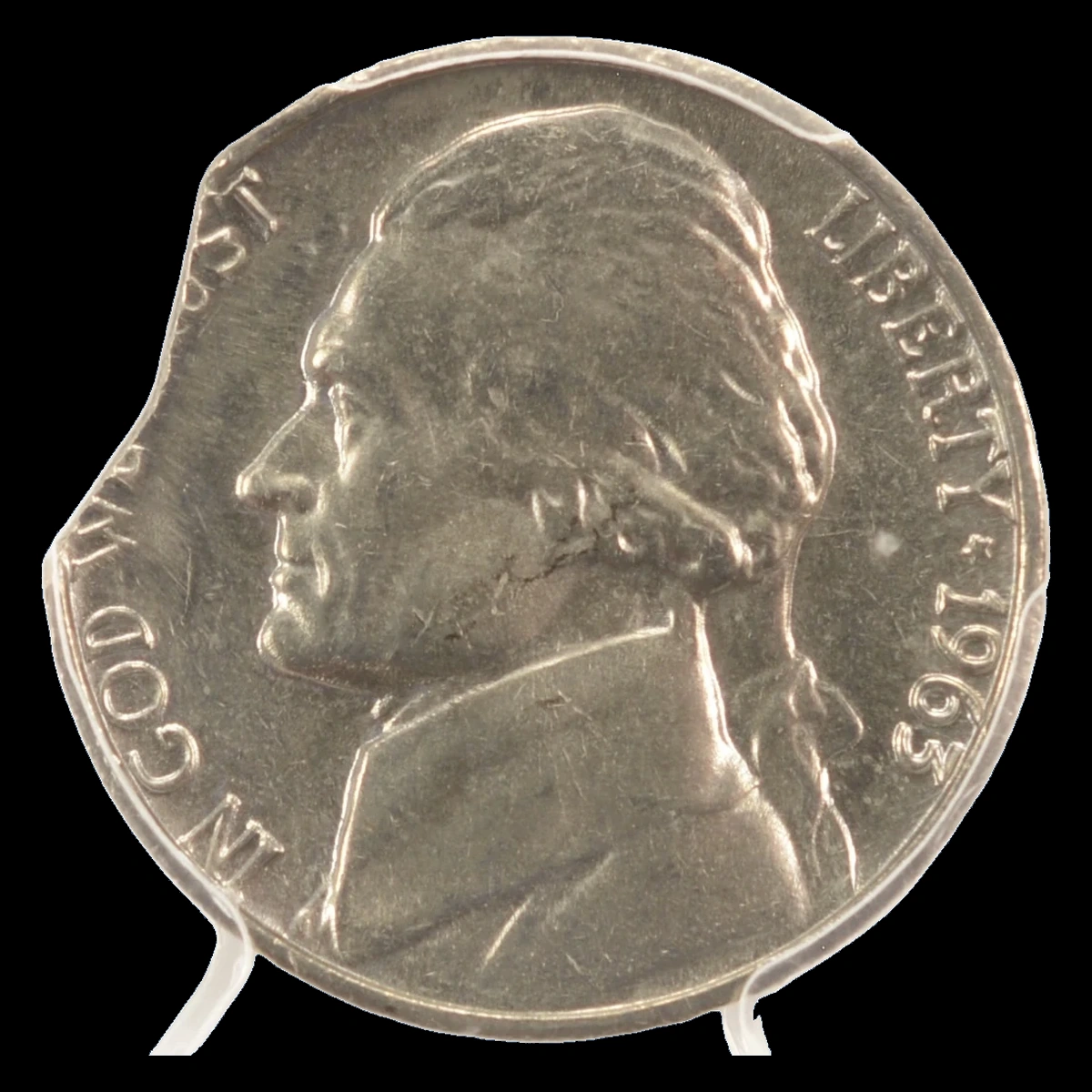
How to Identify
Study both ends of the curved gap and the adjacent design. Metal flow and a softened boundary can support an original clip, while burrs or file strokes suggest later cutting.
Look opposite the gap for supporting rim weakness. Support a severely clipped coin carefully rather than gripping across the missing area.
What It’s Worth
$25–$600 allows $25–$150 for smaller genuine clips and $150–$600 for large, attractive examples. Readable dates and clean surfaces help even when much of the metal is missing.
The 1963 coin appeared with four other nickels, so its lot does not establish a separate price. A 1997-P nickel with a smaller 20% clip sold for $124 in March 2025 as a different-year comparison.
5. 1963 Nickel An Underweight Coin from a Defective Blank Error
One 1963 nickel graded NGC MS65 weighs 4.4 grams and was identified as struck on a defective blank. A normal nickel weighs about 5 grams and measures roughly 21.2 mm across.
The supplied description does not specify the defect’s shape. Calling it a hole, clip, or thin strip would add a detail the record does not establish.
How to Identify
Record a loose coin’s weight and diameter, then inspect the actual abnormal area. The way the struck design meets that boundary helps show whether the flaw existed before striking.
Look around the plain edge and both faces for grinding, acid damage, or shaving. Another 4.4-gram coin does not automatically have the same Mint-made defect.
What It’s Worth
$50–$350 covers modest identified defects around $50–$150 and clearer examples in stronger condition around $150–$350. No sale amount is supplied for the documented 4.4-gram coin.
A 1979 nickel with a blank hole sold for $253 in June 2008. Its visible hole provides a related price comparison without identifying the shape of the 1963 defect.
6. 1963 Nickel A Dark Surface from Improper Annealing Error
The nickname Black Beauty describes a dark nickel’s appearance, not its metal composition. A problem during annealing, the heating step before striking, can produce unusual dark surfaces.
A 1963 nickel uses copper-nickel alloy throughout. It does not have an outer layer that can go missing to explain the color.
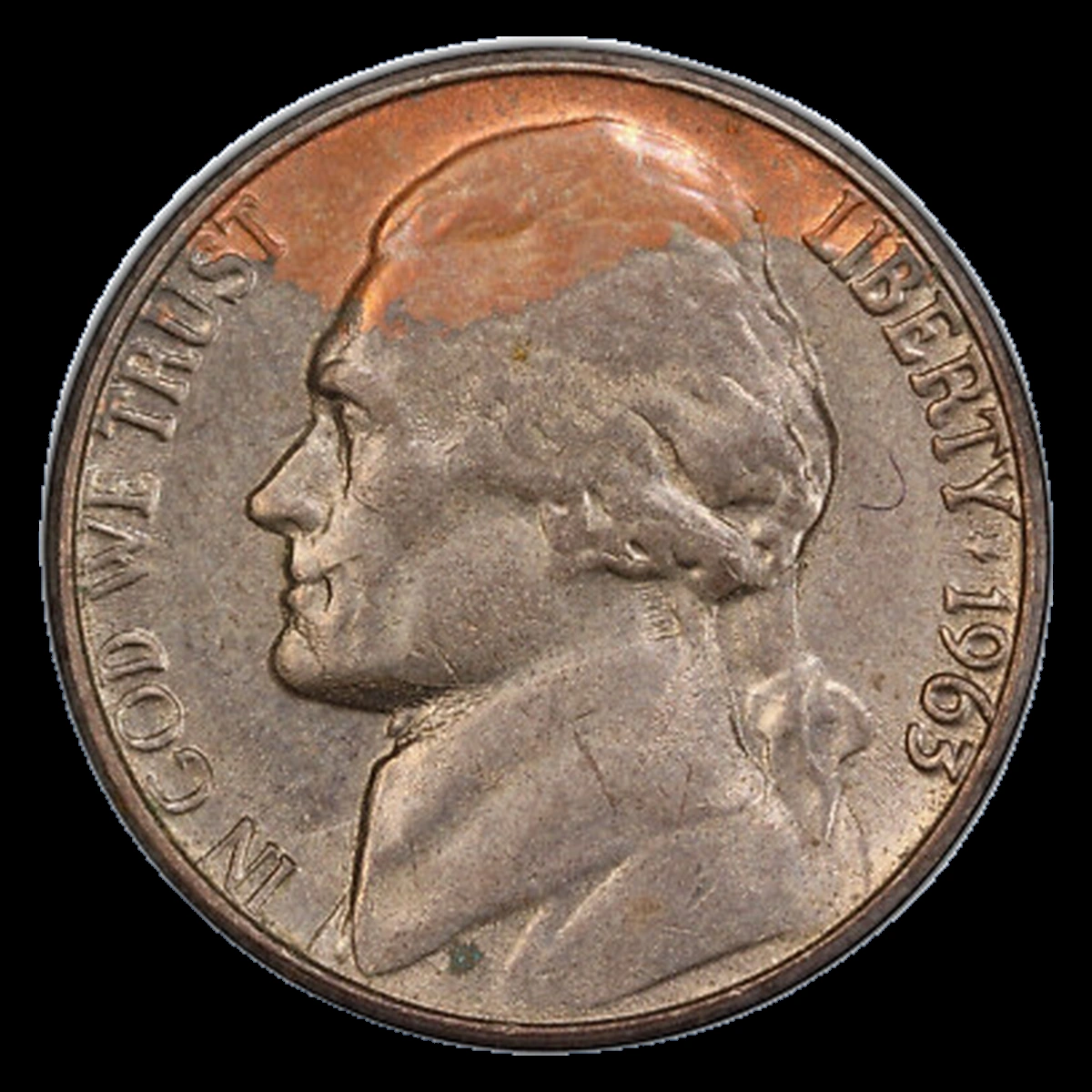
How to Identify
Under neutral light, examine the surface texture and any original shine beneath the dark color. Pits, paint, or rough chemical damage suggest other explanations.
Keep the surface uncleaned for examination. Normal measurements cannot prove when the discoloration formed, so color alone is not enough to identify a Mint heating error.
What It’s Worth
$25–$300 applies to verified examples, with lightly worn pieces around $25–$100 and pleasing unworn coins around $100–$300. Staining alone does not qualify.
A 1971-D improperly annealed MS65 nickel brought $149 in July 2022. It also had a low D mintmark, making it a comparison rather than a fixed price for a dark 1963 nickel.
7. 1963 Nickel A Small or Unusual Blank under the Nickel Design Error
Recorded Philadelphia and Denver nickels were struck on copper-rich cent blanks weighing about 3.1 grams. The smaller blanks cannot hold all the nickel’s outer design.
A separate PCGS MS63 example was described as struck on a foreign copper-nickel blank. Its weak centered design does not establish the intended country or denomination.
How to Identify
For a copper-colored piece, combine its weight with the naturally cut-off outer design. A normal nickel with added plating should remain much closer to 5 grams.
Measure the outline, remembering that a strike can spread a smaller blank. For the silvery foreign-blank category, composition and measurements need to support the attribution; weakness alone cannot do so.
What It’s Worth
$250–$1,500 covers these wrong-blank categories. Comparable cent-blank nickels fit about $250–$750, while an authenticated foreign-blank example uses a broader $500–$1,500 estimate.
The Philadelphia NGC MS63 Full Steps cent-blank coin sold for $264 in January 2018, and a Denver NGC MS64 Brown example brought $408 in September 2023. Full Steps describes clear building steps, not a second error.
No matching sale is supplied for the foreign-blank piece. Its estimated range does not identify an otherwise unknown country or denomination.
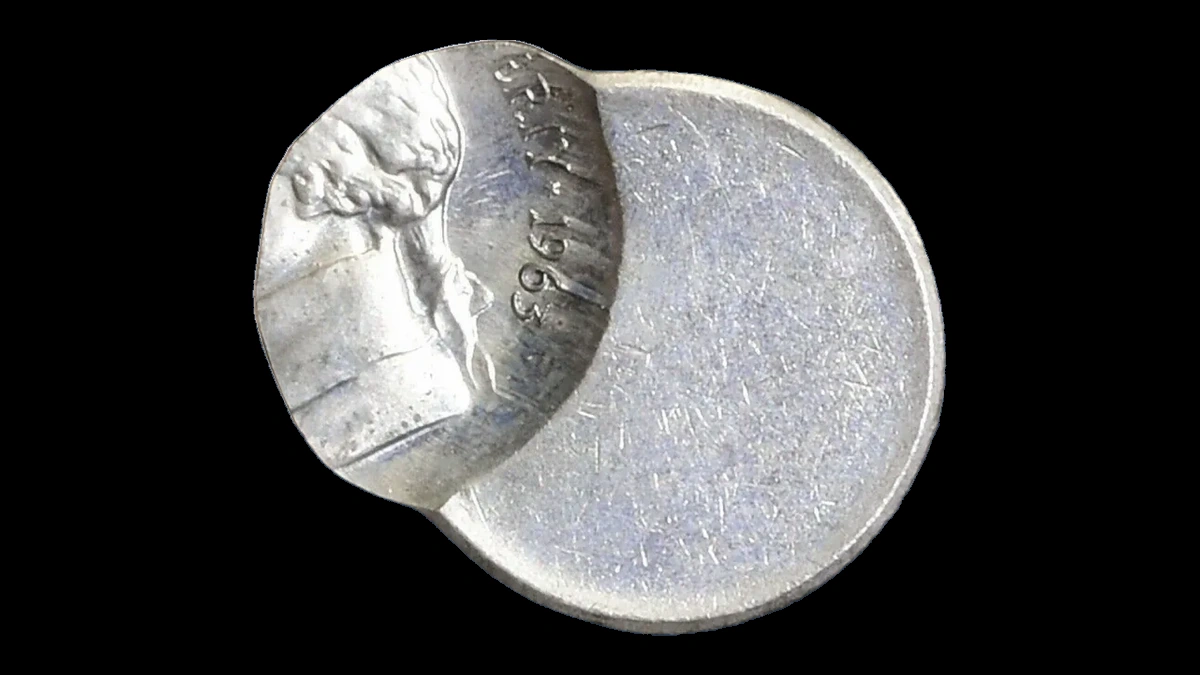
8. 1963 Nickel Bare Metal beside an Off-Center Design Error
An off-center strike leaves an unused crescent because the blank sits partly outside the dies. Some intended design lands beyond the metal’s opposite edge.
Reports for 1963 do not give one shared percentage or direction. The actual coin must supply those details.
How to Identify
Check both faces for compatible displacement and missing outer design. An uneven rim on just one face can result from a misplaced die instead.
Keep the date visible in full-coin photographs and inspect the blank area for scraping. The crescent should contain unstruck metal, unlike a clipped gap.
What It’s Worth
$50–$400 is the type estimate, with modest offsets around $50–$150 and more dramatic readable examples around $150–$400. This is not an auction result for a specific 1963 coin.
A large shift may be less useful to a year collector if the entire date disappears. Judge the surviving identity alongside the visual size of the error.
9. 1963 Nickel Overlapping Designs from a Double Strike Error
A second blow can move whole parts of Jefferson or Monticello to a new position. A reported 1963 double-struck, off-center nickel is described in MS60 condition.
Its mintmark and precise offset are not established in the supplied account. Small extra letter edges alone would not prove this kind of second strike.
How to Identify
On a photograph, follow each design position separately without marking the coin. Look for earlier raised details flattened by the later blow.
Turn to the other face for related changes and inspect the edge for later squeezing. Several connected overlapping features provide stronger evidence than one doubled-looking line.
What It’s Worth
$100–$750 allows about $100–$300 for modest genuine examples and $300–$750 for especially readable overlaps. How clearly the two strikes can be followed matters more than the label alone.
A 1987-P double-struck, off-center nickel graded AU58 sold for $159 in March 2025. That different-year sale gives context without becoming the price of the reported 1963 MS60 coin.
10. 1963 Nickel A Tilted Monticello from Rotated Dies Error
A coin can have a normal outline and complete designs but still have the two faces set at the wrong angle. This reported 1963 category has no single established rotation for every example.
How to Identify
Hold Jefferson upright and turn the coin over from top to bottom without twisting sideways. Monticello should finish upright on a normally aligned nickel.
Repeat the movement against an angle guide, using a fixed grip or continuous video. Inspect the edge for a join before accepting an extreme turn.
What It’s Worth
$20–$250 spans modest authenticated angles at $20–$75 and larger clear turns at $75–$250. Separately rotated photographs cannot establish either the error or its value.
A 2015-D MS64 nickel rotated 90 degrees clockwise sold for $79 in October 2021. Its measured angle belongs to that coin and should not be assigned to an unmeasured 1963 example.
Conclusion
A useful 1963 nickel identification combines the visible feature with its location, finish, and measurements. The repeated D, tripled back motto, and embedded staple each provide different evidence.
Keep unusual surfaces and retained objects intact. For a light or dark coin, investigate the cause before attaching a name; for shifted designs, show both faces so the movement can be understood.