Rare 1972 Nickel Errors (List & Pictures)
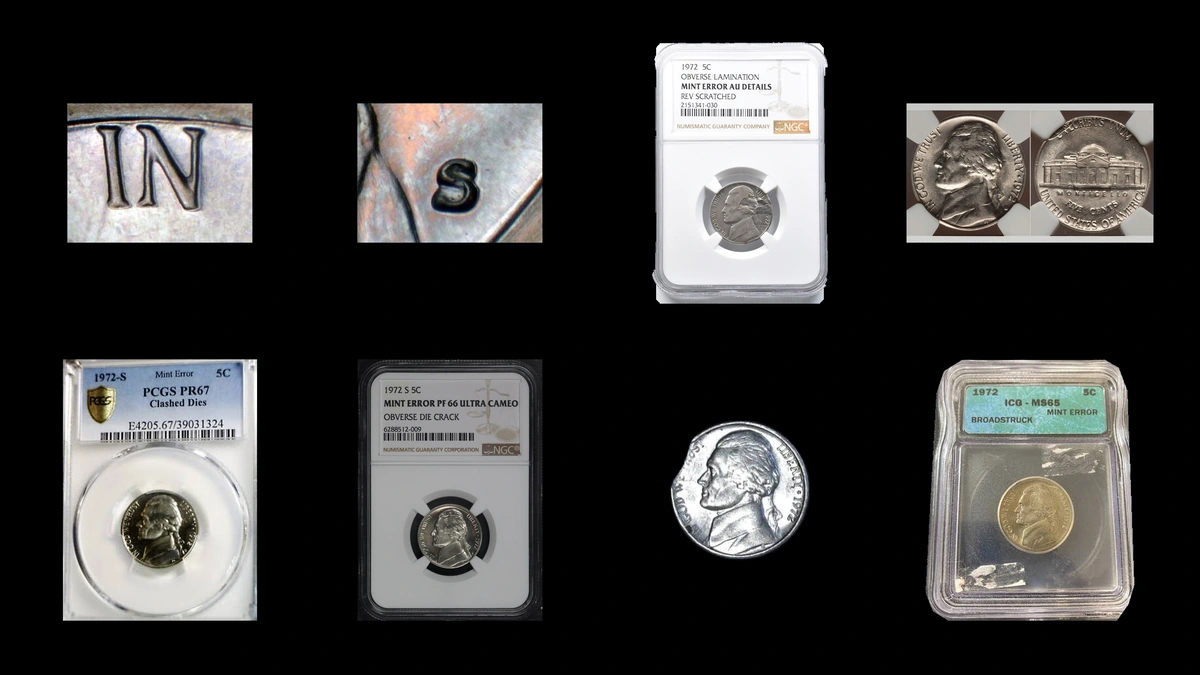
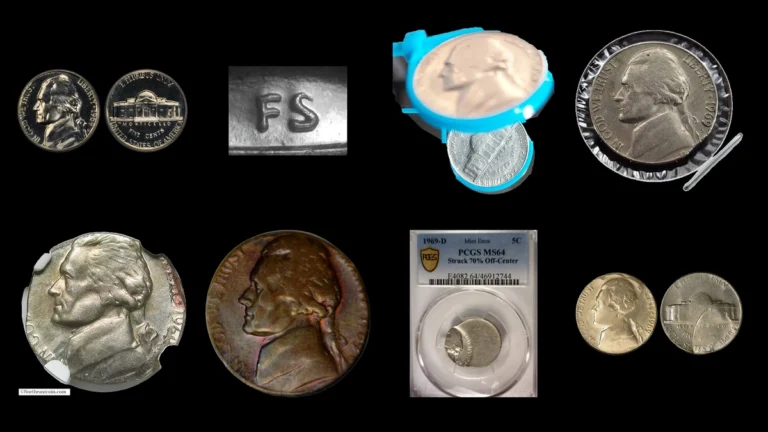
A 1972-S Proof with two displaced strikes sold for $4,312.50 in January 2008. Estimated whole-coin values for 1972 nickel errors range from $10–$6,000.
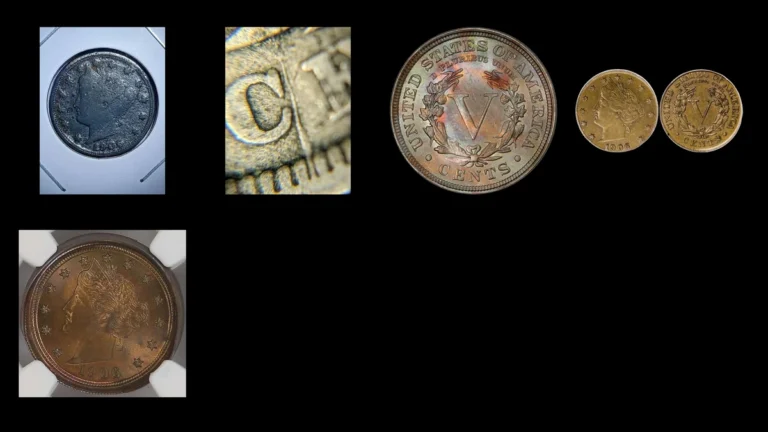
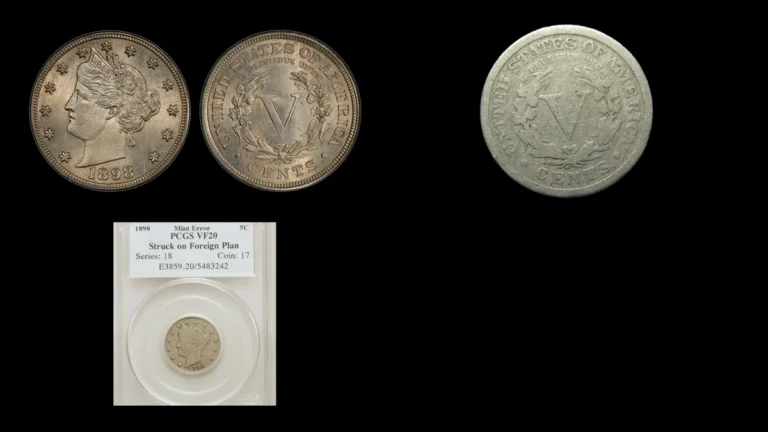
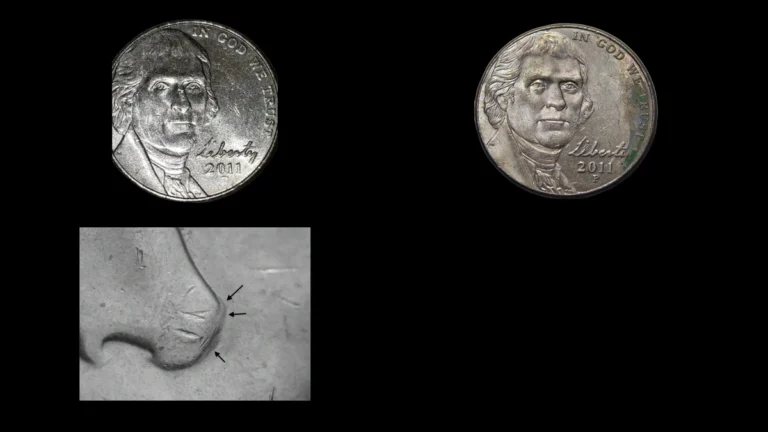
Inspect small letter and surface features before moving to edge defects, repeated designs, and unusual blanks. Keep ordinary circulation coins and specially prepared Proofs in their own comparisons.
| Area | Possible features | Estimated values |
|---|---|---|
| Letters and mintmark | Doubled die or repunched S | $15–$250 |
| Surface and die marks | Lamination, fold, clash, or cud | $10–$1,000 |
| Rim and outline | Clip, broadstrike, collar break, or off-center strike | $10–$450 |
| Blocked or repeated designs | Uniface, counterbrockage, or multiple strike | $100–$6,000 |
| Unexpected metal or shape | Wrong blank or scrap | $200–$3,000 |
A normal nickel weighs 5 g and measures 21.21 mm, with a plain edge and uniform copper-nickel alloy. Philadelphia circulation coins of this year have no mint letter; S identifies the Proof issues discussed here.
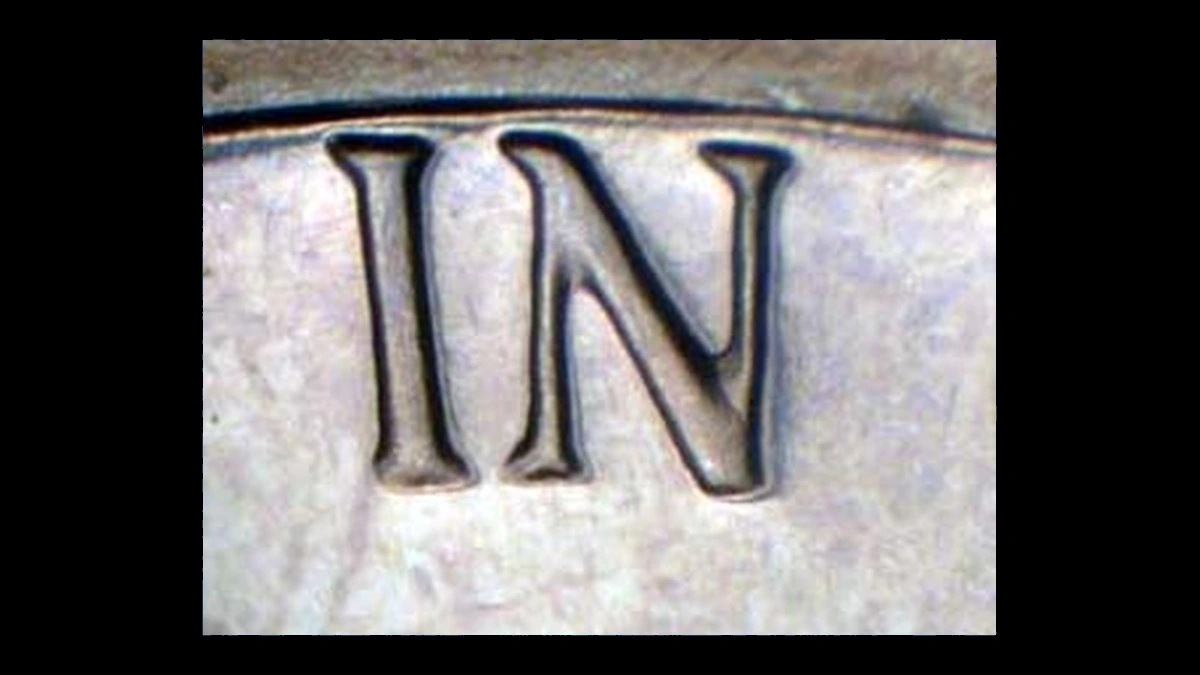
1. 1972 Nickel Close Extra Letter and Date Outlines: Doubled Dies Error
Denver examples include a close extra outline at the final 2 and reverse spread in the motto, AMERICA, or Monticello’s right side. S Proofs have separate front and back patterns.
How to Identify
Match mint, face, and finish before selecting diagnostics. S Proof front reports involve LIBERTY, the star, date, and designer initials, while reverse patterns affect inscriptions and the building.
The repeated design must agree with the reference, not merely appear thick. Small supporting die marks can help but cannot replace the main match.
What It’s Worth
Estimated values are $15–$100 for minor Denver varieties and $25–$250 for S Proofs. Clear separation and attractive surfaces support stronger comparisons.
No completed sale is assigned here to every variety. Flat strike doubling does not qualify as a doubled die.
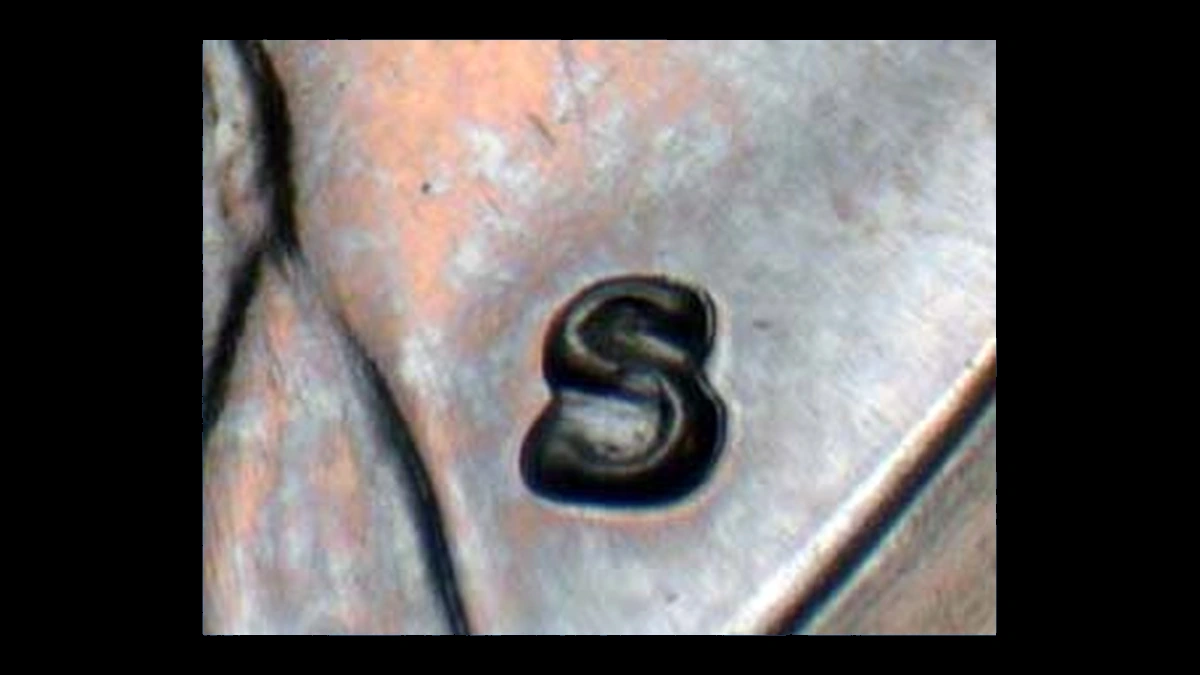
2. 1972 Nickel An Earlier S Remains beside the Mintmark: Repunched S Error
Two recorded S Proof varieties have an earlier mintmark impression toward the top. Another has a clockwise-turned earlier S.
How to Identify
Photograph the whole S below the date and trace a recognizable earlier letter contour. Sharing a northward direction does not make two varieties identical.
A thick letter, reflected corner, or nick is insufficient. Compare the complete earlier shape with the appropriate catalog photograph.
What It’s Worth
Matched 1972-S repunched-mintmark Proofs have an estimated value of $20–$250. Clean collector surfaces and visible separation support more.
This is a variety estimate rather than a confirmed sale for each catalog entry.
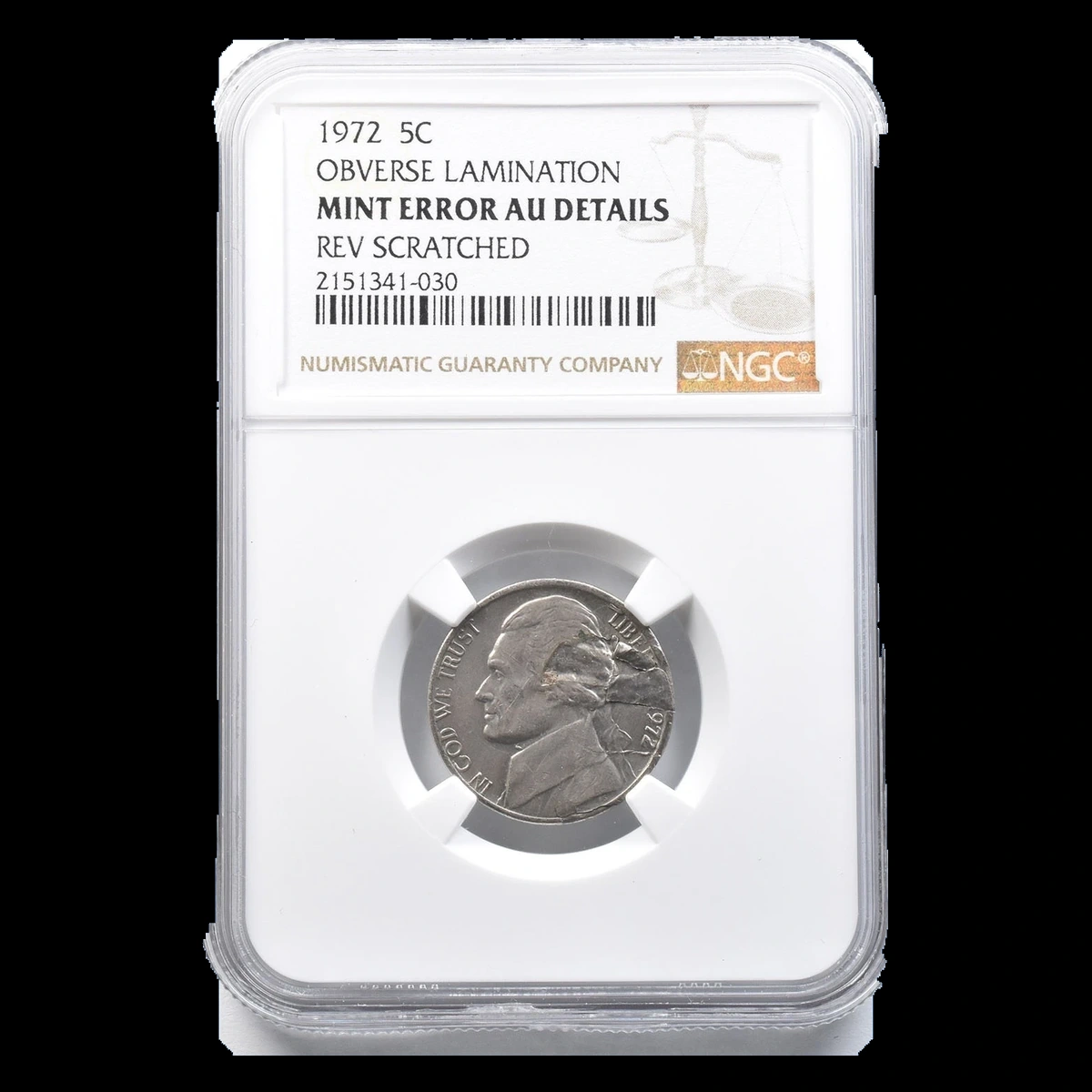
3. 1972 Nickel A Surface Sheet Separates or Folds Down: Lamination Error
A no-letter lamination was recorded in original Mint Set packaging. A separate Denver coin was struck through a folded piece of separated metal on its front.
How to Identify
Follow the layer boundary without lifting the flap. On the Denver example, the interrupted design should fit the folded metal.
The alloy can separate internally despite being uniform. Keep the Mint Set coin sealed, and distinguish original metal from added coatings or later gouges.
What It’s Worth
Estimated values are $10–$100 for local laminations and $50–$300 for clear folded-flap examples. The Denver MS62 sold for $79 in June 2023.
The no-letter coin was in a ten-coin Mint Set lot that brought $24 in August 2011. That total is not an individual nickel price or independent grade.
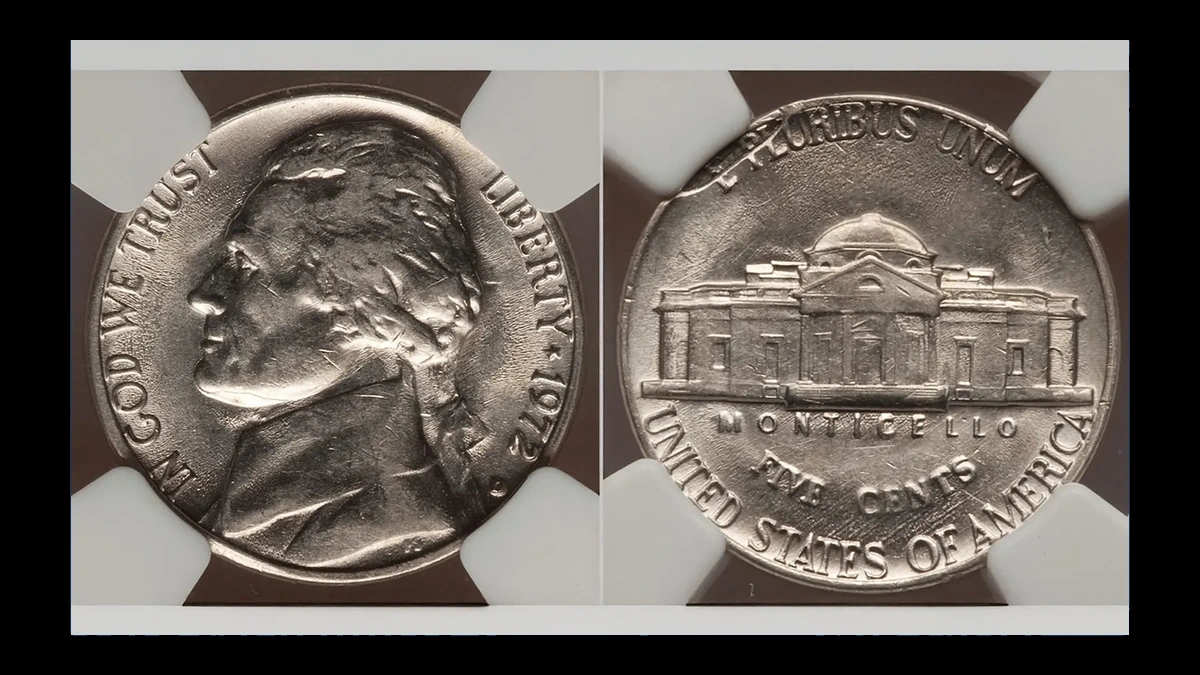
4. 1972 Nickel E PLU Crosses a Nearly Level Metal Tongue: Rolling Fold Error
A Denver example has a broad short reverse tongue outlined by a narrow split. A rough projection from blank punching folded inward before E PLU was struck over it.
How to Identify
Examine the undisturbed outer edge beside the fold and the lettering crossing it. The recorded tongue lies almost level with the surrounding surface.
A later rim tear or long pushed-in spur needs another explanation. Do not lift the metal to investigate underneath.
What It’s Worth
Estimated values are $50–$350 for recognizable rolling folds with original surfaces. The lettering helps demonstrate the sequence.
The recorded 1972-D AU55 example sold for $89 in August 2010. A larger flap alone does not establish the same mechanism.
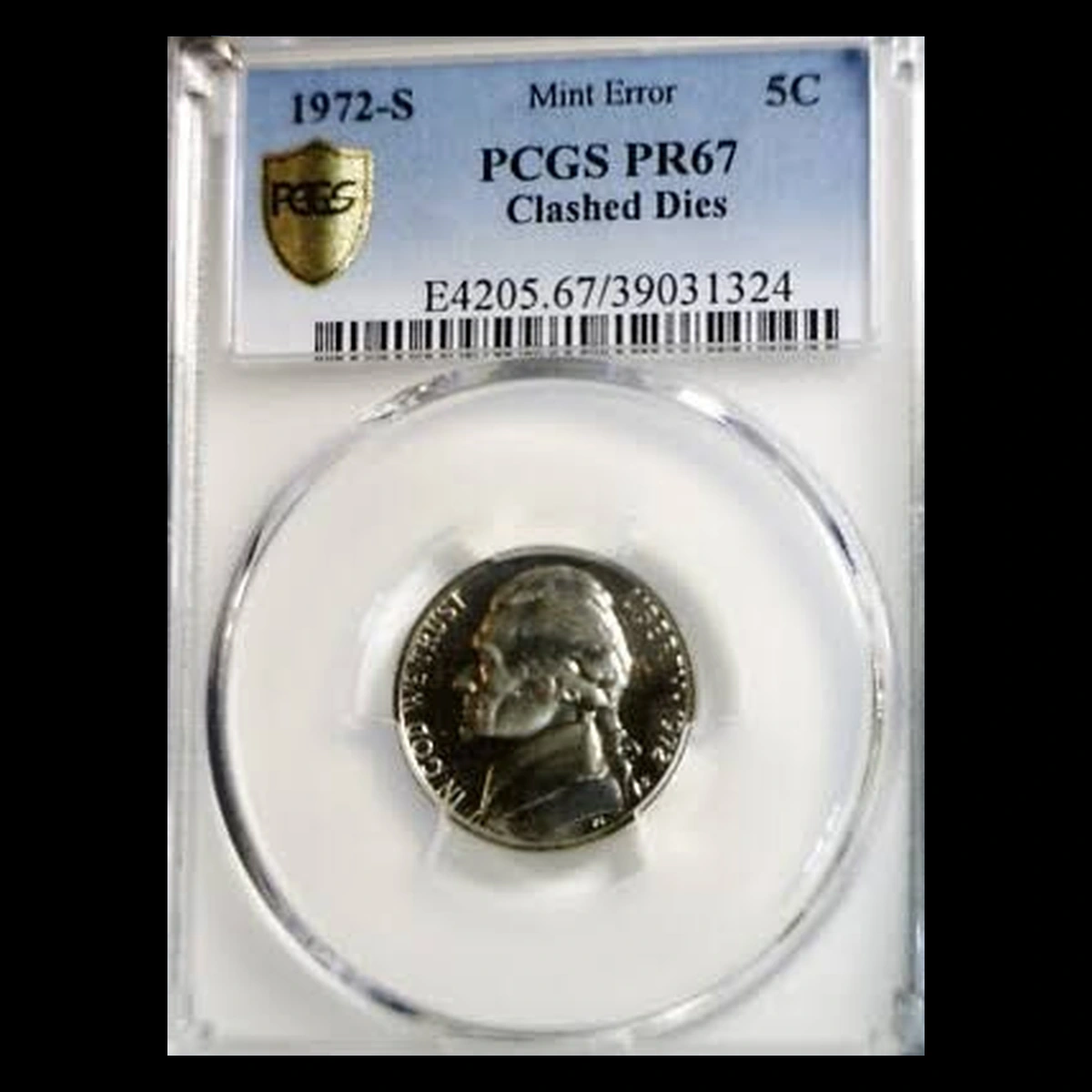
5. 1972 Nickel Opposite-Side Traces near the Portrait: Die Clash Error
Recorded examples include an S Proof and separate Denver patterns. One unusual Denver coin has sunken MONTICELLO traces on the front, much of which stops at higher portrait details.
How to Identify
Match recognizable parts of the opposite design rather than unrelated scratches. The unusual sunken lettering should not be rejected solely for its depth.
An ordinary Denver clash and the S Proof each need their own photographs. They do not inherit the unusual front-letter pattern.
What It’s Worth
Estimated values are $20–$150 for faint ordinary clashes and $75–$500 for clearer unusual patterns. The complete coin’s finish and condition matter.
An S Proof graded PR64 sold for $51 in December 2020. That sale does not price the different Denver sunken-letter example.
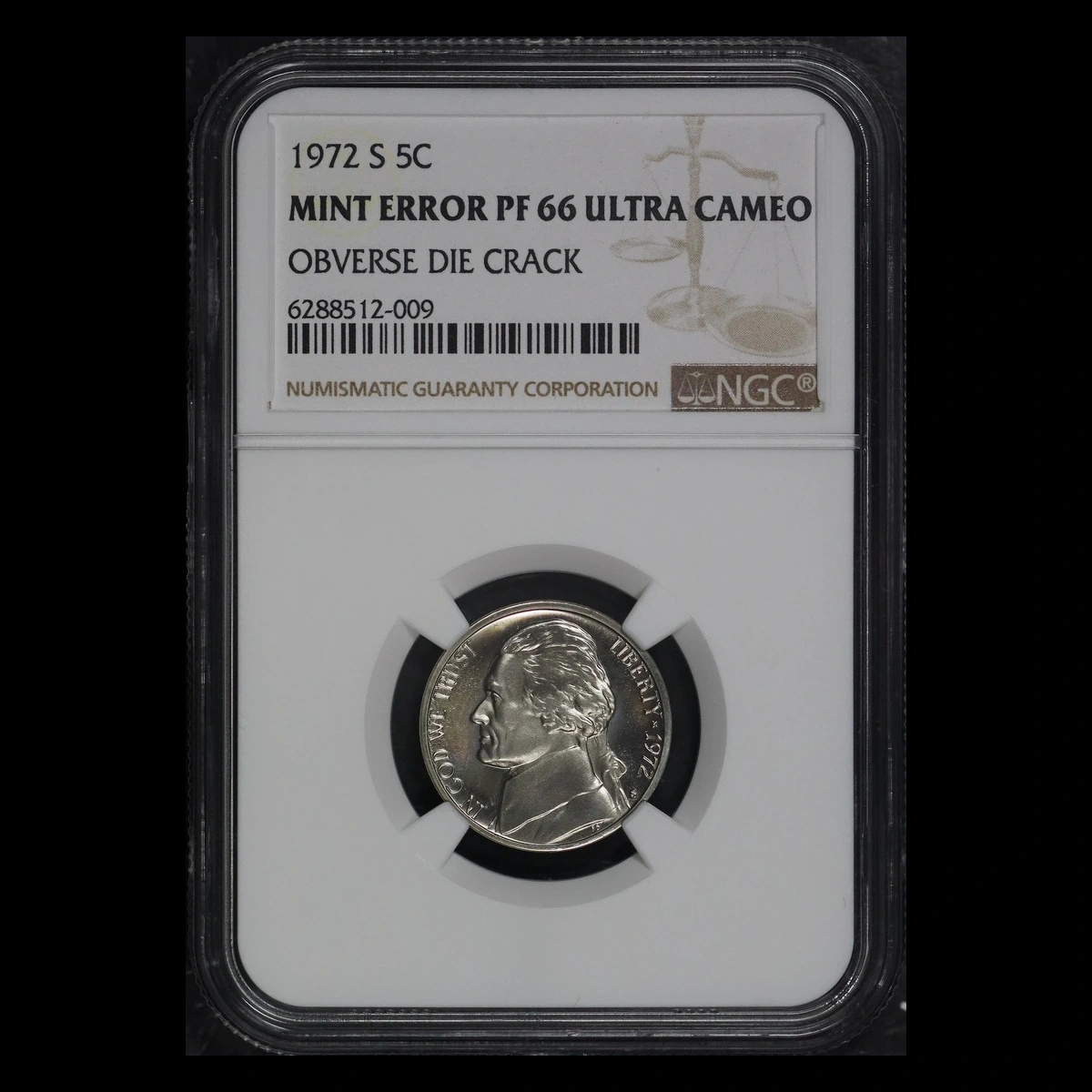
6. 1972 Nickel Raised Patches Join the Face Rim: Cuds Error
Several Denver dies developed progressively larger breaks. An S Proof has a separate front cud near five o’clock.
How to Identify
Match the actual mint, finish, and break shape. A six-coin progression begins with an intact coin and continues through five cud examples.
The first normal coin is not another cud. On individual specimens, inspect the rim connection for folded metal, solder, or an added patch.
What It’s Worth
Estimated values are $30–$300 for individual Denver cuds and $250–$1,000 for the S Proof type. A Denver MS66 sold for $94 in July 2021.
A PR65 S Proof was offered at $450 by Sullivan Numismatics. The six-coin progression sold for $546.25 in August 2010, a complete-set price rather than a per-coin result.
7. 1972 Nickel A Ridge Extends around the Side: Collar Break Error
A 1972-D example has an edge expansion from seven o’clock to twelve. Metal entered a gap in the broken collar, the ring surrounding the blank.
How to Identify
Keep the front’s top fixed while photographing the sidewall and its junction with both faces. A face close-up alone may hide this defect.
Exclude solder or a crushed rim from an impact. The recorded Full Step label describes Monticello’s detail and does not establish a collar error.
What It’s Worth
Estimated values are $75–$450 for clear original examples. Visibility and intact surrounding surfaces support the comparison.
The recorded coin belonged to a four-coin group sold for $161 in August 2010. A 1976-D with two collar breaks had a historical $200 dealer asking price, another distinct comparison.
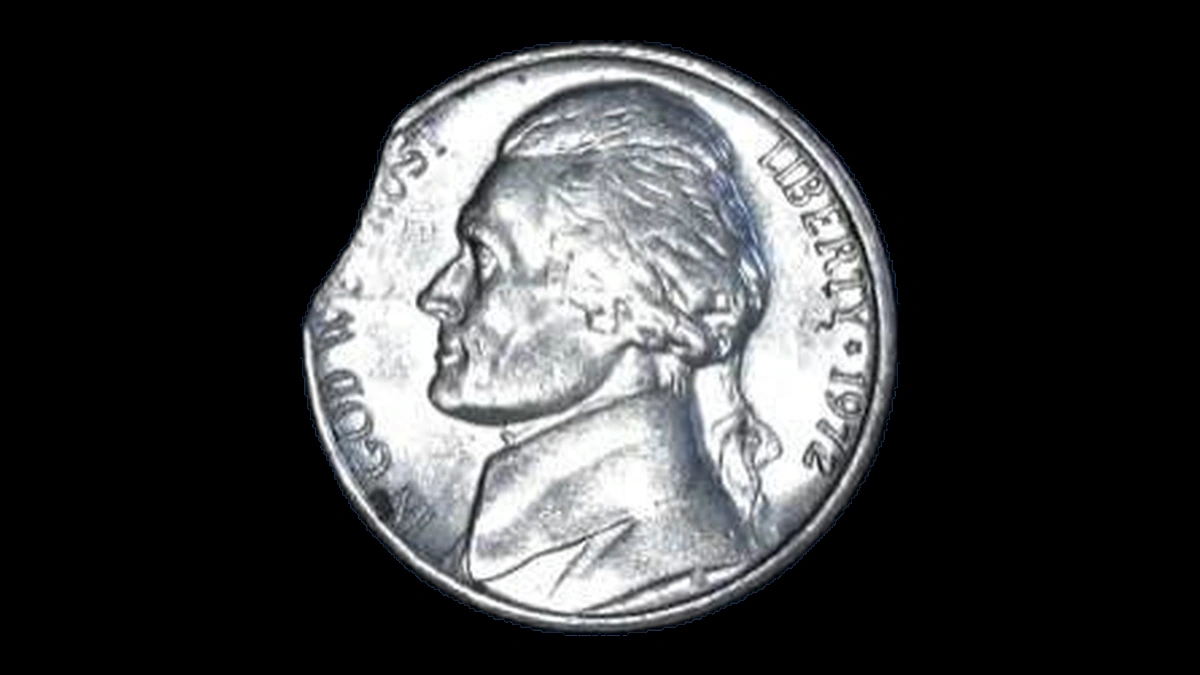
8. 1972 Nickel A Section of Metal Is Missing: Clipped Blank Error
The 1972 report includes incomplete blanks without establishing one mint, finish, or gap shape. The absent metal must predate the strike.
How to Identify
Follow both ends of the opening into the adjacent design. File lines and cuts through completed letters suggest later removal.
Natural flow and possible opposite-rim weakness can support an original clip. Neither an S Proof identity nor a curved subtype should be assumed from a general listing.
What It’s Worth
Estimated values are $20–$250 for genuine 1972 clips. Clear dates and larger attractive gaps can support the higher end.
A 1997-P with a 20% curved clip sold for $124 in March 2025. That figure establishes no percentage or grade for the generic 1972 report.
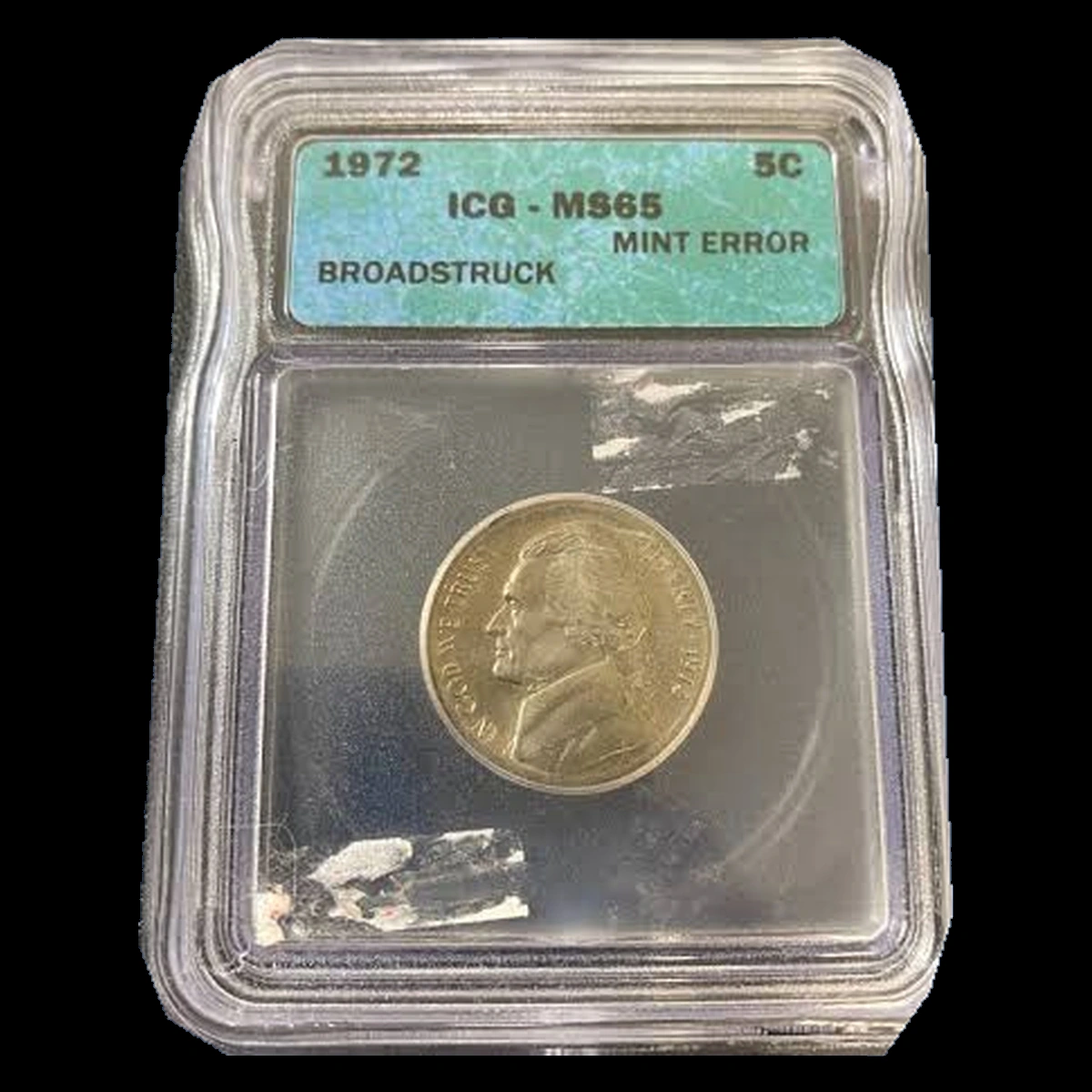
9. 1972 Nickel Complete Design inside a Wider Border: Broadstrike Error
A no-letter ANACS MS62 example expanded when the collar failed to contain its metal. It is an ordinary circulation strike, not a Proof.
How to Identify
Check that intended design remains inside the expanded outline on both faces. An off-center blow instead loses some details beyond the blank.
Look for original surfaces rather than crushed letters and impact marks from later flattening. An uneven border alone does not settle the diagnosis.
What It’s Worth
Estimated values are $10–$200 for ordinary broadstrikes. Clear expansion and preservation influence demand.
The ANACS MS62 sold for $57 in July 2021. A separate ICG MS65 brought $10 in December 2008, showing that numerical grade alone does not determine price.
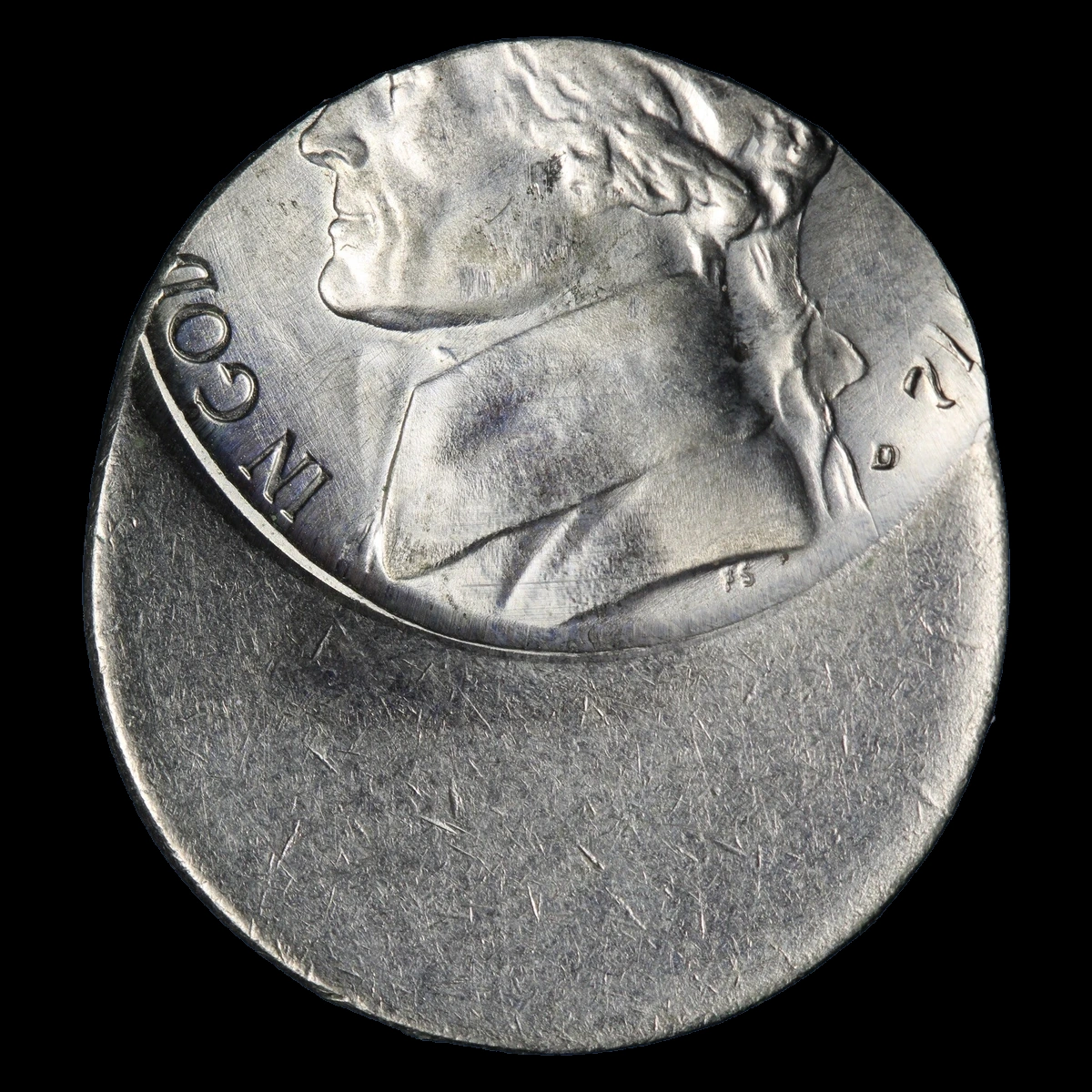
10. 1972 Nickel A Large Bare Crescent Remains: Off-Center Strike Error
A no-letter specimen is 75% off-center toward eleven o’clock. A separate Denver coin is 65% off-center toward ten-thirty.
How to Identify
Read the actual surviving date and mint before comparing direction. Both faces should fit the same misplaced blank.
The bare area retains metal, unlike a clip. Inspect it for grinding or cuts that could have removed a previously struck design.
What It’s Worth
Estimated values are $25–$400 for readable ordinary examples. Condition and date visibility can outweigh percentage.
Both the no-letter 75% and Denver 65% coins sold for $99 each in January 2022. Separate less dramatic examples brought $27 apiece in December 2008.
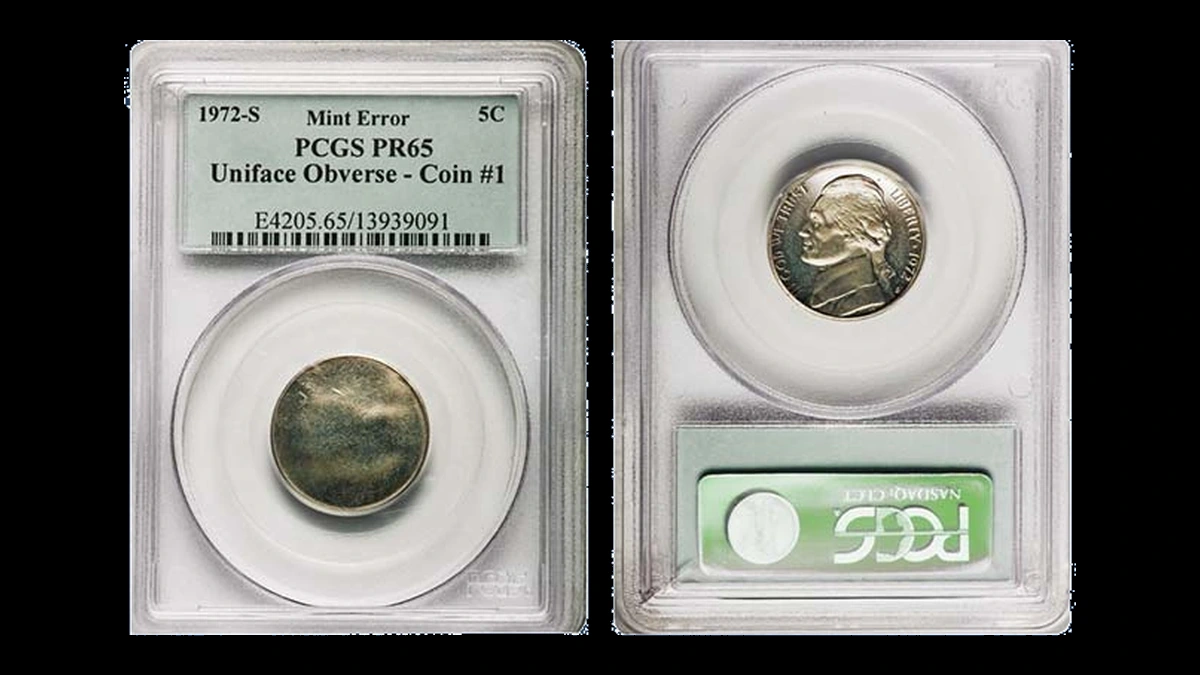
11. 1972 Nickel One Face Lacks Its Usual Image: Reported Uniface Strike Error
Another blank can block a die and prevent one face from receiving its design. The general 1972 report names no particular mint or blank face.
How to Identify
Inspect the blank-looking area for abrasion, thinning, or polishing that erased a finished design. The opposite face must establish the actual identity.
A listing among Proof material does not by itself establish an S Proof. Specialist comparison should address the blocked surface and its relationship to the normal side.
What It’s Worth
A conditional estimated range of $100–$1,000 applies to authenticated ordinary one-sided strikes. Extent, preserved surfaces, and readable identifying detail matter.
No verified individual sale is supplied here. A ground-down face does not qualify.
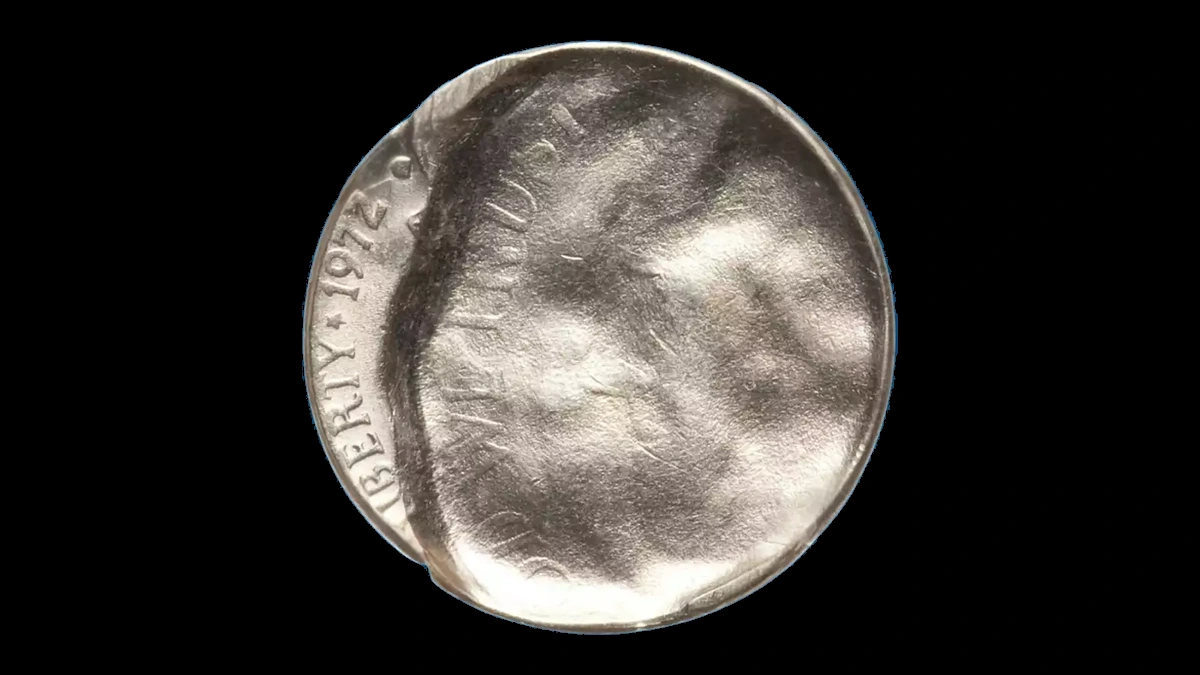
12. 1972 Nickel A Raised Forward-Reading Transfer Appears: Partial Counterbrockage Error
A documented Denver NGC MS64 has a partial front counterbrockage. This results from a second transfer: a recessed mirror image impresses a raised, normally oriented image into another blank.
How to Identify
Determine the unusual design’s height and reading direction under side lighting. A simple sunken mirror image is a brockage, not the same transfer stage.
The description gives no required percentage or clock position. Compare the distortion and junction with normal design rather than guessing those details.
What It’s Worth
Estimated values are $350–$1,500 for convincing comparable examples. Recognizable transferred design improves the explanation.
The recorded 1972-D partial counterbrockage sold for $517.50 in October 2010.
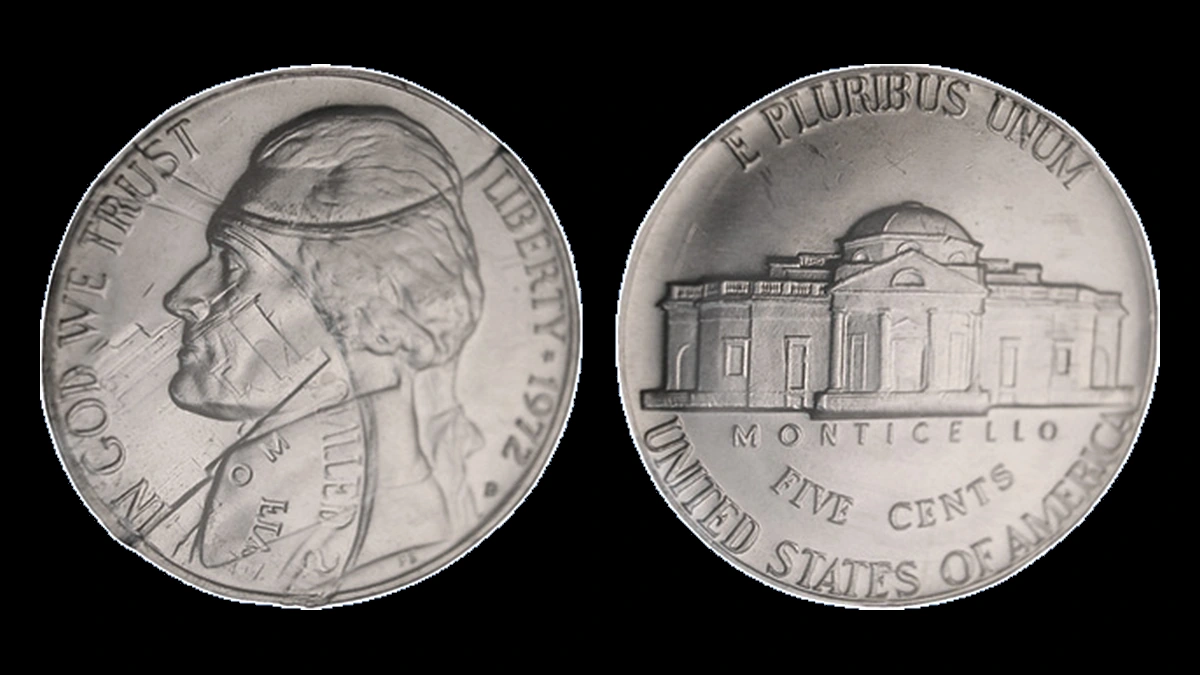
13. 1972 Nickel Two Shallow Areas Interrupt a Normal First Strike: Low-Pressure Combination Error
A studied Denver coin has a 20% top indent and 40% partial brockage on the left from a later low-pressure blow. It remained aligned inside the collar after a normal first strike.
How to Identify
The studied coin remained sealed in its Denver Mint Set pocket. Preserve that packaging and compare the two recessed areas with the unaffected first design.
The indent lacks the same reversed design evidence as the partial brockage. Outside those areas, the second blow did not bring the dies directly against either face.
What It’s Worth
Estimated whole-coin values are $300–$3,000 for an authenticated matching sequence. Packaging supports its history without supplying a sale price.
A different 1972-D flip-over double strike with later wheel marks sold for $408 in June 2023. That is a related striking comparison, not a transaction for the packaged coin.
14. 1972 Nickel Displaced Portraits or Mixed Faces: Double Strike Error
One S Proof received a 5% off-center blow followed by a 35% off-center blow. Separate examples include an S Proof with a 95% second strike, a Denver 70% second strike, and an in-collar Denver flip-over.
How to Identify
Trace the old and new impressions separately. On a flip-over, opposite-face fragments can share a side, unlike a simple displacement without flipping.
For the 5%/35% Proof, both strikes point toward twelve relative to the disc, while the second lies toward six relative to the first. Its curved reverse mark follows the earlier rim, and those directions do not transfer to the 95% coin.
What It’s Worth
Estimated values are $150–$1,200 for ordinary repeated strikes and $1,000–$6,000 for dramatic S Proofs. The Denver 70% second strike sold for $207 in August 2009.
The PR67 two-off-center-strike Proof brought $4,312.50 in January 2008. The separate PR66 Cameo 95% example sold for $1,200 in April 2021.
15. 1972 Nickel Nickel Designs on a Smaller Copper Disc: Cent Planchet Error
A Denver cent-blank example weighs 3.1 g, and a separate no-letter specimen is recorded. These unused blanks had no earlier Lincoln design.
How to Identify
A period cent blank began near 3.11 g and 19.05 mm. Assess copper alloy, cropped outer nickel detail, and the edge together, allowing for expansion during striking.
Keep the measured 3.1 g with the Denver specimen. Recognizable earlier Lincoln details require an overstrike explanation instead.
What It’s Worth
Estimated values are $200–$1,200 for authenticated cent-blank strikes. Clear date, mint, and original surfaces support stronger comparisons.
A Denver MS64 Red sold for $552 in December 2023. A separate no-letter MS64 Red and Brown brought $264 in September 2019.
16. 1972 Nickel A Small Layered Blank Carries the Design: Dime Planchet Error
The recorded Denver coin weighs 2.22 g, while a separate no-letter specimen weighs 2.24 g. Their clad blanks have a copper core between copper-nickel outer layers.
How to Identify
Compare the metal and dimensions with a dime blank’s starting standard of 2.268 g and 17.91 mm. A nickel strike can expand the disc.
No earlier Roosevelt design or dime-style reeding is required on an unused blank. Keep the two measured specimens and their mint identities separate.
What It’s Worth
Estimated values are $250–$1,200. Readable dates and attractive surfaces matter more than tiny weight differences between documented coins.
The no-letter 2.24 g example sold for $345 in September 2010. The Denver 2.22 g AU58 brought $373.75 in January 2011.
17. 1972 Nickel A Copper Blank without a Named Denomination: Unidentified Planchet Error
A Denver PCGS MS64 example weighs 2.75 g and is described as struck on a copper blank. The grading description names no country or denomination.
How to Identify
Record weight, width, thickness, and original strike boundaries before proposing a source. The reported weight differs from a normal cent blank.
Exclude plating, filing, or clipping that could alter an existing coin. The absence of a named denomination should remain explicit until supported by evidence.
What It’s Worth
Estimated values are $400–$1,500 for an authenticated matching copper-blank type. No invented foreign identity is needed to describe its unusual specifications.
The 2.75 g PCGS MS64 sold for $660 in October 2021.
18. 1972 Nickel A Tiny Bowtie-Shaped Piece Holds the Date: Scrap Strike Error
A 0.9 g Denver piece was struck on leftover strip between punched blanks. Its curved sides and narrow middle resemble a bowtie.
How to Identify
Photograph the complete outline and inspect how struck design meets the original boundaries. A fragment cut from a finished nickel needs a different explanation.
Read the surviving date and D on the actual scrap. Most of a normal round blank was never present, so do not judge it as a complete disc with one clip.
What It’s Worth
Estimated values are $600–$2,000 for this kind of dated scrap strike. Original edges and identifiable design are important.
The 0.9 g NGC MS63 example sold for $822.50 in August 2013. Light weight alone does not authenticate another fragment.
19. 1972 Nickel Measurements Match Another Country’s Blank: Foreign Planchets Error
Denver records include Philippine 25-sentimo, five-sentimo, and ten-sentimo blanks, plus a Liberian five-cent blank. Each identification needs its own metal and size comparison.
How to Identify
Keep the five-sentimo specimens at 2.4 g and separately damaged 2.5 g distinct from the ten-sentimo at 2.0 g and Liberian coin at 4.1 g. None supplies a missing weight for the 25-sentimo example.
The Liberian specimen’s front wheel mark is later damage. Weak steps or cropped letters alone cannot establish any foreign denomination.
What It’s Worth
Estimated values are $200–$1,000 for Philippine 25-sentimo examples and $600–$3,000 for the other recorded foreign blanks. The AU58 25-sentimo sold for $230 in February 2006.
A five-sentimo piece brought $1,920 in March 2023, while the separately damaged 2.5 g specimen brought $1,281 in June 2026. The ten-sentimo and Liberian pieces sold for $1,440 and $960 respectively in September 2019.
Conclusion
The 1972 examples span fine die details, distorted strikes, and blanks that were never intended for a United States nickel. A visible letter crossing a fold or a measurable alloy difference can be more informative than dramatic size alone.
Keep Proofs, circulation coins, and group-lot totals separate when comparing prices. Combined features belong to one striking history, and the exact specimen determines which measurements, direction, and condition apply.