Rare 2011 Nickel Errors (List & Pictures)
A damaged off-center 2011-P sold for $63 on January 3, 2022. The highest supplied comparison for 2011 nickel errors is a different-year clipped 1997-P at $124 in March 2025.
Estimated ranges span $3–$500. Start with the outline and alignment, then inspect color, mint lettering, and smaller raised features.
Normal Jefferson nickels weigh 5 grams, measure 21.2 mm, and have plain edges. Record these measurements once; normal size and weight do not prove the cause of an unusual surface.
1. 2011 Nickel A Section Is Missing from the Outline: Clipped Blank Error
The reported 2011-P category concerns metal absent before the blank was struck. Overlapping a previously punched hole can create a curved clip, while reaching the strip’s end can create a straight one.
The missing section’s shape is therefore only a starting clue. Later cutting or filing can also make a nickel incomplete.
How to Identify
Inspect the gap from the edge and follow the struck design into both endpoints. Cutting grooves, burrs, or a sharp interruption of completed detail suggest later work.
Opposite-rim weakness may support the identification. Lower weight indicates absent metal but cannot establish that the blank was incomplete before striking.
What It’s Worth
The estimated range is $15–$150 for genuine 2011-P examples. Size, wear, and convincing original edge formation guide comparisons.
A 1997-P nickel with a 20% curved clip sold for $124 in March 2025. That earlier coin does not supply a percentage for the reported 2011 type or limit genuine clips to curved shapes.
2. 2011 Nickel The Coin Is Wider but Keeps Its Design: Broadstrike Error
A broadstrike spreads outward when the collar, the ring surrounding the blank, fails to contain the blow normally. The 2011-P report concerns expansion around the complete design.
A nickel already has a plain edge in normal production. The absence of edge grooves cannot demonstrate collar failure.
How to Identify
Check that Jefferson, Monticello, and the outer lettering remain on the metal. Missing outer design suggests an off-center strike instead.
Measure several widths and inspect the high points for crushing. Later squeezing can widen a nickel while flattening letters and leaving pressure marks on both faces.
What It’s Worth
Genuine 2011-P broadstrikes have an estimated range of $25–$250. Clear expansion and attractive complete design provide stronger comparisons than barely perceptible width.
A 1999-P broadstrike graded PCGS MS63 sold for $89 in March 2025. That unworn other-year coin illustrates the mechanism without pricing a nickel flattened afterward.
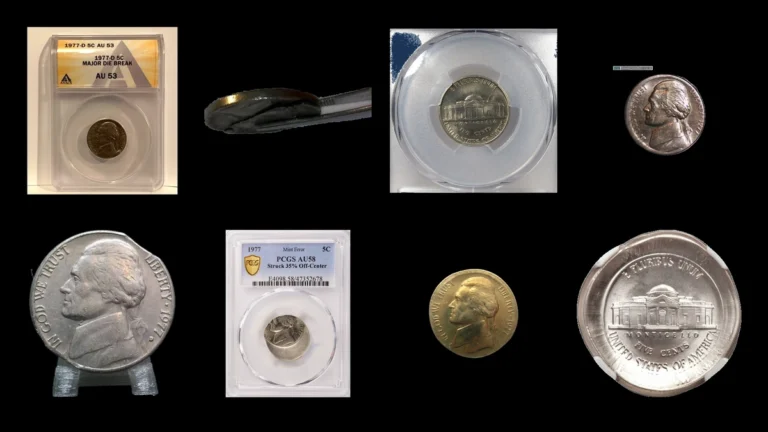
3. 2011 Nickel A Bare Crescent Accompanies Missing Design: Off-Center Strike Error
The documented 2011-P nickel has both an off-center strike and later damage. Its blank was misplaced under the dies, producing unused metal opposite cut-off design.
NGC described AU Details, meaning light wear together with a condition problem. The damage does not erase the original error, but it matters to value.
How to Identify
Examine both faces to confirm that one misplaced blank explains their boundaries. A shift confined to one die is a different alignment issue.
Record scrapes or dents separately from the unstruck crescent and keep 2011 and P visible. No displacement percentage is supplied for the auction coin, so its photograph must not inherit one from another example.
What It’s Worth
The estimated range is $30–$500 across varying displacement and condition. A readable date and undamaged surfaces support stronger comparisons.
The damaged 2011-P AU Details example sold for $63 on January 3, 2022. That actual result does not make it equivalent to a clean, more dramatic coin at the estimated upper end.
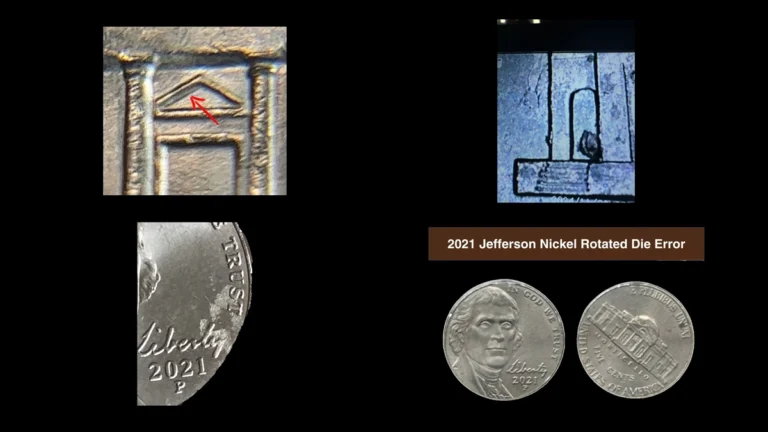
4. 2011 Nickel Monticello Turns Far from Upright: Rotated Dies Error
A 2011-D example is reported with about 120 degrees of reverse rotation. The dies were turned relative to one another, changing the relationship between otherwise recognizable faces.
How to Identify
Practice a top-to-bottom flip with an ordinary nickel: with Jefferson initially upright, Monticello should finish upright. Repeat the same controlled movement with the candidate and measure its reverse from that expected position.
A continuous video with the date and D visible is more useful than separately rotated photographs. Keep a certified holder sealed and inspect accessible edge views for an assembly seam.
What It’s Worth
A clearly demonstrated 2011-D rotation has an estimated range of $40–$300. Large visible turns and well-preserved surfaces help make the comparison.
A 2015-D with a 90-degree clockwise rotation sold for $79 in October 2021 at PCGS MS64. Its measured direction and angle belong to that later coin, not the approximately 120-degree 2011 report.
5. 2011 Nickel The Surface Is Unusually Dark: Improper Annealing Error
Reports list improper annealing for both 2011-P and 2011-D nickels. Annealing is the heating step used to soften blanks, and a problem in that process can change surface chemistry before striking.
The nickname “Black Beauty” does not establish that origin. Burial, chemicals, later heat, and ordinary aging can also darken the metal.
How to Identify
Compare color under neutral light and inspect texture, deposits, pitting, and exposed high points. A coating wearing through or chemical damage may explain darkness without a Mint heating error.
Leave the surface uncleaned for specialist assessment. A normal weight or surviving shine does not rule out every later alteration, and a solid copper-nickel coin has no plated outer layer to lose.
What It’s Worth
Genuine examples have an estimated range of $30–$250. A reliable explanation of the surface and its preservation matter more than the nickname.
A 2005-D Bison nickel with improper annealing brought $119 in December 2022 at NGC MS62. That unworn different-year result does not apply automatically to a stained 2011 nickel.
6. 2011 Nickel The Mint Letter Is Incomplete: Reported Filled-Die Detail Error
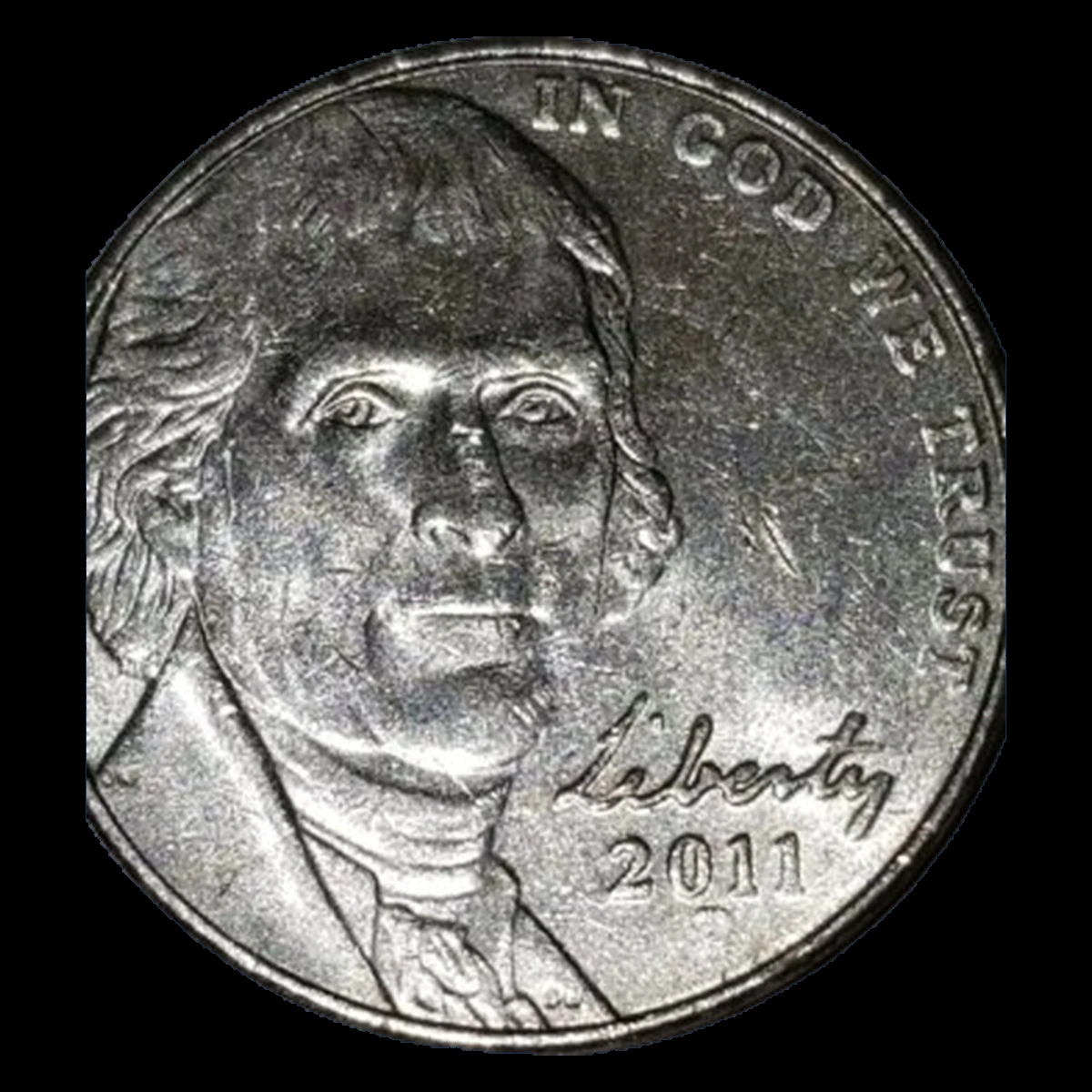
A seller-described 2011-D has an incomplete mint letter, with similar weakness also reported for Philadelphia coins. Grease or other packed material in a die recess can prevent the usual raised detail from forming.
The D report is not a documented grading-service attribution. Wear, weak striking, and deliberate removal must remain alternative explanations.
How to Identify
Search for surviving letter strokes under changing light and compare them with the nearby date. Local weakness beside sharper detail differs from general wear across exposed features.
Inspect for a polished hollow, scratches, or displaced metal around the mintmark. Keep the surrounding portrait in photographs so a close crop does not conceal signs of removal.
What It’s Worth
A genuine filled mint-letter area has an estimated range of $3–$25. Slight weakness belongs toward the lower end, and the seller report supplies no confirmed auction price.
An absent letter alone does not create a major “no mintmark” rarity. Worn-away or removed mintmarks fall outside this error estimate.
7. 2011 Nickel Raised Lines or a Rim Patch Replace Detail: Die Cracks and Cud Error
The reported 2011-P crack is a narrow ridge copied from an opening in the die. A separate 2011-D rim break is larger, producing a raised patch where part of the die’s edge was missing.
The rim-connected patch is called a cud. A tiny interior lump or an impact dent is not the same feature.
How to Identify
For the D break, establish a natural rim connection and replacement of normal detail. Material lying over intact design or a folded edge needs another explanation.
For the P crack, use side light to follow a raised center rather than a scratched groove. Photograph the opposite face too, where weakness can help explain metal movement beside a large break.
What It’s Worth
Small cracks have estimated values of $3–$25; substantial rim-connected breaks may fit $30–$200. These are different scales of die damage.
A 1983-P cud sold for $63 in July 2022 at PCGS AU53. That lightly worn different-year coin is not a sale assigned to the reported 2011-D break.
8. 2011 Nickel Building Traces Appear near Jefferson: Die Clash Error
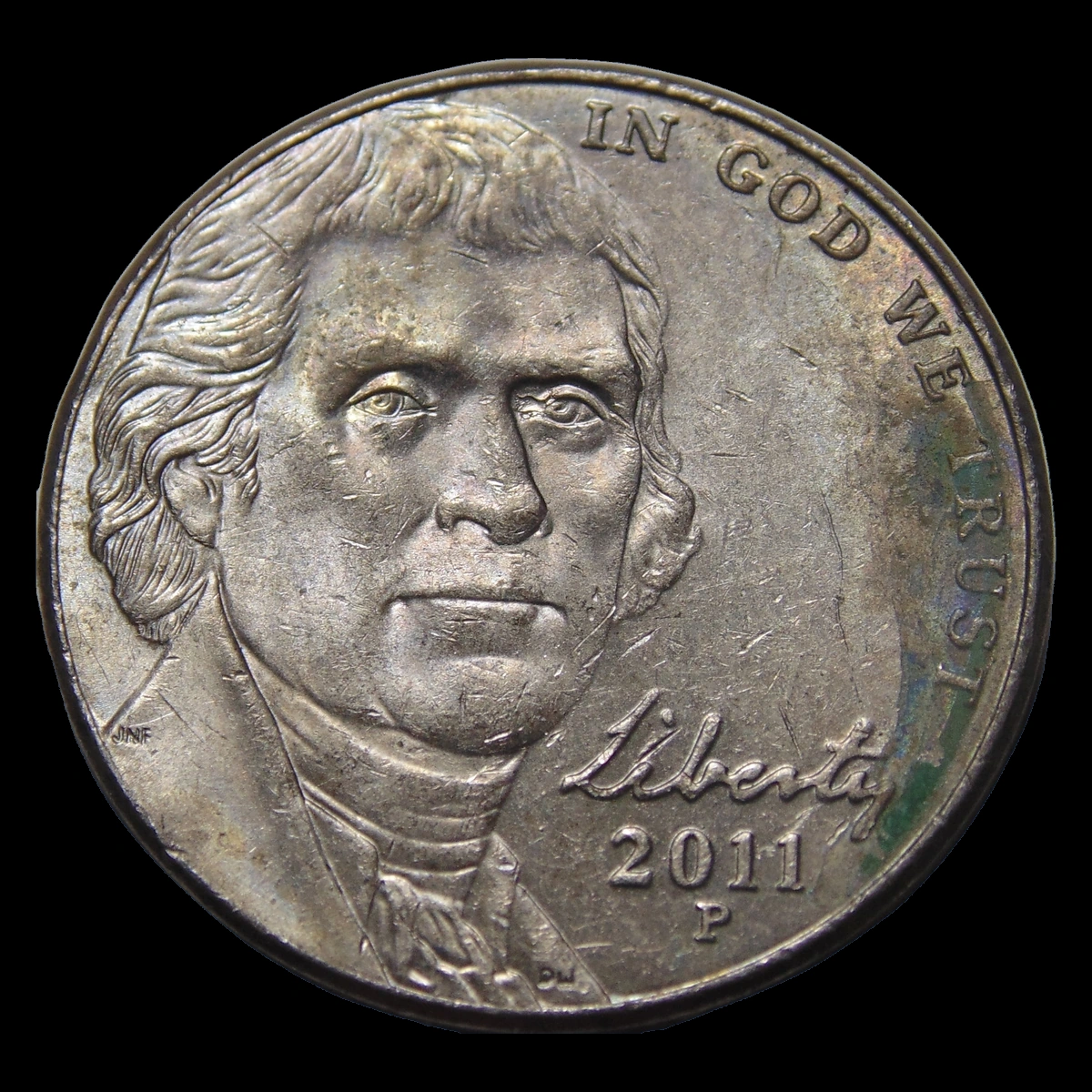
Faint Monticello-related outlines are reported on the front of 2011-P nickels. The dies touched without a blank and transferred marks that later appeared alongside the normal portrait.
How to Identify
Locate the trace relative to Jefferson and compare its shape with the corresponding reverse design. A complete building is unnecessary, but a short line must still make sense in that relationship.
Use low light to separate dirt and scratches from the physical outline. A full recessed mirror design suggests direct coin contact instead of ordinary partial die-clash traces.
What It’s Worth
Recognizable 2011-P clashes have an estimated range of $5–$60. No specific 2011 auction result is assigned here.
Clear marks on unworn surfaces provide better comparisons than ambiguous lines among damage. Several traces are evidence of one feature, not separate prices to add.
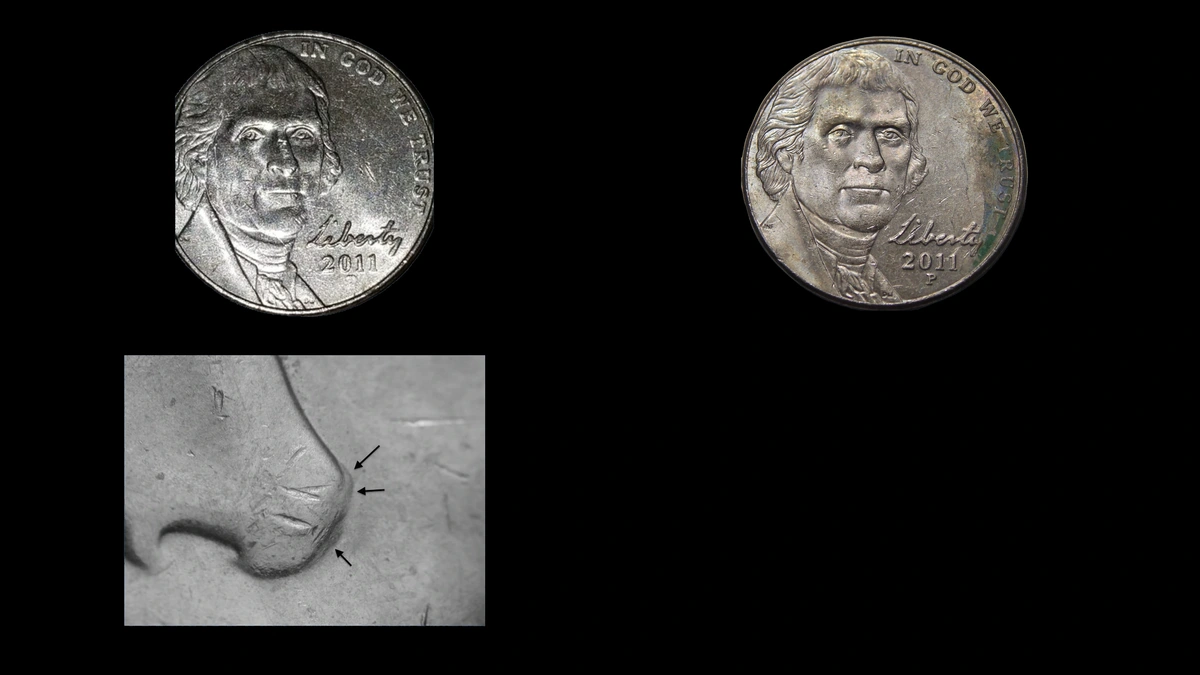
9. 2011 Nickel The Nose or Doorway Has an Extra Outline: Doubled Dies Error
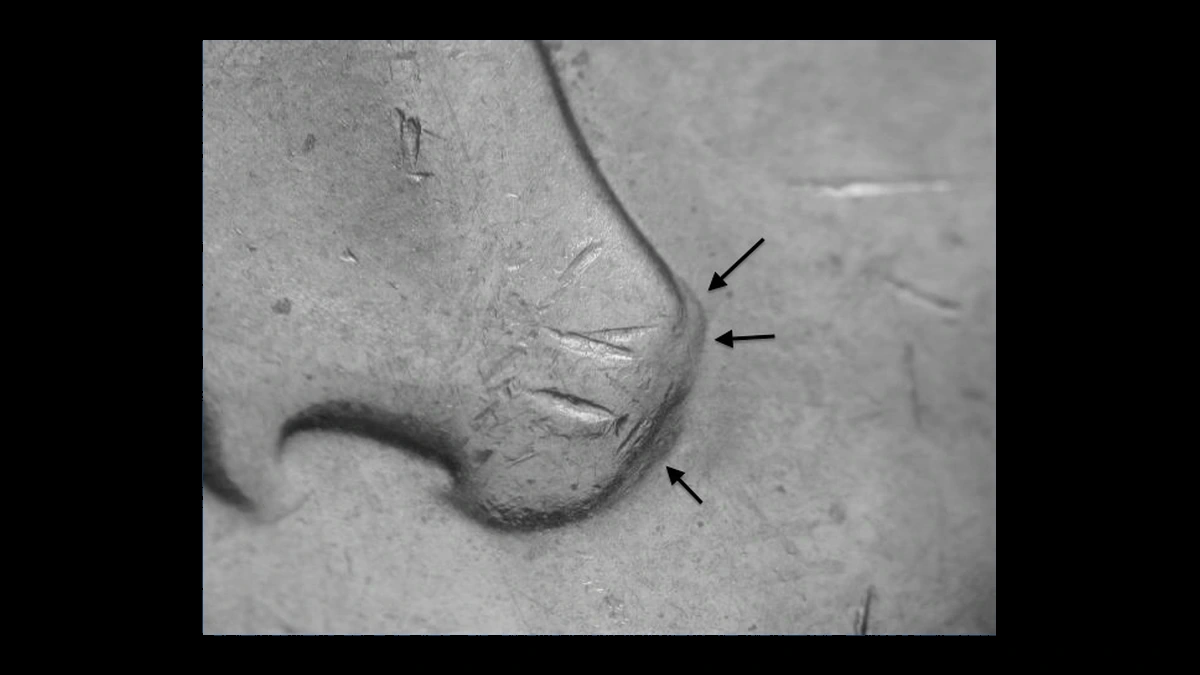
A reported 2011-D front has an extra raised outline along the right side of Jefferson’s nose. Reverse reports concern added detail beneath the upper-left corner of Monticello’s central doorway.
The described mechanism is duplication already present in the die, copied by a normal strike. Philadelphia and Denver reverse patterns require separate comparisons even in the same small location.
How to Identify
Confirm D before comparing the nose feature, and keep the full outline visible under changing light. A shadow is not raised metal.
For the doorway, match the mint and include the surrounding frame. Flat shelves that narrow the original detail can arise during striking rather than from a doubled design in the die.
What It’s Worth
The estimated range is $5–$75 for clearly matched examples. Distinct repetition and unworn surfaces support the stronger part of this modest modern-variety estimate.
A wide shadow or mechanical shelf does not receive that premium. A clear image of the actual added shape is more useful than numerous close-ups of an ambiguous edge.
Conclusion
The 2011 nickel categories range from a few weak strokes to large changes in outline or alignment. Read the mint letter, compare both faces, and use the actual pattern rather than a familiar nickname to identify the feature.
The damaged off-center sale shows that a genuine error can coexist with later problems. Dark surfaces, incomplete mintmarks, and repeated-looking edges still require evidence of their cause before the corresponding estimate becomes useful.