Rare 1969 Nickel Errors (List & Pictures)
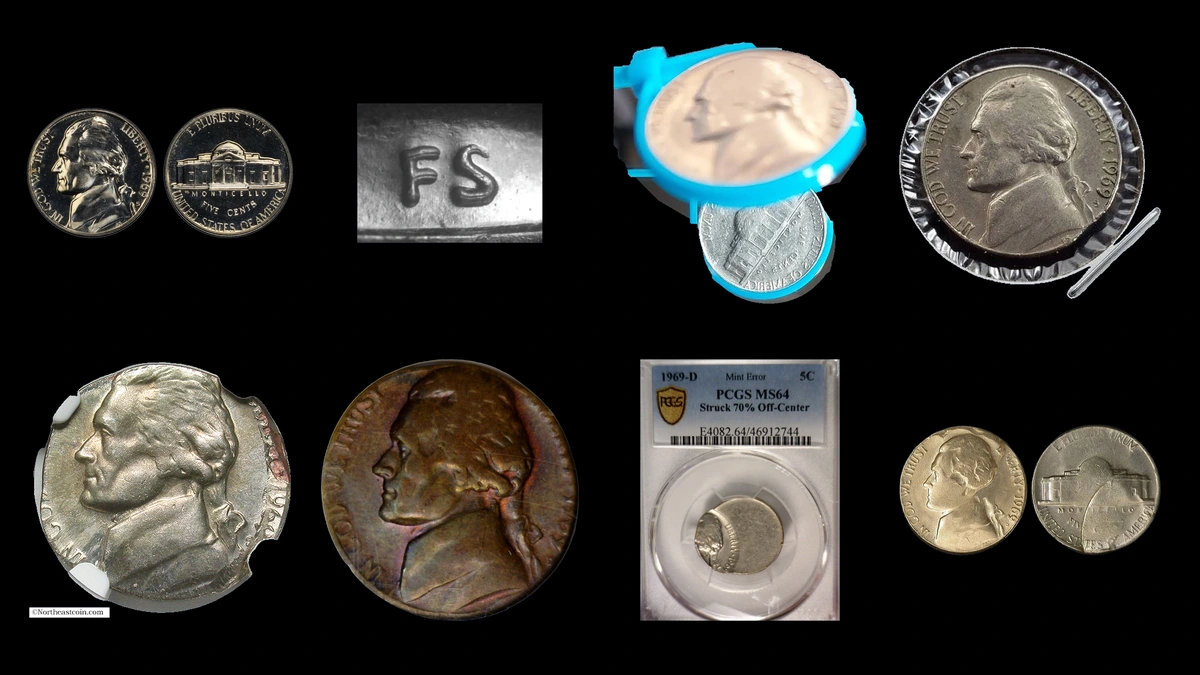
An S does not automatically identify a 1969 nickel as a Proof, because San Francisco also made regular coins. The supplied 1969 nickel errors also include a Denver cent-planchet nickel that sold for $460 at auction in August 2010.
The supplied estimates span $5–$2,000. Establish the mint and finish, then compare repeated details, altered metal, and displaced designs while keeping each documented specimen’s measurements separate.
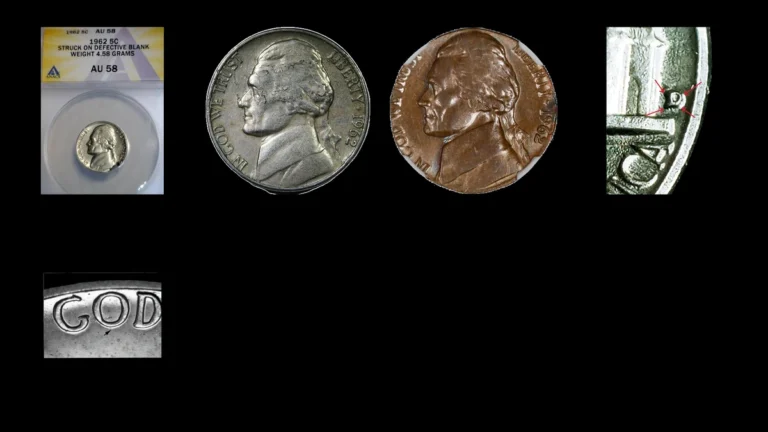
1. 1969 Nickel Another D or S Outline Follows the Mintmark: Repunched Mintmark Error
Mintmarks were punched into working dies separately in 1969. A displaced application could leave an earlier letter partly visible beneath or beside the final one.
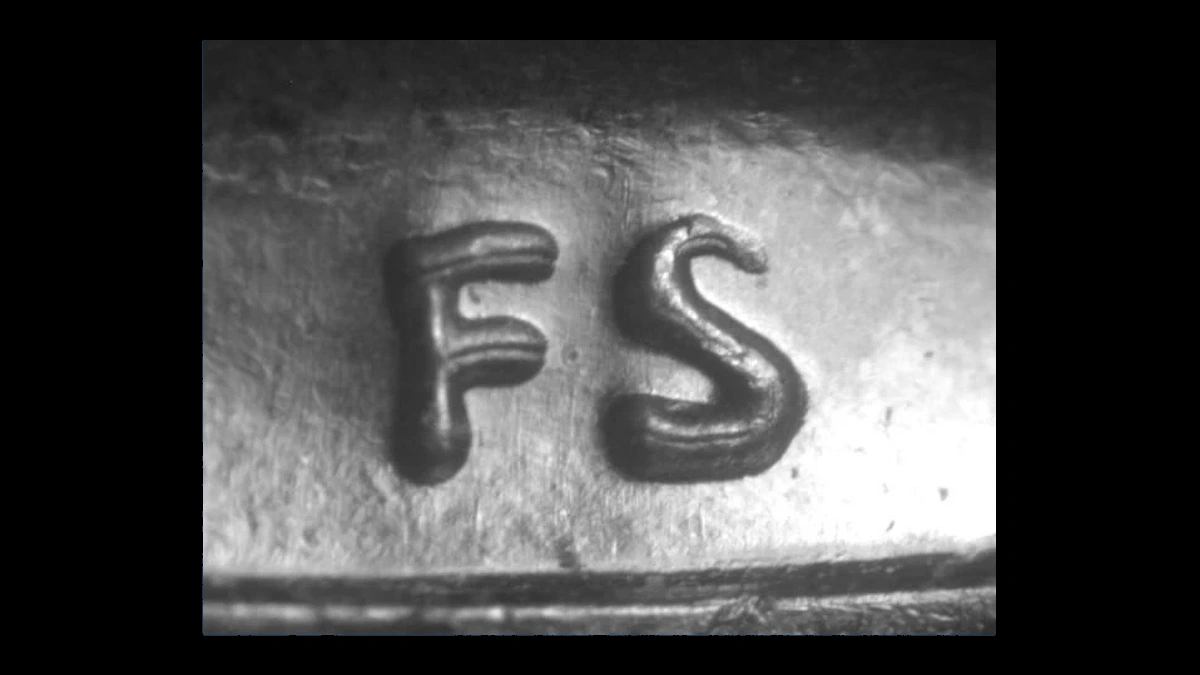
Denver examples include a tilted D beneath the main D, while San Francisco listings show several S directions on regular coins and Proofs. FS-501 identifies a particular S Proof variety, not the FS designer initials or the Full Steps designation.
How to Identify
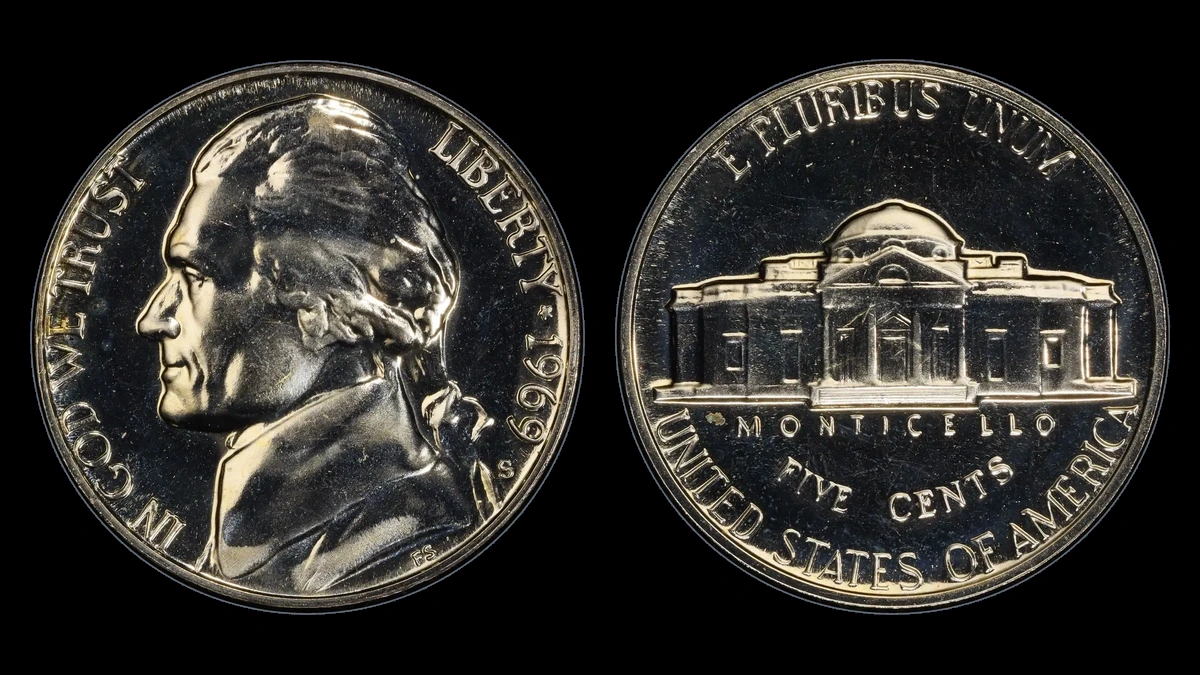
Inspect the mintmark below and right of Jefferson’s portrait, comparing inner curves as well as outer edges with the variety listings. A flat shelf caused during striking is not equivalent to an earlier punched letter.
Confirm the finish independently of the S. San Francisco produced both regular nickels and specially made Proof collector coins in this year.
What It’s Worth
$150–$800 for identified FS-501 examples and roughly $10–$150 for other repunched D or S varieties are the estimates. PCGS records a $600 eBay result in July 2021 for an FS-501 graded PR67.
That is a marketplace record for a high-grade Proof. Other doubled-looking mintmarks do not inherit its value without the correct pattern and manufacture.
2. 1969 Nickel Lettering Has Close Repeated Outlines: Doubled Die Error
Listed 1969-S patterns often affect reverse lettering, especially E PLURIBUS UNUM, while others involve the front motto or small FS designer initials. The doubling was present in the die before the coin received its impression.
Most listed S examples are Proofs, but their finish still needs confirmation. A separate Denver reverse-doubling report cannot be established using an S specimen’s photograph.
How to Identify
Compare individual letters and the exact mint and finish with the supplied variety photographs. Reverse examples call for inspecting the motto and country name, while front patterns require their own match.
Seek fixed raised separation or split detail rather than a shelf that narrows the original letter. If a coin has both doubled lettering and a repunched S, they remain features of one specimen.
What It’s Worth
$10–$200 is the range for identified minor doubled dies of this date. Clear, attractive collector examples make stronger comparisons than very close doubling difficult to show.
The $600 FS-501 result concerns the separate mintmark variety. It should not be assigned to all doubled lettering or added as an independent full value to a coin already priced.
3. 1969 Nickel The Reverse Tilts After a Consistent Flip: Rotated Dies Error
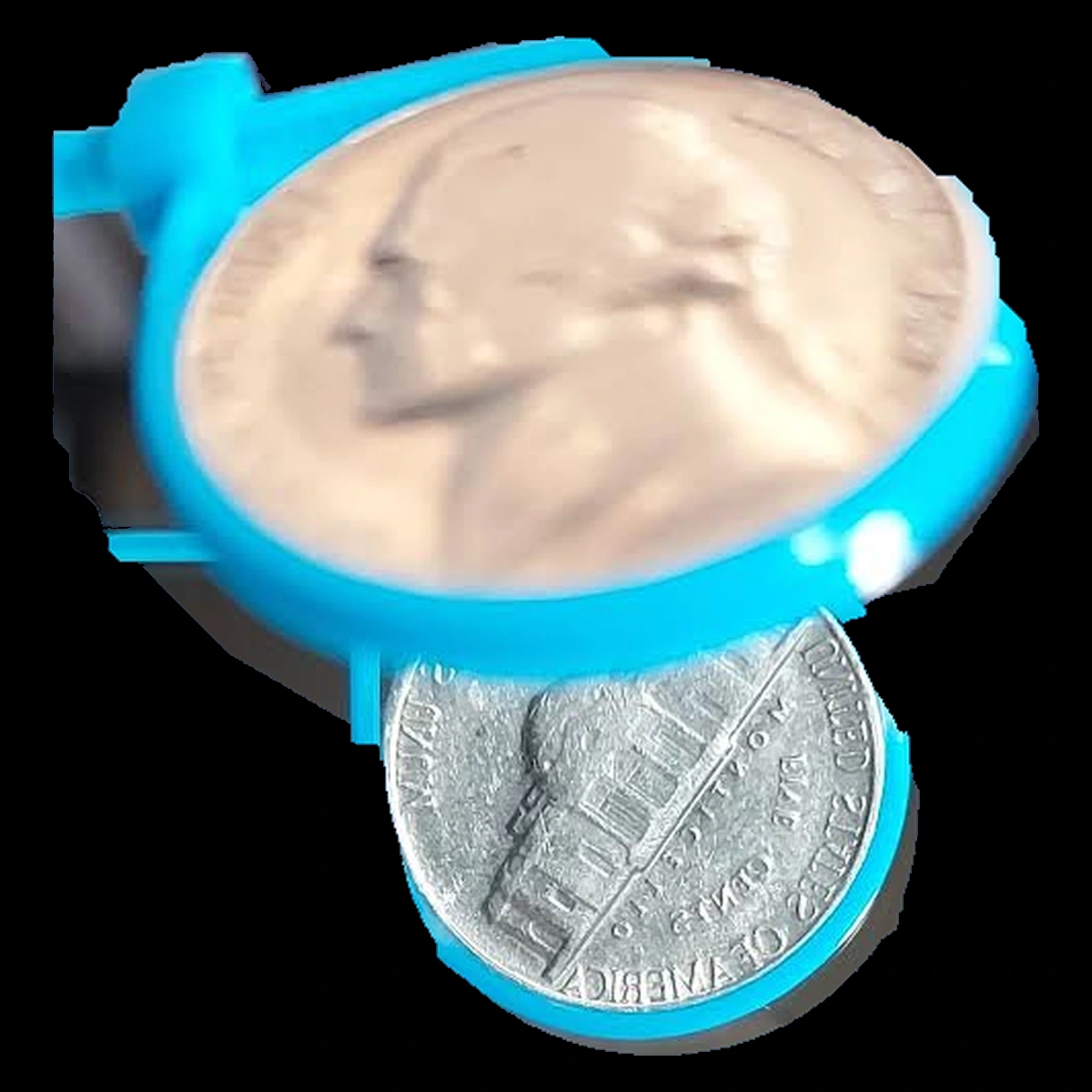
A rotated die changes how the two faces relate to each other without necessarily changing the lettering on either face. Monticello may finish tilted when an upright Jefferson is turned top to bottom.
The 1969 report supplies no specific angle shared by the category. Regular and Proof coins also require separate comparisons.
How to Identify
Repeat the top-to-bottom flip in a clear holder without twisting sideways. Keep the holder’s top visible and measure the consistent difference from an upright reverse.
Inspect the edge for a join if the relationship is unusual. A normal nickel weighs 5 grams, measures about 21.21 millimeters, and has a plain edge, but normal measurements do not themselves prove die rotation.
What It’s Worth
$25–$250 is the estimate for an obvious genuine rotation on a regular 1969 nickel. Larger demonstrable angles generally attract more attention than slight departures.
No particular angle or Proof example is assigned a sale record here. Independently rotated photographs are insufficient evidence for using the range.
4. 1969 Nickel A Curved Gap or Unfinished Punch Line Appears: Clipped Planchet Error
A blanking punch overlapping an existing hole in the metal strip can produce a curved missing section. An incomplete cut can instead leave its curved trace while the metal remains attached.
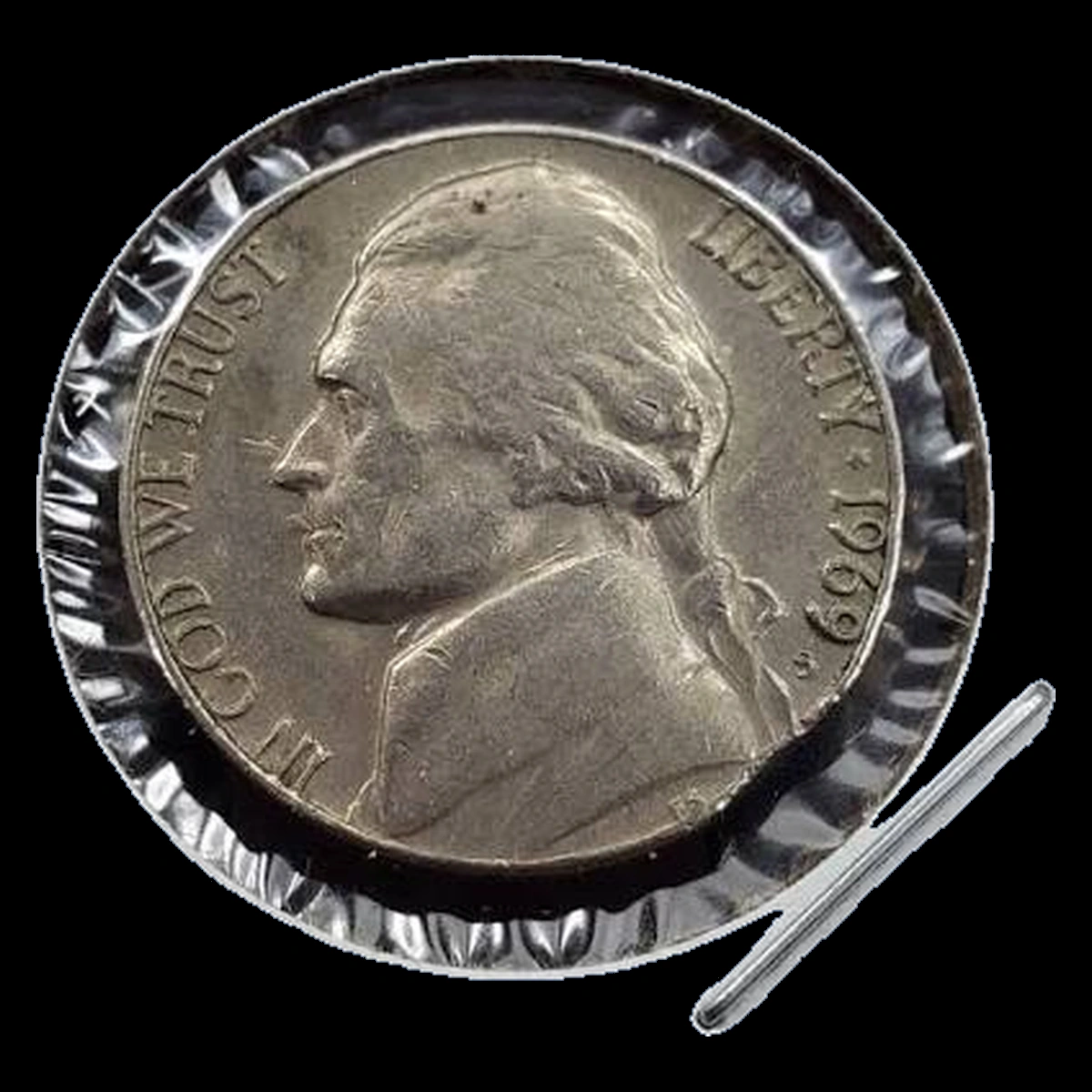
The recorded NGC MS65 1969-D shows an incomplete curved clip. It therefore differs from a coin with a fully open gap.
How to Identify
Determine whether metal is actually absent before interpreting the line. An original incomplete punch feature must be distinguished from a fresh curved scratch across finished detail.
On a complete clip, inspect both ends of the gap and the way nearby rim and lettering approach it. Weakness opposite a clip can support the attribution, but is not required to be obvious on every example.
A complete clip reduces mass, while an unfinished one need not. Keep attached metal in place rather than opening the cut to test its depth.
What It’s Worth
$25–$300 is the estimate for genuine complete or incomplete clips. The NGC MS65 Denver incomplete clip sold for $172.50 in August 2010.
Its unworn condition and clear feature are part of that comparison. A small curved line alone does not establish either its origin or value.
5. 1969 Nickel The Design Was Struck on an Exposed Split Surface: Split Before Strike Error
The documented 1969-D weighs 4.2 grams and was identified by NGC as a split blank struck after separation. Part of the original metal was already gone when the remaining piece received its design.
The timing distinguishes it from a layer that peeled away after the coin was finished. Nickels contain one copper-nickel alloy, so it is not a missing outer layer exposing a separate copper core.
How to Identify
Look for portions of the struck design crossing the rough exposed surface. That relationship supports the split having existed when the dies came together.
Record weight and the surviving outline; a split can leave a nearly normal diameter. Uniform grinding, a smoothly shaved face, or fresh cutting instead suggests metal removed after striking.
What It’s Worth
$40–$150 is the supplied estimate for comparable split-before-strike pieces. The 4.2-gram Denver example sold for $64 in December 2024.
No numerical grade appeared in the sale title. Its result should not be converted into a grade-specific price promise.
6. 1969 Nickel A Very Light Coin Has an Unspecified Blank Defect: Defective Planchet Error
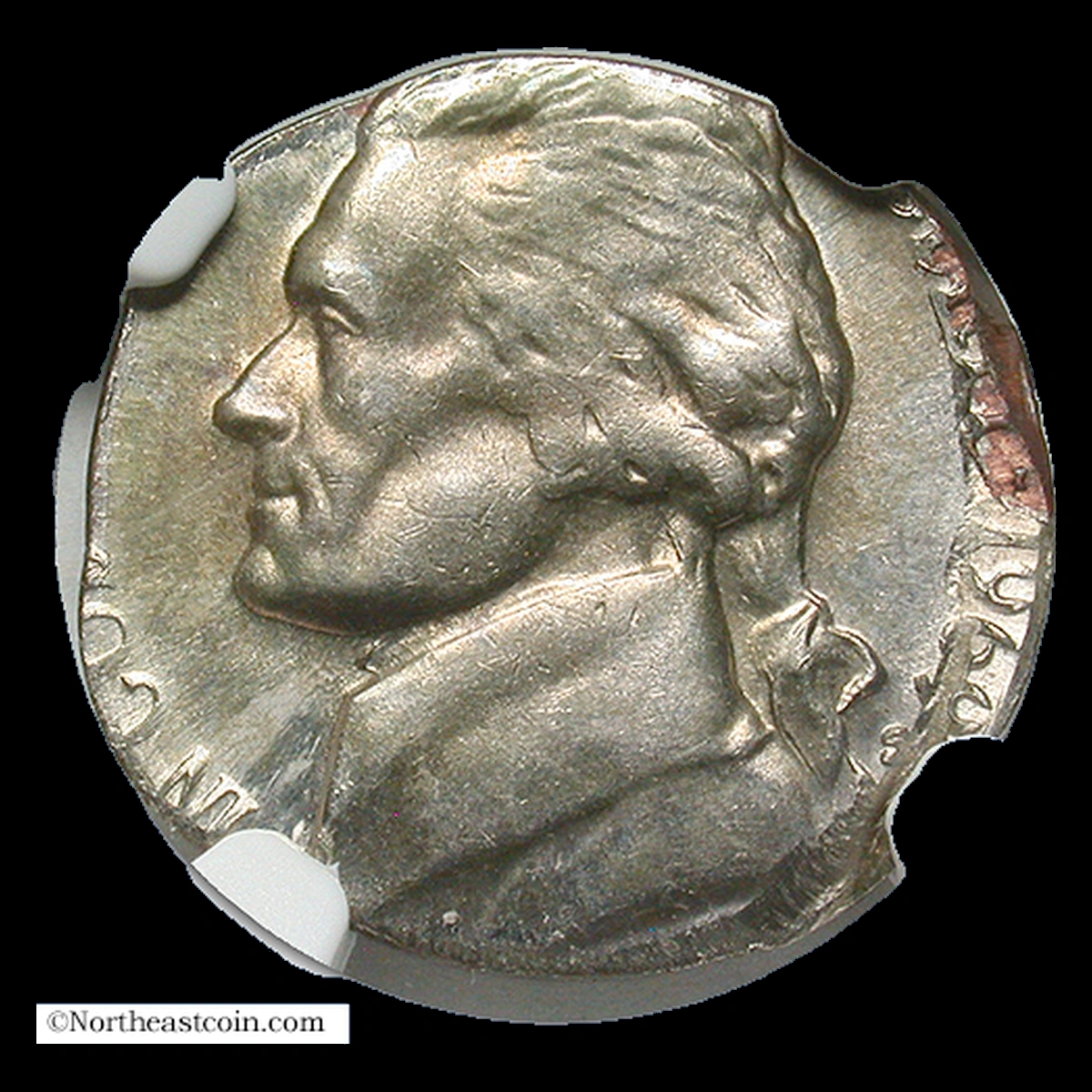
The 1969-S listed by Northeast Numismatics weighs 2.2 grams and was graded NGC MS63 as struck on a defective blank. That is less than half normal nickel weight, but the label does not establish the precise cause.
It names neither a dime blank nor a particular split. Those more specific conclusions need evidence beyond a similar scale reading.
How to Identify
Keep the dealer specimen’s recorded 2.2-gram measurement with its actual defective-blank description. Leave it in the holder rather than opening it to reweigh.
For a loose candidate, record size as well as mass and inspect both faces and the edge. Grinding lines, shaved metal, or deep corrosion may explain lost weight without an original blank defect.
What It’s Worth
$200–$800 is the working estimate for a comparable professionally identified defective blank. The dealer offered the recorded specimen for $525.
That was an asking price, not a completed auction result. A damaged nickel near 2 grams does not qualify solely through its weight.
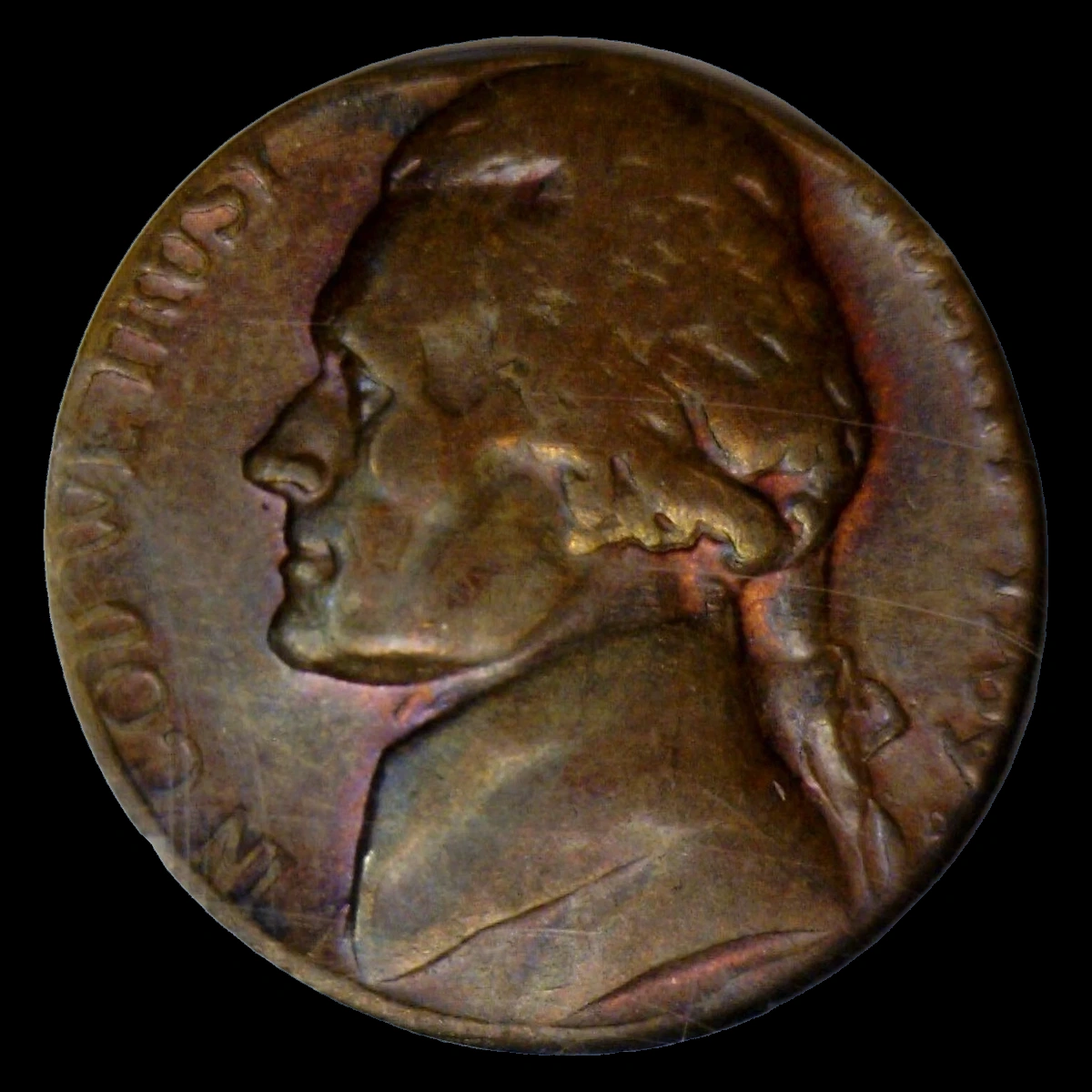
7. 1969 Nickel Different Blanks Received the Nickel Design: Wrong Planchet Error
The supplied records include a Denver nickel on a 3.1-gram copper cent blank and S and D examples on dime blanks. Foreign-planchet records include a Denver nickel on a Philippine 25-sentimos blank weighing 4.03 grams and a separate historical piece listed around 4.21 grams.
Those weights belong to different coins. The metal and surviving design must agree with each proposed blank, not just a generally lighter-than-normal nickel.
How to Identify
Inspect naturally cut-off lettering and the edge for the appropriate metal. Paint and plating can imitate cent color but cannot explain the whole combination of weight, dimensions, and cropped design.
A layered dime blank normally starts near 2.27 grams, which is a reference rather than an actual measurement for every listed error. Foreign attribution requires the alloy and size together, and striking can alter the starting diameter.
What It’s Worth
$250–$1,000 for comparable cent or dime planchets and $300–$2,000 for identified Philippine blanks are the estimates. A Denver cent-planchet coin sold for $460 in August 2010.
A January 2019 fixed-price sale of an S dime-planchet MS64 is recorded at $379.99. No completed sale is supplied for the 4.03-gram Philippine piece.
8. 1969 Nickel Complete Designs Survive on Expanded Metal: Broadstrike Error
The reported broadstrike spreads beyond normal diameter because the collar did not contain the blank. The full design can remain within the metal despite unequal border widths or some surviving rim.
The year report gives no fixed mint or exact enlarged diameter. Those observations must come from the coin being examined.
How to Identify
Read all the outer lettering on both faces and compare the expanded border around it. A broadstrike retains its intended design, unlike an off-center coin with details lost beyond the edge.
Inspect Jefferson, Monticello, and the edge for hammer marks or flattened detail from later pressure. Extra width alone cannot distinguish the causes.
What It’s Worth
$30–$300 is the estimate for genuine regular-strike broadstrikes. A clear expanded outline with readable date is generally more appealing than a slight spread difficult to demonstrate.
No single measured 1969 specimen or sale establishes this range. Original metal flow must support the mint-made cause before the estimate applies.
9. 1969 Nickel Much of the Design Missed an Intact Blank: Off-Center Strike Error
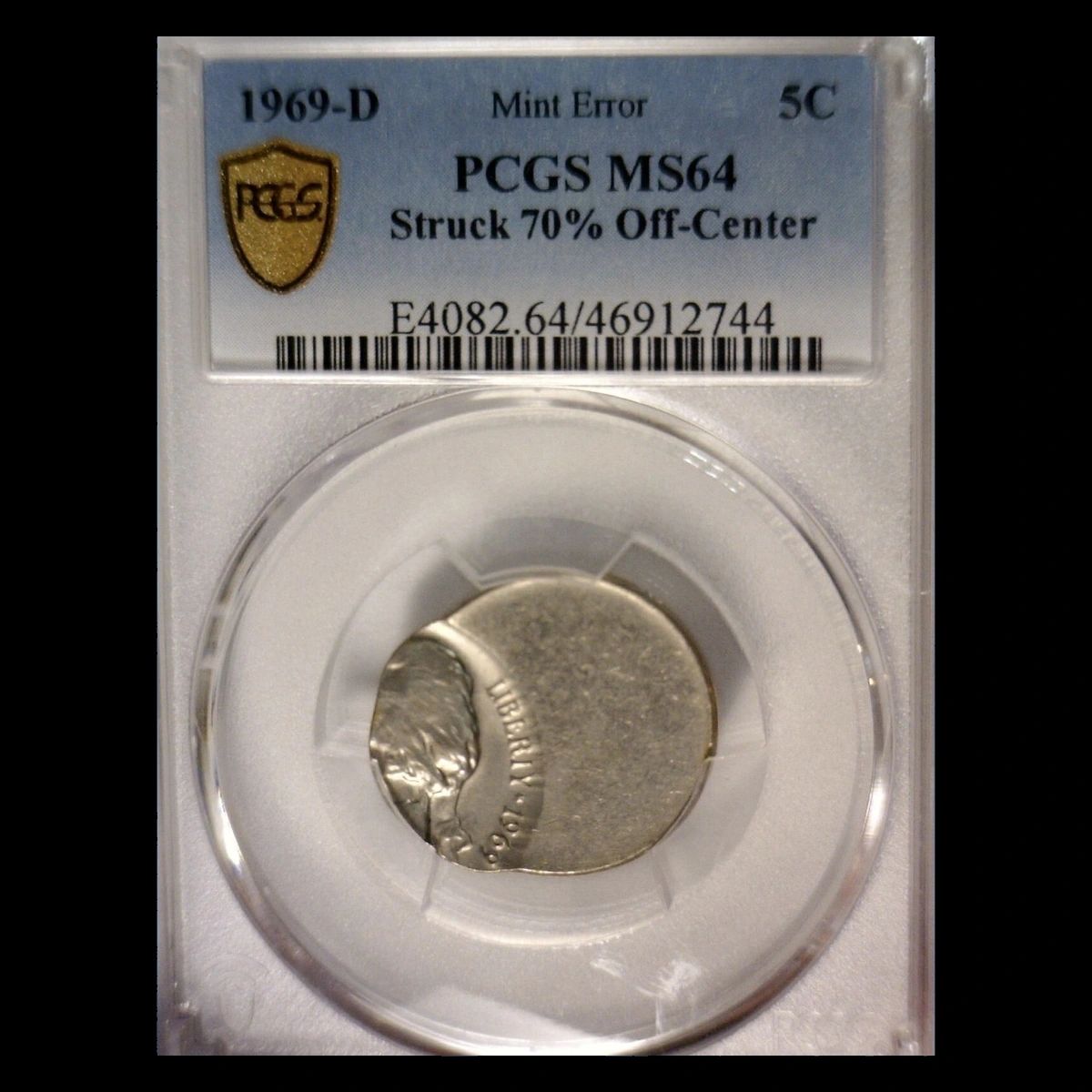
The year guide describes a 1969-D struck 65% off center and graded PCGS MS64. The blank was displaced between the dies, leaving solid unused metal beside the partial design.
The percentage describes design that missed the disc, not metal removed from it. No direction is supplied for this specimen.
How to Identify
Read enough of the date and mintmark to establish the issue before estimating displacement. A nearly blank undated fragment cannot automatically be valued as a 1969 coin.
Compare both faces for the same misplaced blank and inspect the unstruck area for grinding. A one-face uneven rim or trimmed edge needs a different explanation.
What It’s Worth
$20–$100 for smaller shifts and $100–$500 for dramatic dated examples are the estimates. These are not a verified selling price for the reported 65% Denver coin.
Readable identity and original surfaces matter alongside the amount of missing design. A larger blank area alone does not determine the result.
10. 1969 Nickel Tape or Other Material Interrupted the Strike: Struck Through Error
The documented regular-strike 1969-S has tape impressions on both faces and was graded NGC MS64. Material between die and blank blocked the normal design and left evidence of its presence.
The attribution does not establish that tape remains attached today. Other struck-through reports identify the general process without specifying the material.
How to Identify
Photograph where normal lettering or portrait detail meets the affected area on each face. A design interrupted during striking differs from glue lying over fully formed letters afterward.
Use side lighting to inspect the depression and any texture without scraping. If residue or material remains, leave it in place for examination rather than testing whether it comes off.
What It’s Worth
$25–$600 is the estimate from smaller genuine impressions to strong identified examples. The two-sided tape coin brought $322 in August 2010.
That amount bought one coin with both impressions. It should not be counted once per face.
11. 1969 Nickel A Faint Second Impression Includes a Reversed Portrait: Multiple Strike and Brockage Error
A recorded S double strike has its second blow 85% off center toward about 7 o’clock. The coin was graded AU55 and has scratches attributed to leaving the press.
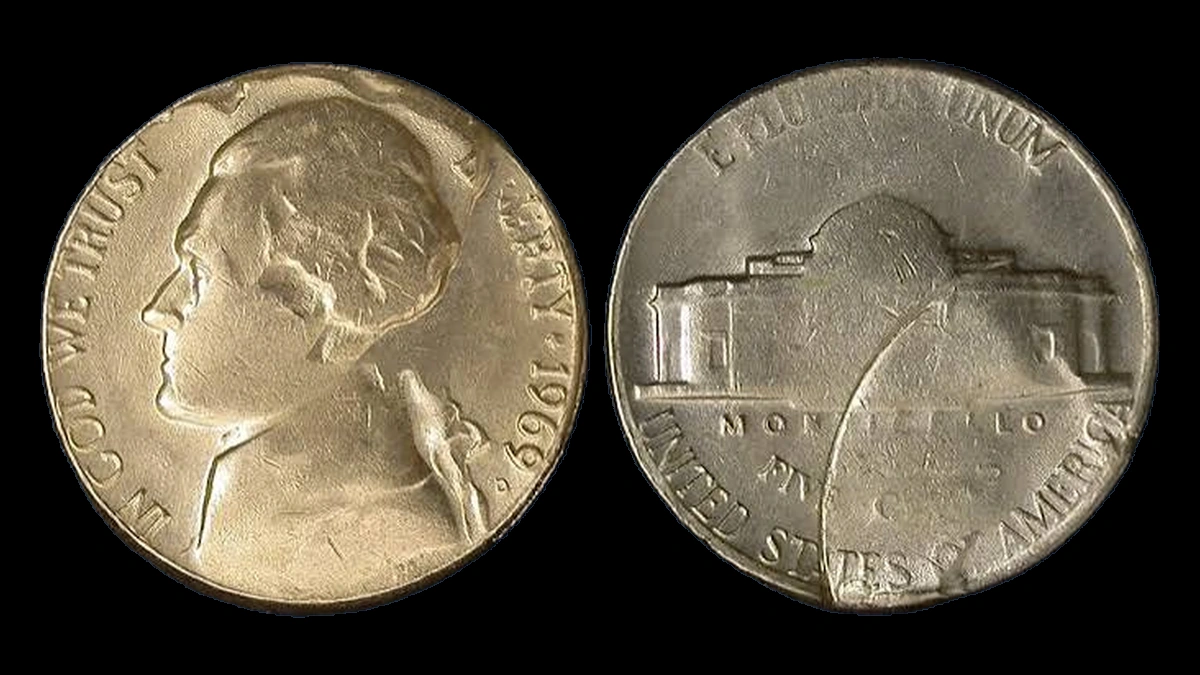
A separate Denver coin has an extremely weak second strike about 30% off center with a shallow reversed portrait on the reverse. Another nickel beneath it produced that recessed mirror impression, called brockage.
How to Identify
Mike Diamond’s explanation describes why the Denver example lacks two bold complete designs. Trace its limited second-strike front detail together with the shallow reverse portrait under angled light.
The press barely squeezed the stacked coins during that weak event. Do not transfer the S coin’s lower-left direction to the Denver combination or reject it simply because much of the second strike is faint.
What It’s Worth
$150–$600 for comparable double strikes and $300–$1,000 for a clear weak double strike with partial brockage are the estimates. The S example appeared with a $159 minimum bid rather than a reported final sale.
No sale is supplied for the Denver coin. Its weak second impression and brockage are parts of one combined error.
12. 1969 Nickel Cracks Lead to a Rim-Connected Raised Patch: Die Breaks Error
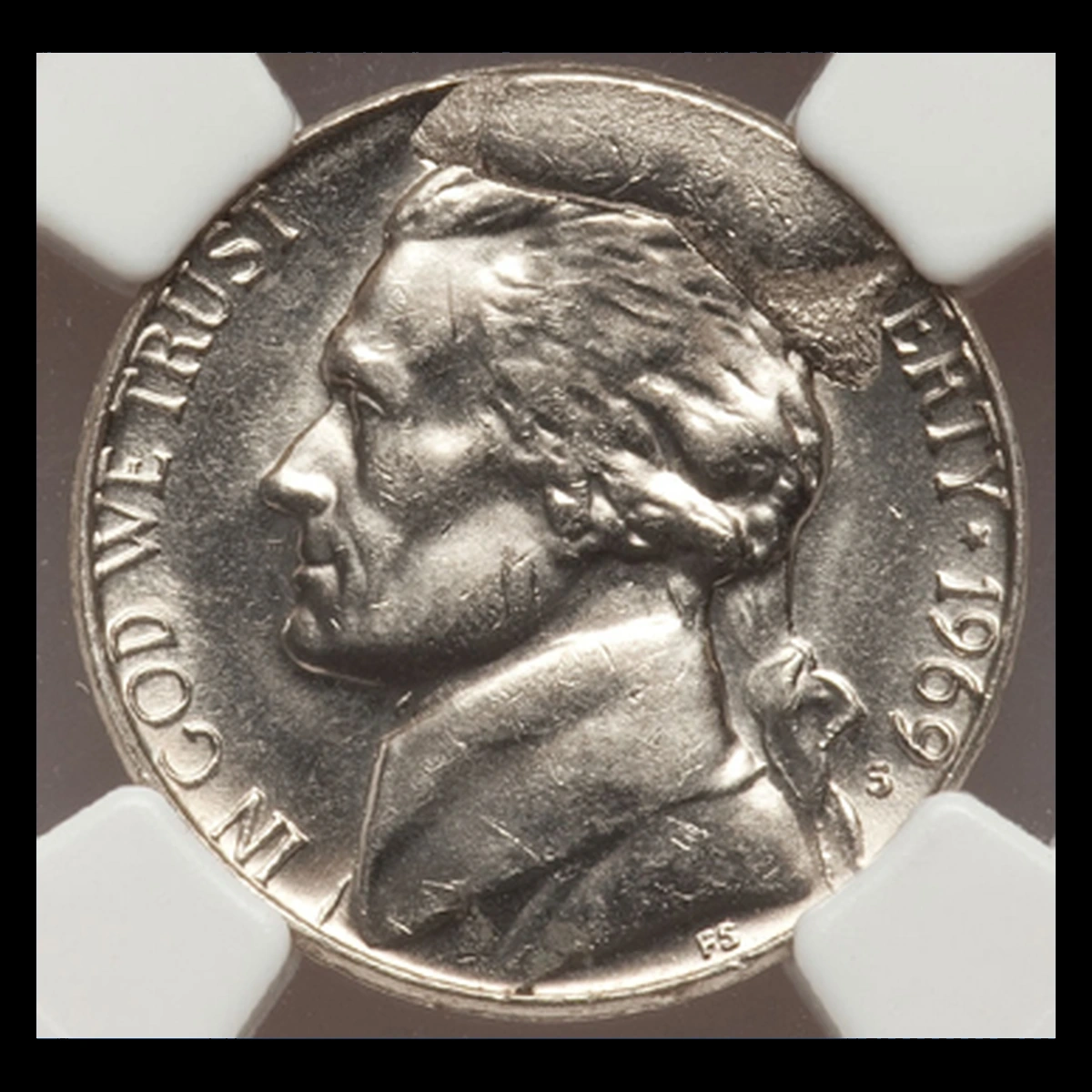
The documented regular-strike 1969-S cud extends across the top front rim from roughly 12 to 2 o’clock. A section missing from the die’s edge allowed coin metal to rise into that space.
Narrow cracks leave ridges rather than broad patches. A separate S Proof cud is reported, but the regular coin does not establish its location or finish.
How to Identify
For the recorded regular coin, follow the raised patch into the rim at the top of the front. Inspect nearby surfaces for a dent, scraped copper-nickel, or a displaced rim that could imitate a break.
A genuine crack rises above the surface rather than forming a cut. Confirm Proof manufacture independently when assessing the separate Proof report, since S alone identifies neither finish nor matching cud.
What It’s Worth
$5–$50 for small cracks and $50–$300 for ordinary cuds are the estimates. The regular S cud, graded NGC MS65, sold for $94 in August 2010.
$200–$1,500 is a conditional estimate for the separately reported Proof cud after its finish and break are confirmed. That higher band is not a recorded Proof sale or a price for every S-mint crack.
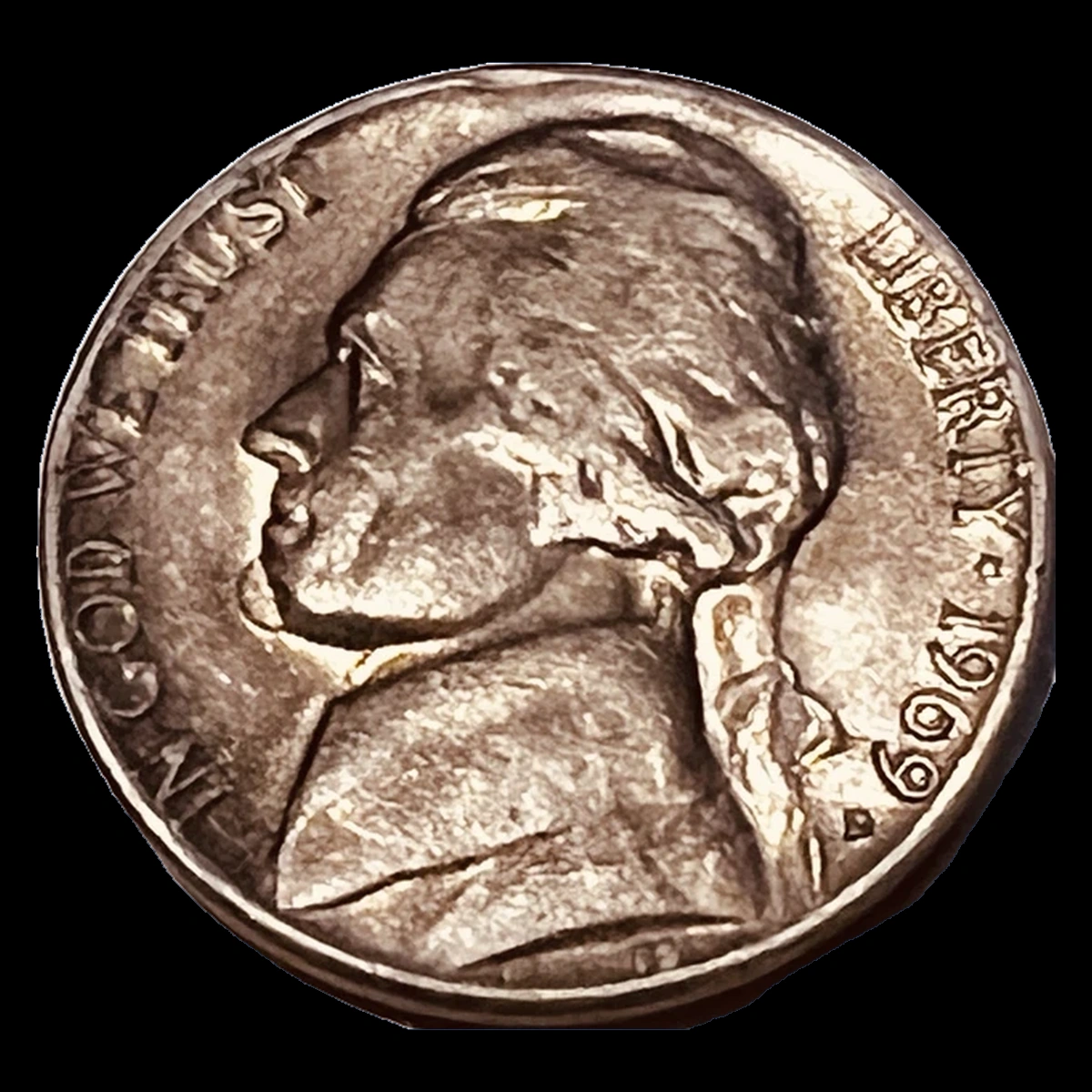
13. 1969 Nickel Fragments Resemble the Opposite Design: Die Clash Error
Clash traces come from the dies meeting without a blank and marking each other. Later coins can carry incomplete portions of the opposing portrait or building alongside their normal design.
The 1969 guide gives no universal location for those fragments. A recognizable design relationship is therefore essential to the attribution.
How to Identify
Compare the unexpected shape with a clear view of the opposite face, seeking connected curves or angles rather than an unrelated straight line. A clash usually leaves fragments rather than a second complete portrait.
Move the light to distinguish the mark from a scratch and its pushed-up edges. Weight and size describe the coin but cannot identify the source of an extra outline.
What It’s Worth
$10–$100 is the estimate for a recognizable clash on a regular 1969 nickel. A clear fragment in an open area is easier to demonstrate than a faint line among busy lettering.
No recorded transaction is supplied for the guide’s example. A claimed shape visible in only one photograph needs better evidence before it supports the same comparison.
Conclusion
For 1969 nickels, the mintmark and finish are separate observations, and a low weight does not name the blank by itself. A split before striking, an unspecified defective blank, and a wrong-denomination planchet each require their own evidence.
Keep auction results, minimum bids, asking prices, and marketplace records distinct. Preserve exposed surfaces and contact marks so that original minting features can be separated from later cutting, residue, or pressure damage.