Rare 1989 Nickel Errors (List & Pictures)
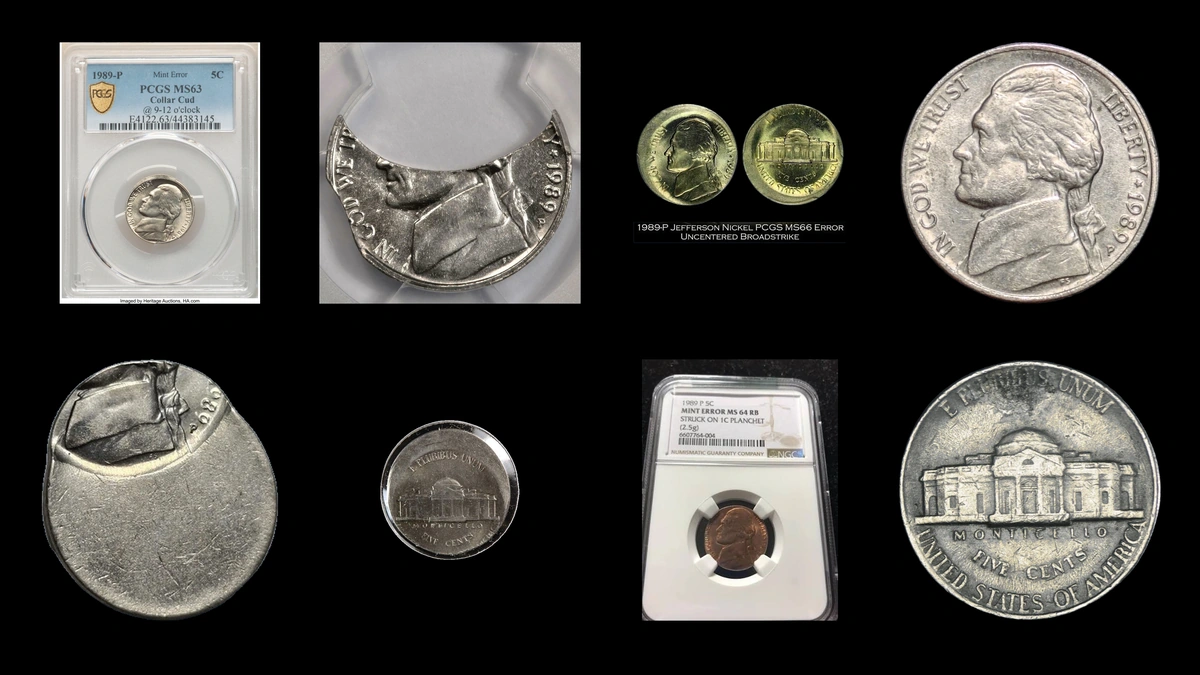
A dime blank carrying Jefferson’s nickel design brought $690 in January 2011. That small coin is one of several very different 1989 nickel errors, with supplied estimates ranging from $5 to $1,500.
Begin with the edge and outline, especially when the coin seems wide, clipped, or unusually small. Then compare both designs and any transferred details before assigning a cause to an extra line or depression.
1. 1989 Nickel An Extra Strip Bulges From the Edge: Collar Cud Error
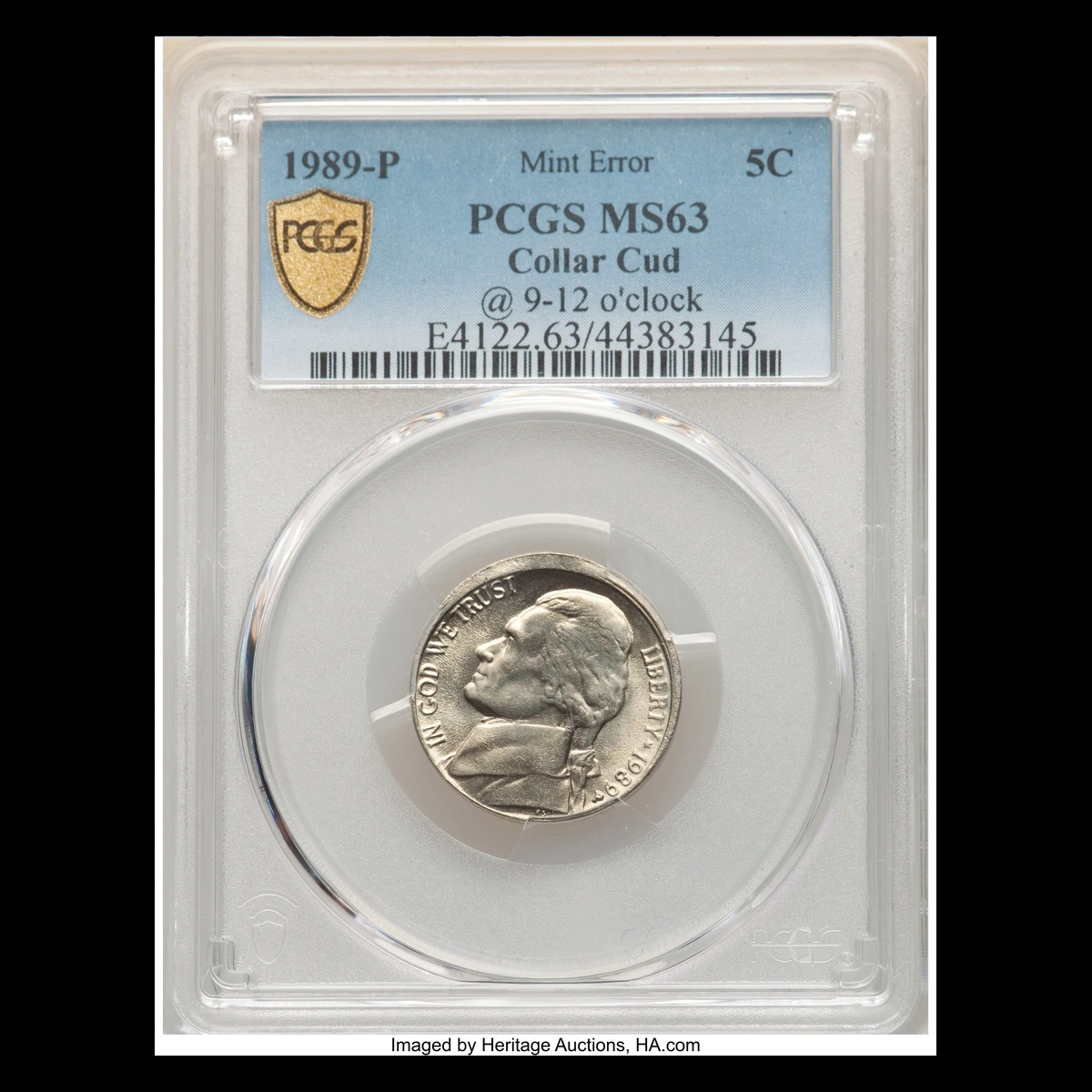
The collar is the ring that contains a blank’s edge during striking. If a piece breaks out of that ring, coin metal can enter the opening and create a raised strip on the edge, called a collar cud.
Philadelphia listings describe examples extending from 9 to 12 o’clock and another from 9 to 11. These are separate specimens, even when their descriptions or grades seem similar.
How to Identify
Orient Jefferson upright and view the coin from the side to establish the affected span. Follow the transition from the ordinary plain edge into the bulge rather than looking only for a lump on the front.
A normal nickel weighs 5 grams and measures about 21.21 millimeters. Safe measurements can document expansion, while dents, battered metal, or a separate attachment seam may indicate later damage instead.
What It’s Worth
$25–$250 is the estimate across different lengths, clarity, and condition. Auction records list $123 in January 2023 for a PCGS MS62 example described from 9 to 11 o’clock.
A separate MS60 piece described from 9 to 12 is listed around $31 in July 2022. Both are unworn grades, but the specific edge feature and surface quality remain important.
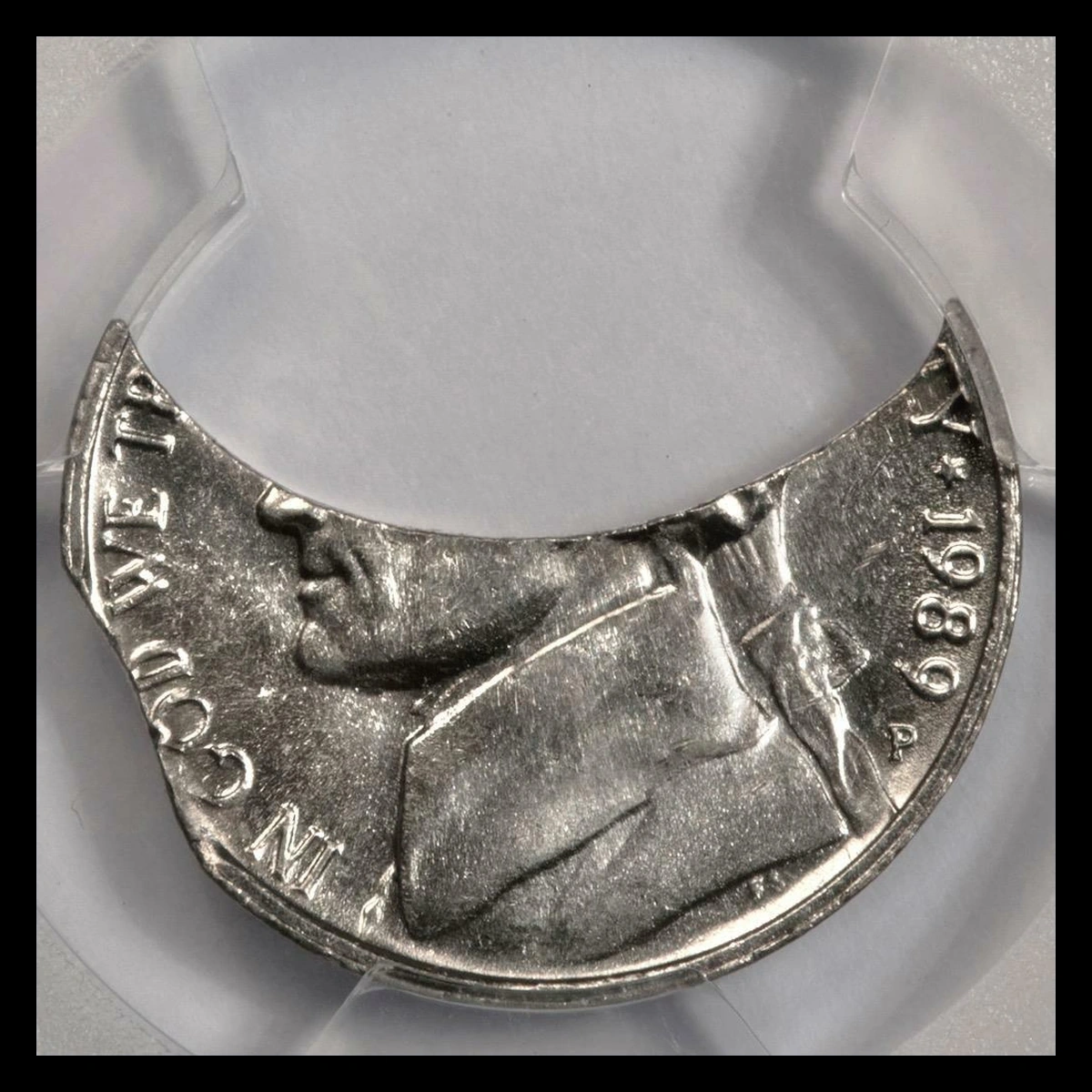
2. 1989 Nickel A Curved Opening Interrupts the Disc: Clipped Planchet Error
The recorded Philadelphia major curved clip weighs 4.01 grams and was graded ANACS MS65. Its missing section was attributed to the blank before the coin received its design.
No clock position is supplied for that opening. Another coin with similar weight or shape still needs examination of its own boundary.
How to Identify
Inspect both ends of the gap and the neighboring struck details. Original metal flow toward the missing area differs from filing or cuts across an already finished design.
Record actual weight and intact dimensions without converting the missing mass into an assumed precise clip percentage. Weakness opposite the gap can support the attribution, but its absence does not settle the question.
What It’s Worth
$40–$300 is the estimate for a clear major curved clip. The 4.01-gram Philadelphia listing identifies the specimen without a usable sale amount in the supplied record.
A 2005-P 10% curved clip sold for $99 in June 2026. That is a different date, grade, and missing amount rather than the 1989 coin’s price.
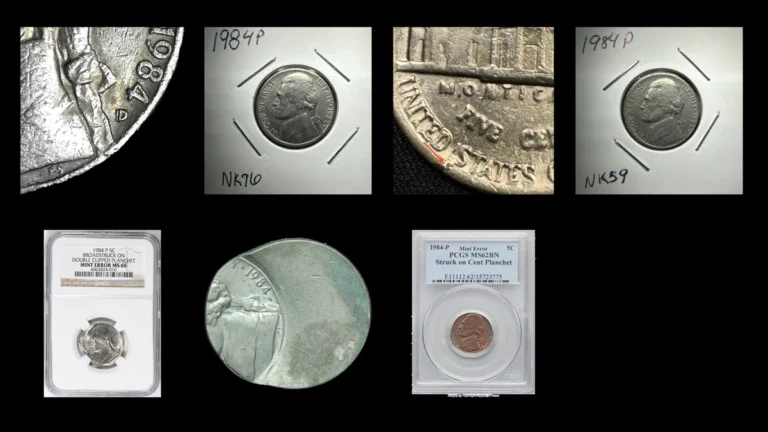
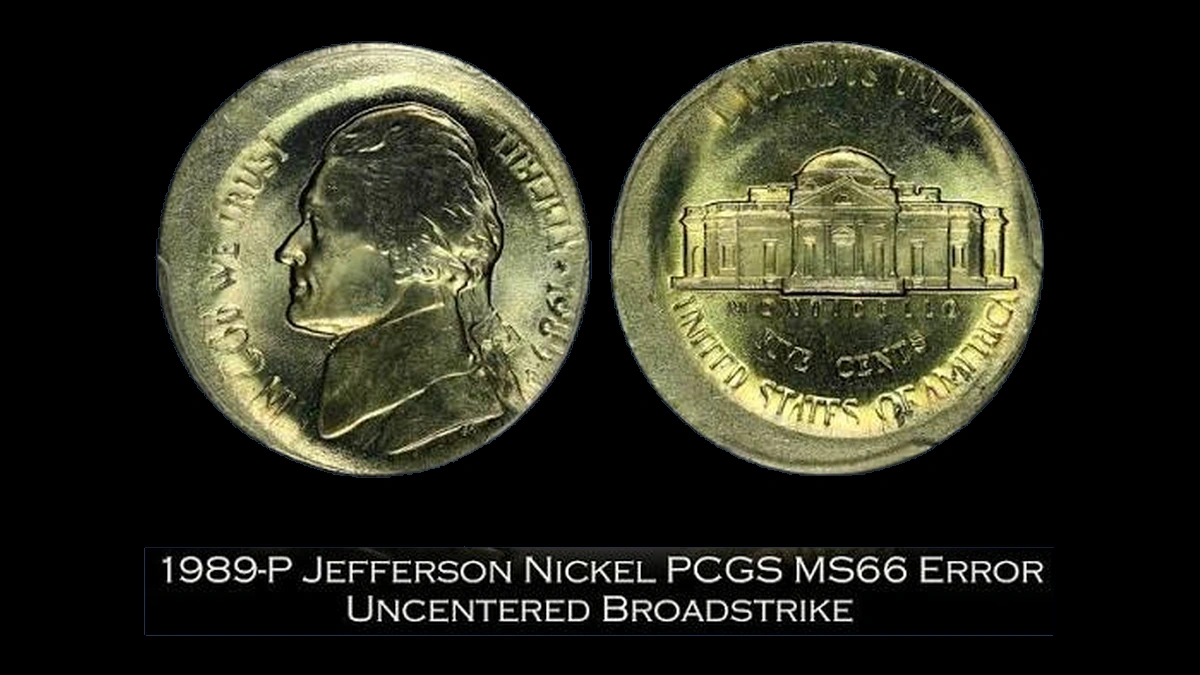
3. 1989 Nickel The Coin Is Wider but Its Designs Are Complete: Broadstrike Error
Unrestricted spreading can occur when the collar fails to hold the blank during the blow. A broadstrike keeps the full design while metal expands outside its usual boundary.
The Philadelphia auction example is described as struck on a Type Two blank. That term means the blank already had its raised starting rim; the ordinary preparation is not the error.
How to Identify
Trace the entire outer lettering on both faces before measuring the width in several directions. Complete designs distinguish a broadstrike from an off-center strike that loses some intended detail beyond the blank.
Examine expanded metal for crushing, filing, or flattened letters from later hammering. A smooth edge proves little because normal nickels already have plain edges.
What It’s Worth
$20–$200 is the supplied estimate. The Philadelphia Type Two example, graded ANACS MS63, is listed around $47 in December 2020.
The result concerns an unworn but marked coin with a straightforward broadstrike. Indented or multiply struck combinations need comparison as complete objects.
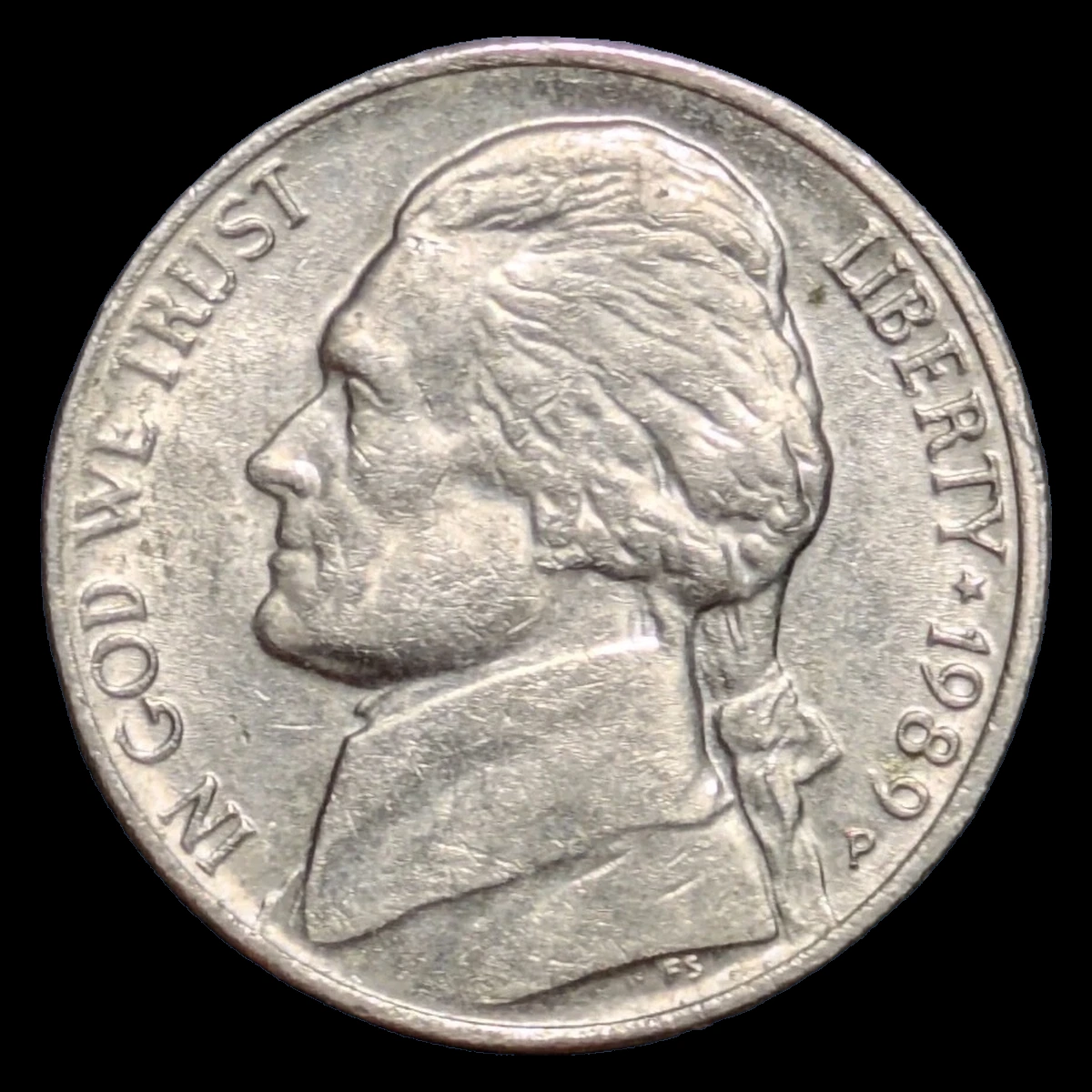
4. 1989 Nickel The Front Is Shifted While the Reverse Is Centered: Misaligned Die Error
A front die moving sideways can place Jefferson close to one rim while Monticello remains normally positioned. The blank itself need not have missed the center.
The recorded 1989-P example was graded NGC AU58 for very light wear. It appeared in a group with a separate 1999-D nickel.
How to Identify
Photograph both faces directly from above with the coin flat. Compare the spacing all the way around each design, since an angled camera can exaggerate border differences.
Inspect the narrow edge for filing or squeezing before interpreting the shift. A similar displaced area on both faces points toward movement of the blank rather than just the front die.
What It’s Worth
$5–$75 is the estimate for readily visible front misalignment. Small rim differences on a circulated nickel can add little collector value.
The two-coin lot was listed at $48 in December 2015. That total also bought the 1999-D, so neither the whole amount nor an assumed half is an individual 1989 result.
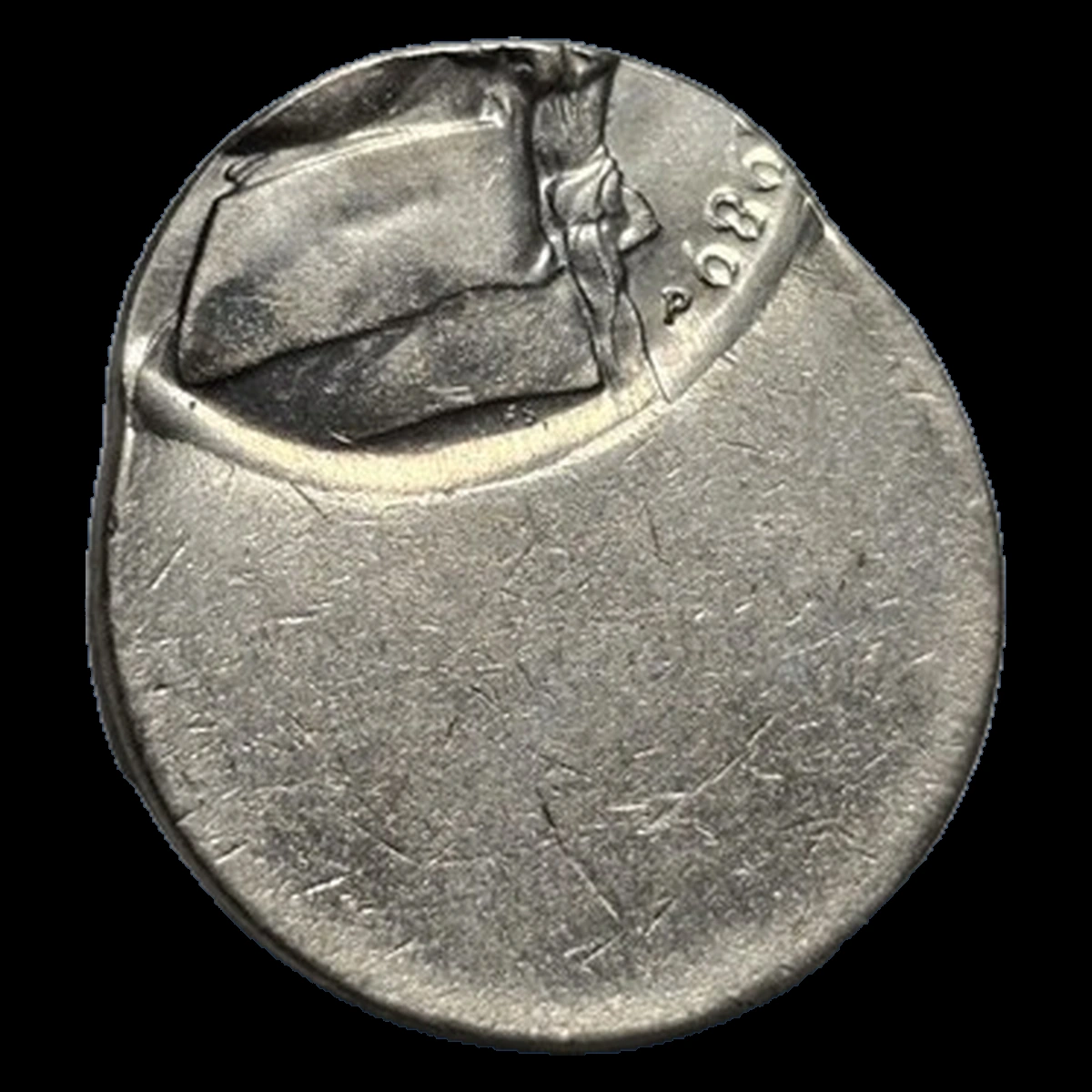
5. 1989 Nickel A Large Blank Area Remains Beside a Partial Design: Off-Center Strike Error
The Philadelphia ANACS MS64 example was struck 55% off center toward 11 o’clock. Its misplaced blank retained a large unused area while part of the portrait and lettering missed the metal.
How to Identify
Keep Jefferson upright and compare the partial design with the unstruck surface on both faces. Both impressions should reflect the same displacement, while the exact percentage and direction remain specimen-specific.
Look for untouched blank surface rather than grinding or erased letters. A simple off-center strike normally keeps its original metal, unlike a clipped coin with an actual gap.
What It’s Worth
$30–$350 is the estimate for dated examples. The 55% Philadelphia coin is listed around $65 in an August 2021 Heritage result.
That provides a practical comparison for a dramatic-looking error in ordinary unworn condition. A clear date and original surfaces may matter more than a slightly larger displacement.
6. 1989 Nickel A Hollow Accompanies a Wide Centered Strike: Indent and Broadstrike Error
Ken Potter described a Philadelphia nickel at the 1999 ANA convention with a depression near 7 o’clock and a centered design on an expanded disc. Another blank overlapped it under striking pressure.
The coin had spread to approximately a quarter’s size. The indent records the overlap, while the broadstrike records the lack of normal edge restraint.
How to Identify
Follow the hollow’s boundary where it interrupts the struck design. Compare the other face and edge for later impacts, then check whether the depression and outward spreading fit one press event.
The quarter-size description is a historical comparison, not an exact measurement. Record the actual dimensions rather than importing a quarter’s diameter as the documented size of this specimen.
What It’s Worth
$100–$500 is the estimate for a comparable expanded nickel with a clear indent. The convention report provides no completed sale.
A 1997-P with a much larger 90% reverse indent is listed at $780 in March 2025. Its stronger effect is not a direct value for the 1989 example, whose two features should be priced together.
7. 1989 Nickel Possible Raised Design Appears Within a Depression: Reported Counterbrockage Error
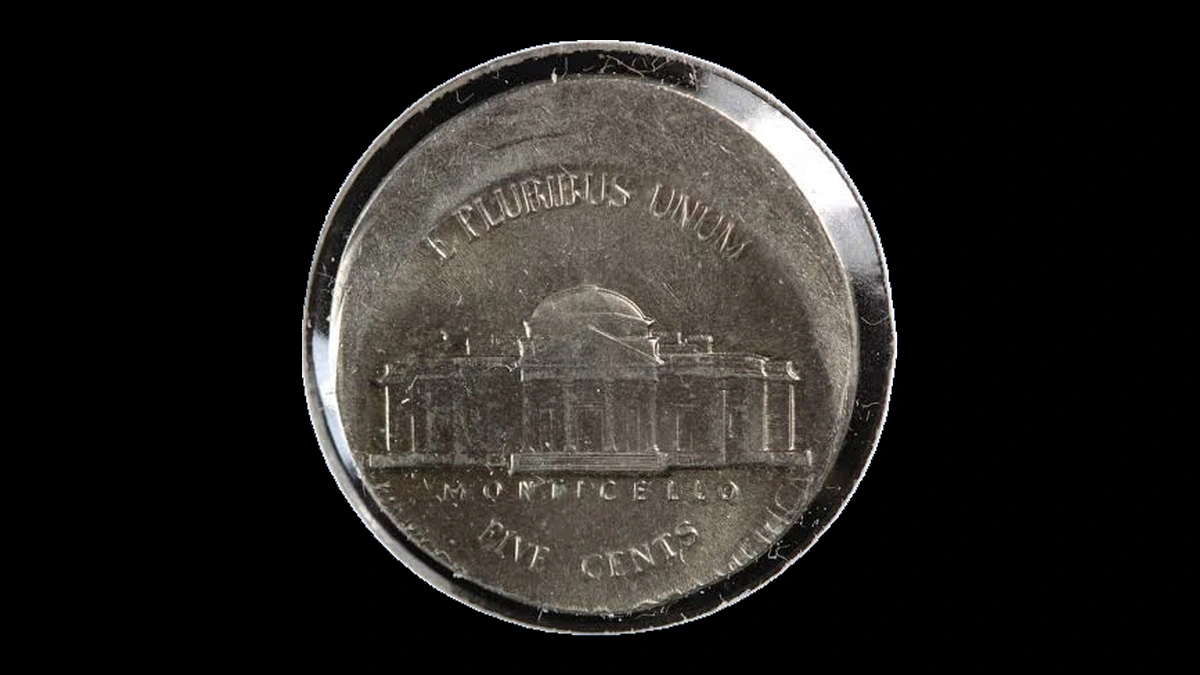
The owner of another Philadelphia broadstrike proposed a partial counterbrockage, while other collectors interpreted it as an ordinary indent. The question is whether recognizable transferred design exists inside the depressed area.
A counterbrockage can form when a coin carrying a recessed mirror design presses into a fresh blank. That transfer leaves a raised, normally oriented image on the receiving coin.
How to Identify
The owner’s photographs and discussion identify a low arc from about 7:30 to 5 o’clock and possible LI remnants on the right. Examine whether those fragments are raised and readable in the normal direction.
The owner clarified that the receiving coin was struck once. A smooth hollow without recognizable transferred details supports an indent interpretation more readily than the proposed counterbrockage, while a recessed backward image is another transfer type.
What It’s Worth
$150–$800 if a partial counterbrockage is established, or $100–$500 if it is an indent with a broadstrike, are conditional estimates. The discussion contains no completed sale or professional authentication.
The mechanism must follow the actual relief and design match. A speculative name does not itself justify the higher comparison.
8. 1989 Nickel Several Design Positions Overlap: Multiple Strikes Error
One Philadelphia coin received three blows, with the later strikes 70% and 90% off center. A separate double-struck coin has two off-center impressions with the second reverse impression blocked.
Another reported nickel combines multiple strikes with a broadstrike but has no supplied exact strike count. It should not inherit the three-strike sequence from the first example.
How to Identify
Connect repeated portraits, letters, or building fragments into distinct impressions before counting blows. The small final design on the triple strike should be traced separately from the larger earlier positions.
The 70% and 90% figures do not establish an unstated clock direction. On the separate double strike, inspect the reverse area where the second blow was blocked rather than requiring the triple coin’s features.
What It’s Worth
$75–$700 is the supplied estimate for clear repeated strikes. The Philadelphia PCGS MS64 triple-struck coin is listed around $402 in August 2009.
The ANACS MS63 double strike appeared in a $79 two-coin lot in December 2014 with a 1999-P nickel. That group total does not provide an individual 1989 price.
9. 1989 Nickel An Earlier Cent Design Lies Beneath Jefferson: Double Denomination Error
The documented Denver coin received a nickel design over a finished 1989-D cent, with both dates visible. Its Memorial side lies beneath Jefferson, while the cent portrait lies beneath Monticello.
A separate Philadelphia example was struck over a 1989 cent. The P on the nickel does not assign a P mintmark to the underlying cent.
How to Identify
Map the older designs on both faces and read each date in its own context. A second shadow of the nickel date is not evidence of an earlier cent.
A contemporary cent starts near 2.5 grams and 19.05 millimeters, although overstriking may expand it. Check the crossing designs for original overlapping relief rather than marks from later squeezing.
What It’s Worth
$300–$1,200 is the estimate for clearly identified examples. The Philadelphia NGC MS65 Red piece is listed at $432 in September 2019.
The Denver NGC MS64 Red has a January 2007 auction record without a publicly displayed price in the supplied material. Its sale history remains separate from the Philadelphia result.
10. 1989 Nickel An Unused Small Blank Receives Nickel Details: Wrong Planchet Error
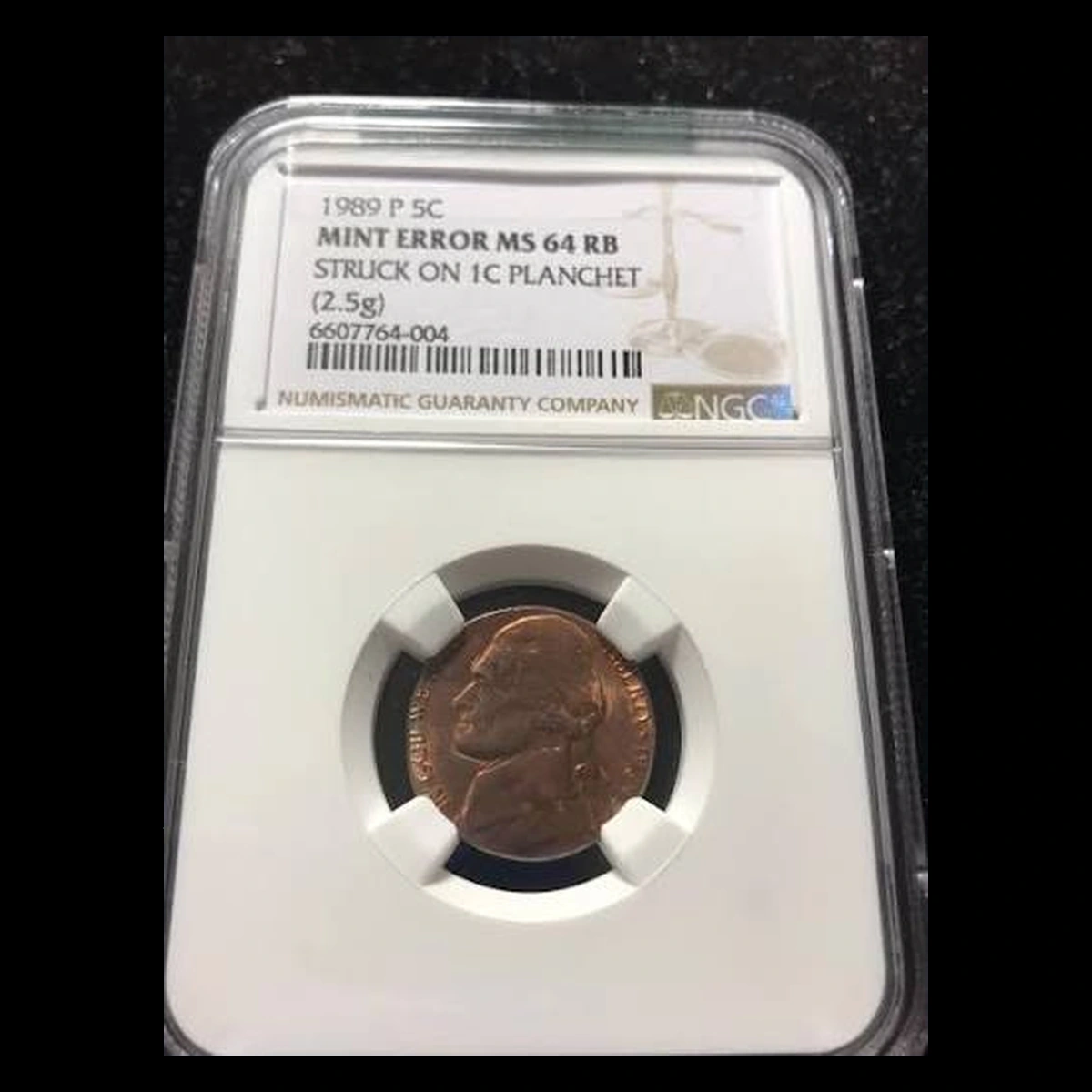
Unused cent and dime blanks can enter the nickel press and receive a design too large for them. Neither needs to show Lincoln or Roosevelt because the blank had not yet received its intended denomination’s design.
Philadelphia cent-planchet examples have copper-colored surfaces. The documented Denver dime-planchet nickel instead uses layered metal with a copper core between outer copper-nickel layers.
How to Identify
Compare the metal, edge, size, and cropped design together. Standard starting figures are about 2.5 grams and 19.05 millimeters for a modern cent blank, or 2.268 grams and 17.91 millimeters for a dime blank.
Allow for spreading during striking and inspect for added plating or later reshaping. These blank standards are not substitutes for recording the actual candidate’s measurements.
What It’s Worth
$300–$1,000 for clear cent-planchet strikes and $400–$1,500 for attractive dime-planchet examples are the estimates. The Philadelphia PCGS MS63 Red and Brown cent-planchet coin brought $348 in November 2020.
The Denver dime-planchet example, graded NGC AU58 for very light wear, sold for $690 in January 2011. Sharp staircase detail is a strike-quality feature, not another error to price separately.
11. 1989 Nickel Extra D-Shaped Detail Sits Above the Mintmark: Reported RPM Error
The supplied Denver report describes an upward repunched D. A repeated punch into the working die left part of an earlier mintmark impression above the main letter.
This is a feature of the tool’s preparation, not a second strike delivered to the coin. A thick or damaged D may look unusual without preserving a second letter shape.
How to Identify
Compare the D below the date with an ordinary Denver example and trace the upper extra stroke. It should follow a recognizable D form rather than merely touch the letter as a random bump or scratch.
Move the lamp to test whether the stroke remains fixed as reflections change. Normal measurements cannot authenticate this small feature; the mintmark’s shape must supply the evidence.
What It’s Worth
$10–$125 is the estimate for an identified upward D/D. Clear separation and unworn surfaces support stronger comparisons.
The year guide reports the feature without a matched original sale. Its description should not turn every thick D into the same variety.
12. 1989 Nickel A Reverse Patch Interrupts the Original Surface: Planchet Flaw Error
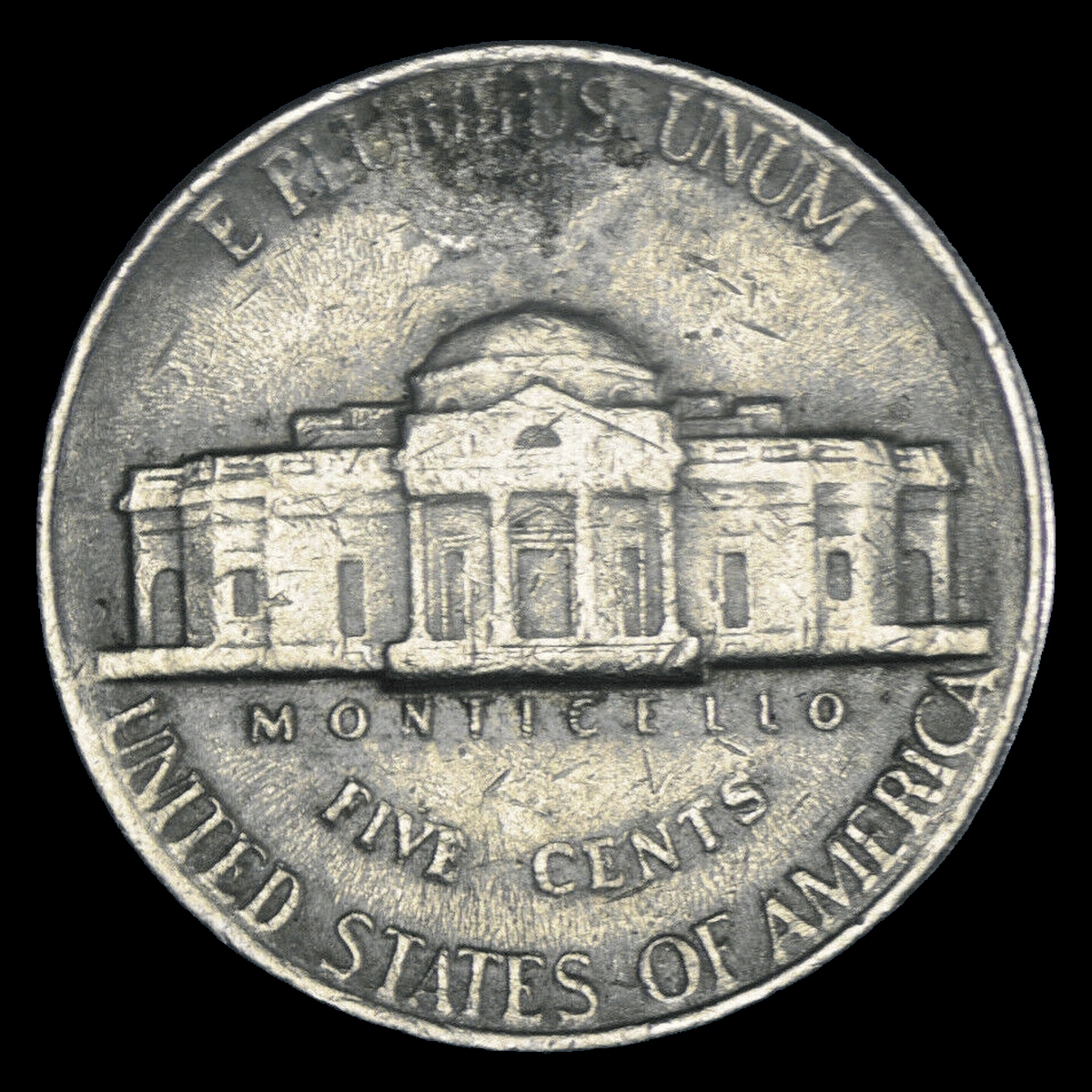
The year list reports a flaw in the original blank on the reverse without establishing its exact mechanism. It does not determine whether a layer separated, the metal cracked, or some other blank defect survived the strike.
The broader description preserves that uncertainty. A normal nickel is a uniform copper-nickel alloy, so a rough patch is not automatically a missing clad layer.
How to Identify
Compare the flaw with nearby letters or building details to see how the struck design meets it. A fresh cut with pushed metal or clusters of corrosion pits may explain a rough area differently.
Check the other face and edge for an impact that could have made the depression. Do not dig into the patch to search for a layer that is not already visible.
What It’s Worth
$15–$150 is the estimate for a genuine original blank flaw. No matched transaction is supplied for a particular 1989 reverse defect.
Visibility and preserved design determine the useful comparison. A dramatic damaged surface does not by itself establish a rare split or wrong-metal error.
13. 1989 Nickel Debris Left a Local Impression: Struck Through Error
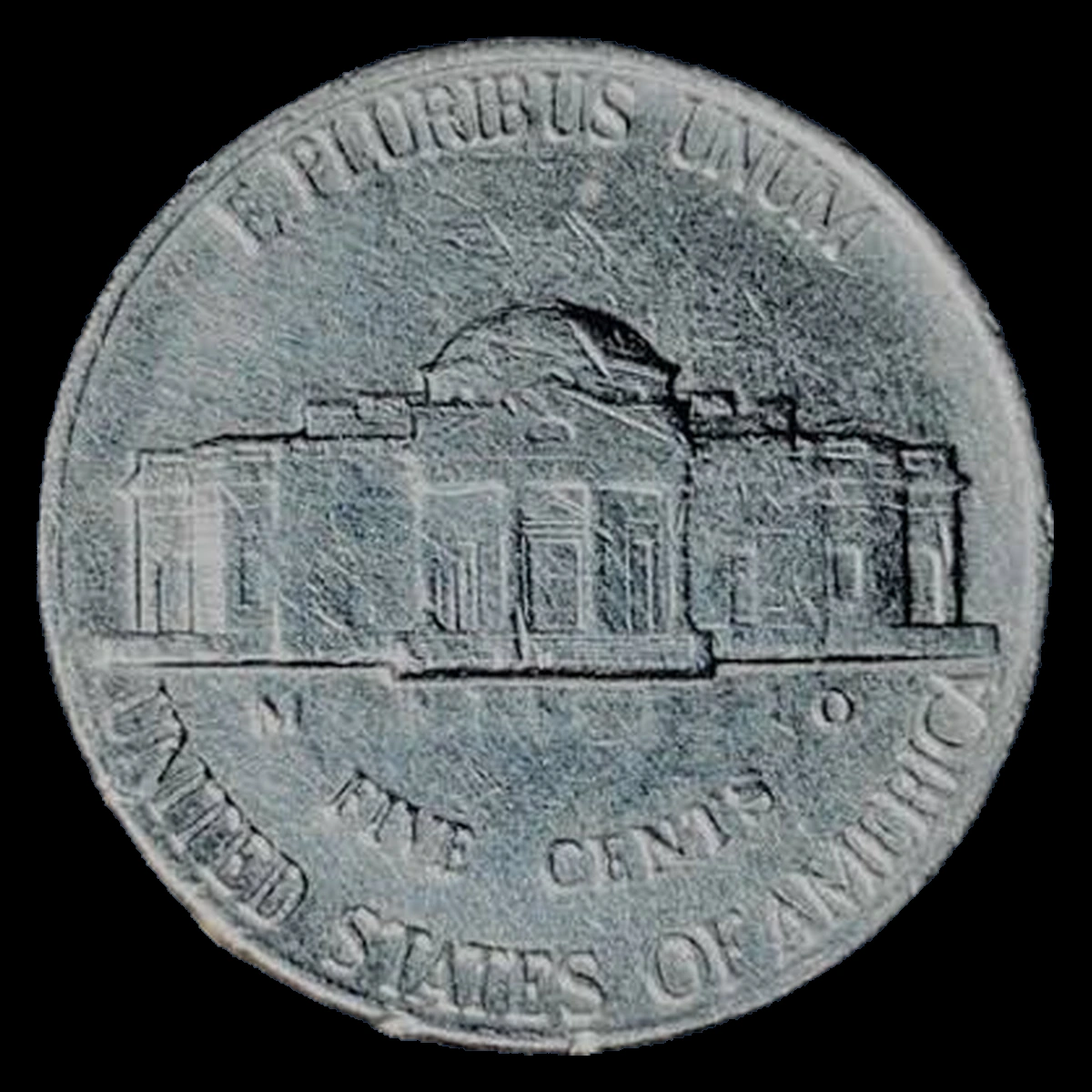
The Philadelphia example listed by GreatCollections was graded ANACS MS65 with six complete steps. Its attribution identifies debris between blank and die but does not specify the material or exact affected location.
The obstruction may have left a depression or prevented part of the design from forming. Six steps describes Monticello’s sharpness, not a separate mint error.
How to Identify
Follow the affected boundary into neighboring design to distinguish a blocked strike from a cut across finished detail. Examine the reverse and edge for impact evidence that could explain a later dent.
If material remains attached, leave it in place. Do not rename the unspecified debris as grease without evidence from the actual impression.
What It’s Worth
$20–$250 is the estimate for a visible genuine debris strike-through. The available listing supplies no usable sale amount for the Philadelphia specimen.
A distinctive original shape on a clean coin is more informative than a faint weak spot. Later gouges do not receive the same premium simply because an object could have made them.
Conclusion
The edge resolves many questions about 1989 nickels: it can show collar failure, a clipped boundary, or the layered metal of a wrong blank. Both faces then reveal whether a design was displaced, repeated, or struck over another denomination.
Keep tentative image-transfer claims conditional until recognizable detail supports them. Separate specimen measurements and lot prices carefully, and preserve original boundaries and attached material when documenting an unusual coin.