Rare 1875 Nickel Errors (List & Pictures)
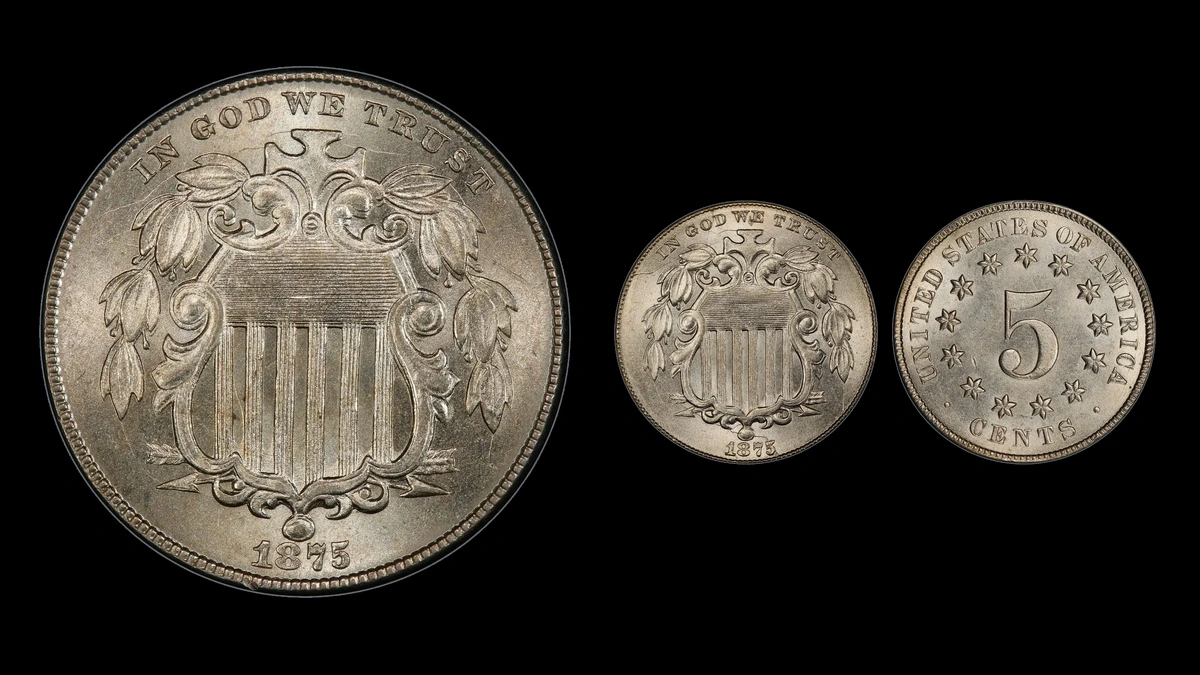
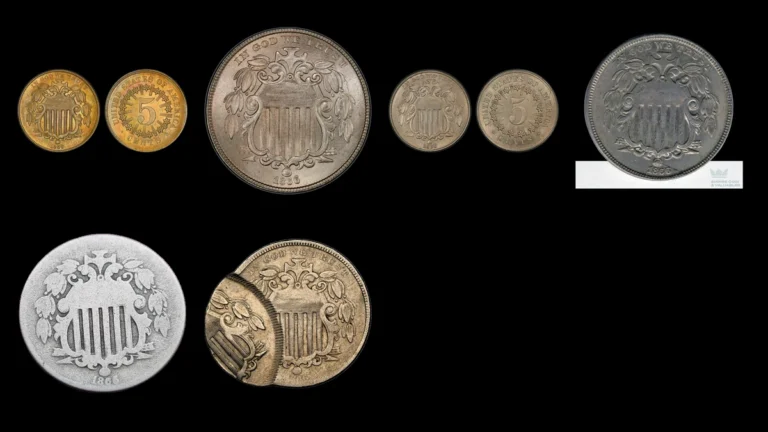
The motto, date, and reverse letter S provide three useful starting points for 1875 Shield Nickel errors. A recognized doubled-front example in MS65 sold for $1,351 in August 2017, while estimated whole-coin values across the features below range from $15–$2,000.
Study the added shapes before choosing a name: repeated letters, remnants of a date punch, and raised die cracks have different origins. The examples discussed here are ordinary circulation strikes.
1. 1875 Nickel Repeated Motto Edges or an Extra S Tail: Doubled Die and Reported Reverse Feature Error
Rounded second outlines in the motto and shield can come from repetition built into the die, the tool that stamps the coin. On the reported 1875 front varieties, the extra detail extends downward or toward the lower-left.
A coin can acquire those repeated shapes in a single blow. The feature does not require the coin itself to have been struck twice.
The extra tail reported on the S in CENTS is a separate question. It may reflect doubling or a groove in the die, and that uncertainty should remain part of its description.
How to Identify
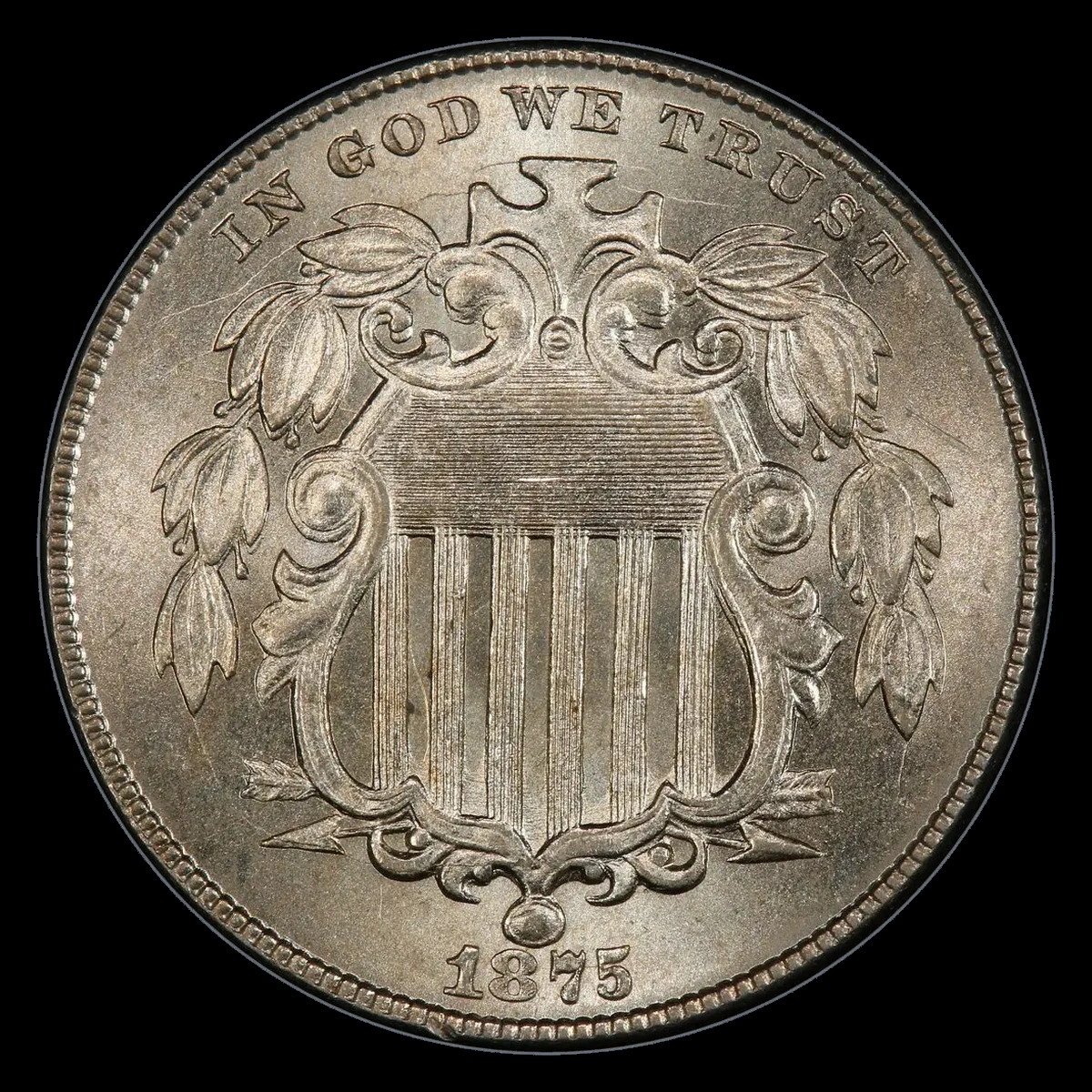
Start with several motto letters rather than one bright edge, then inspect related shield detail. Rounded repeated outlines in the same arrangement provide a stronger match than general thickening.
A broad flat shelf beside lettering can arise during striking and needs a different explanation. Compare the whole pattern with an identified doubled-front specimen.
On the reverse, examine the S and nearby letters separately. The specialist report leaves two possible causes for the tail, so one raised projection cannot establish a confirmed doubled die.
For basic checks on a loose Shield nickel, normal measurements are about 5 grams and 20.5 millimeters, with a plain edge. Those measurements help document the coin but cannot identify its die variety.
What It’s Worth
Identified doubled-front coins are estimated at $150–$2,000. The separate S-tail report has a conditional estimate of $20–$300 until its cause is established.
An FS-101 example graded MS63 sold for $780 in August 2021. An MS65 example brought $1,351 in August 2017.
Both MS grades describe unworn coins, with the higher number indicating better preservation. A possible die groove on the reverse should not inherit the premium of a matched doubled front.
2. 1875 Nickel Earlier Numeral Strokes Remain below the Date: Repunched Date Error
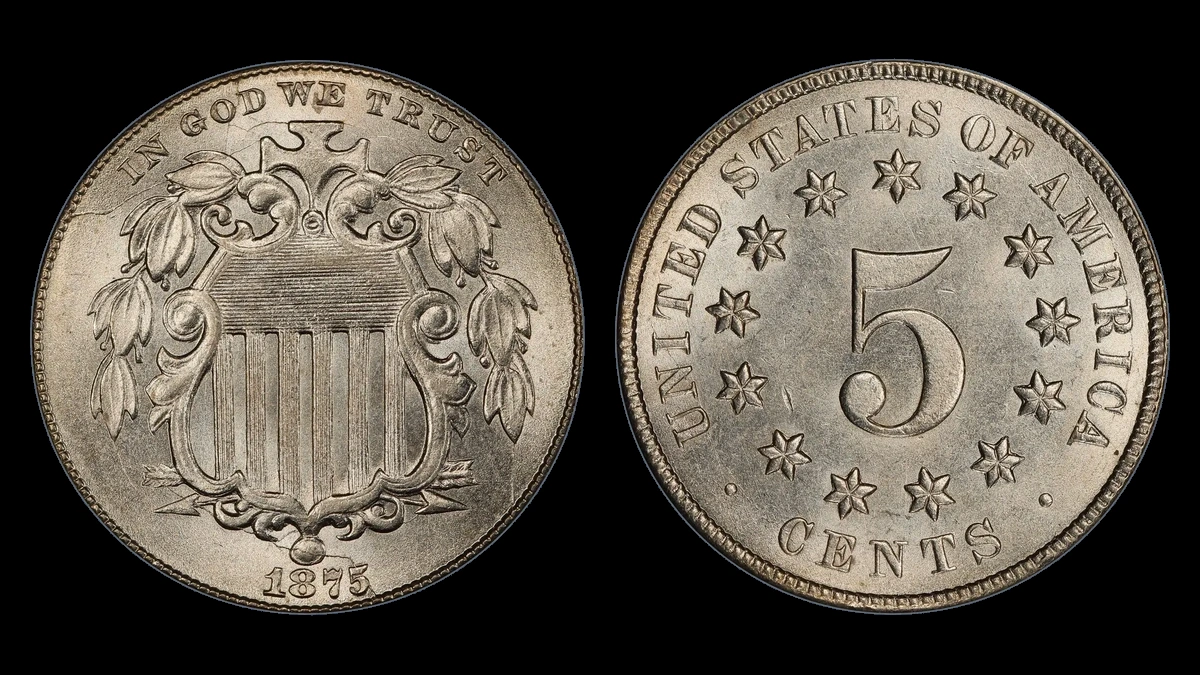
Look beneath the date for fragments shaped like parts of numerals. One reported arrangement has extra strokes below the 8, 7, and 5; another has a remnant farther below the base of the 1.
These patterns result from a date being punched into the die more than once in slightly different positions. The earlier impression can survive beside the final date and transfer to coins made from that tool.
The two arrangements need not appear on the same coin. Repunched numerals also do not establish that the motto is doubled.
How to Identify
Keep the whole date in view and compare its normal numeral shapes before enlarging a small remnant. Irregular or altered digits require attention beyond a variety attribution.
Trace each suspected extra stroke beneath 875 or the base of 1 against an identified photograph of the appropriate arrangement. It should follow a plausible earlier numeral shape and position.
Raised rounded remnants differ from random cuts near the date and from flat ledges beside existing digits. Strong lighting from more than one direction helps reveal that distinction without touching the surface.
What It’s Worth
Identified 1875 repunched dates are estimated at $30–$1,500 as whole coins. Preservation and readable punch remnants explain much of that spread.
An 1883 Shield nickel repunched date in MS66 sold for $1,440 in August 2021. It is a different-year example with unusually good preservation, not a completed sale of the 1875 variety.
Cleaning, corrosion, and a weak date can make that high-grade comparison unsuitable. A faint possible stroke should be resolved before applying an attributed-variety estimate.
3. 1875 Nickel Thin Raised Ridges Cross the Surface: Die Cracks Error
A crack in a die allows coin metal to enter a narrow opening under striking pressure. The coin then carries a raised ridge, even though its own metal has not split.
Cracks are reported on 1875 coins with doubled front detail. Additional lines can develop as a damaged die continues in use, so the exact pattern depends on the specimen and stage of wear.
How to Identify
First establish that the line lies on the coin rather than its holder. A scratch in clear plastic can come into focus at a different height or shift against the design as you change angle.
Focus on the metal under low side lighting and follow the ridge. A scratch ordinarily has a lowered central channel, sometimes bordered by displaced metal.
Inspect any doubled letters independently. A genuine crack can accompany a recognized variety, but it cannot replace the matching letter outlines needed for that identification.
What It’s Worth
A worn 1875 nickel with a small genuine die crack is estimated at $15–$250. Much of the amount belongs to the underlying Shield nickel rather than the fine ridge.
The $780 MS63 doubled-front sale discussed above is a comparison for a complete attributed coin, not a crack-only result. Several features on one specimen still contribute to one whole-coin value.
Conclusion
The most useful distinction on an 1875 Shield nickel is the shape of the added metal. Repeated letter outlines, remnants of another numeral position, and narrow crack ridges each point to a different part of the production process.
Keep the uncertain S-tail explanation separate from a confirmed doubled front. Match several details, account for surface condition, and use the quoted ranges as whole-coin comparisons rather than premiums to add together.