Rare 1957 Nickel Errors (List & Pictures)
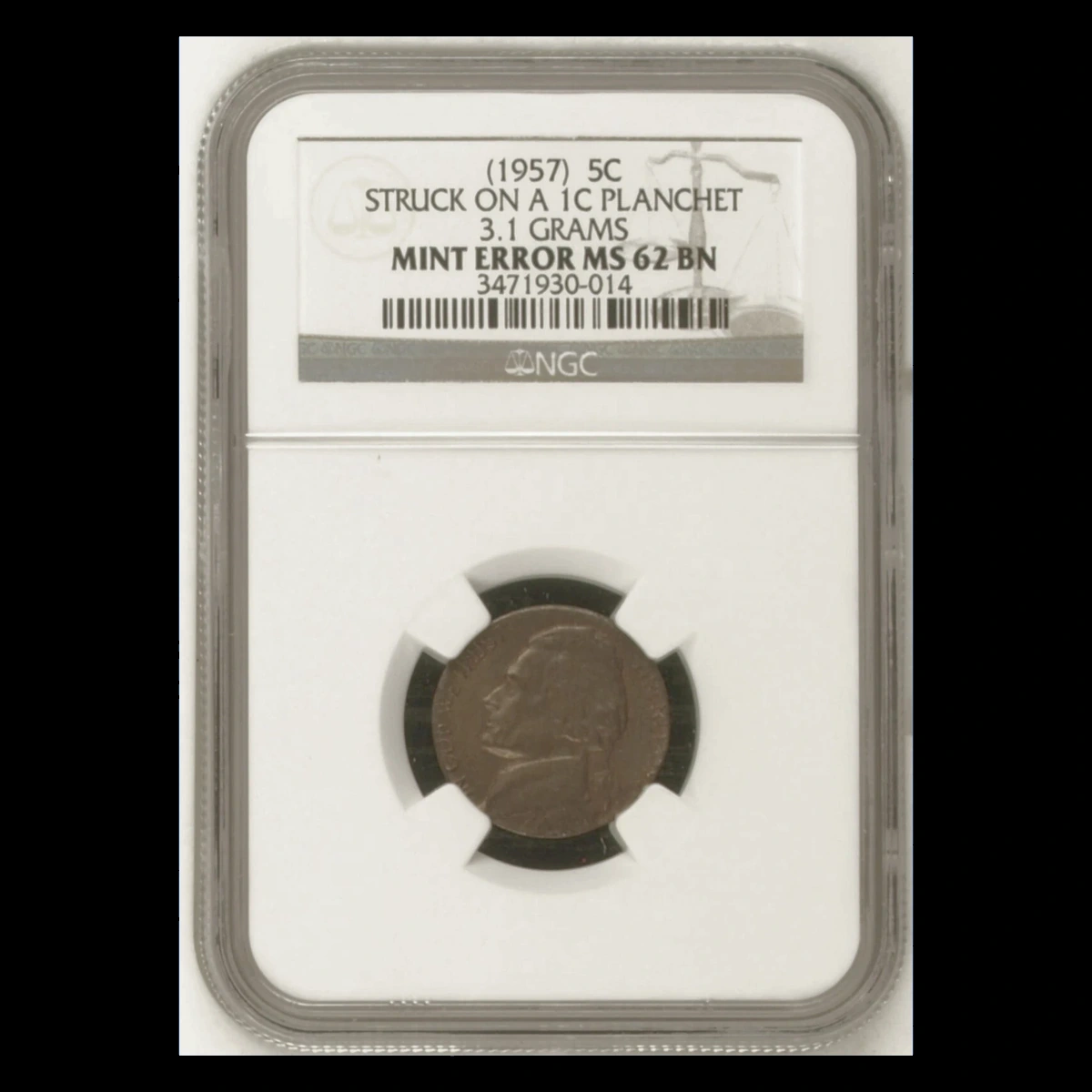
A 3.0-gram copper-colored nickel brought $930 in January 2023 because its blank was intended for a cent. Smaller metal could not hold Jefferson’s full design.
The supplied 1957 nickel errors have estimated values of $5–$1,800, from repeated mintmark strokes to split blanks and expanded strikes. Compare the disc and surviving design first, then use mint and finish to select the right small-variety reference.
1. 1957 Nickel Copper Metal Carries Cropped Nickel Lettering: Cent Planchet Error
The documented Denver coin retains most of its date, a partly weak D, and only the lower portions of LIBERTY. E PLURIBUS UNUM is weak too, consistent with a smaller blank receiving the larger nickel design.
Its reported weight is 3.0 grams. A period copper-alloy cent blank normally began near 3.11 grams and 19.05 millimeters, before any spreading during the wrong strike.
How to Identify
Compare the crowded outer design with the edge and metal rather than relying only on brown color. Plating a normal nickel does not establish the same weight, dimensions, or natural cutoff.
A normal nickel weighs 5 grams, measures about 21.21 millimeters, and has a plain edge. Record a loose candidate’s own measurements and inspect for later trimming or a coating.
What It’s Worth
$350–$1,500 is the supplied estimate for comparable genuine cent-planchet strikes. The NGC MS63 Brown Denver example sold for $930 in January 2023.
MS63 describes unworn condition with noticeable marks, while Brown describes the copper surface. Readable identity and original surfaces help make another coin a useful comparison.
2. 1957 Nickel Thin Metal Received Soft Design Details: Split Before Strike Error
The recorded Philadelphia split-planchet nickel weighs 2.4 grams, less than half normal weight. Part of its original blank separated before striking, leaving thin metal that did not fill the dies normally.
NGC identified the error, but the supplied auction description gives no numerical grade. Soft detail on this coin should not automatically be explained as heavy wear.
How to Identify
Trace the design across the exposed split surface under side lighting. An impression formed on that surface supports separation before striking, whereas parallel grinding marks or a uniformly shaved face suggest later metal removal.
Record diameter and thickness without squeezing a fragile edge. A split can preserve much of the round outline, and the nickel’s solid copper-nickel alloy does not have a separate outer coating to lose.
What It’s Worth
$50–$250 is the estimate for comparable identified pieces. The 2.4-gram example appeared in a March 2008 auction at $126.50.
That result supplies no numerical grade for a grade-based promise. Surviving design, condition, and a clear explanation of the split matter more than low weight alone.
3. 1957 Nickel A Solid Blank Area Adjoins a Partial Design: Off-Center Strike Error
The documented 1957-D is 60% off center and graded NGC MS67. Its blank sat partly outside the dies, leaving a large unused area while much of the intended design missed the metal.
The percentage describes lost design rather than removed metal. The blank can remain complete despite the dramatic partial impression.
How to Identify
Read the surviving date and locate D beside Monticello before assigning the year and mint. Compare both faces to verify that their struck boundaries fit one displaced blank.
An intact unused crescent differs from a clipped or trimmed opening. A shift on just one face may reflect die misalignment, while a complete design on expanded metal points toward broadstriking.
What It’s Worth
$100–$800 is the estimate for comparable dated examples. The 60% Denver MS67 coin sold for $460 in September 2010.
Its high unworn grade indicates very few marks, but does not give every wide blank crescent the same value. Surface quality and how much identity survives remain important alongside displacement.
4. 1957 Nickel Extra Width Surrounds Complete Designs: Broadstrike Error
A broadstrike spreads outward because the collar fails to contain the blank. The expansion may be uneven, but the full design still fits on the metal.
The year guide reports two Denver auction examples graded PCGS MS64 and MS62. Their individual shapes and condition should not be reduced to one assumed diameter or common degree of expansion.
How to Identify
Follow all the outer lettering before measuring widths in several directions. Missing design beyond the edge instead suggests an off-center strike.
Inspect the portrait, building, and edge for hammering or crushed detail from later flattening. A plain edge is normal for nickels and therefore is not proof of collar failure.
What It’s Worth
$150–$1,800 is the working estimate for comparable confirmed broadstrikes. The guide reports $360 in June 2024 for an unevenly centered MS64 and $1,440 in August 2024 for a separate MS62.
These remain guide-reported auction figures. The higher amount for the lower numerical grade shows why individual shape and appeal need consideration rather than pricing by holder grade alone.
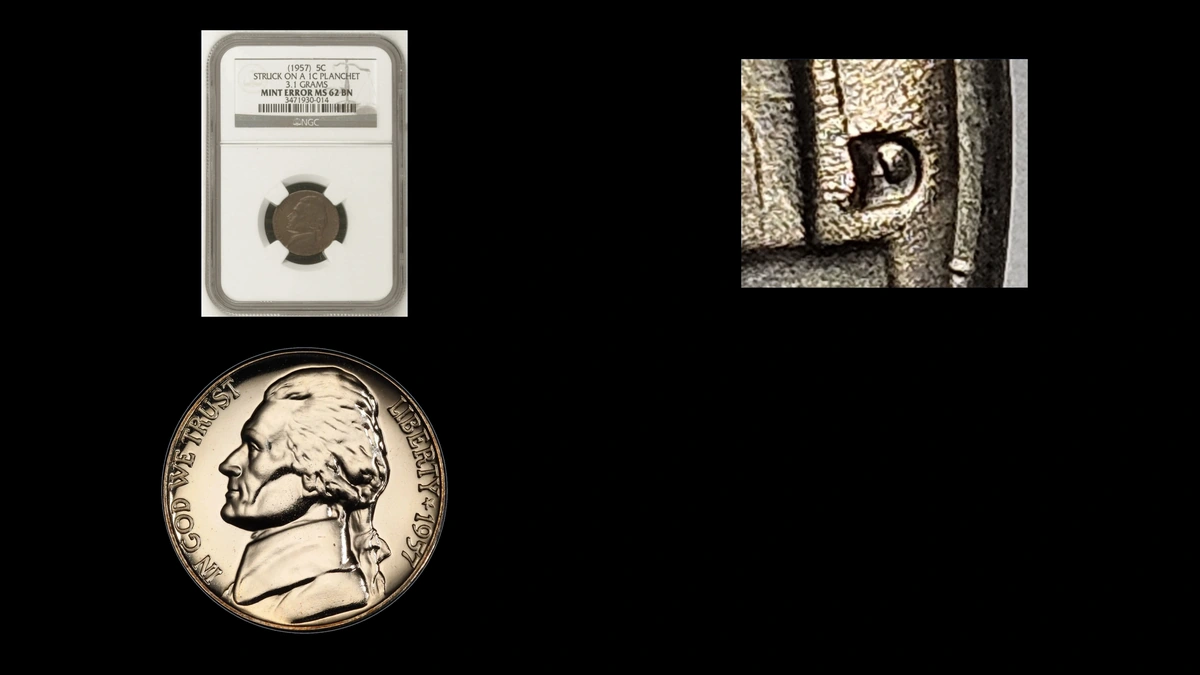
5. 1957 Nickel A Second D Outline Remains Beside Monticello: Repunched Mintmark Error
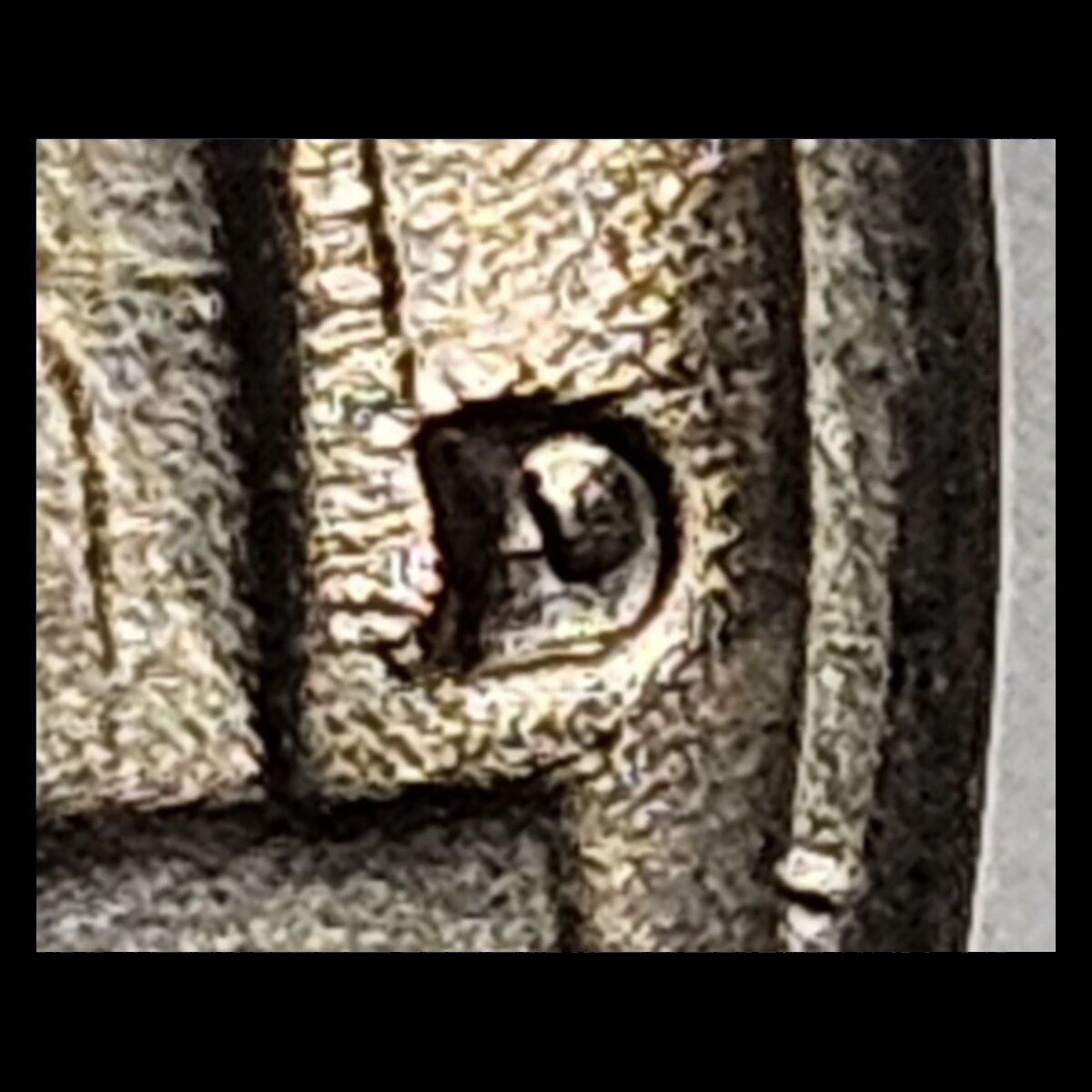
The D was punched into the working die separately from the main design. If a repeat application shifted, remnants of both letter positions could appear on subsequent coins.
Listed 1957-D patterns include tilted impressions and a D extending leftward. These are separate shapes to match, despite both making the mintmark look thicker.
How to Identify
Find D to the right of Monticello and inspect its inner curve and outside stem. Compare the complete repeated shape with the appropriate Wexler listing.
Move the light to see whether a secondary raised curve stays fixed. Glare or a low flat shelf caused by movement during striking does not establish a repeated punch.
What It’s Worth
$5–$100 is the estimate for a clearly identified repunched D. A small feature on a worn coin generally falls lower than visible extra strokes on attractive surfaces.
The range is not an equal price for every catalog number. The extra letter must remain recognizable beyond the variety label.
6. 1957 Nickel Multiple Raised Letter Outlines Repeat a Die Pattern: Doubled Die Error
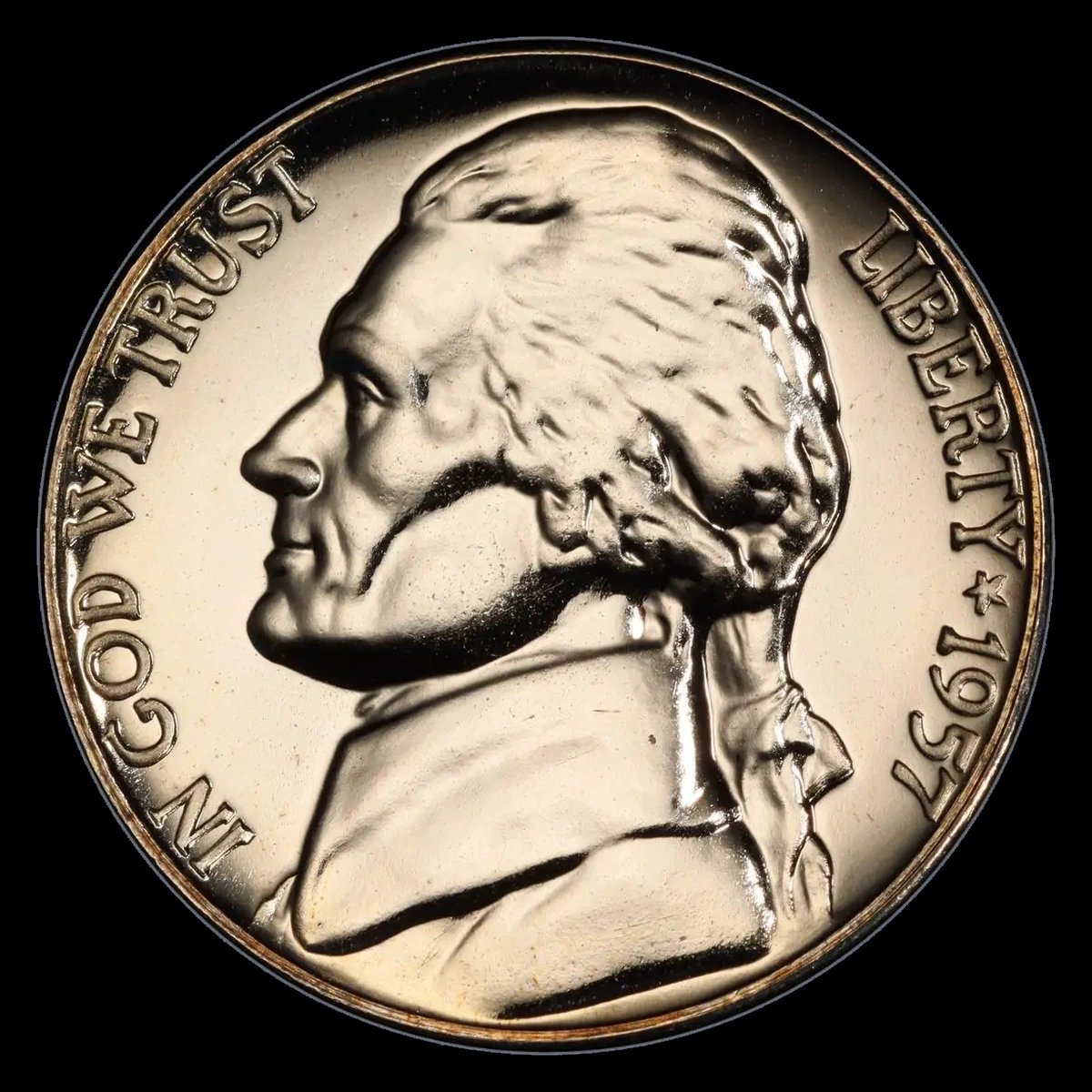
Many listed 1957 doubled-die patterns belong to Philadelphia Proofs, specially made collector coins. Front varieties involve the motto, date, star, and LIBERTY, while reverse examples affect lettering around Monticello.
The FS-101 Proof has notably strong repeated front outlines, whereas other patterns are much closer together. A separate Denver reverse variety belongs to regular coinage.
How to Identify
Establish finish and affected face before comparing the same letter group with Brian’s catalog. A regular Denver reverse cannot be attributed from a photograph of the Philadelphia Proof front.
Compare the distance and direction between rounded outlines or split corners, rather than thickness alone. Flat shelves can form during striking, while multiple outlines in the die do not count the number of blows delivered to the coin.
What It’s Worth
$10–$100 for minor identified doubling and $75–$1,000 for the stronger FS-101 Proof are the estimates. The broad Proof range reflects grade and how well its multiple outlines survive.
No separate auction price is supplied for each numbered variety. A bright coin with flat doubled edges should not receive the stronger Proof pattern’s valuation without a correct match.
Conclusion
The surviving design helps distinguish the main 1957 nickel errors: crowded lettering can support a cent blank, soft detail on exposed metal can support a pre-strike split, and complete letters separate broadstriking from a displaced partial impression.
For small varieties, match mint, finish, and exact repeated strokes. Keep actual measurements and sale descriptions with their own specimens, and preserve original surfaces while documenting both faces and the edge.