Rare 1994 Nickel Errors (List & Pictures)
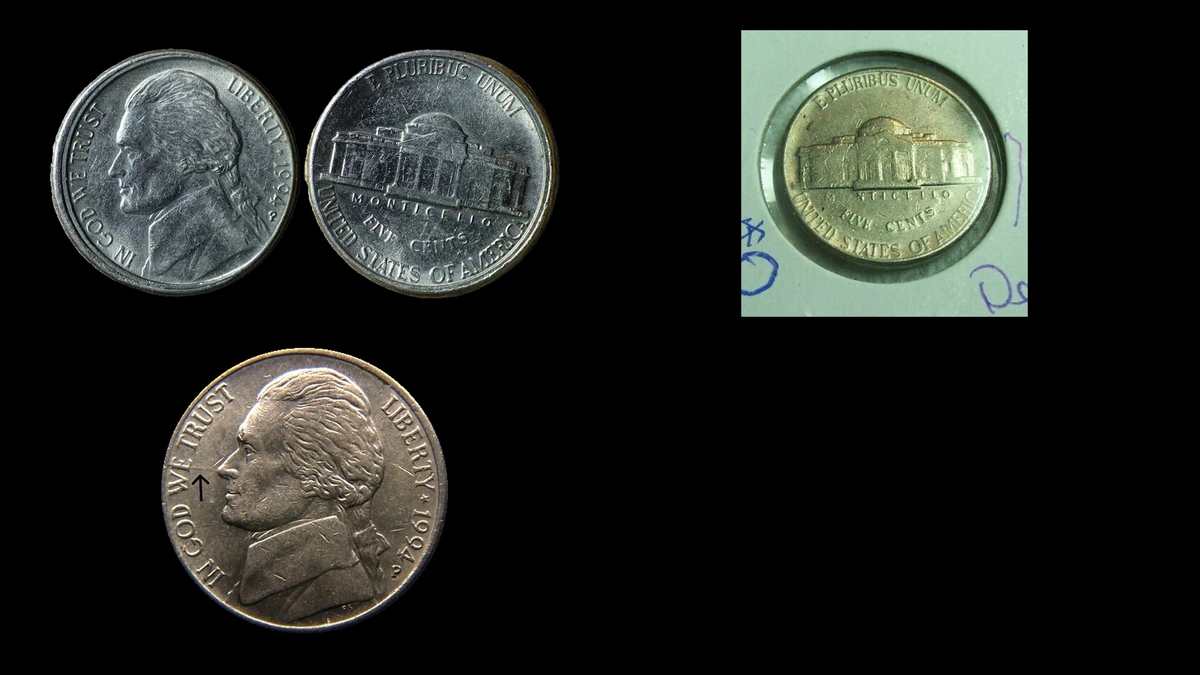
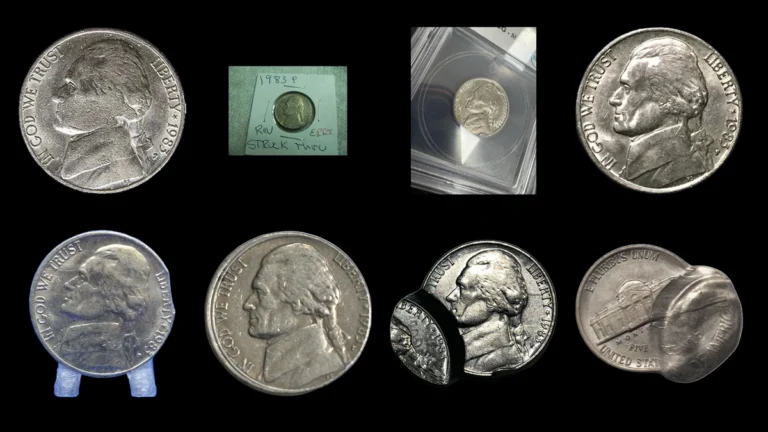
A 1994-P nickel on an unusual layered blank sold for $881.25 in 2013; a different-year chain-strike comparison reached $1,020 in 2021. Estimated values for 1994 Jefferson nickel errors span $5–$2,500.
Identify the ordinary or matte collector version first, then compare the outline, edge and design with the relevant error type.
| Feature | Possible explanation | Estimated range |
|---|---|---|
| Opening in the edge | Clipped blank | $15–$250 |
| Expanded coin, complete design | Broadstrike | $30–$300 |
| Step around the edge | Partial collar | $20–$500 |
| Unused crescent or neighbor contact | Off-center or chain strike | $25–$1,500 |
| Separate overlapping designs | Multiple strikes | $100–$1,500 |
| Reverse consistently tilted | Rotated dies | $25–$200 |
| Local missing letters | Strike-through | $5–$175 |
| Loose original metal | Lamination | $15–$200 |
| Raised reverse line on matte coin | Die crack | $30–$350 |
| Unusual layered metal | Wrong blank | $500–$2,500 |
A normal nickel weighs 5 grams, measures 21.21 millimeters and has a plain edge. Its copper and nickel are mixed throughout; the special 1994-P Coinage and Currency Set version has an intentional matte finish, often described as an SMS or special strike.
1. 1994 Nickel Metal Missing from the Outline: Clipped Blank Error
An opening can exist before the design is struck if the blank-cutting punch overlaps an old hole or the edge of the strip. The remaining disk becomes a clipped-planchet coin.
Year lists report clips without establishing one shape or percentage for 1994. Curved, straight and ragged are possible forms, not three confirmed specimens from that general report.
How to Identify
Follow the rim and nearby letters into both ends of the gap. Original metal flow differs from saw grooves or a sharp cut through a completed design.
Weakness opposite the opening can support a clip, but the boundary itself matters more. Reduced weight alone cannot distinguish a Mint clip from later removal.
What It’s Worth
Genuine 1994 clips are estimated at $15–$250. A natural boundary, readable date and preserved surfaces help determine the comparison.
A 1997-P nickel with a 20% clip sold for $124 in March 2025. Its percentage belongs to that different-year coin.
2. 1994 Nickel An Enlarged Border with All the Words: Broadstrike Error
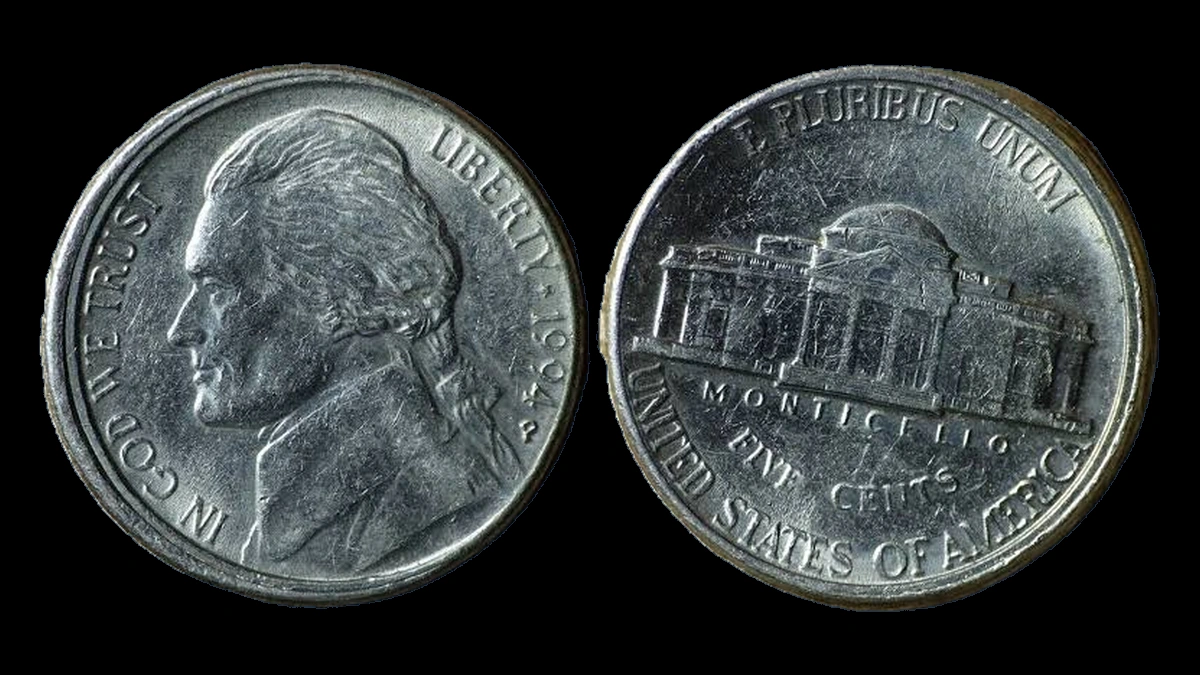
A coin can spread beyond its intended width when the collar fails to contain it. This ring normally controls the outline during striking.
The resulting broadstrike keeps the design on the metal even if its border is uneven. The general 1994 report supplies no particular mint or measured diameter.
How to Identify
Check the outside lettering on both faces before judging width. Missing design beyond one edge would suggest a different striking position.
Measure several spans and inspect the expanded surface for crushed detail or repeated impacts. A plain edge is normal and does not prove collar failure.
What It’s Worth
Original broadstrikes are estimated at $30–$300. Natural spreading with attractive surfaces supports more useful comparisons than an unexplained wide outline.
A 1998 Philadelphia broadstrike brought $57.50 in July 2002, and a 1999-P example brought $89 in March 2025. These are different-year sales, not recorded 1994 results.
3. 1994 Nickel A Step in the Edge: Partial Collar Error
When only part of the blank is held inside the collar, the exposed metal can spread farther than the contained section. The difference leaves a step around the edge.
A special-finish 1994-P example was graded ICG MS69 Full Steps. An NGC SP69 report and an ordinary Philadelphia coin in a mixed lot are separate records.
How to Identify
Photograph the edge from the side and follow the change in width. Check for cutting, squeezing or a joining seam that could imitate a step.
Establish the ordinary or matte finish separately. Full Steps describes Monticello’s stair detail, while the collar error concerns the edge.
What It’s Worth
Estimated ranges are $20–$150 for ordinary partial collars and $75–$500 for comparable special collector pieces. Finish and preservation remain part of the full price.
The ICG MS69 special-finish coin sold for $161 in March 2008. The ordinary 1994-P belonged to a twenty-coin lot sold for $80.50 in June 2000, which provides no individual result.
4. 1994 Nickel A Displaced Design and Possible Neighbor Contact: Off-Center Strike Error
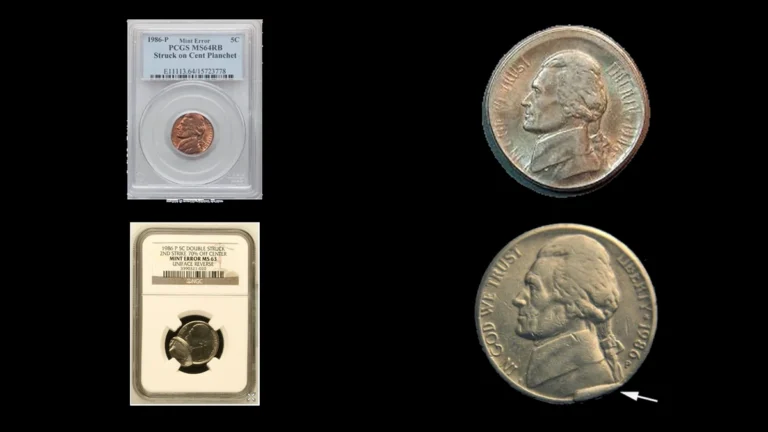
A reported 1994-P nickel is 60% off center toward 11 o’clock, retaining its full date and P. The blank missed the proper striking position, leaving a solid unused area.
A separate Philadelphia coin is 50% off center with chain-strike contact from a neighboring blank. That contact adds an edge feature beyond the offset itself.
How to Identify
Compare both faces to connect the unused metal with the lost design. Their relationship should fit one displaced blank.
For a chain strike, inspect the edge for a boundary formed by pressure against the neighboring blank. An offset alone cannot establish chain contact, and the 11-o’clock direction belongs only to the 60% example.
What It’s Worth
Ordinary offsets are estimated at $25–$350, while convincing combinations with chain contact are estimated at $200–$1,500. These are whole-coin ranges.
The ANACS MS64 60% coin carried a $65 asking price, not a confirmed sale. The 50% chain-struck piece was another member of the twenty-coin $80.50 lot.
A separate 1973-D chain strike brought $1,020 in May 2021. Its date, grade and contact position cannot be assigned to the 1994 coin.
5. 1994 Nickel Rotated or Flipped Overlapping Designs: Multiple Strikes Error
The recorded rotated double strike also has a partial-collar edge step. PCGS graded that 1994-P coin MS64, but its title does not establish an exact rotation angle.
A separate PCGS MS63 Philadelphia piece flipped and received four strikes, including three off-center impressions. Flipping can place older portrait fragments alongside later building detail.
How to Identify
Trace one recognizable date, portrait or building impression through the overlap before counting blows. Large separate designs differ from fine doubling already present in a die.
Inspect both faces and the edge, allowing for earlier detail flattened by later strikes. Dents or folds imposed after minting do not create genuine repeated nickel designs.
What It’s Worth
Genuine repeated strikes are estimated at $100–$1,500 across different sequences and conditions. More blows do not automatically multiply the value.
The MS63 flipover four-strike coin sold for $360 in January 2018. No sale is assigned here to the separate rotated double strike with its edge step.
6. 1994 Nickel Monticello Finishes at an Angle: Rotated Dies Error
A complete centered design can still be rotated relative to the opposite face. The two dies, the steel stamping tools, were turned away from their normal relationship.
The 1994 listing establishes no measured specimen. A quarter-turn or half-turn illustration cannot supply an angle for a newly found coin.
How to Identify
Hold Jefferson upright against a reference line, then flip the coin from top to bottom. Monticello should finish upright on a normally aligned coin.
Repeat without sideways movement and measure a consistent tilt with a grid or protractor. Check for movement in the holder or an edge seam from joined pieces before accepting the result.
What It’s Worth
A clearly measured original rotation on an ordinary 1994 nickel is estimated at $25–$200. A reproducible substantial angle is easier to demonstrate than a small uncertain tilt.
A 2015-D nickel with a 90-degree counterclockwise rotation sold for $79 in October 2021. That angle is not established for the general 1994 report.
7. 1994 Nickel Missing MO in MONTICELLO: Strike-Through Error
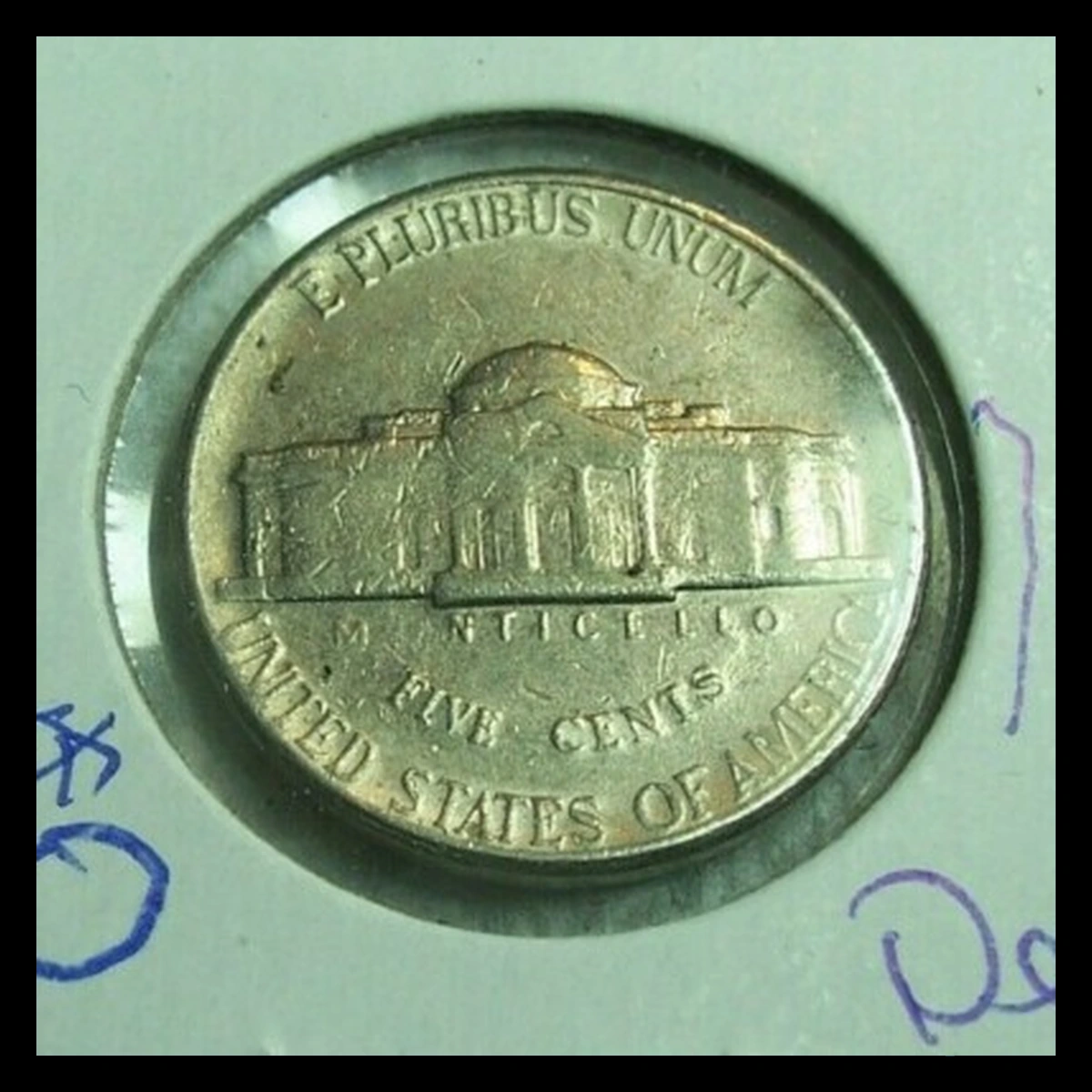
The Philadelphia report describes two missing letters at the start of MONTICELLO. Material between the blank and die may have prevented that part of the word from forming.
No particular obstruction is established for this coin. Grease, thread and fragments can cause strike-throughs generally, but should not be listed as confirmed objects in this example.
How to Identify
Compare the remaining letters and nearby building with the missing area. Local interruption beside sharp detail deserves a different examination from general wear at the same height.
Use light from both sides to inspect the boundary for polishing, cuts or displaced metal. A later smooth patch can remove finished letters without being a Mint strike-through.
What It’s Worth
Minor original letter loss is estimated at $5–$40, with extensive clearly defined strike-throughs around $40–$175. Preserved surrounding surfaces support the identification.
No individual sale is assigned to the missing-MO report. Two absent letters do not guarantee a particular premium.
8. 1994 Nickel A Loose Flap or Shallow Opening: Lamination Error
A weakness within the alloy can separate a thin piece of the coin’s own metal. The flap may remain attached or leave a rough recess after falling away.
This reported 1994 category has no fixed mint or location. A normal nickel’s construction contains no distinct outer clad layer to lose.
How to Identify
View the thin boundary from the side without lifting it. Follow the separation into the surrounding design and along the edge if it reaches the outline.
A coating sits above the finished surface, while a gouge may push metal up beside a trench. Missing material can reduce weight; a retained flap may not.
What It’s Worth
Small original separations are estimated at $15–$75, and larger attractive flaps at $75–$200. Surviving design and surface condition help place a coin within those ranges.
The supplied report has no specific 1994 sale. Pulling away attached metal changes the evidence and may reduce collector appeal.
9. 1994 Nickel A Raised Reverse Line on the Matte Coin: Die Crack Error
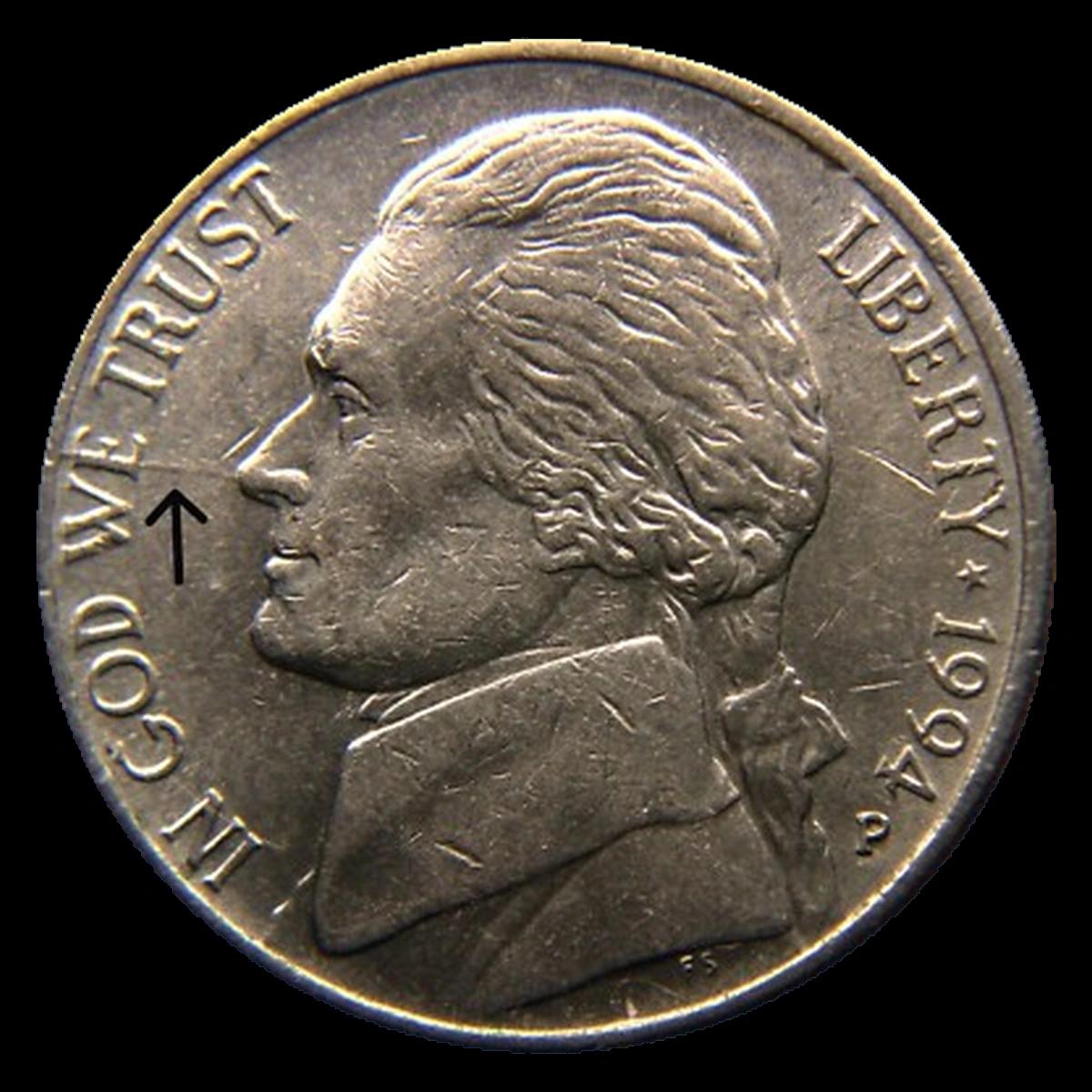
A crack in a die can fill with metal during striking and leave a ridge on the coin. The 1994 report concerns the reverse of the matte Philadelphia collector version.
The softly textured finish is intentional. Only the additional raised line is under examination as an error, and its exact path is not established here.
How to Identify
Use original set information or a grading description to establish the special version. An ordinary P nickel should not inherit that identity from a similar-looking line.
Inspect the center of the line under low light. A crack ridge rises above the surface, whereas a scratch can have raised sides surrounding a cut.
What It’s Worth
A special-finish coin with an original reverse crack is estimated at $30–$350. Much of the total can reflect its collector finish and preservation.
No individual sale is assigned to this reported specimen. Matte texture and sharp steps are not separate errors to add to the valuation.
10. 1994 Nickel Unusual Layered Metal: Wrong-Blank Strike Error
Mike Diamond described a thin 1994-P piece weighing 2.14 grams, with apparent layered construction, rough weakly formed faces and narrow copper borders. Its edge showed copper instead of the normal uniform nickel alloy.
A separate Heritage listing identifies a 1994-P nickel on a clad blank. The supplied records do not establish that these are the same physical coin or that either blank was intended as a standard dime.
How to Identify
Compare the expert’s 2.14-gram example with the candidate’s actual edge and surface evidence. Low weight and copper color alone cannot establish bonded layers.
Photograph visible layer boundaries and check for coating or grinding without scratching a test patch. Professional metal examination should distinguish a layered blank from an ordinary alloy nickel with altered color.
What It’s Worth
Authenticated unusual layered-blank errors are estimated at $500–$2,500. Identification of the actual construction is central to that range.
The NGC MS63 clad-blank nickel sold for $881.25 on April 28, 2013. This is not an established sale of Diamond’s separate 2.14-gram piece.
Conclusion
The whole 1994 nickel matters more than one cropped feature. Show both faces and the edge to connect an offset, a collar step or an unusual metal boundary with the rest of the coin.
Establish the matte collector finish before applying its price comparisons, and leave fragile metal untouched. Keep asking prices, mixed-lot totals and separate specimens distinct so the value estimate reflects the object actually being examined.