Rare 1912 Nickel Errors (List & Pictures)
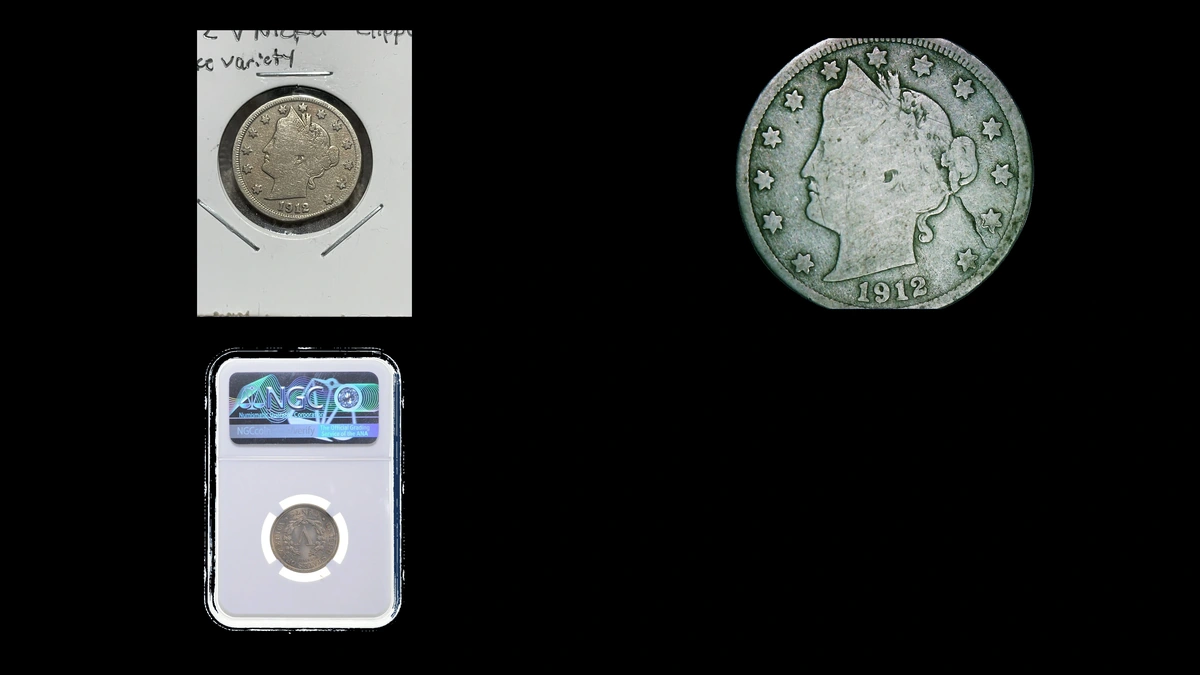
Mint and condition explain much of the estimated $20–$5,000 spread among 1912 Liberty Nickel errors. Even a circulated San Francisco broadstrike, graded Fine 12, sold for $630 in March 2021.
Start with the outline, then compare peeling metal, raised features, and date detail. The small mintmark can matter as much as the mistake, so keep that part of the reverse visible throughout the examination.
1. 1912 Nickel A Gap Interrupts the Rim: Clipped Blank Error
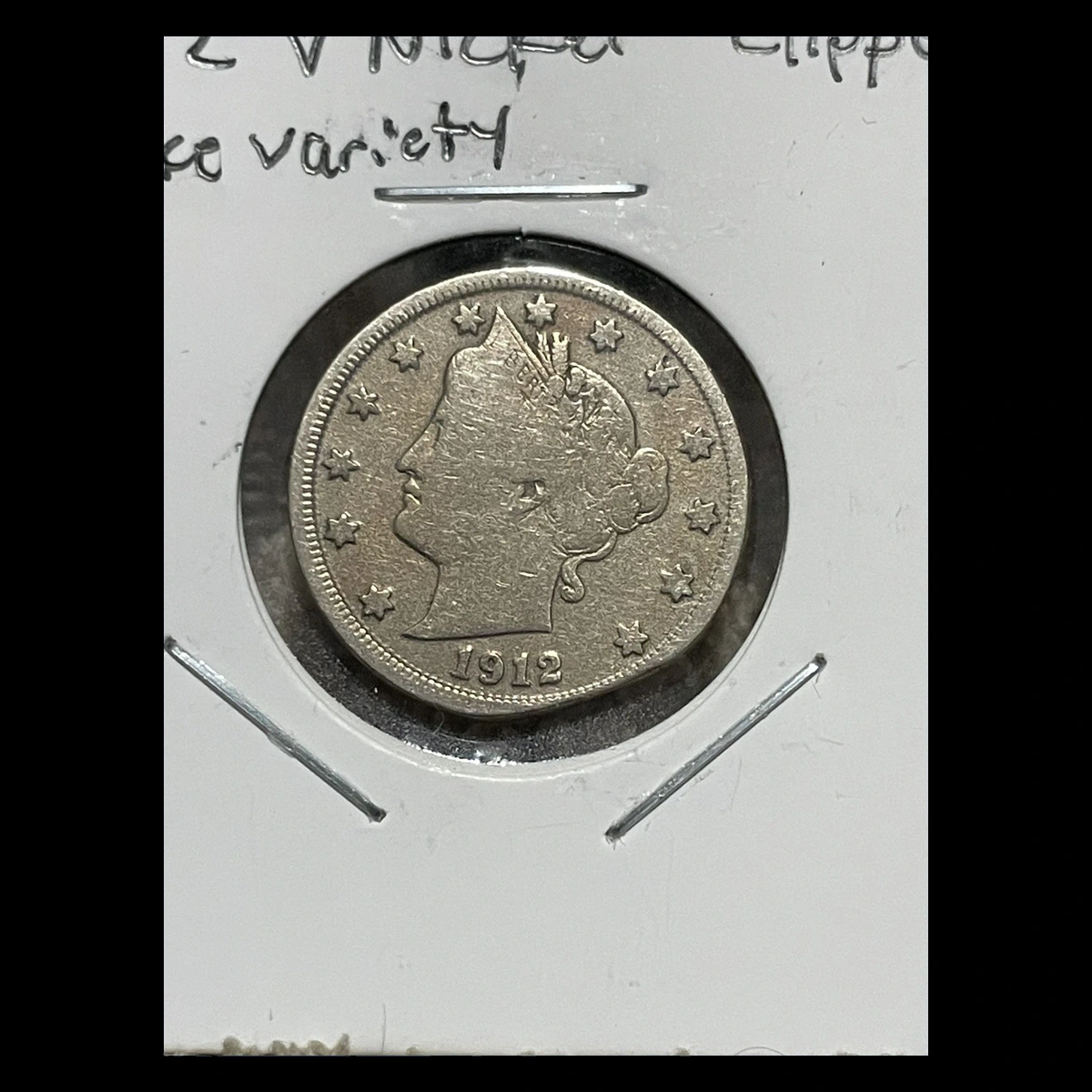
The recorded Philadelphia example is described as a disk clip and graded ANACS MS62. Its blank lacked part of the metal before the design was struck.
A blanking punch can overlap an earlier hole in the strip, leaving an incomplete disc. Separate Denver clip reports also exist, but the Philadelphia listing does not authenticate those other coins.
How to Identify
Inspect the rim at both ends of the opening for metal shaped toward the gap during striking. Saw marks, filing, or fresh burrs can expose a later cut.
A normal loose Liberty nickel weighs 5 grams and measures 21.21 millimeters. A small clip may change the weight too little for a basic scale to resolve clearly.
Weakness in the rim opposite the missing section is helpful supporting evidence. Its absence alone does not establish that the coin was cut after minting.
What It’s Worth
Genuine Philadelphia or Denver clips are estimated at $50–$350. Mint, grade, the missing amount, and the original rim transitions affect the comparison.
The Philadelphia MS62 listing establishes an unworn example with noticeable marks, but no realized price is assigned here. A later notch has no equivalent mint-error premium.
2. 1912 Nickel Unused Metal Borders a Cropped Design: Off-Center Strike Error
Older dealer catalogs describe separate Philadelphia and Denver coins displaced 10% off center. The Philadelphia example points toward 4 o’clock and the Denver example toward 9 o’clock.
The blank entered the press out of position, so part of each design missed the metal. These directions belong to those specimens and do not establish a San Francisco example.
How to Identify
Compare both faces for corresponding cropped design beside original unused metal. A single uneven border may have a different cause, such as one shifted die.
Read the date and examine the mintmark area near the lower-left of CENTS. If that area missed the strike entirely, an absent letter cannot prove Philadelphia origin.
The boundary between struck and untouched metal should fit an original displaced blow. Grinding or pressing a finished coin may instead leave damaged detail around the apparent empty area.
What It’s Worth
Dated 1912 off-center nickels are estimated at $150–$1,000. Clear identity, displacement, and preservation help select the relevant comparison.
A reprinted 1984 dealer catalog asked $175 for the Denver 10% example in VF/XF condition. That historical asking price is neither a completed auction result nor a fixed present-day value.
3. 1912 Nickel The Design Fits inside Expanded Metal: Broadstrike Error
A broadstrike expands when the collar fails to hold the blank at its intended diameter. The collar is the surrounding ring, and losing its restraint allows metal to spread outward.
The documented 1912-S coin from the Don Bonser collection was graded NGC Fine 12. It shows considerable circulation wear while retaining an identifiable expanded strike.
How to Identify
Check that the intended design remains inside the enlarged outline. Design falling beyond the metal beside an unused crescent would fit off-center striking instead.
Measure several spans and examine the borders for natural expansion. Hammering can also widen a coin, but it may flatten letters and leave impacts or a battered rim.
Confirm the S near the lower-left of CENTS when comparing the auctioned coin. Its catalog gives no measured diameter, so the exact width must not be invented from the photographs.
What It’s Worth
Broadly comparable circulated San Francisco examples are estimated at $400–$1,500. More surviving detail and clear expansion can strengthen collector interest.
The Fine 12 broadstrike sold for $630 at Heritage on March 8, 2021. The scarce S issue contributes to that whole-coin price; $630 is not an automatic broadstrike premium for another nickel.
4. 1912 Nickel A Small Flake Remains Attached: Lamination Error
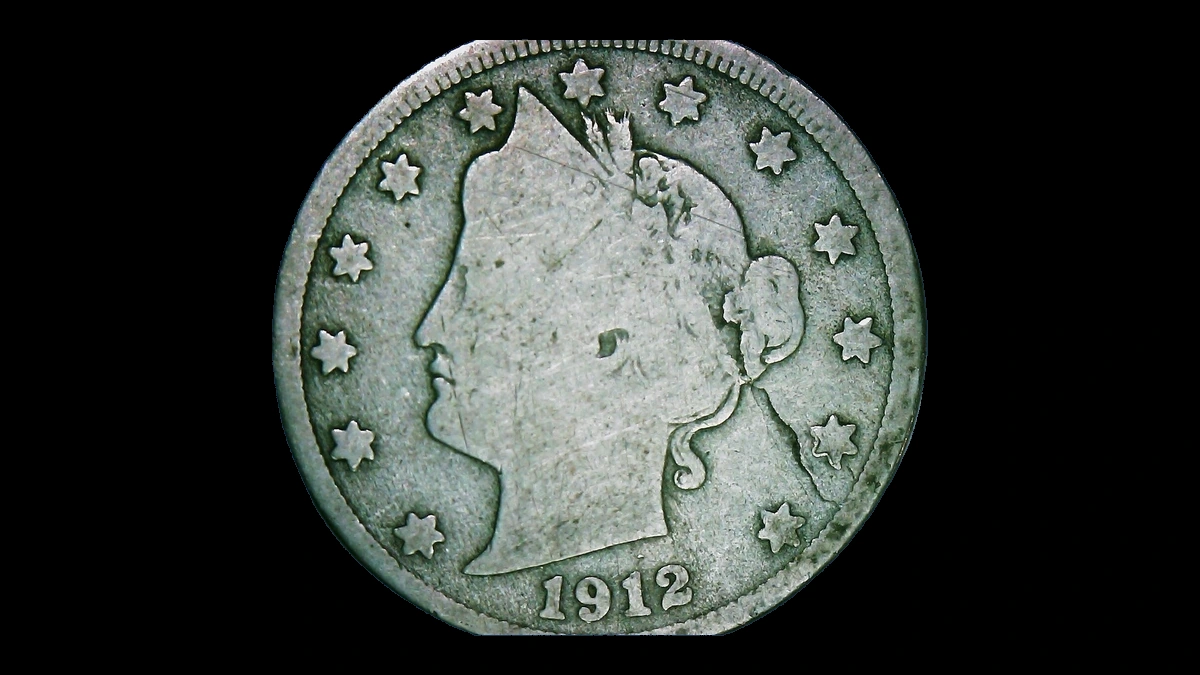
One cataloged 1912-S NGC MS64 nickel has a faint attached lamination at the tip of the right wreath branch. A weakness within the blank’s metal allowed a thin part of the surface to separate.
Liberty nickels are solid copper-nickel alloy rather than modern clad coins. Philadelphia and Denver laminations are also reported, but their descriptions do not share the San Francisco specimen’s exact location.
How to Identify
At the right wreath tip, inspect the thin boundary where the layer remains joined to the coin. Leave it attached and use photographs if the coin is already in a holder.
A peeling edge differs from a solid raised ridge produced by a die crack. A faint attached flake may change neither the diameter nor the weight appreciably.
What It’s Worth
The estimated range is $30–$5,000 when worn Philadelphia or Denver pieces and well-preserved San Francisco coins are considered together. Most of that wide span comes from mint and grade.
No realized price is assigned to the MS64 San Francisco specimen. Its faint lamination does not justify treating an entire scarce unworn coin’s value as a peeling-metal premium.
More extensive peeling can reduce interest among collectors seeking undisturbed surfaces. A larger flaw therefore does not guarantee a higher whole-coin value.
5. 1912 Nickel A Raised Line or Rim Patch Replaces Detail: Die Crack and Cud Error
Coin metal entering a crack in the die produces a raised line. A larger missing portion at the die edge can leave a raised patch connected to the rim, called a cud.
Year reports include fine Philadelphia cracks and cuds without a specified mint. No fixed path through the portrait or lettering is established.
How to Identify
Inspect a line under low side light to distinguish a ridge from a central groove. A scratch may have raised lips but still cut down through the surface.
For a cud, show where the patch joins the rim and replaces normal design. An interior lump away from the rim does not automatically fit that name.
Examine the opposite face for possible weakness and the edge for impact or added material. Solder, glue, and displaced metal from a later blow need different explanations.
What It’s Worth
Ordinary circulated 1912 coins with confirmed cracks or rim breaks are estimated at $20–$500. Thin lines generally attract less interest than a prominent recognizable cud.
No completed sale is supplied for the reports. Better grades and scarcer mints can change whole-coin value independently of the size of the break.
6. 1912 Nickel A Local Patch Is Weak beside Readable Detail: Struck Through Error
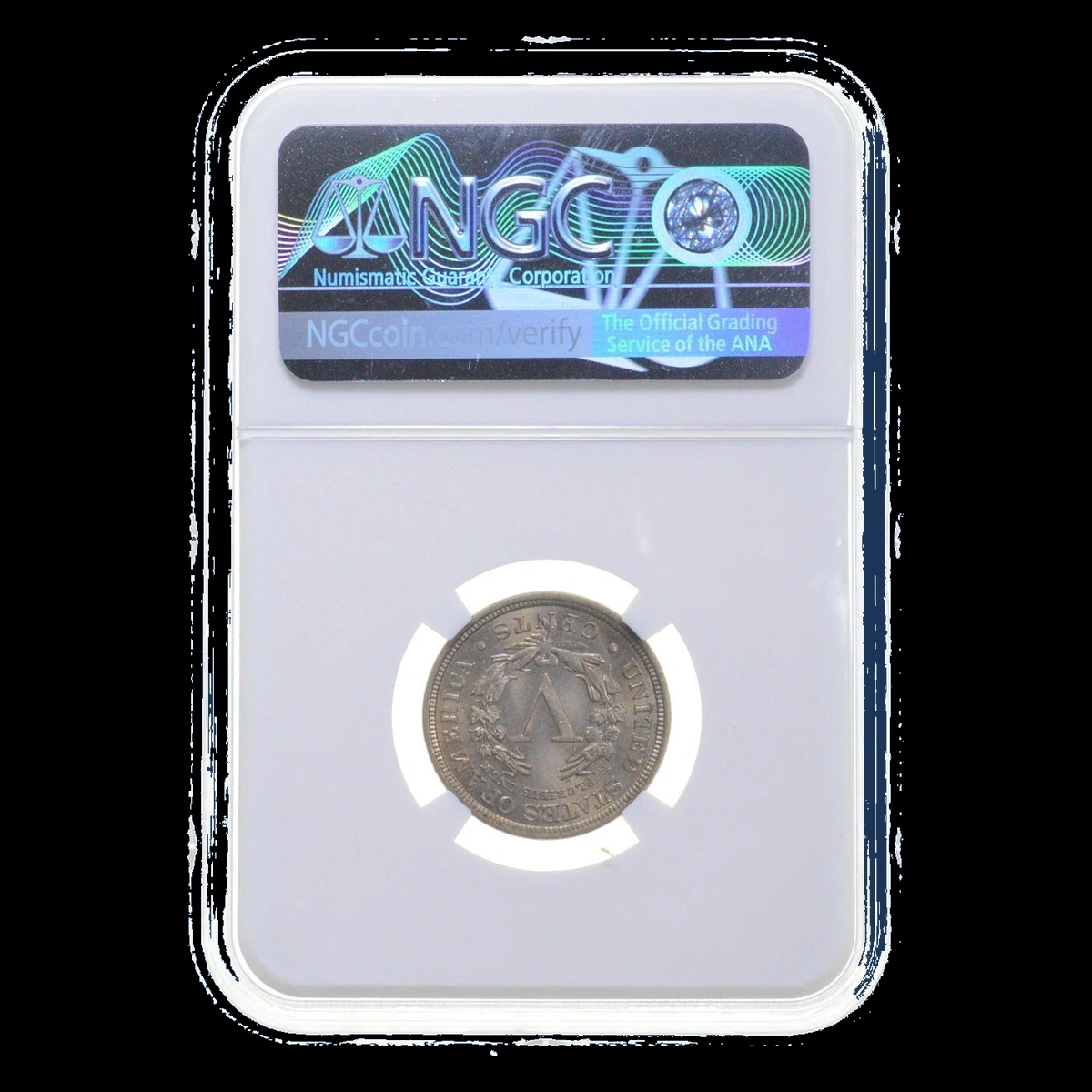
An obstruction between the die and blank can prevent part of the design from forming. Reports for 1912 describe portrait areas and reverse lettering, without identifying a single blocking substance.
A cleaned San Francisco example is also reported. Cleaning is a later condition issue that can coexist with a genuine strike-through; it is separate from the original obstruction.
How to Identify
Check exposed portrait high points and nearby lettering for general wear before focusing on the local patch. Broadly flattened detail may need no obstruction to explain it.
Inspect the boundary for scraping or a lip of metal displaced by a later blow. Leave the surface untouched, since cleaning lines can conceal the original clues.
What It’s Worth
Ordinary 1912 strike-throughs are estimated at $40–$600. Scarce mint issues and unusually strong examples may fall outside that broad comparison.
A secondary year guide reports about $70 for a cleaned 1912-S, with no primary auction record adopted here. That weakly documented problem-coin result must not be treated as a general price for intact San Francisco nickels.
7. 1912 Nickel Date Digits Appear to Have Another Edge: Reported Doubled Die Error
A doubled die carries repeated design in the tool itself. A 1912 year guide reports minor date doubling without naming the mint, digit, direction, or widely recognized catalog variety.
The report therefore remains conditional on a matching identified coin. Thick numerals alone cannot establish the cause.
How to Identify
Photograph all four date digits and move the light while keeping the coin fixed. A reflection or shadow may disappear, while actual raised detail remains in place.
Rounded separated outlines differ from low flat shelves caused during striking. Seek the same repeated pattern on another correctly identified 1912 coin before accepting a variety name.
What It’s Worth
A verified minor 1912 doubled die has a conditional estimated value of $25–$200. No certified matching specimen with a completed sale is supplied here.
The range requires repeated design from the die. Mechanical doubling or damage does not earn the same premium simply because a date looks unusual.
Conclusion
For 1912 Liberty nickels, the mintmark and grade can explain much of a strikingly wide price range. Compare the entire coin before assigning its value to a small lamination, crack, or blocked area.
Preserve attached flakes, record both faces of displaced strikes, and distinguish historical asking prices from completed sales. The reported minor doubled date still needs a specific pattern match, while the $630 San Francisco broadstrike provides a documented individual result.