Rare 2003 Nickel Errors (List & Pictures)
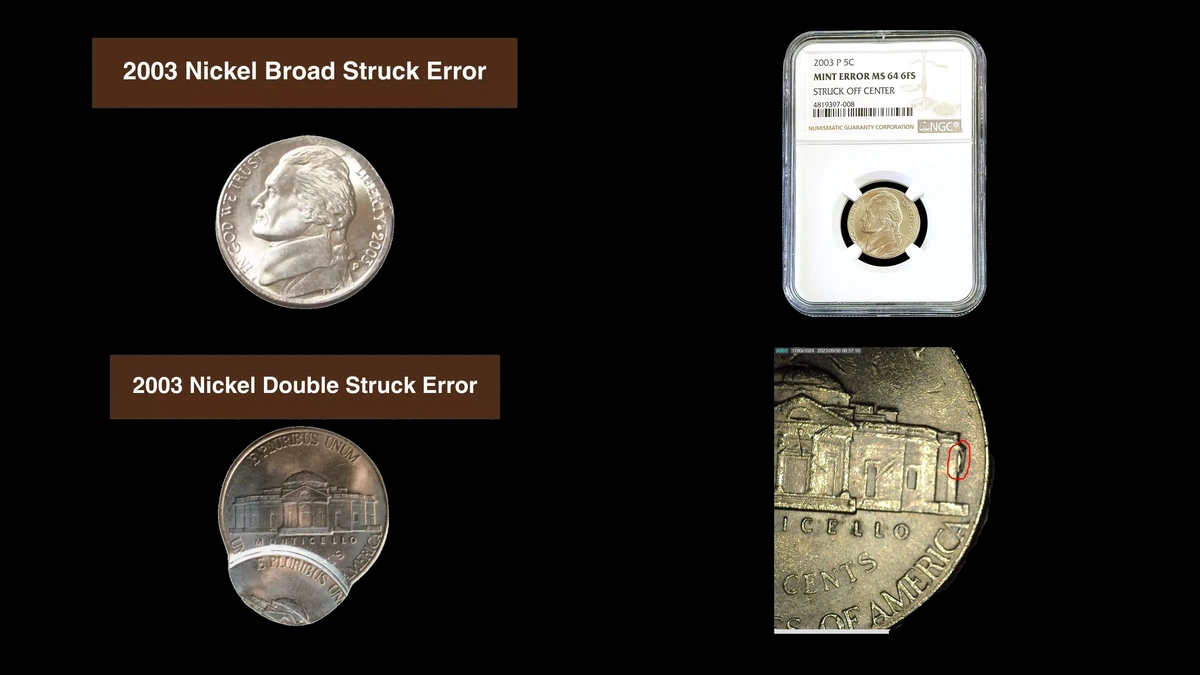
A genuine 1999-P mated pair sold for $1,260 in September 2025, providing a different-year comparison for reported 2003 nickel errors. Estimated values here span $3–$3,000, including a range for two authenticated matching coins together.
Inspect each coin’s body and design before judging a pair. The 2003 issue has Jefferson’s older left-facing portrait, a plain edge, and normal specifications of 5 grams and 21.21 mm.
Shared dates, reflective surfaces, or similar damage do not establish shared manufacture.
1. 2003 Nickel Nickel Designs Fill a Smaller Copper-Colored Disc: Cent-Blank Strike Error
The reported 2003-D wrong-blank type carries Jefferson and Monticello on a disc intended for a cent. Its limited space cannot receive all the outer nickel design.
A contemporary cent blank is copper-plated zinc, with a starting standard of 2.5 grams and 19.05 mm. Those are reference specifications rather than recorded measurements of the reported specimen.
How to Identify
Confirm the nickel designs instead of Lincoln and the cent reverse. Recognizable older cent designs underneath would raise a separate double-denomination question.
Compare the measured body with both denominations, allowing for expansion, and inspect the edge for filing or added coating. Color and low weight need support from natural design termination and nondestructive metal assessment.
What It’s Worth
An authenticated 2003-D example has an estimated range of $150–$750. Readable date and original surfaces strengthen the comparison.
A 1981-P nickel on a cent blank sold for $372 in September 2025 at PCGS MS63. Its older copper-based cent blank differs from the 2003 copper-plated zinc standard, so the sale is a market comparison rather than a specification match.
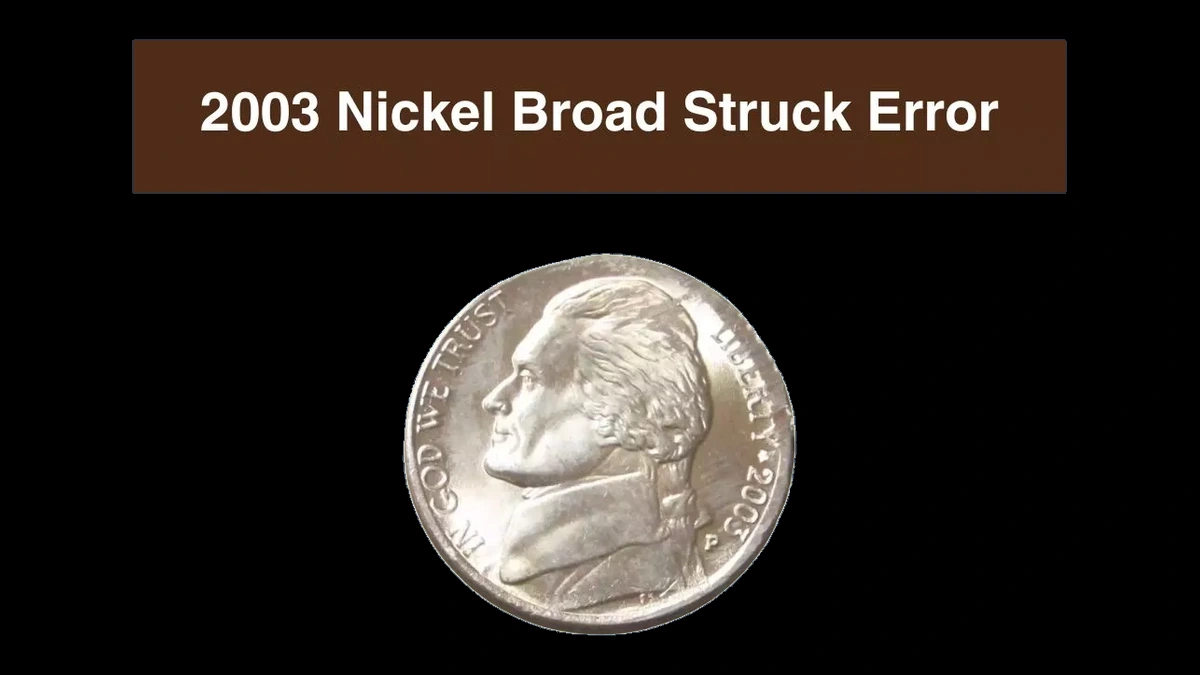
2. 2003 Nickel A Wide Border Contains the Full Design: Broadstrike Error
Reported Denver broadstrikes show outward spread around Jefferson, Monticello, and the principal lettering. The collar, the restraining ring around the blank, failed to contain the metal normally.
A plain edge cannot prove that failure because ordinary nickels already have smooth edges. The expansion itself must be established.
How to Identify
Measure several spans and confirm that the intended design remains on both faces. Missing outer details may instead indicate an off-center strike.
Inspect the high points for flattening and the edge for pressure marks. Squeezing a finished nickel can widen it without reproducing a natural broadstrike.
What It’s Worth
The estimated range is $25–$250 for genuine 2003-D examples. Visible expansion and undamaged original design provide the better comparisons.
A 1999-P broadstrike graded PCGS MS63 sold for $89 in March 2025. Its unworn condition belongs to that different-year result.
3. 2003 Nickel One Design Moves toward 9 O’Clock: Off-Center Strike Error
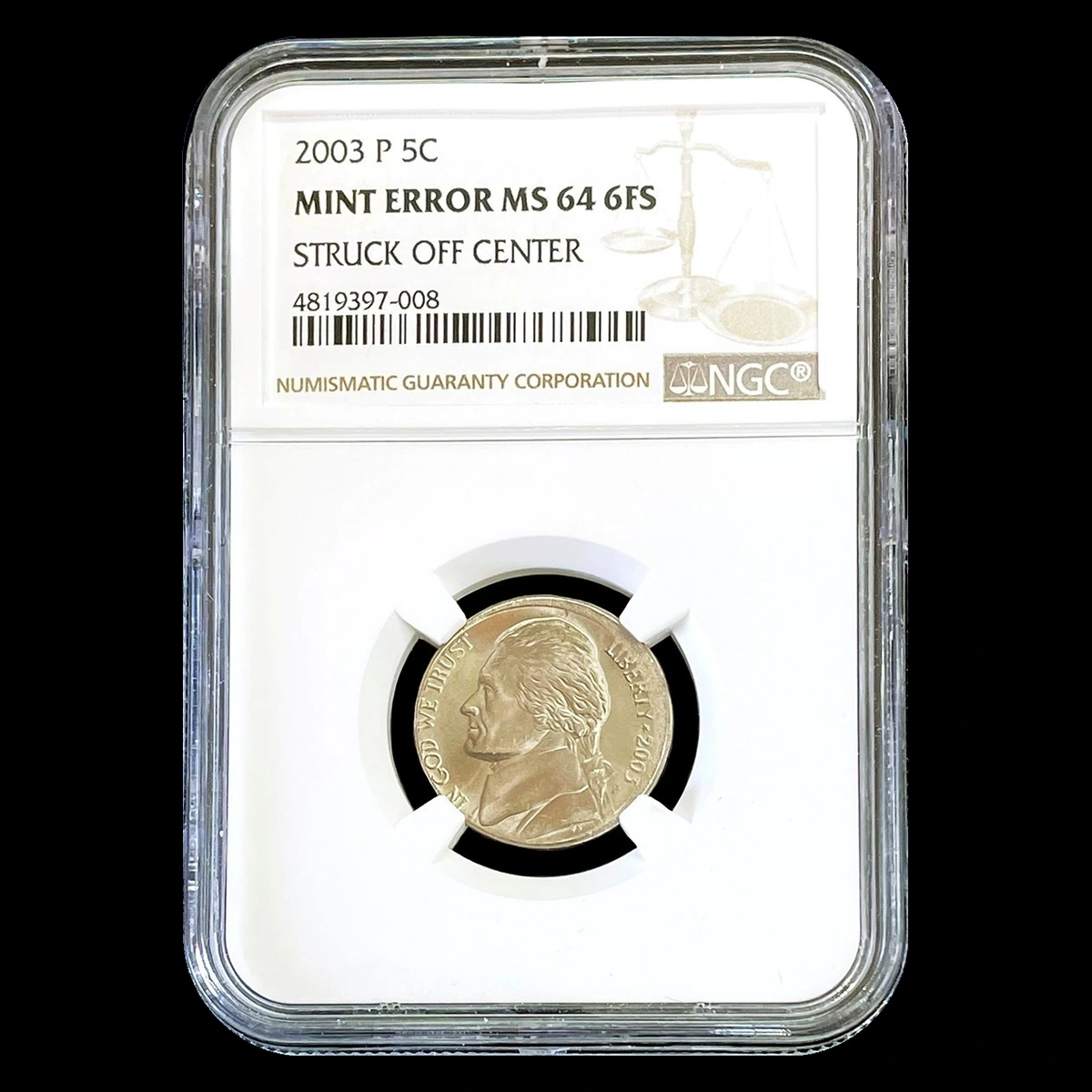
The recorded 2003-P was struck 10% off center toward the left and graded ANACS MS63. It appeared in a lot with a more strongly displaced 2001-D.
The original blank remained present outside part of the design. Some outer details missed the opposite edge during the misplaced blow.
How to Identify
Read 2003 and P directly, then compare both design boundaries with the 9 o’clock displacement. A broad date range such as 1966–2003 cannot establish this particular year.
Check the transition to unused metal for grinding and inspect the edge for missing material. The companion coin’s percentage, grade, or direction must not be assigned to the Philadelphia specimen.
What It’s Worth
Estimated values run $25–$500 for 2003 off-center strikes, depending on displacement and preservation. A modest 10% shift requires a different comparison from a dramatic clean example.
The two-coin lot sold for $63 in January 2022. That total includes the 2001-D and cannot be treated, or evenly divided, as an actual individual 2003 sale price.
4. 2003 Nickel Two Groups of Design Details Are Displaced: Double Strike Error
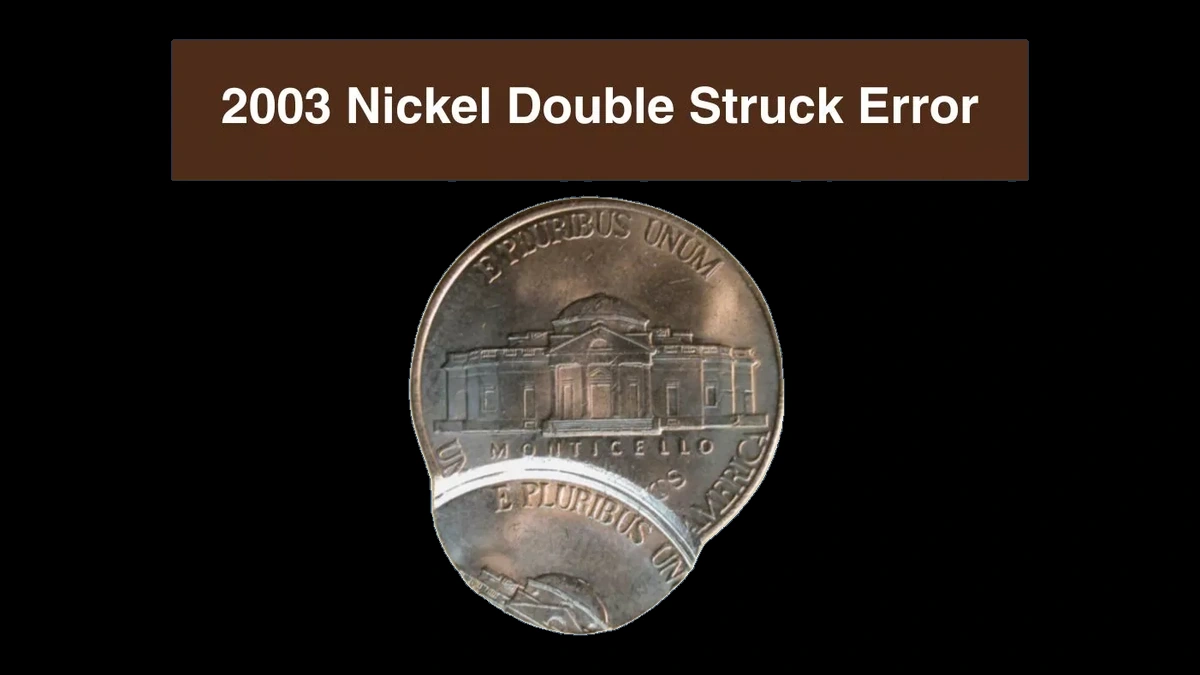
The reported 2003 case is described as a Proof, a specially made collector coin, but that manufacture needs verification on the actual piece. Normal repeated aligned blows in Proof production are not themselves an error.
The collectible feature is movement between blows that leaves two distinct design positions. A small extra outline on one letter is a different observation.
How to Identify
Connect a second portrait edge with the lettering belonging to that same impression and compare both faces. Let the overlap establish the direction rather than assuming an angle from another coin.
Check finish and mintmark independently of the repeated design. Reflective fields alone cannot prove Proof status, and a low isolated shelf cannot prove displaced double striking.
What It’s Worth
The conditional estimate is $100–$1,500 for a genuine displaced double strike matching the reported type. This range does not certify the candidate’s finish or grade.
A 2007-D nickel with double striking and major broadstriking sold for $1,260 in August 2025. That stronger combination demonstrates why geometry matters more than the generic word doubling.
5. 2003 Nickel The Edge Rises into a Cup: Die Cap Error
A struck coin stuck to a die can spread and wrap around it as later blanks are struck. The resulting cap is the trapped coin itself.
A separate coin struck beneath the cap may show weak or altered design while remaining comparatively flat. The reported 2003 cap category must not be confused with that receiving coin.
How to Identify
View the face-to-wall transition from the side and relate the cupped outline to its strike details. Natural metal flow should explain how the coin developed around the tool.
Sharp folds, fresh scratches, or gripping marks suggest later bending. Preserve the shape rather than flattening it for a diameter measurement.
What It’s Worth
Genuine 2003 caps have an estimated range of $300–$2,000. Depth and convincing strike evidence can increase interest.
The 2007-D sold for $1,260 was also discussed as a cap, while its auction label described double striking and major broadstriking. It is a qualified comparison, not a price for the 2003 report.
6. 2003 Nickel Two Coins Preserve Matching Contact Areas: Mated Pair or Bonded Coins Error
A mated pair consists of coins whose marks demonstrate the same striking accident. They can be separate objects; bonded coins remain physically joined.
The 2003 report uses both terms without resolving that distinction. Similar dates or two unusual shapes cannot establish either a shared event or an original bond.
How to Identify
Compare the contact boundaries, transferred details, and blocked areas on both coins without forcing them together. Their sizes and positions should explain one interaction.
For joined pieces, distinguish an original connection from glue or solder without pulling them apart. Examine each coin’s finish, identity, and condition separately rather than transferring a claim across the pair.
What It’s Worth
An authenticated 2003 pair has an estimated range of $500–$3,000 for both coins together. The estimate does not establish that the reported pieces remain bonded or are Proofs.
A genuine 1999-P pair sold for $1,260 in September 2025. One member had an off-center backward impression and its partner repeated off-center strikes, making that sale a different-year pair comparison.
7. 2003 Nickel A Local Area Is Weak or Impressed: Struck Through Material Error
The 2003 reports include the general struck-through category without one established material or location. Soft packed material can weaken detail, while a firmer obstruction can leave a distinct impression.
How to Identify
Photograph the entire affected face with the date and nearby sharp details. At the boundary, determine whether design was interrupted during formation or later cut and scraped.
Compare wear on the high points to avoid calling general flattening an obstruction. Do not assign cloth, wire, or metal merely because those materials cause similar errors on other dates.
What It’s Worth
Small soft areas have estimated values of $3–$25, while clear object impressions may fit $25–$200. Condition and a convincing original boundary matter.
A 2000-D nickel struck through a coin covering the die sold for $84 in September 2025. That distinct obstruction is neither a 2003 sale nor an identification of the material in a weak patch.
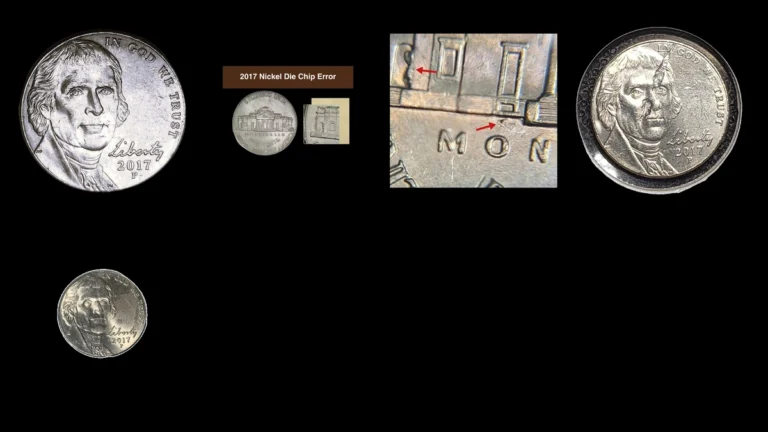
8. 2003 Nickel Raised Lines or Small Blobs Interrupt the Surface: Die Cracks and Chips Error
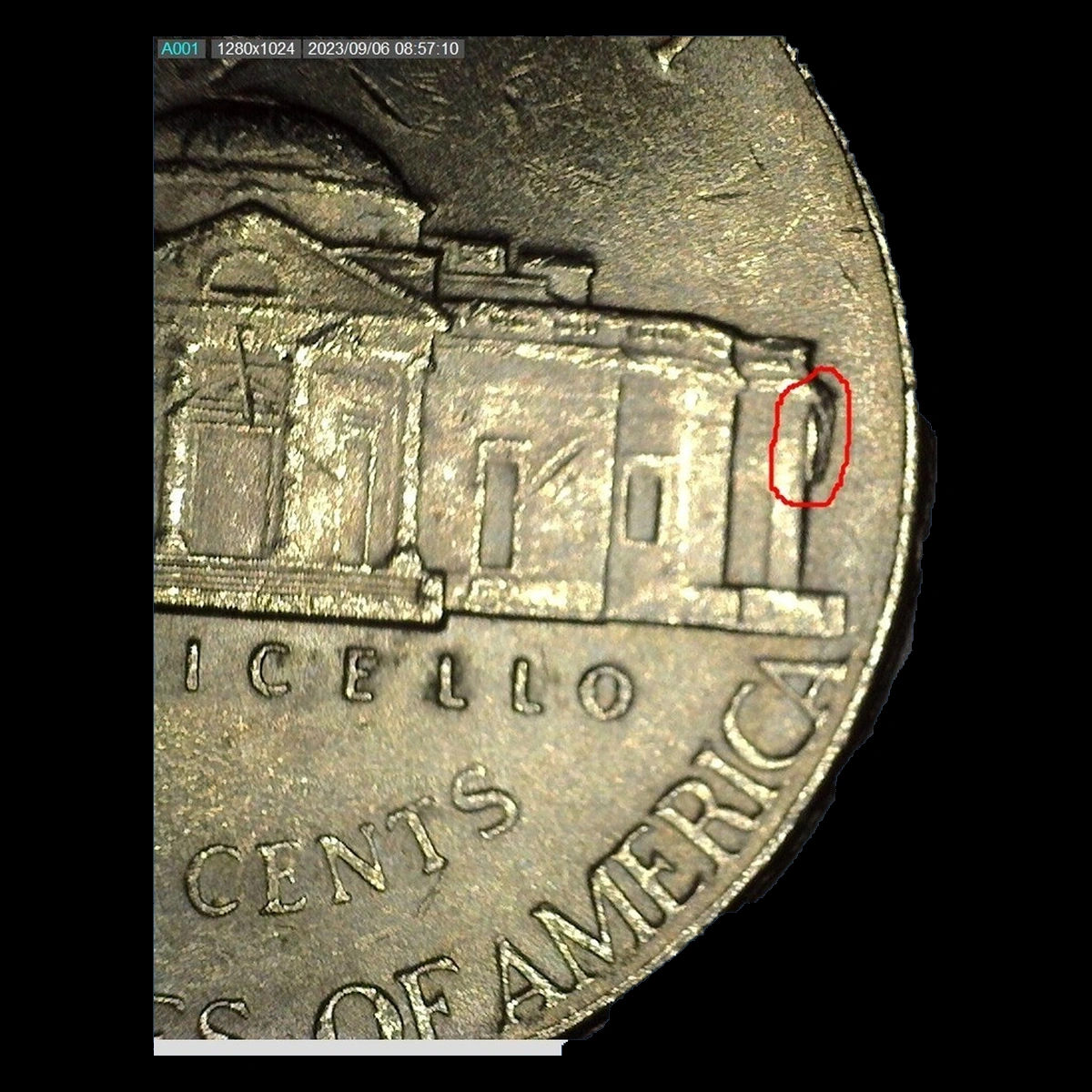
Reports describe modest cracks and chips on 2003-D dies. Metal entering a narrow opening produces a raised line, while a small missing steel fragment produces a wider blob.
An interior chip does not automatically establish a larger rim-connected break. Normal design edges can also seem unfamiliar in an overly tight crop.
How to Identify
Move side lighting across the feature and compare it with a normal 2003-D. The center should rise rather than form the groove of a scratch.
Check for seams, different texture, or edge impacts that pushed metal inward. Attached material and later damage need different explanations from a die opening.
What It’s Worth
Ordinary small cracks or chips have an estimated range of $3–$40. A clearly visible feature on unworn surfaces supports more interest than a faint ridge among wear.
No specific auction record is assigned to these reported features. A large-looking blob caused by damage or contamination receives no die-error premium.
9. 2003 Nickel Portrait Traces Appear around Monticello: Clashed Dies Error
Reported 2003-P clashes show faint portrait-related shapes around the building or steps. The dies contacted one another without a blank and transferred traces to coins struck afterward.
Monticello remains normally positioned. The unexpected outlines need to fit Jefferson’s older left-facing portrait.
How to Identify
Use a normal 2003 front image, not the later forward-facing design. Keep nearby lettering and steps visible to compare the shapes’ correct locations.
Separate dirt and scratches from the transferred pattern. A complete sunken backward portrait would call for investigation of direct coin contact instead of a die clash.
What It’s Worth
Recognizable examples have an estimated range of $5–$60. Clear traces on clean surfaces offer better comparisons than marks visible only under suggestive lighting.
This is an estimate rather than a supplied sale. More unrelated lines do not make a stronger or more valuable clash.
Conclusion
The 2003 reports require careful separation of related-looking effects: a broadstrike keeps its design, an off-center coin loses some design, and a cap differs from the coin struck beneath it. Two unusual pieces need matching contact evidence before becoming a pair.
Retain the old portrait, date, and mintmark in photographs. Keep uncertain Proof or bonded status conditional, and distinguish a group’s sale price from the value of one coin.