Rare 1942 Nickel Errors (List & Pictures)
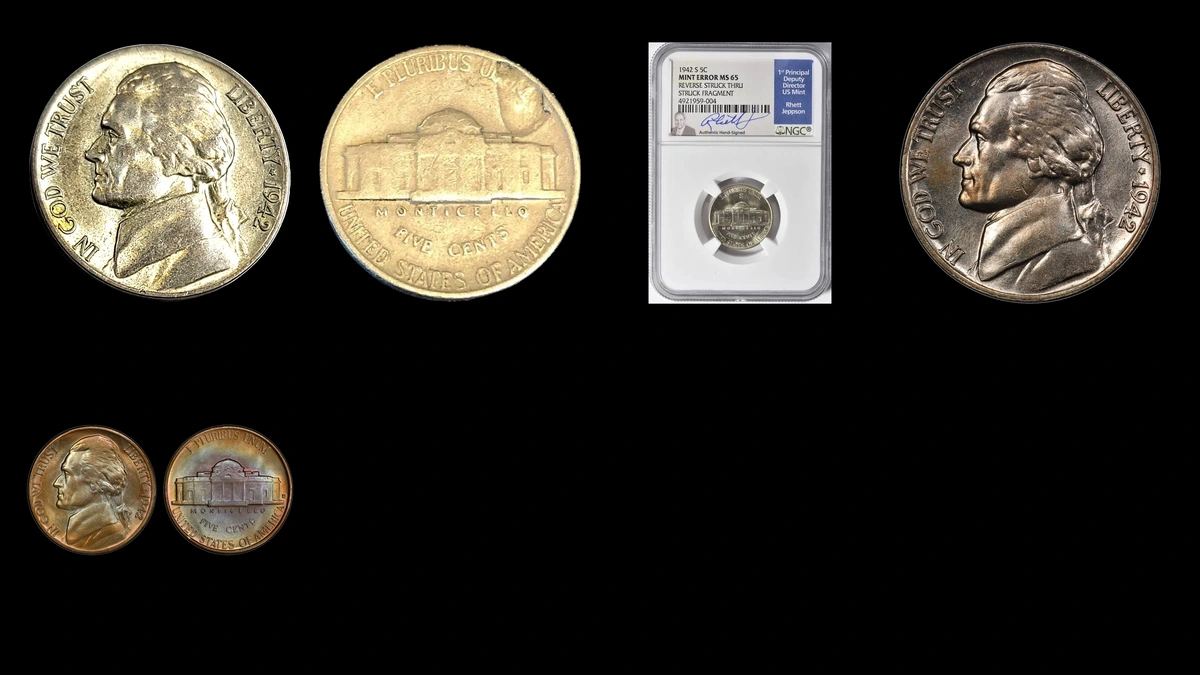
The mintmark is the first useful clue when examining 1942 Jefferson Nickel errors. This year includes ordinary copper-nickel and wartime silver-alloy coins, with estimated error-coin values spanning $10–$35,000.
A sideways-D variety graded MS64 Full Steps brought $32,200 in January 2006. Identify the normal version before comparing its metal, outline, and repeated details with the examples below.
1. 1942 Nickel An Early Reverse Is Struck in Wartime Metal: Silver Transition Error
The documented coin combines the early Philadelphia reverse, without a large P, with wartime silver-alloy metal. PCGS graded it Good 6, and its recorded weight is 4.7 grams.
The auction included a 1965 identification letter and a contemporary discovery report. Those documents support this particular specimen rather than every pale no-mintmark nickel.
How to Identify
Normal 1942 nickels of either alloy began near 5 grams and 21.21 millimeters, with a plain edge. Early Philadelphia coins have no mintmark, Denver has a small D beside Monticello, and wartime P or S letters sit above the dome.
Inspect the space above Monticello for removal marks that could disguise a wartime mintmark. Color cannot distinguish the original silver alloy from a coating.
Qualified non-destructive testing must confirm 35% silver in the original metal together with an unaltered early design. The documented 4.7-gram weight reflects this heavily worn coin, not a different normal production standard.
What It’s Worth
A genuine comparable transitional example is estimated at $5,000–$15,000. Secure identification of the design and alloy is central to that value.
The documented Good 6 coin brought $9,987.50 in August 2016. Its strong result despite wear reflects the unusual combination, not the appeal of an ordinary pale nickel.
2. 1942 Nickel Brown Metal Carries Only the Nickel Design: Cent Planchet Error
The recorded Philadelphia coin has the early nickel design on a blank intended for a cent. It weighs 3.04 grams and was graded NGC MS62 Red and Brown.
The smaller blank limits how the outer nickel design fits. Because it began unused, it does not need to show an earlier Lincoln impression.
How to Identify
Compare the actual 3.04-gram specimen reading with the contemporary cent standard of 3.11 grams. A cent blank began at 19.05 millimeters, although striking can enlarge it.
Inspect cropped lettering, the date, and the edge for natural striking rather than trimming or added copper color. No mintmark is normal for the early Philadelphia design.
Search both faces for identifiable earlier cent details. Their presence would change the explanation from an unused blank to the double-denomination error below.
What It’s Worth
Comparable genuine cent-planchet nickels are estimated at $1,000–$4,000. The 3.04-gram MS62 Red and Brown example sold for $2,280 in July 2021.
Readable identity and preservation matter alongside the wrong metal. Brown color on an ordinary nickel does not establish this comparison.
3. 1942 Nickel Lincoln Survives beneath Monticello: Double Denomination Error
On the PCGS example, Lincoln’s head lies nearly upside down beneath Monticello, and his coat edge crosses part of E PLURIBUS. A finished cent had entered the nickel press.
The later strike used the wartime Philadelphia design with a large P. Records include PCGS and NGC MS64 Brown pieces, but matching grade and color do not prove they are the same specimen.
How to Identify
Trace the earlier cent detail beneath the newer nickel impression, using the nearly inverted head and coat edge for the PCGS comparison. Keep any surviving cent date distinct from the later nickel date.
The cent’s starting standards were about 3.11 grams and 19.05 millimeters. Neither is presented as an actual measurement of these PCGS or NGC examples.
Inspect both faces and the edge for joins or later pressure damage. Recognizable earlier cent design is the essential distinction from a nickel on an unused copper blank.
What It’s Worth
Comparable genuine 1942-P double denominations are estimated at $2,500–$8,000. Clear surviving Lincoln details make the sequence easier to understand.
The PCGS MS64 Brown example is reported at $5,760 in November 2022. A separate NGC MS64 Brown auction record gives $4,320 in December 2022; the records should not be merged into an assumed repeat sale.
4. 1942 Nickel The Date and Reverse Wording Run off a Small Silver Disc: Dime Planchet Error
The cataloged 1942-S PCGS MS63 coin retains only the lower half of the date, with enough detail to establish the year. Its large S nearly reaches the upper edge, and most of E PLURIBUS UNUM is absent.
A silver dime blank received the larger nickel design, with collar contact affecting its shape near 12 o’clock. A separate AU58 dealer example retains a complete date.
How to Identify
Match the surviving date portions and high S to the MS63 specimen’s own photographs. The AU58 coin’s complete digits cannot fill gaps in another coin’s evidence.
A contemporary silver dime blank normally started at 2.50 grams and 17.91 millimeters. These are reference specifications, not measured values supplied for the MS63 coin.
Inspect the naturally cropped design and edge for later trimming. A dime blank struck under nickel tools need not acquire the grooves expected on a normal dime.
What It’s Worth
Genuine 1942-S dime-planchet nickels are estimated at $1,500–$6,000. The PCGS MS63 example sold for $3,600 in January 2023.
A complete date can help a comparison, but the separate AU58 coin also has more wear. Collector interest centers on the wrong-blank strike rather than its silver content alone.
5. 1942 Nickel An Unworn Denver Coin Is Light: Defective Blank Error
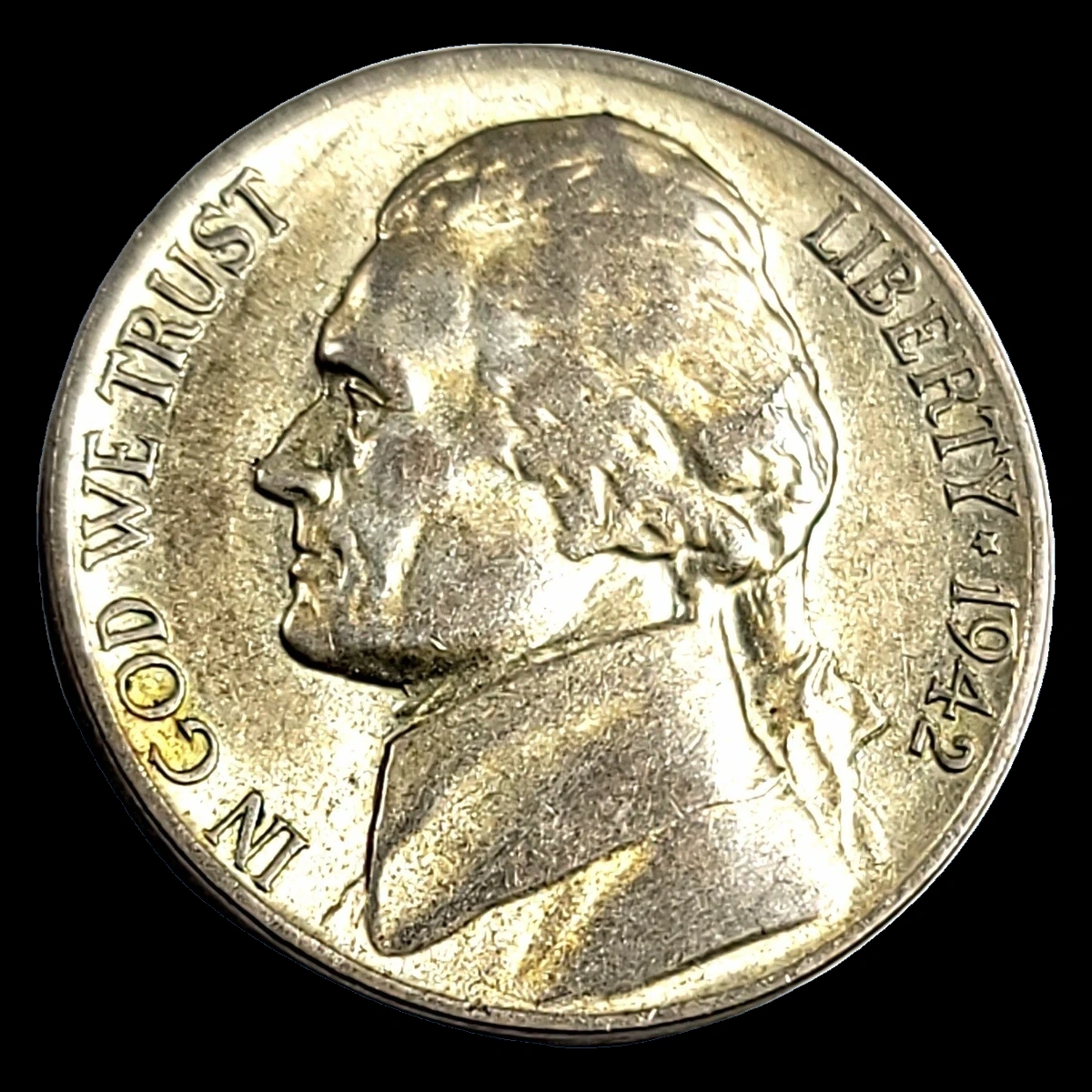
The recorded 1942-D nickel weighs 4.4 grams and was cataloged as struck on a defective blank. NGC graded it MS64 Full Steps.
The description does not identify a clip, thin rolled section, or lamination. Those more specific explanations should not be assigned without corresponding physical evidence.
How to Identify
Confirm the small D beside Monticello and record the weight before interpreting the shortage. A large wartime letter above the building belongs to a different normal issue.
Inspect thickness, surface, and edge for original defects while checking for filing, corrosion, or cutting. A 4.4-gram reading alone cannot establish why the coin is light.
What It’s Worth
Comparable genuine Denver defective-blank coins are estimated at $75–$400. The recorded 4.4-gram MS64 Full Steps example brought $156 in July 2021.
Full Steps describes Monticello’s clear stair detail. It does not identify the blank defect or make every underweight nickel equivalent to this specimen.
6. 1942 Nickel A Curved Opening Removes Part of the Rim: Clipped Planchet Error
The reported wartime San Francisco clip has a curved gap without an established size or clock position. The blanking punch overlapped an earlier opening in the metal strip.
The incomplete disc then received its design. That differs from unused metal beside an off-center strike or a gap cut into a finished coin.
How to Identify
Find the large S above Monticello and inspect the rim at both ends of the gap. Naturally formed transitions differ from sliced letters or sharp filing burrs.
Look for possible weakness opposite the opening without requiring it on every clip. Compare intact spans rather than measuring through the missing section as though it were the original diameter.
What It’s Worth
A genuine 1942-S curved clip is estimated at $30–$500. Clear identity and original struck boundaries matter along with condition.
A 1946 Philadelphia clipped nickel graded MS65 sold for $30 in March 2025. That ordinary copper-nickel piece supplies context for a modest clip rather than an exact price for a wartime example.
7. 1942 Nickel A Flap or Shallow Patch Separates: Lamination Error
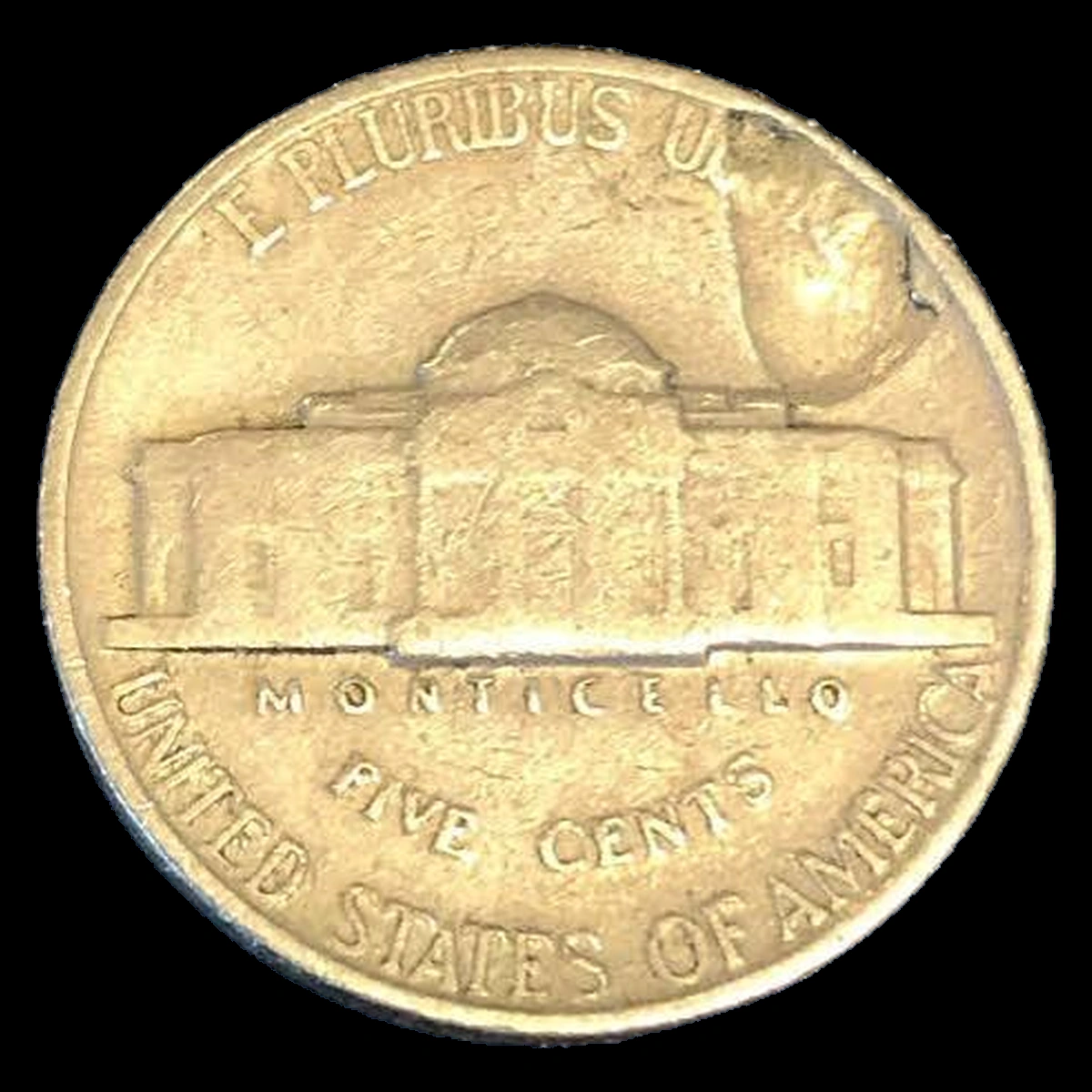
A weak area within the alloy can open into a thin loose layer. A recorded 1942-P silver nickel with lamination was graded ANACS VG8.
Wartime nickel alloy contains 35% silver mixed into the metal, not a silver coating over another core. Ordinary copper-nickel pieces can also develop internal weakness.
How to Identify
Leave an attached flap in place and examine the rough inner boundary and any remaining struck design. Scraping can leave tool tracks, while corrosion often makes scattered pits instead of a coherent peeling layer.
The large P identifies the reported wartime example. A small attached layer may barely change weight, while detached metal can lower it.
What It’s Worth
Genuine laminations are estimated at $10–$300. The worn ANACS VG8 Philadelphia example is reported at $10 in November 2008.
A broad clear flap can be more interesting than a small shallow patch. Cleaning or tearing the layer away can reduce appeal and remove useful evidence.
8. 1942 Nickel A Local Area Lacks Normal Design: Struck Through Error
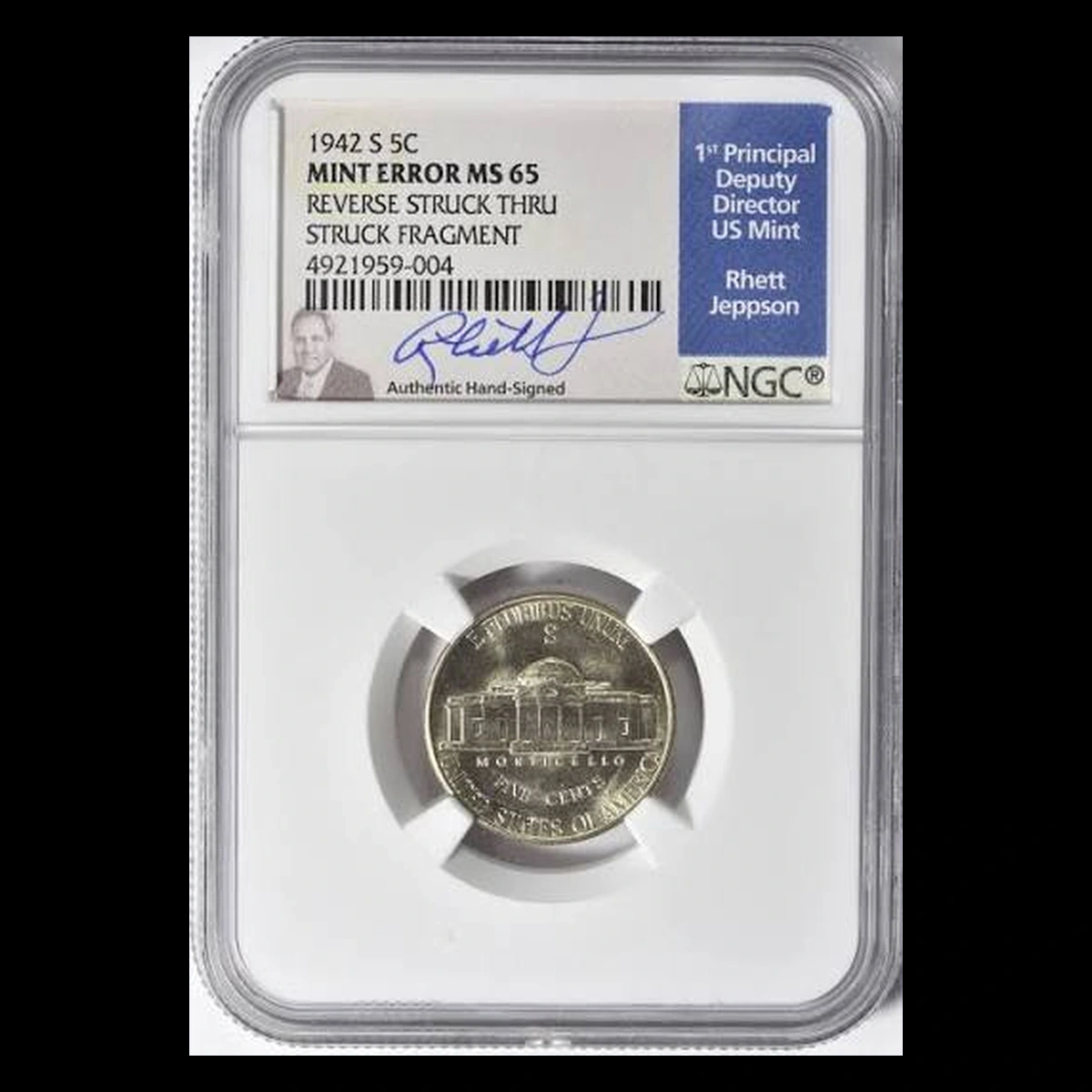
The 1942-S report describes material blocking a strike without identifying the substance or exact location. A local weak patch or impression can remain where the die could not reach the blank normally.
The large S is part of the regular wartime design. It does not itself establish an obstruction.
How to Identify
Keep the date and large S connected to the affected-area photographs. Compare the interruption with neighboring raised details for a local difference rather than general wear.
Inspect the boundary for an original depression or texture without naming cloth or wire from guesswork. A later scrape may cut completed detail and leave disturbed metal.
What It’s Worth
A genuine 1942-S strike-through is estimated at $15–$350. Larger distinct impressions generally provide stronger comparisons than slight weakness.
A 1958 Philadelphia nickel described with cloth across the portrait was reported at $68 in 2024. Neither its date nor its cloth texture can be transferred to the unspecified 1942-S report.
9. 1942 Nickel Turned Impressions Overlap on Expanded Metal: Double Strike Error
The documented coin moved between blows, and its second strike occurred outside the collar. It therefore combines turned overlapping designs with outward spreading.
NGC graded it MS67 Six Full Steps. The available record does not establish whether its original blank was ordinary copper-nickel or wartime alloy.
How to Identify
Trace an earlier design position beneath the later impression on both faces. The turn occurs between strikes, rather than merely between the orientation of the front and reverse.
Match the expansion to the later blow and inspect the edge for later squeezing or joins. An enlarged outline without overlapping design would need a different explanation.
Establish the alloy separately from the grade. Six Full Steps describes visible stairs, not the starting metal or an extra strike count.
What It’s Worth
Comparable genuine combinations are estimated at $400–$2,500. The MS67 Six Full Steps coin sold for $862.50 in September 2010.
Its clean surfaces and sharp steps contribute to one whole-coin value. Separate full premiums for rotation, broadstriking, and another blow should not be added together.
10. 1942 Nickel Letters or Portrait Details Have Repeated Contours: Doubled Die Error
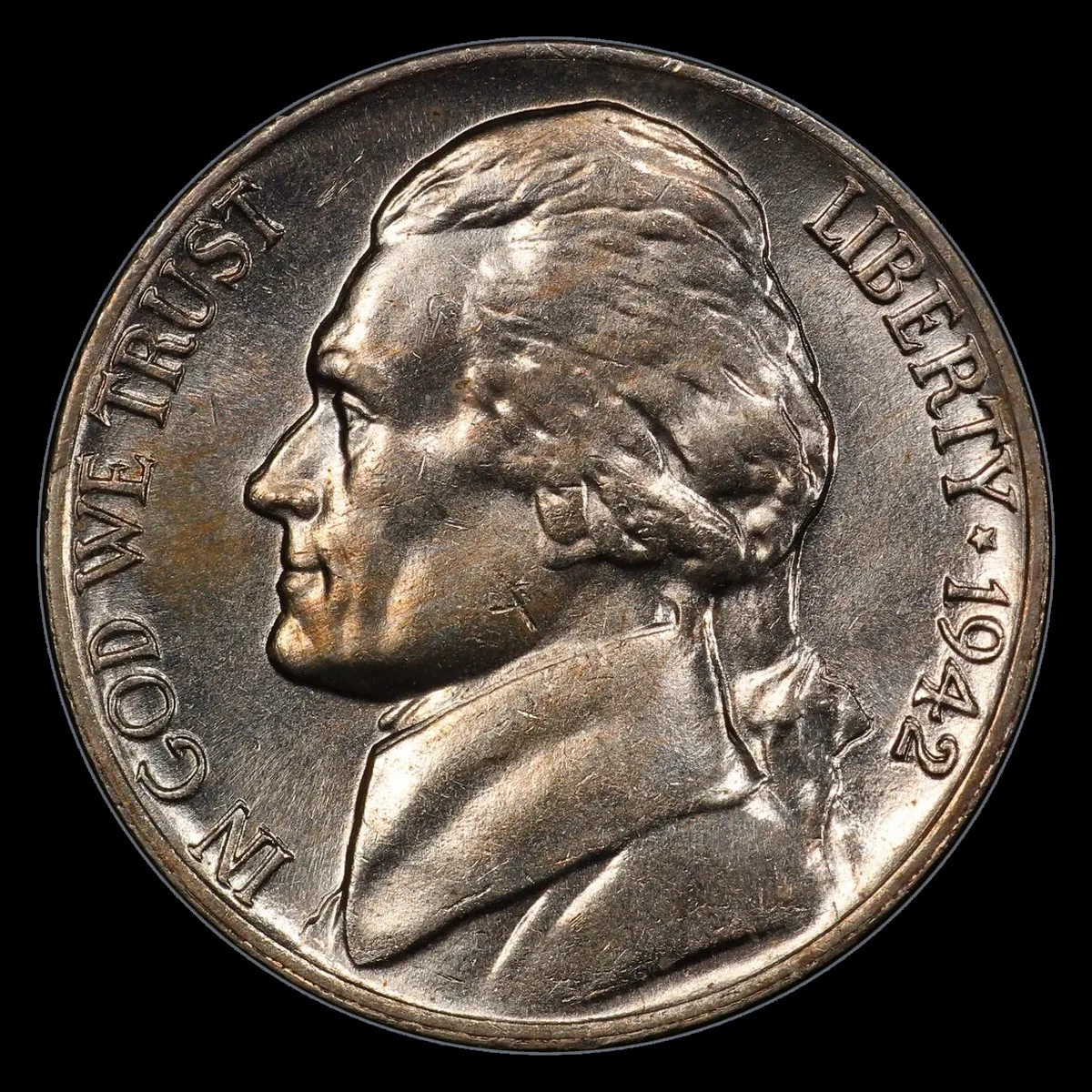
Philadelphia copper-nickel FS-101 and FS-102 are distinct doubled-front patterns involving the date, motto, and portrait. The repeated design was present on the die before the coin was struck.
Denver and San Francisco have other front or reverse varieties. Philadelphia Proof varieties also require separate comparisons for copper-nickel and silver-alloy collector coins.
How to Identify
Identify mint, metal, and finish before using the illustrated 1942 variety catalog. A doubled nose alone cannot select among the year’s different issues and patterns.
Match several rounded repeated contours in the appropriate pattern. Flat shelves and thick lettering are insufficient, and FS-101 and FS-102 must not be treated as alternate names for one die.
What It’s Worth
Identified doubled designs are estimated at $20–$1,500. Strong named patterns and better preservation generally support more interest than minor repetition.
A Philadelphia copper-nickel FS-102, formerly FS-026, graded PCGS MS65 sold for $690 in February 2010. That ordinary-strike result cannot automatically price a Proof or another mint’s doubled design.
11. 1942 Nickel An Earlier Mint Letter Remains: Repunched Mintmark and Sideways D Error
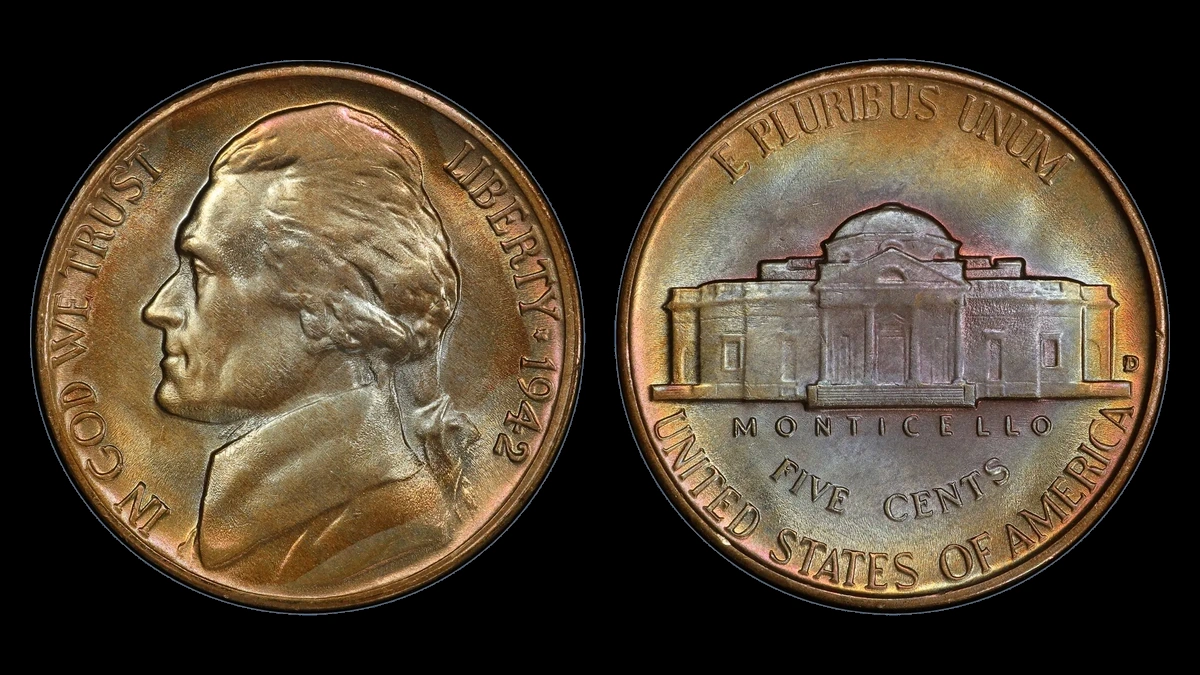
The famous Denver variety shows a sideways D beneath an upright D. Both punch impressions entered the die before it produced coins.
Other Denver varieties have different repeated D shapes, while wartime Philadelphia and San Francisco coins can show repeated large P or S letters. Some patterns preserve more than two punch positions.
How to Identify
Inspect the small D beside Monticello for curves corresponding to a sideways letter. Turning an ordinary D photograph sideways can help explain the earlier shape, but the actual coin still needs a precise match.
Use separate mintmark photographs for the large P and S above the dome. Match the correct letter, position, issue, and finish rather than assigning the sideways-D name to any extra bump.
What It’s Worth
The broad estimated range is $10–$35,000, but most small repunches belong roughly within $10–$300. Exceptional sideways-D coins occupy a very different comparison.
PCGS records $32,200 in January 2006 for an MS64 Full Steps sideways-D example. That historical high reflects the exact variety, stair detail, and condition rather than a routine price for every sideways D.
Conclusion
The normal 1942 issue must be identified before its error can be judged. A small D, a large wartime mintmark, and no mintmark lead to different metal and variety comparisons.
Keep wrong blanks separate from finished-cent overstrikes, and use actual measurements only for the specimens that supplied them. The largest prices require precise identification and strong supporting evidence, while many real laminations or minor repunches remain modest whole-coin purchases.