Rare 1980 Dime Errors (List & Pictures)
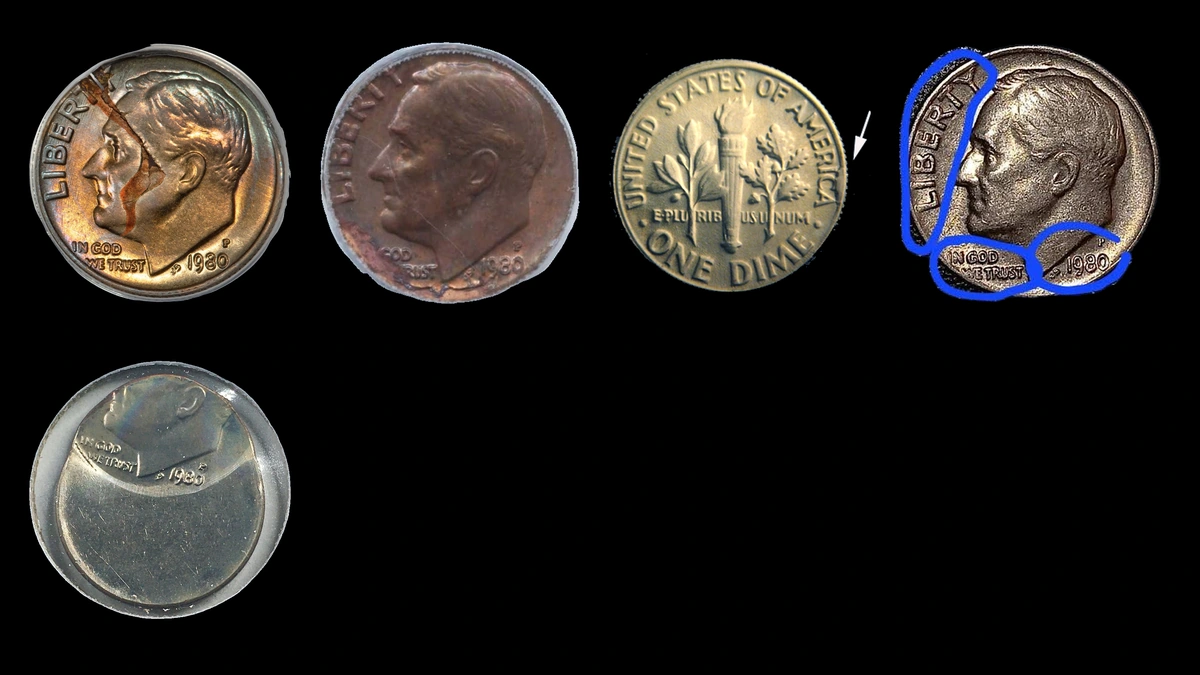
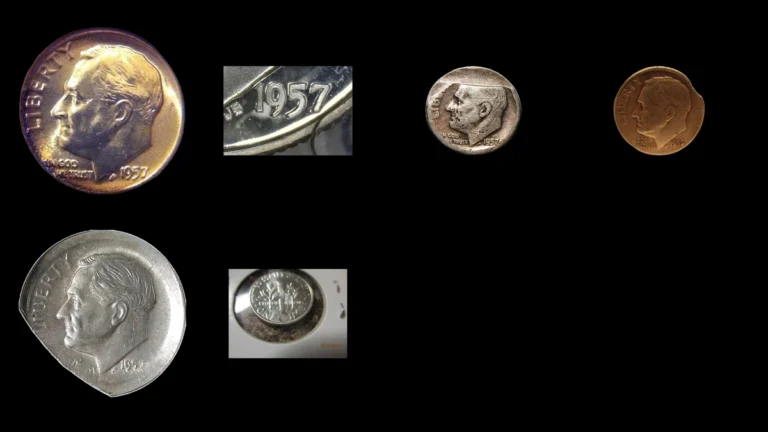
Two copper-colored 1980 dimes can have very different stories: one may have lost an outer layer, while another is reported on the wrong kind of blank. A separate dime with a major broken-die feature and an expanded shape sold for $1,440 in January 2023.
This guide to 1980 dime errors covers estimated values of $5–$2,000. Check color and weight together, then compare the raised marks, missing metal, and unusual design impressions.
1. 1980 Dime Copper Showing through the Surface — Missing Clad Layer Error
A normal clad dime has copper-nickel outer layers around a copper center. If one outer layer separates before striking, the exposed face can show the copper underneath.
Documented Philadelphia examples include front-layer losses weighing 1.9 grams and a separate reverse-layer loss. Another coin lost both outer layers and received its design on a 1.4-gram copper core.
How to Identify
Inspect both faces and the edge to see which layers remain. Copper on one face differs from a core-only coin with copper on both sides.
A normal 1980 dime weighs 2.268 grams and measures about 17.91 mm across. Reduced weight and missing edge layers should support the color change; stains alone do not prove a loss.
The 1.9-gram figure belongs to the recorded front-loss pieces. Do not assign it to an unweighed reverse-loss example.
What It’s Worth
$60–$1,200 spans single-layer losses and copper-core strikes. One-face losses generally fit $60–$350, with separate March 2025 sales at $84 for a reverse loss and $139 for front losses.
The core-only type fits roughly $600–$1,200. The 1.4-gram PCGS MS62 specimen sold for $822.50 in August 2016.
2. 1980 Dime Copper-Colored but Heavier — Dime on a Cent Blank Error
The reported cent-blank category describes a dime design struck on metal intended for a penny. For 1980, that would mean a bronze blank, not the lighter copper-coated zinc used in later cents.
The year guide does not identify a particular certified specimen. This category must remain separate from the light copper-core dime above.
How to Identify
A normal bronze cent blank weighs 3.11 grams and is about 19.05 mm across before striking. An intact blank of that type should not explain a copper-colored dime weighing only 1.4 grams.
Check composition, size, and weight together with the dime design. Plating, missing layers, or surviving details of an already-struck coin would point to other explanations.
What It’s Worth
$500–$1,200 is the estimated range for this reported category once the bronze cent blank is authenticated. Readable dime details and original surfaces strengthen the comparison.
Color by itself does not support the wrong-planchet price.
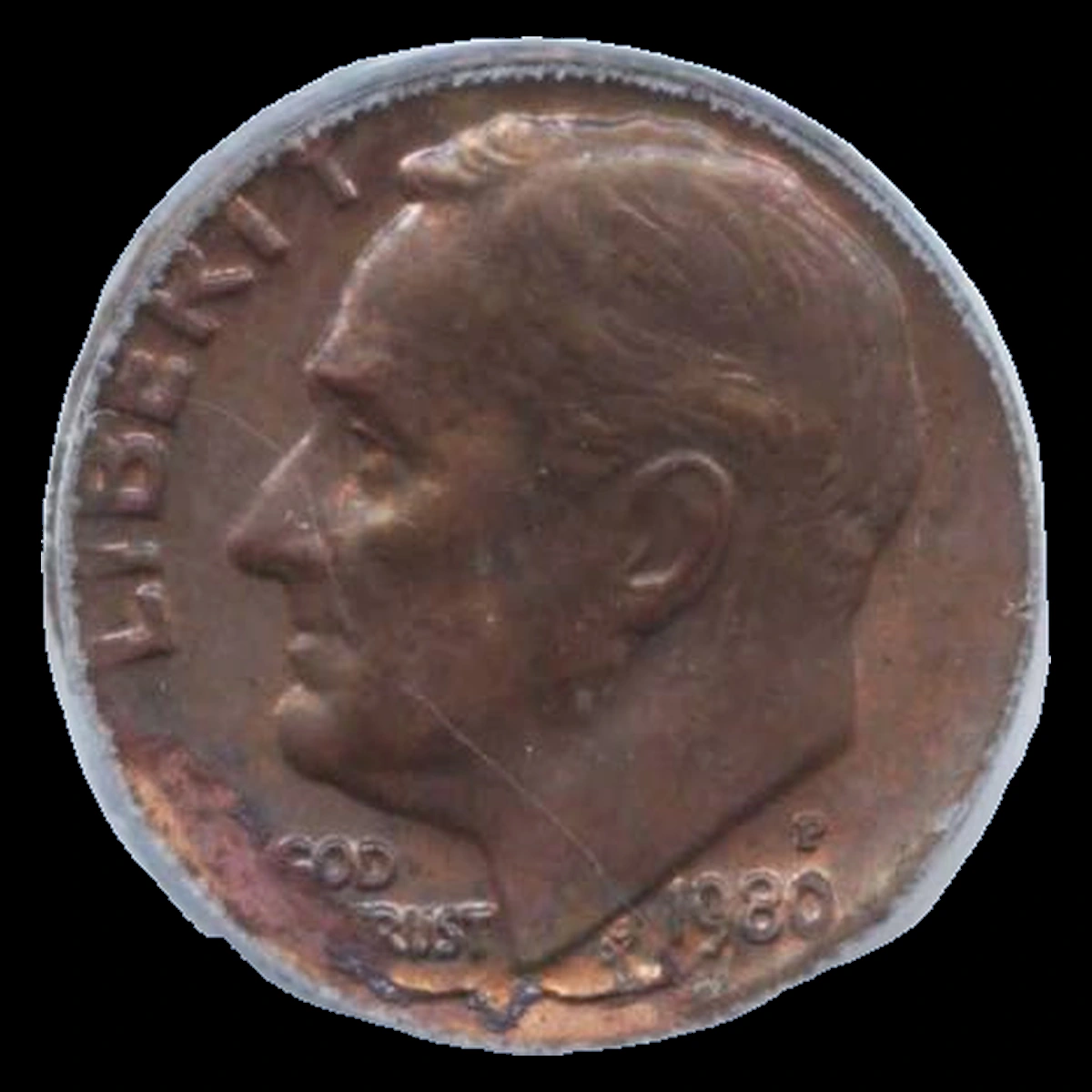
3. 1980 Dime A Flaw beneath the Struck Design — Defective Blank Error
An uneven area already present in a blank can remain visible after striking. A 1980-P dime graded ANACS MS62 was cataloged with such a defective blank.
The description does not establish an unusual alloy or a complete missing layer. MS62 indicates an unworn coin with noticeable marks.
How to Identify
Follow the portrait or letters where they meet the flaw. Struck details entering an original uneven area differ from a later scrape cutting through completed design.
Record this coin’s own measurements rather than borrowing the weight of the copper-core specimen. A local blank defect need not affect the entire metal composition.
What It’s Worth
$50–$350 is a useful estimate for comparable identified blank defects. The ANACS MS62 example sold for $139 in March 2023.
A clearly visible relationship between the flaw and the struck design makes the error easier to explain.
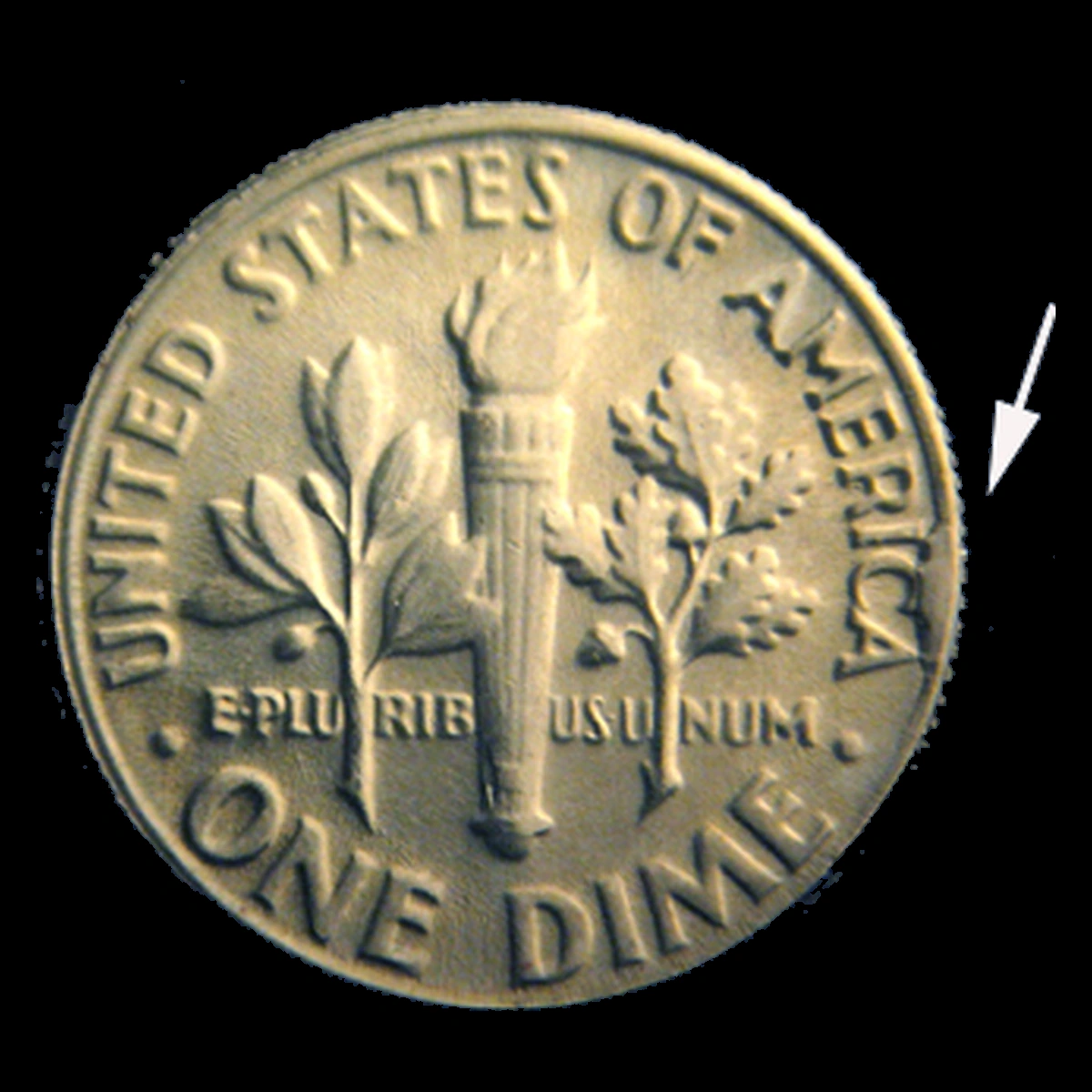
4. 1980 Dime Raised Metal inside P or along the Rim — Die Chip or Cud Error
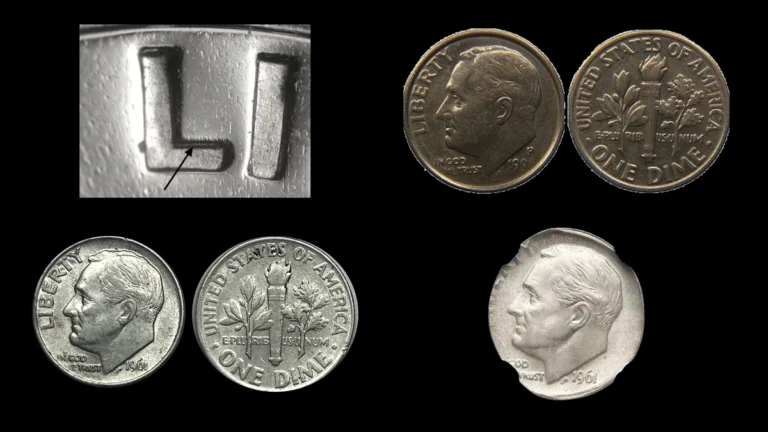
A tiny broken section of the die can leave a raised filling inside the P mintmark. A larger break reaching the tool’s edge can produce a broad raised patch joined to the coin’s rim, called a cud.
The 1980 records include a filled P and a separate Denver reverse cud. They are different coins with very different-sized features.
How to Identify
Under angled light, check whether the P contains original raised metal rather than dirt. A weak P caused by a blockage loses detail instead of gaining a filled center.
For the Denver coin, compare the reverse patch and its rim connection with the cud catalog. A dent that pushes metal upward can resemble a break without matching its shape.
What It’s Worth
$5–$500 covers the two scales of damage to the tool. A small filled P generally fits $5–$25, while an identified Denver cud can fall around $75–$500.
The larger range should not be applied to every tiny bump in a mintmark.
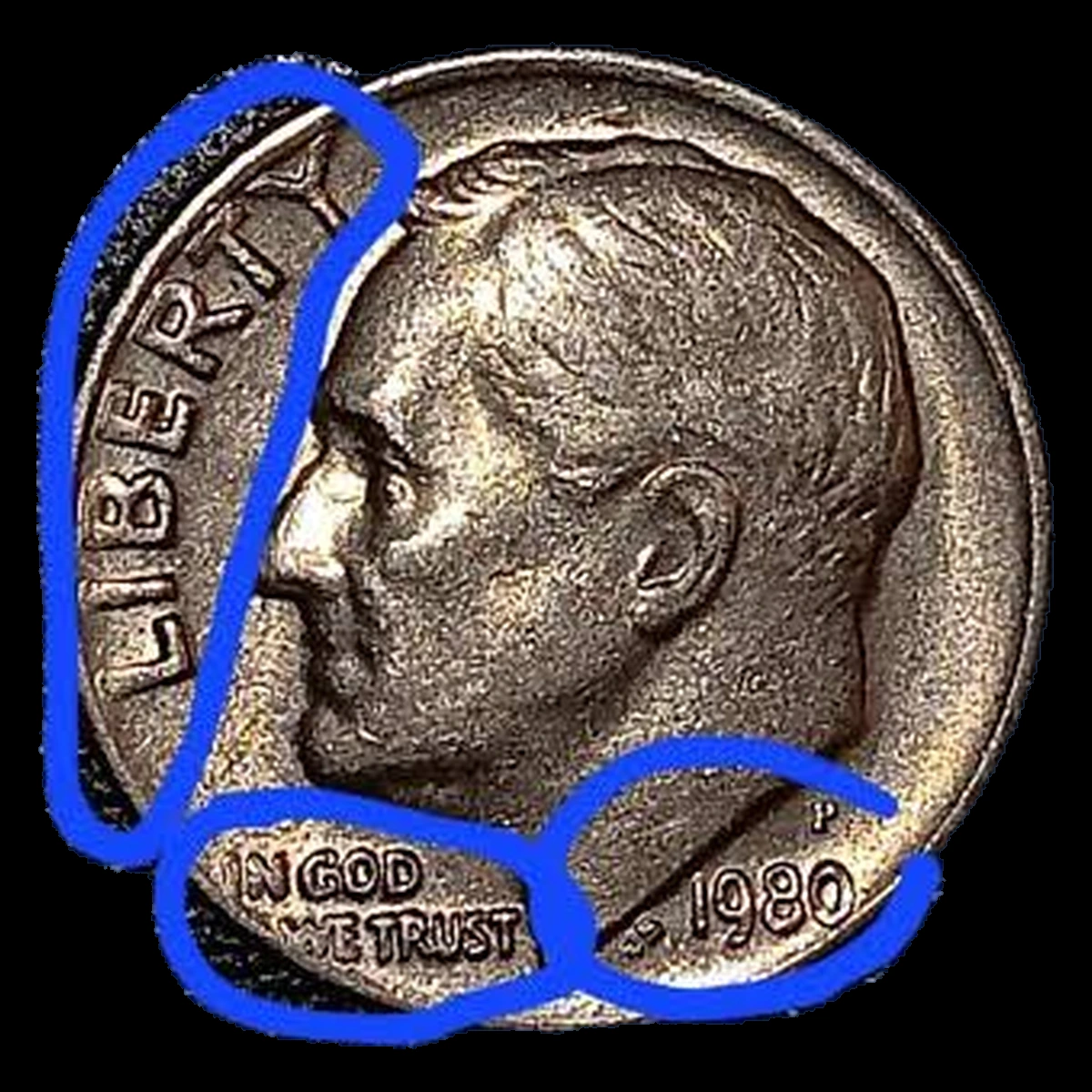
5. 1980 Dime A Second Rounded Edge on Letters — Doubled Die Error
A doubled die carries duplicated details before it strikes any coins. The reported 1980 checking areas include the date, LIBERTY, motto, and portrait on the front, plus lettering, branches, and the torch on the back.
Those broad reports do not establish a catalog number for every area or prove that one coin has doubling on both faces.
How to Identify
Look for a split corner or a separated raised outline that stays visible when the lighting changes. A low, flat shelf can come from movement during the strike instead.
Record whether the coin is an ordinary P or D issue or a specially made S Proof. Match an identified pattern on that issue before applying a variety name.
What It’s Worth
$15–$100 is an estimate for modest, correctly identified doubled dies. Clear detail under ordinary magnification is more helpful than a very large but blurry photograph.
6. 1980 Dime A Small Area That Failed to Form — Struck Through Error
Debris between the blank and die can interrupt the design. Soft material may leave a weak patch, while a harder object can press a more recognizable shape into the surface.
The supplied year report does not identify the material or its position. The object does not need to remain attached for the impression to survive.
How to Identify
Compare the weak area with nearby sharp details and with wear elsewhere on the coin. An isolated interruption needs a different explanation from a generally worn face.
Look for scraping, an impact lip, or crushing on the opposite side. These can indicate later damage rather than material blocking the strike.
What It’s Worth
$10–$150 is the estimated range for ordinary confirmed strike-throughs. A clear impression surrounded by original detail generally has more appeal than a slightly weak letter.
7. 1980 Dime A Piece Missing from the Outline — Clipped Blank Error
A cutting punch can overlap an existing hole or reach the edge of the metal strip. The incomplete blank then receives a coin design with a curved or straight section missing.
The general 1980 listing does not specify one mint, shape, or clip percentage.
How to Identify
Examine the gap’s ends for a natural meeting with the struck faces. Fresh burrs, file marks, or cut-through letters suggest that metal was removed later.
A weak rim opposite the opening can support a genuine clip, although it is not always visible. Lower weight records missing metal but cannot prove when it disappeared.
What It’s Worth
$15–$100 is an estimated range based on modern clad dime clips. A readable date and a larger original gap usually display better than a tiny notch on a heavily worn coin.
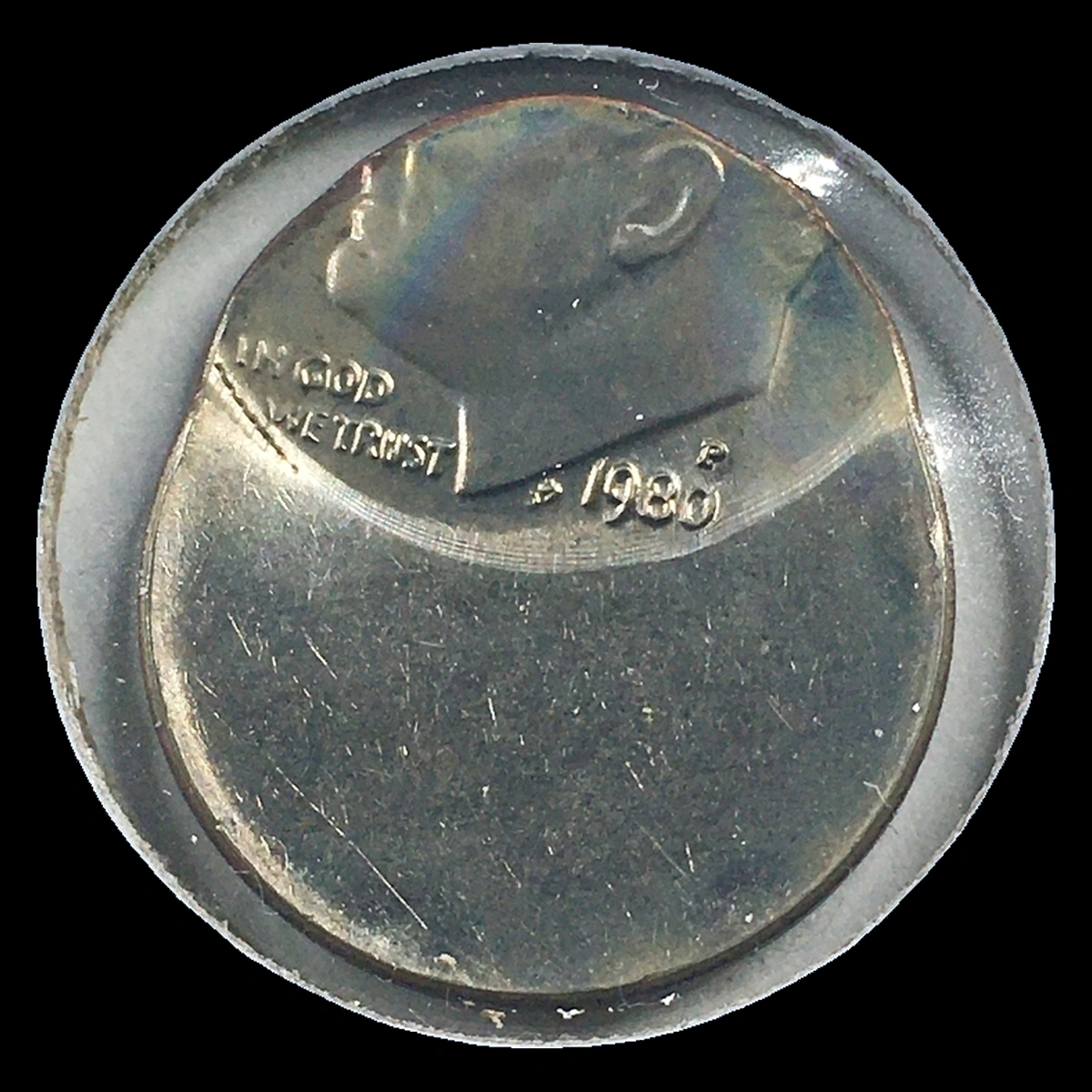
8. 1980 Dime Design Missing beside a Solid Crescent — Off-Center Strike Error
A displaced blank can leave a smooth unstruck area opposite design that ran beyond the edge. The solid crescent remains part of the coin, unlike the missing metal of a clip.
Recorded Philadelphia pieces include a 15% shift toward two o’clock in ANACS MS64 and a 45% shift toward 12:30 in ANACS MS63. A separate 15% example carries an NGC MS64 grade.
How to Identify
Read the date and mintmark, then compare both faces for the corresponding shift. A border change limited to one face may come from a misaligned die.
Check the crescent for grinding or thinning. Keep each recorded coin’s grade, direction, and percentage together when comparing photographs.
What It’s Worth
$25–$300 is a practical estimated range. The NGC MS64 15% example brought $109 in June 2026, while the ANACS MS63 45% piece sold for $49 in January 2022.
The larger shift did not bring the higher price. Date visibility, condition, and the appearance of the complete coin all matter.
9. 1980 Dime An Irregular Gap plus a Shifted Design — Ragged Clip and Off-Center Strike Error
One specialist dealer record describes a 1980-P dime with a ragged end clip and a 10% off-center strike. The rough gap came from the incomplete blank, while the smooth crescent came from the strike missing part of it.
The available description gives neither a grade nor an exact clock position.
How to Identify
On a full photograph, locate the empty gap separately from the solid unstruck crescent. Both faces should support the same displaced strike.
Inspect the ragged boundary for original metal rather than corrosion or cutting. Both features must belong naturally to the same dated coin.
What It’s Worth
$50–$350 is an estimated range for this combination. A 1995-P dime struck off center on a curved-clipped blank sold for $79 in December 2020.
That comparison involves another year and a curved clip, not the recorded 1980 ragged gap.
10. 1980 Dime A Plain Indentation and an Edge Step — Indent with Partial Collar Error
Another blank overlapped a 1980-P dime during striking, leaving a 10% indentation on the front. At the same time, only part of the edge was contained by the collar ring.
The recorded PCGS MS63 coin therefore combines a hollow with a stepped edge. Its description does not identify backward design inside the hollow.
How to Identify
Use an edge view to find the transition between a narrow grooved band and the section that spread farther. The front depression should meet original struck surfaces without fresh squeezing or hammer marks.
Look inside the hollow for recognizable detail. A plain indentation differs from the mirror-image impressions in the next sections.
What It’s Worth
$15–$200 is an estimated range for comparable combinations. The PCGS MS63 specimen sold for $16 in October 2011.
The price covers one coin with both features, rather than two independent premiums.
11. 1980 Dime A Backward Front Impression and Edge Step — Brockage with Partial Collar Error
A struck coin trapped against a fresh blank can press a sunken mirror image into it. This transferred design is called a brockage.
A documented 1980-P example has front brockage and a partial-collar step. NGC described it as Uncirculated Details because a later wheel mark damaged the front despite the absence of circulation wear.
How to Identify
Find backward details that correspond to the normal reverse design. A plain dent cannot provide that matching mirror image.
Then inspect the original step around the edge. Keep the wheel mark separate from both mint-made features when following the surface under a light.
What It’s Worth
$150–$600 is an estimated range for comparable examples. The documented coin sold for $228 in November 2020.
A stronger transferred image and cleaner surfaces may improve appeal, while the wheel damage affects the condition comparison.
12. 1980 Dime A Stretched, Faint Mirror Image — Late-Stage Brockage Error
A stuck coin can stay on a die and strike more blanks, acting like a cap. As repeated blows stretch that cap, the backward images it transfers become weaker and more distorted.
A 1980-P dime graded ANACS AU58 was cataloged as a late-stage brockage. The available text does not specify which face carries the abnormal impression.
How to Identify
Study both faces for sunken remnants of transferred design. A complete backward word may no longer survive at this late stage.
Distinguish those remnants from normal design worn nearly flat. AU58 indicates slight wear, but wear alone does not explain an original mirror-image transfer.
What It’s Worth
$40–$250 is the estimated range for comparable recognizable late-stage brockages. The ANACS AU58 example realized $42 in March 2023.
13. 1980 Dime Two Portraits with a Cup-Like Shape — Double Strike and Coin Cap Error
Two front designs lie nearly opposite each other on this 1980-P dime. The coin rotated between strikes, and the blocked reverse of the second strike expanded into a cup-like form.
The NGC MS65 specimen is the distorted coin cap itself. It is different from a flat dime that simply received an impression beneath a cap.
How to Identify
View the shape from the side without trying to flatten it. Trace the two front impressions to check their nearly inverted positions and compare the expanded reverse.
A bent dime with only one normal design does not explain the same sequence. Preserve the cup and use its own recorded measurements if the coin is sealed in a holder.
What It’s Worth
$300–$1,000 is an estimated range for a comparable identified combination. The MS65 coin was offered in August 2004 but did not sell, so that listing provides no realized price.
A separate 1986-P double strike with a blocked second impression sold for $288 in April 2022. Its different date and shape limit the comparison.
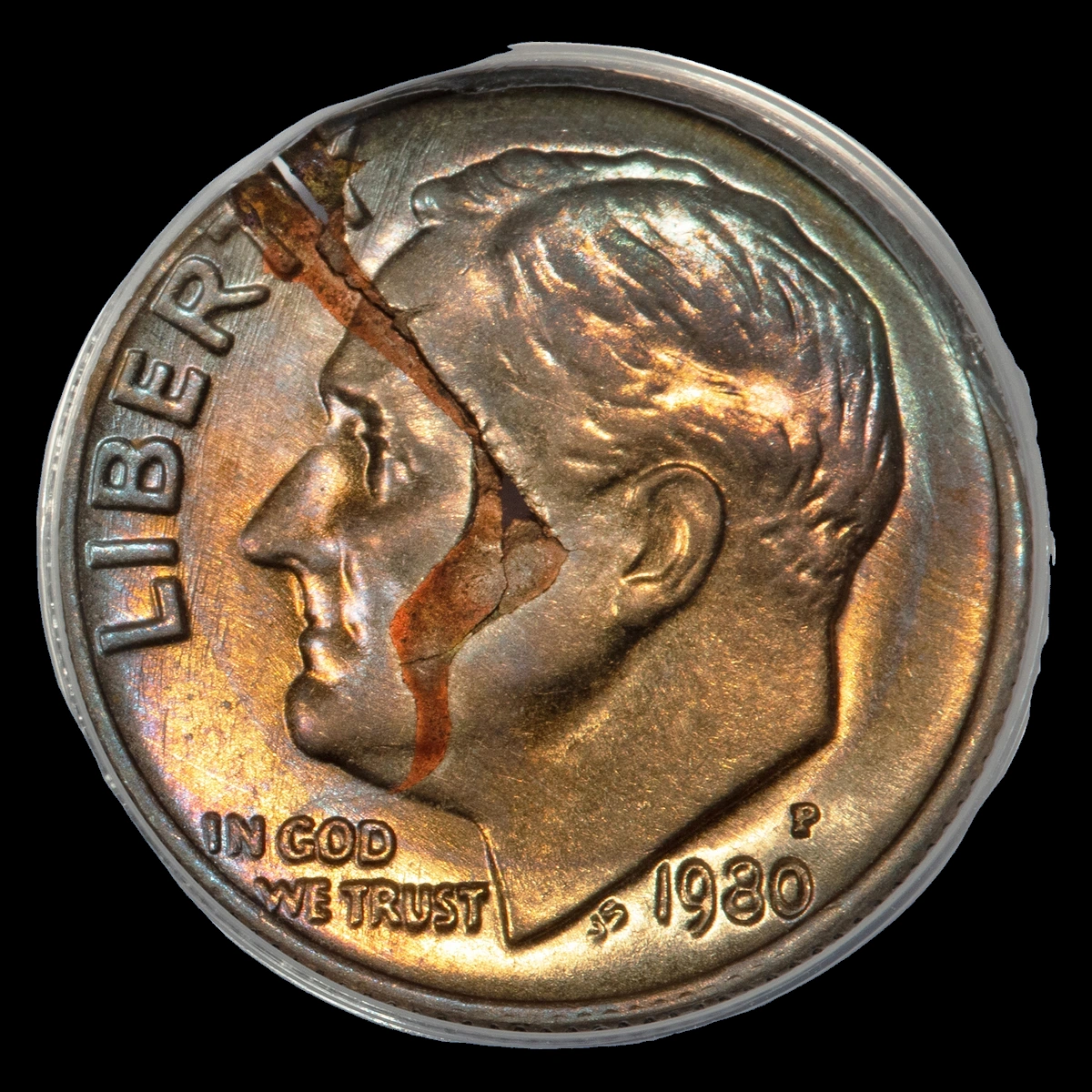
14. 1980 Dime A Huge Raised Front Patch on a Wide Dime — Major Die Break and Broadstrike Error
A broken part of the die left room for metal to rise across roughly half the front of a 1980-P dime. The coin also spread beyond normal collar restraint, creating a broadstrike.
The recorded NGC MS65 coin combines both features. The description’s 50% figure refers to the die break, not to an off-center shift.
How to Identify
Follow the raised patch into the remaining struck surface to distinguish it from applied metal. Examine the expanded outline separately from the missing design caused by the broken die.
The same coin must show both features. A tiny filled P or an ordinary broadstrike does not match this large combination.
What It’s Worth
$800–$2,000 is the estimated range for a comparable major combination. Auction records list the MS65 example at $1,440 in January 2023.
Its large visible break, surviving design, and unworn condition help explain the result.
Conclusion
Color, weight, and the edge work together when checking a 1980 dime’s metal. For unusual strikes, decide whether you see missing metal, an unstruck area, a plain hollow, or recognizable backward design.
Keep combinations together when they occur on one coin, but leave later damage out of the error count. That approach makes both the identification and the price comparison easier to follow.