Rare 1868 Dime Errors (List & Pictures)
An 1868 Proof dime with misplaced numeral fragments sold for $1,700.23 in June 2017. The 1868 dime errors below span estimated whole-coin values of $50–$4,000.
Work upward from the date into Liberty’s seat, then inspect the reverse and surrounding fields. Keep Philadelphia and San Francisco separate, and distinguish collector Proofs from circulation coins; the standard silver dime weighs 2.49 grams and measures 17.9 millimeters.
| Where to examine | Feature | Estimated whole-coin range |
|---|---|---|
| 1 and first 8 in date | Repunched 18 | $50–$1,500 circulated |
| Inside Liberty’s seat | Misplaced numeral fragments | $500–$4,000 for Proofs |
| Ribbon ends and wreath | Doubled die reverse | $500–$4,000 for Proofs |
| Open areas beside design | Die clash | $50–$3,000 |
1. 1868 Dime Extra traces beside 18: repunched date Error
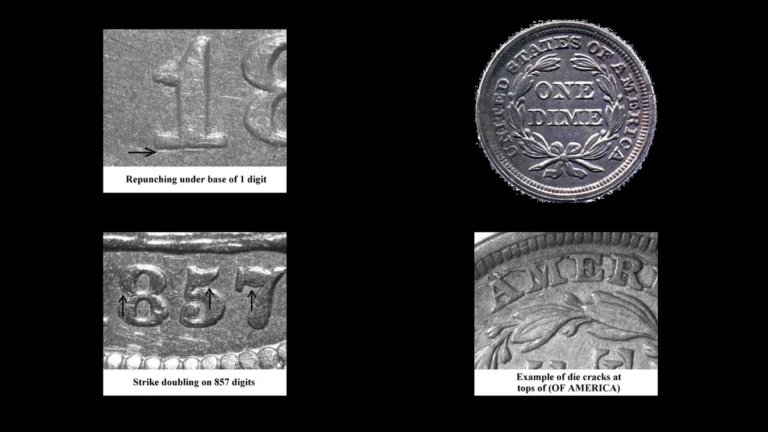
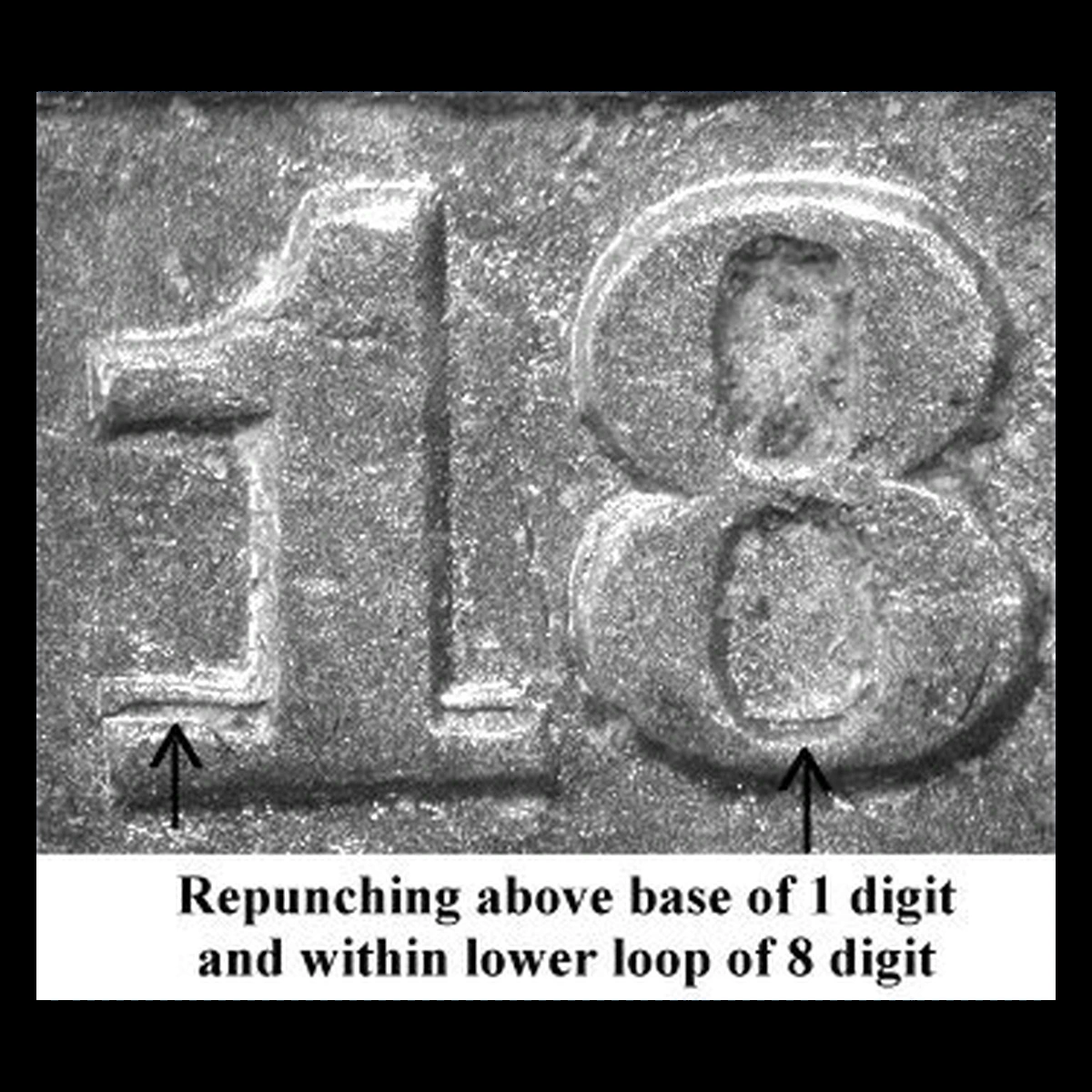
On Philadelphia F-103 dimes, a small raised outline survives just above the base of the 1. Better-preserved examples can also reveal a trace low inside the bottom loop of the first 8.
These are remnants of an earlier date entry in the die. The corrected entry did not completely erase the first impression, so later coins received its surviving details.
How to Identify
Begin at the 1’s base, where the stronger clue is located. Then inspect the first 8, allowing for wear that may make its smaller trace difficult to see.
Compare the full date’s position as well as the repeated contours with an attributed F-103. One thick number or a shelf along its edge is not enough.
This is a Philadelphia circulation variety with no mintmark. Its remnants lie beside the normal date, unlike the separate misplaced fragments higher inside the seat.
What It’s Worth
Circulated F-103 dimes have an estimated whole-coin range of $50–$1,500. Clear attribution, remaining detail, and original surfaces support stronger comparisons.
Ordinary Philadelphia examples graded PCGS VF30 and XF40 sold for $134 and $159 in April 2025. Neither was identified as F-103, so these are underlying date-and-condition benchmarks rather than repunched-date sales.
2. 1868 Dime Parts of extra 1s in the seat: misplaced digits Error
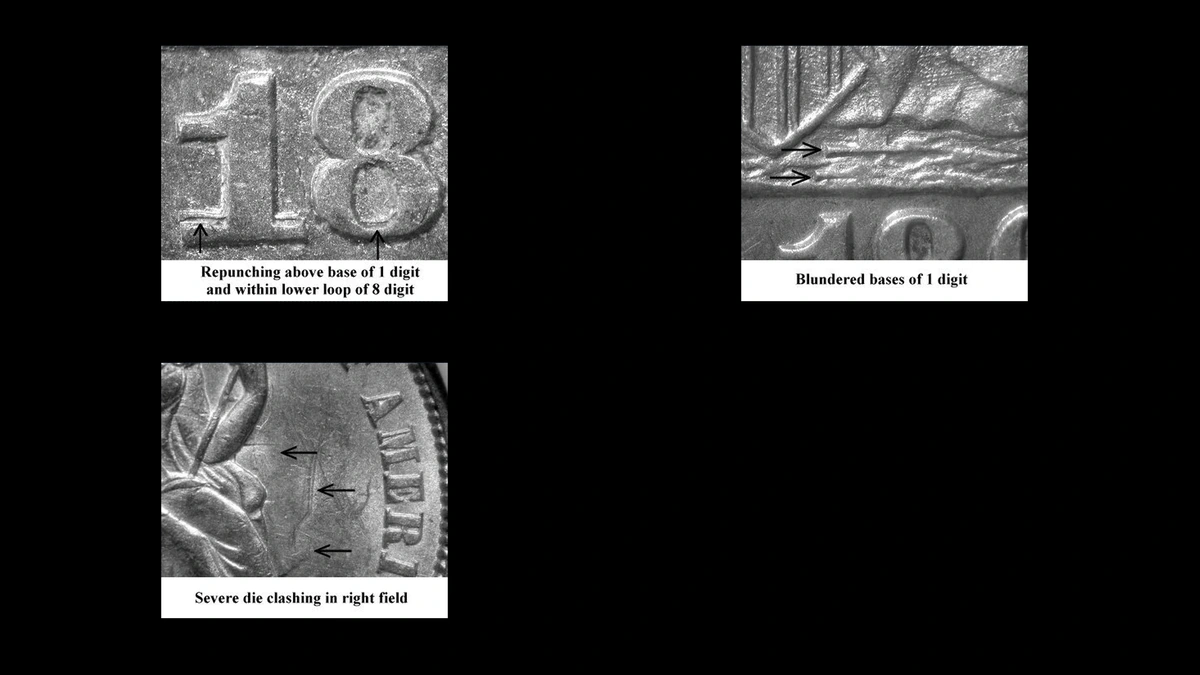
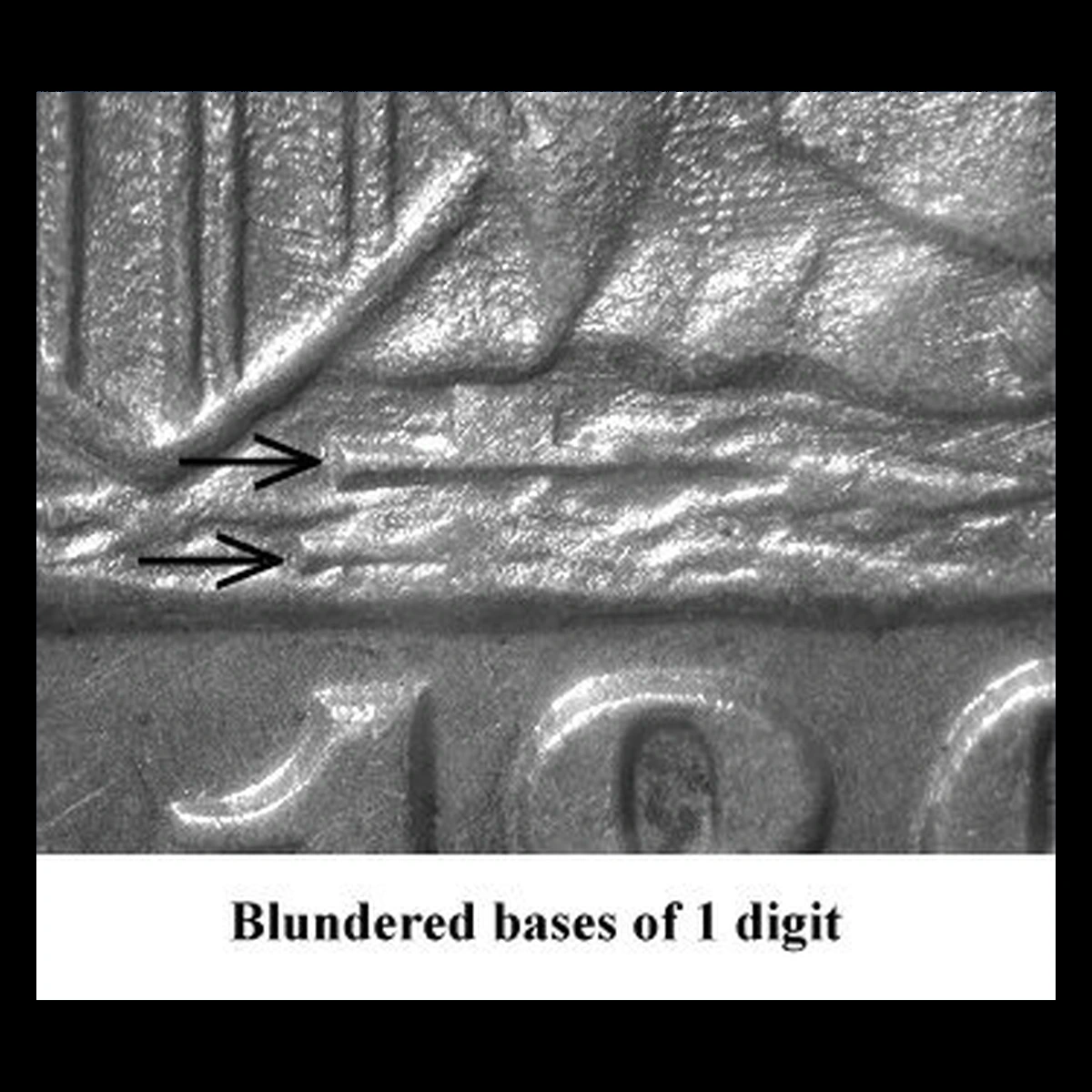
Above the normal 18, inside Liberty’s rocky seat, two numeral fragments appear on F-105. The upper one includes an upright stroke and foot below the scroll’s end, with part of another foot immediately below it.
These marks came from punches placed in the wrong part of the die. The normal 1868 remains in its intended position, so this is not a previous year altered into 1868.
How to Identify
Locate the scroll end and the first two date digits before looking for the fragments between them. Match both raised shapes and their vertical relationship.
A random straight line inside the seat does not establish a numeral. Check the expected foot and upright elements rather than relying on a single bright stroke.
The F-105 dies made Proofs and were also used for circulation coins. Identify the finish from the complete coin; numeral fragments alone do not prove a Proof.
What It’s Worth
Collectible Proofs have an estimated whole-coin range of $500–$4,000. Circulation examples need their own comparisons and should not automatically receive the same range.
Heritage sold an NGC PR66 Cameo F-105 for $1,700.23 on June 8, 2017. Cameo describes contrast between the design and background on that well-preserved Proof.
The result covers one complete coin, including its reverse doubling. Neither the two numeral fragments nor the two affected faces produce separate prices to add together.
3. 1868 Dime Repeated ribbon and wreath edges: doubled die reverse Error
The same Philadelphia F-105 die pair has repeated outlines at the reverse ribbon ends and parts of the wreath. The reverse die already carried the repetition before striking the coin.
A single blow could therefore leave both outlines. This is different from a coin receiving two separate, displaced strikes.
How to Identify
Follow the ribbon ends into the surrounding wreath and compare the contours with the F-105 reference photograph. The small repeated edges should agree in position, not merely make a leaf look thick.
Move the light to distinguish rounded extra outlines from flat shelves or reflections. Check the misplaced front-side fragments as supporting evidence for the same die pair.
Confirm the absence of an S mintmark before applying this Philadelphia attribution. A shiny patch is not enough to establish the Proof finish used in the supplied sale comparison.
What It’s Worth
The estimated $500–$4,000 whole-coin range applies to collectible F-105 Proofs. Reflective fields, surface preservation, and design contrast affect where a coin may fit.
The $1,700.23 PR66 Cameo sale is the same transaction described above. It does not measure a separate premium for the wreath doubling, and it does not directly price a circulation strike from these tools.
4. 1868 Dime Unwanted design shapes in open areas: clashed dies Error
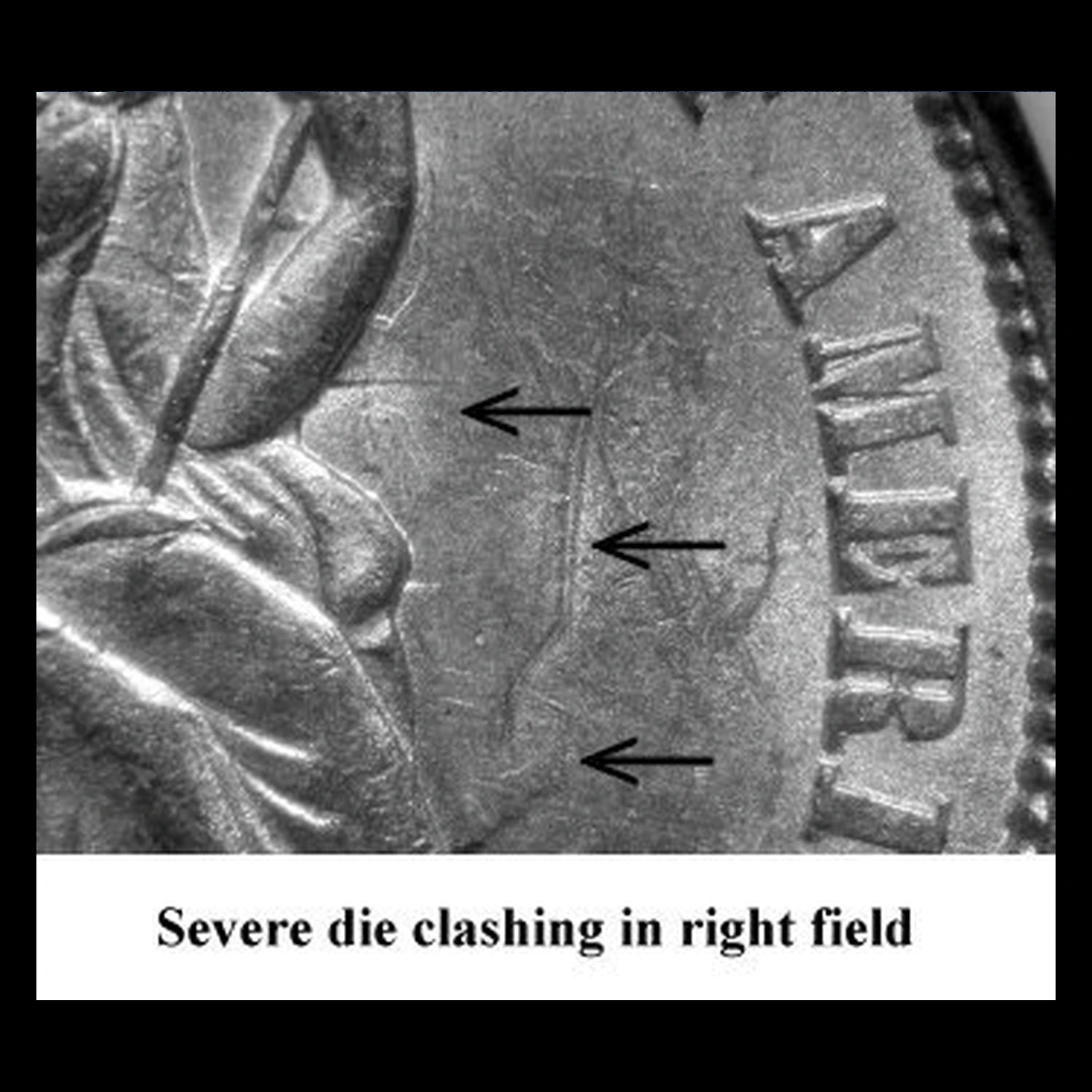
A faint wreath contour beside Liberty may belong to the opposite die’s design. Such a trace can form after the dies collide without a blank between them and then strike additional coins.
Clashing is reported on Philadelphia examples and on a later San Francisco example with marks on both faces. The latter also shows worn border teeth and stronger fine lines from spreading metal, which do not independently prove a clash.
How to Identify
Read the mintmark area below the wreath first: S identifies San Francisco, while no mintmark indicates Philadelphia. Choose a comparison from the correct mint.
Examine the flat areas beside the intended design and look for a recognizable contour from the other face. For the documented San Francisco example, inspect both sides.
Random scratches, ordinary feathers or leaves, and fine spreading lines need separate explanations. A clash attribution rests on the connection to the opposing design, not on how many unexplained lines are present.
What It’s Worth
Estimated whole-coin values are $50–$600 for circulated examples with clear clashes and $600–$3,000 for suitable lower-grade unworn pieces. The mint and surface condition are important parts of that range.
The Philadelphia VF30 and XF40 sales at $134 and $159 are ordinary circulation comparisons. They do not price the illustrated clashed coin or a San Francisco specimen.
Use a San Francisco comparison for an S-mint coin. Exceptionally high grades also require separate assessment beyond this introductory range.
Conclusion
Nearby date remnants and misplaced seat fragments have different locations and causes. On F-105, the seat fragments and reverse doubling work together as identifying evidence for a single die pair.
Finish and mint remain essential when pricing the result. The documented Proof sale values one complete coin, while the ordinary Philadelphia sales offer only limited context for the other circulated varieties and clash examples.