Rare 1899 Quarter Errors (List & Pictures)
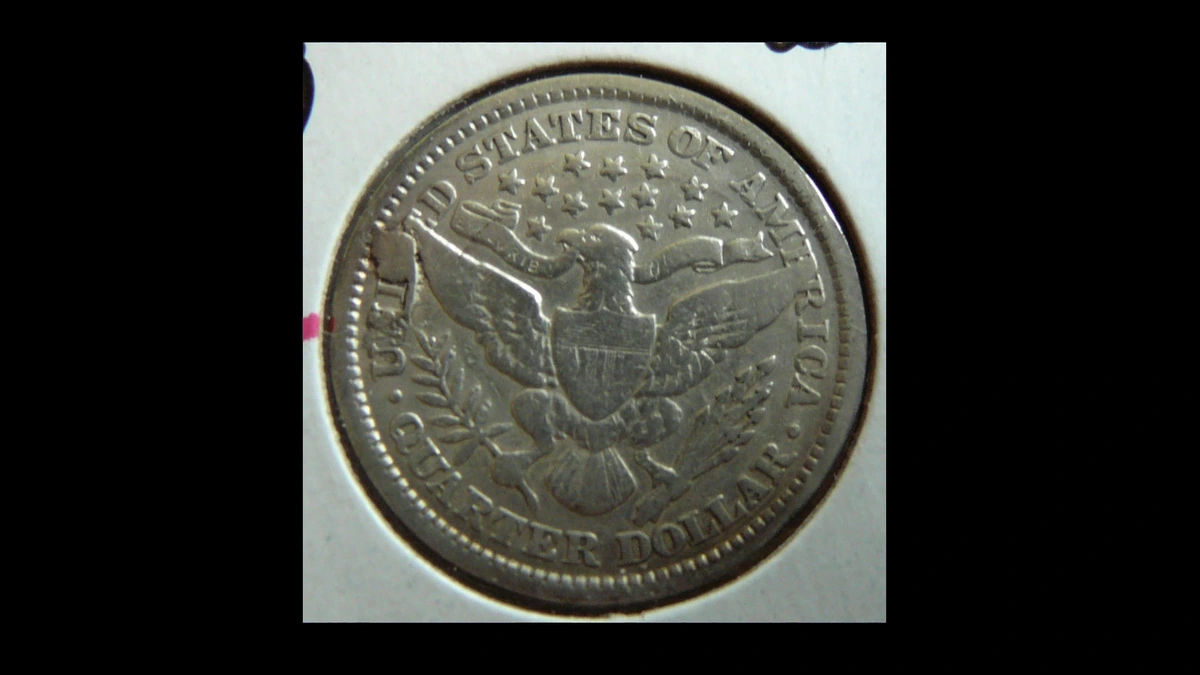
Whether a mark rises from the surface or sinks into it is especially useful when examining 1899 quarter errors. Estimated whole-coin values span $25–$10,000, from modest die damage to a partial backward design called a brockage.
The supplied sales comparisons include $1,080 for a 2000-D dime with a brockage in June 2018, not an 1899 quarter transaction. Begin with the direction and height of unusual detail, then check the date and outline.
1. 1899 Quarter Backward Detail in a Depression: Partial Brockage Error
Recognizable backward detail is more informative than an unexplained hollow. A brockage forms when a struck coin impresses its raised design into another blank during a strike, producing a recessed mirror image.
A 1978 catalog reproduced in Mint Error News describes an 1899 quarter with a 15% partial brockage near 11 o’clock. The same description notes an expanded reverse border.
How to Identify
Look for connected letters or recognizable design inside the affected patch, then use side lighting to confirm that the transfer is recessed. A smooth impression without copied detail does not by itself establish a brockage.
Any transferred letters should read backward. Compare the surrounding struck metal and expanded border as well, because squeezing finished coins together later can imitate a copied design.
The partial image and border expansion belong to the same historical example. Do not apply its percentage or clock position automatically to every brockage attributed to this year.
What It’s Worth
$1,000–$10,000 is an estimated range for a comparable authenticated 1899 partial brockage. Clear transferred detail and a surviving date would be important alongside overall condition.
A 2000-D dime with a reverse brockage and front damage sold for $1,080 in June 2018. Its different denomination, age, and damage make it a mechanism comparison rather than a direct valuation of the Barber quarter.
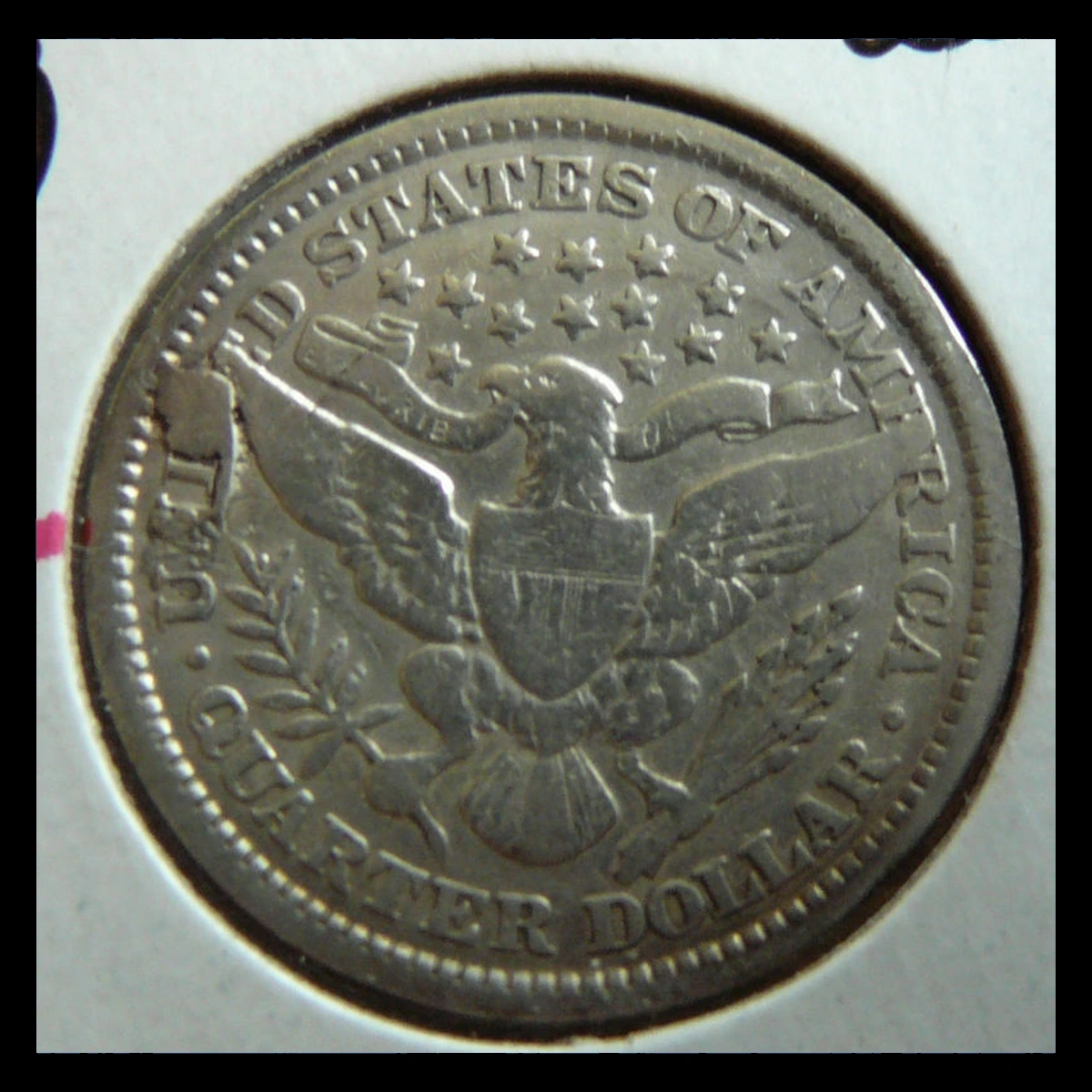
2. 1899 Quarter Extra Metal near the Eagle’s Wing: Die Break Error
The Philadelphia report describes a raised feature extending from the eagle’s wing toward UNITED. It may record a missing portion of the die that allowed coin metal to fill the resulting opening.
Its relationship to the rim has to be established on the actual coin. A rim-connected break is a cud, while a break enclosed within the design is an interior die break.
How to Identify
Locate the expected wing detail and letters on a normal quarter, then determine what the raised patch replaces. Follow it outward to see whether extra metal reaches the rim continuously.
If normal design separates the patch from the edge, the feature should not be called a cud. Inspect its base for deposits, solder, or a nearby impact that could have displaced metal, without scraping the surface.
What It’s Worth
$25–$1,000 is an estimate for confirmed modest die-break examples. The extent of replaced design, any genuine rim connection, and the quarter’s preservation determine which comparison is useful.
3. 1899 Quarter Second Edges in the Motto or Hair: Doubled Die Error
The reported front-side doubling directs attention to IN GOD WE TRUST and Liberty’s hair. It does not establish a mint or catalog number merely by naming those areas.
A doubled die carries duplication in the steel tool before striking. Coins from that die can repeat the same pattern, unlike a random scratch or a later reflection along one letter.
How to Identify
Examine the whole motto before isolating letter corners, looking for related extra outlines rather than a single thick edge. Rounded separation and small notches can help, while hair strands require comparison with a normal coin of similar wear.
A flat ledge beside a letter may be mechanical doubling from movement during the strike. Include the reverse mintmark area in the identification and change the light to rule out a misleading highlight.
What It’s Worth
$50–$1,500 is an estimated range for a confirmed 1899 doubled-front variety. A 1945 Philadelphia FS-101 in PCGS MS65 sold for $552 in March 2018, but that separate silver-quarter variety is not a sale of the reported 1899 pattern.
4. 1899 Quarter A Raised Trace beside the Last 9: Repunched Date Error
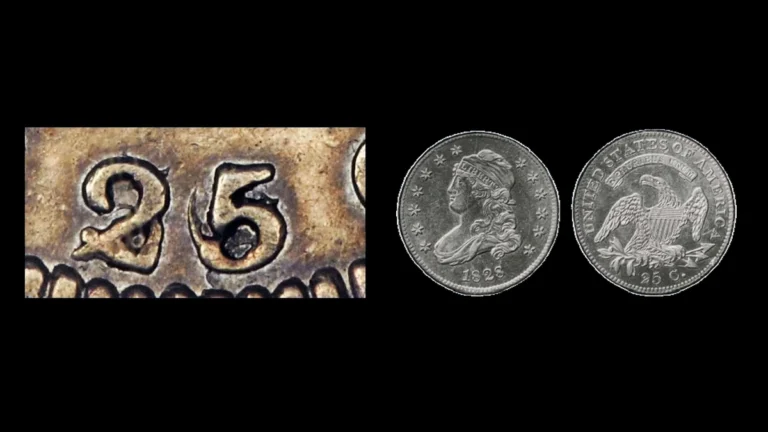
An earlier impression of a date punch may survive after the punch is applied again in a slightly different position. Reports for Philadelphia and San Francisco 1899 quarters describe extra traces near or below the final 9.
The two mints need separate matches. Their reports should not be combined into one universal direction or shape.
How to Identify
Check below the eagle for an S before comparing the date; ordinary Philadelphia quarters have no mint letter. Keep all four digits visible in the photograph so the extra trace can be judged at the correct scale.
Look for a raised curve consistent with part of another numeral. A scratch, engraving, or metal flattened around an ordinary 9 may alter its appearance without preserving an earlier punch impression.
What It’s Worth
$50–$2,000 is a whole-coin estimate for confirmed repunched dates. A clear matching numeral remnant supports the attribution, but mint and condition can matter as much as the size of that trace.
5. 1899 Quarter A Displaced Design beside Bare Metal: Off-Center Strike Error
A blank that is out of position between the dies can retain a bare crescent beside an incomplete design. The supplied 1899 report gives no established percentage or mint for a particular specimen.
How to Identify
Inspect the bare area for natural unstruck surface rather than grinding marks, then compare the placement of the designs on both sides. A centered reverse with only the front shifted calls for a different alignment explanation.
The unused crescent remains part of the metal disk; a clip instead leaves a missing section. Record the surviving date and leave the mint unresolved if its normal identifying area never reached the blank.
What It’s Worth
$500–$5,000 is an estimate for genuine 1899 off-center quarters. Readable identity, an obvious shift, and preservation affect where a coin might fall.
Sullivan Numismatics offered a different-year 1907-S in PCGS AU53, struck 3% off center, at $2,250. That figure is a dealer asking price rather than an 1899 sale or a confirmed transaction for the comparison coin.
Conclusion
Keep the type of surface change at the center of an 1899 quarter examination. Raised metal near the eagle, a repeated date trace, and recessed backward lettering each require a different explanation.
Photograph the entire coin before enlarging the unusual feature so that mint, date, and outline remain connected to it. Historical descriptions and later comparison sales provide context, but they do not replace authentication of the quarter in hand.