Rare 1974 Quarter Errors (List & Pictures)
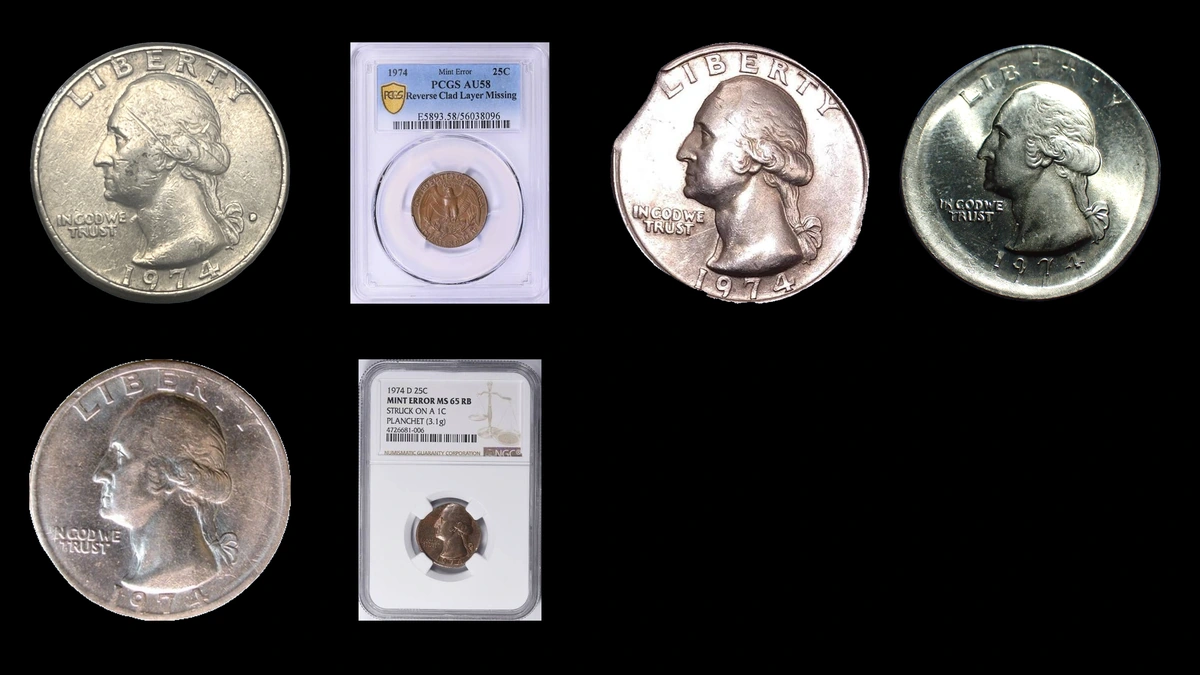
Several 1974 quarter errors are lighter than normal, but the missing weight has different explanations. A thin blank, a missing layer, and a smaller blank from another coin are separate possibilities.
Estimated values run from $2–$4,000. A Denver die cap with a backward image sold for $1,265 in April 2006; work from visible surface changes to shape, overlapping strikes, and finally the metal.
1. 1974 Quarter Raised Lines or an Edge Lump: Die Cracks and Cuds Error
A crack in a stamping tool, called a die, leaves a raised ridge as metal enters the opening. A larger piece breaking from the tool’s edge can leave a lump connected to the rim.
That rim-connected lump is a cud. The reports do not establish one mint or exact position for all 1974 examples.
How to Identify
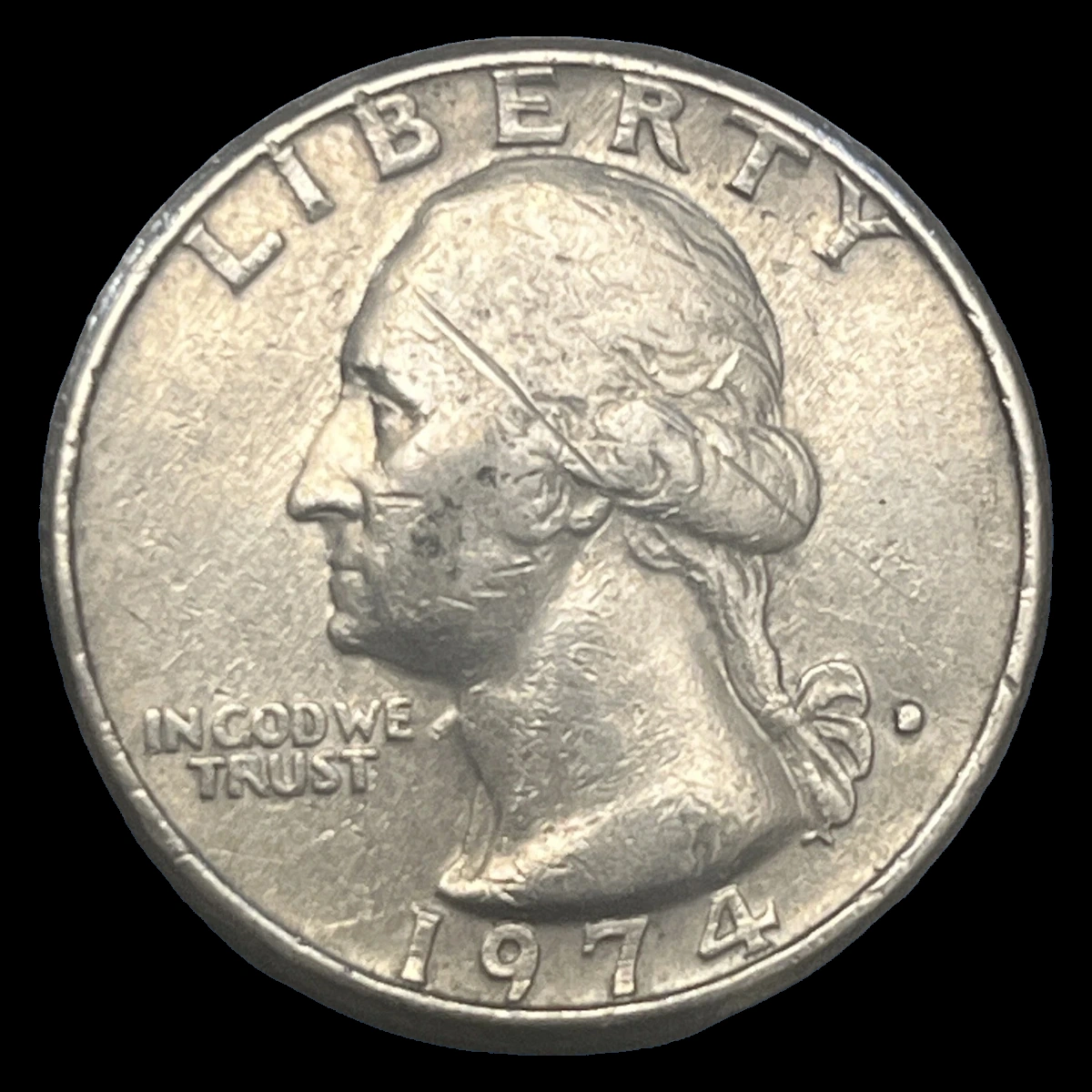
Follow the raised feature under light from the side. A scratch cuts downward, while a later dent may push a ridge up beside it.
For a cud, trace the connection to the original rim. A separate inside bump may be a smaller die chip instead.
What It’s Worth
$2–$25 is the estimated range for small cracks; clearer rim cuds may bring about $15–$150. Size, visibility, and wear influence the comparison.
A nickname does not add value to an unexplained bump or surface deposit.
2. 1974 Quarter The Front Looks Blocked: Struck Through a Die Cap Error
A coin stuck to the front tool can soften the design reaching the next blank. A no-mintmark 1974 quarter received such a strike and was graded NGC MS66.
This is the coin struck through the covering. It is not the cup-shaped cap that was attached to the tool.
How to Identify
Compare the weak front with the back and examine where stronger detail changes to softer detail. Match the whole pattern with an authenticated cap-blocked strike.
Check for polishing scratches or wear that could erase a finished portrait. A raised cup wall is not required on this recipient coin.
What It’s Worth
$100–$1,200 is the estimated range for comparable genuine examples. The MS66 coin sold for $288 in October 2019.
MS66 means unworn with few marks, so a worn or damaged example needs a different condition comparison.
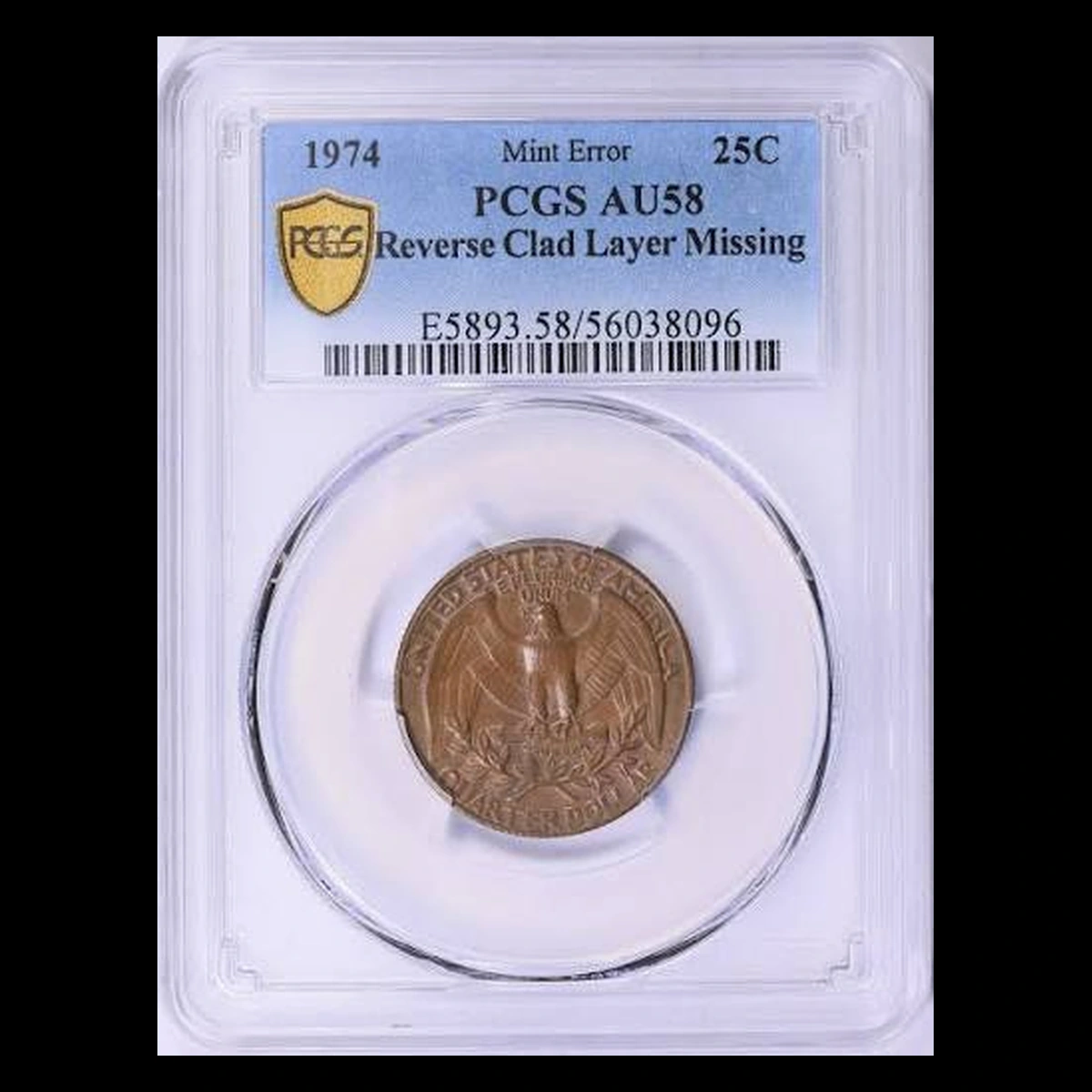
3. 1974 Quarter A Copper-Colored Face: Missing Clad Layer Error
A normal quarter has pale outer layers bonded around a copper center. If one covering is absent, the strike can leave its design on exposed copper.
A no-mintmark PCGS AU58 example specifically lacks the front layer. A separate ANACS MS63 coin also lacks a layer, but its catalog does not name the affected face.
How to Identify
Examine the edge beside the copper-colored face for the missing covering. A stain can change the color while leaving the original layer intact.
Weight below the normal 5.67 grams supports metal loss but does not prove its cause. Look for original detail rather than grinding marks or chemical pits.
What It’s Worth
$50–$600 is the estimated range for genuine missing-layer quarters. The MS63 sold for $80.50 in September 2006, and the separate front-layer AU58 brought $79 in March 2025.
Clear detail on attractive exposed copper helps the error display well.
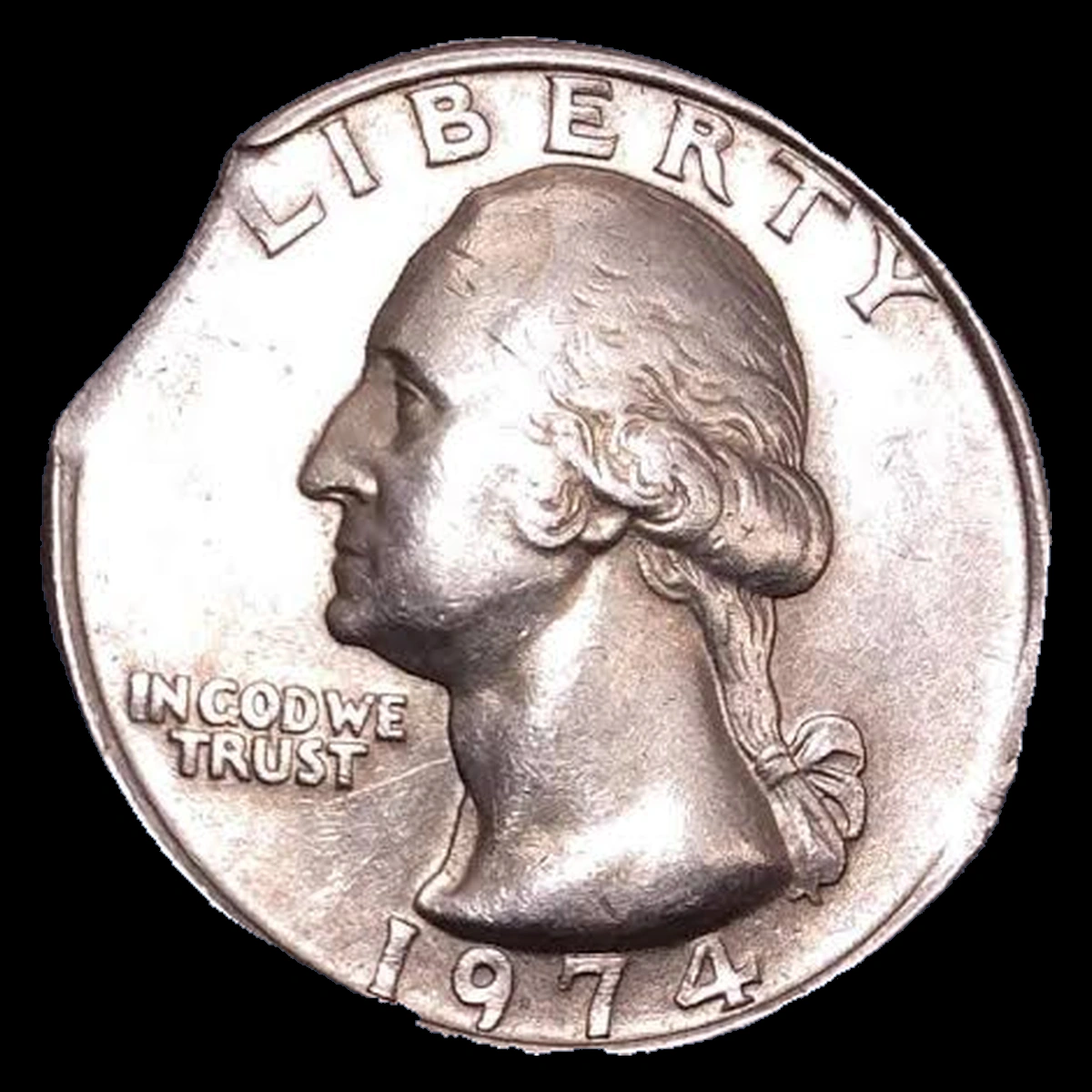
4. 1974 Quarter A Curved Gap Cuts into the Outline: Clipped Blank Error
One 1974-D quarter is missing about half its metal and weighs three grams. The curved gap existed before the design was struck.
Such gaps can begin when the blank-cutting punch overlaps an earlier hole in the strip. A separate no-mintmark coin has two curved clips.
How to Identify
Look through the gap from the side and inspect nearby letters for natural metal flow toward the opening. Fresh filing or saw marks suggest later cutting.
A weak rim opposite a clip can help, but it is not clear on every genuine example. On a double clip, check both openings independently.
A clip is absent metal; the plain crescent on an off-center coin is metal still present.
What It’s Worth
$15–$500 is the estimated range across genuine curved and double clips. The Denver 50% clip graded MS65 sold for $132 in July 2021.
The double-clip AU58 coin was in a six-coin lot sold for $99.88 in November 2015. That total is not its individual price.
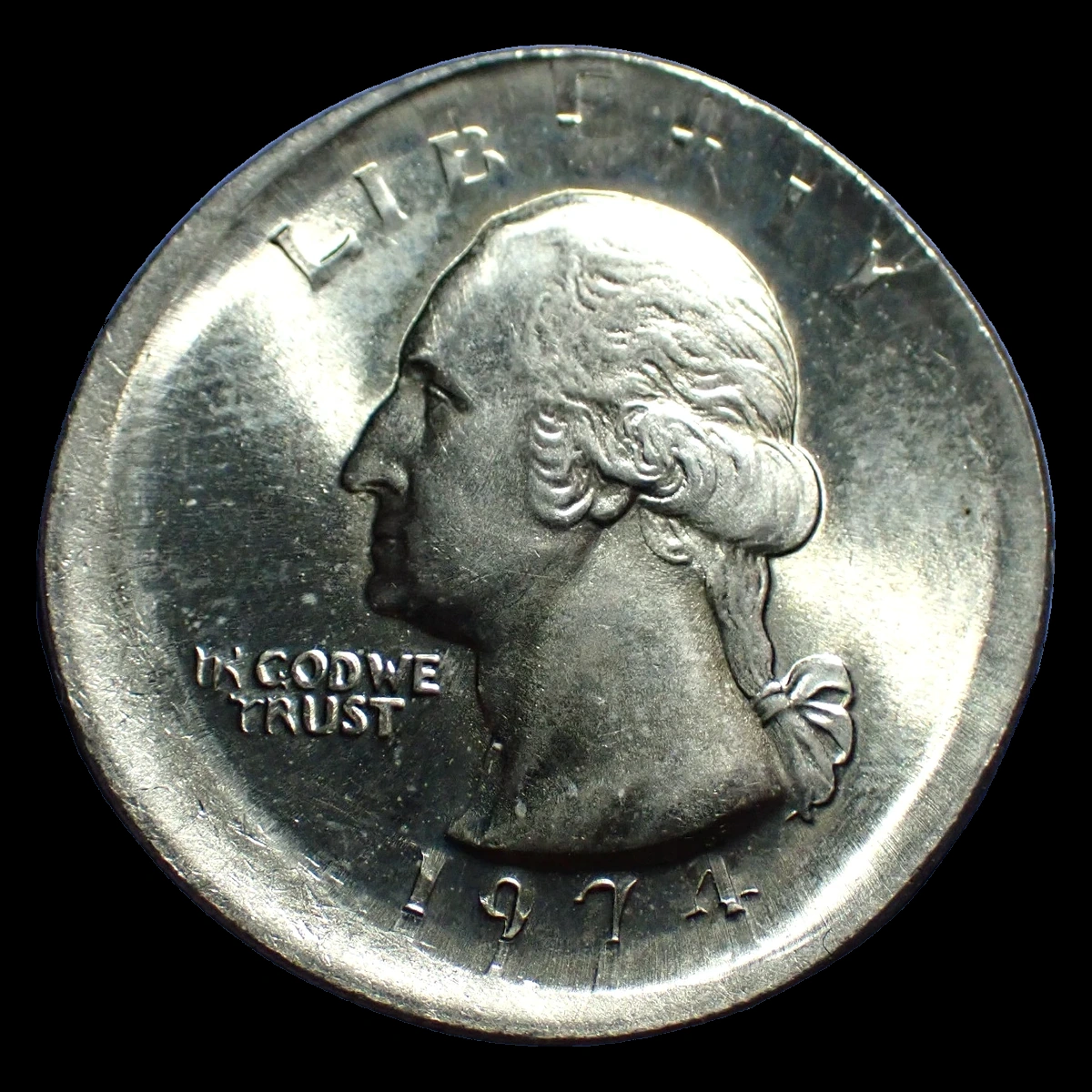
5. 1974 Quarter A Wide Border Holds a Complete Design: Broadstrike Error
Without restraint from the edge ring, or collar, the metal can spread wider during striking. The result is a broadstrike, often with an expanded border and incomplete edge grooves.
A 1974 example appears in an auction-image archive with an MS62 grade. That indicates unworn condition with noticeable marks.
How to Identify
Trace the outer lettering on both faces. A simple broadstrike keeps the main design within the expanded metal.
Compare a loose coin’s width with the normal quarter diameter of about 24.3 millimeters. Look for crushed details that could reveal later flattening.
If separate images overlap, inspect the repeated-strike category as well.
What It’s Worth
$20–$200 is the estimated range for straightforward broadstrikes. A nearby-year 1979 example graded MS63 sold for $49 in July 2022.
More obvious original spread and cleaner surfaces can improve appeal.
6. 1974 Quarter The Design Leaves a Large Blank Crescent: Off-Center Strike Error
The documented no-mintmark quarter was struck 45% off center toward 12:30. ANACS graded it MS64, meaning unworn with visible marks.
The blank sat partly outside the tools, so a large solid area never received the intended design.
How to Identify
With Washington upright, follow the picture toward the displaced edge. Check the plain crescent and the corresponding design position on the back.
Read the surviving year directly and inspect the blank area for evidence of later grinding. Do not confuse the solid crescent with a clipped-out gap.
What It’s Worth
$40–$500 is the estimated range for comparable 1974 off-center quarters. This 45% example sold for $94 in January 2022.
A readable date and untouched blank surface help; a large shift alone does not guarantee a high price.
7. 1974 Quarter Overlapping Pictures: Double and Multiple Strikes Error
One quarter turned about 80 degrees counterclockwise between two strikes within the collar. Another received a second strike 80% off center.
Denver examples include a double strike with a smooth depression and a multiply struck coin with broad outward spread. These are separate coins with different strike patterns.
How to Identify
Trace one connected group of letters or portrait details, then find its other position. This is more reliable than counting isolated doubled lines.
The rotated coin also has grease-related weakness above the eagle’s head and beside its leg on the viewer’s left. Keep those details with that specimen.
A reported flip-over strike puts front and back designs on the same face. Turning over is different from folding metal or transferring a sunken mirror image.
What It’s Worth
$150–$2,000 is the estimated range. The rotated double strike sold for $253 in May 2005, and the 80% off-center second strike brought $336 in October 2021.
The Denver double strike with a depression sold for $460 in January 2012. The broad, multiply struck Denver coin sold for $690 in May 2021.
Each result covers that coin’s combined features, not separate premiums to add together.
8. 1974 Quarter Folded Metal with Two Strikes: Cataloged Fold-Over Error
Heritage described one 1974 quarter as a “Fold Over Double Strike in Collar.” PCGS graded it MS64.
The short description does not explain the exact fold shape. Physical bending needs to be distinguished from a coin simply turning over between blows.
How to Identify
Use side views to inspect thickness and the relationship between the metal and impressions. Two overlapping pictures alone do not prove a fold.
Compare with the cataloged specimen and follow the design into any bent portion. Do not bend a coin to test the explanation.
What It’s Worth
$250–$2,000 is the estimated range for comparable authenticated fold-over double strikes. The MS64 example sold for $376 in January 2016.
Later bending does not qualify for that mint-error premium.
9. 1974 Quarter A Cup Shape and Backward Image: Die Cap with Brockage Error
A coin stuck to a tool can grow a raised wall as repeated pressure pushes metal around it. The documented 1974-D cap also has a backward, sunken image on the back.
That transferred image is a brockage. Both effects belong to one PCGS MS66 coin.
How to Identify
Study the wall from the side without pressing or flattening it. Its shape should fit growth around the stamping tool rather than later rim damage.
On the back, confirm that recognizable details are both reversed and sunken. Keep the surviving date and D in the full views.
What It’s Worth
$500–$4,000 is the estimated range for comparable authenticated caps with brockage. The recorded MS66 example sold for $1,265 in April 2006.
Wall preservation, readable identity, and a clear transferred image influence value together.
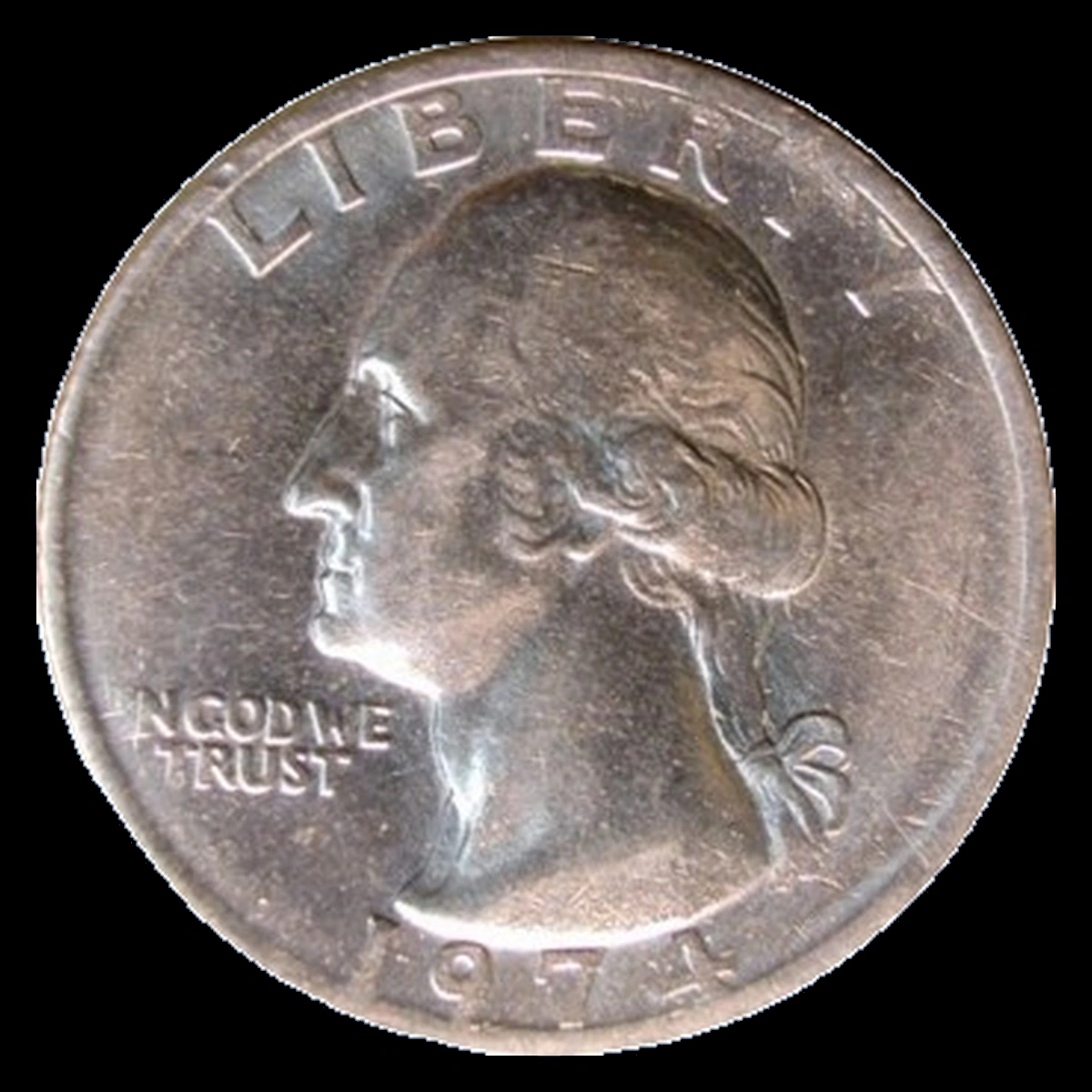
10. 1974 Quarter Full Width but Less Thickness: Thin or Underweight Blank Error
A thin quarter can keep its full outline and both outer layers. Mike Diamond described a 4.92-gram example as quarter strip rolled too thin.
It is too heavy for dime stock. A separate 4.7-gram underweight example has no specific cause established, and another was cataloged as a thin-blank strike.
How to Identify
Record weight, diameter, and thickness for the same loose coin. Check that both pale outer layers and the copper center remain.
The 4.92-gram explanation concerns one full-diameter specimen. Grinding, corrosion, and a missing covering are different reasons for reduced weight.
What It’s Worth
$40–$300 is the estimated range for these thin or underweight examples. The 4.7-gram AU53 coin sold for $69 in December 2020.
A different thin-blank AU55 coin brought $84 in December 2024. Both grades indicate circulation wear.
11. 1974 Quarter Quarter Design on Nickel Metal: Nickel-Blank Strike Error
A nickel blank provides less room for the quarter design and has solid copper-nickel metal. Outer details can extend beyond its smaller edge.
The Denver MS62 example weighs 4.9 grams. A separate no-mintmark example was graded PCGS AU58.
How to Identify
Inspect the edge for solid alloy rather than the normal copper-center stripe. An unused nickel blank starts around five grams and 21.2 millimeters wide, though striking can spread it.
Look for quarter letters cut short at the edge. Remains of an earlier Jefferson design would suggest a finished nickel host instead of an unused blank.
What It’s Worth
$150–$1,200 is the estimated range for comparable nickel-blank quarters. The Denver coin sold for $240 in June 2019; the no-mintmark AU58 brought $207 in September 2006.
The 4.9-gram measurement belongs only to the Denver specimen.
12. 1974 Quarter Copper Metal on a Smaller Disk: Cent-Blank Strike Error
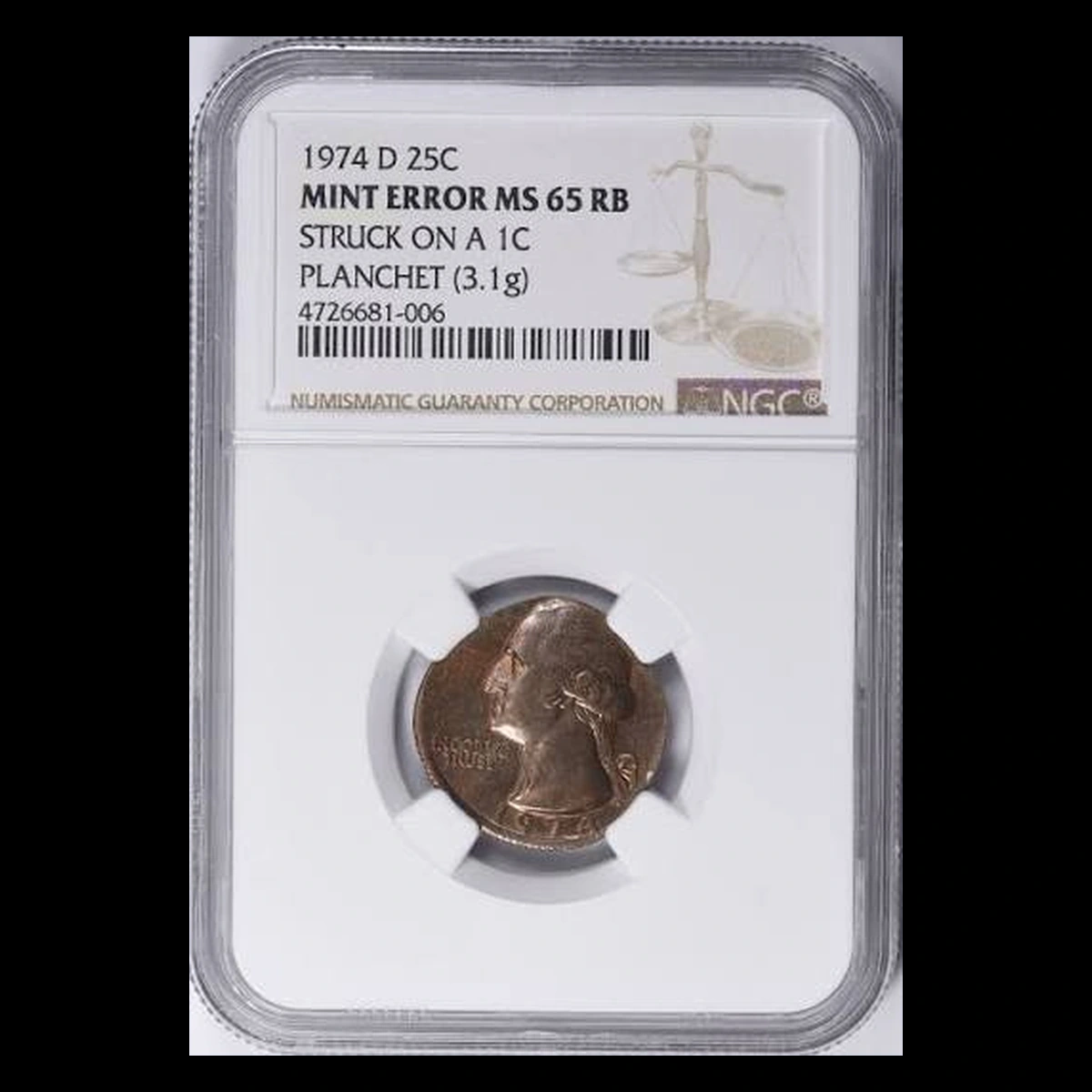
Washington’s design can appear on a copper-colored cent blank if that blank enters the quarter press. The larger design cannot fit fully on the smaller metal.
A no-mintmark MS64 Red and Brown example loses upper front and lower back details. A separate Denver coin was graded PCGS MS64.
How to Identify
Check the edge and weight along with the color. A normal 1974 cent blank weighs 3.11 grams and does not have a quarter’s clad-layer structure.
Read the surviving year and mintmark, then inspect where the quarter design runs off the blank. Plating an ordinary quarter copper-colored does not create the same size and strike pattern.
What It’s Worth
$500–$2,500 is the estimated range. The Denver MS64 sold for $977.50 in January 2010, and the no-mintmark MS64 Red and Brown brought $833.75 in September 2002.
A no-mintmark MS62 example sold for $540 in December 2024. Readable identity and surface preservation help explain the differences.
13. 1974 Quarter A Smaller Foreign Blank: Liberia Twenty-Five-Cent Blank Error
A 1974-D quarter was struck on a blank intended for Liberia’s twenty-five-cent coin. It is slightly smaller than the normal United States quarter blank and weighs 4.6 grams.
NGC graded the coin AU58, meaning slight wear. The foreign connection concerns an unused blank, not a surviving Liberian picture.
How to Identify
Confirm the Washington design and D, then compare the outer details with the small blank’s edge. Keep weight and diameter with the same specimen’s photographs.
A missing-layer quarter can weigh about the same. Metal and dimensions need to match the identified foreign blank, not just one scale reading.
What It’s Worth
$250–$2,500 is the estimated range for comparable authenticated foreign-blank quarters. This example sold for $276 in April 2006.
A firm blank identification and readable design are especially important when using the upper part of the range.
14. 1974 Quarter An Unusual Core and Higher Weight: Non-Copper-Core Blank Error
The cataloged example weighs 91 grains, or about 5.90 grams. That is heavier than a normal quarter and does not fit a missing outer covering.
PCGS graded it XF45, indicating circulation wear. The description does not establish a specific alloy or identify it as silver.
How to Identify
Check the units on any weight report: 91 grains is not 91 grams. Inspect the edge for plating or dirt that could hide the usual copper stripe.
Have the composition examined without cutting or scraping the coin. Weight and color can identify an unusual candidate but cannot name its alloy alone.
What It’s Worth
$200–$1,200 is the estimated range for comparable authenticated unusual-core quarters. The XF45 coin sold for $230 in March 2011.
A reliable metal identification provides a stronger price basis than calling every pale-edged quarter silver.
Conclusion
The outline separates a clip from an off-center strike, while the edge helps separate a thin blank from a missing covering. On repeated strikes, follow whole groups of details before naming the sequence.
Keep exact weights, directions, and prices tied to individual coins. Protect unusual shapes as they are: a folded area or cap wall may hold the most useful evidence of the accident.