Rare 2001 Quarter Errors (List & Pictures)
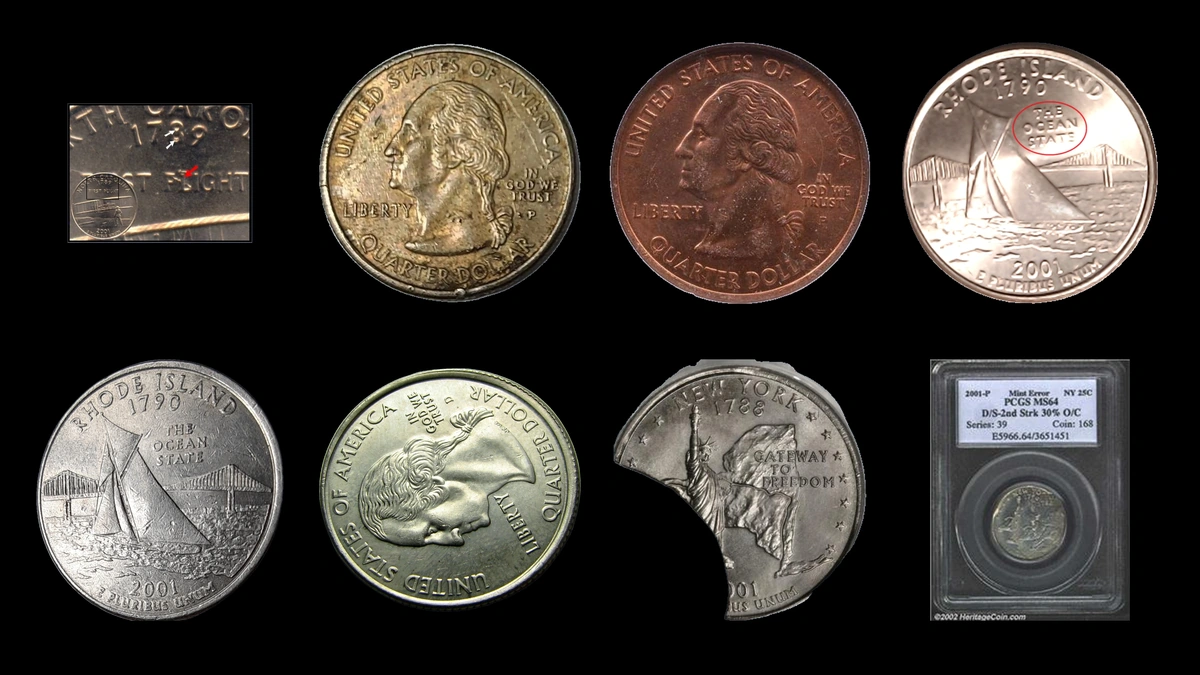
A North Carolina quarter struck on a cent blank sold for $9,000 in August 2024. The 2001 quarter errors below cover estimated values of $2–$12,000, including small raised chips, displaced designs, and incorrect metal blanks.
Identify the state scene first, then follow the lettering, surface, edge, and overall shape to the appropriate comparison.
| What catches your eye | Possible category | Guide range |
|---|---|---|
| Extra contours or raised marks | Doubled die, clash, crack, chip, or cud | $2–$500 |
| Changed color or surface | Annealing, local separation, or missing layer | $20–$1,500 |
| Missing or impressed detail | Struck-through material | $5–$1,500 |
| Unusual border or outline | Misaligned die, collar error, broadstrike, clip, or off-center strike | $5–$2,000 |
| Overlap or a folded shape | Repeat strike, indent, or folded-blank strike | $200–$5,000 |
| Small coin with quarter artwork | Wrong planchet | $600–$12,000 |
1. 2001 Quarter Repeated ear, letter, or state details: doubled die Error
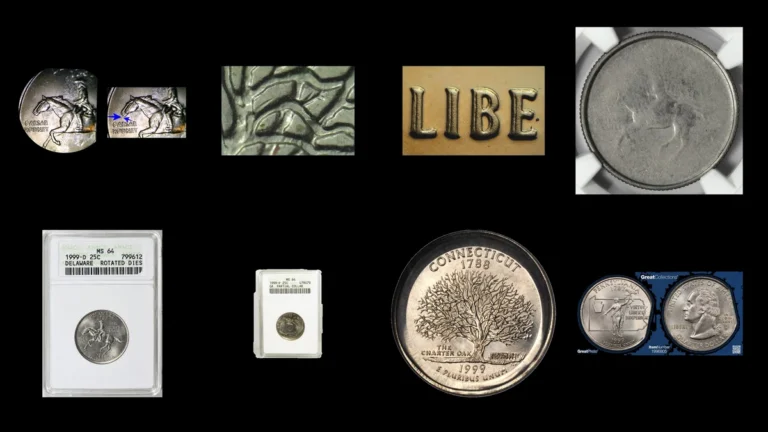
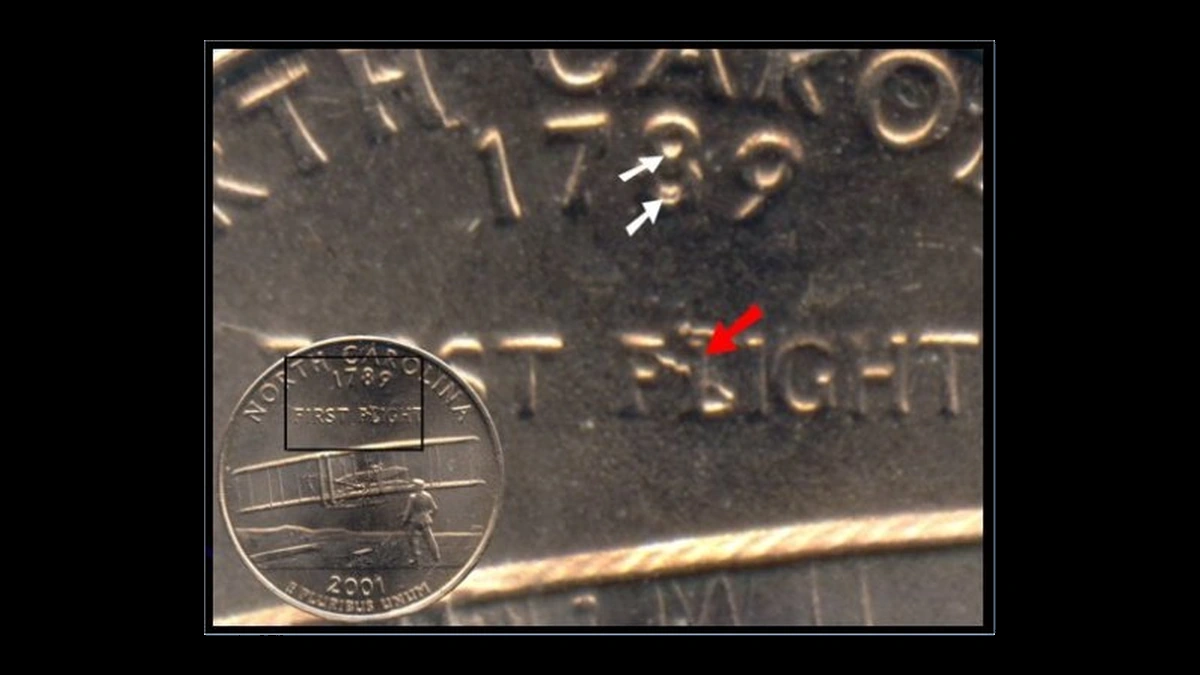
A Philadelphia Vermont report places an extra outline below Washington’s earlobe. Philadelphia North Carolina reports instead identify small splits at the ends of LIBERTY and IN GOD WE TRUST.
New York has a separate Philadelphia front-doubling report, while Kentucky claims concern lettering or the horse outline. The Kentucky reports do not establish one mint and face for every claimed pattern.
A doubled die carries repeated detail in the stamping tool before any coin receives the design. It differs from a coin moving between two strikes.
How to Identify
For Vermont, compare the area immediately below the earlobe with an attributed reference. For North Carolina, inspect the named front letters rather than substituting rough reverse lettering in FIRST FLIGHT.
New York and Kentucky require their own matching patterns. A flat shelf or moving shadow beside a normal letter should not be counted as a rounded repeated contour.
What It’s Worth
Correctly identified examples have an estimated range of $5–$300. Clarity and preservation help determine the premium.
A 2005-P Minnesota Extra Tree quarter graded MS65 sold for $30 in August 2021. That different-year variety is a general comparison, not a price for any of these 2001 patterns.
2. 2001 Quarter Extra lumps or raised lines: chips, cracks, and cuds Error
New York reports include extra metal near the torch or state outline. North Carolina and Vermont have reported die cracks without a specified route, while Kentucky reports include lines near the horse.
A chip or crack in the die allows extra metal to rise on the coin. A larger break connected to the die’s edge produces a rim-connected patch called a cud.
Separate Philadelphia Kentucky cuds are reported near 8 and 8:30 on the reverse. Vermont also has a cud report requiring confirmation of the rim connection.
How to Identify
Compare New York’s tiny features with normal torch and map details before calling a bump extra metal. Trace a Kentucky or Vermont cud all the way to the rim.
Use changing light to distinguish a raised ridge from a scratch with a cut center. Do not invent a route through North Carolina’s aircraft or Vermont’s trees when no route is established.
What It’s Worth
The combined estimate is $2–$500: small cracks and chips may bring $2–$50, while stronger rim-connected breaks may reach $50–$500.
No individual completed sale supplied here fixes the value of a particular 2001 break. Several cracks on one quarter still belong to one whole-coin assessment.
3. 2001 Quarter A faint outline from the opposite design: possible die clash Error
When the dies meet without a blank between them, one tool can acquire a trace of the other’s design. Later coins then display the unwanted shape along with their intended artwork.
A Denver 2001 clash has been claimed without a securely matched state identity. That claim remains conditional until the extra outline fits the correct state scene.
How to Identify
Compare a front-side mark with the actual state reverse, or a reverse mark with Washington’s portrait. Full-face photographs at the same scale preserve the locations needed for that comparison.
An outline resembling the older quarter’s eagle cannot establish a clash involving a 2001 state design. Scratches also need to be excluded by examining how the mark crosses the struck surface.
What It’s Worth
The conditional estimate is $10–$200 for an authenticated minor state-quarter clash. Recognizable transferred artwork supports the attribution better than a faint isolated line.
This range is not a reported sale of the unverified Denver candidate.
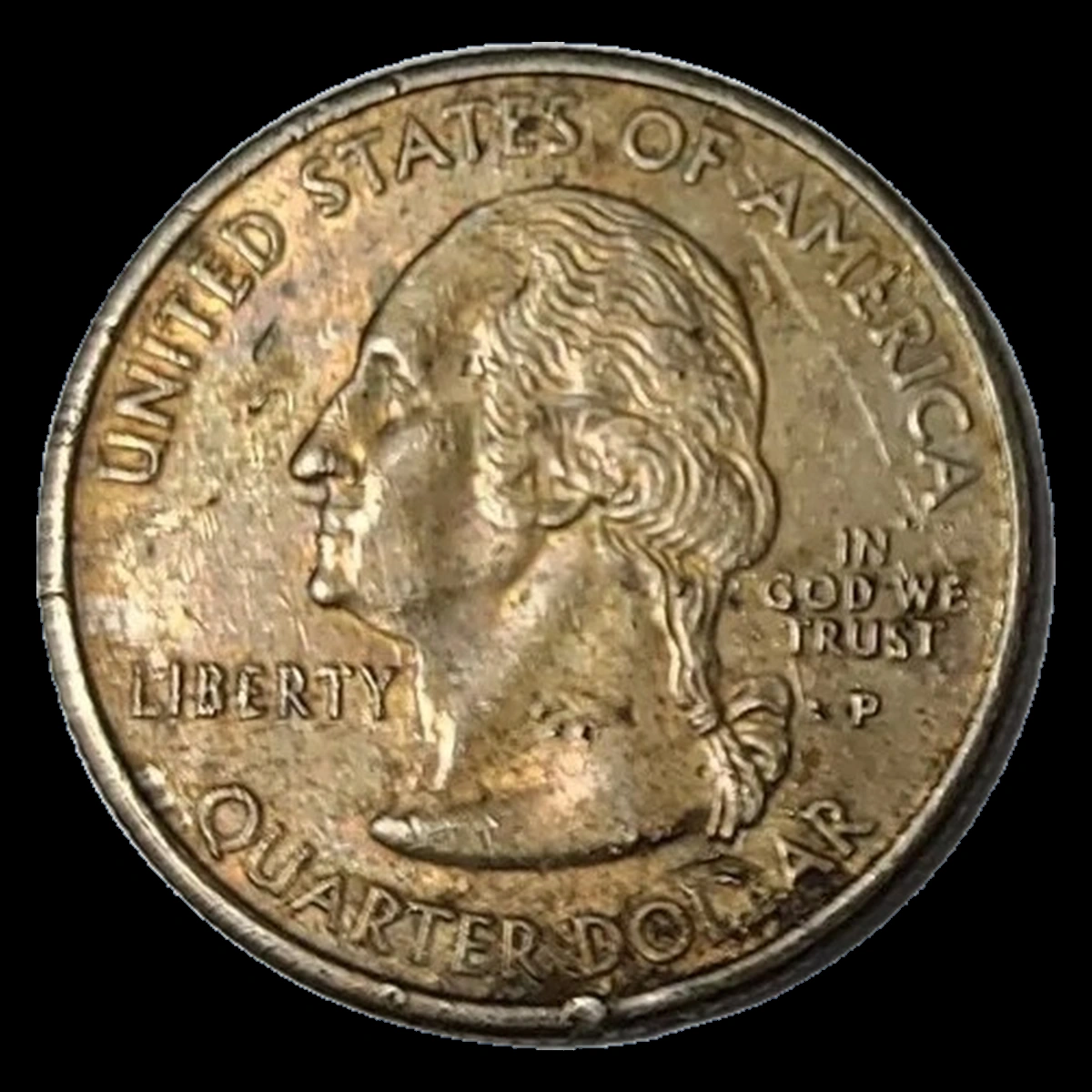
4. 2001 Quarter Unusual color on Kentucky or Rhode Island: improper annealing Error
Annealing is the heating used to soften blanks before striking. A problem during that preparation can change their surface color.
A Kentucky PCGS MS64 example is documented with improper annealing. The Rhode Island report does not establish a particular mint or finish.
How to Identify
Compare the coin with a normal example under neutral light and inspect the edge for intact layers. A missing outer layer exposes copper for a different reason.
Later heat, chemicals, coatings, and tarnish can imitate a mint-made color change. A shiny Rhode Island coin should not be assigned a Proof identity or the Kentucky specimen’s grade from appearance alone.
What It’s Worth
Professionally identified examples have an estimated range of $25–$300. Original surface texture helps explain the unusual color.
A different-year 2009-P Native American dollar with an annealing error sold for $61 in November 2011. It is a general mechanism comparison, not a state-quarter sale.
5. 2001 Quarter A local peeling patch on Vermont: surface separation Error
A reported Vermont quarter has a localized split or peel in its surface metal. This is distinct from losing an entire outer face.
A weak bond or flaw can allow a small section to lift from the surrounding metal. The report does not establish a particular mint or affected face.
How to Identify
Examine the boundary without lifting a loose flap. Look for original coin metal separating beside intact struck design, rather than paint peeling or metal scraped into a raised edge.
Include the full Vermont scene and both faces in photographs. Brown staining alone does not show that any metal has separated.
What It’s Worth
A genuine local separation has an estimated range of $20–$300. Its size, visibility, and remaining surface quality affect the comparison.
No completed sale in the supplied evidence establishes a price for this particular Vermont report.
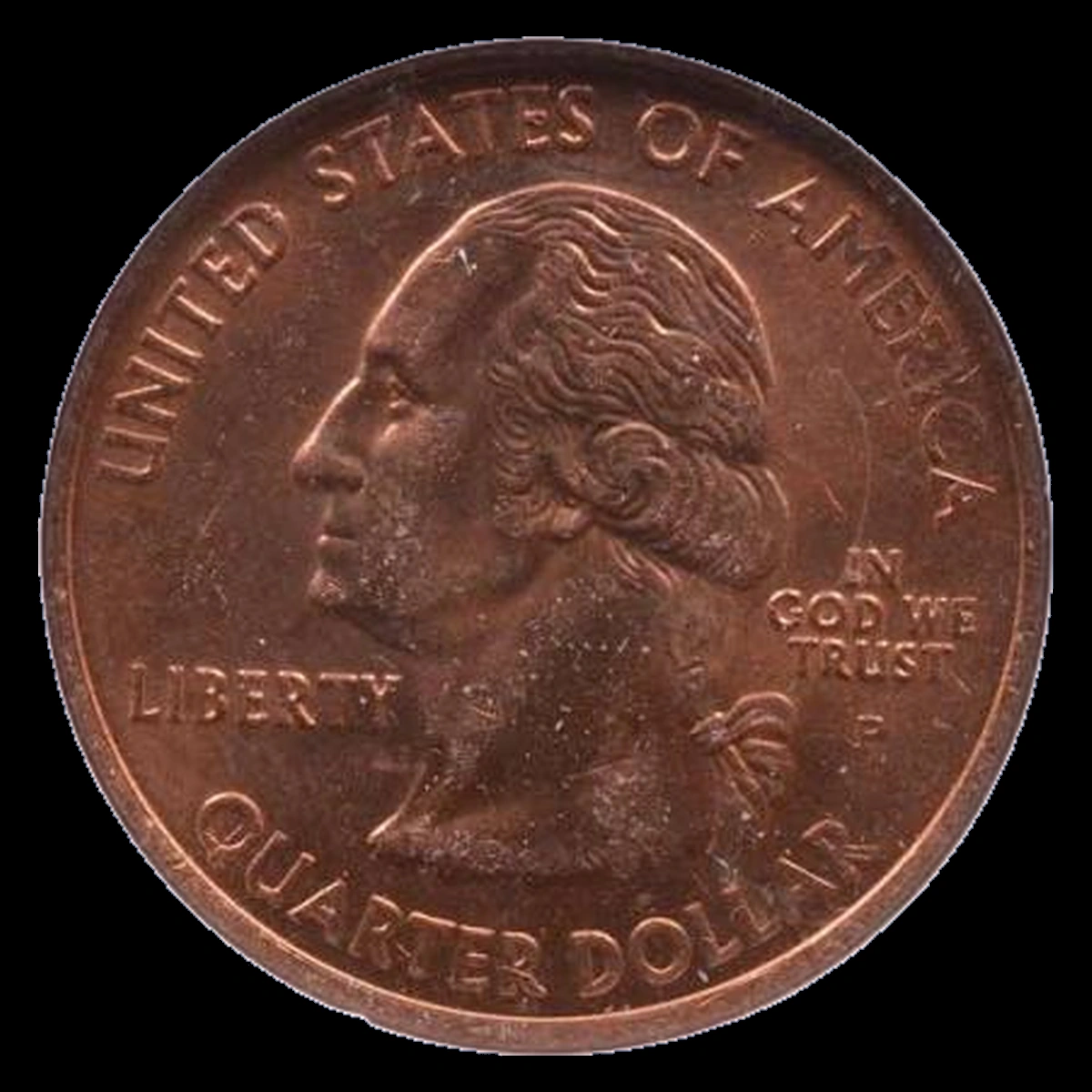
6. 2001 Quarter A copper-colored face with metal missing: outer-layer loss Error
Clad quarters have pale outer layers bonded to a copper center. Reported losses affect the front of Philadelphia Rhode Island coins and the reverse of Denver New York and Philadelphia North Carolina examples.
A Denver Vermont reverse-layer coin has weaker detail across the lower front and upper reverse. A separate Philadelphia Vermont report claims both outer layers missing.
How to Identify
Establish the coin’s normal material first: ordinary clad quarters weigh 5.67 grams, while 2001 silver Proofs normally weigh 6.25 grams. The usual quarter diameter is about 24.26 millimeters.
Compare the exposed face, edge layers, and weight with the proposed loss. Grinding, coatings, and corrosion can change color or weight after minting.
The Philadelphia Vermont two-layer claim requires evidence on both faces. Do not use the separate Denver reverse-layer photograph to establish it.
What It’s Worth
The combined estimate is $150–$1,500, with one-face losses around $150–$1,000 and an authenticated two-layer Vermont example around $500–$1,500.
A Philadelphia North Carolina reverse-layer quarter graded PCGS MS64 sold for $292.80 in March 2026. That result concerns one missing layer, not the two-layer claim.
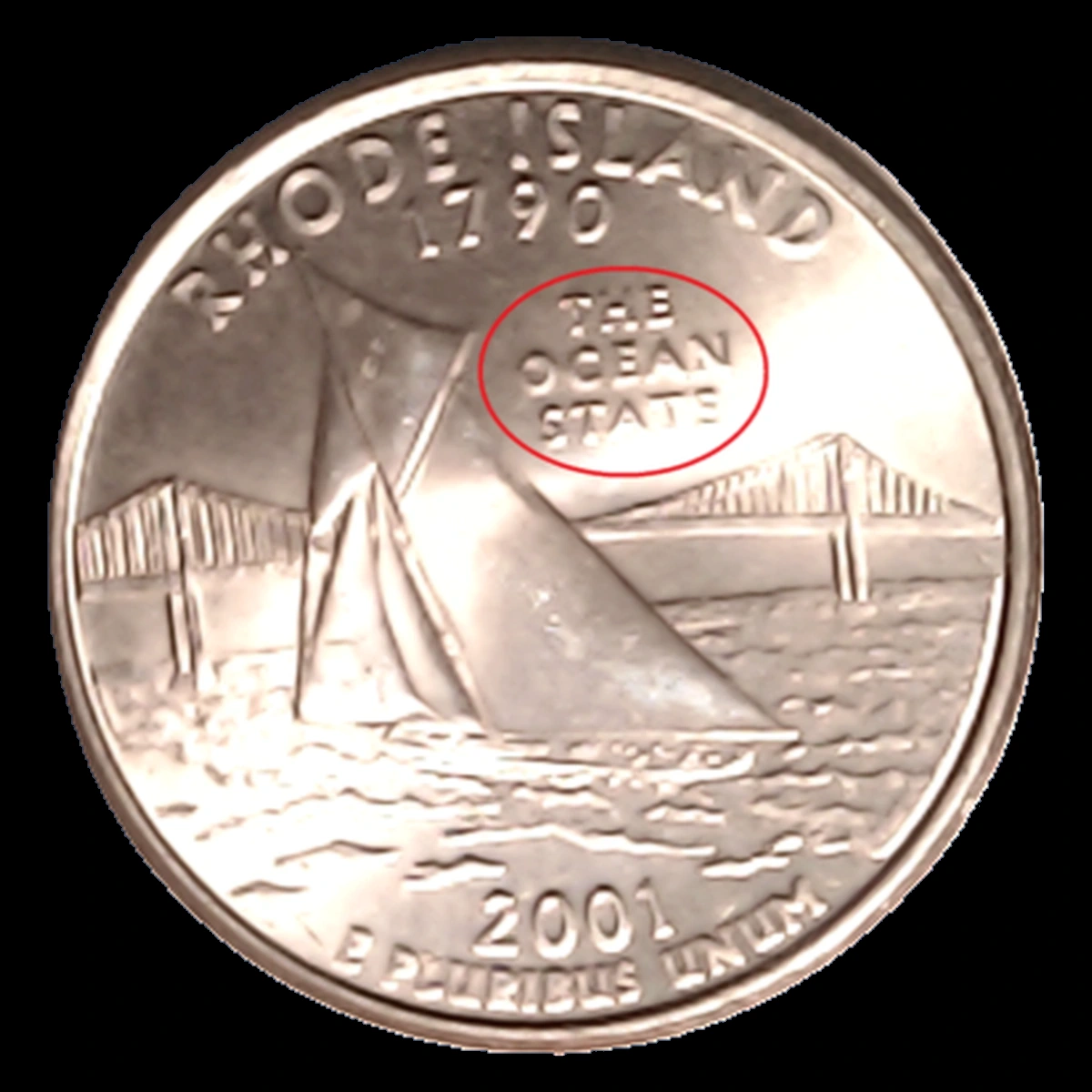
7. 2001 Quarter Depressions, dropped letters, or attached material: struck through Error
Philadelphia New York reports describe shallow front-side impressions from material blocking a strike. Rhode Island reports do not establish a particular object or location.
A separate Philadelphia claim concerns a dropped letter: packed material from a die letter falls out and impresses its shape elsewhere. A Denver retained-material claim means the object allegedly remains attached.
How to Identify
Inspect where ordinary design stops at the impression instead of being cut away afterward. A dropped-letter candidate needs a recessed letter shape in an unintended location, not a raised extra letter.
Leave any attached material undisturbed and establish its relationship to the original strike. The general Rhode Island report does not justify naming a staple or another specific object.
What It’s Worth
The overall estimate is $5–$1,500, including small blocked patches around $5–$100 and clear impressions or genuine retained material around $100–$1,500.
The supplied claims do not provide a verified individual sale. A glued-on object or a letter scratched into the surface falls outside these error estimates.
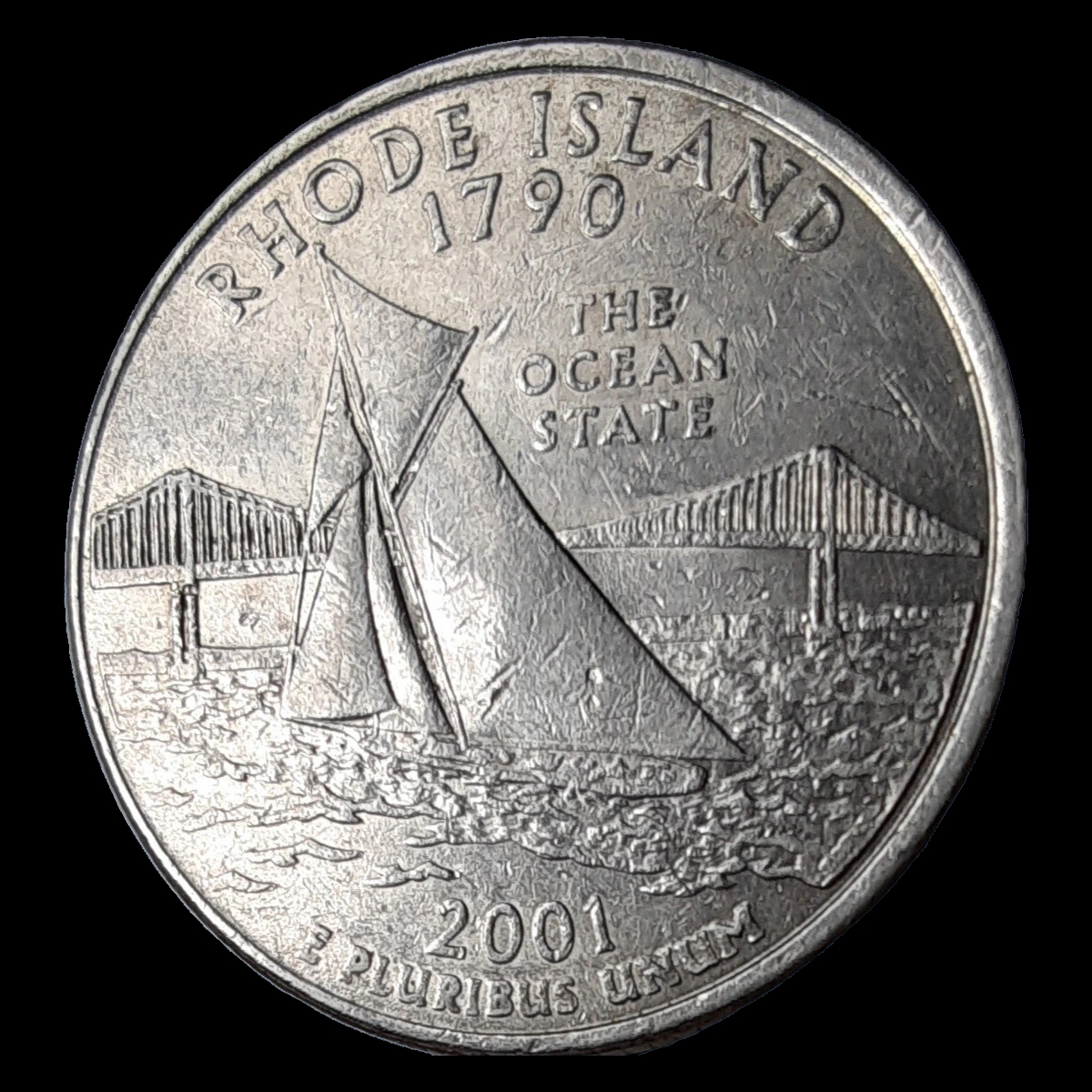
8. 2001 Quarter Rhode Island’s reverse sits to one side: misaligned die Error
A reported Denver Rhode Island MS64 example has an off-center reverse design with a better-centered front. Moving one die sideways changes that design’s border spacing without requiring the blank itself to move.
How to Identify
Photograph the sailboat and Pell Bridge scene squarely from above, with the full border visible. Compare the narrow and wide margins, then repeat the check around Washington.
A tilted camera or damaged rim can create false asymmetry. The relevant clue is a consistent one-sided design shift, not a changed angle of the boat.
What It’s Worth
A clear genuine misalignment has an estimated range of $5–$100. Very small centering differences may add little.
The supplied MS64 report identifies condition but provides no completed sale price.
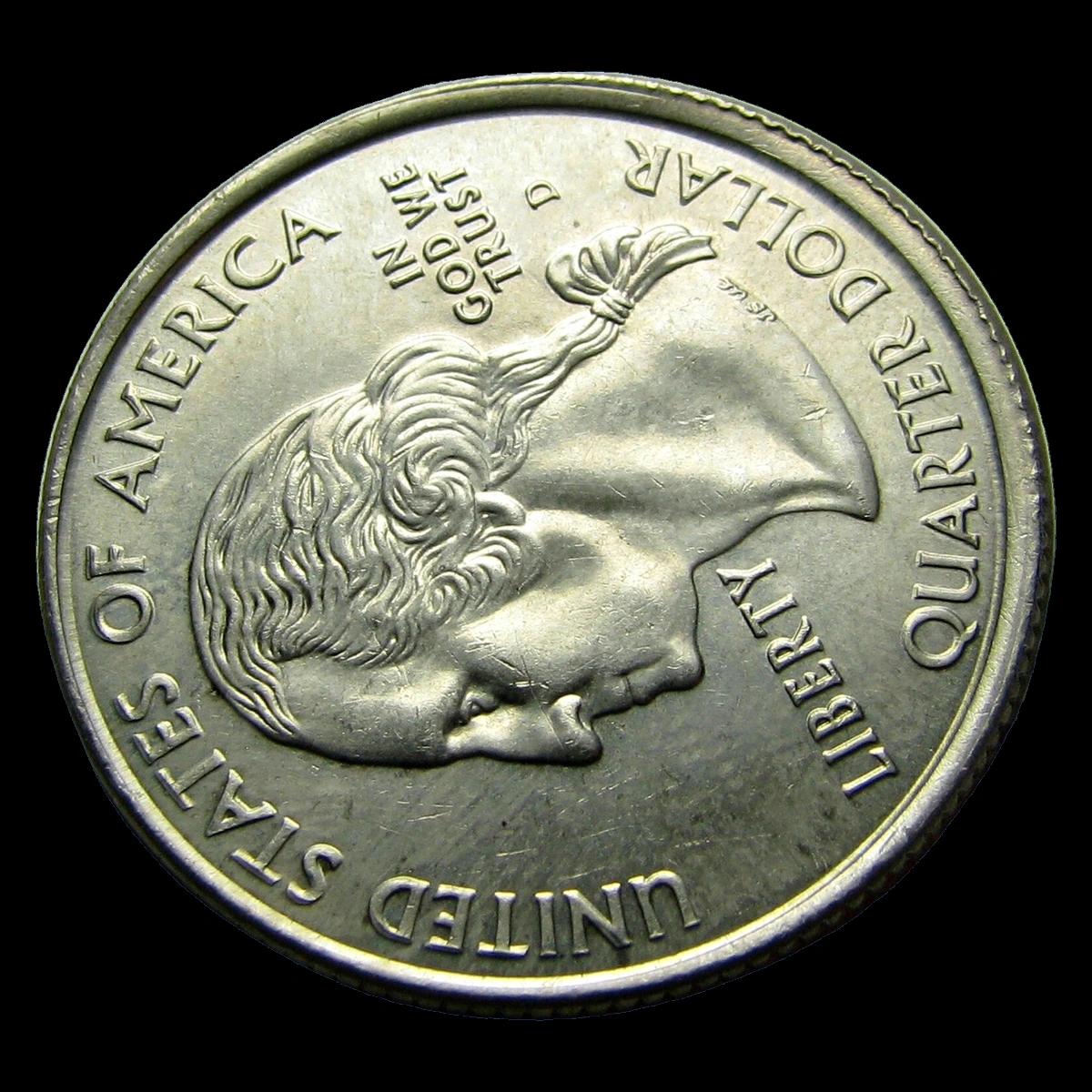
9. 2001 Quarter Two levels around the edge: partial collar Error
A collar normally contains the blank during striking and forms the grooved edge. If only part of the blank sits within that ring, the exposed portion can spread beyond the restrained band.
Denver New York and Philadelphia North Carolina examples are reported with this stepped edge.
How to Identify
Use a side view to follow the transition between the grooved, restrained portion and the wider area. A tall rim visible from the front alone is insufficient.
Check for later rolling, squeezing, or tool marks. Preserve any thin projecting lip rather than pressing measuring tools against it.
What It’s Worth
Authenticated examples have an estimated range of $30–$500. A clear original step and good overall condition make the feature easier to evaluate.
No realized price is supplied for either named 2001 example.
10. 2001 Quarter Expanded metal around a complete scene: broadstrike Error
Denver New York and Philadelphia North Carolina examples are described as uncentered broadstrikes. Their designs sit unevenly inside metal that spread without proper collar restraint.
Kentucky also has a broadstrike report without an established mint for the individual candidate. Its horse, fence, and Federal Hill scene provide the correct reverse comparison.
How to Identify
Read the outer lettering around both faces and check that the complete intended design remains on the coin. If artwork ran beyond the metal, investigate an off-center strike instead.
Compare width in several directions with the normal standard above. Crushing, flattened high points, and tool marks can reveal a coin widened by later pressure.
What It’s Worth
The estimated range is $50–$750 for an authenticated broadstrike. The amount of spreading and surviving surface quality matter.
A different-year 1984-P PCGS MS65 broadstrike sold for $169 in December 2025. That result does not establish a sale of the Kentucky or other 2001 reports.
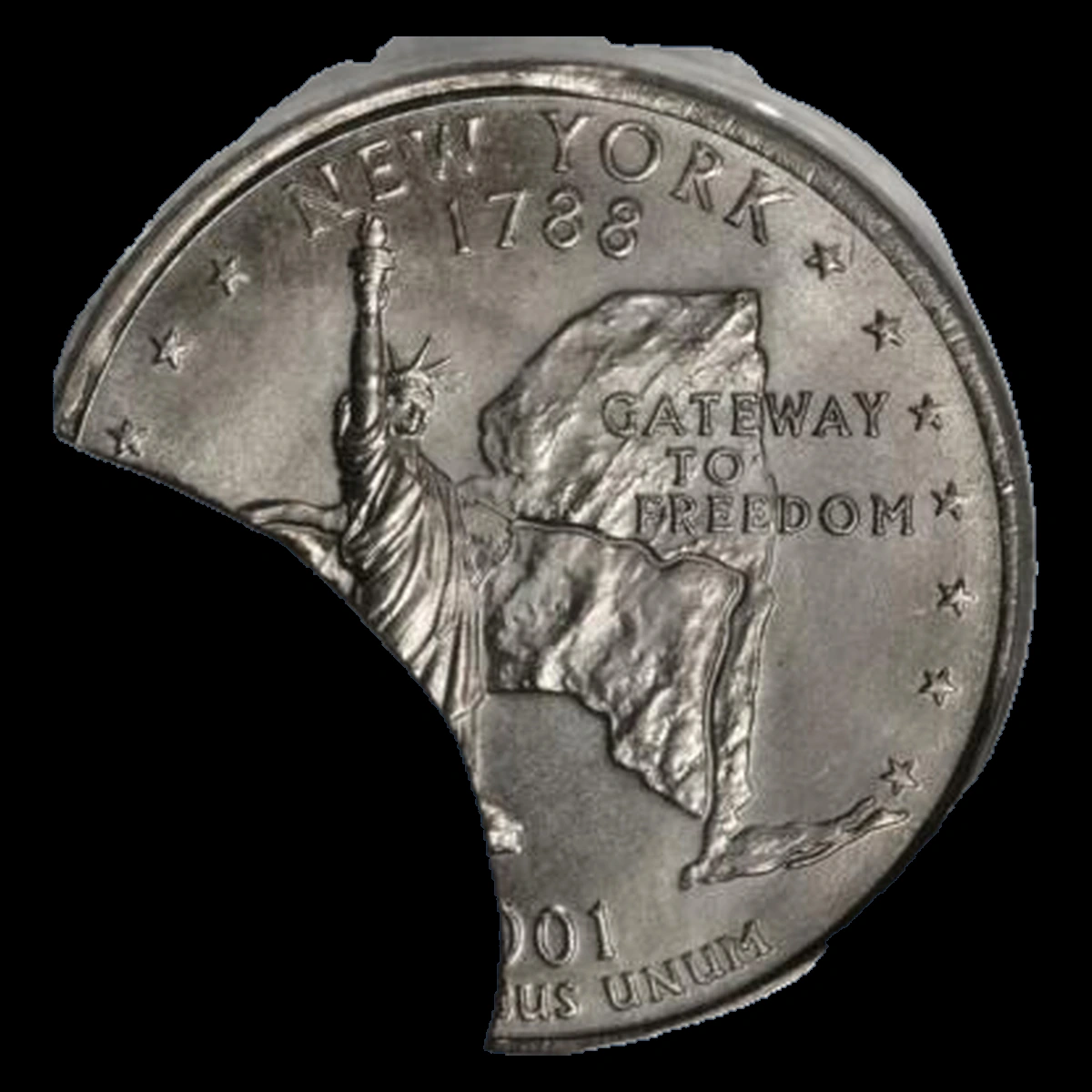
11. 2001 Quarter An oval, incomplete outline: elliptical clip Error
Some blanks begin with missing metal and receive a design on an incomplete, oval shape. Philadelphia New York PCGS MS65 and Philadelphia North Carolina NGC MS62 examples are reported as elliptical clips.
The North Carolina specimen weighs 4.9 grams. That measurement does not turn a clipped quarter into a nickel-planchet strike.
How to Identify
Inspect how the original rim and lettering approach the missing sections. Weak formation near a gap or along the opposite rim can support a genuine incomplete blank.
Search for saw marks, filing, or letters sliced through after striking. Low weight and an oval outline alone cannot exclude later cutting.
What It’s Worth
Estimated values are $25–$1,000 for genuine 2001 clips, with dramatic oval forms generally more noticeable than tiny edge losses.
A different-year 1980-P corner-clipped MS65 quarter sold for $204 in June 2023. Its shape differs from the elliptical examples and offers only a broad comparison.
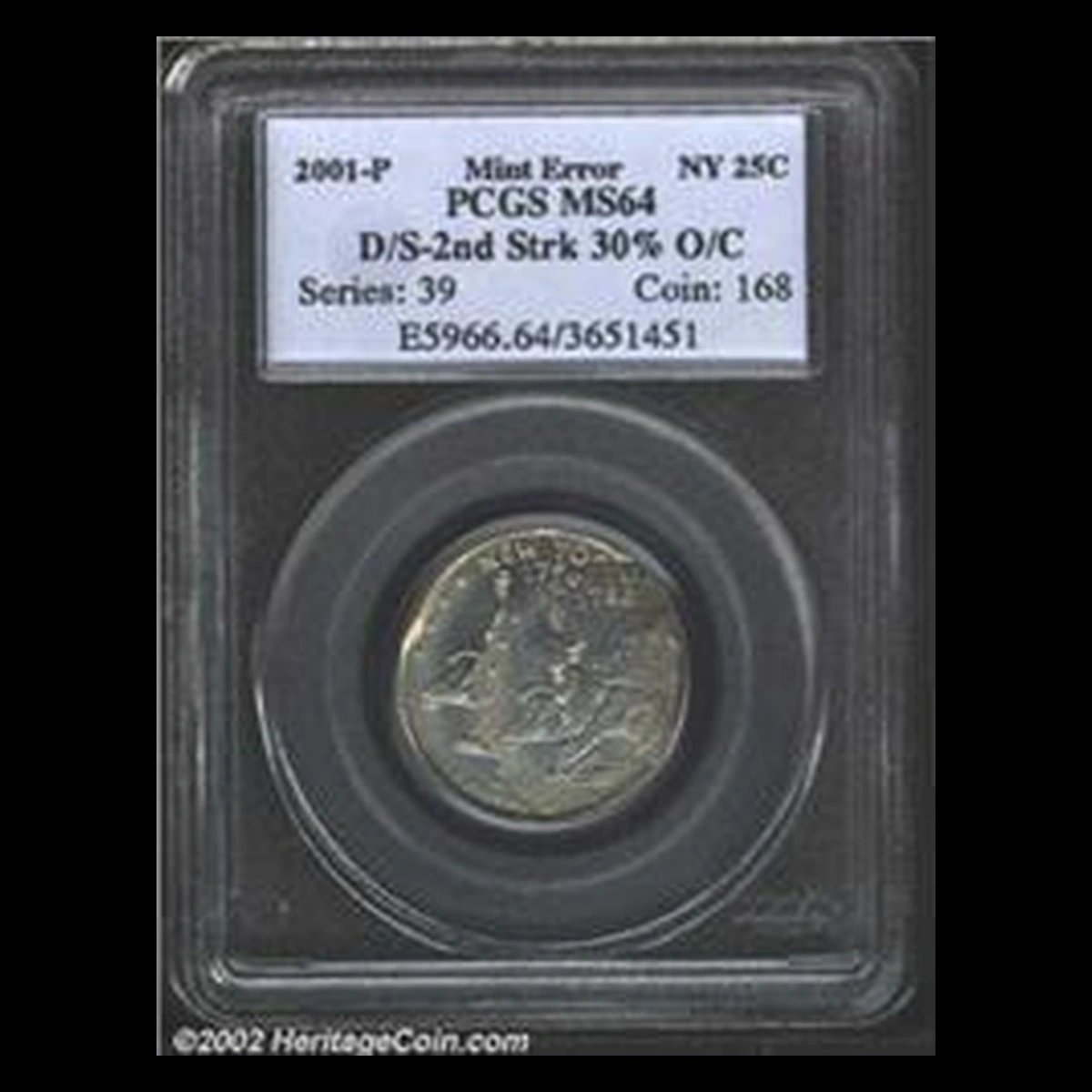
12. 2001 Quarter Part of the design misses the blank: off-center strike Error
A Denver New York quarter is reported about 10% off center. Philadelphia North Carolina reports include separate examples around 5% and 10%, while Kentucky’s report supplies no particular mint or displacement.
The misplaced blank leaves an unstruck crescent opposite artwork that ran beyond its edge. Both faces should fit that same placement.
How to Identify
Read the date and state identity before estimating displacement. Follow the missing design on both sides and inspect the empty area for grinding or remnants of erased lettering.
The percentages in the New York and North Carolina reports do not establish clock positions. Record the actual direction visible on the specimen instead.
What It’s Worth
The guide range is $50–$2,000 for authenticated examples with readable identity. A percentage alone cannot determine a price.
A 1988-P quarter struck 30% off center sold for $109 in January 2022. It is a different-year comparison with its own appearance and condition.
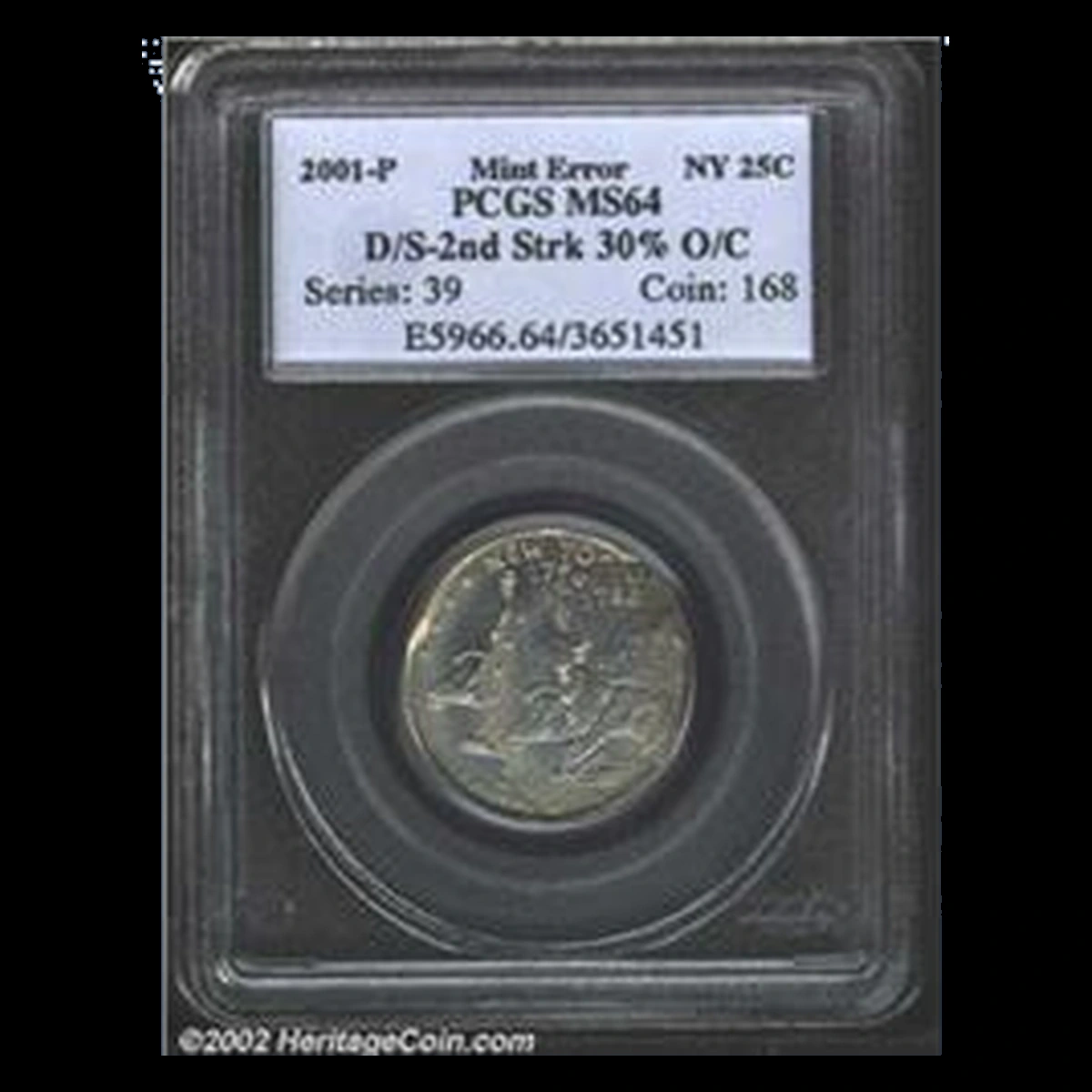
13. 2001 Quarter Overlapping versions of the artwork: repeated strikes Error
One Philadelphia New York coin received a second strike about 50% off center. A separate New York report describes four strikes, with the later three displaced about 50%.
A Denver Rhode Island double strike remained in the collar with roughly 5 degrees between impressions. Vermont’s separate double-strike report does not establish a specific displacement.
How to Identify
Trace a repeated portrait or large letter into neighboring repeated design. The connected pattern should make sense as another original strike.
For Rhode Island, compare turned versions on the same face; the reported rotation is not front-to-back die alignment. Keep New York’s percentages separate from the unspecified Vermont example.
What It’s Worth
Authenticated repeated-strike quarters have an estimated range of $200–$4,000. Clear overlapping designs can matter more than the number of blows.
No completed sale is supplied for these particular combinations. Value the whole piece once, including expansion or lost design resulting from its additional strikes.
14. 2001 Quarter Design formed on folded metal: reported folded-blank strike Error
A folded blank can receive design across a thickened, doubled section of metal. The reported Philadelphia 2001 type lacks a matched state scene, so its precise identity remains unresolved.
A finished quarter bent with pliers can also have a doubled thickness. The important distinction is whether the design was struck onto the folded shape.
How to Identify
Leave the shape intact and photograph the bend from the side. Follow the design toward the fold to see whether it was stamped there or merely distorted after it had formed.
Look for pressure marks and crushed details from later bending. The date, P, and surviving state scene must support the claimed identity.
What It’s Worth
The conditional estimate is $500–$5,000 for an authenticated folded-blank strike with readable identity.
This is not a recorded sale of a verified state-quarter specimen. An ordinary later-bent quarter does not qualify for that range.
15. 2001 Quarter A rounded area blocked by another blank: possible indent Error
Two overlapping blanks can interrupt one another’s strike. One blank may press a rounded hollow into the other while preventing the normal design from forming in that area.
A Denver 2001 claim describes this mechanism without establishing the state. Its identification still needs the actual scene and overlap boundary.
How to Identify
Examine how letters and artwork stop against the depression. An unused blank leaves its contact shape, not a fully formed opposing coin design.
Check for impact marks and displaced metal that could indicate a later circular punch. Read the date and D directly rather than borrowing them from a seller’s description.
What It’s Worth
An authenticated example with clear identity has a conditional estimated range of $500–$5,000.
No verified Denver specimen sale is established by the supplied claim. Its proposed overlap must first agree with the struck surface and edge.
16. 2001 Quarter A smaller blank carrying state-quarter artwork: wrong planchet Error
North Carolina reports include strikes on cent, nickel, and dime blanks, while Rhode Island has a cent-blank report. Denver Kentucky is reported on a dime blank, and a separate New York dime-blank example has design on only one face.
A Philadelphia North Carolina cent-blank specimen retains the aircraft and Wilbur Wright but loses much of the left-side lettering. A different cent-blank report has substantial exposed zinc on the reverse.
How to Identify
Compare metal, edge structure, and surviving artwork before naming the blank. Standard modern blank weights are 2.50 grams for a cent, 5 grams for a nickel, and about 2.27 grams for a clad dime.
These are starting standards, not actual measurements supplied for every error. A trimmed quarter can also become smaller and lighter, so inspect its edge for later cutting.
Keep the exposed-zinc cent specimen separate from the North Carolina coin described by its surviving flight scene. Inspect both faces of the claimed one-sided New York coin instead of assuming a blocked side from its size.
What It’s Worth
The overall estimate is $600–$12,000: cent-blank examples may fall around $2,000–$12,000, and nickel or dime blanks around $600–$4,000.
A North Carolina cent-blank quarter graded PCGS MS64 Red sold for $9,000 in August 2024. A separate North Carolina nickel-blank coin brought $2,040 in September 2024.
Conclusion
The state scene is the starting point for a useful 2001 error comparison. An ear outline on Vermont, a Kentucky rim break, and a Rhode Island design shift require different evidence.
Keep uncertain reports conditional and separate each specimen’s mint, measurements, and sale history. The clearest conclusions combine both faces with the edge, showing how the unusual feature fits the coin’s original manufacture.