Rare 1842 Quarter Errors (List & Pictures)
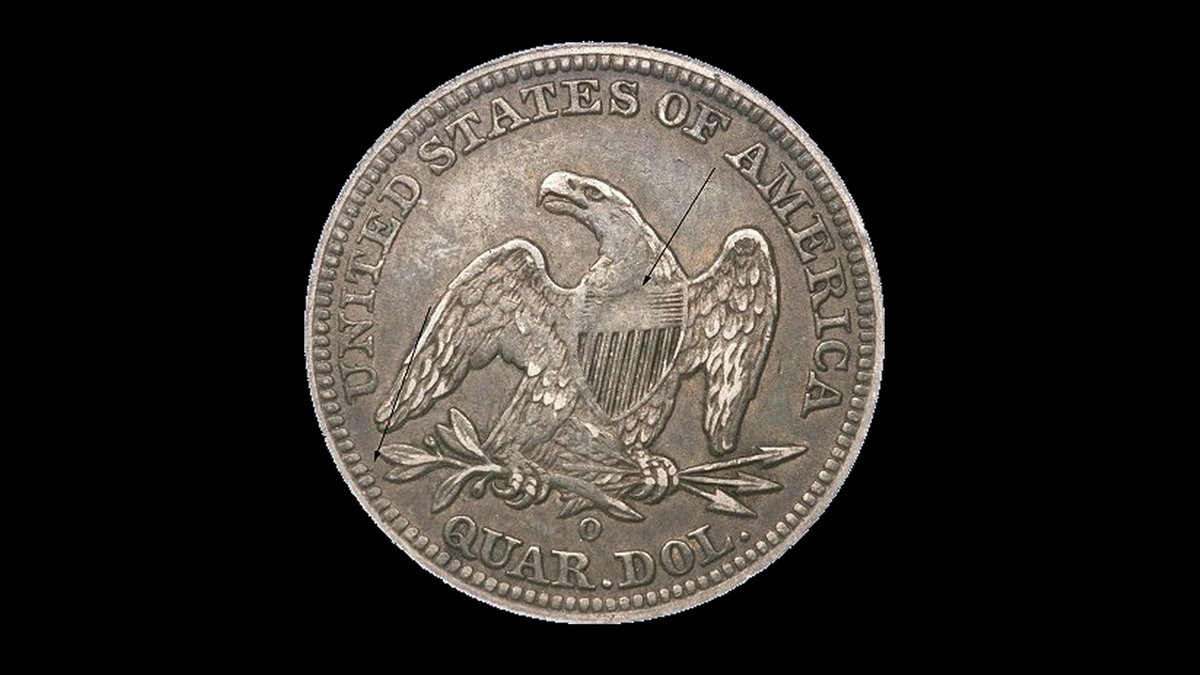
An 1842-O Small Date quarter with a depressed shield area sold for $74,750 in August 2006. The 1842 Liberty Seated quarter errors below span estimated whole-coin values of $150–$80,000.
Choose the correct date style before comparing a repeated 8 on the Large Date or the recurring reverse depression on affected Small Date coins.
1842 Quarter An extra contour on the Large Date 8: repunched date Error
The reported repunched 8 belongs to the New Orleans Large Date issue. It preserves an earlier date-punch position after the punch was adjusted in the die.
The die then transferred that extra contour to the coins it struck. The normal size difference between Large Date and Small Date designs is a separate feature.
How to Identify
Confirm O below the eagle and compare the date with an ordinary Large Date example. Using only a Small Date reference can make normal numeral shapes appear suspicious.
Inspect both loops of 8 under magnification and changing light. Look for a smaller repeated part of the numeral that follows its shape.
A broad flat shelf, a cut, or displaced metal from a dent requires a different explanation. The actual extra outline should agree with an identified example before it is called repunching.
What It’s Worth
Identified Large Date examples have an estimated whole-coin range of $150–$6,000.
A repunched-date 1846 quarter graded PCGS MS65 brought $9,106.25 in December 2014. That result concerns a different year and a well-preserved unworn coin.
No exact 1842-O repunched-8 sale was supplied. A worn coin with a small repeated outline should not inherit the 1846 example’s price.
1842 Quarter A sunken patch in the Small Date shield: die damage Error
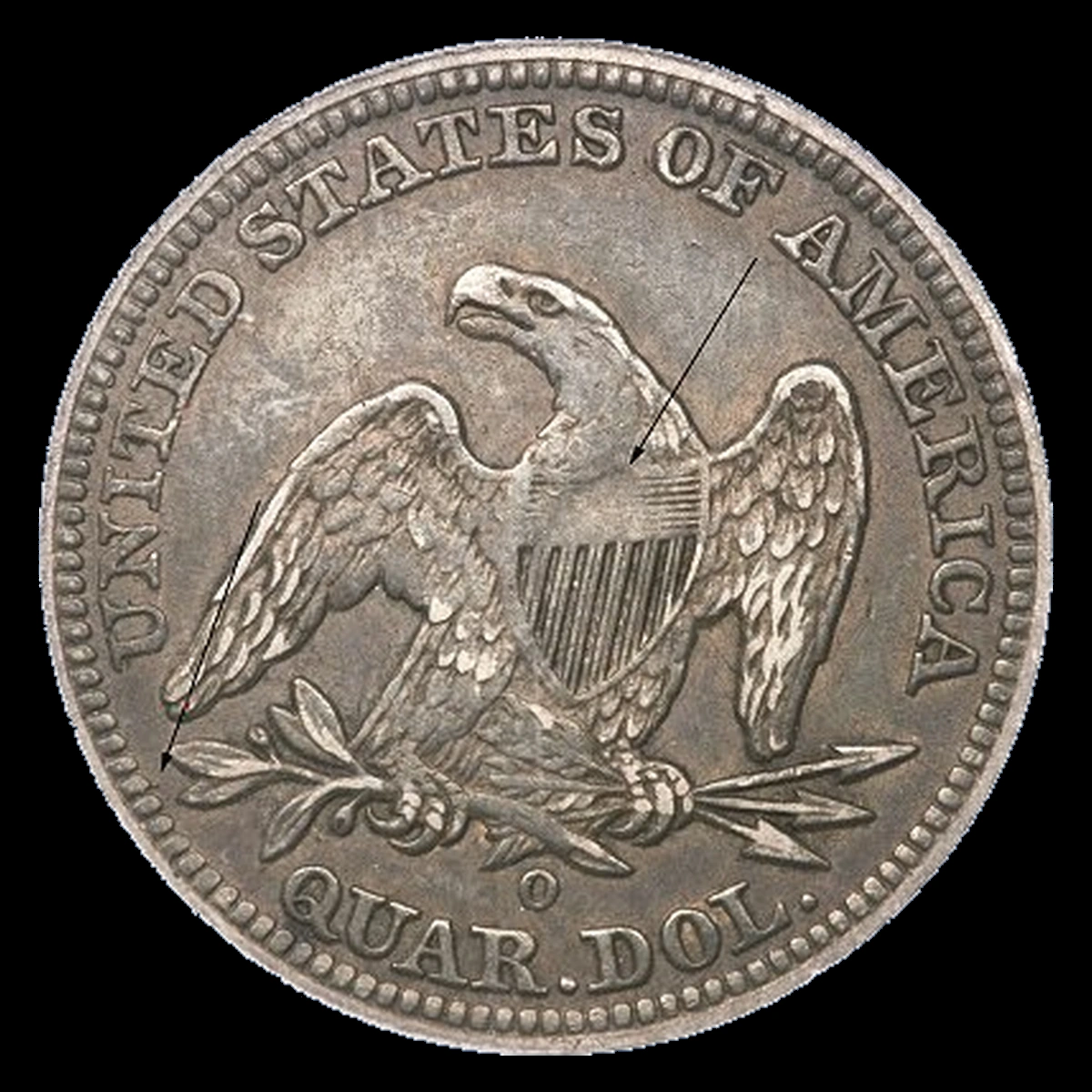
Some 1842-O Small Date quarters have a depressed area across part of the eagle’s shield and nearby neck. Detail within the patch is reduced.
The recurring appearance came from a problem with the reverse die. Although many die defects leave raised metal, this feature is sunken and should be described that way.
Examples struck before the tool developed the problem lack the patch. Its absence does not by itself exclude the Small Date issue.
How to Identify
Establish the date style and New Orleans mint before interpreting the depression. The Small Date comparison shows a shorter, straighter flag at the top of 1.
Examine the upper-left shield and nearby neck under side light. Compare the patch boundary and its effect on shield lines with a photographed affected Small Date example.
A gouge may leave sharp cuts or displaced metal instead of the recurring boundary. Ordinary weakness can soften the shield without producing this same patch.
Keep the full date and eagle visible in photographs. A random dent on a Large Date quarter is not the documented Small Date feature.
What It’s Worth
Affected Small Date quarters have an estimated whole-coin range of $1,500–$80,000.
The NGC MS63 specimen sold for $74,750 on August 14, 2006. A different PCGS VF30 with the depression brought $3,407.50 in March 2013.
The rare Small Date issue and the large difference in preservation account for much of that spread. The shield depression is not a separate five-figure addition to an ordinary Large Date coin.
Conclusion
On an 1842-O, date style controls the comparison: inspect the Large Date 8 for repeated contours or the affected Small Date reverse for its sunken shield patch. Neither a large numeral nor a random dent establishes an error.
The two Small Date sales show how much condition changes the whole-coin price. Keep the exceptional unworn result separate from the worn example and from the different-year repunched-date comparison.