Rare 1868 Quarter Errors (List & Pictures)
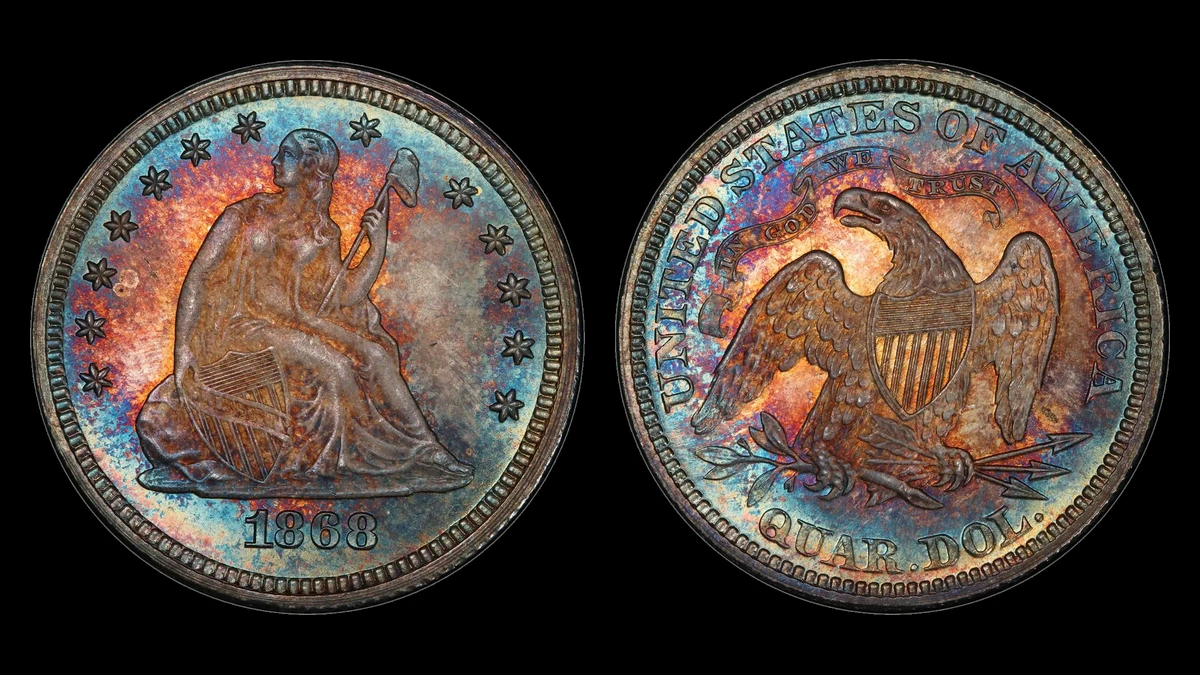
For an 1868 quarter, a few small details can identify the tools that made the coin. The 1868 quarter errors discussed here include star-area cracks, a repeated date, a reported unusual die pairing, and an off-center possibility that still needs a confirmed year-specific specimen.
Estimated whole-coin values span $150–$20,000. A documented comparison reached $2,160 for an off-center 1876 quarter in December 2022; begin with the stars and date, then inspect the reverse before deciding which description fits.
1. 1868 Quarter Raised Lines below the Outer Stars: Die Cracks Error
The lowest star on each side of Liberty provides a landmark for the reported 1868-S cracks. Fine raised lines below stars one and thirteen appear on later strikes from the known San Francisco die pair.
These lines record deterioration of a stamping tool. Silver pressed into cracks in the die formed raised traces, rather than a fracture through the finished quarter.
How to Identify
Confirm the S beneath the eagle and retain that view with the date photograph. Then illuminate the spaces below the two outer stars from the side to examine the relief of each line.
A ridge that matches an identified later die state supports the attribution. A cut with pushed-up edges is different, even when it happens to pass near the same star.
Earlier strikes from the tools may lack these cracks. Their absence does not make an otherwise genuine 1868-S suspect, and their presence does not establish a large rim-connected break.
What It’s Worth
$150–$3,500 is the supplied whole-coin estimate for circulated 1868-S quarters showing the cracks. The scarce issue and its condition account for much of that value.
A fine line can interest someone tracking die deterioration without adding a substantial separate premium. Original surfaces and readable detail matter more than enlarging a minor crack into a dramatic error claim.
2. 1868 Quarter A Remnant above the First Numeral: Repunched Date Error
The Philadelphia front die prepared for Proofs has an extra impression above 1 and recut detail in the upper loop of the final 8. A raised lump attached to B in LIBERTY supplies a second identifying area.
Proofs are specially prepared collector coins, but their dates were still entered into the tool by hand. An adjusted or repeated punch could leave these additional strokes in the die.
How to Identify
Inspect the entire date before taking close-ups of the first and last numerals. The remnant above 1 and the shape inside the final 8 should agree with photographs of the identified Proof front.
Move upward to LIBERTY on the shield and examine the lump joined to B. This separate marker helps distinguish a matching die from dirt or a scratch that merely resembles extra detail in the date.
Keep the reverse in the examination. The same front is reported in an unusual pairing, so a correct date and B match establishes only which front tool was used.
What It’s Worth
$600–$8,000 is estimated for ordinary Proof examples with these date details. Preservation, original reflective areas, and freedom from surface disturbance shape the range.
The recut numerals identify the tool and need not command a large added premium. An unusually paired reverse must be verified separately before considering the specialist estimate in the next section.
3. 1868 Quarter Different Tool Markers on Each Face: Reported Proof Mule Error
The unusual pairing uses the Proof front described above with a reverse associated with circulation strikes. Researcher Greg Johnson reported and illustrated it as an 1868 Proof mule.
Here, “mule” describes the reported combination of those two different tools. The reverse’s recut denomination letters and shield lines are essential evidence, rather than a minor addition to a date-only identification.
How to Identify
On the reverse, examine Q and OL in the abbreviated denomination QUAR DOL. Look for the recut outlines and compare the arrangement of fine lines between the shield’s vertical bars with Johnson’s illustrated circulation-strike reverse.
The arrangement matters more than the mere presence of lines. Random scratches on a finished quarter do not demonstrate use of that particular die.
On the front, confirm the repeated 1, recut upper loop of the last 8, and attached B lump. The date also slopes slightly upward from left to right.
Both sets of markers must occur on the same coin. A reflective surface, or a match on only one face, cannot substitute for that complete comparison.
A Seated-quarter specialist should assess the paired dies and the finished coin together. The origin of one tool does not, by itself, settle how the whole piece should be graded.
What It’s Worth
$3,000–$20,000 is the supplied specialist estimate for a confirmed example of this pairing. No documented auction result for Johnson’s coin accompanies that estimate.
Clear markers on both sides and persuasive attribution are necessary before using the range. The date feature already belongs to the paired coin, so its separate Proof estimate should not be added again.
4. 1868 Quarter Untouched Metal beside Missing Design: Reported Off-Center Strike Error
An off-center possibility is included in the year material, but no confirmed 1868 specimen is established there. A candidate would need a readable date and evidence that the design missed part of an intact blank.
When a blank sits too far to one side of the dies, part remains unstruck and some intended design falls outside the metal. This produces a different physical explanation from silver cut away after the coin was made.
How to Identify
Photograph the entire outline and both faces before concentrating on the empty crescent. The two designs should fit the same displaced blank, rather than one slightly shifted die opposite a centered face.
Examine the bare area for original blank texture and the adjoining design for natural termination at the edge. Abrasive tracks or remnants of flattened lettering would instead suggest alteration.
A normal 1868 quarter weighs 6.22 grams, providing a reference for an unholdered candidate. Wear and damage can lower weight, so the measurement supports an examination rather than proving the striking error alone.
Use surviving digits to establish the year. If the mintmark area is missing, leave the mint unresolved rather than assigning one from an advertisement.
What It’s Worth
$2,000–$10,000 is a conditional estimate for a confirmed 1868 off-center quarter with a readable date. No supplied record establishes an actual mint, grade, displacement direction, or sale for such a coin.
A 30% off-center 1876 quarter brought $2,160 in December 2022. Its NGC Details XF description notes cleaning, making it a different-year example with a specific surface problem.
Conclusion
A raised star-area line and a repeated numeral can identify a tool or its later condition without explaining the entire coin. The reported Proof mule demands a matching reverse as well as the familiar front markers.
For off-center candidates, establish the surviving date and original blank before discussing price. The 1876 transaction supplies context, while the 1868 range remains conditional until a year-specific specimen is confirmed.