Rare 1833 Quarter Errors (List & Pictures)
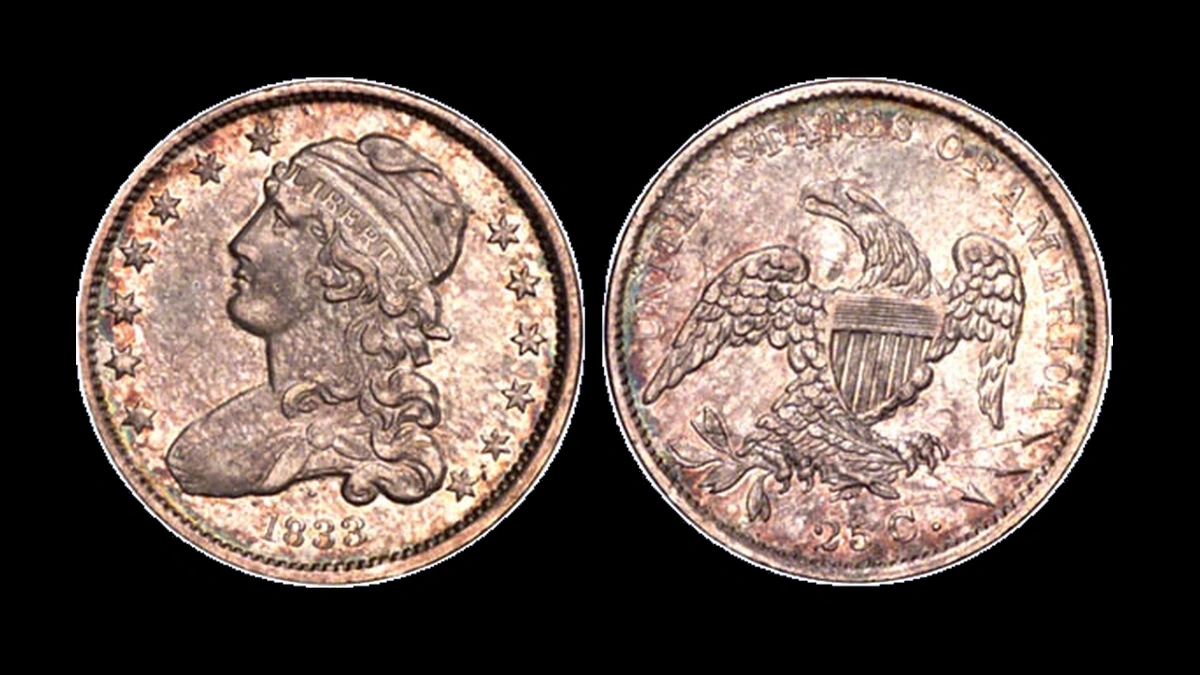
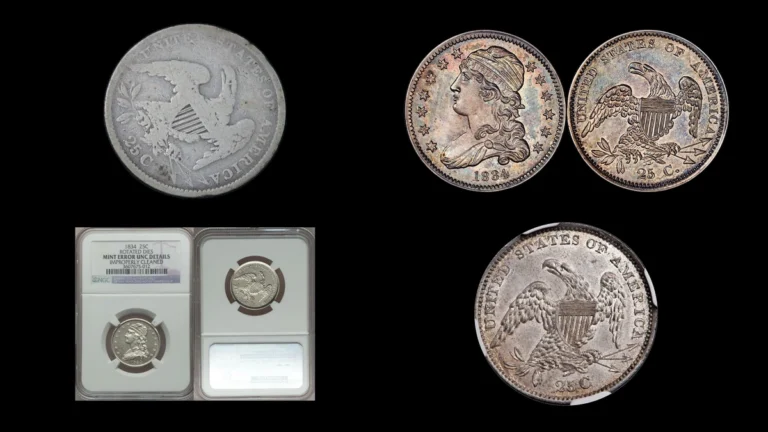
An 1834 quarter sharing the unusual reverse lettering discussed here sold for $11,400 in March 2019. That is a different-year comparison, while the 1833 quarter errors and varieties below have estimated whole-coin values of $75–$12,000.
Start with OF above the eagle, then inspect surface roughness and faint transferred outlines without assuming they have the same cause.
| Visible feature | Category | Whole-coin range |
|---|---|---|
| Unusual upper-right edge of O | B-2 O/F lettering variety | $100–$12,000 |
| Small raised rough patches | B-1 die rust or deterioration | $75–$2,000 |
| Faint shapes from the opposite face | B-1 die clash | $100–$2,500 |
1. 1833 Quarter Unusual lettering above the eagle: O/F variety Error
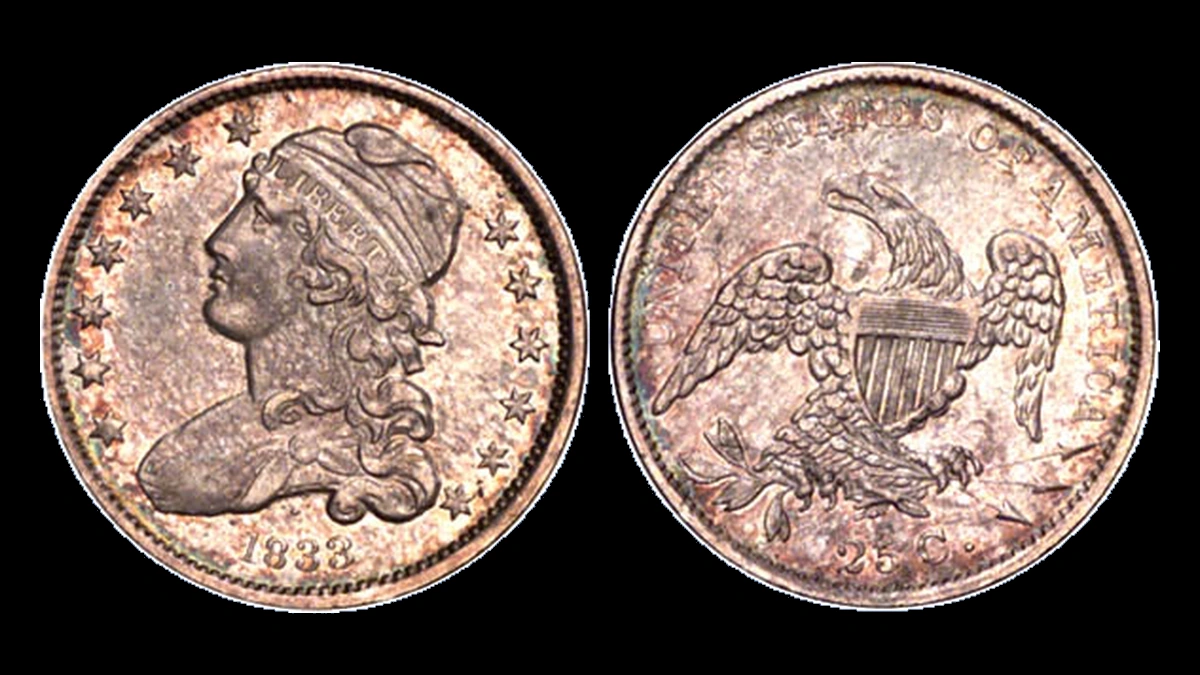
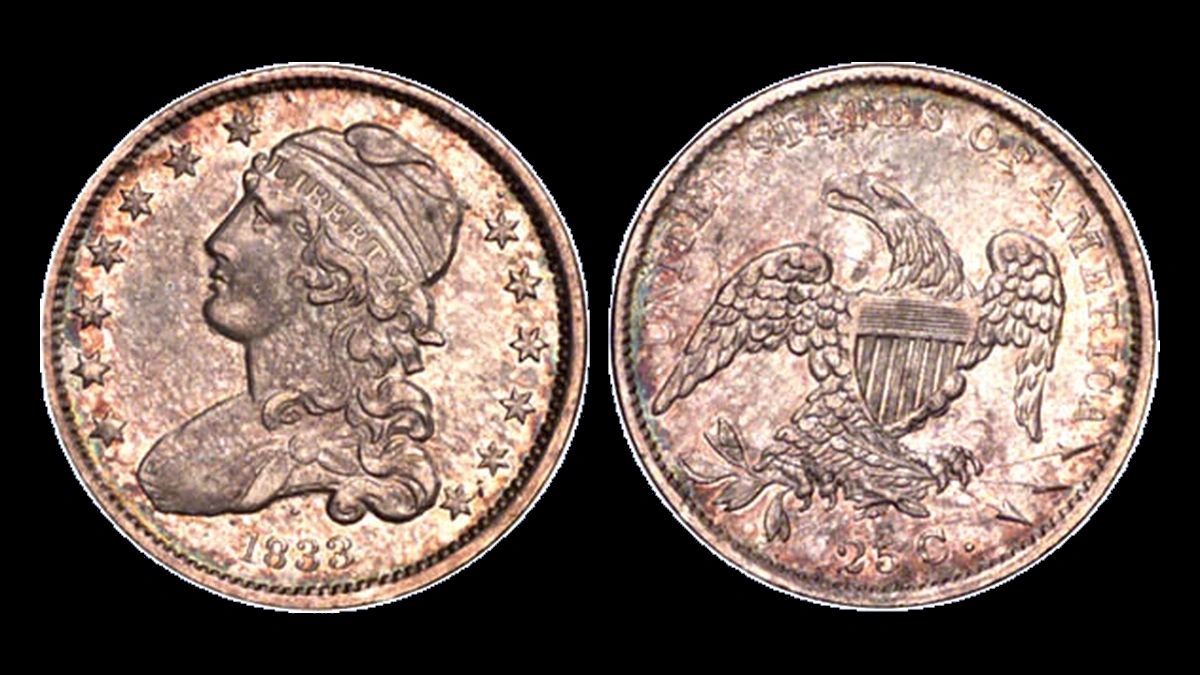
OF is a short word with useful attribution clues on the 1833 B-2 quarter. Inspect the upper-right edge of O, then continue to F and the nearby A in AMERICA.
B-2 names a particular pairing of dies, the tools that stamp the front and back designs. The familiar O/F label describes an unusual letter feature, but does not promise a complete F plainly visible inside O.
A collector study treats the feature as an engraving anomaly rather than firmly identifying a doubled die. Keeping that distinction avoids assigning a process the evidence has not established.
How to Identify
Use magnification with enough surrounding lettering visible to establish the location. A tiny isolated crop of O makes it harder to judge whether the shapes belong to the correct variety.
Compare all the relevant letter edges with a recognized 1833 B-2 example. The collector study of Capped Bust quarter varieties provides context for the unusual lettering and its interpretation.
Keep ordinary shield construction separate from this attribution. Differences in shield-line counts do not by themselves prove another minting error.
What It’s Worth
Estimated whole-coin values span $100–$12,000, from worn examples to attractive unworn coins. The state of preservation matters greatly because the letter features are small.
An 1834 MS65 example sold for $11,400 in March 2019. Its reverse used the same die previously paired with the 1833 B-2 obverse.
That result is for a different-year, sharply preserved whole coin. It is neither an 1833 transaction nor a separate premium for the unusual O.
2. 1833 Quarter Raised roughness on the surface: damaged or rusted die Error
Small bumps on a silver coin can be copied from pits in the steel die. Rust removes metal from the tool, and silver entering those pits during striking leaves raised spots on the coin.
Small pieces breaking away from the die can also produce rough patches. Such deterioration is reported on later examples of the 1833 B-1 die pairing.
How to Identify
Move the light across the suspect area to distinguish raised bumps from pits sunk into the coin. Corrosion that attacks a finished quarter can create roughness with a different origin.
The supplied account does not locate a specific patch on the design. Match its position and shape to a documented B-1 example instead of identifying every rough 1833 quarter as die-rusted.
Nearby original texture and a repeatable pattern on another coin help the comparison. Scraping the patch would remove useful evidence and damage the surface.
What It’s Worth
A broad whole-coin range is $75–$2,000 for worn through lightly worn examples with convincing raised die roughness. Heavy wear can blur both the feature and the design.
A supplied comparison is an 1837 quarter with a clash and crack that sold for $1,380 in January 2006. It illustrates an early quarter’s combined condition and features, not a sale of 1833 die rust alone.
3. 1833 Quarter Faint outlines outside the normal design: die clash Error
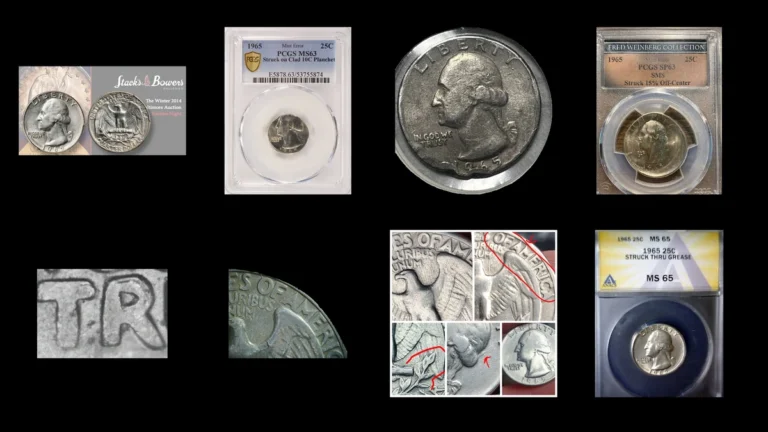
A collector record reports visible clash marks on an 1833 B-1 quarter. These begin when the dies touch without a blank between them and acquire traces of each other’s designs.
Subsequent coins carry those extra shapes alongside the intended artwork. A clash can coexist with die roughness, although the two features form differently.
How to Identify
Photograph both faces at the same scale and compare a suspicious outline with the opposite design. Several corresponding points are more persuasive than a single line that could be a scratch.
No particular feather, letter, or portrait curl is named in the supplied 1833 report. Establish the actual transferred shape from a matching reference before describing it more precisely.
Under changing light, a cut may show displaced metal along its sides. Those raised edges do not make the cut a clash mark.
What It’s Worth
Recognizable clashes on worn through lightly worn 1833 quarters have an estimated whole-coin range of $100–$2,500.
The $1,380 January 2006 comparison above concerns the same 1837 coin with both a clash and crack. It supplies no direct 1833 sale and should not be added to a separate roughness estimate.
Conclusion
On an 1833 quarter, begin with where the feature sits and whether it rises above or cuts into the surface. That separates useful lettering and die clues from a vague description of “rough” or “doubled.”
Retain the B-1 or B-2 attribution when comparing examples, and keep different-year auction results clearly labeled. The quoted ranges include the value of the entire early silver quarter, with condition playing a large role.