Rare 1923 Quarter Errors (List & Pictures)
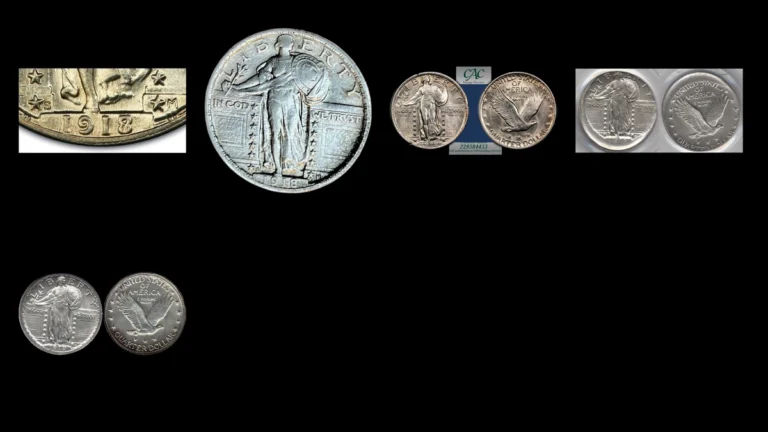
Liberty’s knee is a useful starting point for 1923 quarter errors: an extra letter and a raised teardrop nearby come from different problems. Estimated whole-coin values span $25–$20,000.
The supplied sale comparisons include a different-year 1945 doubled-die quarter at $552 in March 2018. The far higher estimate for a 1923-S off-center coin reflects a different error and a scarce issue; use the visible feature and mintmark together.
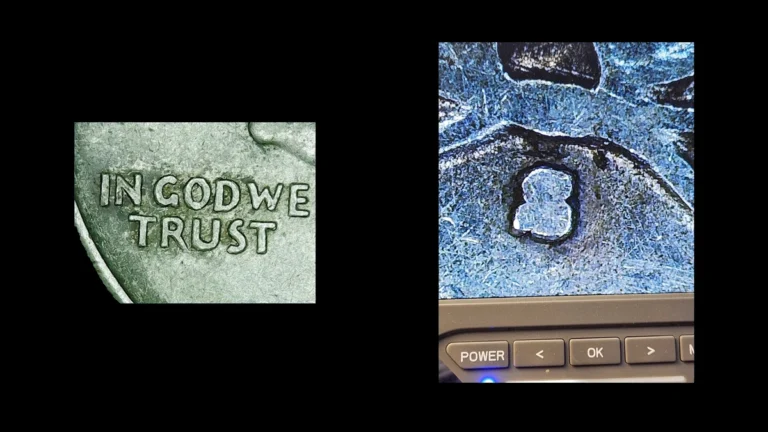
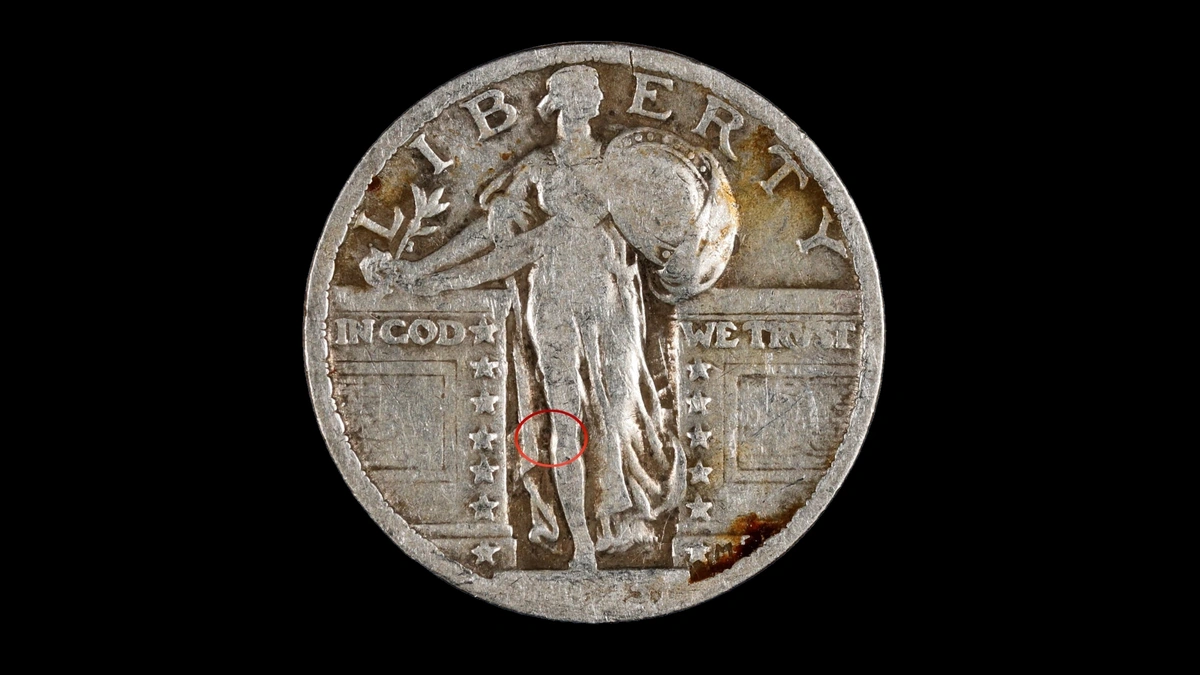
1. 1923 Quarter An Extra E by the Knee: Die Clash Error
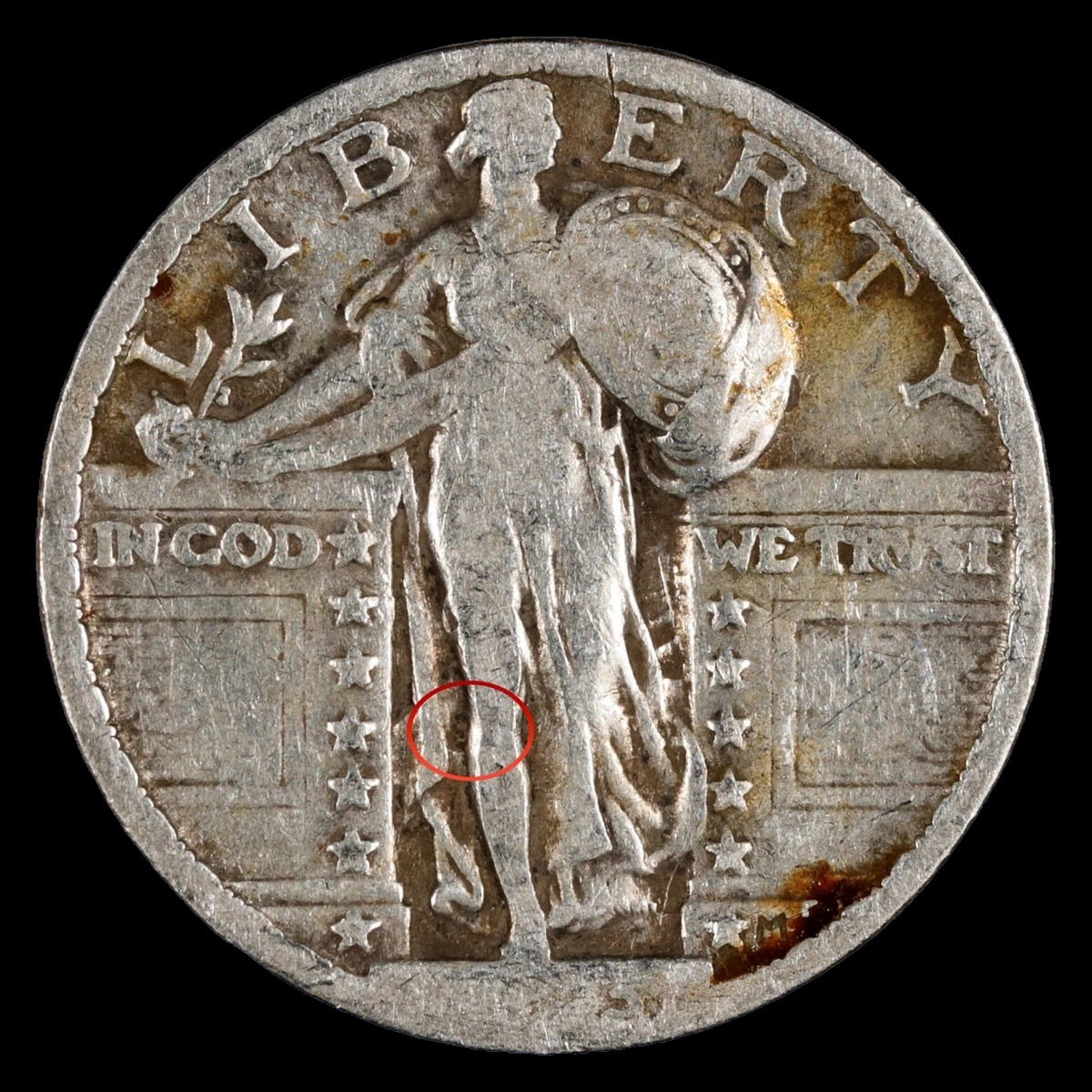
A reported Philadelphia quarter shows an E-like shape near Liberty’s knee. It resembles a letter from E PLURIBUS UNUM on the back.
The stamping tools, called dies, can touch when no blank is between them. Marks picked up during that contact can appear on later coins.
How to Identify
Locate the E on the back, then compare it with the extra shape on the front. Both the shape and position must make sense for the two tools meeting.
Keep the clothing folds visible in close photographs. A fold or random scratch can suggest a letter when viewed by itself.
What It’s Worth
$40–$500 is the estimated range for a confirmed Philadelphia knee clash. A clear letter on an attractive coin generally has more appeal than a faint trace.
The range covers the whole quarter and assumes the mark fits the opposite design.
2. 1923 Quarter A Raised Teardrop or Line: Die Breaks and Cracks Error
The feature nicknamed Big Brother Teardrop is a raised blob beside Liberty’s right knee, on your left when viewing the coin. It comes from missing metal in the tool, rather than a transferred letter.
Other reports describe smaller cracks or chips near the shield or date. Metal entering a crack in the tool produces a raised line on the coin.
How to Identify
Use light from opposite sides to check that the teardrop rises above the surface. Compare its outline and position with an identified example.
An E-shaped trace belongs to the clash comparison. The teardrop is an inside break and does not need to reach the rim.
Follow smaller lines along their full path. Scratches cut downward, though they may push a ridge up along one side.
What It’s Worth
$25–$200 covers estimated values for modest Philadelphia cracks; a clear teardrop can fall around $75–$750. Wear and the visibility of the raised metal affect the comparison.
Worn San Francisco coins with small original cracks may fall around $200–$1,000, including the value of the scarcer issue. The crack alone does not account for that entire amount.
3. 1923 Quarter Repeated Edges in the Front Design: Doubled Die Error
A doubled die has repeated details built into the tool. It can leave two outlines in a letter, number, or star with just one strike.
Front doubling is reported for 1923 quarters. The date, LIBERTY, and stars are places to inspect, not a proven set of markers shared by every example.
How to Identify
Compare with a normal coin that has similar wear. Flattened stars or a worn date may look thick without being doubled.
Look for rounded separation or small notches at corners under magnification. Low, flat shelves are more typical of movement during the strike.
Keep the mintmark area in the wider photograph and match any variety to the same mint.
What It’s Worth
$50–$750 is the estimated range for a confirmed Philadelphia doubled front. Comparable worn San Francisco examples are estimated at $250–$1,500, including their scarce-issue value.
A 1945 Philadelphia FS-101 quarter graded PCGS MS65 sold for $552 in March 2018. That different-date silver quarter provides context, not a recorded sale for a 1923 variety.
4. 1923 Quarter A Flake Lifts from the Silver: Lamination Error
Peeling begins where a weak area inside the metal separates. A flap may remain attached, or it may leave a shallow opening.
These quarters are made from one silver alloy, unlike the bonded layers of modern clad coins. The reported peeling has no fixed location that every 1923 coin must share.
How to Identify
Direct light across the attachment and look for design continuing onto a thin flake. Leave any loose metal in place.
A scrape may push metal into a ridge, while corrosion usually makes pits. Neither appearance alone establishes a lamination.
There is no copper center beneath an outer sheet on this coin. A copper-colored patch therefore needs another explanation.
What It’s Worth
$25–$300 is the estimate for modest genuine peeling on a Philadelphia coin. Comparable worn San Francisco examples may fall around $200–$1,000, including the coin’s underlying value.
For a different-date comparison, a 1932-S quarter graded NGC AU58 with front peeling sold for $228 in September 2023. It does not establish a fixed premium for the flake alone.
5. 1923 Quarter A Hollow Interrupts the Front: Struck Through Error
Material between the blank and the tool can block part of the design. The resulting depression is called a struck-through error.
A documented 1923-S example has this effect on the front. Its NGC AU Details description means light wear with a condition problem.
How to Identify
Follow normal detail toward the depression. Letters or design may fade where the obstruction prevented a full strike.
A later gouge cuts through a finished image instead. Check the error area separately from any cleaning or scratches elsewhere.
The cataloged example does not identify the blocking material. A smooth hollow alone cannot establish cloth, wire, or grease.
What It’s Worth
$250–$2,000 is the estimated range for comparable genuine 1923-S struck-through quarters. The size of the interruption and condition of the rest of the coin both matter.
This whole-coin estimate already includes the San Francisco issue’s collectible value.
6. 1923 Quarter Liberty’s Head Misses the Metal: Off-Center Strike Error
The known 1923-S example has a sharp shield but no head because the design shifted beyond the blank. Its stretched date still identifies the year.
PCGS described it as 25% off center and graded it AU58, meaning very slight wear. The shift points toward roughly 10 o’clock.
How to Identify
Read the date and look for the S near Liberty’s feet on your left. Then locate the blank crescent opposite the displaced design.
The position should explain the missing head and surviving shield together. Ordinary wear at the top does not create a matching unstruck crescent.
Check the back as well. If it is centered while only the front sits sideways, a different press-alignment problem may be involved.
What It’s Worth
$5,000–$20,000 is the estimated range for a comparable lightly worn 1923-S quarter with this dramatic shift. Readable identity and the scarce issue contribute heavily to the estimate.
A 1965 quarter with a 25% shift, graded NGC MS65, sold for $180 in December 2025. That much later common issue is not a direct price substitute.
Conclusion
Near Liberty’s knee, decide whether you see a letter-shaped trace or a plain raised blob. On the rest of the coin, separate extra outlines, lifting metal, and areas where the strike missed or was blocked.
Read the mintmark before comparing prices. A San Francisco quarter’s value may already be substantial, so these ranges describe whole coins rather than amounts to add to a normal coin’s price.