Rare 1837 Quarter Errors (List & Pictures)
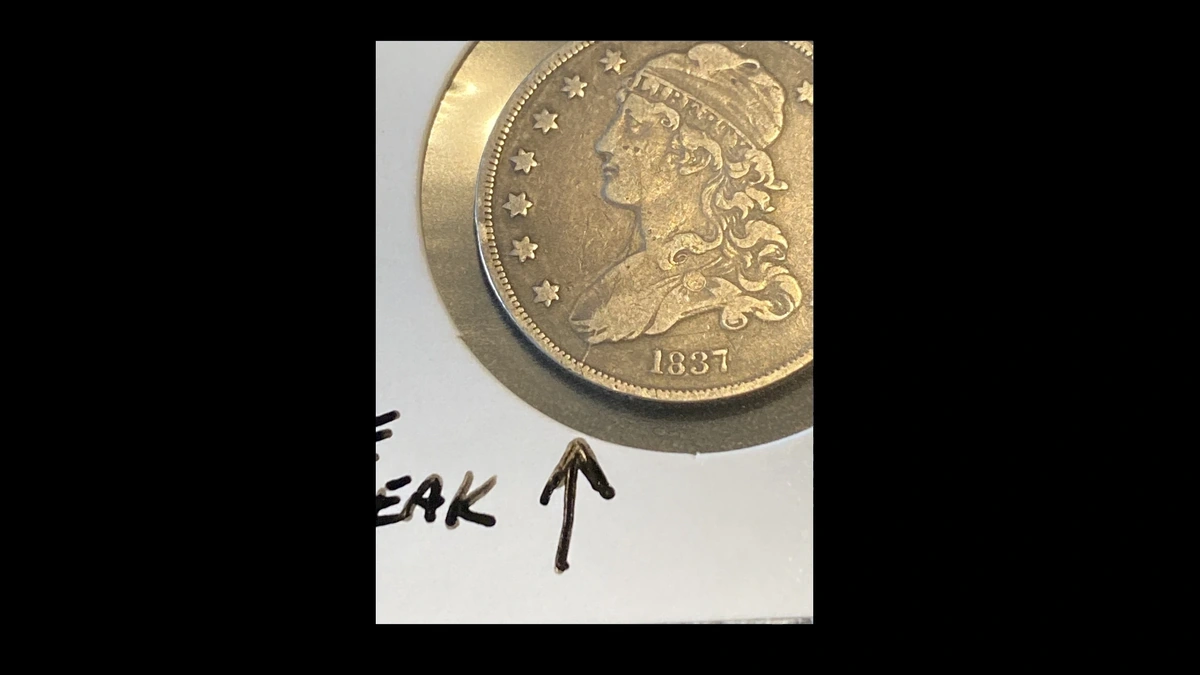
A small mark below Liberty’s ear and a ridge crossing her portrait require different explanations. The documented 1837 quarter errors here concern traces of die contact and cracks that developed in the stamping tools.
Whole-coin estimates range from $75–$3,000. An NGC AU58 example combining an ear-area clash and reverse crack sold for $1,380 in January 2006; use the mark’s location and relief to identify it before comparing the entire coin’s condition and price.
1837 Quarter Extra Traces below the Ear: Die Clash Error
The area immediately beneath Liberty’s ear holds the reported clash evidence on the cataloged example. Its AU58 grade indicates slight wear, leaving much of the original design available for examination.
A clash occurs when the two dies meet without a blank between them. That contact can transfer portions of one design into the other tool, which then reproduces unwanted traces on later coins.
How to Identify
Include the ear and neighboring hair in a photograph so that the mark’s position remains clear. Compare the area with a normal portrait before deciding which strokes are additional.
The catalog identifies the location but does not name a particular eagle feature as the source. An exact match or specialist assessment is needed before attaching a more specific design explanation.
Use angled light to distinguish the trace from a later cut with displaced edges. Another coin rubbing against Liberty does not create the die-contact process described here.
What It’s Worth
$75–$2,500 is estimated for worn through lightly worn examples with genuine recognizable clash traces. The NGC AU58 coin realized $1,380 in January 2006.
That transaction covers its variety, preservation, clash, and reverse crack together. It does not establish a $1,380 premium for a faint under-ear mark on any other quarter.
1837 Quarter A Ridge Crossing the Portrait: Die Cracks Error
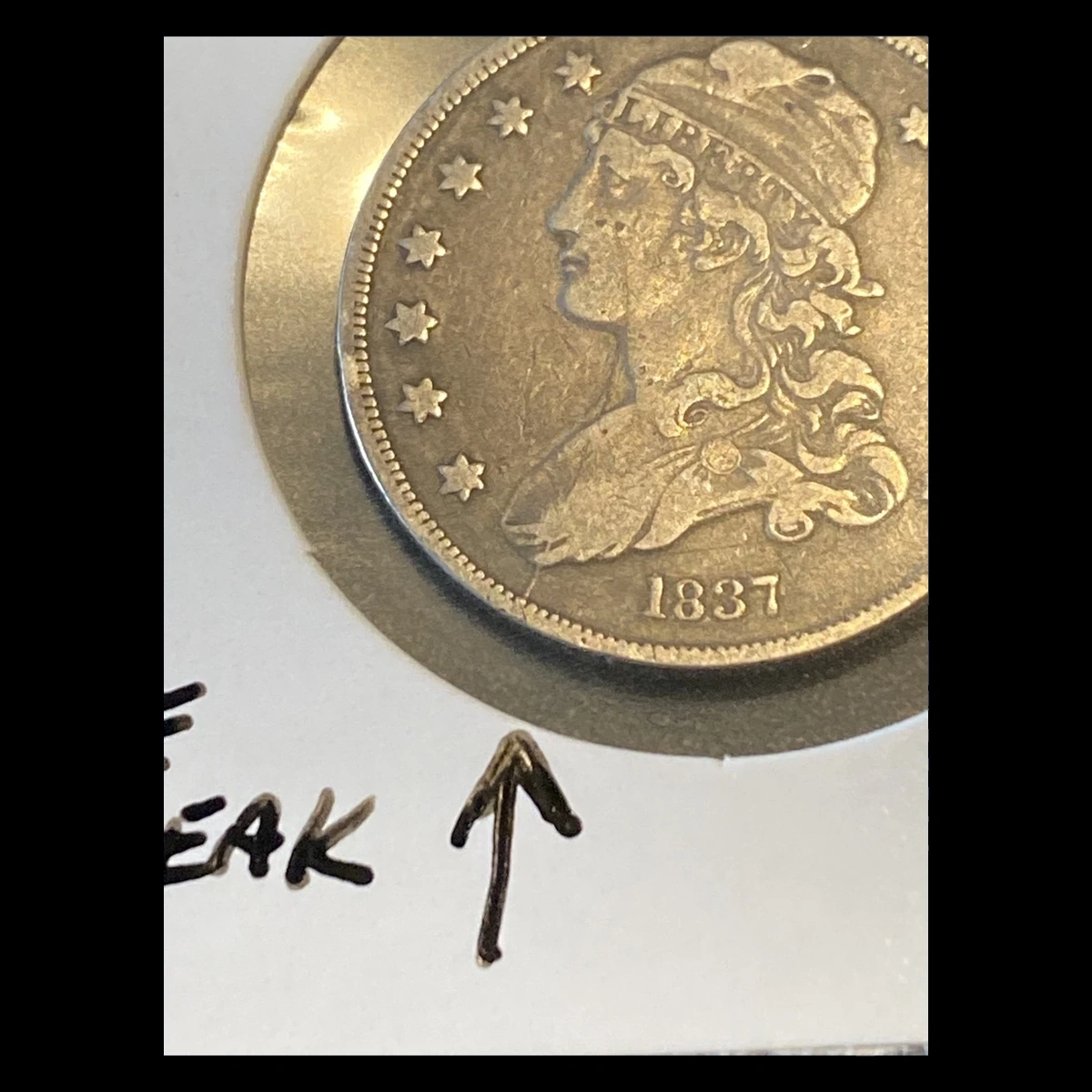
The described long front crack begins near the lower-left rim at 7 o’clock. It crosses the bust and throat, reaches E above the portrait, and continues toward the rim above the cap.
Other reported cracks affect reverse lettering and the nearby border. Metal entering a split in the die creates a raised ridge, whereas a cracked coin blank would have a fissure within its own metal.
How to Identify
Trace the front line through each fixed landmark rather than judging its total length alone. Its course from the lower-left border through the bust, throat, and E gives several points to compare with an attributed example.
Examine the line’s center under side lighting to establish whether it stands above the surface. A scratch can have raised lips beside a cut, so those edges alone are misleading.
Photograph reverse cracks separately with their surrounding words and border visible. A reverse crack does not establish that the front die had reached the same late stage as the long-crack specimen.
Different stages may show shorter or weaker ridges. Match the coin to the corresponding stage without requiring every earlier piece to carry the longest line.
What It’s Worth
$100–$3,000 is estimated for circulated through lightly worn quarters with clear crack patterns. A PCGS AU58 example sold in September 2017 for $950 plus a $166.25 buyer’s fee, totaling $1,116.25.
The catalog specifically described its long front crack. Sharp detail and attractive surfaces matter alongside the die feature, while cleaning or distracting damage can weaken the comparison.
Conclusion
The under-ear trace asks whether an opposite design touched the die, while the long ridge records a split in the tool itself. Location and relief help separate both from damage acquired during circulation.
Keep the front and reverse observations linked to the same specimen. When a quarter carries both a crack and a clash, its preservation and combined appearance support one whole-coin comparison rather than two added prices.