Rare 1928 Quarter Errors (List & Pictures)
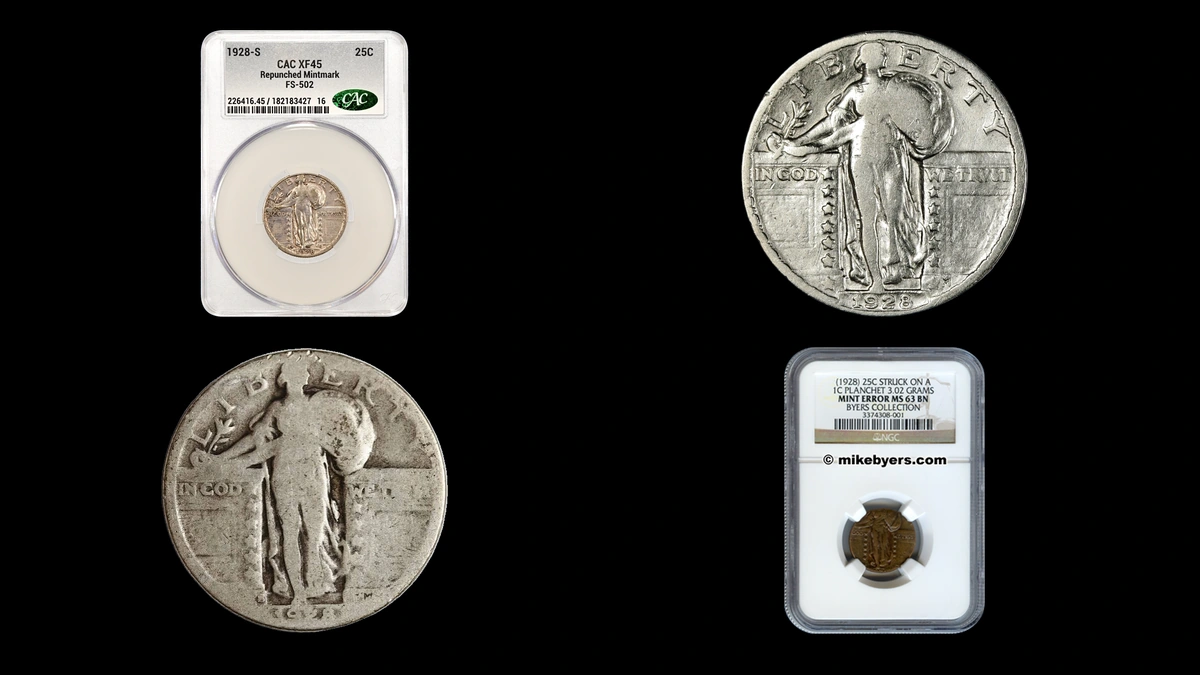
The small mint letter on a Standing Liberty quarter can distinguish several very different claims. Among 1928 quarter errors, a recognized repunched S brought $848.25 at GreatCollections, while the old inverted-S interpretation has changed.
Estimated values span $25–$75,000, with the highest range reserved for an authenticated wrong-planchet rarity whose reported example has unresolved concerns. Start with the mintmark, then compare the reverse, surface marks, and unusual metal.
1. 1928 Quarter An Extra Letter beside S or D: Repunched Mintmark Error
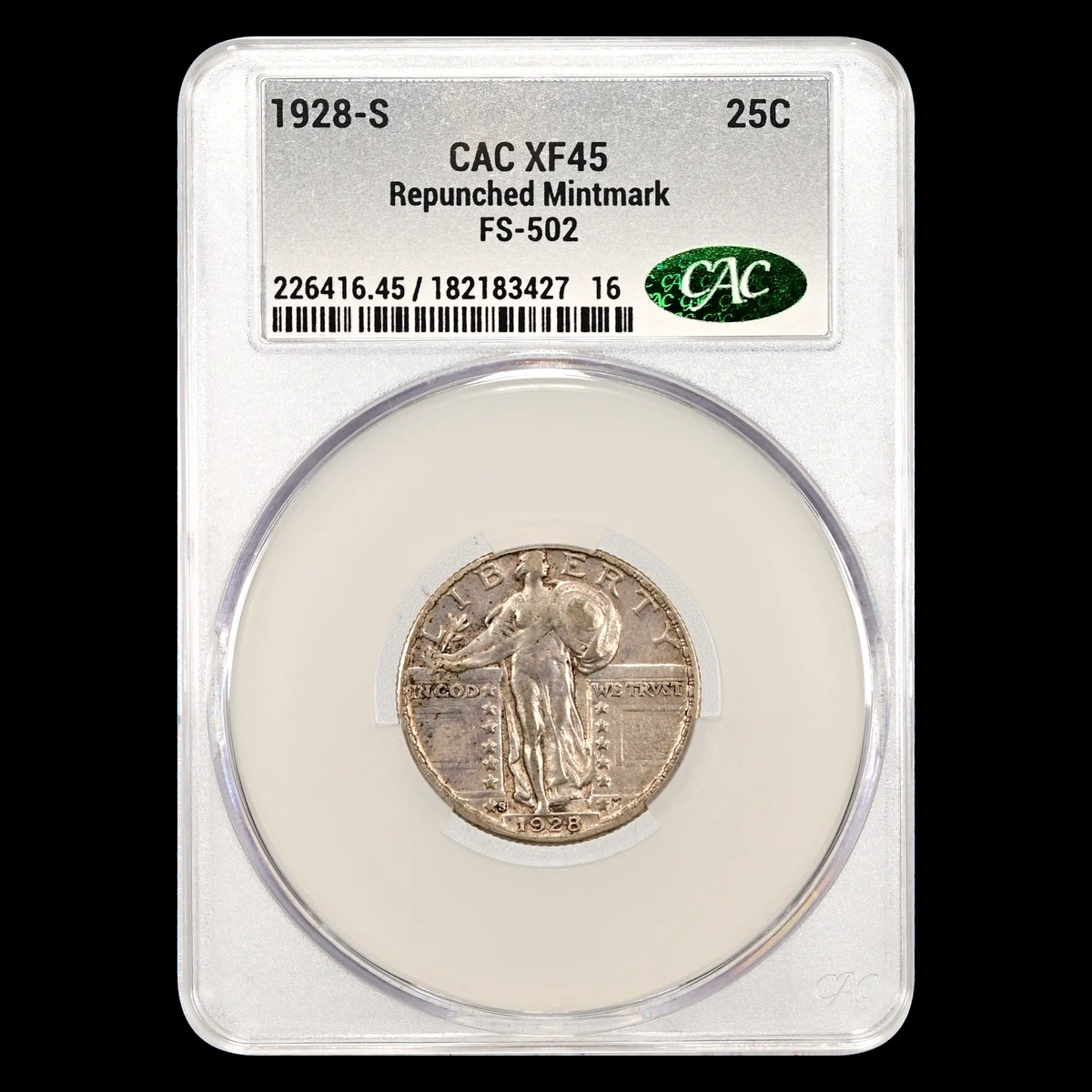
The known San Francisco repunch uses the Large S and shows an earlier impression to its lower right, or southeast. Large S is a normal punch size; the additional outline creates the variety.
Denver repunched mintmarks are also reported but require their own match. Hand-punching a mint letter into a die in more than one position could leave remnants of both impressions.
How to Identify
Find the mintmark on the front, left of Liberty. On the Large S variety, follow raised portions at the lower right that fit another S rather than an isolated lump.
Compare normal Large S and Small S letters before calling size itself unusual. A Denver D/D needs recognizable D remnants without borrowing the S variety’s direction.
What It’s Worth
$60–$2,000 is estimated for identified repunched examples across ordinary grades. GreatCollections records $848.25 for a repunched-S quarter in MS63+.
Lower-grade archive examples brought much less. Exceptional Full Head detail, meaning a sharply formed head, needs its own comparison, and the Denver report does not automatically take the San Francisco price.
2. 1928 Quarter An Older Upside-Down-S Label: Historical Inverted Mintmark Error
Some older holders and listings describe a 1928-S as having an inverted mintmark. The supplied PCGS account explains that it no longer recognizes the variety after the interpretation changed.
This historical name is distinct from the recognized repunched S. Normal variation between large and small S punches must also be considered.
How to Identify
Photograph an old label together with the mintmark, keeping the coin upright. Compare the ends of the S and its upper and lower curves with normal punch shapes at the same magnification.
Wear and shadows can distort those proportions. A repunched-letter claim still needs its own extra raised outline, rather than relying on the inverted-S wording.
What It’s Worth
$40–$500 is an estimated condition-based range for ordinary worn to modestly unworn coins carrying the historical description. It assumes no separate premium for a proven upside-down punch.
Older retail references include a $50 Fine offer and a $125 VG08 offer. They are asking prices from different sellers, not a consistent auction scale.
3. 1928 Quarter Extra Points on the Lower Stars: Doubled Reverse Die Error
The Denver reverse variety is reported with light doubling on the bottom three stars and the final four letters of DOLLAR. The duplicated details were present in the die before it struck the coins.
How to Identify
Confirm the D on the front, then photograph the three lower stars and LLAR together. Their repeated points and corners should match an attributed Denver example as a group.
A similar-looking feature on another mint’s coin needs a separate attribution. Examine relief under changing light to distinguish repeated design from flat mechanical-doubling shelves or star points rounded by wear.
What It’s Worth
$75–$1,500 is an estimate for identified 1928-D doubled reverses across ordinary worn and unworn conditions. Reported MS65 dealer offers around $700–$750 were retail requests rather than confirmed auction payments.
4. 1928 Quarter An E-Like Trace on the Front: Die Clash Error
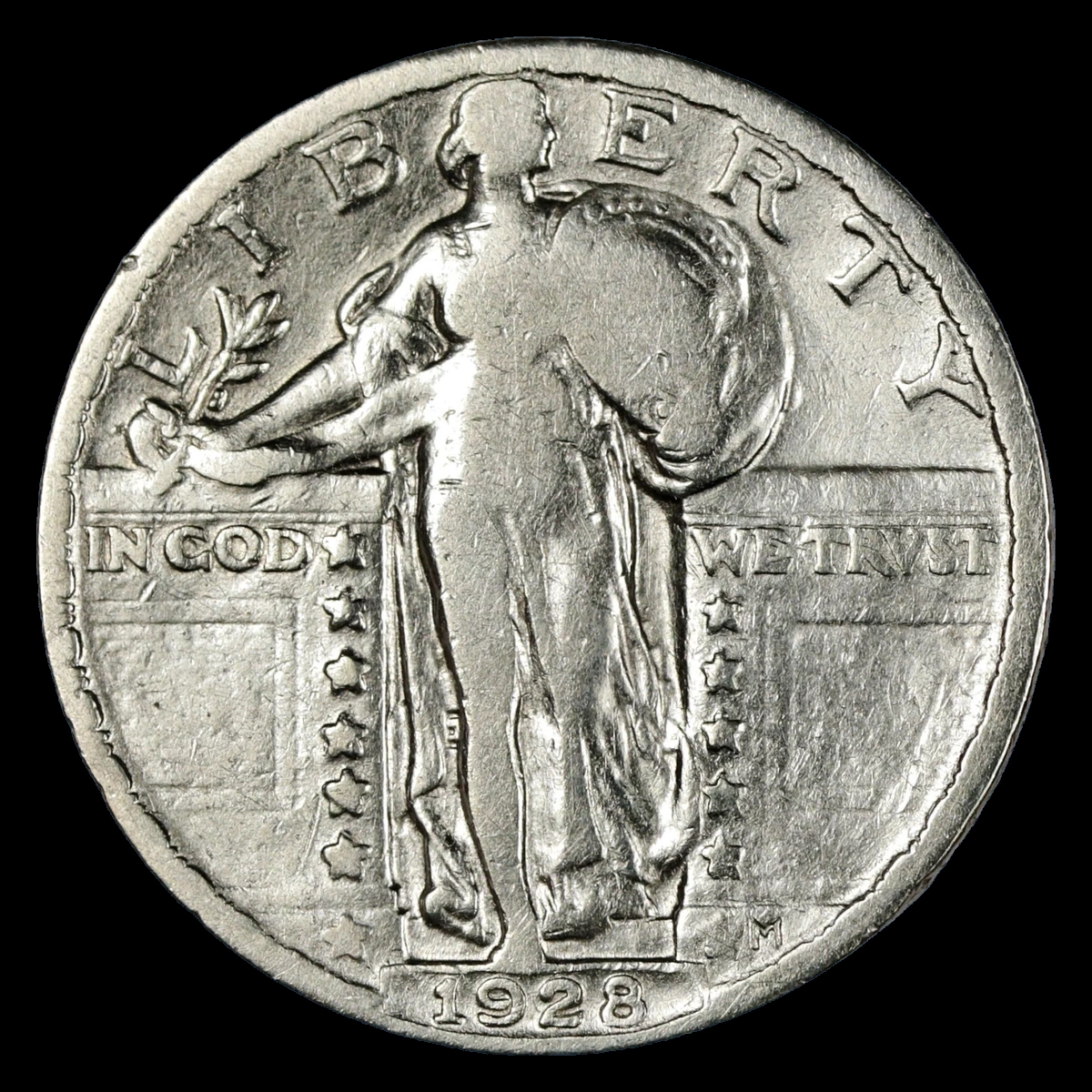
The reported extra E on the front is proposed to come from E PLURIBUS UNUM on the reverse. A clash occurs when the dies touch without a blank between them and transfer traces of their designs.
Later coins can receive those traces along with the normal image. A clashed E therefore differs from another complete strike of the coin.
How to Identify
Locate the source E on the reverse and compare its position with the front under the coin’s normal alignment. Look for neighboring shapes that fit the same opposing design instead of rotating an isolated mark until it resembles a letter.
Inspect for cut grooves or pushed-up metal from damage. Full-face photographs give the extra trace its necessary relationship to Liberty.
What It’s Worth
$50–$300 is estimated for an ordinary circulated to modest-grade quarter with a convincing clash. Exceptional preservation or strong head detail can contribute additional whole-coin value without belonging to the clash itself.
5. 1928 Quarter A Small Raised Drop: Reported Teardrop Die Chip Error
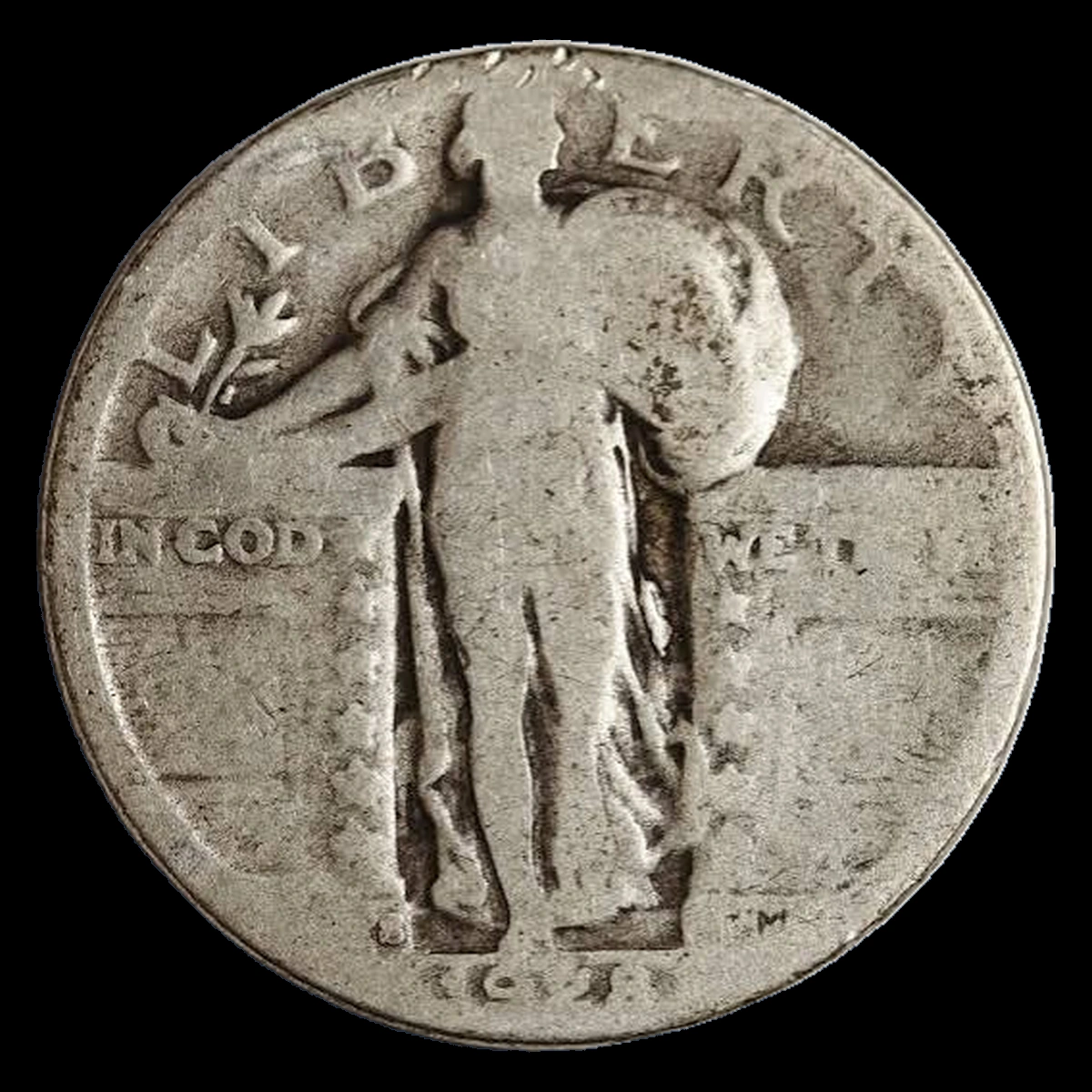
The 1928-S teardrop report describes a small die chip without establishing its exact location. A chip forms when a small piece of die steel breaks away and silver fills that opening during striking.
How to Identify
Establish that the drop-shaped feature is part of the struck metal, inspecting the boundary and surrounding detail. Adhesive, corrosion, or added metal can create a bump with a different surface.
The nickname gives a shape, not a reliable map of where to look. Match an identified example before assigning the name, and distinguish a small internal chip from a broader rim-connected cud.
What It’s Worth
$25–$400 is an estimate across ordinary worn to modestly unworn examples. Published $25 and $39 retail offerings are asking prices, and much of an attractive coin’s value can come from condition rather than a tiny chip.
6. 1928 Quarter Liberty on an Undersized Brown Disk: Reported Cent-Planchet Strike Error
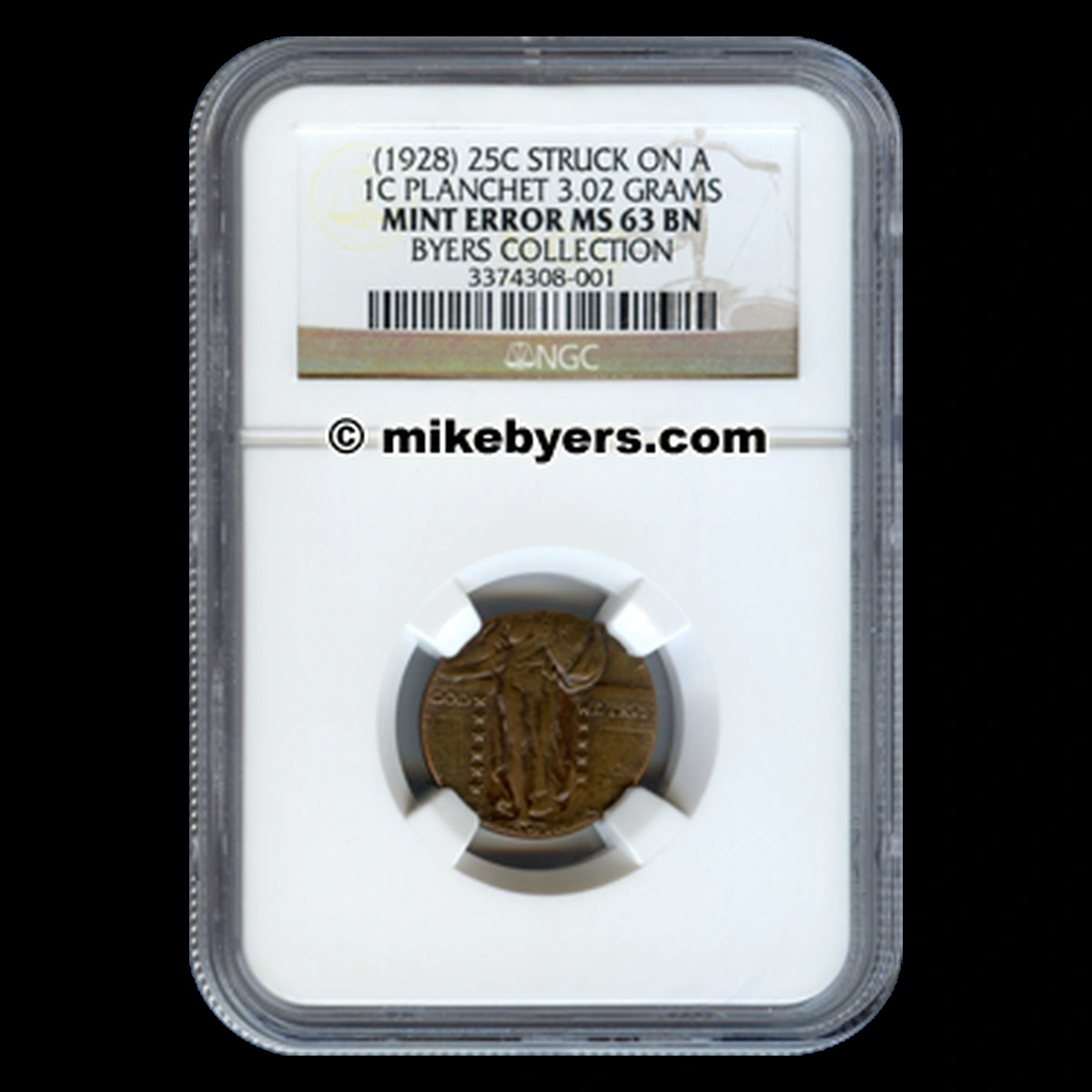
The Byers example was certified NGC MS63 Brown as a quarter on a bronze cent blank and weighs 3.02 grams. Its date is written (1928), indicating an assigned year rather than a fully visible date.
Saul Teichman questioned the same coin, citing raised lines absent from known silver examples and unusual face alignment. The certification and criticism should both remain part of its description rather than being treated as a settled conclusion.
How to Identify
Compare the actual small outline and quarter design cropped by its boundary. A normal silver quarter weighs 6.25 grams, while a period bronze cent blank starts near 3.11 grams; those standards provide context for the recorded 3.02 grams.
Preserve the parenthesized year and do not supply a missing mintmark or complete date from assumption. Plating does not explain a larger design struck on an originally smaller disk.
For this example, use certification photographs and specialist examination of the disputed die features and alignment. Composition testing alone cannot establish that the striking tools were genuine.
What It’s Worth
$15,000–$75,000 is a conditional estimate for an authenticated rarity of this type. The Byers listing marks its specimen sold without disclosing a price.
A different Standing Liberty error, a 1920 quarter on a Peruvian 20-centavo blank, sold for $16,100 in March 2011. That foreign-blank result is not a transaction for the disputed (1928) cent-planchet piece.
Conclusion
Separate what the coin shows from the name attached to it. A normal Large S, a recognized repunched S, and an old inverted-S label make different claims, just as a reported chip still needs its location matched.
The cent-planchet account requires particular care because its date is assigned and its origin has been questioned. Keep those qualifications with the specimen and reserve the highest estimates for securely authenticated examples.