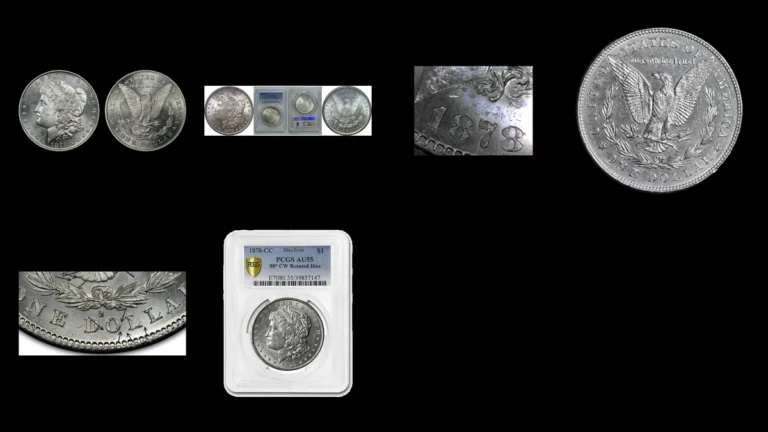
Rare 1923 Dollar Errors (List & Pictures)
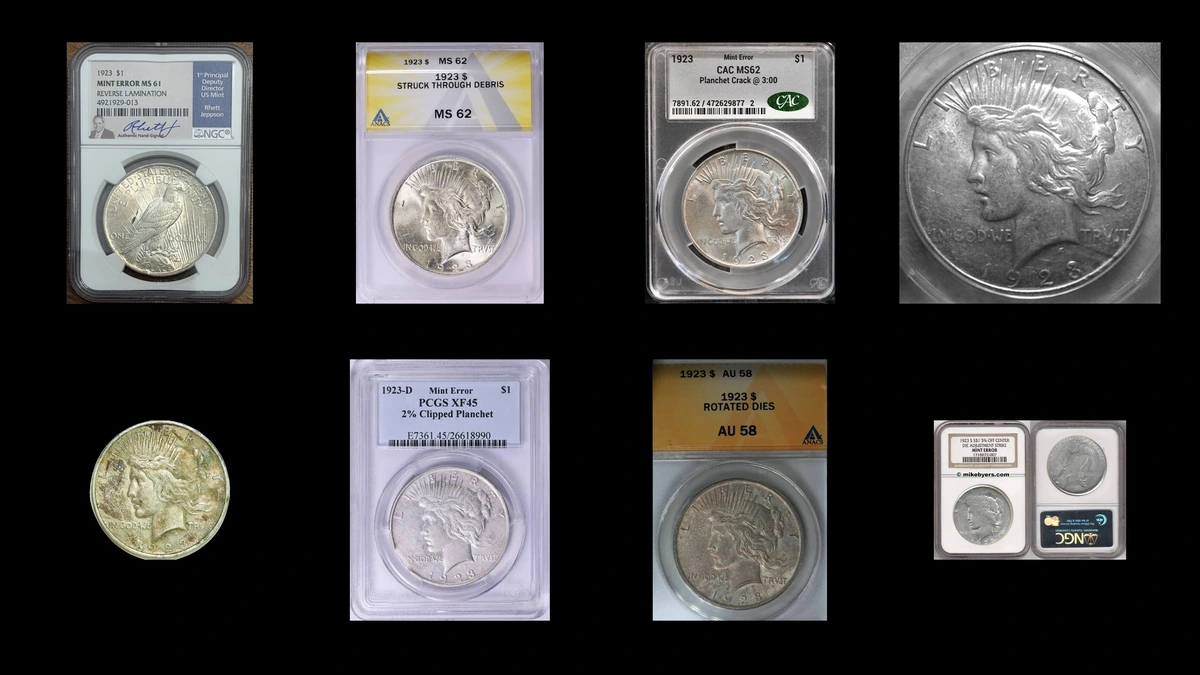
Raised lines, peeling layers, and genuinely open cracks can point to very different 1923 Peace dollar errors. The highest supplied completed sale is $18,000 in December 2022 for a Philadelphia dollar with an off-center second strike.
Estimated whole-coin values range from $50 to $30,000. Begin with the surface, then inspect the lettering, edge, and relationship between the two designs to find the appropriate comparison.
| Visible evidence | Possible category | Estimated range |
|---|---|---|
| Peeling, a hollow, or an open split | Lamination, struck through, or cracked blank | $75–$3,000 |
| Repeated or added raised details | Doubled die or damaged die | $50–$6,000 |
| Incomplete or unusual rim | Clip, partial collar, or Type One blank | $100–$8,000 |
| Tilted, shifted, or overlapping designs | Rotation, off-center strike, or double strike | $150–$30,000 |
1. 1923 Dollar Silver peels away from the design: lamination Error
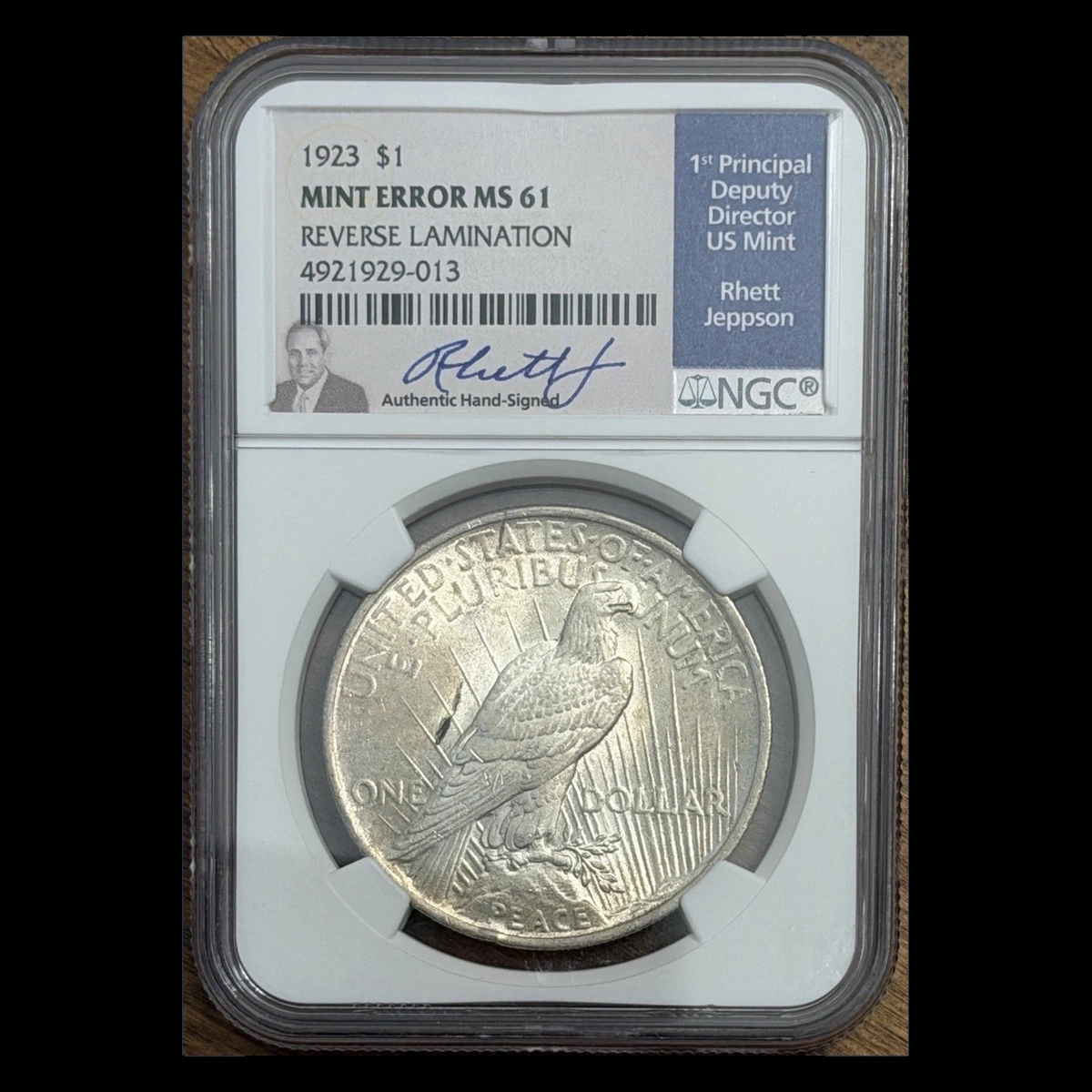
A weak layer within the silver alloy can lift as a flap or separate completely. The remaining opening often has an uneven, layered appearance.
Philadelphia examples are reported with laminations on either face. A separate San Francisco auction entry describes a front lamination on a lightly circulated dollar.
How to Identify
Photograph the attachment of any surviving flap without lifting it. Look for design continuing across the boundary and for irregular internal separation beneath the loose metal.
Parallel grooves and metal pushed beside a trench can indicate a later scrape. The precise location must come from the individual coin; the reports do not establish one universal cheek or eagle mark.
What It’s Worth
$75–$1,000 is the estimate for authenticated laminations in circulated through moderately unworn condition. A broad original peel can be more interesting than a small missing flake.
A seller’s $220 asking price in June 2024 concerned a slightly worn 1927-D Peace dollar. It is a different-year asking-price comparison, not a completed 1923 sale.
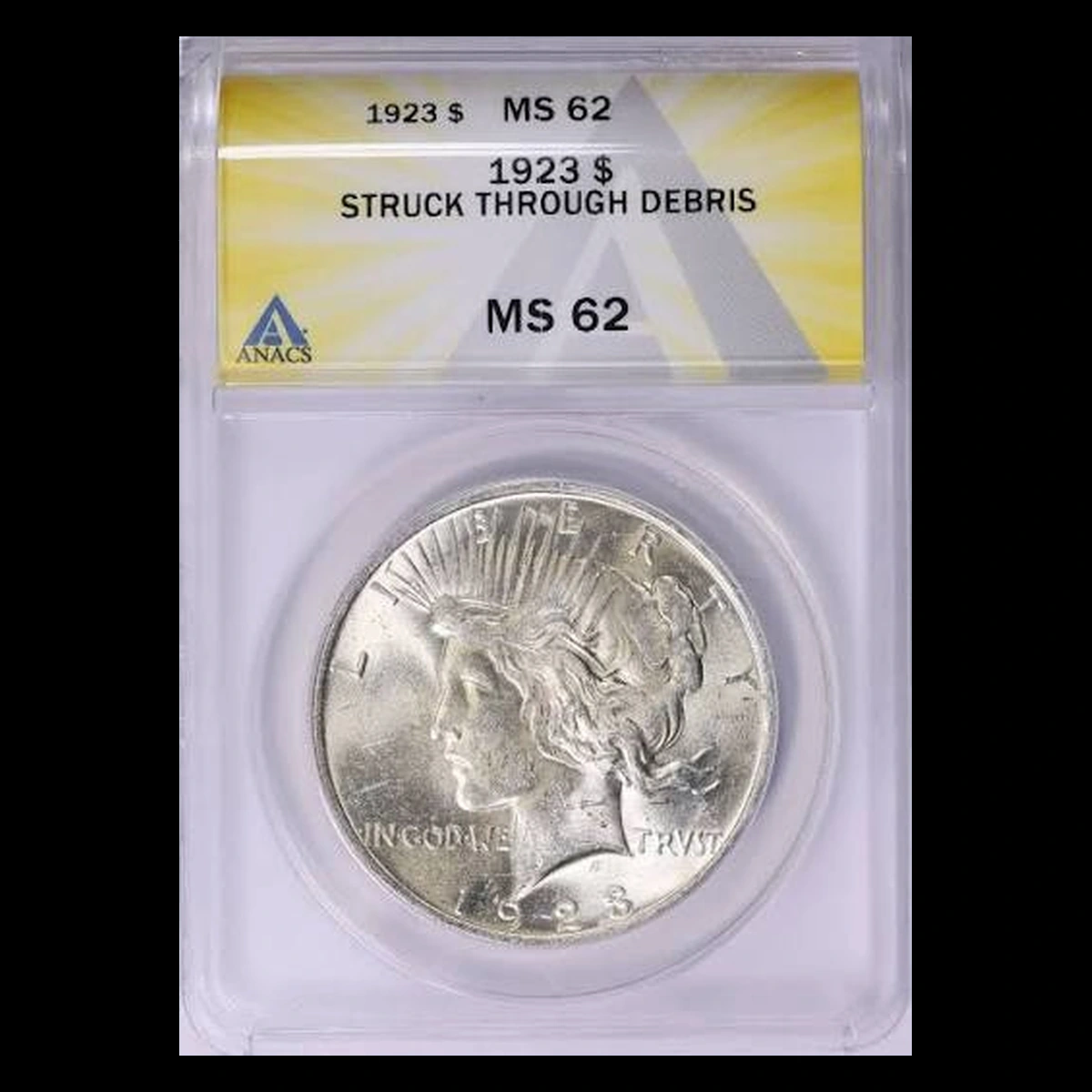
2. 1923 Dollar A patch interrupts an otherwise formed design: struck through Error
An object caught between a blank and die can block part of the picture while pressing its own shape into the metal. The resulting hollow does not always identify what the object was.
Reports include Philadelphia front impressions, a Denver reverse example, and San Francisco front examples, including separate pieces described as struck through metal. One Philadelphia front impression lies near 6 o’clock.
How to Identify
Follow intact design into the interrupted patch and examine its texture and boundary. The obstruction should explain where detail failed to form.
Crushed letters or metal pushed up around an impact can indicate later damage. Call the object metal, fabric, or another material only when the specimen’s evidence supports that identification.
The Philadelphia 6 o’clock location does not describe the Denver reverse or every San Francisco example. Each needs photographs of its own affected area.
What It’s Worth
$100–$2,500 is the estimated range across authenticated struck-through examples. A Philadelphia front example graded NGC MS62 sold for $134 in March 2023.
A recognizable shape and attractive surrounding surfaces can support stronger demand than an indistinct hollow. The supplied sale does not set one price for every obstruction size.
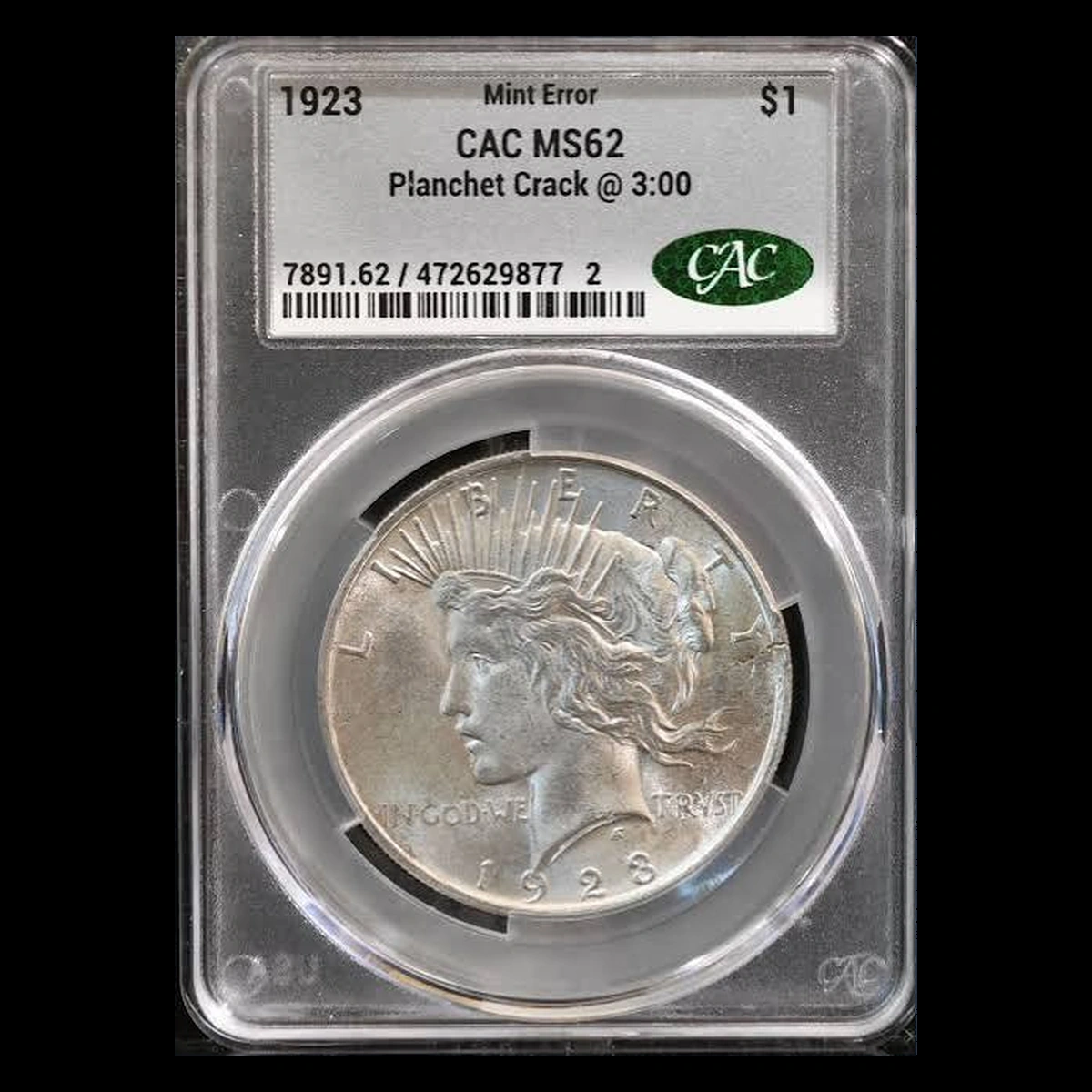
3. 1923 Dollar A line actually separates the metal: cracked planchet Error
An opening through the blank differs from a raised ridge copied from a cracked die. Manufacturing pressure can open an existing weakness in the metal that becomes the coin.
Several Philadelphia cracked blanks are reported. One NGC MS62 example has a crack near 9:30, while other specimens have different positions and lengths.
How to Identify
Illuminate the line from opposite directions to establish whether it is an opening or raised metal. Follow any split through the edge and onto both faces without flexing the coin.
Inspect the entry point and adjoining design for crushing or tearing from a later blow. A manufacturing attribution must explain the whole separation, not just its apparent depth in one image.
What It’s Worth
$150–$3,000 is the supplied estimate for authenticated cracked blanks. A PCGS MS64 example sold for $432 in March 2023.
That sale coin is distinct from the NGC MS62 described at 9:30. A clear original crack on an attractive dollar can be more desirable than a wider opening surrounded by later damage.
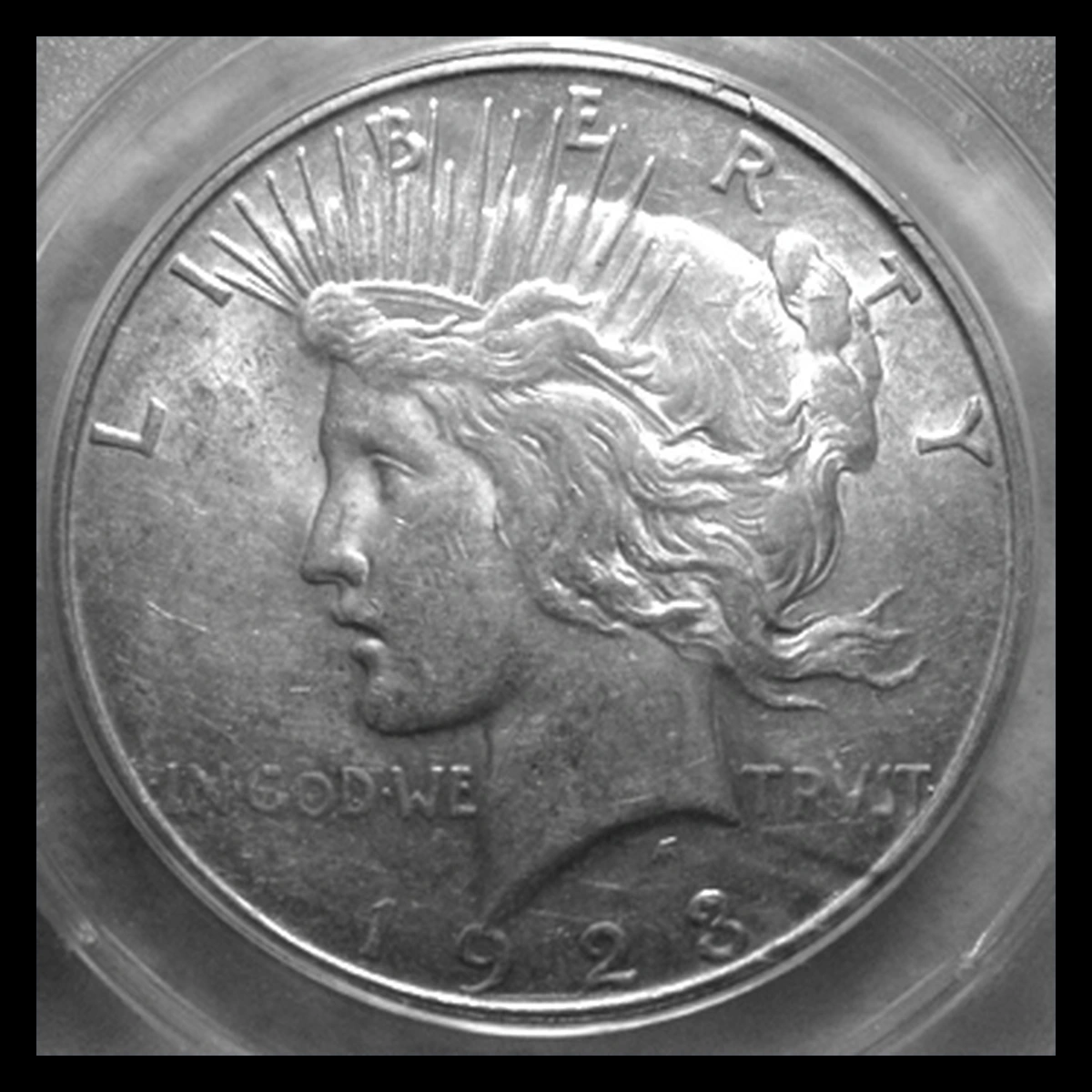
4. 1923 Dollar Raised lines or rough patches were added: die cracks and breaks Error
Silver entering a crack or pit in the die leaves raised detail on the coin. Larger broken areas can produce blobs, with the term cud reserved for a break connected to the rim.
Reported features include jaw and cheek lines, a Tail on O in DOLLAR, and a Denver reverse Ponytail. A separate San Francisco reverse report concerns a pitted die.
How to Identify
Determine whether the feature rises above the surface, then trace its full boundary. A line inside the design and a large rim-connected break should not receive the same description.
Match each nickname to its own mint and shape. The Denver Ponytail cannot be identified from a Philadelphia photograph showing a different feature.
For the pitted-die report, look for small raised bumps on the reverse. Sunken holes in the dollar itself suggest corrosion or other surface damage instead.
What It’s Worth
$50–$6,000 is the supplied range across minor cracks, larger breaks, and identified pitted-die varieties. Ordinary small lines and sought-after named patterns occupy different parts of that range.
The year guide reports $5,175 for a Tail on O example without supplying a sale date. Treat it as a reported comparison whose exact coin and preservation matter.
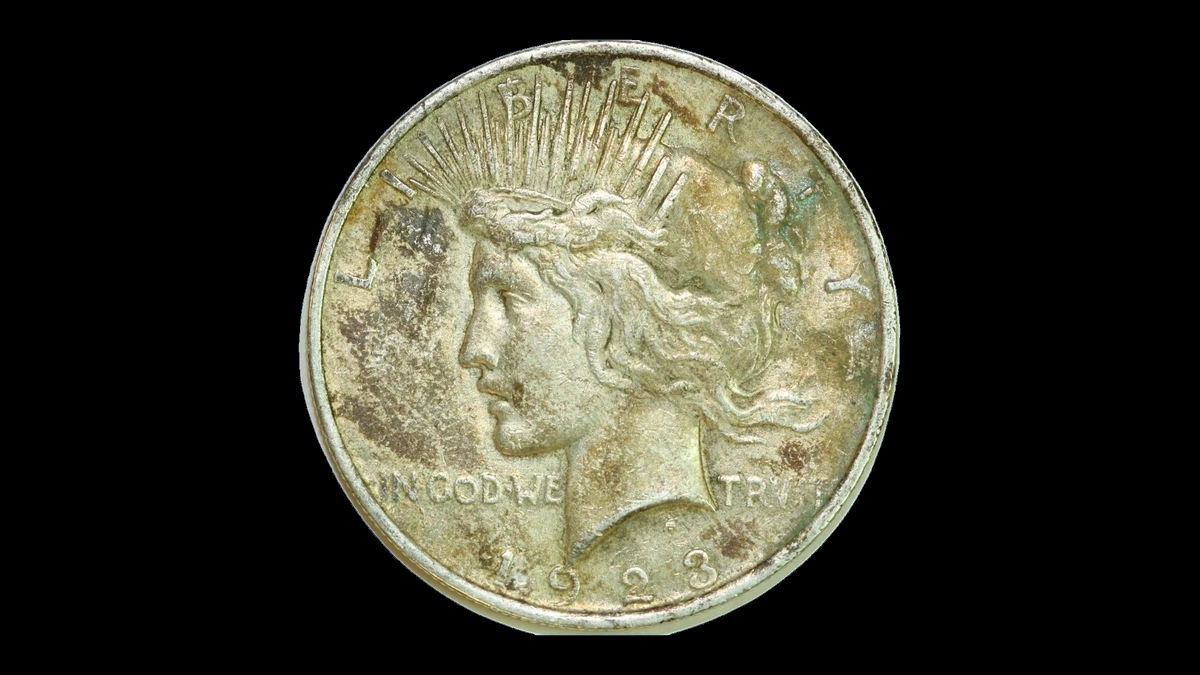
5. 1923 Dollar Rays, leaves, or eagle details repeat: doubled die Error
A die made with slightly shifted design impressions can transfer repeated outlines in one strike. Philadelphia reports involve crown rays on the front and separate reverse doubling among leaves and lower rays.
Denver examples affect the eagle’s head, beak, and neck. Doubling around TRVST is also reported without a settled mint assignment.
How to Identify
Select the comparison after checking the mintmark. Follow the specific ray, leaf, or eagle outline and look for the same raised separation as an attributed example.
The V in TRVST is normal for the design. Neither that letter nor general thickening proves a mint error.
Flat shelf-like doubling can result from movement during striking. Do not combine the Philadelphia front and reverse patterns or assign the TRVST report to a mint without evidence.
What It’s Worth
$75–$5,000 is the estimate for identified varieties across worn through attractive unworn condition. The exact pattern and its visibility affect the premium.
A Philadelphia doubled-motto Peace dollar dated 1927 sold for $7,800 in February 2019. That especially well-preserved different-year comparison does not establish a price for a faint doubled detail on a 1923 dollar.
6. 1923 Dollar A curved or ragged section is absent: clipped planchet Error
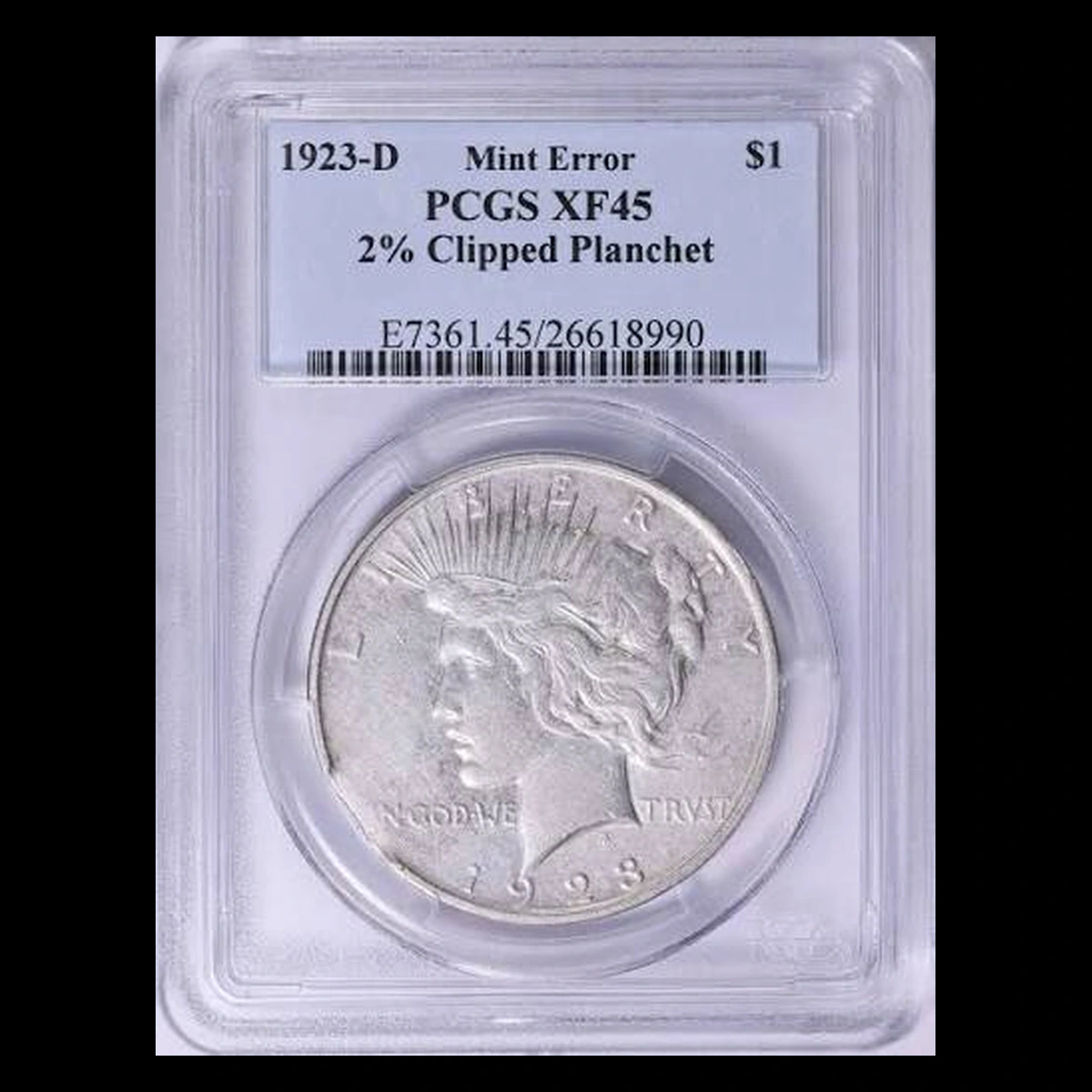
A clip leaves the blank incomplete before the design reaches it. One photographed Philadelphia dollar has a curved gap near 4 o’clock, while separate listings describe ragged clips and other clipped blanks.
The missing portion can influence nearby lettering and rim formation. Those effects help distinguish original blanking defects from later cuts.
How to Identify
Inspect inside the gap for saw grooves, burrs, or scraping, then follow the rim toward its ends. A fading rim or design drawn toward the gap can support original formation.
Weakness opposite the missing portion is another possible clue, although it may be unclear on a worn coin. Compare both faces and the edge rather than expecting every genuine clip to reproduce the same outline.
A normal loose Peace dollar is about 26.73 grams and 38.1 millimeters across. Weight can support the examination, but it does not establish a clip percentage or rule out deliberate cutting by itself.
What It’s Worth
$100–$2,000 is the estimated range for authenticated curved and ragged clips in ordinary collectible condition. Amount missing, readable date, and original surfaces help distinguish stronger examples.
The supplied $149 advertisement from 2020 concerns an unworn 1927-D curved clip. It is a different-year asking price, not a documented 1923 transaction.
7. 1923 Dollar The edge has two levels: partial collar Error
A blank partly outside the collar spreads unevenly when struck. The collar is the ring that controls the coin’s width and forms its edge grooves.
The held portion and the freely spreading portion can leave a step along the edge. An ANACS MS60 1923-S is listed with this error, without a fixed clock position in the supplied description.
How to Identify
Use edge views to trace the two levels and changes in the grooves. A straight portrait photograph can hide the most useful evidence.
Check both rims for crushed detail or flattened grooves from later hammering. A wide diameter alone does not distinguish those alterations from partial collar contact.
What It’s Worth
$300–$6,000 is the estimated whole-coin range for an authenticated partial-collar Peace dollar of this kind. A strong, original step is generally easier to compare than a slight irregularity.
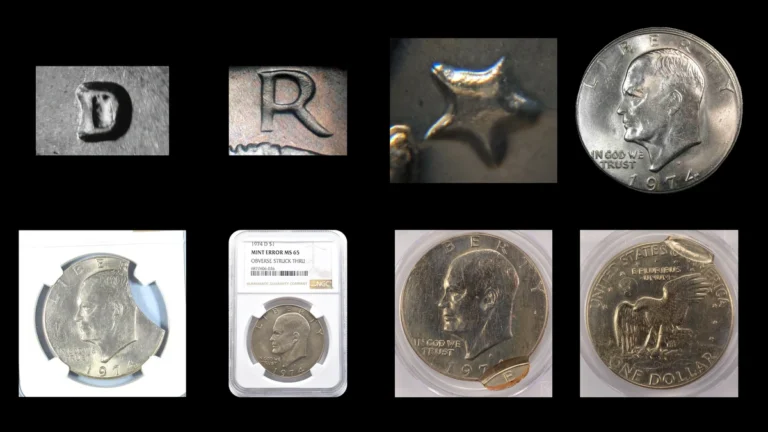
A 1971-D Eisenhower dollar with both partial collar contact and an indent sold for $408 in August 2020. That different series and combined error provide context, not an exact 1923-S price.
8. 1923 Dollar Rim preparation was skipped: strike on a Type One blank Error
A Type One blank has not passed through the operation that raises its border before striking. A Philadelphia Peace dollar graded PCGS MS65 is cataloged as struck on such a blank.
The piece already carries the 1923 design. It is a finished coin made from an incompletely prepared blank, not an unstruck disc assigned a date.
How to Identify
Compare the entire rim and edge with the certified description and a normal dollar of similar preservation. A weak border alone cannot reveal which preparation operation was missed.
Rule out wear, filing, and crushing around the edge. Normal Peace dollar weight and dimensions remain useful because Type One describes preparation, not a different denomination or alloy.
What It’s Worth
$500–$8,000 is the supplied estimate for authenticated Type One blank strikes. Condition and the strength of the rim evidence influence the comparison.
The documented MS65 grade describes an attractive unworn example, but no completed sale is supplied here. An ordinarily weak rim does not establish the same premium.
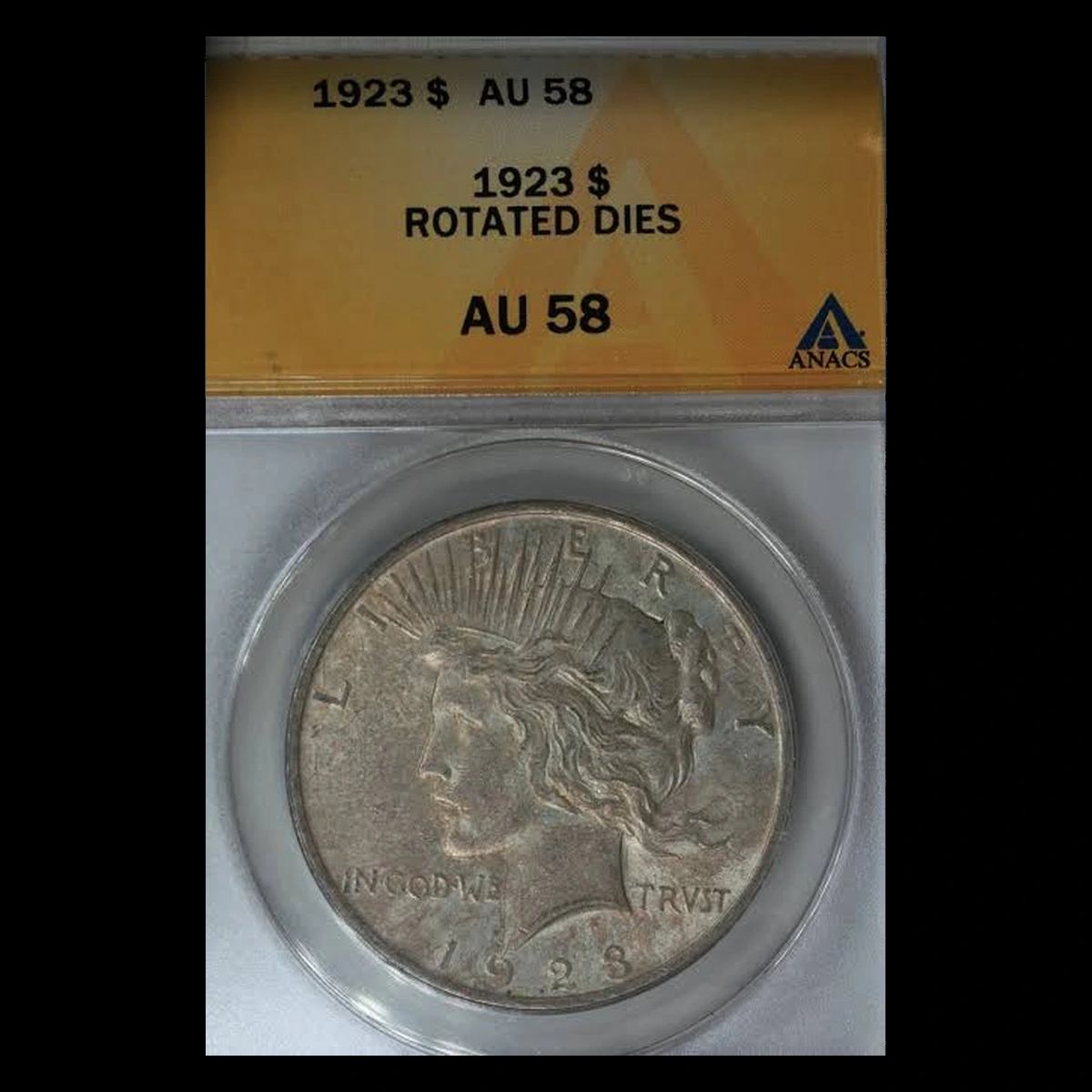
9. 1923 Dollar The reverse tilts after a top-to-bottom flip: rotated dies Error
A rotated die changes the angular relationship between portrait and eagle. A dealer lists a Philadelphia 1923 dollar certified NGC MS63 with rotated designs.
The supplied listing does not assign an angle to that coin. Its grade describes preservation, not the amount of rotation.
How to Identify
Hold Liberty upright and flip directly over the top edge without sideways twisting. The eagle normally finishes upright, so any consistent tilt can be recorded and measured.
Use a continuous turning sequence or the actual coin rather than separately straightened photographs. Allow for movement inside a holder before interpreting a small angle.
What It’s Worth
$150–$4,000 is the estimated range for authenticated rotated-design dollars. Larger demonstrated rotations generally attract more attention, with condition also affecting the whole price.
A silver 1971-S Eisenhower Proof with medal alignment sold for $900 in January 2025. That different-series collector coin is a broader market comparison, not a matched 1923 sale.
10. 1923 Dollar A plain crescent accompanies a displaced design: off-center strike Error
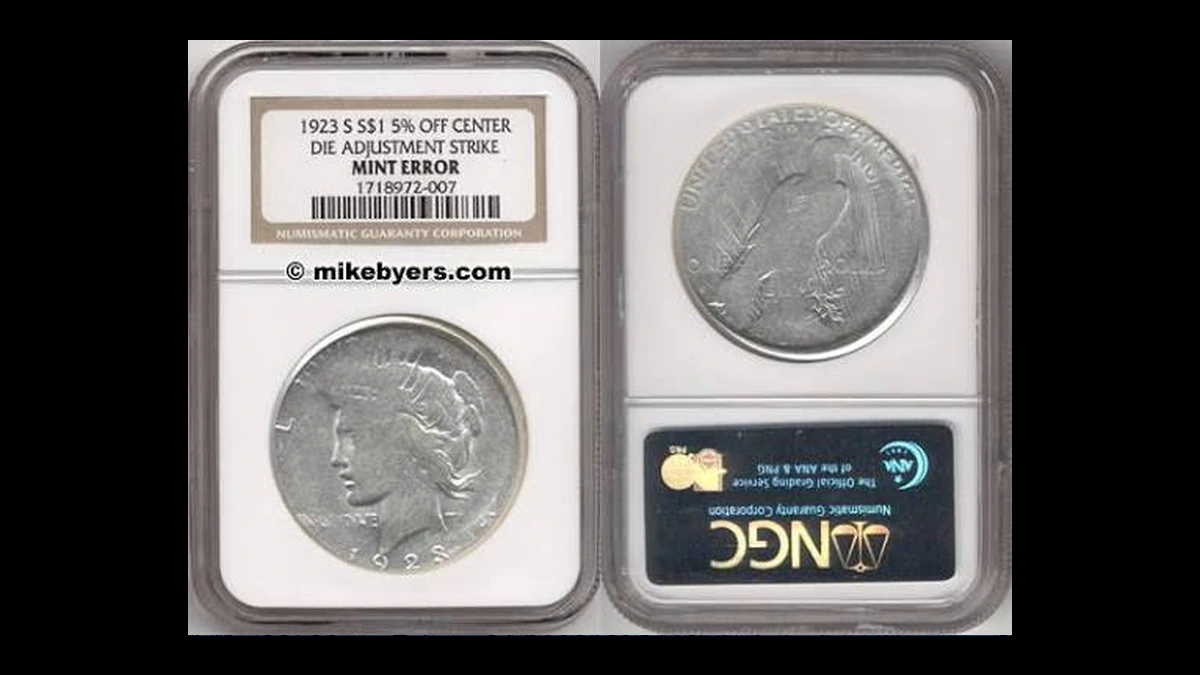
A blank positioned partly outside the dies receives an incomplete design. One documented San Francisco dollar combines about 5% displacement with a very shallow strike outside the collar.
Mike Byers describes the S example as a die adjustment strike made with low pressure. A separate year-guide report concerns a Philadelphia dollar about 15% off center.
How to Identify
Find untouched metal opposite the displaced design and compare the relationship on both faces. An uneven border without missing design is not enough by itself.
On the San Francisco example, look for original texture through shallow features rather than rubbed high points. Its edge also needs examination to establish the described absence of collar restraint.
The Philadelphia report needs its own date, mint attribution, and displacement evidence. It does not inherit the S coin’s low-pressure explanation or 5% figure.
What It’s Worth
$1,000–$30,000 is the estimate for authenticated off-center Peace dollars, with the unusual weak-pressure combination requiring an individual comparison. No completed sale of either described single off-center strike is supplied.
The $18,000 Philadelphia double strike below provides a same-year major-error comparison. Its two striking events make it a different coin from either one-strike example here.
11. 1923 Dollar A second picture overlaps the first: double strike Error
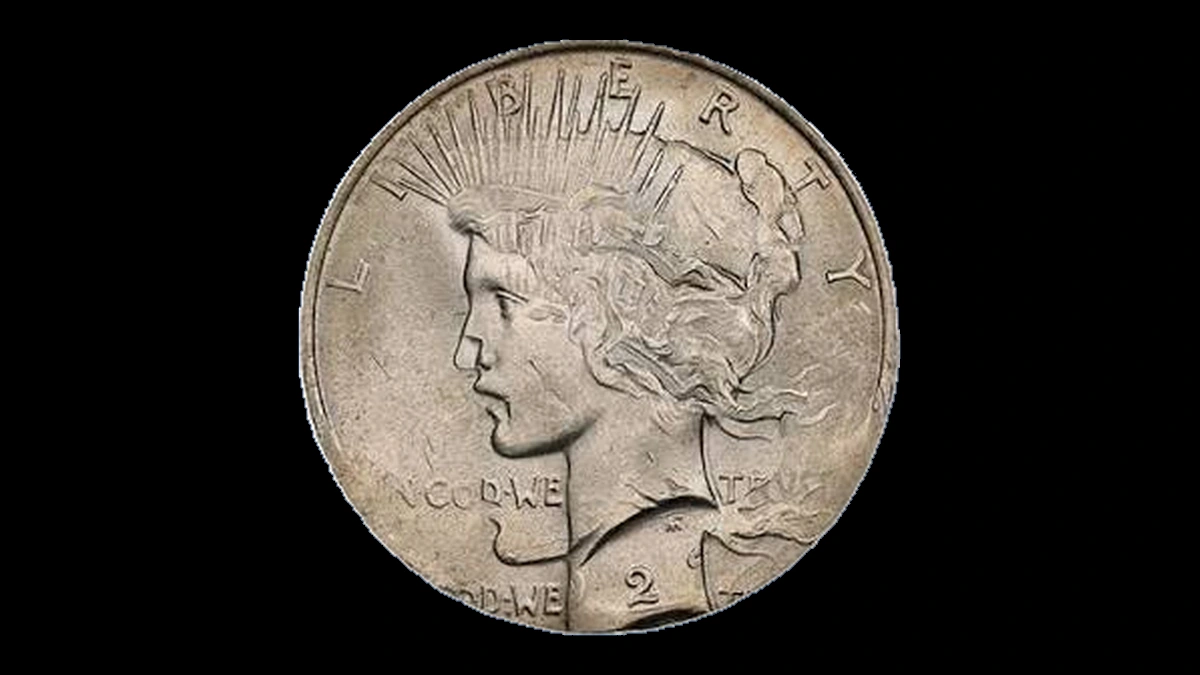
A coin that remains in the press can move before receiving another blow. On the documented Philadelphia example, the second strike landed off center and left evidence of both design positions.
NGC graded the dollar MS64. Neither a displacement percentage nor a direction is established by the supplied description.
How to Identify
Identify a group of letters or a border from the first impression, then locate corresponding details from the second. Use both placements to explain the overlap and areas flattened by the later blow.
Check the other face for consistent evidence of a second strike. A doubled die creates close repetitions from one tool, rather than two broadly displaced design boundaries.
What It’s Worth
$3,000–$25,000 is the estimated range for comparable authenticated double strikes. The NGC MS64 example sold for $18,000 on December 21, 2022.
A readable original design and clear separation make the sequence easier to appreciate. Surface damage or an indistinct extra impression can weaken another coin’s comparison with that result.
Conclusion
Decide first whether an unusual feature rises from the surface, sinks into it, or separates the metal itself. Then use the mintmark, full edge, and relationship between the two faces to narrow the explanation.
Named varieties, seller reports, and certified auction coins carry different kinds of evidence. Keep each example’s location and measurements attached to that coin, preserve fragile metal, and compare the complete dollar before applying a value range.