Rare 1904 Dollar Errors (List & Pictures)
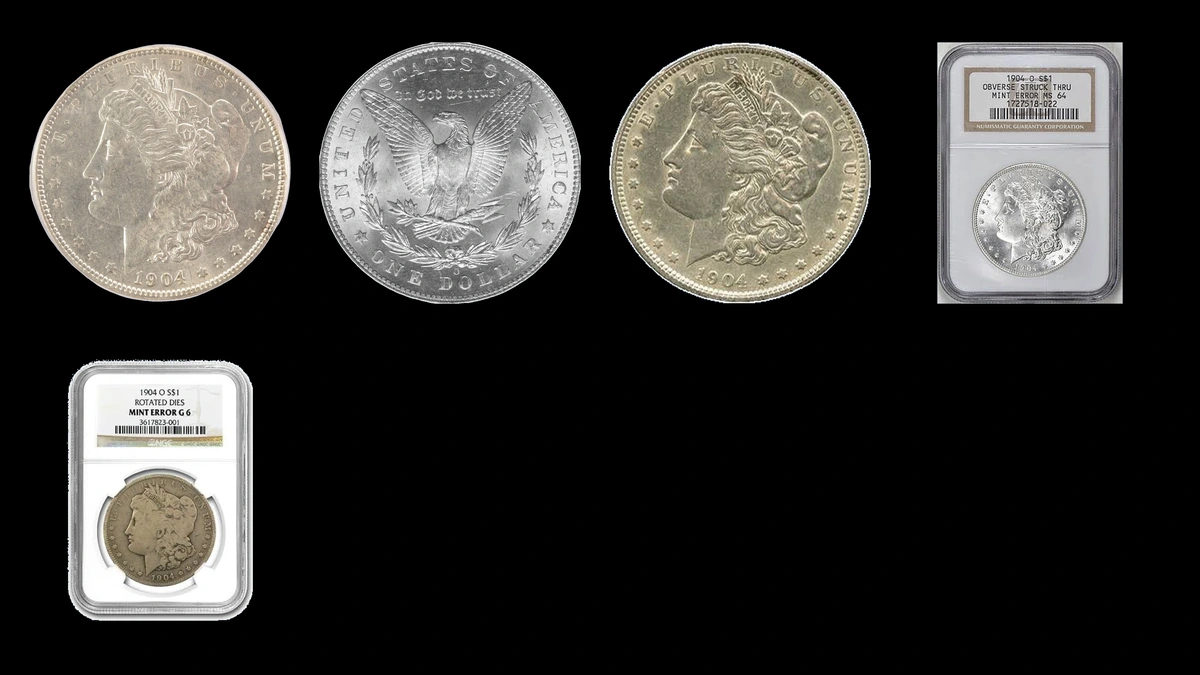
A second profile, an extra date stroke, and a transferred G can all look like unwanted outlines. The 1904 Morgan dollar errors below separate those mechanisms while preserving uncertainty around cataloged threadlike marks.
Whole-coin estimates span $75–$6,000. A New Orleans Trigger in MS67 Prooflike realized $2,820 in April 2017; check the mint and complete pattern before using its exceptional preservation as a price comparison for a smaller or less certain feature.
1. 1904 Dollar A Close Second Edge along Liberty’s Face: Doubled Profile Error
The Philadelphia doubled-profile variety has a faint additional raised portrait outline. The overlapping design was present in the die before it transferred the image to the blank.
This is a small change along the face rather than two widely separated pictures from another strike. New Orleans has its own profile patterns and companion markers.
How to Identify
Confirm Philadelphia’s normal absence of a reverse mintmark, then follow the face-to-background boundary under light from opposite directions. A real metal contour keeps its location while a reflection changes.
Compare the full raised, rounded extra outline with the appropriate mint’s attributed example. A flat lowered shelf can result from movement during striking and does not establish the same die variety.
What It’s Worth
$100–$1,200 is estimated for identified examples in circulated through moderately unworn condition. Sharp original surfaces make this subtle feature easier to document, while wear and marks can obscure it.
2. 1904 Dollar Earlier Pieces beside the Date Digits: Repunched Date Error
Philadelphia reports include repetition of 1 and 4 or of 9 and 4. Another pattern combines a downward spur at the lower right of 1 with extra detail beneath 4.
New Orleans entries include repeated 9 and 4 and a farther-right date with extra edges on 1 and 9. That latter pairing also has a doubled portrait and a high O tilted left.
How to Identify
Select the correct digit pair before comparing close-ups. On the Philadelphia spur pattern, inspect the lower-right foot of 1 and the underside of 4 together.
For the farther-right New Orleans date, look below 1’s top bar and outside the lower-left part of 9’s upper loop. Keep the whole date visible to assess its position as well as the remnants.
A high, left-tilted O supports that particular pairing but does not alone prove another mintmark punch. Distinguish raised numeral contours from scratches passing through them.
What It’s Worth
$75–$2,000 is estimated for identified repeated-date examples in ordinary collectible grades. Exact mint, digit pattern, and preservation matter more than a broadly thick-looking date.
3. 1904 Dollar Threadlike Lines across the Front: Unresolved Cataloged Marks Error
Two New Orleans entries use the term “threadlike impression.” That wording describes appearance without establishing whether foreign material or a mark in a tool produced the line.
It also does not establish that a fiber remains attached. Each reported shape needs its own comparison before a more specific cause is assigned.
How to Identify
Start with a full front image to locate the line against the portrait and words. Record its beginning, turns, and end while changing the light to establish whether it is raised or recessed.
Confirm O above the DO area of DOLLAR on the reverse. Compare the complete path with the correct catalog entry rather than inventing a location from the descriptive name.
A repeated matching path on another attributed coin can strengthen a tool-pattern comparison. A lone cut with disturbed metal may instead be later damage.
What It’s Worth
$75–$1,000 is estimated for matching cataloged examples in circulated through moderately unworn condition. The separate 1904-O Fishhook result of $999 in July 2023 supplies context for an identified small variety, not a transaction for these threadlike marks.
4. 1904 Dollar A Diagonal Opening across the Portrait: Lamination Error
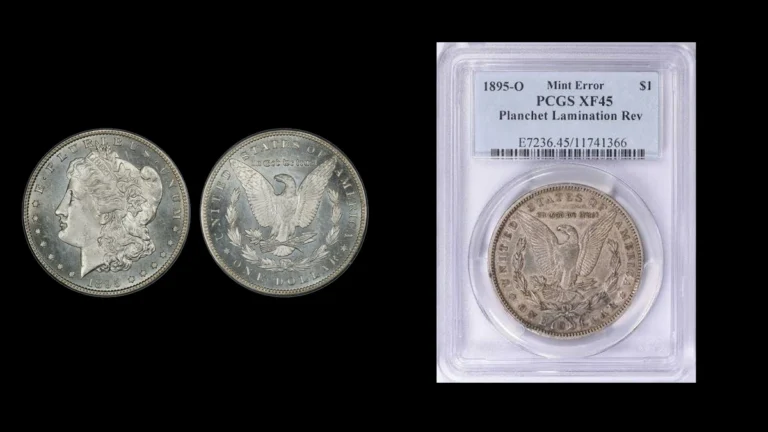
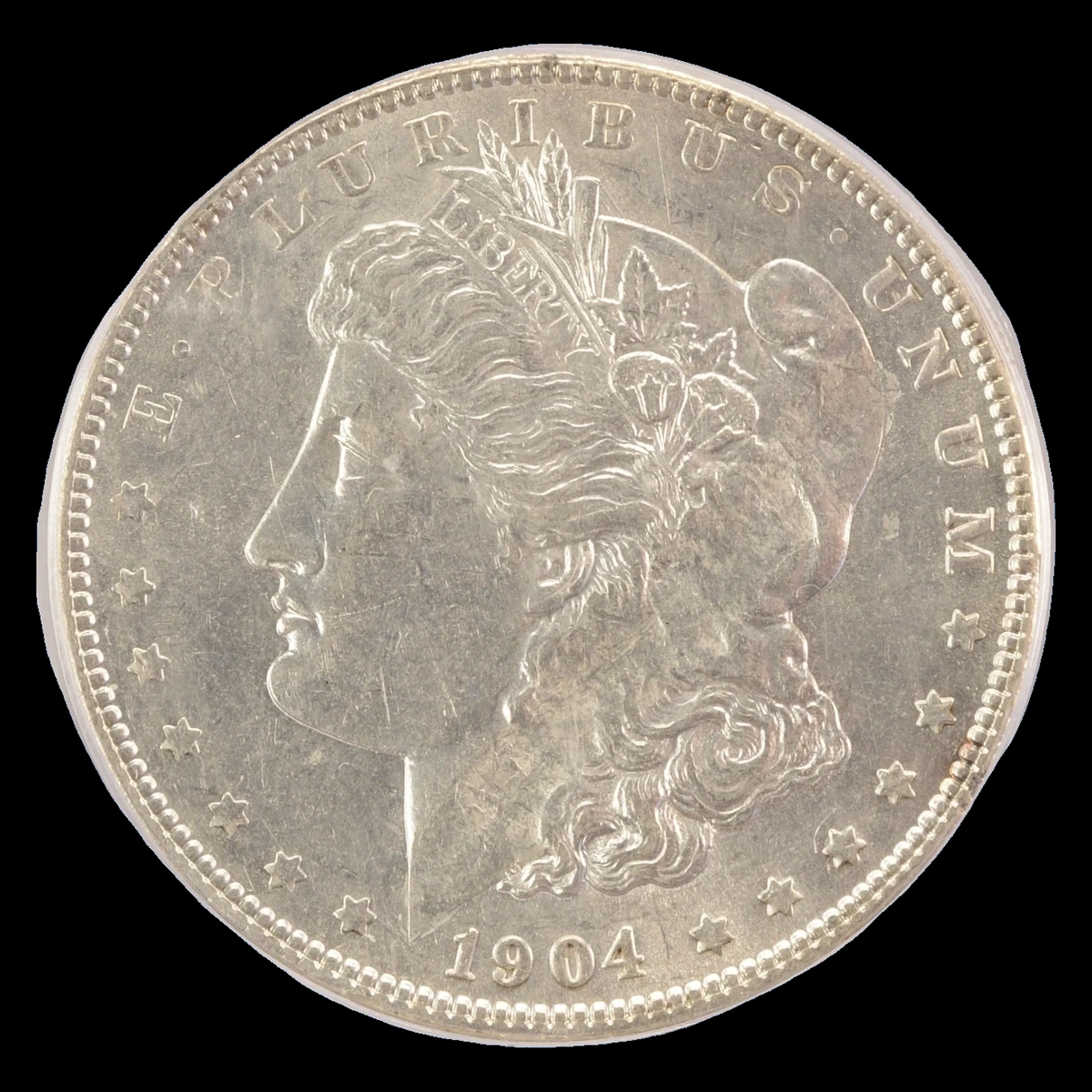
The documented Philadelphia dollar has a long separation running from the pointed bust tip toward the cap near N in UNUM. The coin was graded PCGS AU58, indicating slight wear.
A weakness within the alloy allowed a thin portion to separate. Morgan dollars are 90% silver and 10% copper throughout, not silver-clad coins with a copper center.
How to Identify
Photograph the entire diagonal route before examining lifted edges or exposed layers. Look for original struck detail carried by any remaining flap and leave that metal undisturbed.
Scrapes can leave directional cuts with displaced metal, requiring a different explanation. If identity is uncertain, normal loose-dollar references are 26.73 grams and 38.1 millimeters, though color alone cannot verify composition.
What It’s Worth
$100–$1,500 is estimated for comparable authenticated laminations. The PCGS AU58 with the large diagonal separation realized $180 on September 10, 2019.
The price reflects the whole dollar, including its surfaces and wear. A larger damaged opening is not automatically more valuable than an intact original separation.
5. 1904 Dollar Raised Marks at D or beneath the Wing: Damaged Die Error
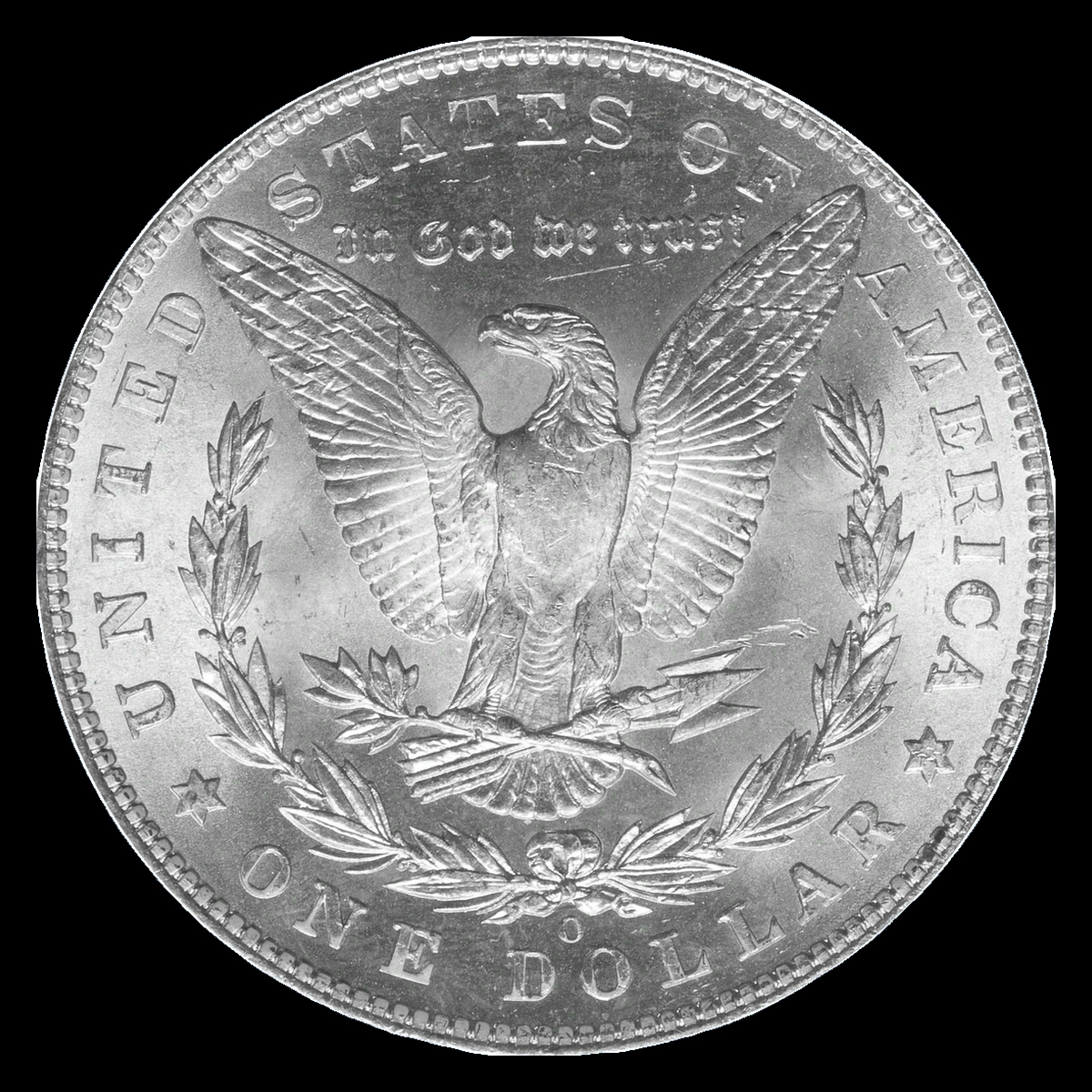
A localized Philadelphia feature occurs at D in DOLLAR, where a small die imperfection produced raised metal. New Orleans varieties instead include border-tooth impressions below the eagle’s wing.
Related O-mint entries may have other tool lines, doubled profiles, or overlapping edge grooves. A shared reverse tool does not make every companion feature present on every coin.
How to Identify
For Philadelphia, inspect whether the D-area roughness rises above the silver rather than being corrosion eaten into it. For New Orleans, use the different wing-area pattern.
The cataloged related O-mint examples show how polishing can weaken the border-tooth impression. Compare the strength, companion profile, and nearby lines with the same variety and stage.
Include edge photographs when overlapping grooves are actually part of that attribution. Do not infer them solely because another coin from a related tool pairing carries them.
What It’s Worth
$75–$3,000 is estimated for identified examples in ordinary collectible grades. A complete pattern match and original surfaces offer more evidence than an isolated bump below the wing.
6. 1904 Dollar A G by the Neck or Extra Lip Contours: Clash and Counterclash Error
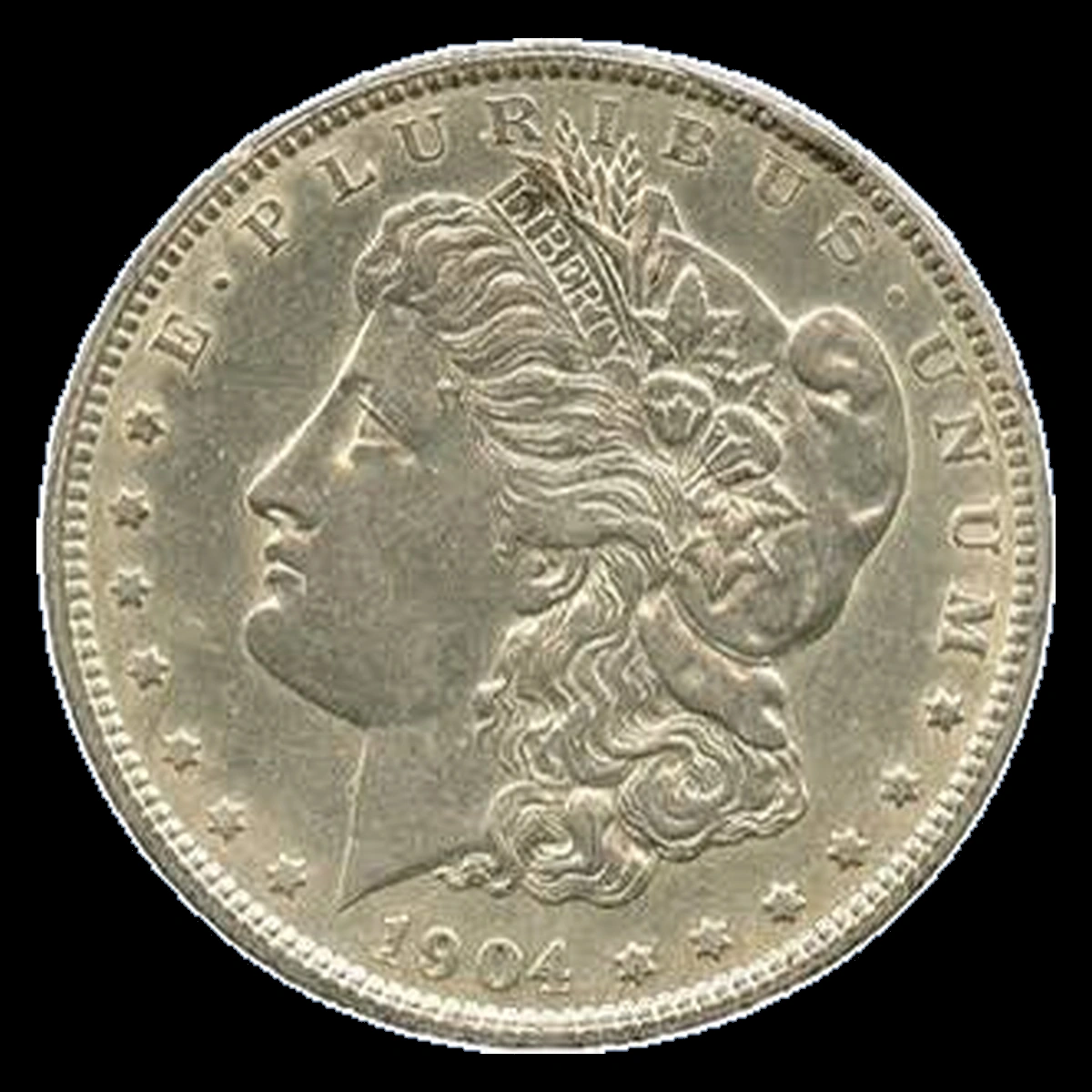
The New Orleans Trigger has part of G from GOD transferred in front of Liberty’s neck. Other combinations include Fishhook and separate lip-area patterns.
Die contact without a blank transfers opposite-face detail, while further contact can transfer a design back in a counterclash. These events involve the tools rather than another finished coin stamping the dollar.
How to Identify
Match a Trigger candidate’s neck-area G with its documented outline and reverse source. For Fishhook, compare the lip area together with the date and OL of DOLLAR.
A counterclashed lip requires its own enlarged reference rather than the Trigger’s neck position. Inspect how faint extra contours meet original detail, separating them from cuts or flattened contact marks.
What It’s Worth
$75–$5,000 is estimated across authenticated clash varieties. The NGC MS67 Prooflike Trigger realized $2,820 in April 2017.
Prooflike describes reflective surfaces on this ordinary strike, while MS67 indicates exceptional unworn preservation. PCGS also records a separate Fishhook at $999 in July 2023.
7. 1904 Dollar An Impression Blocks Normal Detail: Strike-Through Error
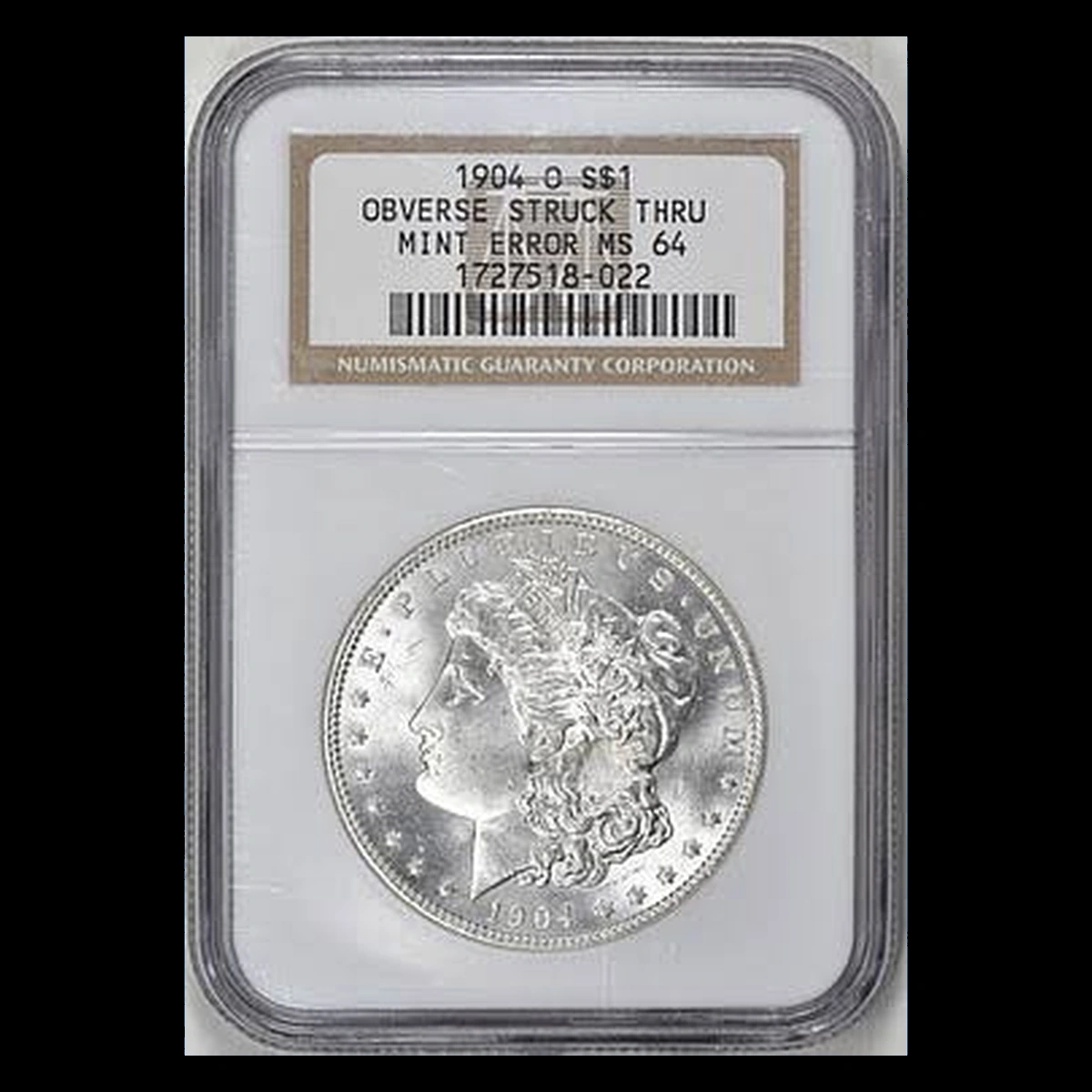
The year guide reports strike-throughs without establishing a particular mint, face, location, or retained object. Material between the die and blank can interrupt the design and leave an impression.
A hollow may show where something intervened without revealing what it was. Wire, cloth, and grease should not become separate confirmed 1904 specimens without corresponding evidence.
How to Identify
Follow the border where normal design stops and examine any texture inside the impression. Compare adjacent letters for later crushing, cutting, or pushed-aside metal.
Establish the mint and use the actual coin’s photographs or certification to narrow the claim. A different year’s distinctive object shape cannot provide the missing details for a general 1904 report.
What It’s Worth
$100–$2,500 is estimated for authenticated 1904 strike-throughs. A 1923 Peace dollar with a front strike-through sold for $134 in March 2023, a different-series example near the modest end of this broad comparison.
8. 1904 Dollar The Eagle Finishes at the Wrong Angle: Rotated Dies Error
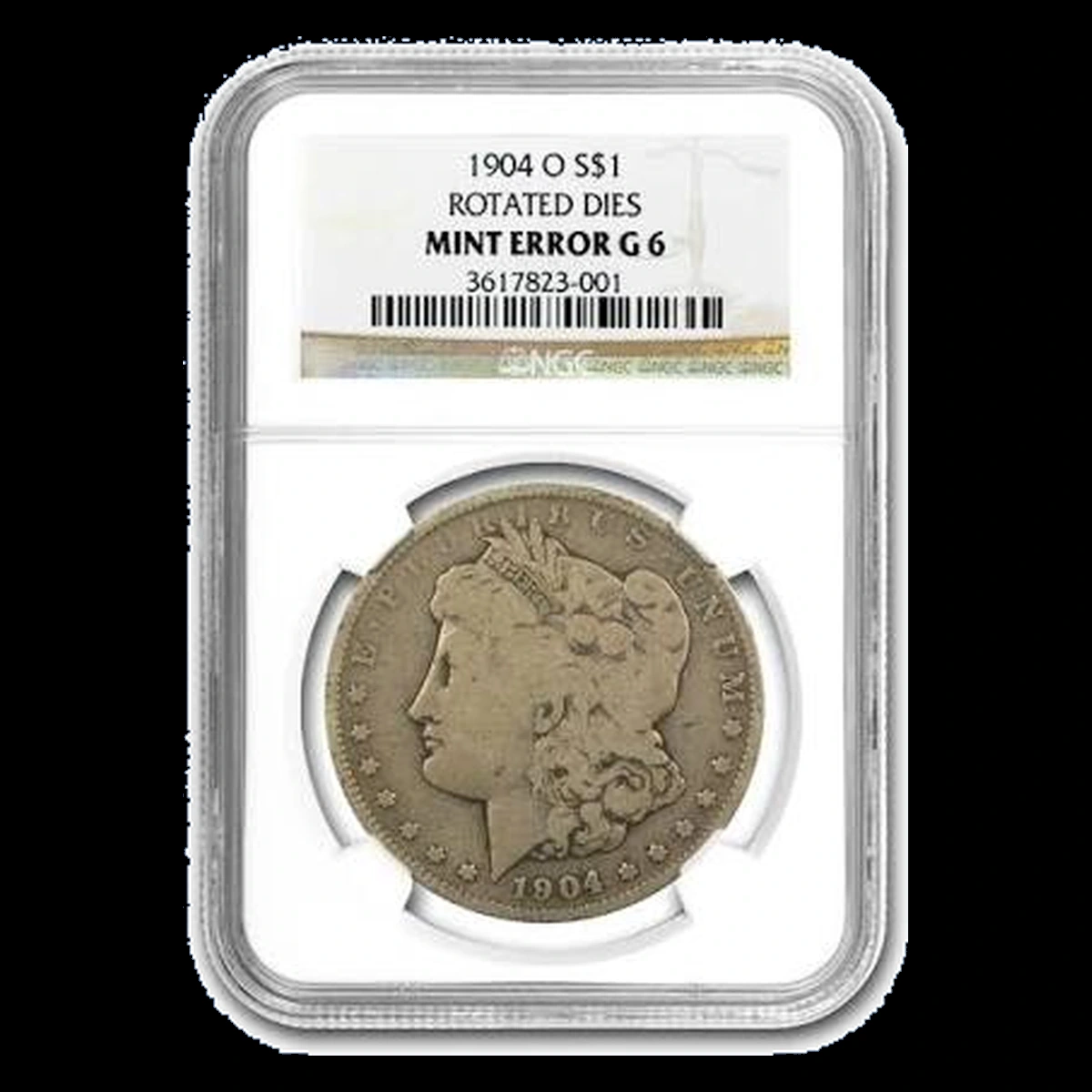
A guide reports a rotated 1904-O without stating its measured angle. The two complete designs can remain intact while their orientation relative to one another is abnormal.
This differs from another strike placing a second picture across the first. No quarter-turn or half-turn should be assigned to the reported coin without measurement.
How to Identify
Hold Liberty upright with the date down, then flip directly top to bottom without twisting sideways. Observe the eagle before adjusting its position; normal coin alignment would leave it upright.
Record the same repeatable turn with linked photographs or video and confirm O. Account for any coin movement inside a holder, since separately straightened views cannot prove the angle.
What It’s Worth
$150–$6,000 is estimated for authenticated examples depending on actual rotation and condition. The year guide reports $215 for a 1904-O sale but gives neither an identified auction date nor a measured angle.
That limited report should not be expanded into a specific auction record. Measure and assess the specimen being valued rather than assuming it shares an unstated angle.
Conclusion
Match the complete pattern before converting an unusual line into a manufacturing story. A threadlike mark may remain unresolved, while a paired date remnant or correctly placed transferred letter supplies more specific evidence.
Keep Philadelphia and New Orleans comparisons distinct, and treat mirror-like surfaces as a finish description rather than automatic Proof identity. The strongest prices here concern complete attributed coins whose preservation matters alongside their small features.