Rare 1927 Dollar Errors (List & Pictures)
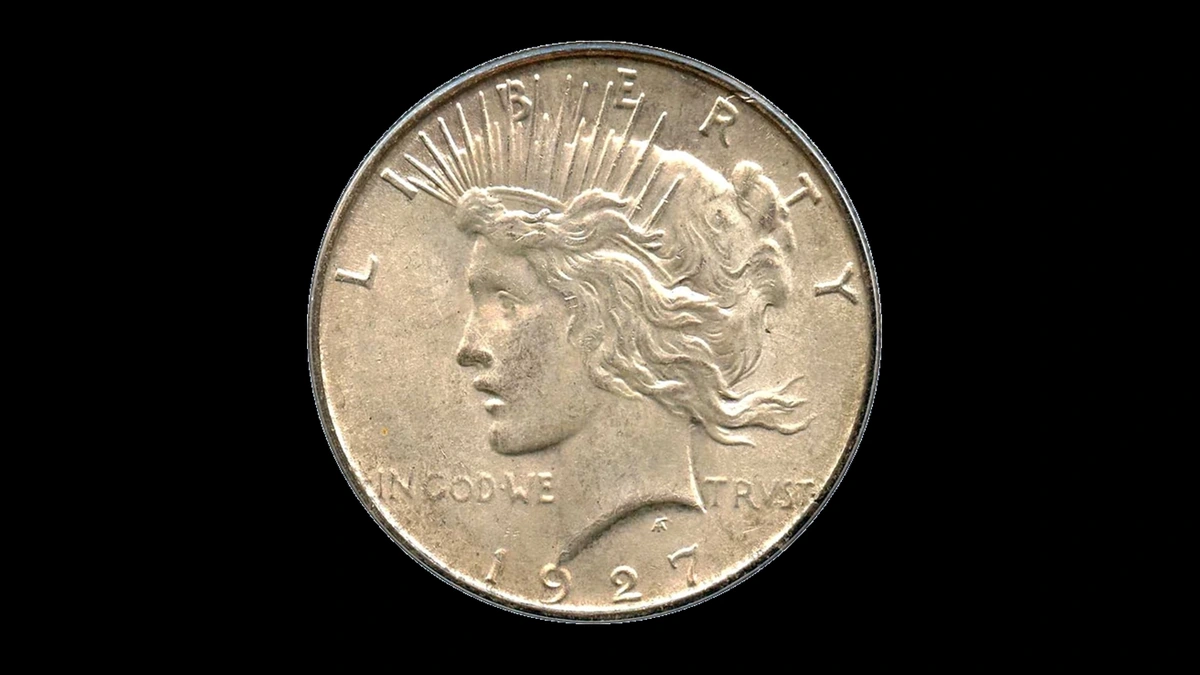
The mintmark determines where to look for many 1927 Peace dollar errors: Philadelphia and Denver doubling affects front details, while a San Francisco variety involves reverse leaves. A Philadelphia doubled-motto dollar sold for $7,800 in February 2019, the highest completed sale supplied here.
Whole-coin estimates range from $75 to $8,000. Check the mintmark and repeated design first, then inspect the metal and edge for the remaining categories.
| Clue | Possible identification | Estimated value |
|---|---|---|
| Small D below ONE | Reported Micro D feature | $75–$1,000; no proven separate premium |
| Additional S-shaped curve | Repunched mintmark | $100–$2,000 |
| Repeated motto or leaf edges | Doubled die | $75–$8,000 |
| Lifting silver | Lamination | $100–$1,200 |
| Curved gap at edge | Clipped planchet | $125–$2,500 |
1. 1927 Dollar An unusually small D: reported Micro D feature Error
The Micro D nickname concerns the size of the Denver mintmark below ONE. It does not, by itself, explain why that particular letter looks small.
Wear, weak formation, and the original punch shape all need consideration. A small-looking D is not automatic proof of a minting mistake.
How to Identify
Choose a normal 1927-D with similar wear and compare photographs at equal scale. Examine the D’s height, width, inner opening, and outer curves rather than its darkness in one photograph.
Check nearby letters and feathers for similar weakness. If the entire area is faint, the mintmark’s appearance may be part of the same condition or striking issue.
Look for disturbed metal around the D before seeking a specialist comparison of Denver punch shapes. The nickname should follow the evidence, not replace it.
What It’s Worth
$75–$1,000 is the supplied whole-coin comparison range for circulated through modestly preserved unworn candidates. It is not an established Micro D premium.
A well-preserved Denver dollar can have substantial value without this reported feature. Original shine, portrait marks, and remaining hair detail help explain that underlying value.
2. 1927 Dollar Another curve follows the S: repunched mintmark Error
The reported 1927-S repunched mintmark involves extra portions of an S around the main letter. Separate applications of the punch at slightly different positions could leave both impressions in the die.
Every coin made from that die would then copy the same overlap. This is a mintmark-making feature, not another strike of the whole dollar.
How to Identify
Trace the main S below ONE from its upper curve through the center to its lower curve. Then test whether the additional raised remnant can belong to another S in a consistent position.
Change the lighting to distinguish actual metal from a shadow. An incuse scratch that crosses the letter or a random raised lump does not establish a second punch.
The supplied year guide reports this category without assigning a single diagnostic pattern here. Match a documented example before applying a precise variety name.
What It’s Worth
$100–$2,000 is the estimate for authenticated examples from circulated through moderately preserved unworn condition. The base value of the 1927-S may account for much of the total.
Readable curved remnants support attribution and collector interest. Heavy wear can obscure the very feature for which a premium is being proposed.
3. 1927 Dollar Motto letters or leaves repeat: doubled die Error
A doubled die carries two slightly shifted versions of part of the design. It transfers those repeated raised details during a single normal strike.
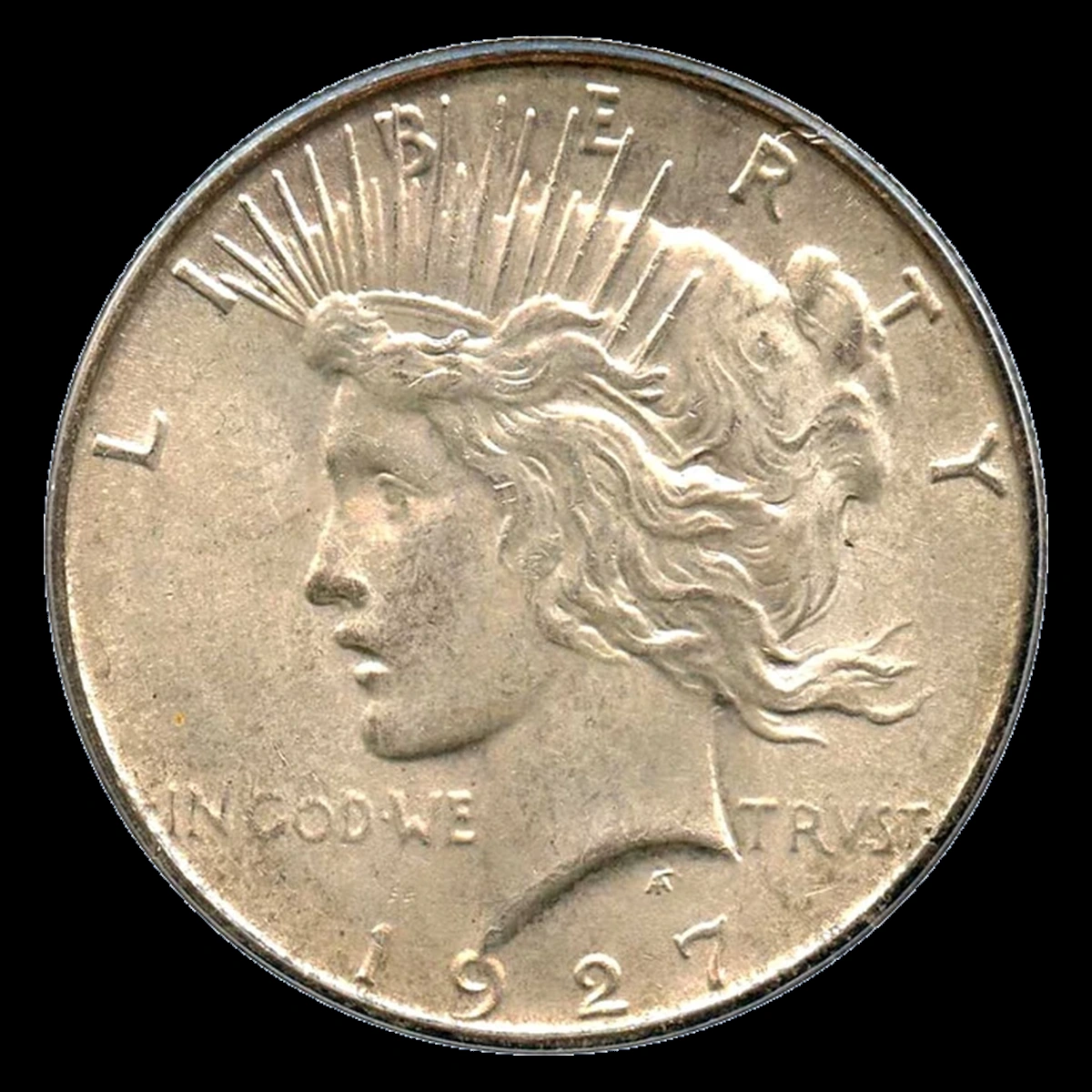
Philadelphia and Denver patterns involve WE and the designer’s small initials on the front. The San Francisco pattern instead affects the middle and lower olive leaves beneath the eagle.
How to Identify
Read the reverse mintmark before choosing a close-up comparison. On an S coin, follow the affected leaf edges and separate genuine extra outlines from leaves that normally overlap.
On Denver and Philadelphia examples, inspect WE and the initials on the front. The Denver E can have a notch at its lower right; that specific marker should not be transferred to the Philadelphia variety.
Look for matching raised separation and notches rather than general thickness. A flat ledge from movement during striking is a different effect.
What It’s Worth
$75–$8,000 is the supplied range across worn examples and choice recognized varieties. PCGS records $7,800 in February 2019 for a Philadelphia doubled-motto dollar graded MS65+.
That result combines an attributed pattern with especially attractive unworn preservation. It is not a transferable price for a faint repeated edge on another mint’s dollar.
4. 1927 Dollar A thin layer lifts from the silver: lamination Error
Metal that did not bond properly within the blank can separate into a flap or leave an irregular opening. This peeling defect is called lamination.
A seller described a 1927-D graded PCGS AU58 with a lamination. The report supplies no fixed cheek, neck, or eagle location that should be expected on other examples.
How to Identify
Leave an attached strip undisturbed and examine its attachment under angled light. Any design continuing onto the flap can help relate the defect to the strike.
Study the exposed surface for layered, irregular separation. Directional scrape marks and pushed-up metal beside a trench may instead indicate later damage.
Inspect both faces and document the actual position. The defect’s structure is more important than finding it at a predetermined clock location.
What It’s Worth
$100–$1,200 is the estimated range for comparable authenticated Denver laminations in circulated through moderately unworn condition. The seller asked $220 for the described AU58 coin in June 2024.
That amount is an asking price, not a confirmed sale. A broad visible peel with original metal attached can attract more attention than a tiny flake, while cleaning reduces the surrounding coin’s appeal.
5. 1927 Dollar A curved section is missing: clipped planchet Error
A curved clip can originate when a blank is cut from an area overlapping an earlier hole in the metal strip. The incomplete blank is then struck with its gap already present.
A seller offered an unworn 1927-D with a reported curved clip. The listing establishes what was advertised; the edge still needs inspection to confirm how the metal disappeared.
How to Identify
Look inside the gap for saw marks, cutting burrs, or freshly scraped surfaces. Follow the adjoining rim on both sides to see whether it fades or the nearby design stretches toward the missing section.
A weak area opposite the gap can provide supporting evidence. For a loose coin, compare its weight with the normal 26.73 grams, allowing for the unknown amount missing and any wear.
Lower weight alone also fits a coin cut after striking. The natural rim formation and the same curved boundary on both faces need to support the blanking explanation.
What It’s Worth
$125–$2,500 is the estimated range for authenticated examples of comparable condition. The reported unworn Denver clip was advertised for $149 in 2020.
A crossed-out listing does not disclose what a buyer paid. Clip size, readable identity, and original surfaces are better grounds for comparing another coin.
Conclusion
Begin by identifying the mint and selecting the correct detail to compare. The Denver E notch, San Francisco leaves, and reported small D describe different features with different levels of supporting evidence.
Preserve peeling metal and study a clipped edge before trusting its outline. The supplied auction result and seller asking prices serve different purposes, and every range here includes the value and condition of the complete dollar.