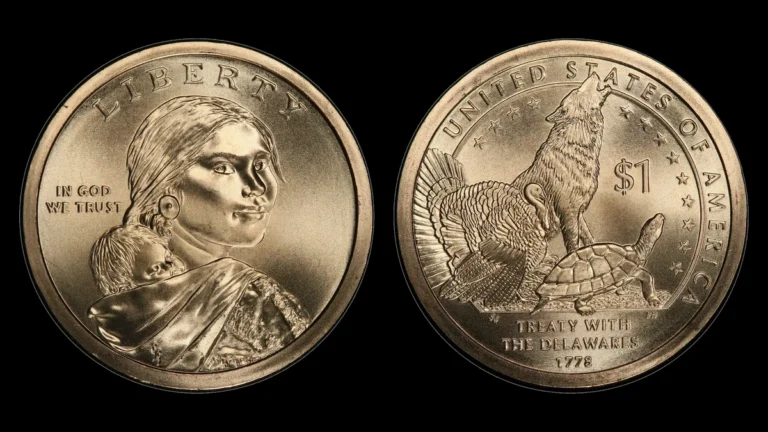
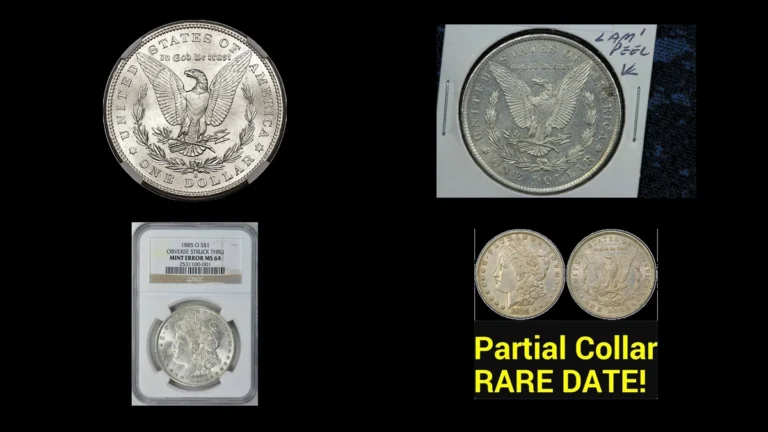
Rare 2020 American Innovation Dollar Errors (List & Pictures)
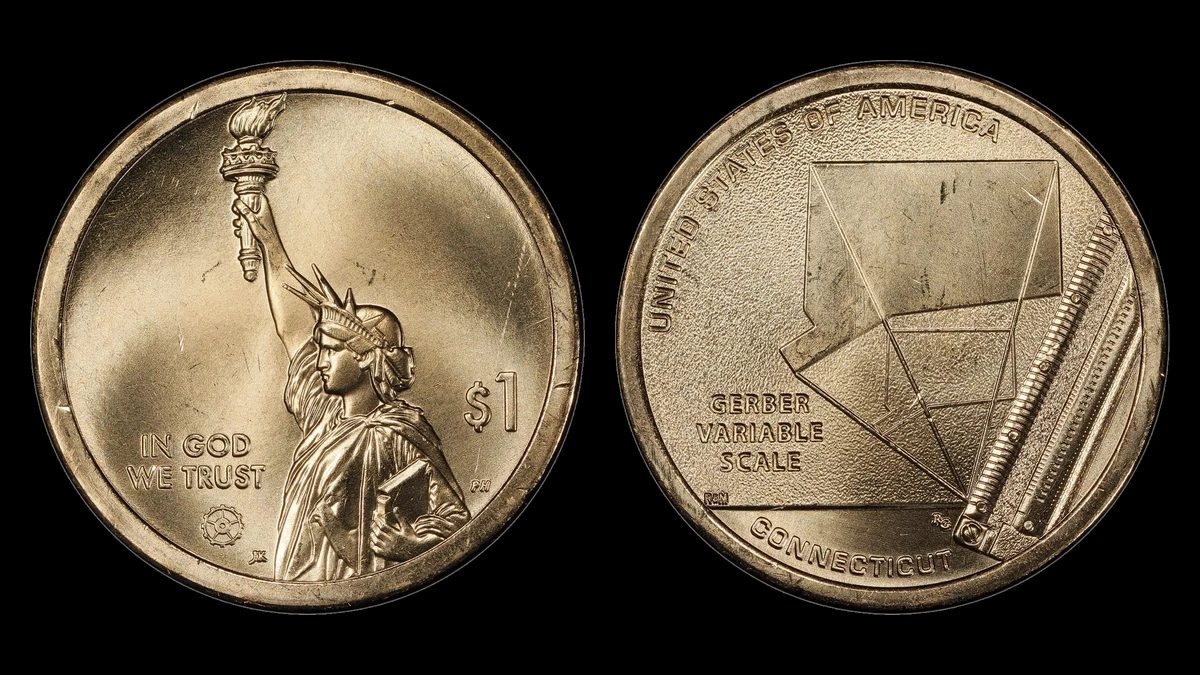
The Connecticut design offers a specific starting point for 2020 American Innovation dollar errors, while several other categories remain possibilities without an identified 2020 specimen. Supplied estimates span $5–$3,000 after authentication.
An older satin-finish Native American dollar with missing edge text realized $1,708 in May 2026, providing context rather than a 2020 sale. Check the state design, face alignment, and entire edge before interpreting smaller raised marks or overlapping images.
1. 2020 Dollar Connecticut Returns at an Angle: Rotated Dies Error
A dealer lists rotated designs on 2020-P Connecticut dollars, the issue depicting the Gerber Variable Scale. A die turned away from normal orientation can change the relationship between the two faces without changing where the edge inscription begins.
The report supplies neither the angle nor its direction. Those facts must come from the individual coin rather than a generic rotated-dollar illustration.
How to Identify
Hold Liberty upright and flip the coin top to bottom without a sideways twist. The reverse normally finishes upright; repeat with the same grip to establish any consistent tilt.
Use Connecticut’s words and complete measuring-device design as orientation references rather than one sloped line within the artwork. Keep straight-on face views linked to that physical flip.
Confirm 2020 and P on the edge. Either normal direction of the edge words is acceptable and does not measure the rotation between the main designs.
What It’s Worth
$25–$300 is estimated for an authenticated Connecticut rotation. The dealer listing establishes a reported type but supplies no completed-sale result used for that range.
Actual angle and preservation shape the comparison. A tilted camera or a coin moving in its holder does not create an error premium.
2. 2020 Dollar No Text around the Circumference: Possible Missing Edge Lettering Error
Ordinary Philadelphia and Denver dollars receive their date, mint letter, and E PLURIBUS UNUM in a separate edge operation. Missing that step could leave normal face designs with an unlettered edge.
The 2020 guide does not identify a confirmed specimen. Proof collector coins use a different process and require separate assessment rather than automatically inheriting the skipped-operation explanation.
How to Identify
Inspect the whole edge in overlapping sections, searching for faint bottoms of letters and digits. A smooth interval between words or one weak patch is not complete missing lettering.
Look for parallel abrasion, flattened bands, or rounded rims from later smoothing. Normal loose-coin references are 8.1 grams and 26.49 millimeters, though correct measurements alone cannot establish originality.
Use the reverse state design to support annual issue identification where the edge date is absent. Keep an unreadable mint unresolved and have the full edge assessed for alteration.
What It’s Worth
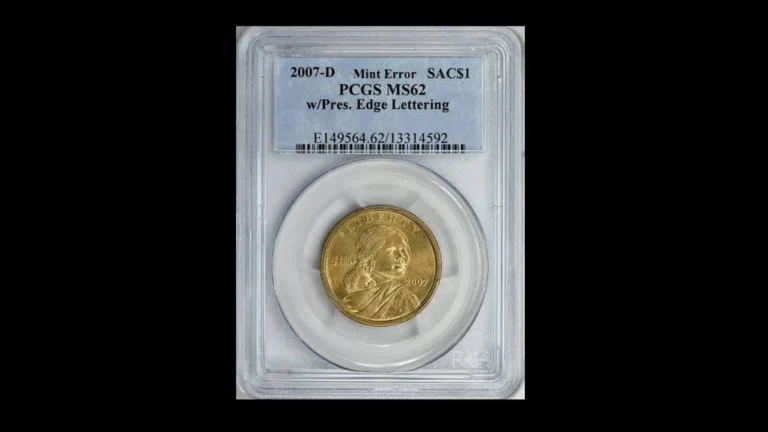
$100–$2,000 is estimated for a candidate after authentication. A 2010 Native American satin-finish missing-edge dollar in SP67 sold for $1,708 in May 2026.
That collector finish and different issue limit the comparison. It does not establish a missing-edge discovery or transaction for any 2020 Innovation dollar.
3. 2020 Dollar A Fine Raised Line across the Artwork: Possible Die Crack Error
The year guide suggests examining Connecticut and Massachusetts designs for cracks without supplying a specific specimen or line route. A split in a die can fill with metal and leave a narrow raised ridge on a coin.
How to Identify
Compare the suspect line with ordinary artwork on the same state design. Follow its entire course and its junctions with letters or figures rather than enlarging one bright segment.
Move the light across the line’s center to distinguish raised metal from an incised scratch with pushed-up lips. A row of small dents or an intended design line requires a different explanation.
What It’s Worth
$5–$150 is estimated for a genuine small crack, not a recorded 2020 sale. Visibility and surface preservation matter, with faint ridges generally providing less appeal than a clear continuous line.
4. 2020 Dollar Two Displaced Versions of the Picture: Reported Multiple Strike Error
The 2020 report lists repeated striking without naming a state, mint, or authenticated specimen. Movement between blows could leave an earlier image partly visible beneath a later one.
This mechanism concerns the coin receiving another strike. Small detail duplicated in a die and repeated text from edge-lettering equipment are separate events.
How to Identify
Connect extra contours into a coherent earlier picture, checking nearby letters and more distant artwork. At crossing points, a later strike may flatten portions of the first while leaving others visible.
Compare the other face for a corresponding strike sequence. One low flat shelf beside a letter cannot establish two separately positioned images.
Proofs normally receive repeated aligned blows, so their usual sharp lettering is not evidence of this error. There must be an abnormal displaced result to assess.
What It’s Worth
$200–$2,500 is estimated for authenticated displaced multiple strikes. A 2009 Native American dollar in MS64, double struck inside the collar and missing edge letters, sold for $336 in January 2022.
That older transaction values one coin combining two features. Neither its sale date nor its price establishes a 2020 Innovation example.
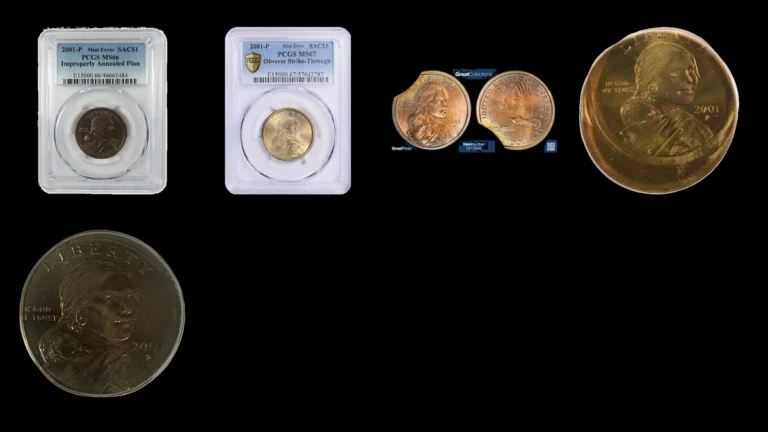
5. 2020 Dollar Bare Metal Opposite Incomplete Design: Possible Off-Center Strike Error
The guide explains off-center striking without documenting a state-specific 2020 coin. A blank partly outside the dies receives incomplete designs beside original unstruck metal.
A wide border by itself is inconclusive. An expanded coin retaining its whole design or a shift limited to one die needs a different assessment.
How to Identify
Compare the picture with the outline on both faces, identifying artwork that falls beyond the metal and the corresponding bare area. The geometry should explain one misplaced blank.
Record any surviving edge date or mint together with the state name and artwork. Those observations must establish the candidate’s own identity and displacement.
Inspect the boundary for crushed letters, impact marks, or grinding that could have erased a completed design. A genuine crescent preserves blank metal rather than merely looking smooth.
What It’s Worth
$250–$3,000 is estimated for an authenticated 2020 off-center dollar based on comparable striking errors. No supplied realized transaction establishes a particular 2020 state, mint, direction, or percentage.
Conclusion
Test Connecticut’s reported rotation with a controlled flip and keep its unknown angle open until measured. For missing edge text, a full circumference matters more than one blank-looking section.
The other categories need their own physical evidence and issue identification. Older Native American dollar sales provide comparisons only, and neither normal edge direction nor aligned Proof striking should be counted as an error.