Rare 1972 Dollar Errors (List & Pictures)
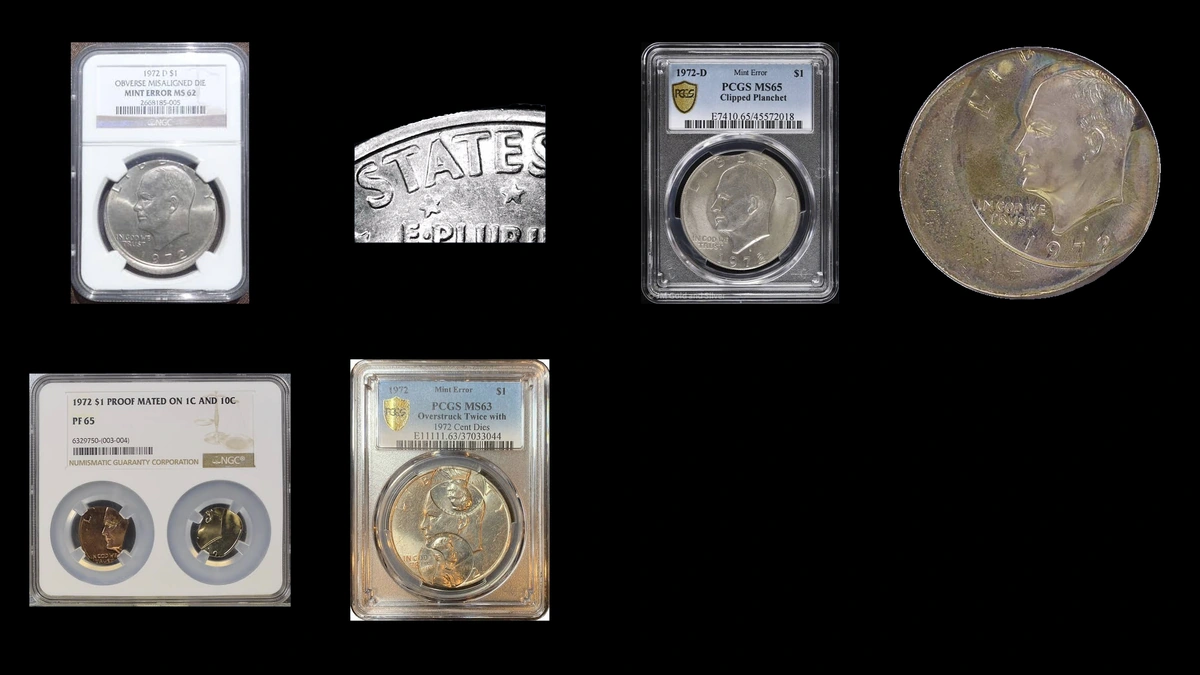
Estimated values for these 1972 Eisenhower dollar errors range from $20 to $100,000, spanning small die shifts and extraordinary mixed-design pieces. The largest supplied completed comparison is $105,000 in April 2021 for a separate three-piece Proof Eisenhower design on dime blanks.
Among the specifically dated 1972 records, a silver Proof double strike brought $15,600. Begin with the small design clues, then inspect the outline, layers, and overlapping impressions while keeping ordinary clad and silver collector issues distinct.
| Finding | Category | Estimated value |
|---|---|---|
| One shifted face | Misaligned die | $20–$250 |
| Repeated small outlines | Doubled or tripled die | $30–$1,000 |
| Curved missing section | Clip | $40–$500 |
| Separated outer metal | Layer error | $150–$5,000 |
| Blocked reverse | Struck through a die cap | $1,000–$6,000 |
| Wrong blank or multiple impressions | Foreign blank, double strike, or mixed-design piece | $250–$100,000 |
1. 1972 Dollar The portrait is shifted more than the reverse: misaligned die Error
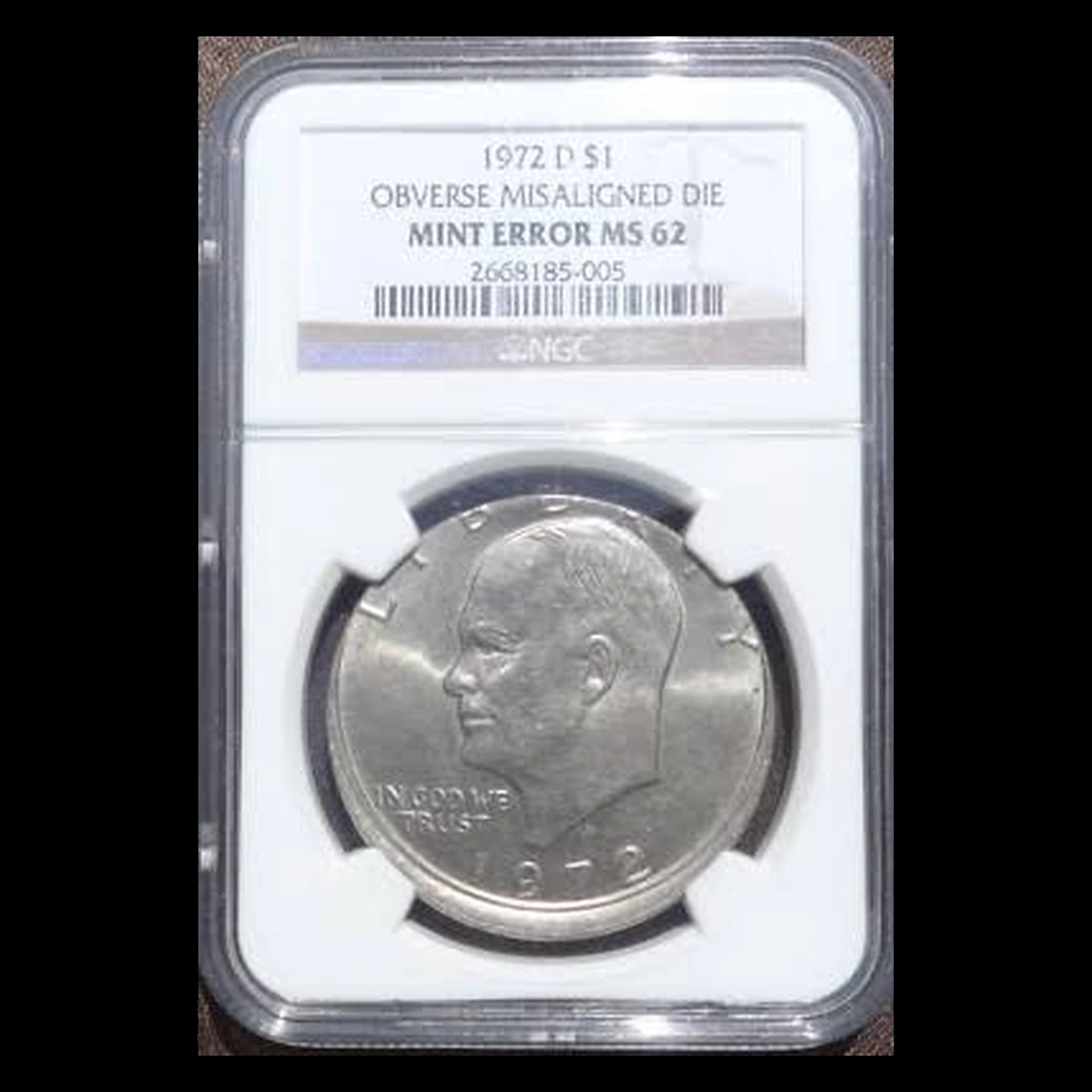
A documented 1972-D has a displaced front design opposite a more normally centered reverse. One die, the steel tool carrying the design, sat out of line with the other.
The PCGS MS64 grade describes an unworn coin with some marks. The error concerns design position rather than wear.
How to Identify
Compare the spaces between design and rim at the top, bottom, and sides of both faces. Straight-on photographs help prevent camera tilt from creating an apparent shift.
A narrow struck rim differs from an edge crushed inward by impact. If both pictures move together relative to the blank, investigate the blank’s placement instead.
What It’s Worth
$20–$250 is the supplied estimate for comparable genuine misalignments. The Denver PCGS MS64 example sold for $114 in December 2024.
A clear difference between the faces makes the error easier to demonstrate. High grade alone does not make a barely visible shift dramatic.
2. 1972 Dollar Letters and other small details repeat: doubled or tripled die Error
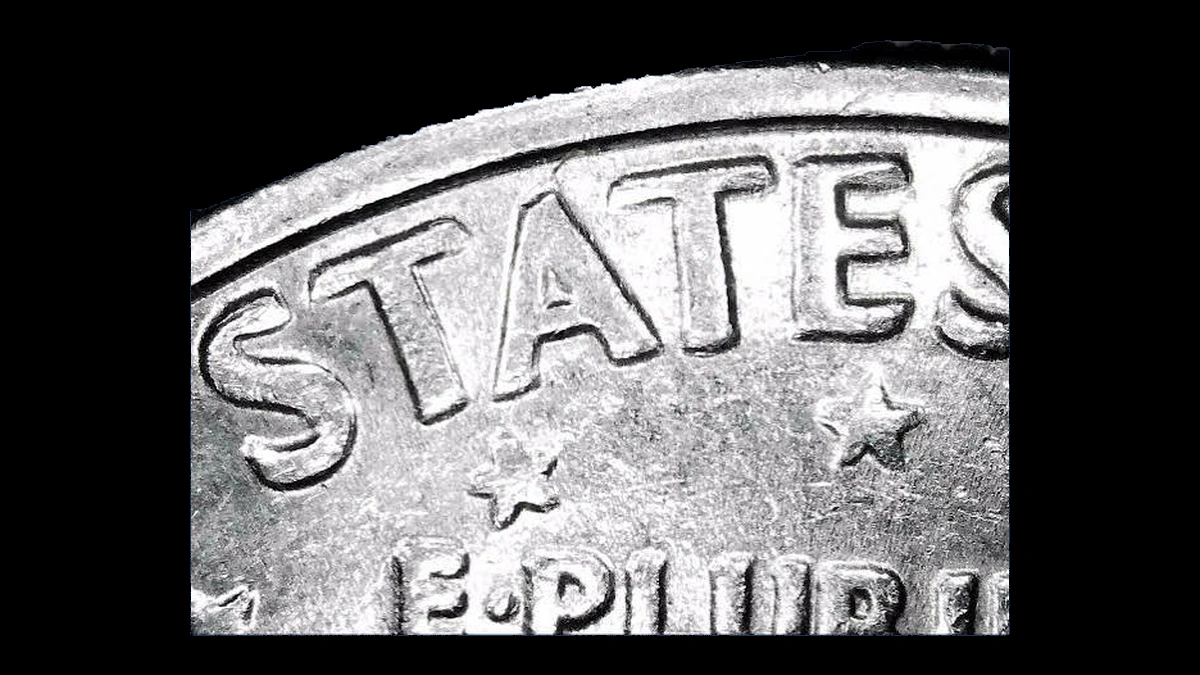
A Denver reverse variety has clockwise repeated outlines in lettering, stars, Earth, and moon craters. These are separate from the normal differences among Philadelphia’s three reverse designs.
San Francisco ordinary silver WDDO-005 shows tripling in the date, motto, and upper LIBERTY. The S Proof WDDO-006 instead has stronger LIBERTY and hair doubling with lighter date separation.
How to Identify
Establish mint and finish before selecting a reference because San Francisco made both ordinary silver collector coins and Proofs. Follow several reverse features on the Denver variety to check the listed clockwise pattern.
On WDDO-005, compare the three outlines in the date, motto, and especially LI. Use the different LIBERTY and hair pattern for Proof WDDO-006.
Other listed varieties, including Proof FS-101, need their exact catalog photographs. A straight-looking R leg or flat letter shelf does not alone establish a doubled die.
What It’s Worth
$30–$1,000 is the estimated range for matched doubled or tripled varieties. Pattern, finish, metal, and preservation contribute to the whole value.
No single price applies to all the listed numbers. Strong readable separation provides a better comparison than a thick letter identified only by its general appearance.
3. 1972 Dollar A curved gap interrupts the rim: clipped planchet Error
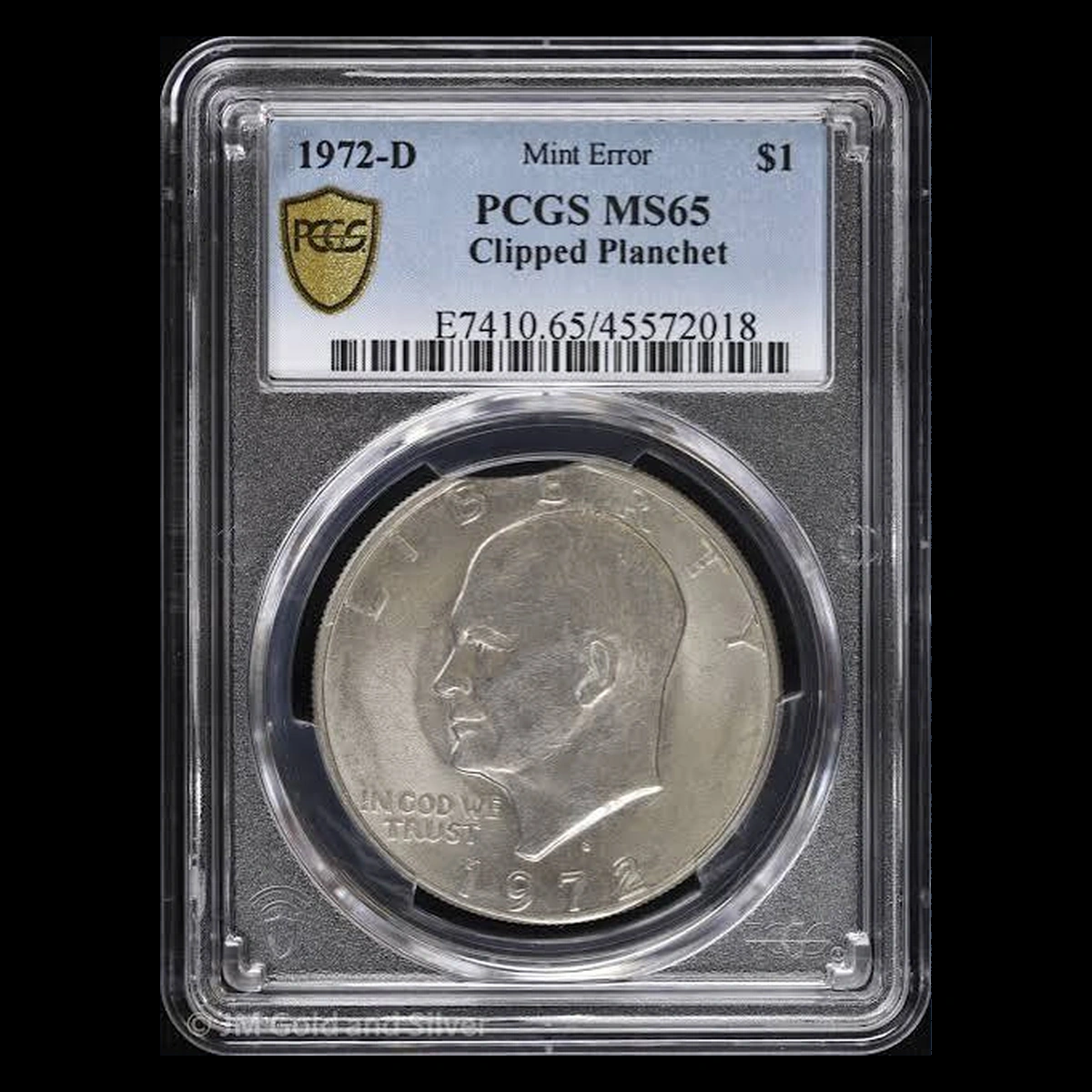
Two documented dollars have small curved clips from blanks cut across an earlier hole in the metal strip. The Philadelphia ANACS MS64 weighs 22.35 grams, and the Denver ANACS MS62 weighs 22.49 grams.
Those are separate specimens. The Philadelphia holder’s Type Two designation was corrected in the auction catalog and must not establish a scarce reverse variety.
How to Identify
Inspect how rim and lettering approach the gap, looking for metal flow consistent with the missing section being present before striking. Opposite-rim weakness can offer additional support.
File marks or a sharp altered face inside the gap suggest later cutting. Compare weight with the ordinary clad standard of 22.68 grams, remembering that both genuine clips and later removal reduce it.
What It’s Worth
$40–$500 is the estimated range for similar authenticated clips. In March 2022, the Philadelphia MS64 sold for $180 and the Denver MS62 for $51.
Condition, clip appearance, and readable identity all matter. The corrected Philadelphia design-type label should add no unsupported premium.
4. 1972 Dollar An outer layer is missing or detached: layer separation Error
A Philadelphia dollar survives with the reverse fragment that separated after striking. The fragment represents about 35% of that face, roughly from 1 to 4:30, and the coin and fragment received AU58 and MS62 grades respectively.
Other examples include partial front cladding on Denver, a Philadelphia dollar weighing 19.0 grams with its full front layer absent, and a silver Proof with part of its reverse layer detached after striking. These are different coins.
How to Identify
Compare a detached piece and its missing area in photographs without pressing them together. Design on the Philadelphia fragment shows that it received the strike before separating.
For ordinary clad dollars, examine a copper-colored face for an actual layer boundary rather than chemical discoloration. The 19.0-gram figure belongs to the complete-front-layer-missing example, not the paired reverse fragment.
A normal silver S collector dollar weighs about 24.59 grams instead of the clad dollar’s 22.68 grams. Its outer layer is 80% silver while the whole coin is 40% silver, so silver content itself is normal.
What It’s Worth
$150–$2,500 is the estimate for comparable ordinary layer errors, with $1,000–$5,000 for authenticated silver Proof examples. The Philadelphia reverse-fragment pair sold together for $1,265 in February 2005.
That amount values the two parts as one dollar. Preserving the original fragment can make the separation and its timing easier to understand.
5. 1972 Dollar A covering coin blocked the reverse die: struck through a cap Error
A previously struck coin can remain attached to a die and cover it like a cap. The next blank then meets that covering coin instead of directly meeting the die.
A Denver dollar certified NGC MS66 was struck through a coin covering the reverse tool. It is the affected dollar, not automatically the cap itself.
How to Identify
Compare the entire reverse’s weak or distorted features with the more normal portrait side. The surviving date and D connect that unusual surface to the identified issue.
Check for grinding or wiping that could erase a finished design. A mirror image can occur in some cap-related situations, but it is not required through every worn cap.
The cap’s condition changes the impression it leaves. A specialist comparison should explain the broad pattern rather than treating one missing letter as sufficient proof.
What It’s Worth
$1,000–$6,000 is the supplied estimate for similar authenticated examples. The NGC MS66 Denver dollar sold for $3,120 in August 2021.
Its preservation and distinctive reverse make it a useful same-year record. An ordinary smooth patch without evidence of cap contact does not justify that comparison.
6. 1972 Dollar The dollar design occupies a foreign blank: one-piso planchet Error
A Denver dollar graded PCGS MS64 was struck on a blank identified as intended for a Philippine one-piso coin. Its design sits slightly off center toward 6 o’clock.
Six o’clock states direction, not 6% displacement. The supplied description concerns an unused blank, so no older Philippine picture is required underneath.
How to Identify
Record the surviving 1972 date and D along with the entire struck outline. Use actual weight and diameter measurements to compare the body with the ordinary dollar standards of 22.68 grams and 38.1 millimeters.
Those normal standards are not measurements of this error. The foreign blank’s composition must also agree, preferably through nondestructive examination.
Inspect the edge for trimming that could make a normal dollar smaller and lighter. The original strike, measured body, and metal must all support the one-piso attribution.
What It’s Worth
$750–$7,500 is the estimated range for a correctly identified 1972 foreign-blank dollar. The PCGS MS64 one-piso example realized $747.50 in May 2005.
A separate undated Eisenhower dollar assigned to 1973–1978 on a one-piso blank sold for $3,172 in June 2026. That newer result is not another sale of the dated 1972 specimen.
7. 1972 Dollar Two displaced pictures overlap: double strike Error
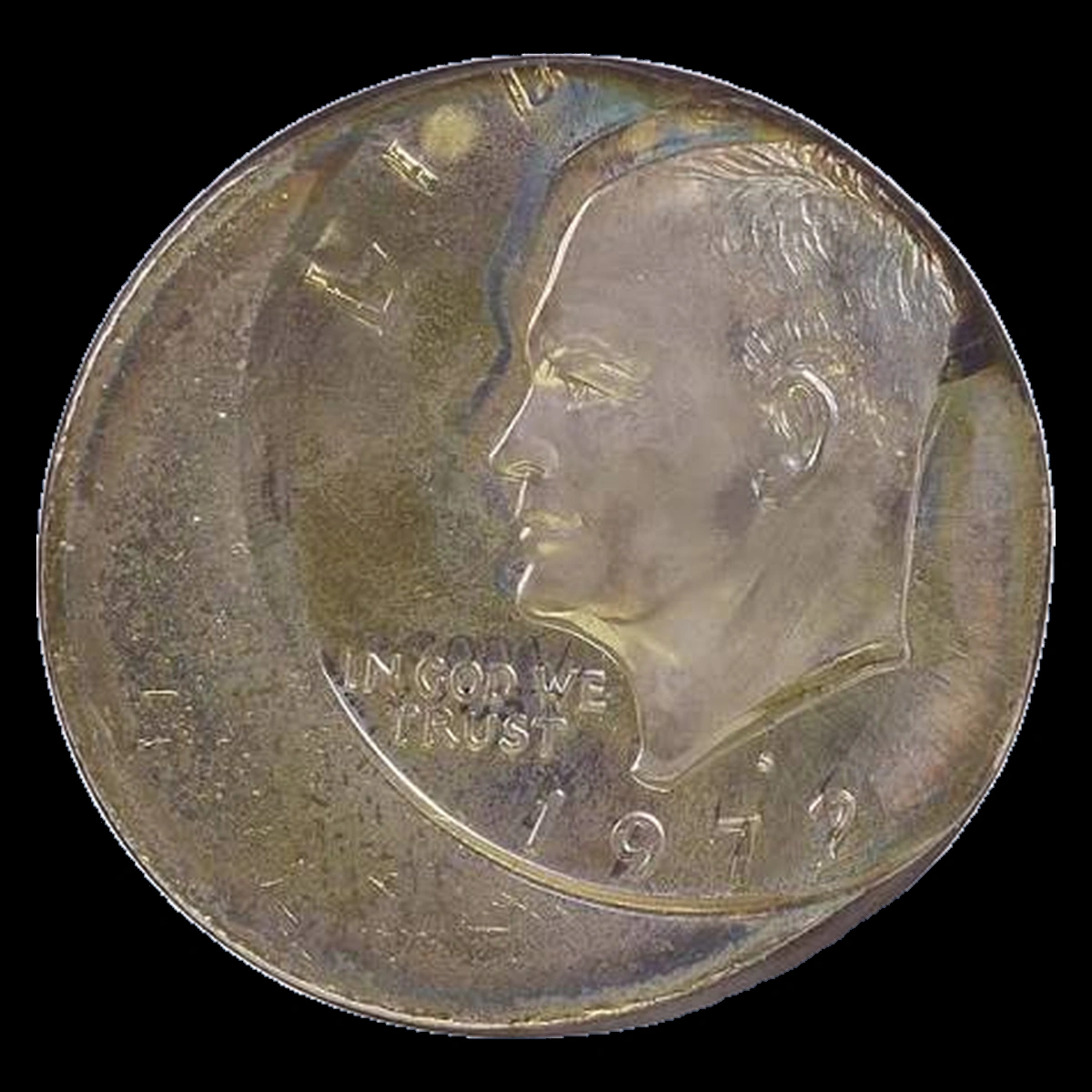
One silver S Proof has two impressions, both about 10% off center toward 5 o’clock. Graded NGC PR66 Ultra Cameo, it repeats LIBERTY and ONE DOLLAR while losing outer lettering and the bottoms of 972.
A different PR68 Cameo silver Proof has a normal first strike and a second shifted toward 8 o’clock. An ordinary Denver example has a second strike 95% off center.
How to Identify
Map recognizable letters and design boundaries from each impression. On the PR66, the repeated wording and incomplete lower date should agree with its two off-center placements.
For the PR68, trace the normal first design beneath the displaced second. On the Denver coin, concentrate on the small second-strike area near the edge without borrowing either Proof’s direction.
Normal Proof manufacture can involve repeated aligned blows. Distinct abnormal placements, rather than close doubled letter edges alone, establish the error here.
What It’s Worth
$8,000–$25,000 is the estimate for comparable silver Proof double strikes, while ordinary Denver examples are estimated at $250–$2,000. The PR66 sold for $13,800 in August 2022.
The separate PR68 Cameo realized $15,600 in the same auction. Finish and clarity of the impressions help explain why these Proofs differ from the ordinary Denver category.
8. 1972 Dollar Two small pieces share one dollar picture: cent-and-dime blank pair Error
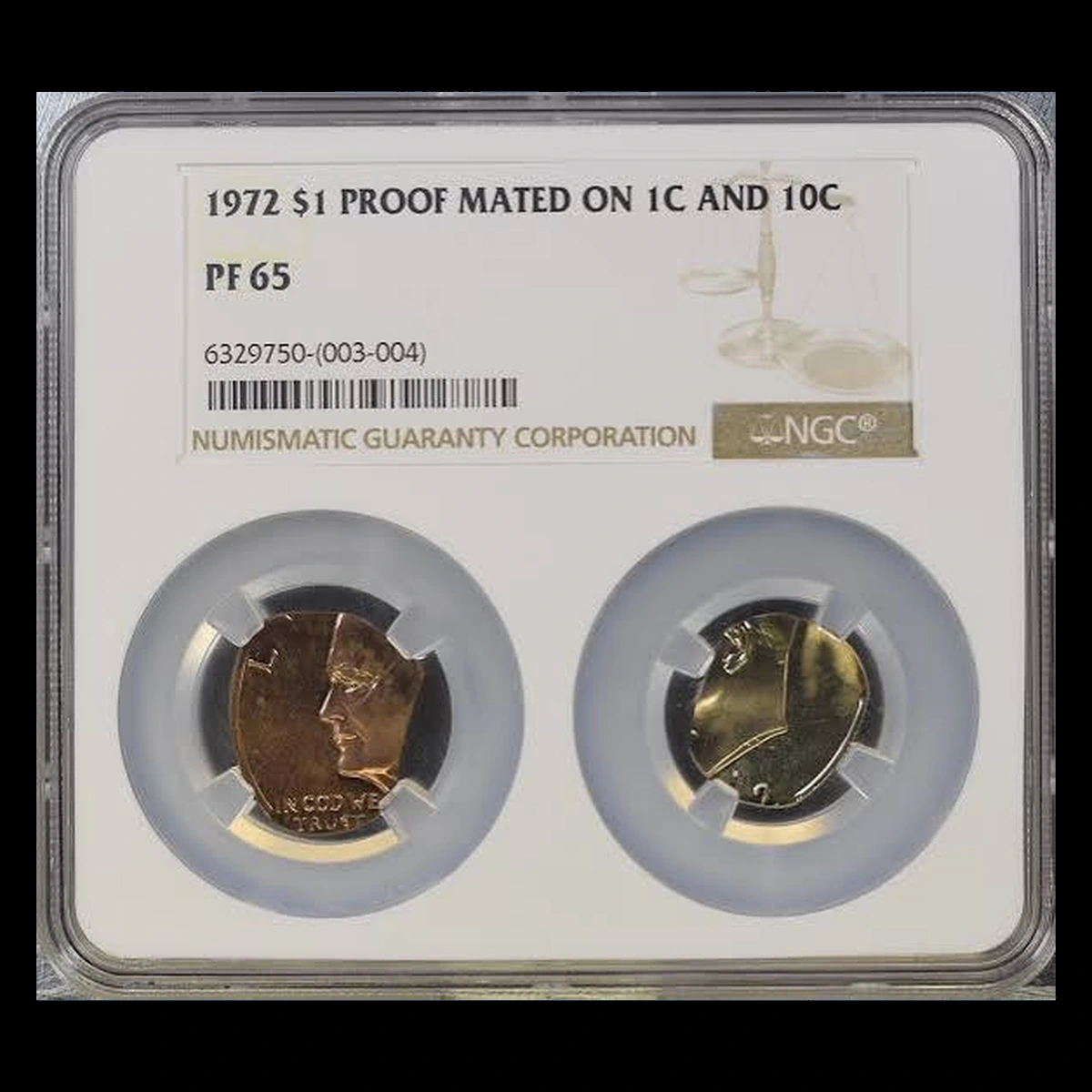
A cent blank and dime blank lay side by side beneath Proof dollar dies and received parts of the same design. Their contact restricted spreading between them while other areas expanded into oval outlines.
The NGC PR65 pair is cataloged as 1972-S. The dime-blank piece shows an S above-left of the final 2, but the rest of the date is absent.
How to Identify
Compare both pieces at equal scale and orientation, following the divided design and adjoining boundaries. Stretched TRUST and the ED of UNITED help show how the metal spread.
Keep the pieces in their holders rather than forcing their edges together. The certified attribution supplies the year; the visible final 2 is not a complete readable 1972 date.
Although holder wording suggests finished small coins, the auction found no underlying cent or dime design. The supplied evidence describes unused blanks.
What It’s Worth
$25,000–$80,000 is the estimate for the complete authenticated two-piece pair. Its August 2025 auction appearance ended without a sale.
A different three-piece Proof Eisenhower design on adjacent dime blanks sold for $105,000 in April 2021. That larger arrangement is a comparison, not a realized price for the cent-and-dime pair or for either piece separately.
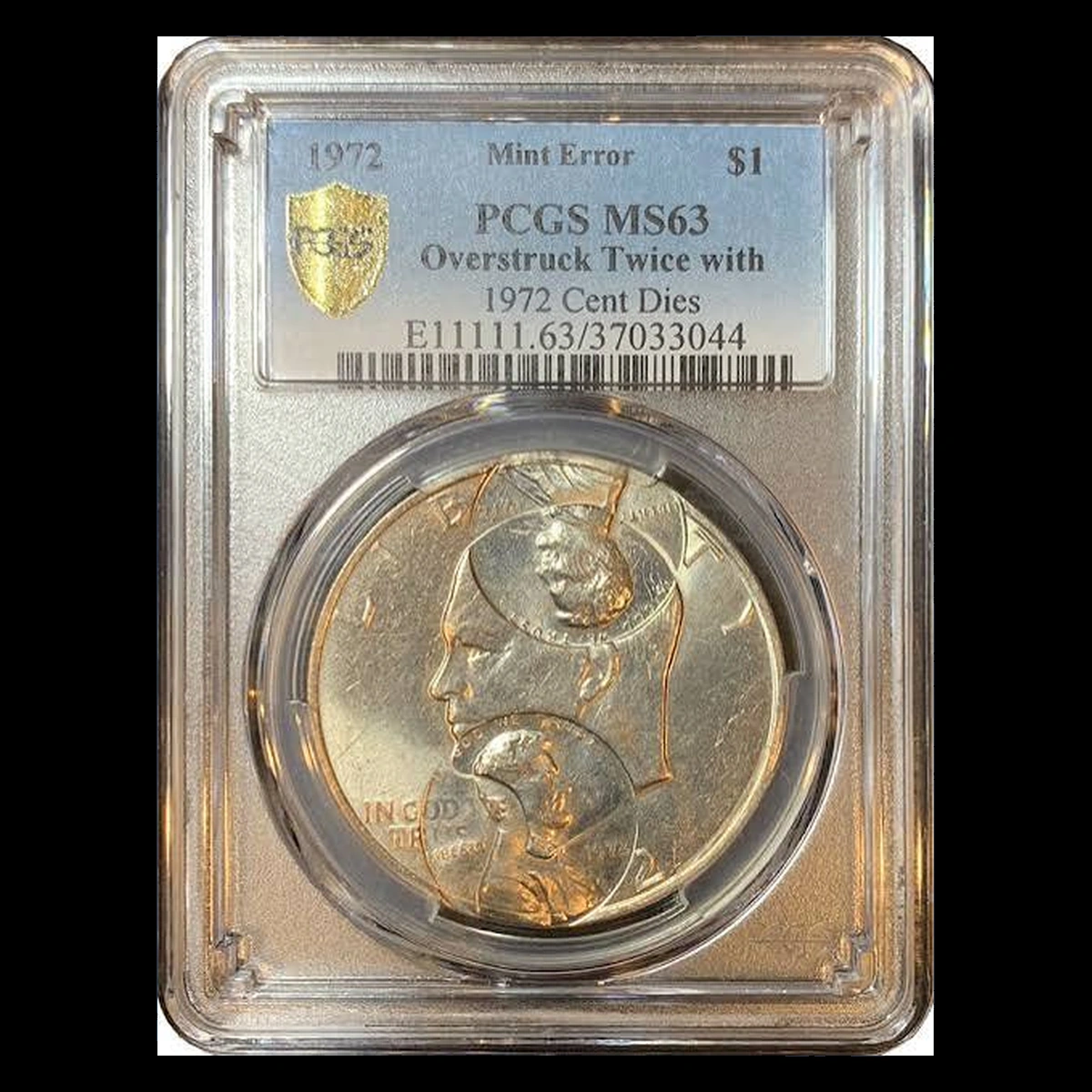
9. 1972 Dollar Two cent impressions cover an existing dollar: mixed-design overstrike Error
The large dollar design came first on this unusual piece, followed by two adjacent Lincoln cent impressions. A raised strip between them creates its saddle-like form.
Mike Byers describes two neighboring pairs of cent dies acting at the same time and regards the result as an intentionally made Mint product. PCGS graded the piece MS63; the supplied account does not establish an accidental feed error.
How to Identify
Locate surviving dollar detail beneath the smaller designs to establish their order. Both cent areas should contain real struck features rather than attached coins or decorative engraving.
Use side views to examine the connecting strip and compare the complete form with Byers’s published example. Do not flatten it to recover a round-dollar outline.
The original dollar began at about 38.1 millimeters, but this striking sequence changed its shape. It is different from applying dollar designs to small blank discs.
What It’s Worth
$30,000–$100,000 is the editorial estimate for the whole certified piece. No completed auction amount for this 1972 object is supplied.
A 1979-S dollar design over a finished cent brought $3,904 in June 2026. Its opposite design sequence and different physical form make it a limited comparison.
Conclusion
Identify mint, finish, and metal before applying any error label to an Eisenhower dollar. Silver is expected on the appropriate S collector issues, and normal reverse-design differences are not doubled dies.
For larger errors, retain fragments and matched pieces together while documenting their design sequence. The complete coin or group is what an auction prices, so keep separate specimens, unsuccessful auction appearances, and broader comparisons attached to their own records.