Rare 1868 Dollar Errors (List & Pictures)
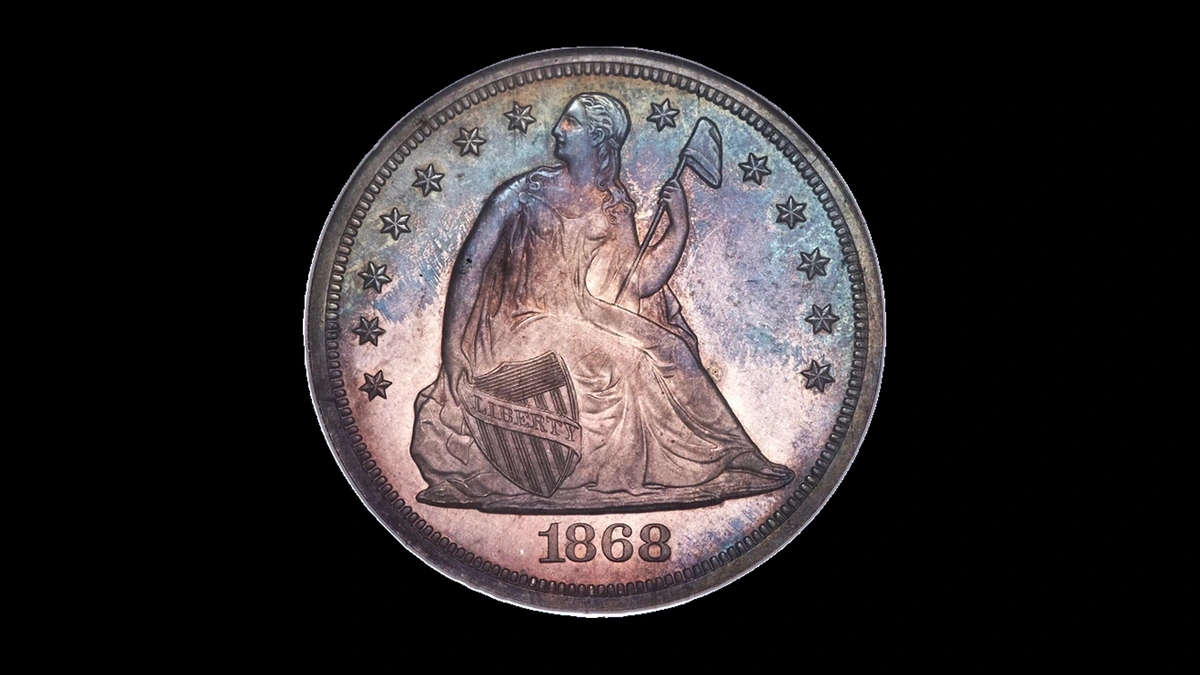
An 1868 dollar with a misplaced 6 sold for $6,600 in November 2025. The 1868 Liberty Seated dollar errors and die features below have estimated whole-coin values of $500–$20,000.
Establish ordinary strike or Proof first, then inspect the date, the upper reverse letters, and any small drapery mark using the correct variety comparison.
1868 Dollar An extra digit below the date: misplaced and repeated dates Error
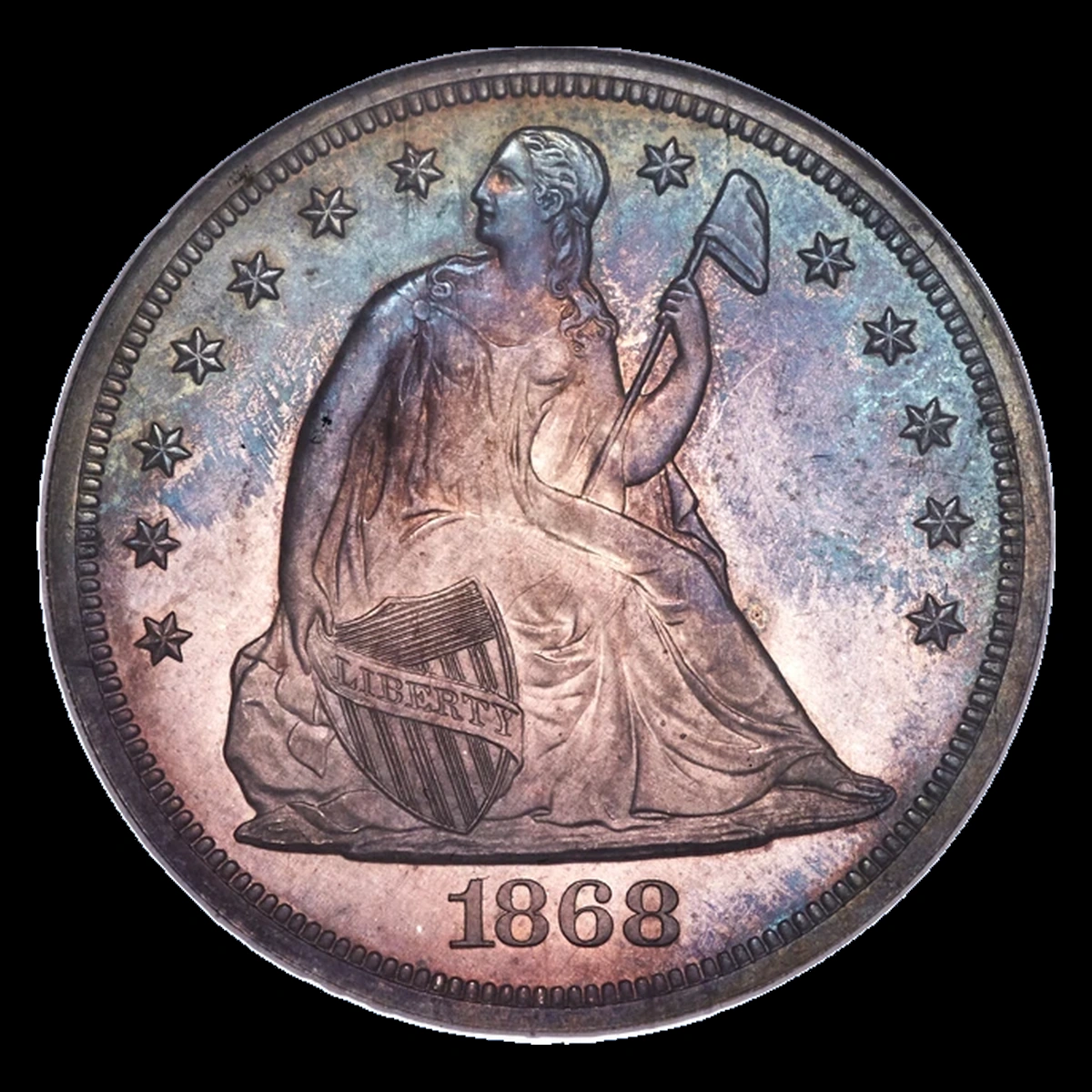
On the ordinary FS-301 variety, a second 6 appears among the small border beads beneath the normal 6. A date punch entered the die outside its intended position and left a remnant for later coins to copy.
Collector Proofs have separate date listings. FS-302 is a misplaced-date designation, while Breen-5480 describes a repeated date impression most apparent on early strikes.
These Proof names should not automatically be counted as two independent varieties or specimens. Their actual date patterns must be compared separately from ordinary FS-301.
How to Identify
Determine the coin’s production finish before choosing a reference. Reflective surfaces alone cannot prove Proof status; the documented ordinary MS62 coin also has reflective areas.
For ordinary FS-301, inspect the border directly beneath 6 and follow the extra numeral arc across the beads. One nick or rounded border tooth cannot establish the whole shape.
For Proof FS-302, use a photograph with that exact designation rather than assuming the ordinary variety’s lower-6 position. A suspected Breen-5480 needs comparison of the repeated date outlines with an early-strike example.
Later impressions can weaken the small Proof date remnants. Keep uncertainty visible when wear or the die state prevents a complete match.
What It’s Worth
The combined date-variety estimate is $500–$15,000, with ordinary FS-301 around $500–$10,000 and the Proof date forms around $2,500–$15,000.
The PCGS MS62 FS-301, attributed OC-2, sold for $6,600 at Heritage in November 2025. Its whole-coin preservation and variety are both included.
Greysheet lists FS-302 guide values around $3,080–$10,230. Those are guide figures rather than recorded auction transactions.
1868 Dollar A line through S and OF or a drapery lump: die flaws Error
The OC-2 reverse has a fine raised line from the last S in STATES to the tops of O and F in OF. The same coin also carries the misplaced 6 described above.
A different variety, OC-1, has a small raised lump within Liberty’s clothing. That mark needs its own reference because it is not the reverse crack on OC-2.
A fracture or cavity in a die allows coin metal to rise into the damaged area during striking. A scratch or deposit on the finished dollar has a different origin.
How to Identify
Begin at OF on the reverse and follow the raised thread across the letter tops toward the final S. Use low light to distinguish a ridge from a cut into the field or letters.
For the drapery mark, match an identified OC-1 close-up with the surrounding folds still visible. The supplied description does not establish a more precise location within the clothing.
Move the lamp rather than picking at a suspected lump. Loose dirt can resemble extra metal in a single view without being part of the strike.
What It’s Worth
Identified examples have an estimated whole-coin range of $500–$20,000 across worn and well-preserved unworn grades.
The OC-2 reverse crack belongs to the same MS62 dollar sold for $6,600 in November 2025. It cannot be counted as another full-price transaction beside its misplaced date.
The OC-1 lump is recorded on an NGC MS65 coin without a supplied realized price. The higher grade describes preservation, not a guaranteed premium for the small mark.
Conclusion
The ordinary misplaced 6 supplies a precise starting point, while Proof date varieties require their own references. On the reverse, the S-to-OF crack belongs to OC-2; the drapery lump is a separate OC-1 feature.
Keep those identities and production finishes attached to each comparison. Multiple marks on one coin still produce one whole-coin value, with condition and original surfaces accounting for much of the price.