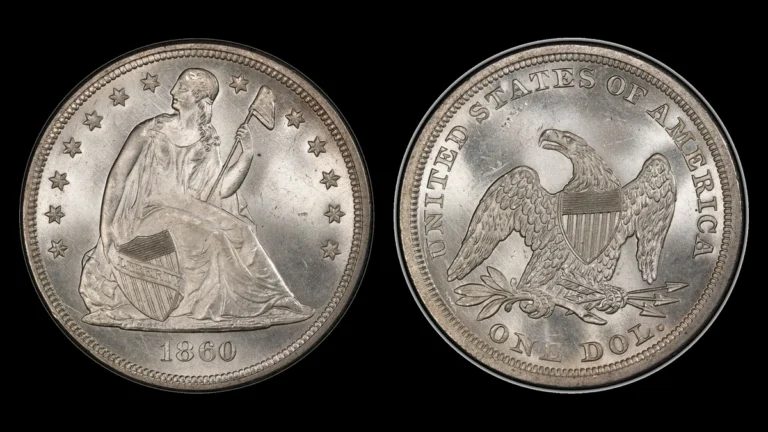
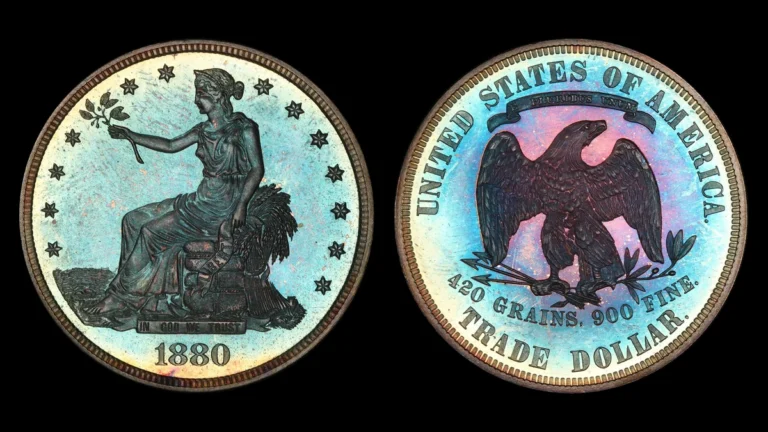
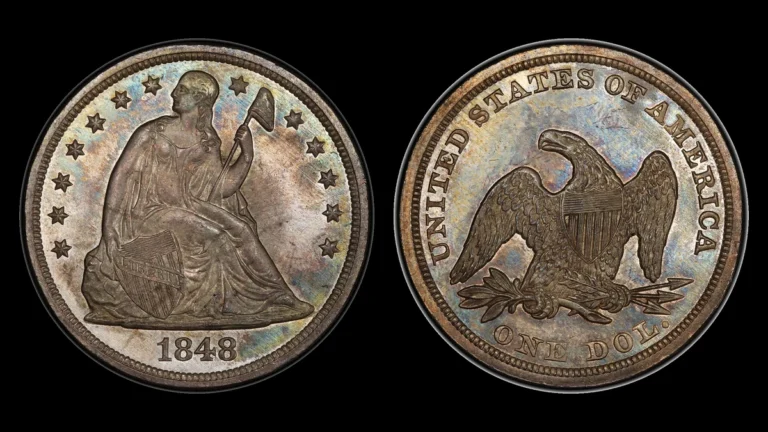
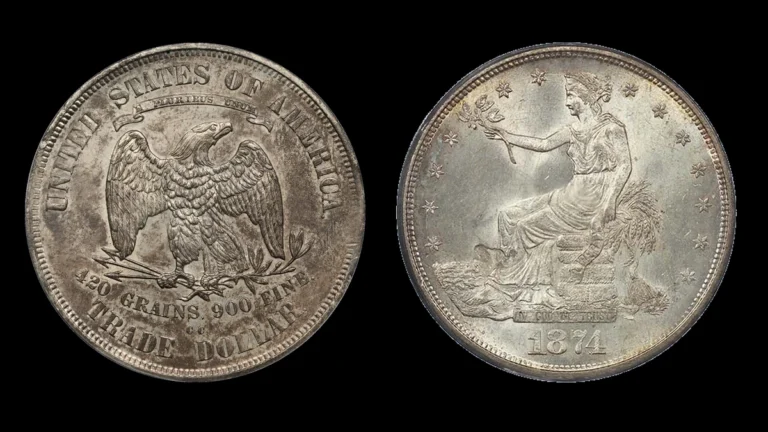
Rare 1924 Dollar Errors (List & Pictures)
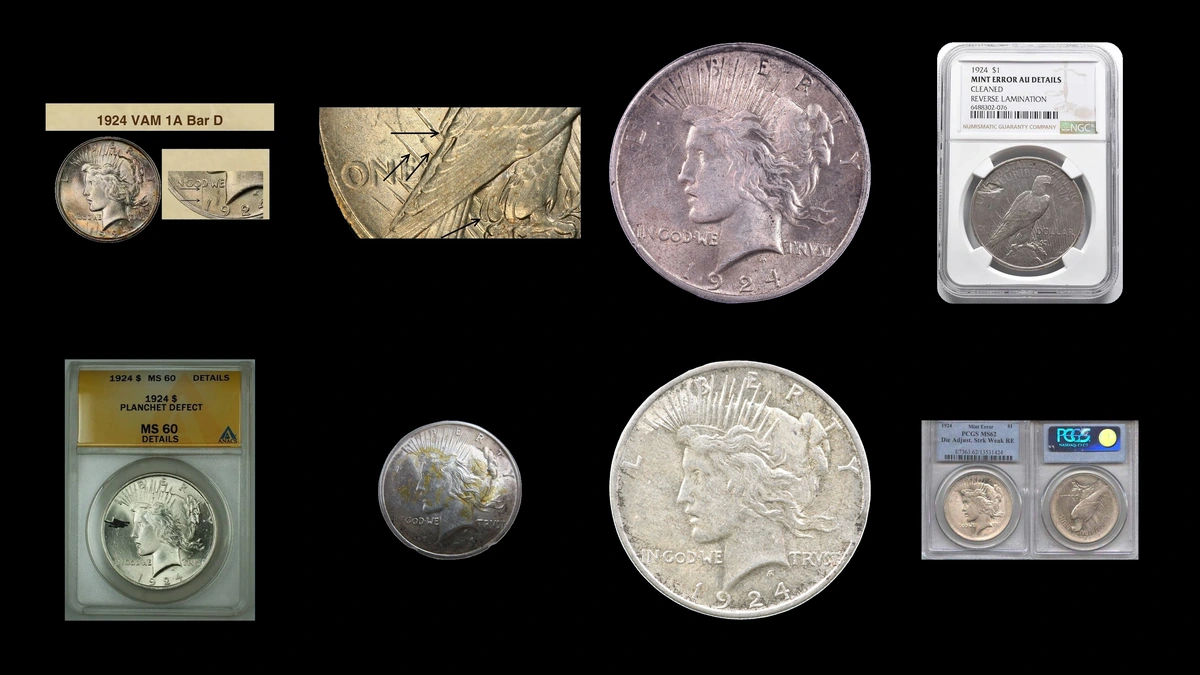
Is the odd mark raised, recessed, or peeling away? That first question helps separate eight groups of 1924 Peace dollar errors, with working values of $75–$6,000.
A Broken Wing dollar in exceptional MS67 condition brought about $2,233 in January 2015. Follow the surface checks below before comparing prices, since a tiny die mark and a broadly weak strike tell very different stories.
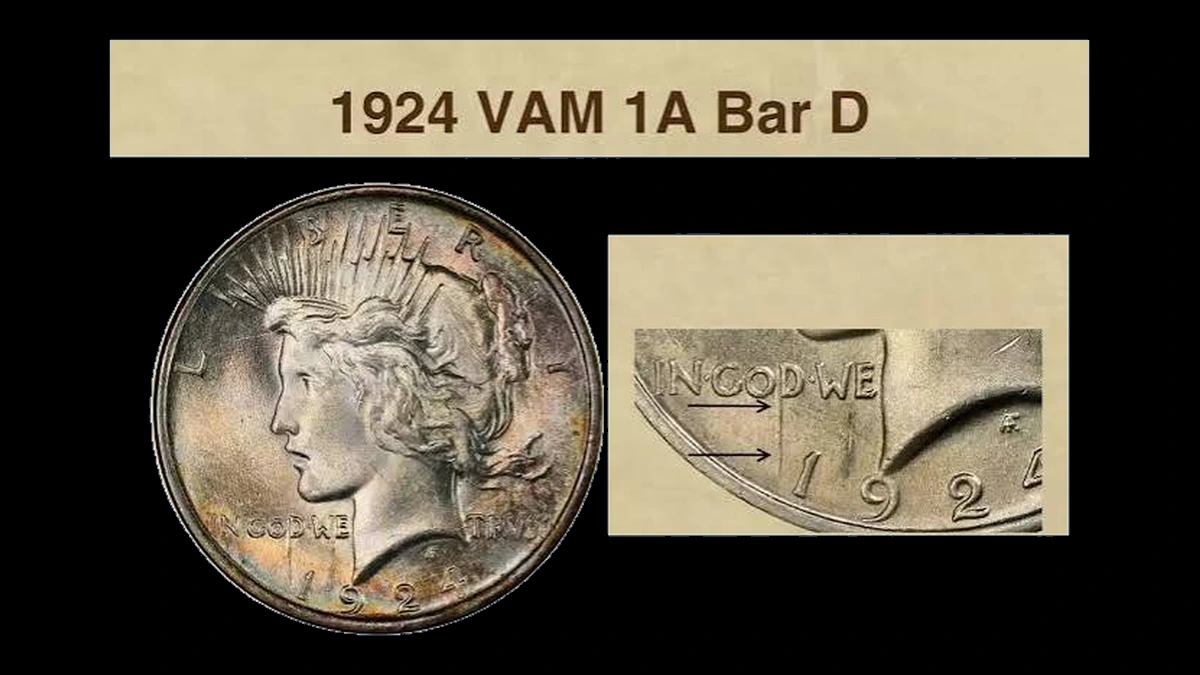
1. 1924 Dollar A Ridge Hanging below GOD: Bar D Error
Find the D in GOD on the portrait side. On the Bar D variety, an extra vertical ridge extends below that letter.
A groove in the die filled with coin metal during striking, leaving the raised bar. Damage from a feeding part has been suggested as the cause of the groove, but that explanation is not established.
How to Identify
Check that the line rises above the surrounding surface. A scratch made on the finished dollar cuts downward instead.
Compare the bar’s shape and attachment to the D with an identified example. Its location is below GOD on the front, not below DOLLAR on the eagle side.
What It’s Worth
$75–$1,000 is the working range for circulated through attractive unworn Bar D dollars. PCGS records an MS64 example at $600 in a January 2023 eBay result.
The clarity of the ridge helps, but scratches and wear elsewhere still affect the whole coin. The nickname alone does not set its price.
2. 1924 Dollar Repeated Reverse Outlines: Doubled Die Error
The eagle side may show extra outlines in its lettering and design. When those outlines were already present on the die, each coin struck from it could receive the same doubled pattern.
A Philadelphia doubled-reverse variety is recognized by PCGS. A separate San Francisco report must be matched to its own examples.
How to Identify
Check for an S near the eagle’s tail before choosing a comparison photograph. The same date does not make Philadelphia and San Francisco doubling interchangeable.
Look for a fixed pattern across several details rather than a single thick letter. Reflections shift with the light, and flat shelf-like edges can come from movement during the strike.
What It’s Worth
$100–$1,500 covers matched examples across ordinary circulated and unworn grades. The recorded Philadelphia MS64 coin brought about $852 in February 2014.
That sale does not price the separate San Francisco report. Grade, mint, and the strength of the matching pattern all belong in the comparison.
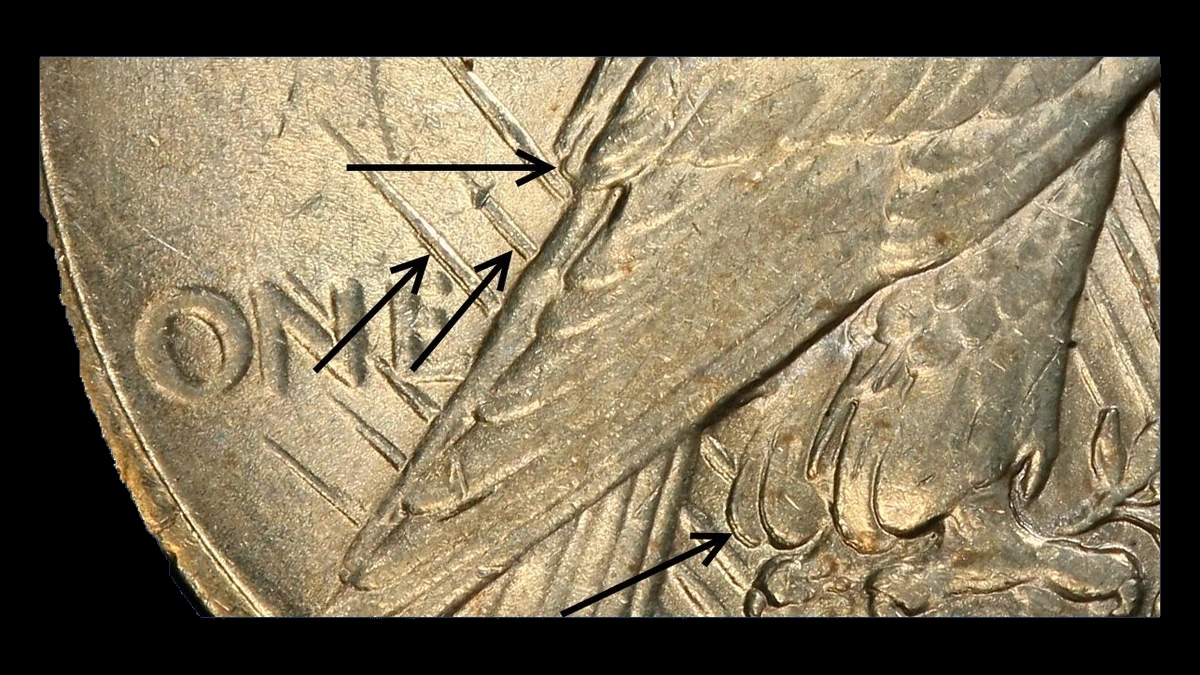
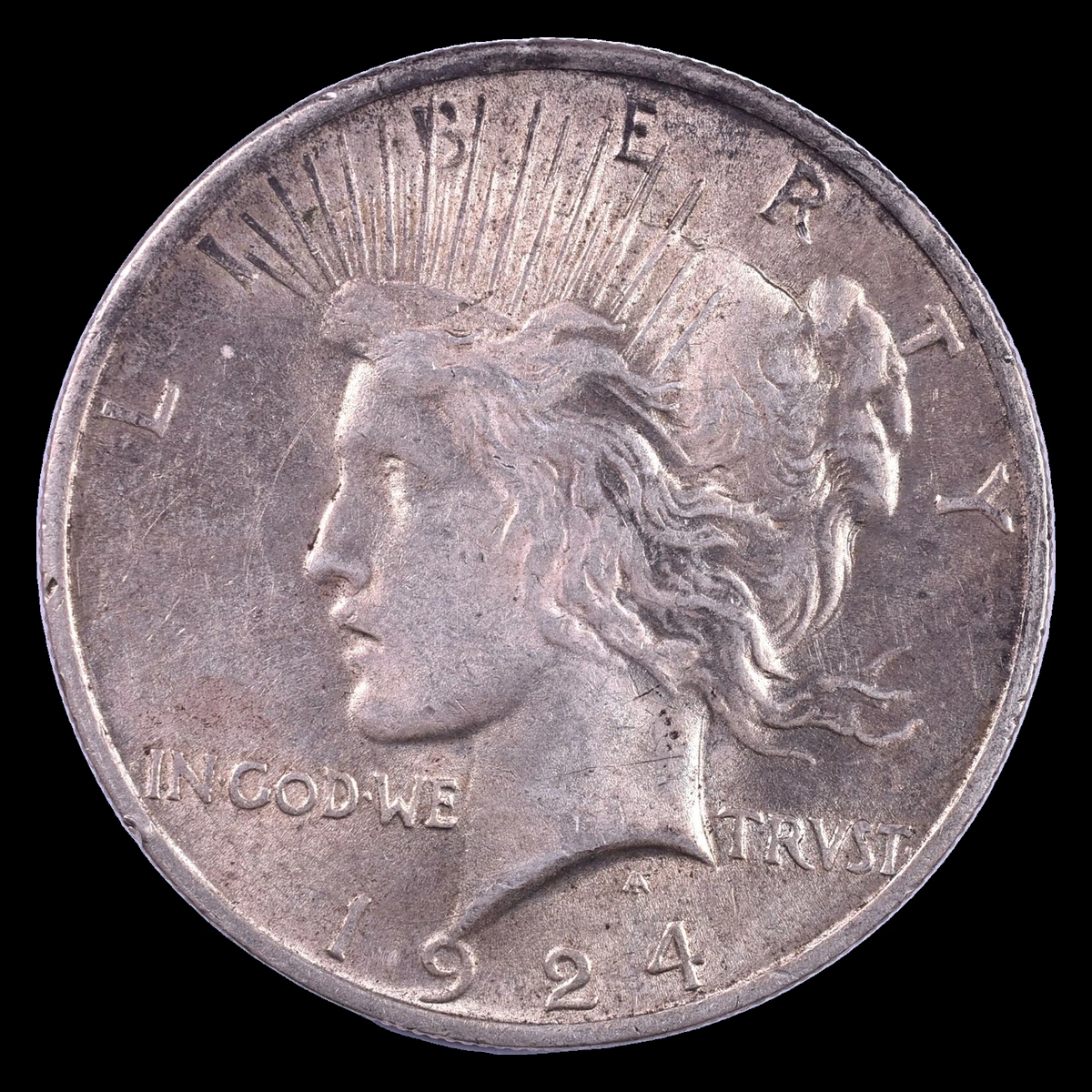
3. 1924 Dollar Raised Metal in the Wing or at the Rim: Die Break Error
A broken piece of die can leave an opening that fills with metal. The result is raised detail on the coin, even though the damage occurred to the tool.
The Broken Wing variety affects the eagle’s wing area. A separate advertised rim-cud example has a lump at the edge, so it should not be treated as the same shape or specimen.
How to Identify
Compare the wing feature with an identified Broken Wing photograph, separating the added metal from ordinary feather lines. A cut through a feather is not the raised feature.
For a cud, check where the lump joins the rim and look for evidence of a later edge hit. The supplied rim listing places its feature at 7 to 8 o’clock but does not name the face.
What It’s Worth
$100–$3,000 is the comparison range for the supplied wing and rim breaks. A Broken Wing dollar graded MS67 brought about $2,233 in January 2015, with its exceptional preservation contributing heavily.
The separate ANACS MS64 rim-cud dollar was offered at $149.95 in a 2007 dealer list. That older asking price is not a completed sale.
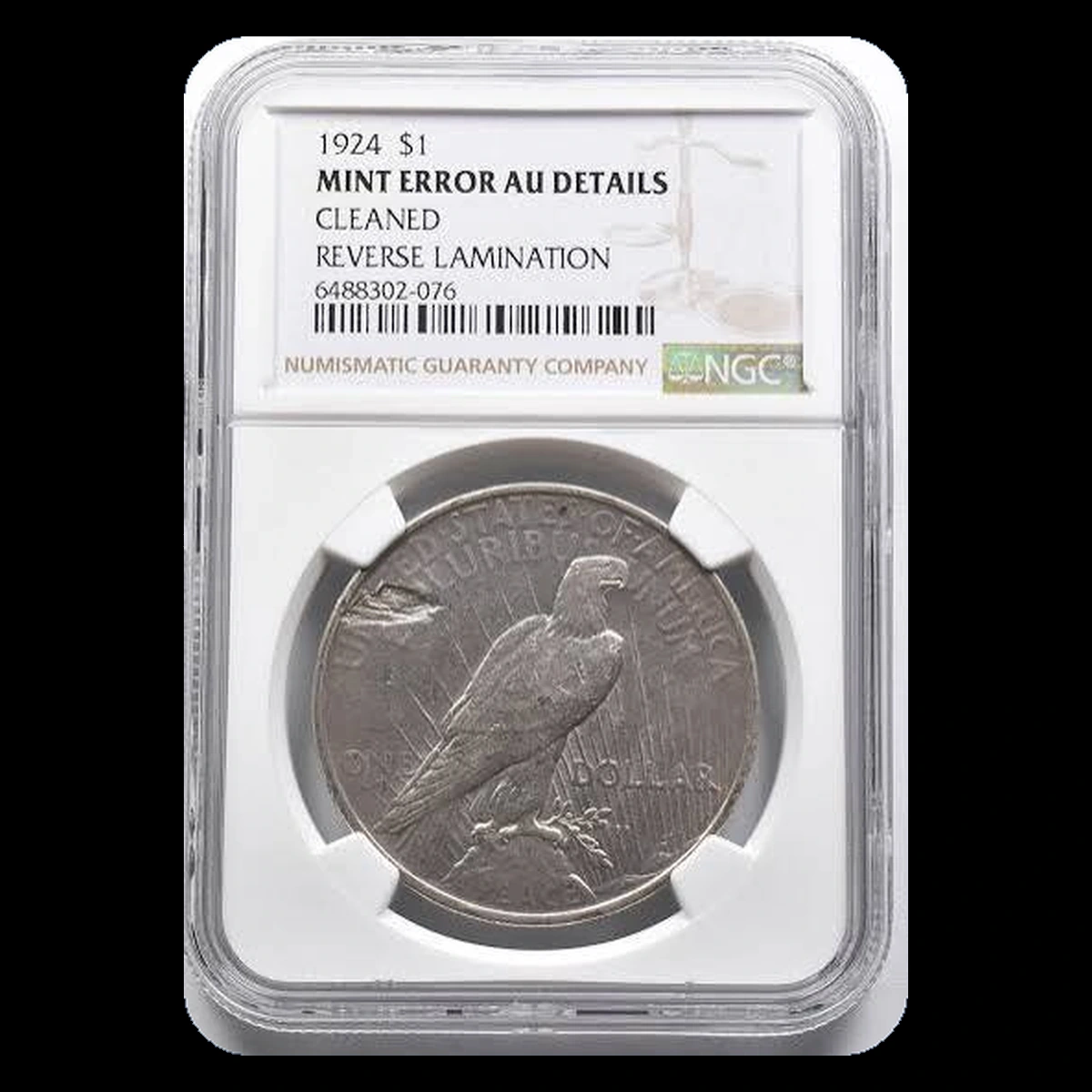
4. 1924 Dollar A Thin Layer Lifting Away: Lamination Error
A silver-copper blank can contain a weak seam that later peels open. The dollar may retain a thin flap or show a shallow patch where part of the surface separated.
The supplied Philadelphia examples include a reverse lamination graded NGC AU58 and a separate front lamination graded NGC MS61. A San Francisco year-guide report gives no matching grade or location.
How to Identify
Use side lighting to follow the seam and any design crossing it. Leave a flap attached rather than lifting it to see underneath.
Scraping often produces parallel cuts or pushed metal. This dollar is a solid silver-copper alloy, so a natural peel is not loss of a modern clad outer layer.
What It’s Worth
$75–$500 is the working comparison range. The 1924 Philadelphia reverse-lamination coin graded AU58 sold for $36 in August 2013, an older result below this range.
A different-year 1922 Peace dollar with a reverse lamination in the same grade brought $134 in December 2025. The amount and appearance of the peeling metal matter alongside condition.
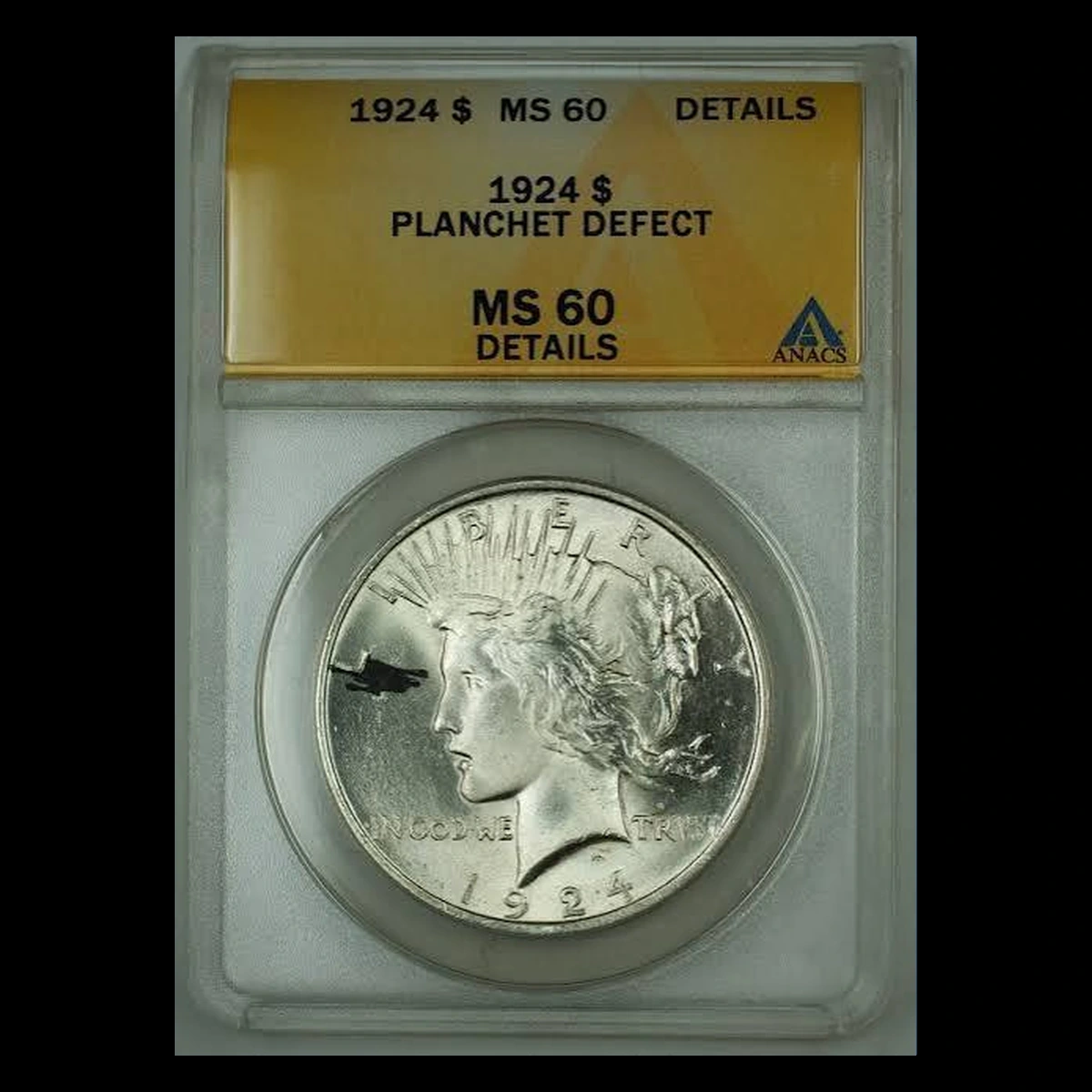
5. 1924 Dollar An Embedded Patch below DOLLAR: Rolled-In Material Error
A dealer described a large patch below LLAR in DOLLAR as rolled-in slag. That means unwanted material was pressed into the metal strip before the blank was cut.
The listed 1924 coin was described as About Uncirculated, with only limited wear. The description does not identify the material’s exact composition.
How to Identify
Examine the boundary beneath LLAR and the way the nearby design meets it. Embedded material must be distinguished from dirt resting on top or corrosion that formed later.
Color cannot settle that question. Keep the patch untouched, since scraping could remove the very evidence needed to understand it.
What It’s Worth
$100–$750 is the estimate for a genuine example with a clear embedded patch. Its connection to the original struck surface is more important than how dark it looks.
Jim’s Coins listed a $16 minimum bid for the described coin. No realized price is supplied, so that opening figure should not be called its sale value.
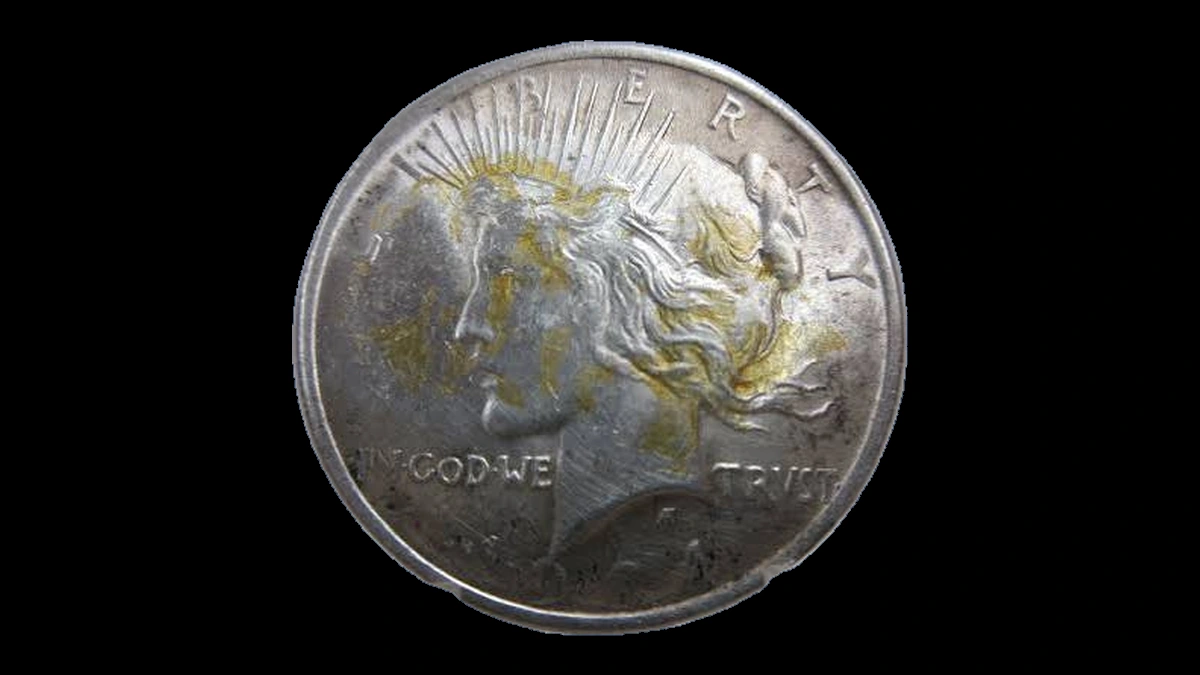
6. 1924 Dollar A Patch of Front Design That Did Not Form: Struck Through Error
An object caught between a die and blank can block part of Liberty’s design. Unlike a peeling layer, this interruption can happen without metal breaking away from the finished coin.
The records include a Philadelphia catalog example and a separate front struck-through dollar graded NGC MS63. Neither description establishes a particular kind of blocking material.
How to Identify
Find the transition from fully struck detail to the affected patch. Its outline should help explain where contact was blocked.
A later dent may push metal into the surrounding design, while a lamination may have a lifting lip. Do not call a faint texture cloth or wire without a convincing pattern.
What It’s Worth
$100–$2,000 covers comparable authenticated 1924 struck-through dollars. A broad interruption on otherwise attractive surfaces usually shows the error more clearly than a tiny mark.
A 1923 front struck-through Peace dollar graded NGC MS64 sold for $192 in December 2025. That recent comparison concerns another year, not either of the supplied 1924 examples.
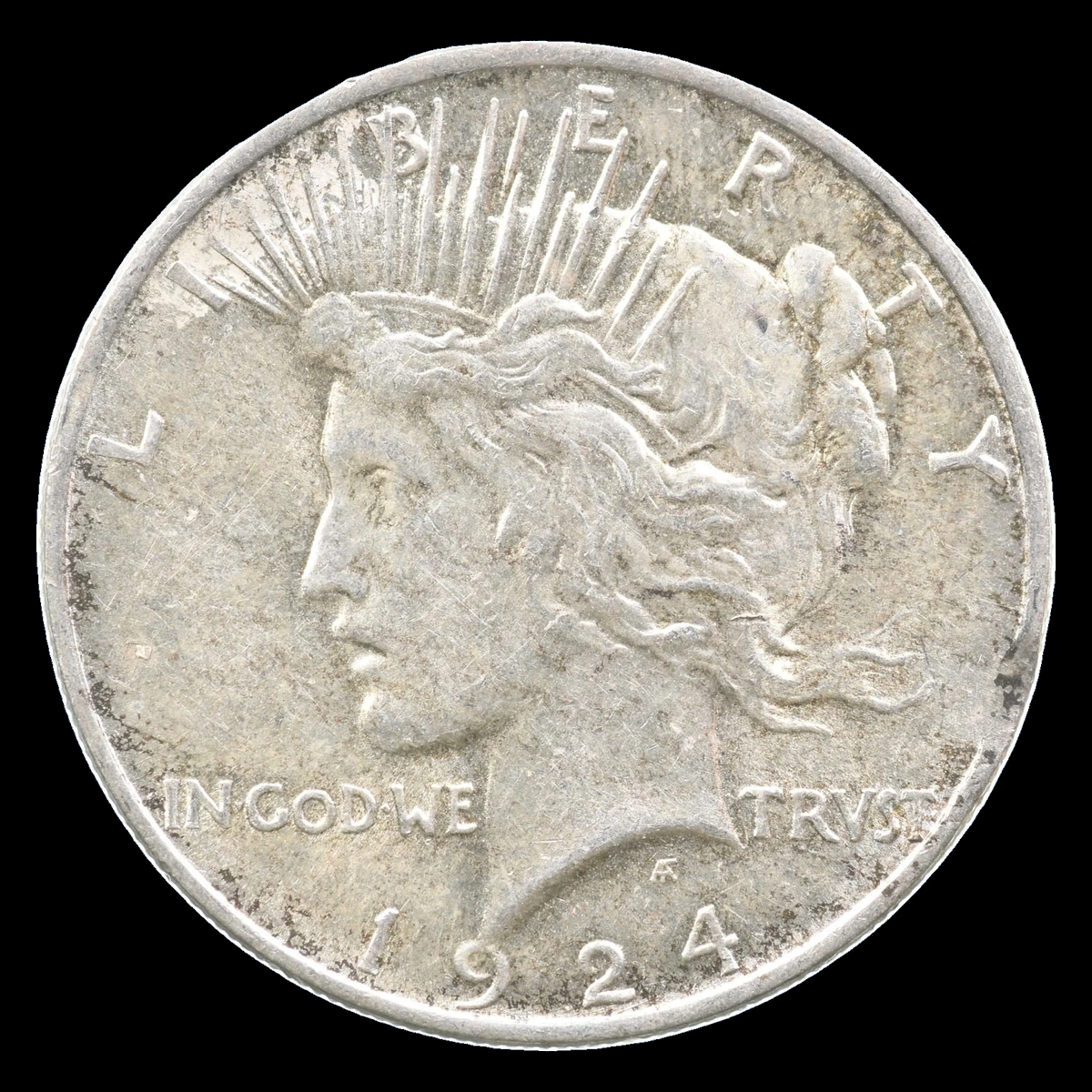
7. 1924 Dollar One or Two Curved Gaps: Clipped Planchet Error
A dollar blank can be incomplete before it reaches the press. If the cutter overlaps an earlier hole in the metal strip, the new blank loses a curved section.
The year guide reports curved and double clips without fixing a mint or gap size. Two gaps mean two missing areas of blank, not necessarily two strikes.
How to Identify
Inspect both ends of each gap for natural transitions into the rim. Nearby detail can be softened, and the opposite rim may also be weak.
A normal Peace dollar weighs about 26.73 grams and measures 38.1 mm, but missing weight alone proves little. Check for sawing or filing because a later-cut coin can also be light.
What It’s Worth
$75–$600 is the estimate for authenticated 1924 clips. Judge a double clip as one complete coin, considering its size and preservation.
A clipped 1972 Philadelphia Eisenhower dollar graded ANACS MS64 sold for $180 in March 2022. Its different date and metal make it only a broad large-dollar comparison.
8. 1924 Dollar Weak Faces and Faint Edge Ridges: Broad Weak Strike Error
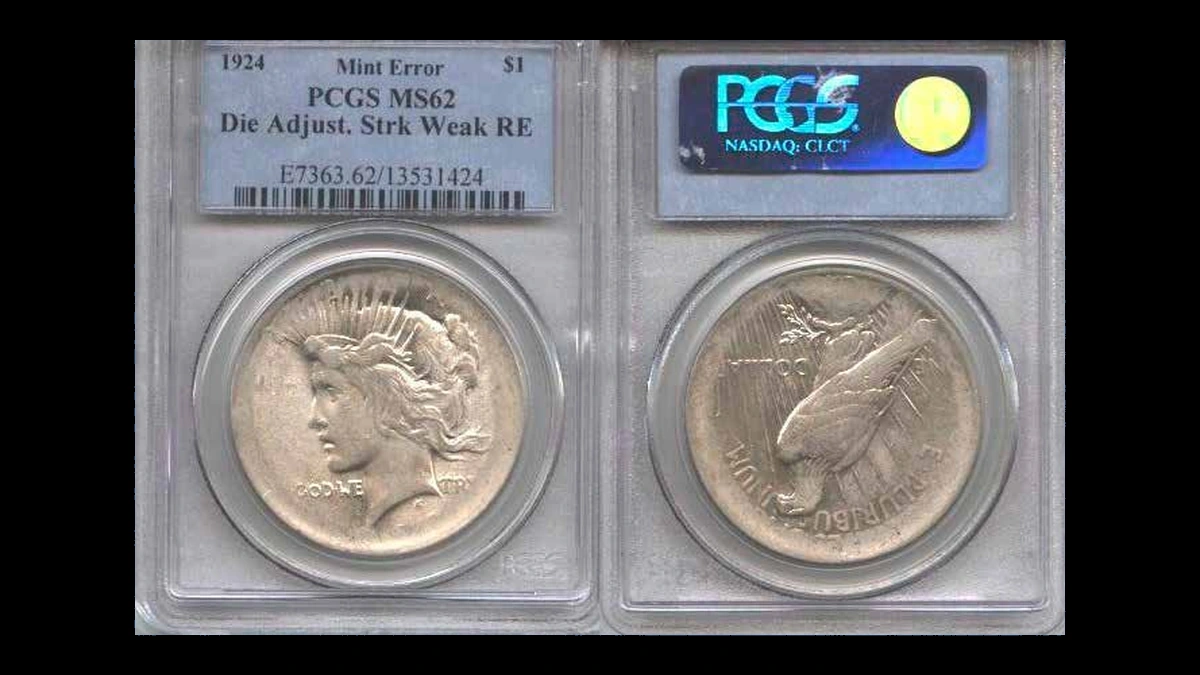
When much of the design is shallow, examine the edge as well. A documented 1924 Philadelphia dollar graded PCGS MS62 combines broad weakness with lightly formed edge ridges.
Its holder uses the name “Die Adjustment Strike.” Low striking pressure explains the weak impression, but the name does not prove that workers deliberately made a test coin.
How to Identify
Compare both faces for widespread shallow detail while looking for original, unrubbed surfaces. Circulation wear tends to smooth the exposed high points instead.
The weak edge ridges are part of the documented combination, not an optional detail. Use edge photographs for a certified coin rather than removing it from its holder.
What It’s Worth
$1,500–$6,000 is the comparison range for an authenticated example resembling the documented broadly weak strike. Al’s Coins advertised the PCGS MS62 coin for $4,995.
That figure is an asking price, not a reported sale. A normal worn dollar or one locally blocked letter does not provide the same combination of weak faces and edge.
Conclusion
Extra raised metal points toward a damaged die, while peeling metal directs attention to the blank. A recessed patch needs a closer check of its boundary, and broad weakness calls for views of the edge.
Use those differences to choose the right comparison before looking at its price. Keep fragile flakes and embedded material intact so their original features remain available for identification.