Rare 1874 Dollar Errors (List & Pictures)
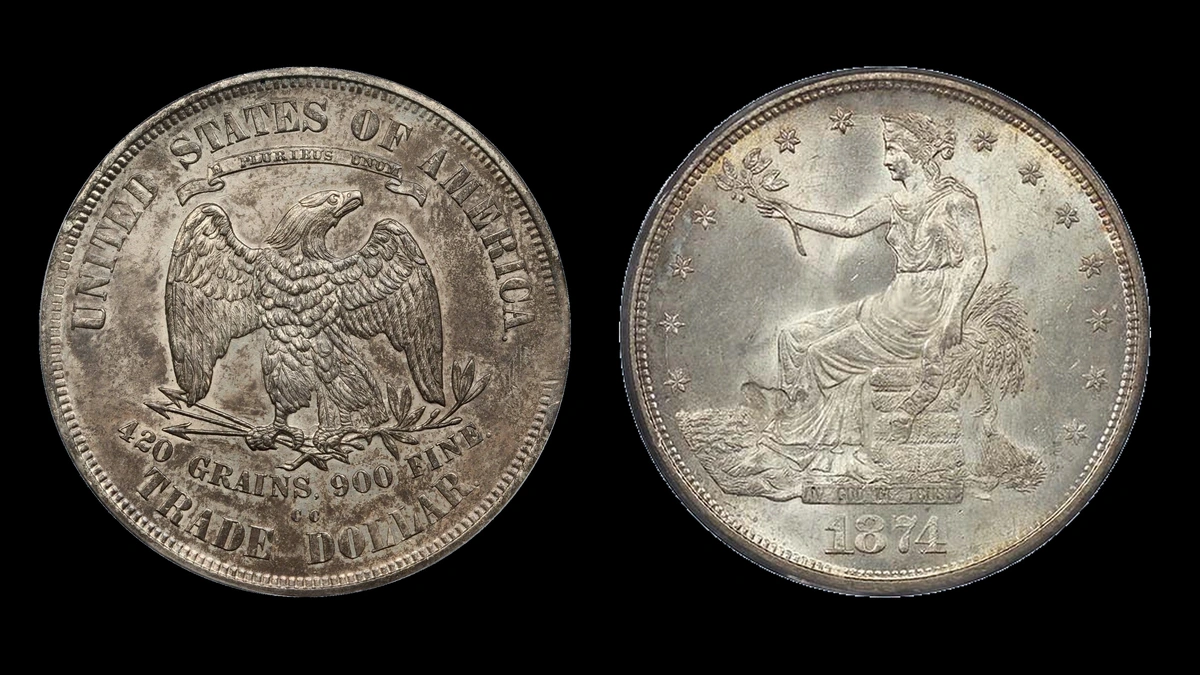
An exceptional ordinary 1874-CC dollar sold for $54,625 in March 2001, providing condition context rather than an error sale. Working estimates for these 1874 Trade dollar errors range from $150–$30,000.
Identify S or CC before comparing reverse doubling, raised die damage, a front impression, or the relationship between both faces.
| Mint and feature | Category | Working range |
|---|---|---|
| S or CC, repeated reverse outlines | Doubled die | $250–$20,000 |
| CC, raised line or rim mass | Die cracks and breaks | $300–$20,000 |
| CC, minor front impression | Strike-through | $500–$30,000 |
| S, modest leftward reverse turn | Rotated die | $150–$3,500 |
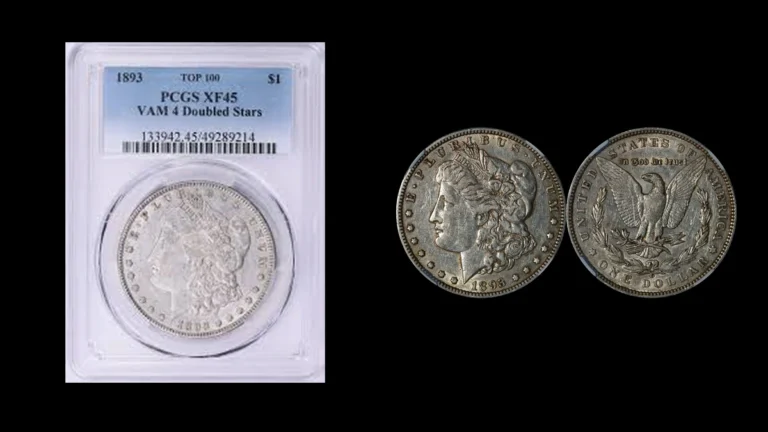
1. 1874 Dollar Small repeated contours on the reverse: doubled die Error
The San Francisco pattern is easiest to compare along the bases of TRADE DOLLAR. Its extra contours are slight, not a second complete set of letters.
A separate Carson City report describes slight reverse doubling without supplying the same exact letter locations. Both concern repeated design in a die before it struck the coin.
How to Identify
Read the mint mark first. On an S example, follow the lower edges of TRADE DOLLAR against an identified San Francisco reference.
For CC, use a verified Carson City photograph rather than borrowing the S diagnostic. A flat shelf from movement during striking can imitate doubling without matching the die pattern.
Compare several connected contours under changing light. One blurry edge is insufficient to identify either variety.
What It’s Worth
The combined estimate is $250–$20,000, including $250–$6,000 for matching S examples and $500–$20,000 for CC examples.
A stronger 1878-S FS-801 doubled reverse graded MS63 sold for $2,760 in August 2019. That different-year result does not price the subtler 1874 pattern.
Carson City’s ordinary issue value contributes to its higher range. Grade and surfaces remain part of every comparison.
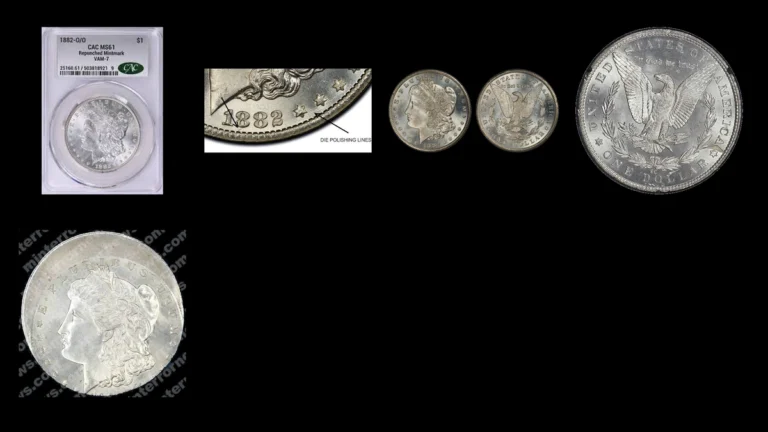
2. 1874 Dollar A raised line or border mass interrupts the design: die damage Error
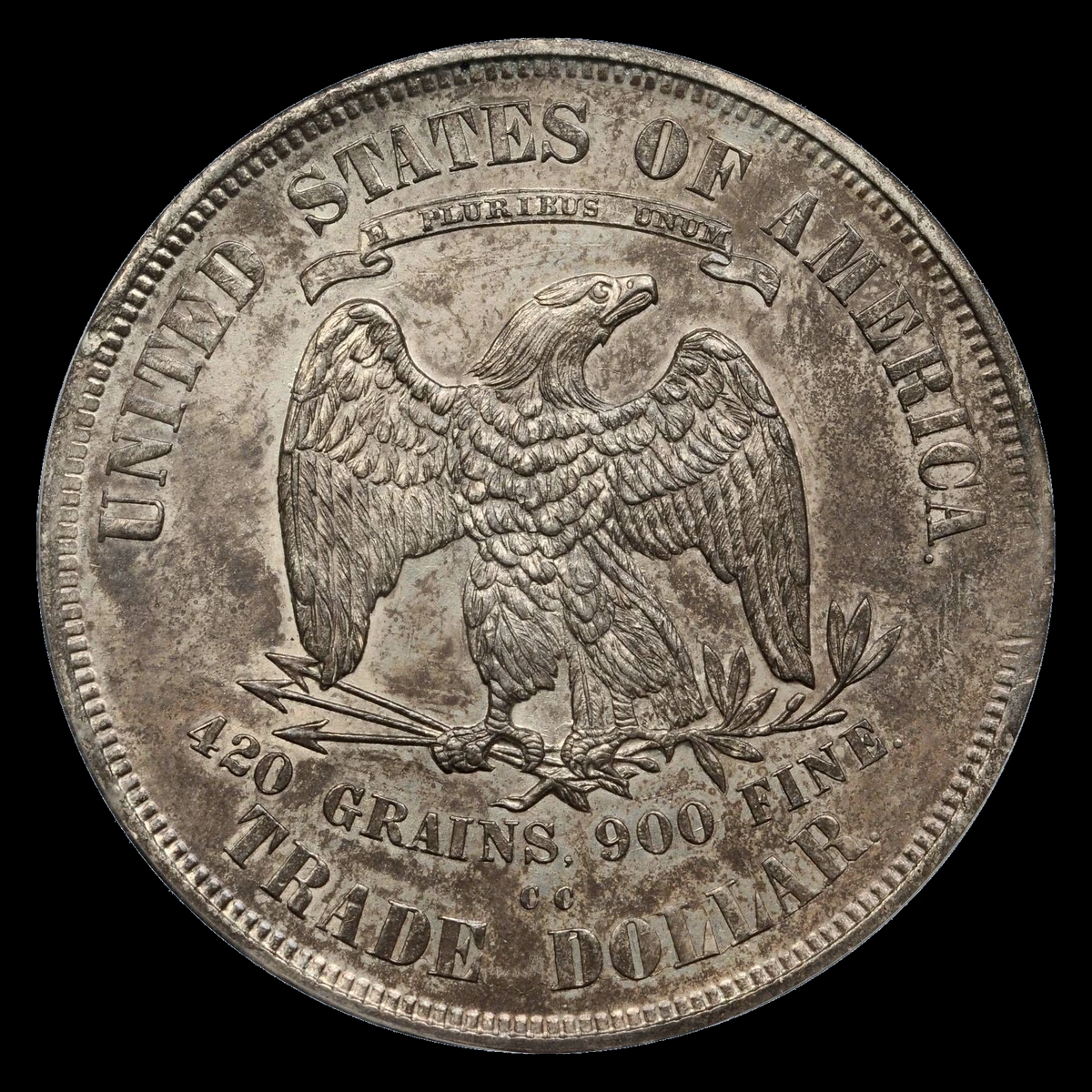
One Carson City example has a reverse crack across the tops of MERI in AMERICA. Other specimens show front-rim breaks.
A narrow die opening produces a raised ridge as silver fills it. A larger missing edge piece can create a rim-connected mass called a cud.
The reported routes belong to different coins. A thin reverse crack should not be combined with a front cud to invent one universal pattern.
How to Identify
For the recorded reverse crack, inspect the tops of MERI under side lighting. The line should rise above the surface rather than form a scratched channel.
For a front-rim break, follow the raised area’s connection to the border. Inspect the edge for an impact or added metal that could imitate a cud.
Use the relevant example in the Carson City variety study. Match the actual location and shape rather than accepting a generic lump.
What It’s Worth
Worn through attractive unworn CC examples have a working whole-coin range of $300–$20,000.
A normal NGC MS64 brought $9,600 on August 28, 2025. That is condition context, not a specified crack or cud sale.
The exceptional ordinary $54,625 result stands above this working range. Small raised lines alone do not make a coin comparable with that specimen.
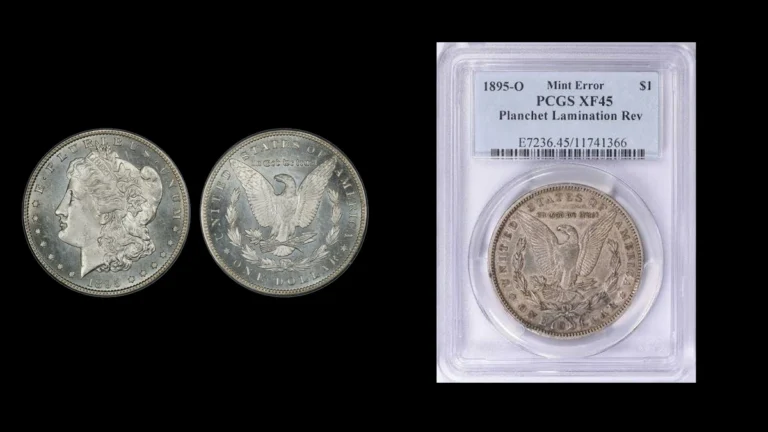
3. 1874 Dollar A minor impression interrupts the front: struck through material Error
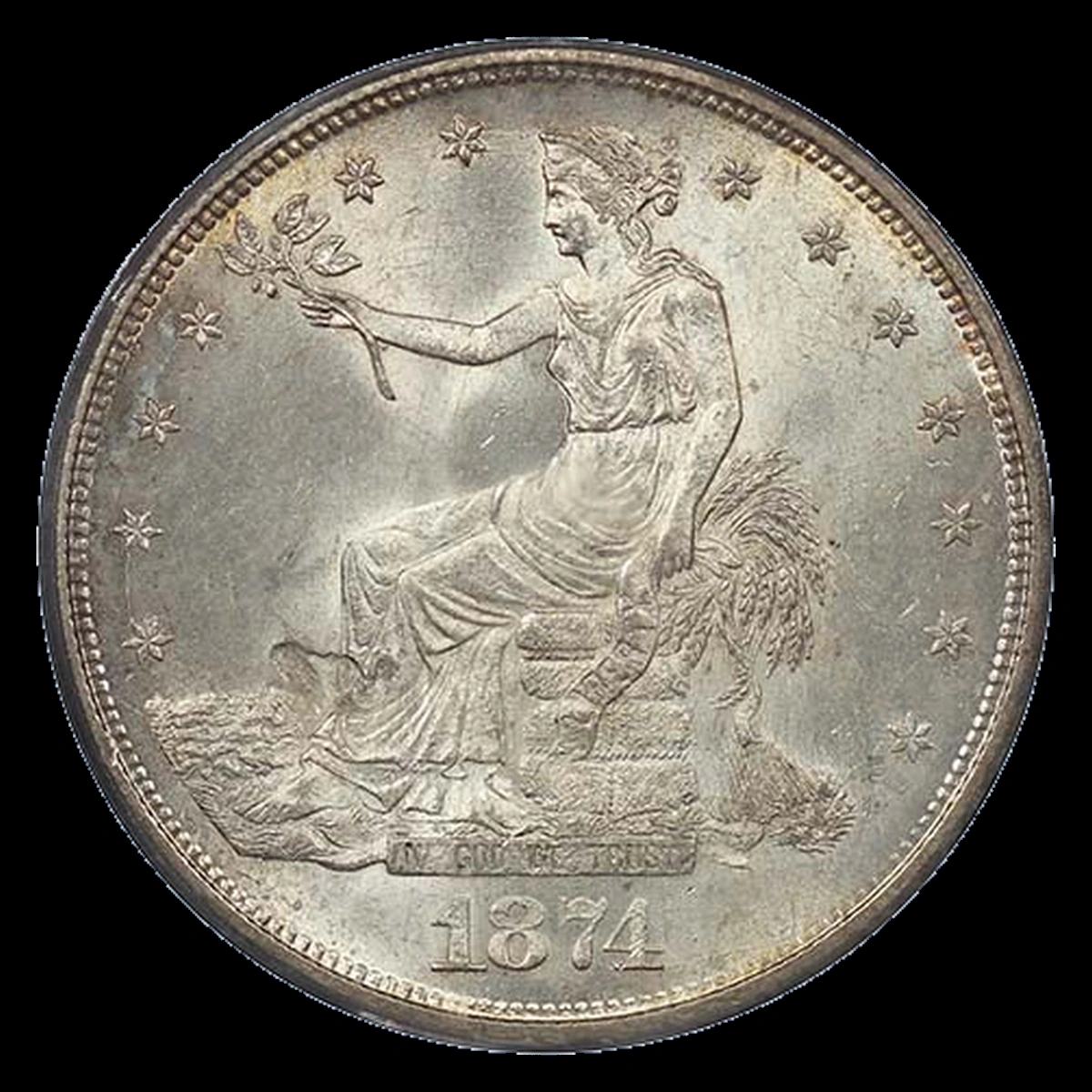
A PCGS MS64 1874-CC appears in a collector display with a minor front strike-through. Material between the die and blank interrupted the design as the coin was struck.
The label does not identify the substance. Naming grease, wire, or wood would go beyond the supplied evidence.
How to Identify
Compare the full front with the photographed collector specimen. The report does not justify assigning a position from another CC coin.
Study the boundary where normal design meets the impression. A later impact may displace metal, while a merchant’s chopmark adds a stamped symbol to an already finished coin.
Corrosion and scraping can leave irregular depressions too. Match the actual outline and interrupted design before proposing a striking obstruction.
What It’s Worth
Confirmed minor strike-throughs on circulated through attractive unworn CC dollars have a working range of $500–$30,000.
The pictured MS64 is a collector-display example without a supplied public selling price. The separate normal MS64’s $9,600 result offers only condition context.
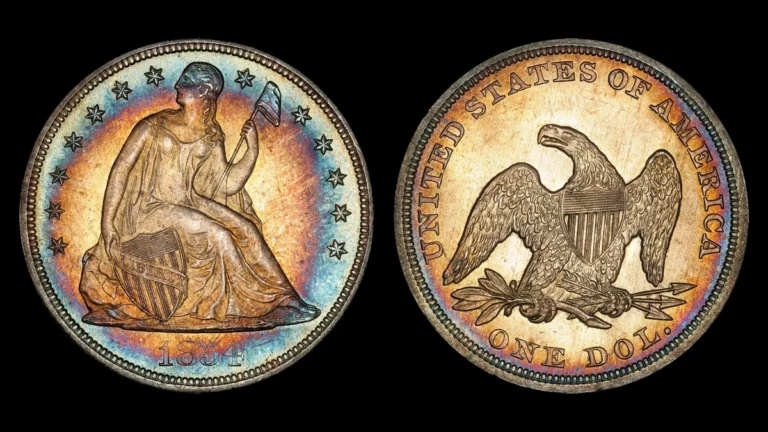
4. 1874 Dollar The eagle leans slightly left after a flip: rotated die Error
Some 1874-S dollars with a medium-sized S have about 15 degrees of counterclockwise reverse rotation. The designs can remain complete and centered even though the dies’ angles differ.
This is a modest turn, not a sideways or upside-down reverse. It should not be assumed on every San Francisco dollar or transferred to another mint.
How to Identify
Align Liberty upright in a secure clear holder and turn it top to bottom without twisting sideways. The reverse would normally finish upright.
Repeat the flip and compare the eagle’s vertical axis with a straight guide. Both photographs must preserve the same starting orientation rather than being independently rotated.
A consistent leftward lean supports the observation. Measure the actual coin instead of assigning 15 degrees from a tilted auction image.
What It’s Worth
Worn through modest unworn examples have an estimated whole-coin range of $150–$3,500.
Bowers’s reference notes that the roughly 15-degree examples historically sold without an extra premium. An interesting alignment difference need not create a large price increase.
Conclusion
Keep the mint and exact specimen attached to each observation. San Francisco’s doubled lettering and modest rotation need different comparisons from Carson City’s cracks, rim breaks, and front strike-through.
The working estimates price complete coins, with preservation often contributing more than a minor feature. The exceptional ordinary auction result and the normal MS64 sale provide context; neither is a documented price for every error in this guide.