Rare 1926 Quarter Errors (List & Pictures)
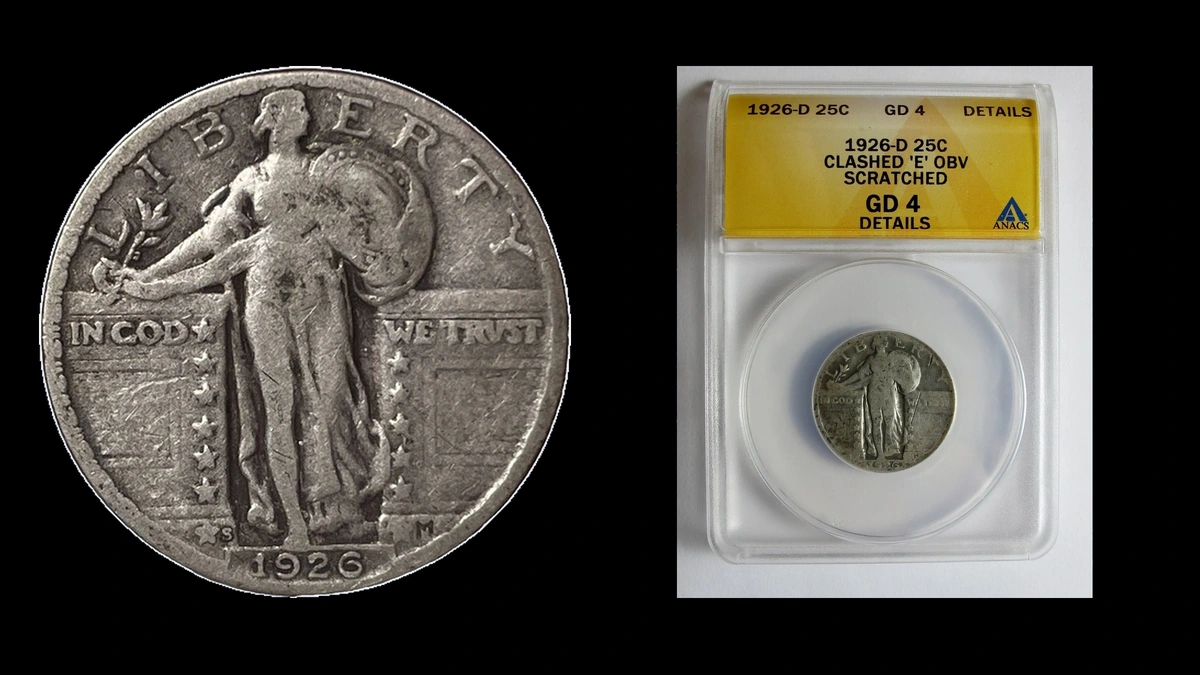
The Teardrop belongs beside Liberty’s leg, a useful correction before examining 1926 Standing Liberty quarter errors. The highest supplied completed sale concerns a different feature: a small clipped 1926-S graded AU50 brought $1,092.50 in May 2000.
Whole-coin estimates span $25–$2,000 for the conditions described. Inspect the raised feature near WE, then the outline, and require an identifiable opposite-side design before accepting a possible clash.
| Where to look | Feature | Estimated value |
|---|---|---|
| Between Liberty’s leg and the wall | Teardrop die break | $30–$1,000 |
| Head or above date | Separate reported die cracks | $25–$500 |
| Front edge near 4 o’clock | Documented clipped blank | $200–$2,000 |
| Unexpected opposite-design trace | Possible die clash | $25–$400 after confirmation |
1. 1926 Quarter A raised droplet sits beside the leg: Teardrop and die cracks Error
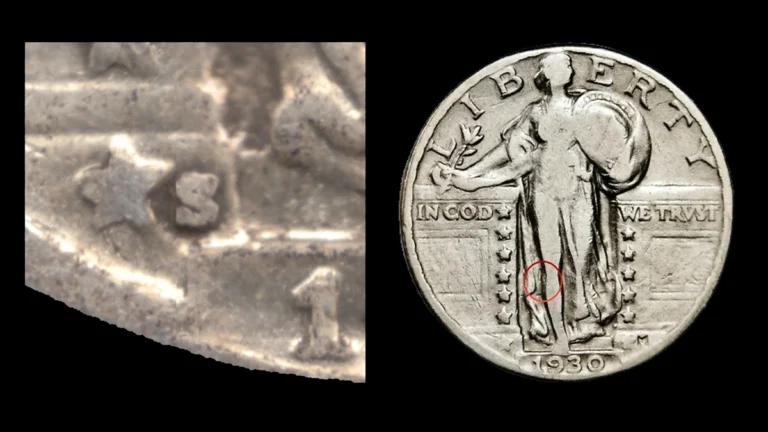
On the 1926-S Teardrop, a small raised shape lies between Liberty’s leg and the nearby wall at WE. A missing area in the die filled with silver during striking, adding the droplet to the coin.
The feature is recognized as VP-001. Its position within the design differs from a cud, the larger type of die break connected to the rim.
Separate reports describe lines at Liberty’s head and an arc above the date. Those cracks should not be required on every Teardrop example.
How to Identify
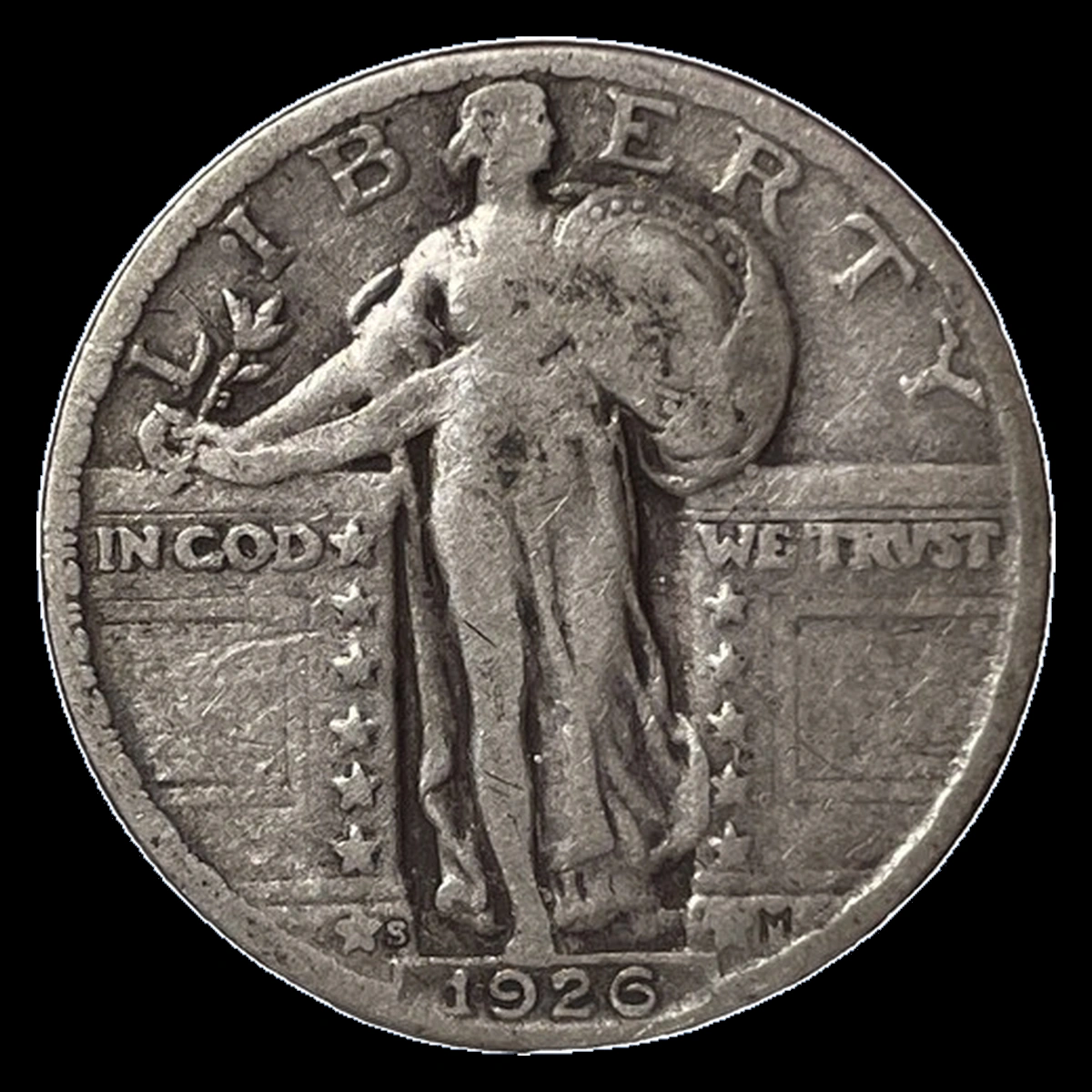
Confirm the small S near the lower left of the front, then inspect the space beside the leg. The droplet should stand above the surface rather than form a dent.
A mark below the eye is unrelated to this nickname. Match the actual position and outline while leaving the metal untouched.
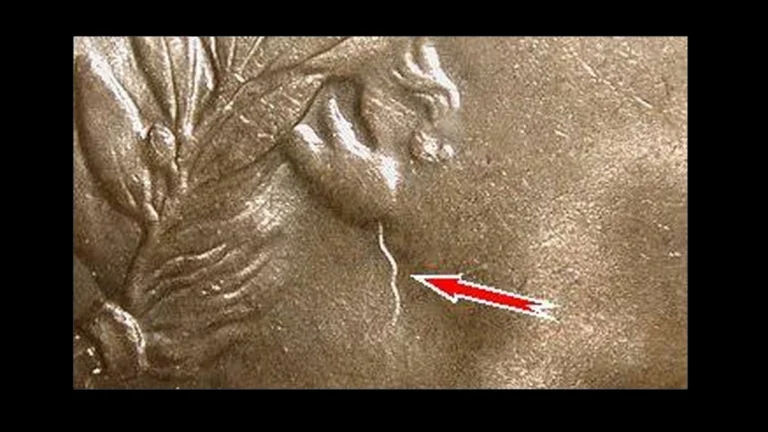
Examine the head and date lines separately with light from the side. A die crack leaves a narrow raised ridge, whereas a scratch cuts through the finished design.
What It’s Worth
$30–$1,000 is the estimate for identifiable Teardrops, with a separate $25–$500 range for the reported fine crack forms. Wear and original surface quality account for much of the variation.
A clear droplet on an attractive coin is easier to compare than a weak trace on heavily worn silver. If one quarter has both a droplet and a crack, its price is still one whole-coin assessment rather than the sum of two ranges.
2. 1926 Quarter A small gap interrupts the lower-right outline: clipped planchet Error
The documented 1926-S has a 3% clip near 4 o’clock on the front. Its blank was incomplete before the quarter design was struck.
PCGS graded the example AU50, indicating some wear with substantial detail retained. The location and percentage belong to that particular coin.
How to Identify
Keep the front upright and record both the 1926 date and S mintmark before enlarging the gap. Follow the rim toward each end of the missing section.
Natural formation beside an original gap differs from a cut through completed design. Check the inner boundary for file marks, cutting grooves, or sharp burrs.
Opposite-rim weakness can support the diagnosis but may vary in visibility. The normal 6.25-gram standard is a comparison figure, not this auction coin’s published weight.
Lower weight alone also fits later metal removal. The boundary and adjoining struck surface must support the blanking explanation.
What It’s Worth
$200–$2,000 is the estimated range for comparable genuine examples. The PCGS AU50 quarter sold for $1,092.50 at Heritage on May 5, 2000.
That result values the complete identifiable San Francisco quarter. A small notch added after minting does not inherit a clip premium merely because it occupies a similar position.
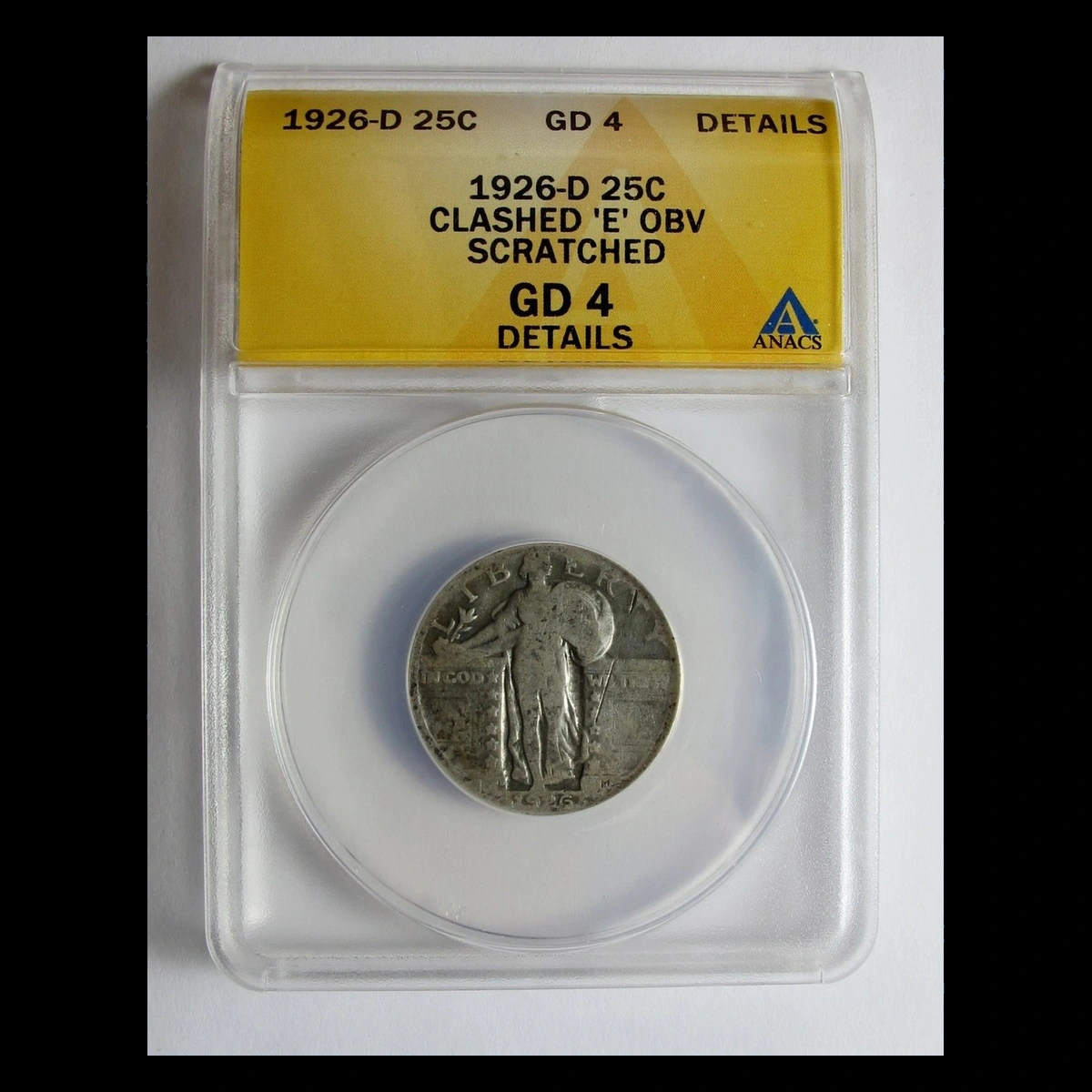
3. 1926 Quarter An unfamiliar shape resembles the opposite picture: possible die clash Error
A die clash occurs when the two dies meet without a blank between them. Contact can transfer part of each design onto the other tool, which then repeats the unintended mark on later coins.
For a 1926 candidate, the critical task is to explain the actual transferred shape. No fixed location from another year should be imported into the comparison.
How to Identify
Place clear normal front and reverse photographs beside the candidate. Identify which portion of the opposing design could produce the suspected trace and whether its relationship is consistent.
Change the light to distinguish a raised feature from an incuse scratch. An unexplained line crossing several design details is not sufficient evidence of contact between the dies.
Keep the full face in view along with any enlargement. Recognizable transferred design matters more than a convincing nickname attached to one ambiguous mark.
What It’s Worth
$25–$400 is the conditional whole-coin estimate for a confirmed clash from worn through attractive lightly worn condition. A clear recognizable transfer offers more useful evidence than a faint line.
A high-grade quarter may already exceed that range through preservation alone. The estimate does not award a clash premium to ordinary design lines or later damage.
Conclusion
The Teardrop adds a raised shape beside the leg, while a clip removes part of the original outline. A suspected clash needs a third kind of evidence: a recognizable trace of the opposite design.
Use the correct location and surface structure for each examination. The $1,092.50 result belongs to a specific AU50 clipped quarter, and the broader estimates still depend on the complete coin’s mint, wear, and original surfaces.