Rare 1973 Quarter Errors (List & Pictures)
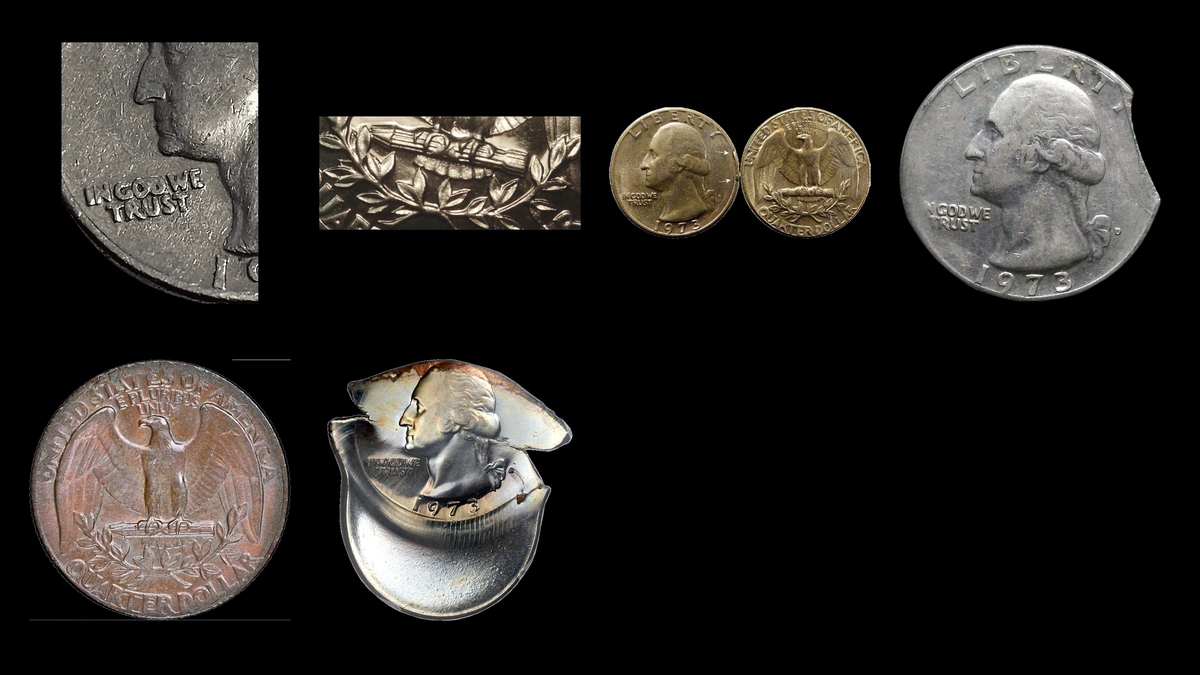
The lightest recorded example in this list is a 1973-S quarter design on an aluminum blank weighing only 0.7 gram. Intended for a Nepal one-paisa coin, that blank became a Proof error that sold for $4,800 in August 2020.
These 1973 quarter errors cover estimated values of $5–$8,000. Begin with small design clues, then follow the edge, exposed metal, and overlapping strikes to understand the larger mistakes.
1. 1973 Quarter The Motto Looks Faint — Weak Strike Error
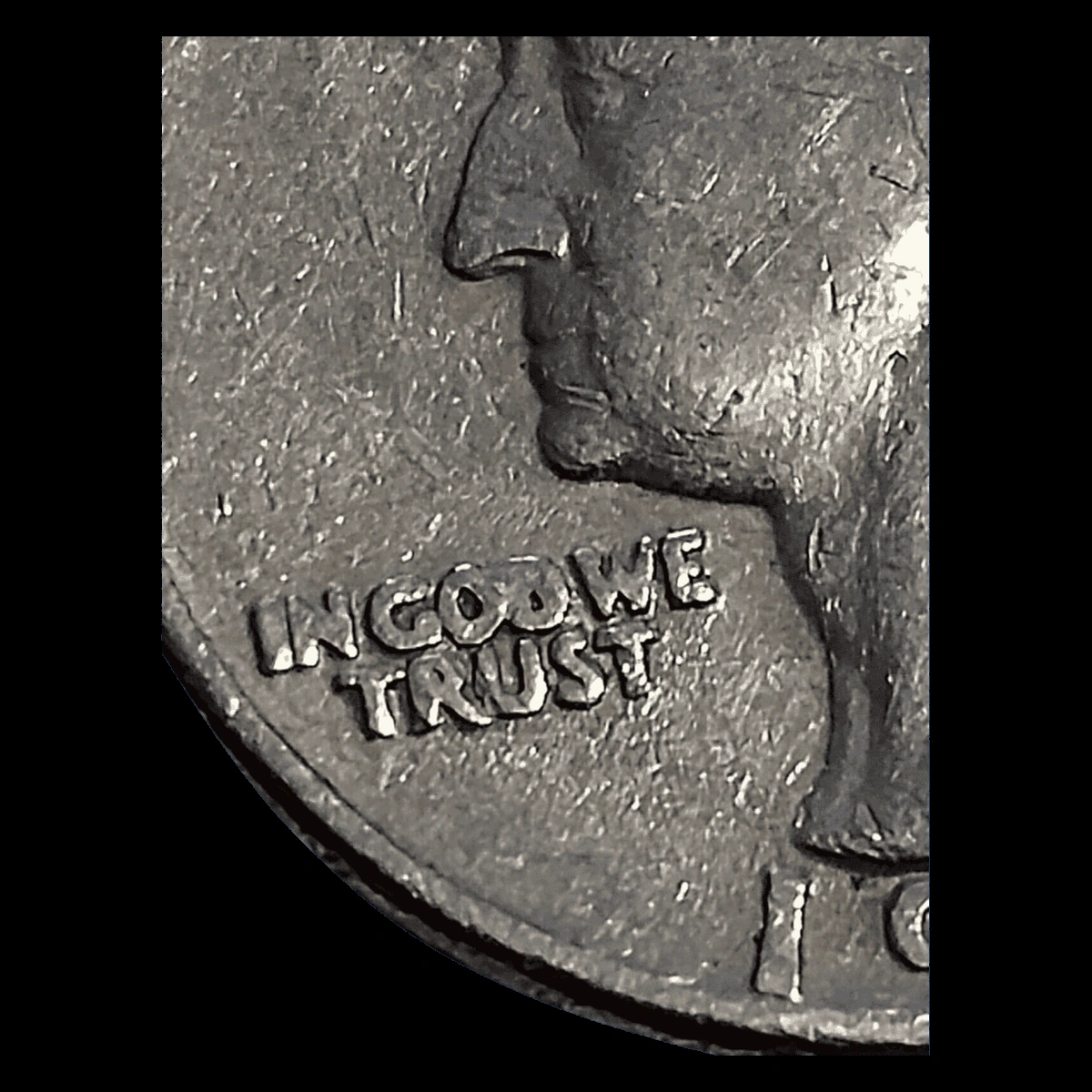
Reports of weakly struck 1973 quarters mention IN GOD WE TRUST. Low pressure is one possible cause, but blocked or worn dies and circulation wear can produce similar-looking softness.
The visible condition must be separated from its proposed cause. A worn motto on a heavily circulated coin is not automatically a mint error.
How to Identify
Compare the motto with Washington’s hair, the eagle’s feathers, and protected low details. Broad wear across raised surfaces differs from shallow detail inside an otherwise fresh surface.
Check both faces and look for original shine through the weak area. One faint word cannot by itself establish low striking pressure.
What It’s Worth
$5–$50 is an estimate for a genuine minor weak strike. An ordinary worn quarter may still be worth only face value.
A weakly struck 1986-P quarter graded NGC AU55 sold for $36 in March 2010. It offers later-year context rather than a sale of a 1973 example.
2. 1973 Quarter Extra Front Outlines or Altered Proof Details — Doubled or Retouched Design Error
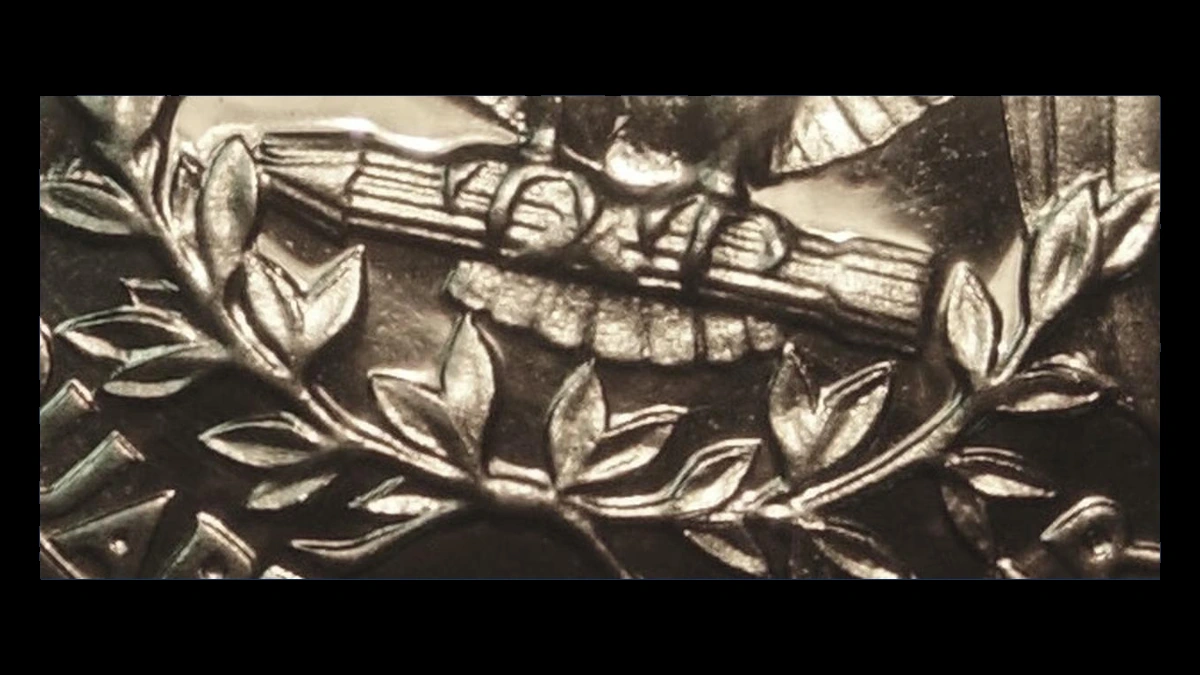
Philadelphia front doubling is reported without a specific verified working-die number in the supplied material. A different discussion concerns extra reverse lines on a 1973-S Proof that may come from retouching the design.
Retouching and a doubled die are different explanations. The two reports should not be combined into one variety.
How to Identify
Separate a no-mintmark Philadelphia coin from an S Proof before matching details. Rounded extra outlines or split corners deserve comparison with a confirmed doubled pattern.
A thin flat shelf can result from movement during striking. On the Proof reverse, compare the lines with normal artwork before claiming that the tool carried a doubled design.
What It’s Worth
$5–$150 spans these different comparisons. Confirmed minor Philadelphia doubled dies are estimated at $15–$150, while typical raw Proofs with minor retouch-like lines fit about $5–$30 unless a recognized premium is established.
A 1990-S FS-101 doubled-die Proof sold for $360 in March 2020. That is a stronger established variety, not the same reported 1973 feature.
3. 1973 Quarter Part of Another S above the Mintmark — Repunched S Error
The cataloged 1973-S RPM-001 Proof has a second S impression to the north, or above the main letter. The mintmark punch entered the die more than once from slightly different positions.
This feature repeats the mint letter, not the entire coin design. Reflections from the Proof surface can make weak extra curves harder to read.
How to Identify
Soften the light and compare the upper curve with CONECA’s RPM-001 photographs. Enough of the remnant should fit another S.
Move the lamp to check that the raised curve stays in place. A changing highlight or a scratch extending into the field is not the same evidence.
What It’s Worth
$20–$200 is an estimate for recognizable examples. A clear extra S, original finish, and little haze make the variety easier to show.
The $360 result for the different 1990-S doubled die is a stronger-variety comparison, not a direct sale of this repunched mintmark.
4. 1973 Quarter A Small Raised Section of Rim — Die Cud Error
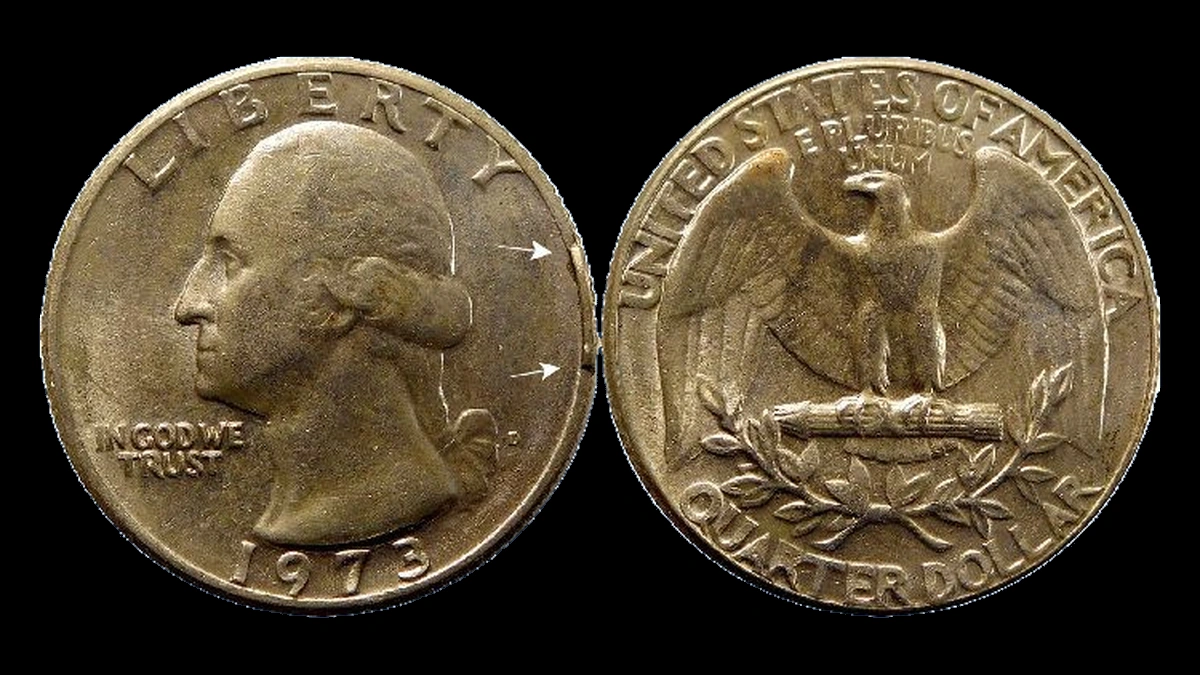
The cataloged Denver variety CU-25c-1973D-01 has a small rim cud. Part of the die’s edge broke away, leaving space for coin metal to rise during the strike.
Its limited rim location differs from a large break covering much of a portrait. Size and exact shape matter when making a match.
How to Identify
Find the D and compare the defect with the cataloged rim break. The raised area should join the normal struck rim naturally.
Inspect the edge and opposite face for a later dent, crushed grooves, or added metal. A matching year and mintmark alone cannot identify the variety.
What It’s Worth
$10–$100 is an estimated range for the confirmed small rim cud. A clearer shape and undamaged surface support the better examples.
A 1970-D nickel with two larger cuds sold for $63 in October 2022. That different-denomination result gives broad scale rather than a fixed value for the 1973-D rim feature.
5. 1973 Quarter An Interrupted Patch on the Face or Back — Struck Through Error
A substance between the blank and die can block part of the design. One 1973 report describes an affected area across Washington’s face.
A separate 1973-S Proof graded PCGS PR67 has a reverse strike-through. Neither description identifies a particular object or material.
How to Identify
Follow a normal letter or portrait detail into the affected area. A mint-made interruption differs from a gouge that cuts through finished metal and pushes it aside.
Check the surrounding surface for connected scratches or corrosion. Names such as cloth or wire require a recognizable impression, not just an unusual patch.
What It’s Worth
$20–$400 is the estimate across smaller ordinary strikes and more conspicuous Proof examples. A 1986-P struck-through nickel sold for $204 in June 2023.
The quarter’s own shape, finish, and condition remain the basis for comparison.
6. 1973 Quarter A Sloping Step around the Edge — Tilted Partial Collar Error
A tilted blank can sit only partly inside the collar ring. One section stays at normal width while another spreads outward, leaving a step that changes height around the edge.
A Philadelphia ANACS MS60 Details example was cataloged this way, with counting-wheel damage noted separately. The wheel scrape occurred after striking.
How to Identify
Rotate an edge view to follow the sloping transition between the restrained and expanded sections. One isolated rim dent cannot establish that continuous structure.
A normal quarter is about 24.26 mm across and weighs 5.67 grams. Compare the original edge levels with those standards, keeping the surface scrape out of the collar diagnosis.
What It’s Worth
$25–$250 is an estimated range for tilted partial-collar examples. The recorded details-grade coin should be compared with other problem coins.
A 1990-P nickel with a partial-collar error sold for $99 in June 2025, offering context from another denomination.
7. 1973 Quarter The Whole Design Sits inside a Wide Border — Broadstrike Error
A Philadelphia NGC MS66 quarter was cataloged as broadstruck on a blank. The collar failed to restrain the metal, allowing it to spread sideways.
Philadelphia quarters did not carry a P in 1973. The absent mintmark is normal; the expanded outline is the error feature here.
How to Identify
Follow the outside lettering on both faces to confirm that the intended design remains on the metal. Its placement may be uneven within the wider border.
Inspect for incomplete edge grooves and original spreading. Hammering a finished coin can enlarge it too, but often flattens details and leaves pressure marks.
What It’s Worth
$30–$250 is the estimated range for a genuine 1973 broadstrike. Clear expansion and clean unworn surfaces generally improve appeal.
Two 1990 Philadelphia broadstrikes sold together for $101 in July 2021. That is a pair total, not a price for the 1973 MS66 coin.
8. 1973 Quarter One or Two Pieces Missing from the Edge — Clipped Blank Error
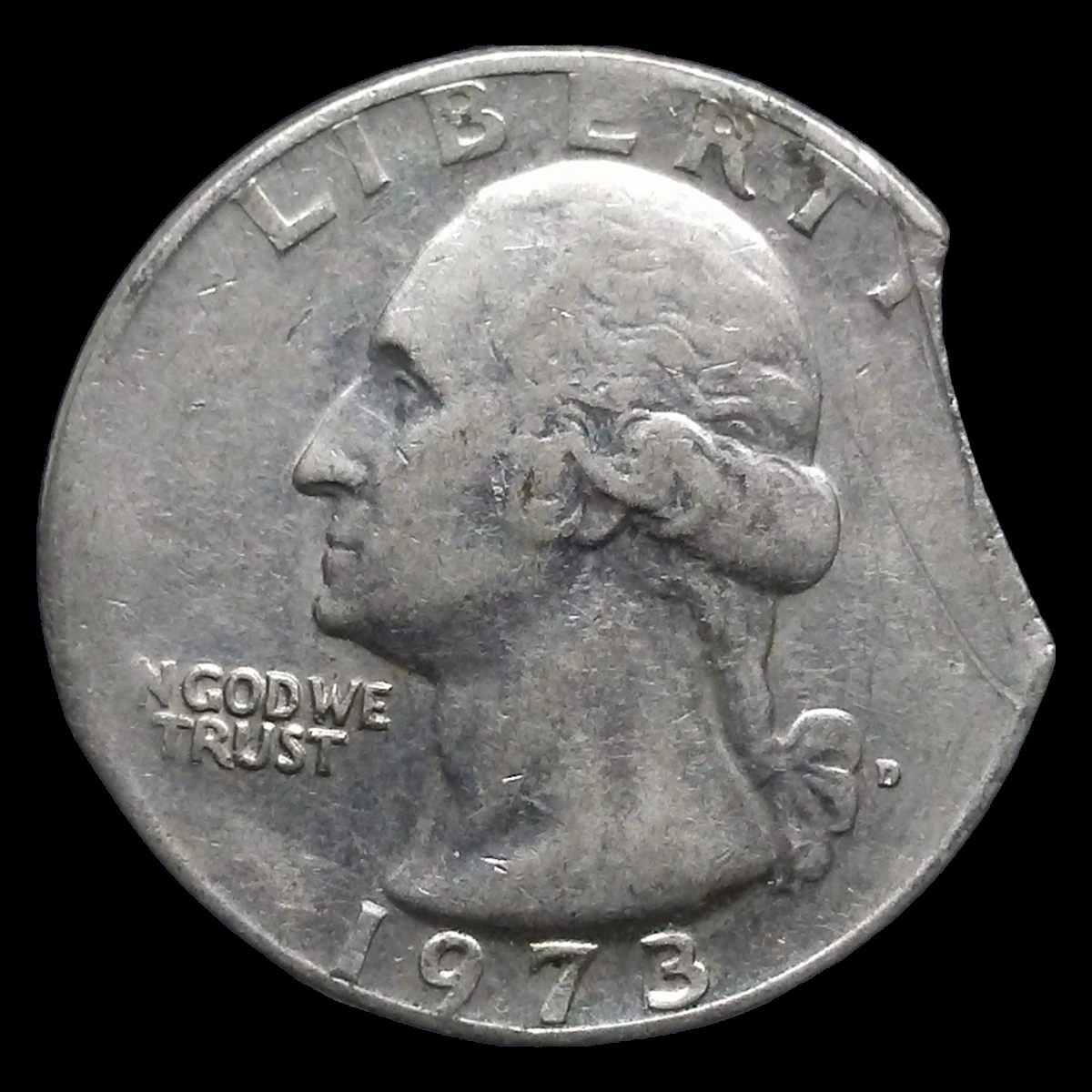
Records include a 1973-D quarter with a 5% clip. Another Denver coin has two curved clips, a partial-collar edge, and a measured weight of 3.88 grams.
ANACS graded the combined-error specimen MS62. Its two gaps and edge step belong together on that single coin.
How to Identify
Inspect each curved boundary for original metal flow and naturally weakened nearby design. Saw marks or sharp new burrs indicate a different cause.
On the 3.88-gram specimen, check the edge step separately from the gaps. The 5% clip does not inherit its weight or partial collar.
What It’s Worth
$30–$300 is an estimated range for genuine clips. A small 5% example generally belongs below a dramatic two-gap coin of similar preservation.
A 1978 quarter with three curved clips sold for $180 in March 2025. That comparison values one multi-clip coin, not a separate amount per gap.
9. 1973 Quarter Copper Appears on Part or All of a Face — Missing Outer Layer Error
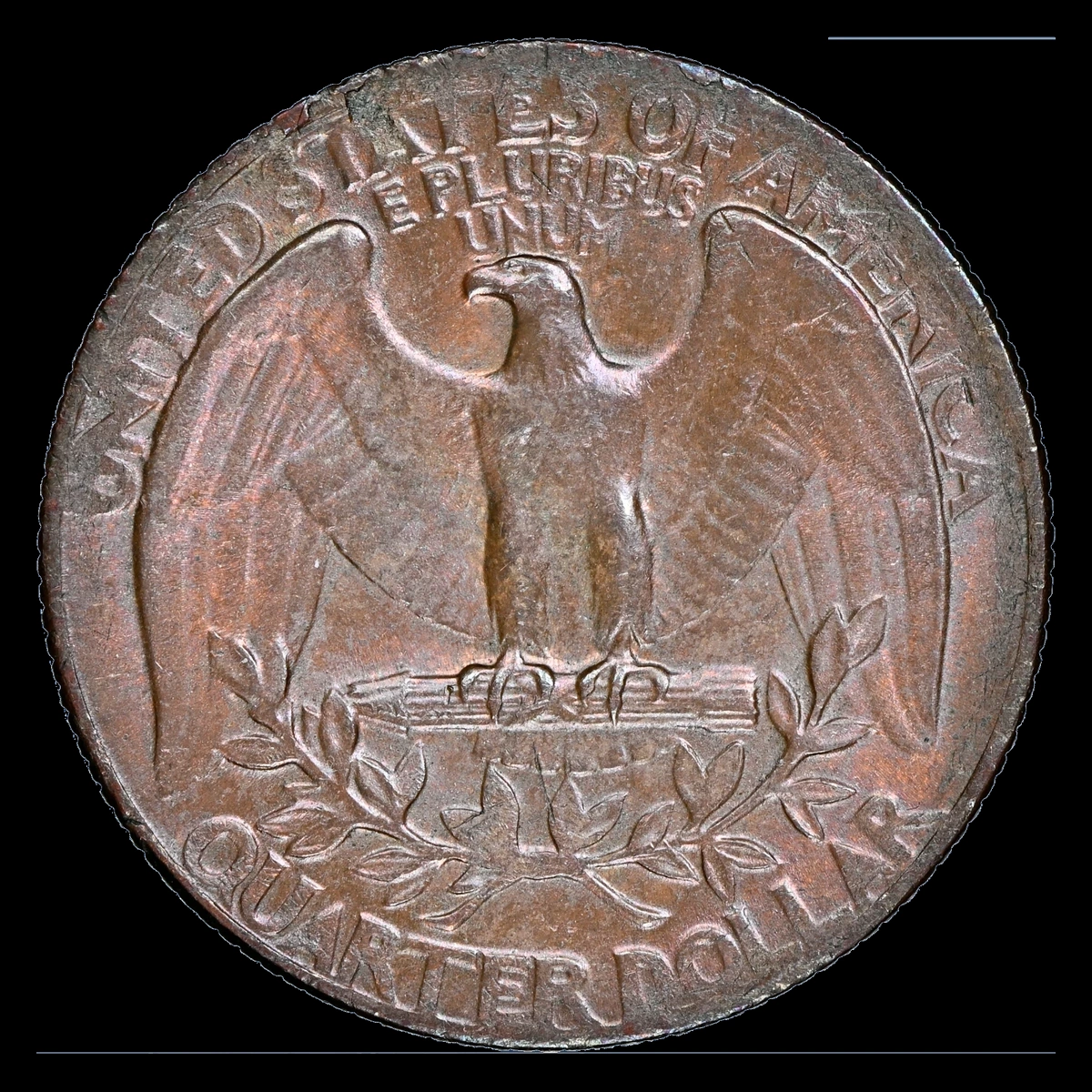
Normal clad quarters have pale outer layers bonded around copper. Recorded 1973 examples include a 4.7-gram Philadelphia front loss, a reported 4.9-gram back loss, and a separate 4.8-gram Denver partial front loss.
Those weights describe individual coins. Complete and partial losses can look very different.
How to Identify
Inspect where the outer metal ends at the edge or across the affected face. Struck detail should fit naturally on both sides of a partial-loss boundary.
Compare the actual weight with the full clad standard. Corrosion, scraping, or copper plating can change the color without the same original layer structure.
What It’s Worth
$100–$600 is an estimated range for comparable genuine examples. A Philadelphia front-loss NGC MS64 coin sold for $384 in January 2022.
The Denver partial-front-loss NGC MS63 piece brought $168 in June 2024. Keep each sale with its own missing area and condition.
10. 1973 Quarter A Blank Crescent beside Missing Design — Off-Center Strike Error
A misplaced blank can receive only part of the quarter design. Philadelphia auction records include an ANACS MS63 example, while Denver reports include shifts greater than 40%.
Those ordinary off-center records are separate from the Denver combination with a backward image below.
How to Identify
Read the date and check the mintmark area before comparing the amount of displacement. If that area was not struck, an absent D cannot prove Philadelphia.
Both faces should agree with the same blank position. The unused crescent should show original metal rather than later grinding or flattening.
What It’s Worth
$40–$700 is the estimated range for genuine examples. A 1978 quarter struck 15% off center sold for $154 in September 2025.
The later coin’s percentage should not be assigned to a 1973 piece. Readable dates and surfaces matter alongside the size of the shift.
11. 1973 Quarter Another Portrait or Small Later Impressions — Extra Strikes Error
A Philadelphia flipover quarter retains an earlier Washington outline beneath the new reverse design. Another Philadelphia coin was struck three times, with later blows about 85% and 95% off center.
A report calling a similar 95% piece double-struck may refer to that same triple-struck coin. Denver double strikes are also reported separately.
How to Identify
For the flipover, trace the earlier portrait on the back rather than looking only for two dates. Its position should fit the coin turning over between strikes.
For the triple strike, locate all three design boundaries, including the small later impressions. Two obvious lobes do not necessarily show the complete sequence.
What It’s Worth
$150–$1,200 is an estimate for comparable extra-strike errors. The Philadelphia in-collar flipover graded PCGS MS64 sold for $373.75 in September 2008.
A 1978 rotated double strike sold for $198 in July 2022. Clear separation and readable details matter more than multiplying an ordinary price by the number of blows.
12. 1973 Quarter A Backward Image on a Shifted Coin — Off-Center Brockage Error
A 1973-D PCGS AU58 quarter combines about 50% off-center displacement with a sunken backward image on the reverse. Another struck coin transferred its raised design into the new coin during the accident.
That transferred mirror image is called a brockage. It differs from ordinary raised doubling or a smooth hollow.
How to Identify
Reverse a photograph or use a mirror to compare the unusual design. It must be backward and sunken, not simply a normal raised image turned sideways.
Trace the transfer within the off-center struck area and inspect for later crushing. Both features need to fit an original minting event on the same coin.
What It’s Worth
$200–$1,500 is an estimate for comparable authenticated combinations. A different 1999-P New Jersey quarter with an 80% brockage and broadstrike sold for $312 in December 2024.
The clearer the transferred design, the easier it is to compare. That later coin has a different design and combination.
13. 1973 Quarter Two Proofs Preserve Matching Contact Areas — Mated Pair Error
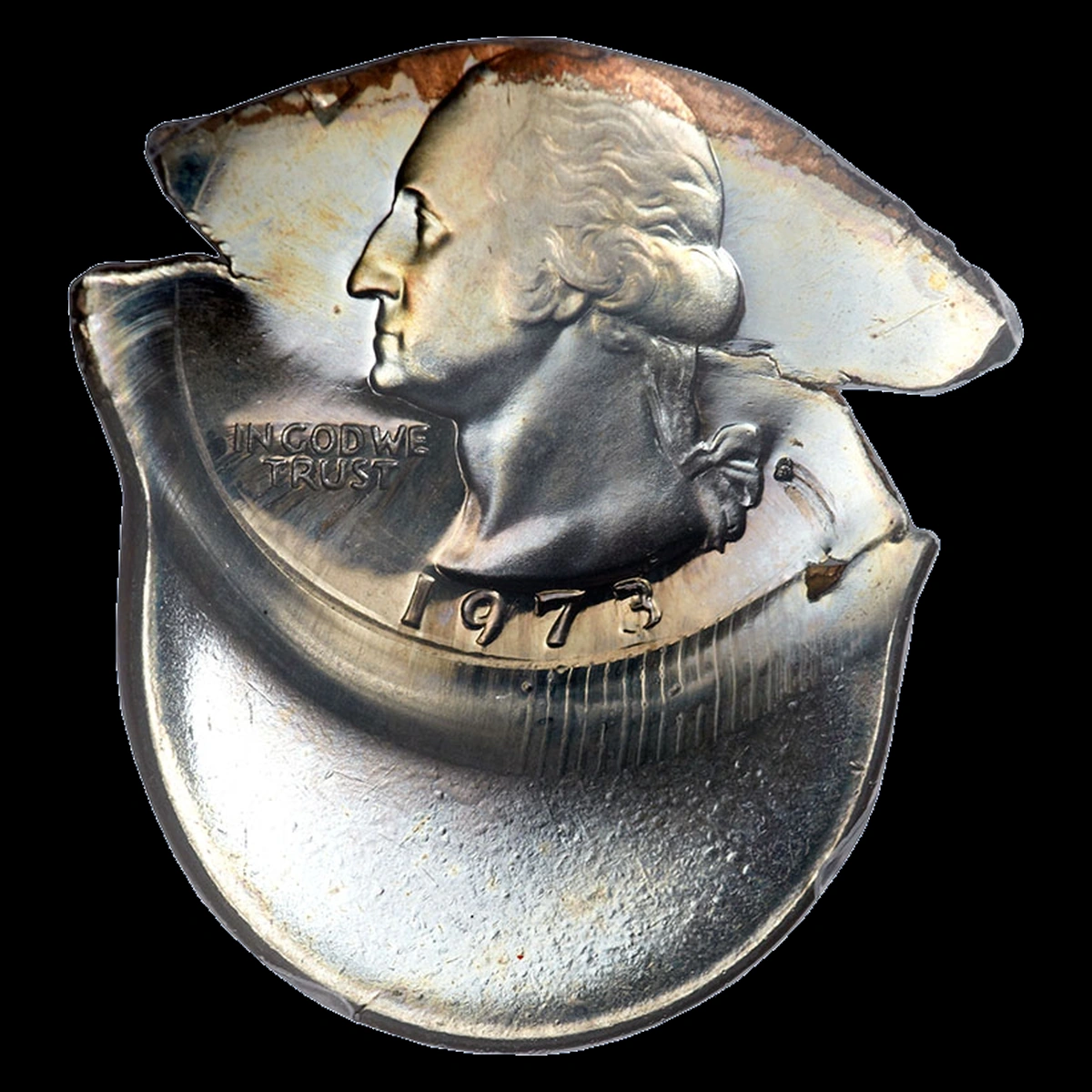
Two 1973-S Proof quarters survive from the same striking accident. The first is 15% off center toward twelve o’clock with an unstruck front; the second has an almost complete reverse and a depression covering about 85% of its front.
PCGS graded the pieces PR65 and PR66. These features belong to two coins, not one quarter with every effect combined.
How to Identify
Compare the blank front on the PR65 piece with the large front depression on the PR66 piece. Their contact boundaries should explain the same event.
Use photographs rather than pressing the coins together. Keep each piece’s grade, orientation, and affected face clearly identified.
What It’s Worth
$3,000–$6,000 is an estimated range for a comparable authenticated pair. The documented two-coin set sold for $3,760 in June 2017.
The amount covers both coins together. Neither piece automatically receives the full price or exactly half of it when separated.
14. 1973 Quarter The Quarter Design on Different Metal — Wrong Planchet Error
Ordinary Philadelphia and Denver records include cent and nickel blanks, with Denver dime blanks also reported. S Proof examples include cent, nickel, dime, Nepal one-paisa aluminum, and Liberia five-cent blanks.
The designs remain Washington and the eagle. Some specimens also have off-center placement, die breaks, clashes, or displaced extra strikes, which belong only to those individual coins.
How to Identify
Match metal, actual measurements, and the cropped quarter design together. Recorded Denver readings include 5.0 grams for a nickel blank, 3.06 grams for a cent blank, and about 2.2 grams for a dime blank.
The Nepal aluminum piece weighs 0.7 gram and began on a 16.75 mm blank; the Liberia example weighs 4.2 grams. Striking can enlarge a blank beyond its starting size.
One Proof cent-blank coin with extra strikes weighs 3.13 grams, while another is listed at 3.1 grams. Check each specimen’s added features separately instead of treating every wrong blank as the same combination.
What It’s Worth
$150–$8,000 is the estimated range across this broad group. A Denver nickel-blank MS64 quarter sold for $276 in June 2005.
The Nepal-blank Proof sold for $4,800 in August 2020. Other 2020 results included $2,520 for a Proof cent blank and $4,080 for a Proof nickel blank, showing how finish and blank identity change the comparison.
Conclusion
Small 1973 varieties begin with the correct mint and finish: a Philadelphia front report and an S Proof mintmark need different references. Larger errors become clearer when both faces and the entire edge are visible.
Keep measurements attached to their own specimens, especially for missing layers and wrong blanks. For the Proof mated pair, preserve both coins and their matching record so the relationship remains part of the collection.