Rare 1952 Quarter Errors (List & Pictures)
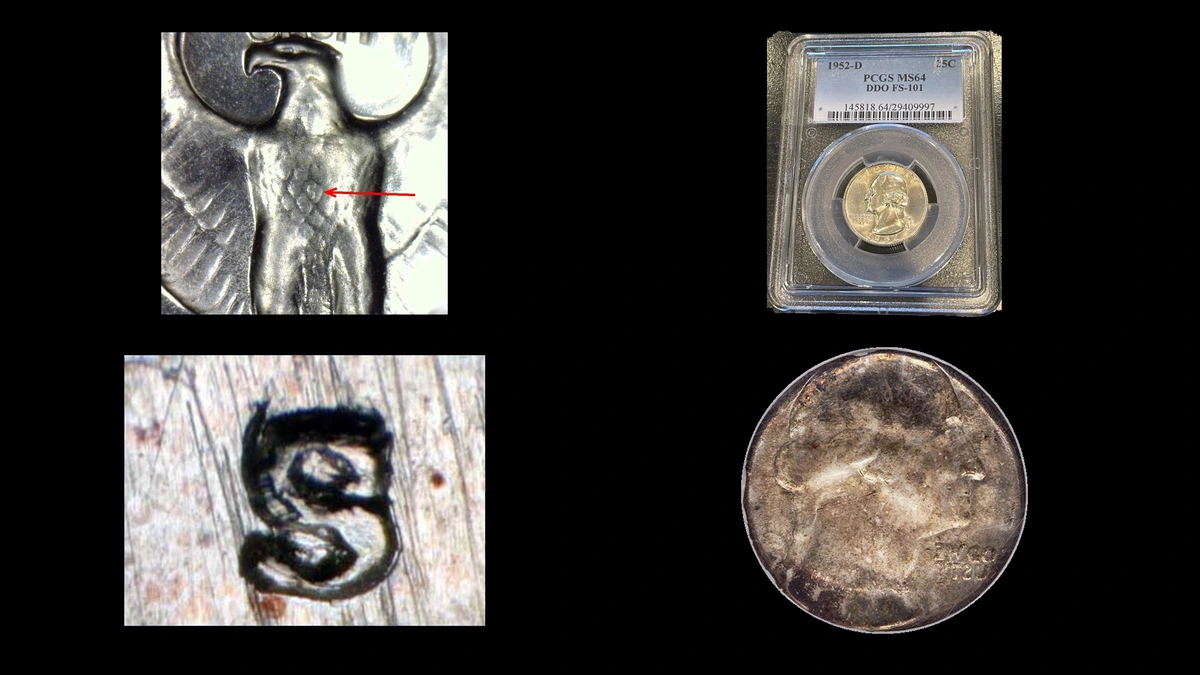
The tiny “S” on an eagle’s chest can matter more than a large scratch. Among 1952 quarter errors, useful examples range from about $25–$12,000, and a sharply contrasted Superbird proof sold for $9,600 in October 2020.
Start with the eagle, then check the letters, surfaces, and coin shape. Some marks belong to a particular die, while others happened to a single coin during production.
1. 1952 Quarter An “S” on the Eagle’s Chest: Superbird Proof Error
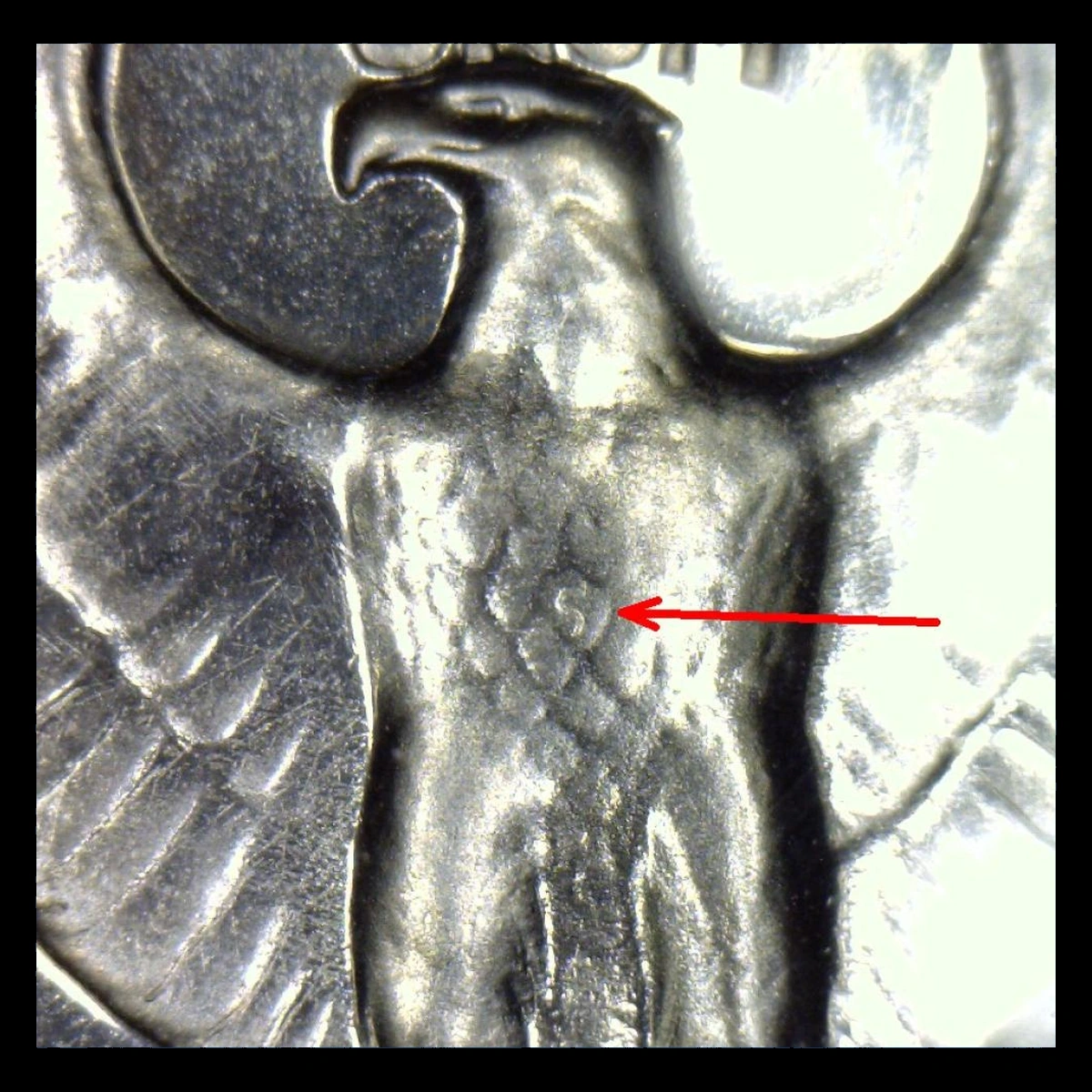
On the Superbird proof, a small raised shape looks like an “S” on the eagle’s chest. This is a Philadelphia proof variety; the chest mark is not a San Francisco mintmark.
Proofs were made for collectors with specially prepared dies and blanks. The familiar Superbird is FS-901, while FS-902 also has hand-engraved tail feathers and slight doubling in ERTY on the front.
How to Identify
Find the chest mark before studying the tail feathers. A true mintmark, when present on a regular quarter, sits below the wreath instead.
Compare the raised “S” with an identified Superbird photograph; a scratched letter cuts into the surface. Use both the tail and the front lettering when checking FS-902, rather than applying that number to every Superbird.
What It’s Worth
$150–$12,000 covers a wide spread of proof quality. More typical collectible examples fall around $150–$2,500, while exceptional coins with strong contrast can reach $3,000–$12,000.
A PCGS PR67 Deep Cameo example sold for $9,600 in October 2020. “Deep Cameo” describes the strong contrast between frosted designs and mirrorlike fields, which helped this coin stand above an ordinary proof.
2. 1952 Quarter Extra Raised Letter Edges: Doubled Die Error
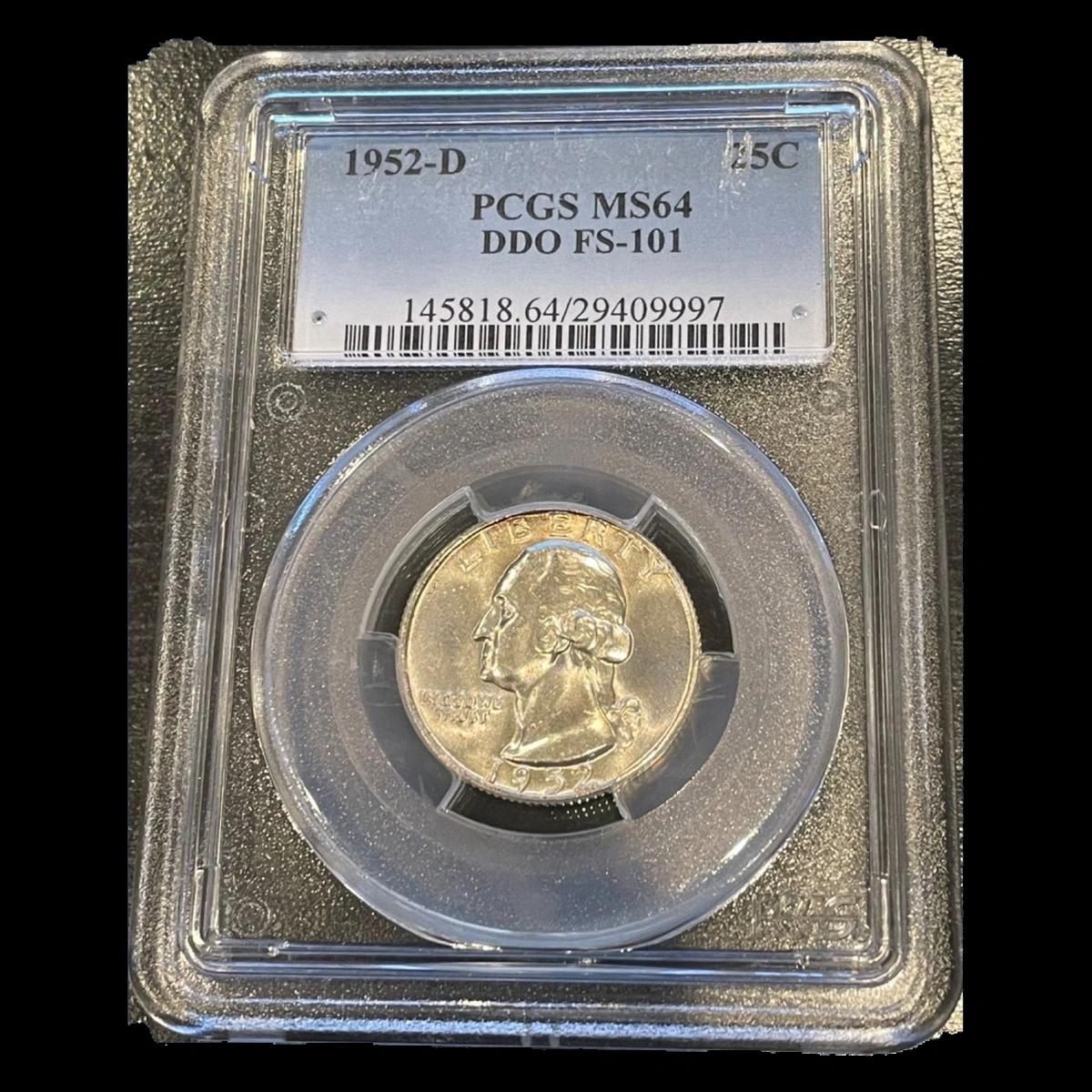
Lettering can reveal a doubled die even when the portrait looks normal. The die received overlapping design impressions during preparation and then repeated that doubled detail on the coins it struck.
The 1952-D FS-101 front shows its strongest doubling in LIBERTY, with less in the date and motto. Other Philadelphia, Denver, San Francisco, and proof examples have their own patterns.
How to Identify
Use a magnifier on LIBERTY first, then compare the date and motto with the same mint and finish. Some San Francisco examples involve RTY, while a Philadelphia proof front may show slight doubling in ERTY.
Reverse varieties can involve the denomination, wings, branches, or motto, depending on the die. A flat shelf beside a letter is a different effect and does not establish one of these varieties.
What It’s Worth
$25–$3,000 is the working range across this group. Clear separation, an identified die, and well-preserved surfaces carry more weight than a vague thickened letter.
A proof variety and a worn Denver coin should not share the same price simply because both show doubling. Match the complete pattern before choosing the closer comparison.
3. 1952 Quarter A Second Mintmark Outline: Repunched Mintmark Error
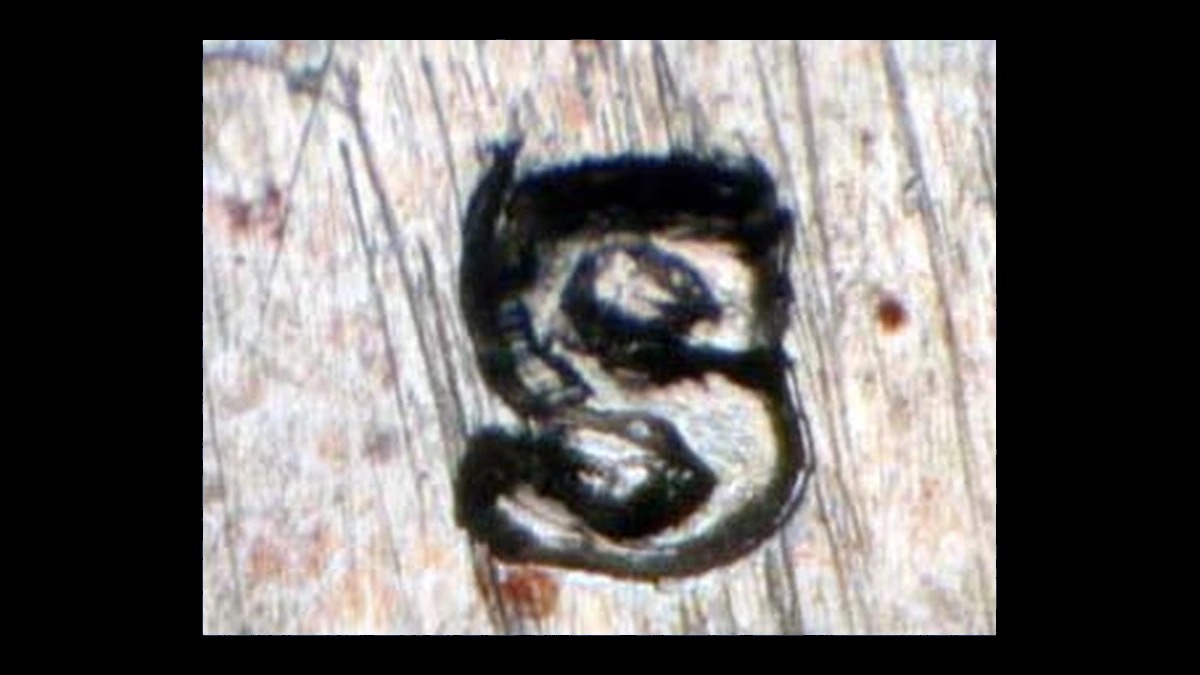
Look below the reverse wreath for a D or S with an extra curved edge. These mintmarks were punched into the die by hand, and a second placement could leave part of the first mark visible.
Denver examples include remnants above, below, or at an angle to the main D. San Francisco patterns include extra marks above or to the east, and some show traces of three impressions.
How to Identify
Keep the main letter and the nearby remnant in the same magnified view. The remnant should follow part of a D or S rather than look like an unrelated lump.
Direction alone does not identify the die: compare the spacing, tilt, and surviving curves. Do not confuse a damaged mintmark or flat strike doubling with an earlier punched position.
What It’s Worth
$25–$1,500 covers the supplied repunched-mintmark group. A strong, easy-to-see pattern usually has more appeal than one nearly lost to wear.
Three visible impressions still belong to one coin and one variety. They do not create three separate values.
4. 1952 Quarter A Faint Outline from the Other Side: Die Clash Error
A small part of the opposite design can appear where it does not belong. This can happen after the two dies strike each other without a blank between them, leaving marks that transfer to later coins.
How to Identify
Try to match the odd line to a recognizable feature on the other face. Its shape and position must make sense when the two designs are aligned.
The supplied 1952 category does not specify one fixed clash location. Parallel polishing lines or random scratches are not enough to identify it.
What It’s Worth
$25–$750 is a comparison range for this reported category. A recognizable transferred outline is more useful to collectors than a faint line that needs a long explanation.
Preservation and the amount of visible clash detail help place a coin within the range. The supplied records do not attach a specific 1952 auction result to this category.
5. 1952 Quarter A Peeling Silver Surface: Lamination Error
A thin flap or missing surface layer can come from a weakness inside the metal. A 1952 quarter uses a silver-copper alloy, so this is not the missing copper-nickel outer layer seen on modern clad quarters.
How to Identify
Follow the boundary of the peeling area and look for a thin layer separating from the coin. A deep cut or corroded patch has a different surface structure.
Leave an attached flap in place. Weighing can help when a substantial piece has fallen away, but a very thin peel may barely change the normal 6.25-gram weight.
What It’s Worth
$25–$500 is the working range for the supplied lamination category. Size, position, and the survival of an attached flap affect its interest.
A small rough spot near the edge belongs near the lower end. A clear peel across a major design feature offers a stronger visual example.
6. 1952 Quarter Recessed Patches on Both Faces: Struck Through Error
A recorded 1952-D quarter graded PCGS MS62 has struck-through areas on both sides. Material came between the coin and the dies, interrupting the design where the metal should have received a full impression.
The supplied description does not identify that material. Both affected faces belong to the same coin.
How to Identify
Inspect the border of each recessed patch and the way the nearby design stops. Later gouges often drag or push metal, while a struck-through area forms during the strike.
Use views of both faces to match the documented Denver example. Do not label the marks as wire, cloth, or retained debris without evidence of that specific material.
What It’s Worth
$75–$2,000 covers this broad type of strike interruption. Large, clear areas on a coin with little wear can sit well above minor marks.
The two sides should be assessed together as one error coin. Adding a separate price for each face would overstate its value.
7. 1952 Quarter A Missing Piece of the Blank: Clipped Planchet Error
A curved gap can begin before a quarter is struck. If the blanking punch overlaps a hole already cut in the metal strip, the next blank comes out incomplete.
How to Identify
Study both ends of the gap and how the rim meets it. A weakened rim opposite the clip can support the identification, although it is not equally obvious on every coin.
File marks inside the gap suggest a later alteration. The supplied year entry gives no fixed clip size, direction, or mint, so those details must come from the coin itself.
What It’s Worth
$50–$1,500 is the comparison range for a genuine 1952 clipped blank. A substantial clip with a readable date is generally more appealing than a tiny edge loss.
Shape and authenticity matter before percentage. A large piece cut away after minting does not become a valuable clip.
8. 1952 Quarter A Shifted Design and Blank Crescent: Off-Center Strike Error
An off-center quarter has part of its design missing and an unstruck area beside it. The blank was not centered between the dies when they came together.
How to Identify
Turn the coin over and check whether both designs shifted together. The date must remain readable to support a 1952 identification.
A broadstrike can spread the coin while keeping the full design, and a misaligned die may affect mainly one face. Neither should be priced as an off-center strike simply because the rim looks uneven.
What It’s Worth
$100–$5,000 provides a working range for the reported off-center category. The amount of displacement, visible date, and condition drive the comparison.
This entry supplies no exact 1952 percentage or auction result. Use the actual amount of missing design when judging a candidate coin.
9. 1952 Quarter Two Overlapping Pictures: Double Strike Error
A double strike means the coin received another blow after its first strike. Movement between the blows can leave two overlapping portraits or sets of lettering.
How to Identify
Trace several parts of the second image, rather than relying on one doubled letter. Their positions should agree with the same movement of the coin.
Check both faces for a consistent strike story. Close extra edges from a doubled die and a later impression pressed into a coin are different situations.
What It’s Worth
$500–$7,500 is a comparison range for an authenticated double-struck silver quarter with these features. It is not a recorded sale range for a certified 1952 example in the supplied material.
A clearly separated second picture can bring more than a small shift. The readable date and remaining detail would also affect the value of a confirmed example.
10. 1952 Quarter A Quarter on a Smaller Coin Blank: Wrong Planchet Error
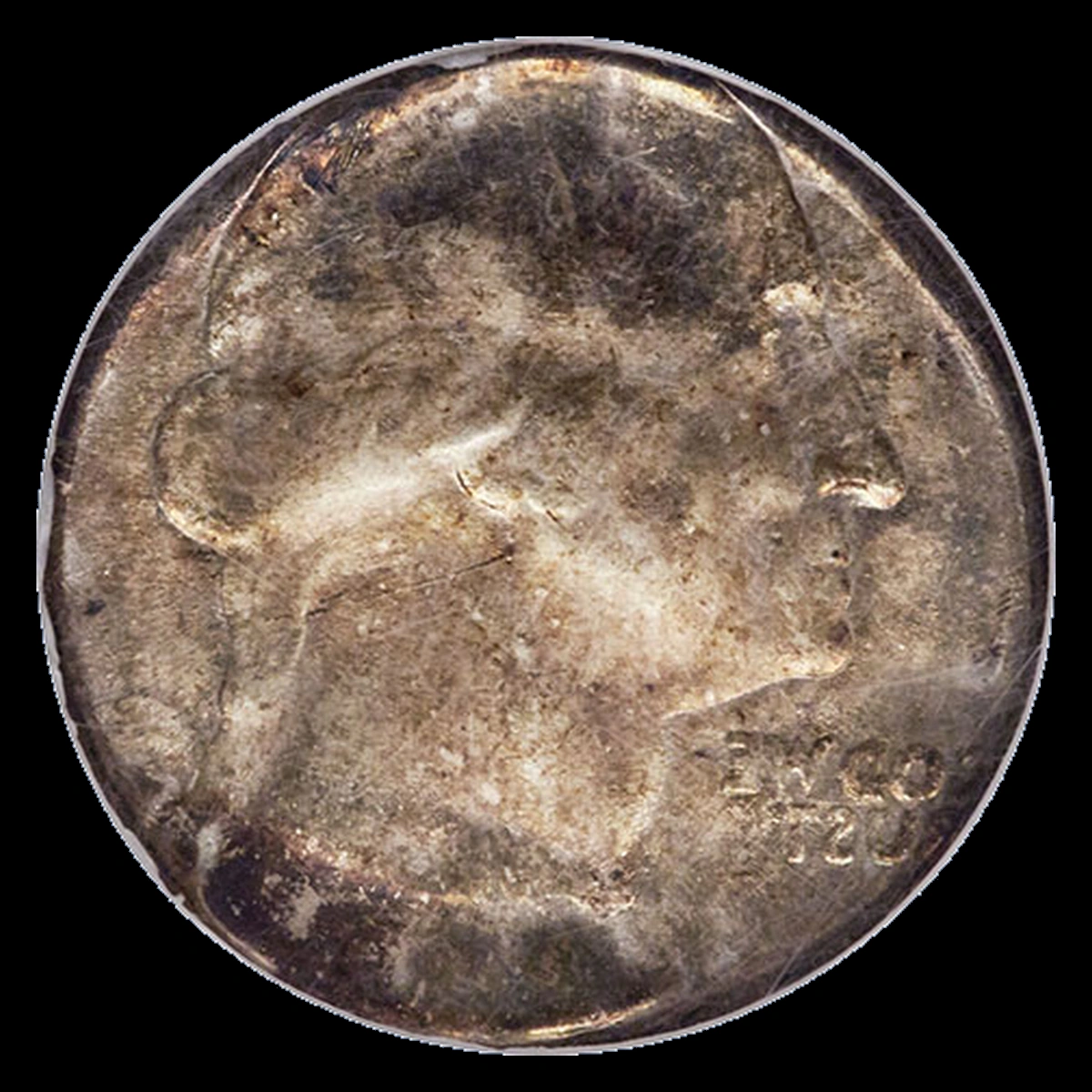
One remarkable 1952 quarter was struck on a silver dime blank. Its front shows Washington, while the back carries a recessed, enlarged mirror image of Washington and part of GOD WE TRUST.
That mirrored impression is called a brockage. A separate 1952-S quarter was struck on a nickel blank, so the two examples should not be combined into one description.
How to Identify
The dime-blank coin has a full 1952 date, missing parts of LIBERTY, and an unreadable mintmark position. Its mint is unknown; the S belongs to the separate nickel-blank coin.
The nickel-blank example weighs 4.6 grams, below a nickel’s nominal 5 grams and well below a normal silver quarter’s 6.25 grams. Size, metal, weight, and surviving design must agree before an undersized coin is called a wrong-planchet error.
What It’s Worth
$500–$10,000 covers the supplied wrong-planchet group. The NGC MS64 dime-blank coin with reverse brockage sold for $4,700 in February 2016.
The separate 1952-S nickel-blank quarter, graded NGC MS61, sold for $1,260 in September 2024. The brockage and dime blank are combined features of one coin, not two prices to add together.
Conclusion
A chest mark, doubled letter, peeling surface, and missing design each call for a different check. Find the visible feature first, then match the mint, finish, and exact pattern.
The strongest supplied results belong to clearly identified coins with specific grades. Keep those records separate from broad comparison ranges, and preserve unusual surfaces exactly as you find them.