Rare 1987 Quarter Errors (List & Pictures)
A letter that seems to be missing calls for a different check from a bite-shaped gap. These 1987 quarter errors range from about $2–$1,500, depending on what happened and how clearly it shows.
The highest documented sale in this group is $411.25 for a matched pair in November 2013. Follow the lettering first, then the outline and any repeated designs.
1. 1987 Quarter Weak Letters: Grease-Filled Details Error
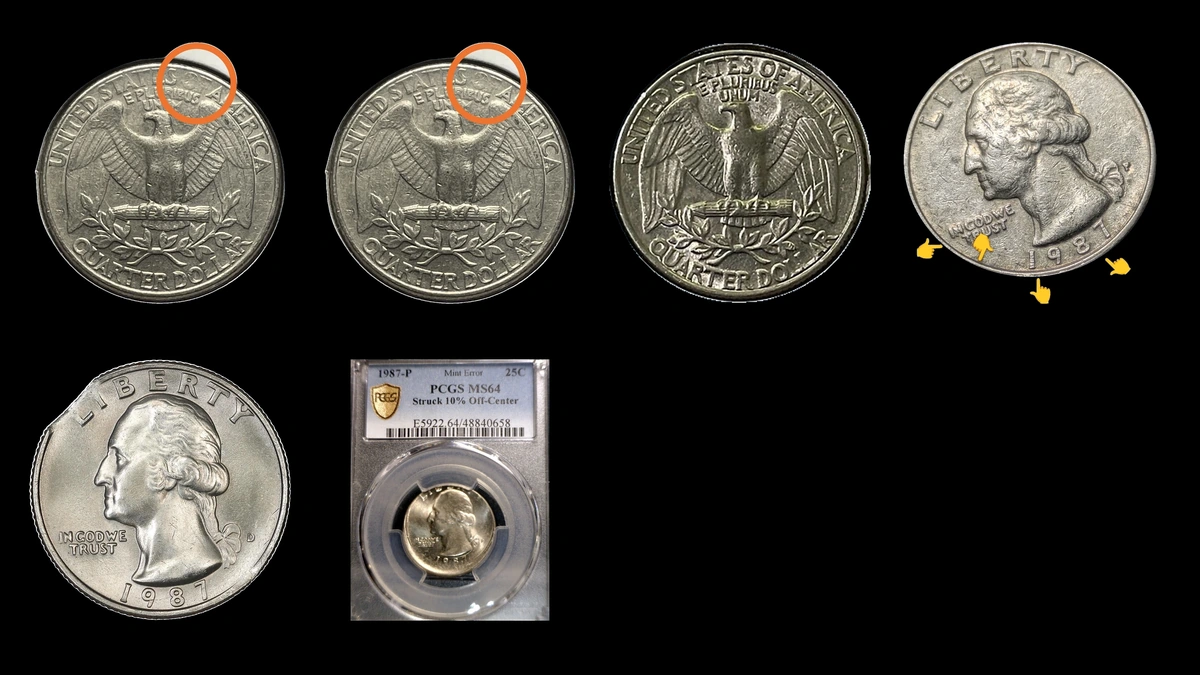
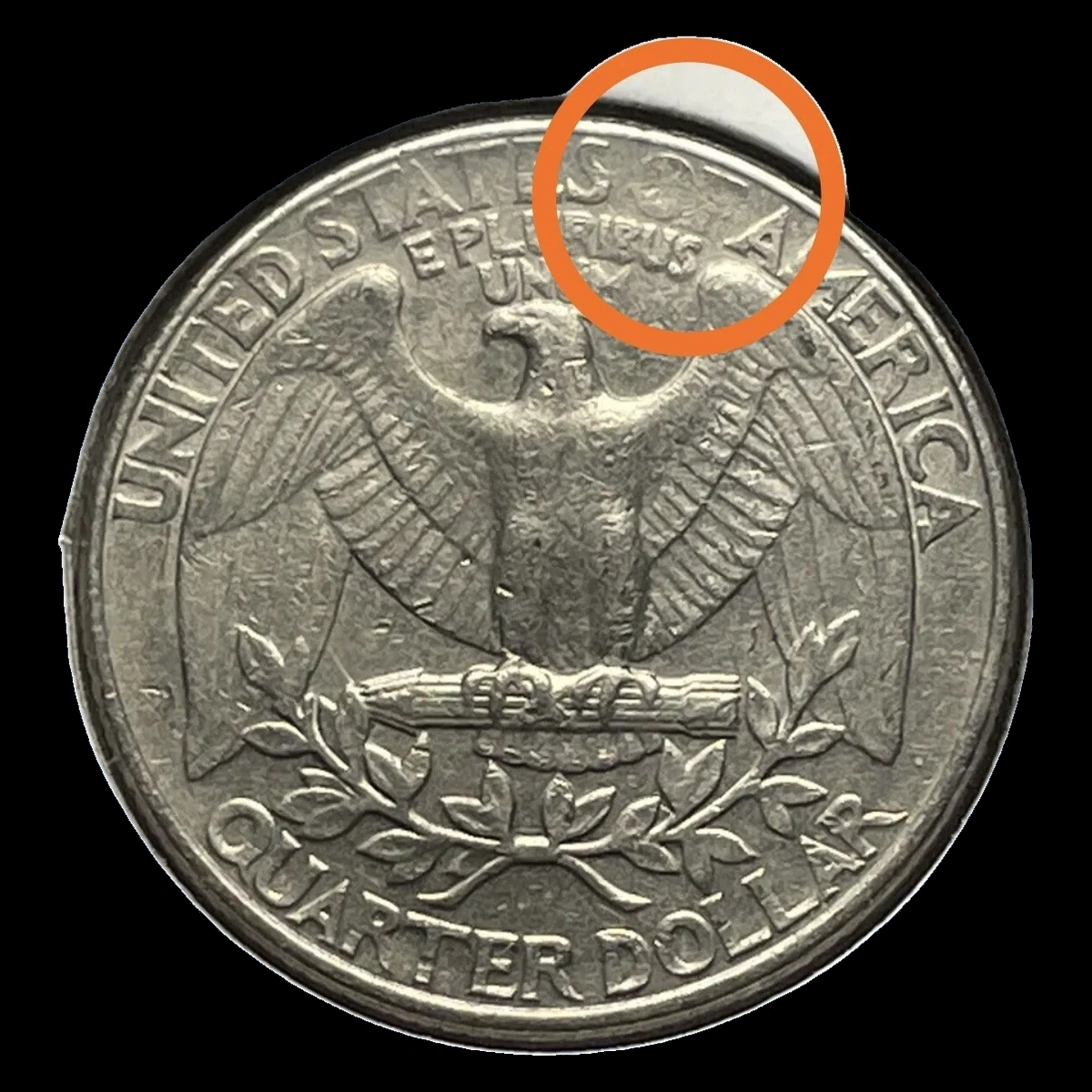
Look at ER in LIBERTY and TER in QUARTER on the reported Denver coin. Some strokes are weak or absent.
Collectors suggested that grease or debris blocked parts of the stamping tools, called dies. That would stop those letters from forming properly.
How to Identify
Compare the weak letters with the details beside them. A small patch of missing detail among sharp letters fits a local blockage better than general wear.
The owner’s discussion and photographs record a proposed explanation, not a professional certification. The posted weight of 5.58 grams is close to a normal quarter’s 5.67 grams and does not settle the cause.
What It’s Worth
$5–$75 is the estimated range for genuine grease-filled lettering. Clearly missing letters with strong surrounding details are more appealing than slight weakness.
Normal wear or an overall weak strike can also fade letters. Those features do not support the same error premium.
2. 1987 Quarter Extra Letter Edges: Doubled Dies Error
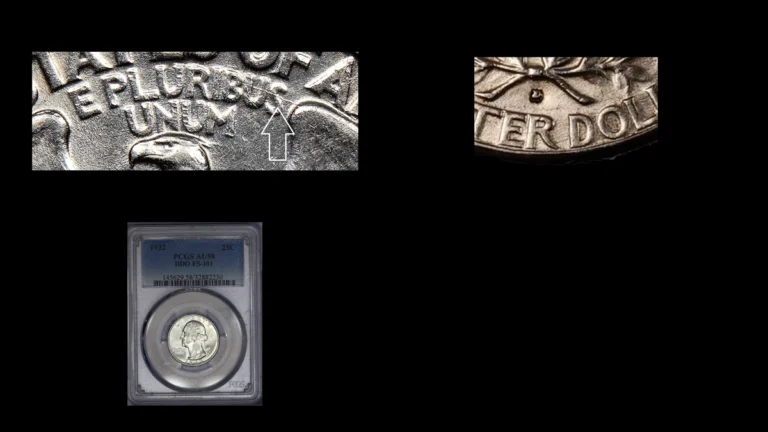
Two separate reports point to different faces of the quarter. The Denver report concerns E, R, I, and C in AMERICA; the Philadelphia report concerns LIBERTY, the motto, and the date.
A doubled die carries repeated details on the tool itself. One blow can therefore leave extra outlines on a coin.
How to Identify
Read the mintmark before choosing which letters to examine. The Denver and Philadelphia clues describe separate coins.
Under magnification, look for rounded separation or split corners. A low, flat shelf beside a smaller-looking letter is more typical of machine doubling.
Neither report supplies an established specialist number. Thick lettering alone does not identify a recognized doubled-die variety.
What It’s Worth
$10–$150 is an estimated range for genuine minor doubled dies of these kinds. A clear specialist match and easy-to-see separation help support the upper end.
A seller’s label adds little if the photograph only shows flat shelves or worn lettering.
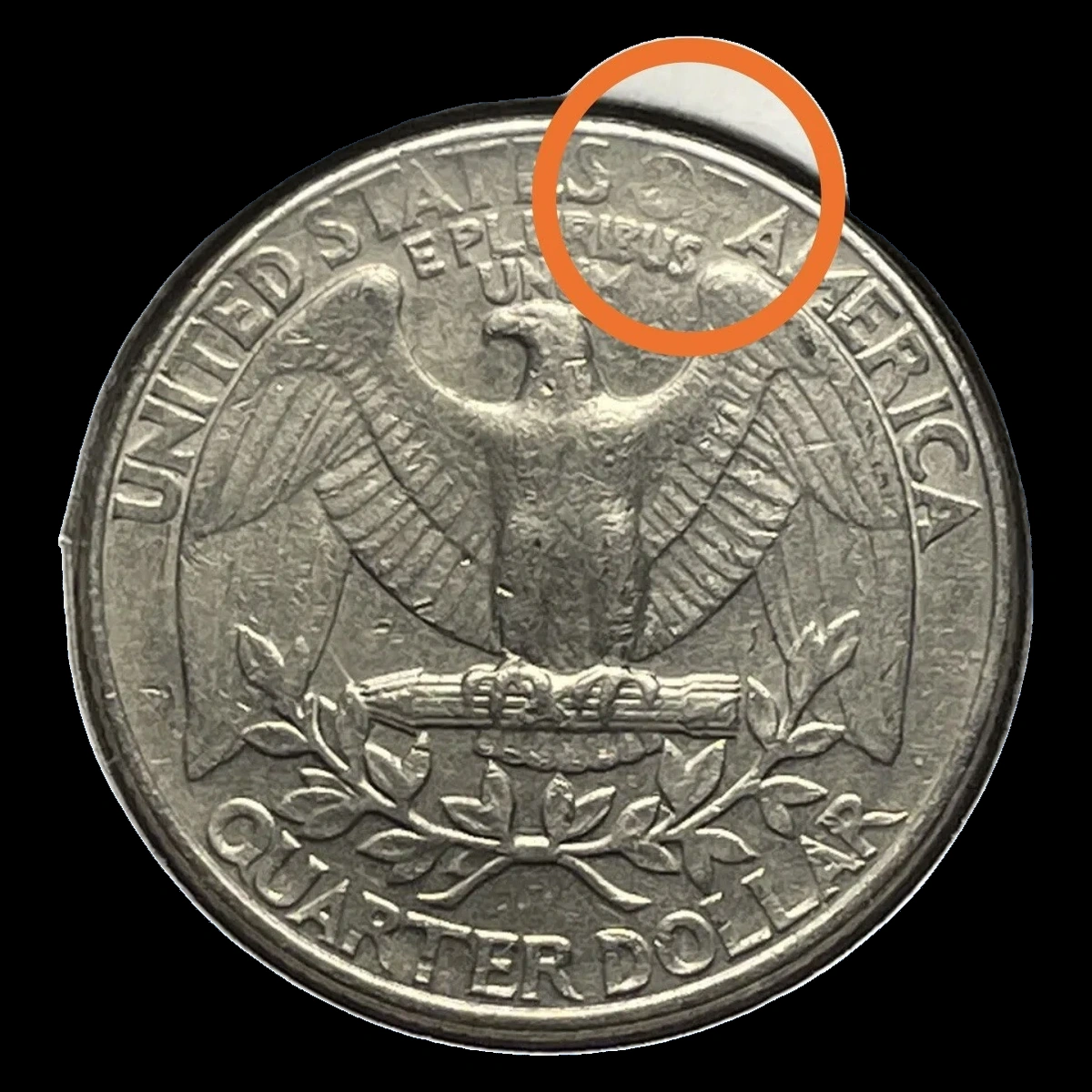
3. 1987 Quarter Faint Shapes Between the Designs: Die Clash Error
A faint shape that resembles part of the opposite face may be a clash mark. The tools can strike each other without a blank between them and pick up traces of one another’s designs.
Later coins receive those extra traces along with the normal picture. A Philadelphia example is reported for 1987.
How to Identify
Trace the extra shape in a photograph, then compare its curves with the design on the other face. The shape and position must fit contact between the tools.
A random raised line could instead be a die crack. The report does not establish an exact clash location, so use the actual coin’s photographs rather than an assumed marker.
What It’s Worth
$5–$100 covers estimated values for recognizable clashes of this general kind. An obvious transferred shape is easier to collect and display than a faint trace.
Good photographs should show why the extra mark belongs to the opposite design.
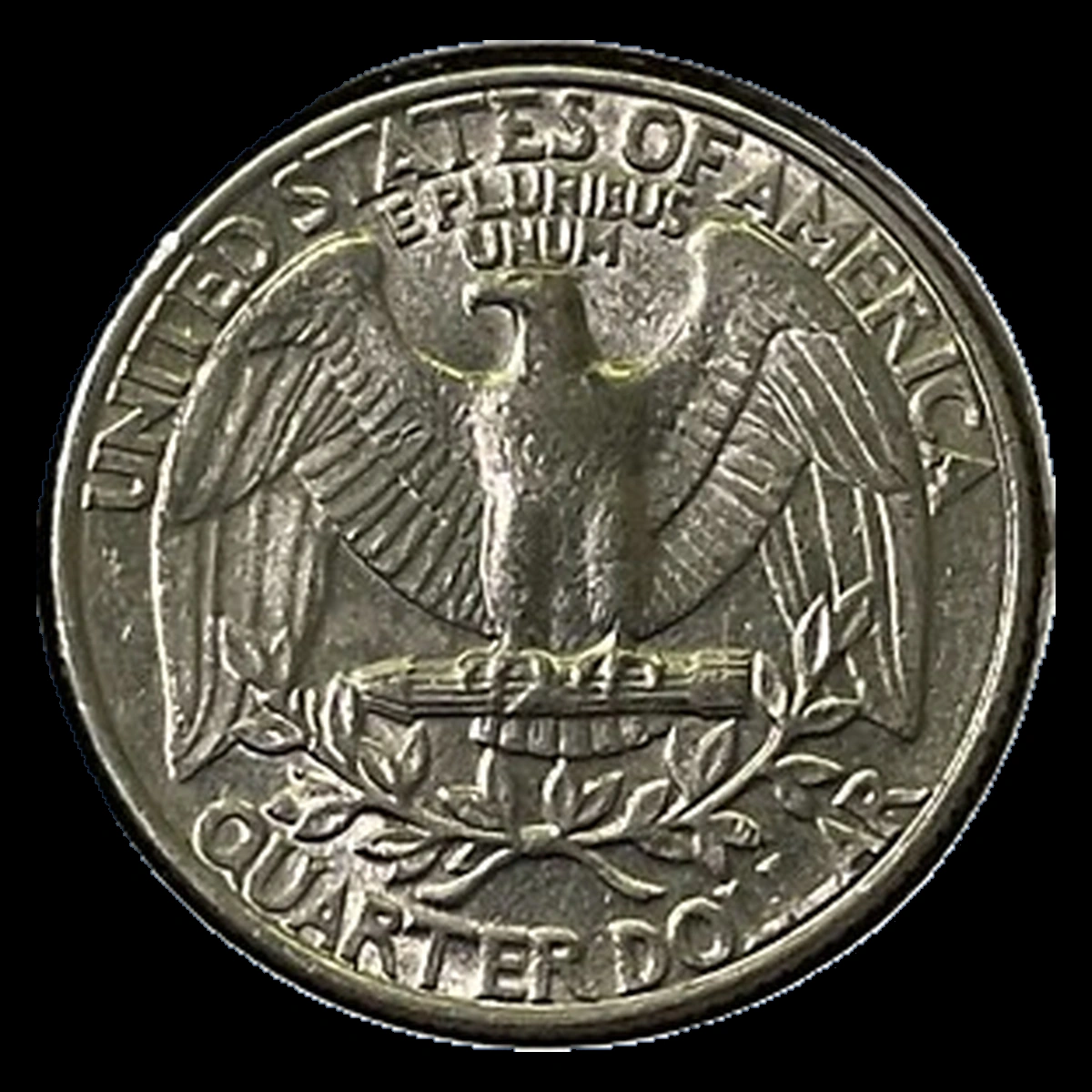
4. 1987 Quarter A Raised Line on a Proof: Die Crack Error
The 1987-S Proof was a collector coin made with specially prepared tools and surfaces. A crack in one tool could leave a thin raised line across that reflective finish.
This reported category concerns the usual clad Proof, not a silver issue. The source does not give a fixed route for the line.
How to Identify
Keep the coin protected and move the light across the line. A crack leaves metal above the surface; a scratch cuts into it.
Follow the entire visible path. Several fine parallel lines may be cleaning marks rather than one continuous raised crack.
What It’s Worth
$25–$200 is a working range for a confirmed small Proof die crack. A visible line on clean reflective surfaces is more attractive than a barely noticeable line on a scratched coin.
This estimate does not assume a large piece broke from the tool.
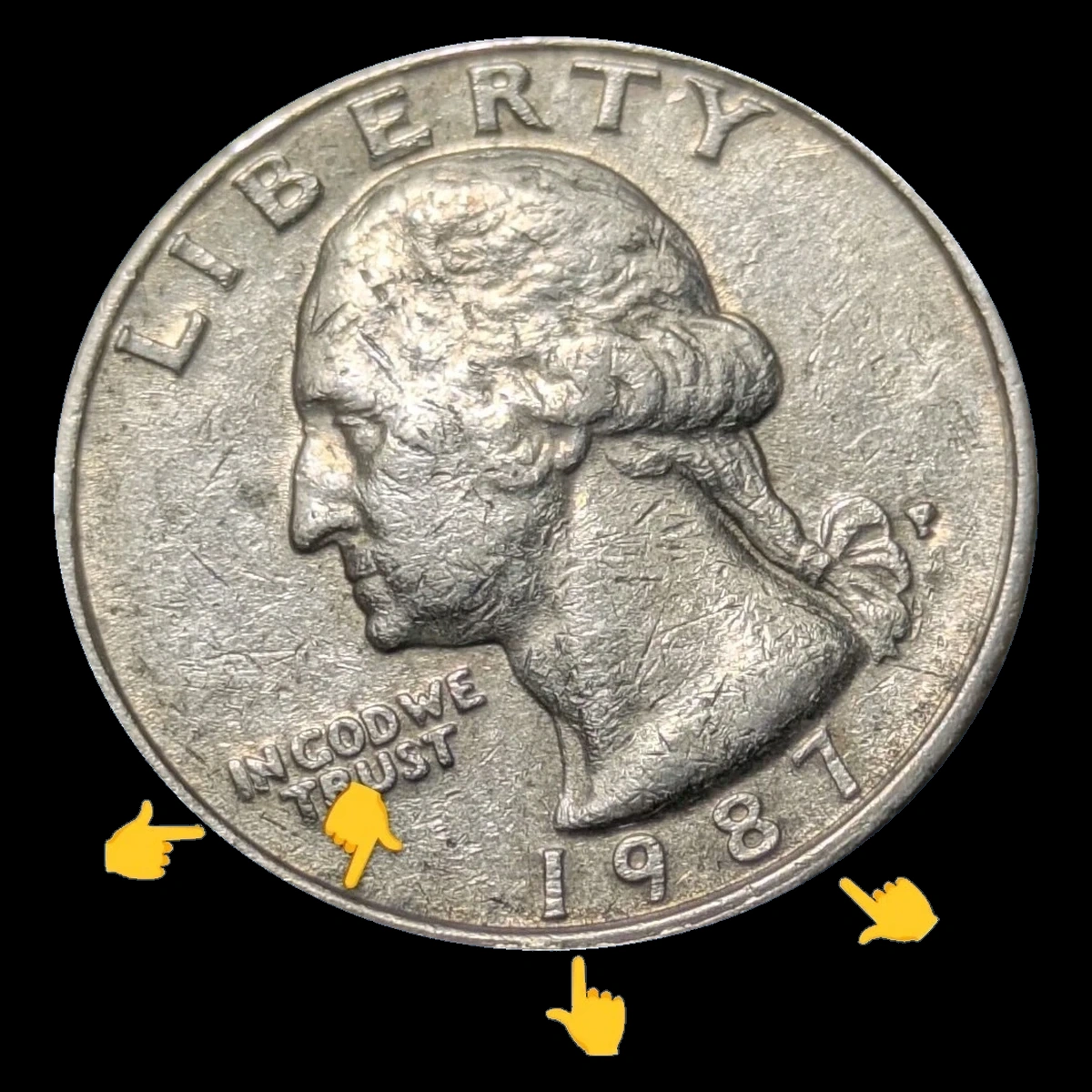
5. 1987 Quarter One Face Sits Too Far to the Side: Misaligned Die Error
When one stamping tool shifts sideways, the border can become narrow on one side and wide on the other. The opposite face may still be centered.
A Philadelphia example is reported, but the report gives no fixed direction or amount of movement.
How to Identify
Photograph both faces straight on, keeping the whole rim visible. Compare how close the outer letters sit to the edge.
One shifted face beside a centered face supports a misaligned die. Matching blank crescents on both faces point instead toward an off-center strike.
Also check for a bent or dented edge that could make the border look uneven.
What It’s Worth
$2–$50 is the estimated range for modest genuine shifts. A tiny difference in border width usually has little value.
A clear shift that can be shown on both photographs is more useful to buyers than a dramatic description.
6. 1987 Quarter Metal Spreads Past the Design: Broadstrike Error
The edge-forming ring normally keeps a quarter from spreading too far during the strike. Without that restraint, extra metal can extend around the design.
A documented Philadelphia example was graded NGC MS63, meaning unworn with noticeable marks. Its catalog did not state its diameter.
How to Identify
Compare the area beyond the lettering with a normal quarter. A broadstrike should show natural outward spread while retaining the design.
A regular quarter is about 24.3 millimeters wide, which provides a useful comparison for a loose coin. It is not the recorded measurement of the auctioned example.
Hammer damage can also widen a coin, but it tends to flatten or distort already struck details.
What It’s Worth
$20–$150 is the estimated range. The Philadelphia MS63 example sold for $20 in August 2009.
More obvious spread and cleaner surfaces may bring more, though a small genuine broadstrike can remain inexpensive.
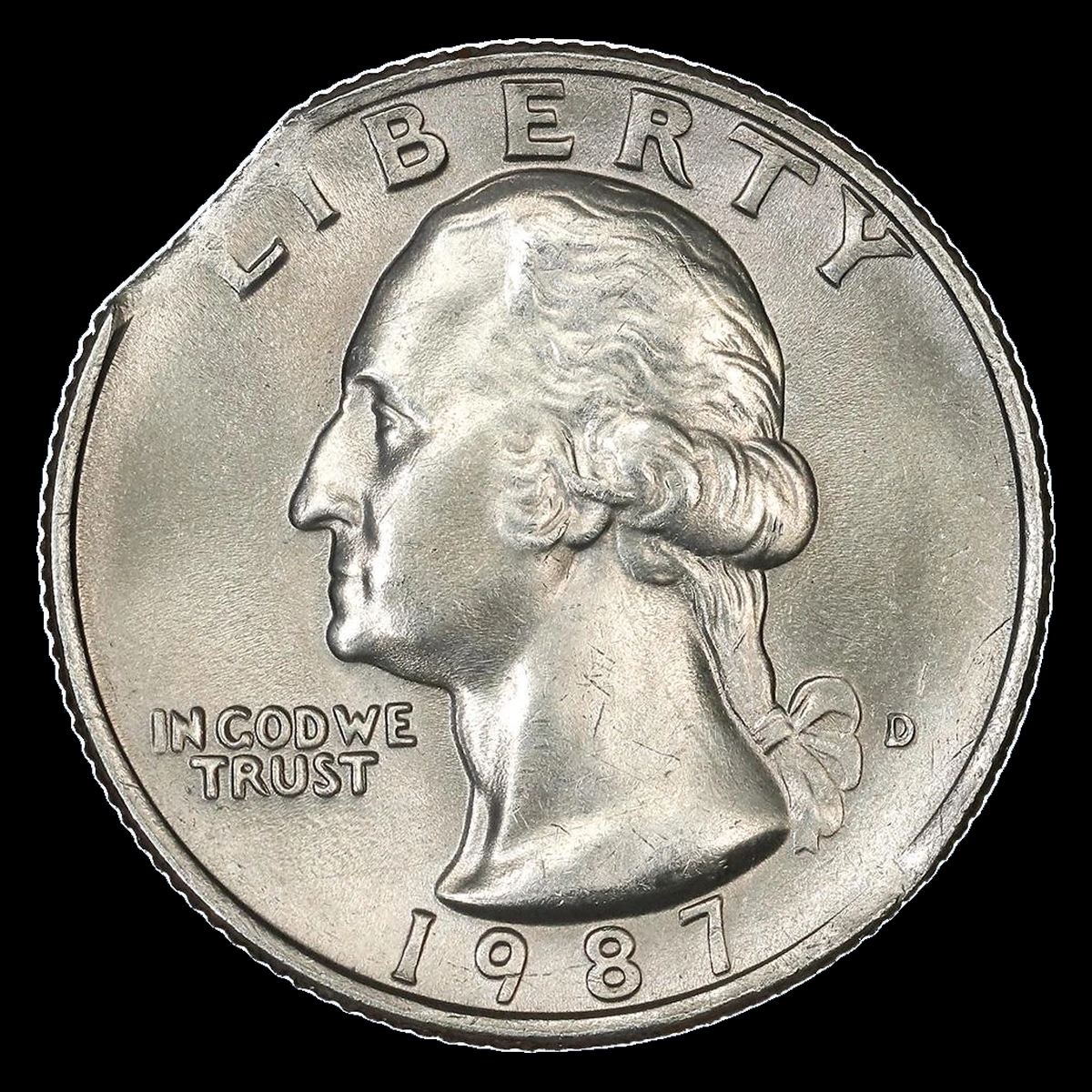
7. 1987 Quarter Curved Metal Is Missing: Clipped Blank Error
A curved notch can start when a blank is punched from an overlapping area of metal strip. The gap is already present when the design is struck.
Philadelphia reports include single and double clips, and a Denver clip is pictured in a year guide. Another 1987 coin combines a small clip with a large off-center strike.
How to Identify
Find the missing metal first. On a combined error, the clipped notch is different from the broad blank area left by the off-center strike.
Look for natural metal flow near the gap and check for fresh cutting marks. A weak rim opposite a clip can help, but it is not equally clear on every genuine coin.
The combined example was described as about 3% clipped and 50% off center, weighing 5.52 grams. Those measurements belong to that one coin, whose mint was not identified.
What It’s Worth
$10–$100 is the estimated range for small simple clips; $75–$250 covers the clip-and-off-center combination. Two clear clips can also add interest.
Al’s Coins listed the combined coin at $99.95 in 2007. That was an asking price, and the combination should be valued as one coin.
8. 1987 Quarter The Picture Misses Part of the Blank: Off-Center Strike Error
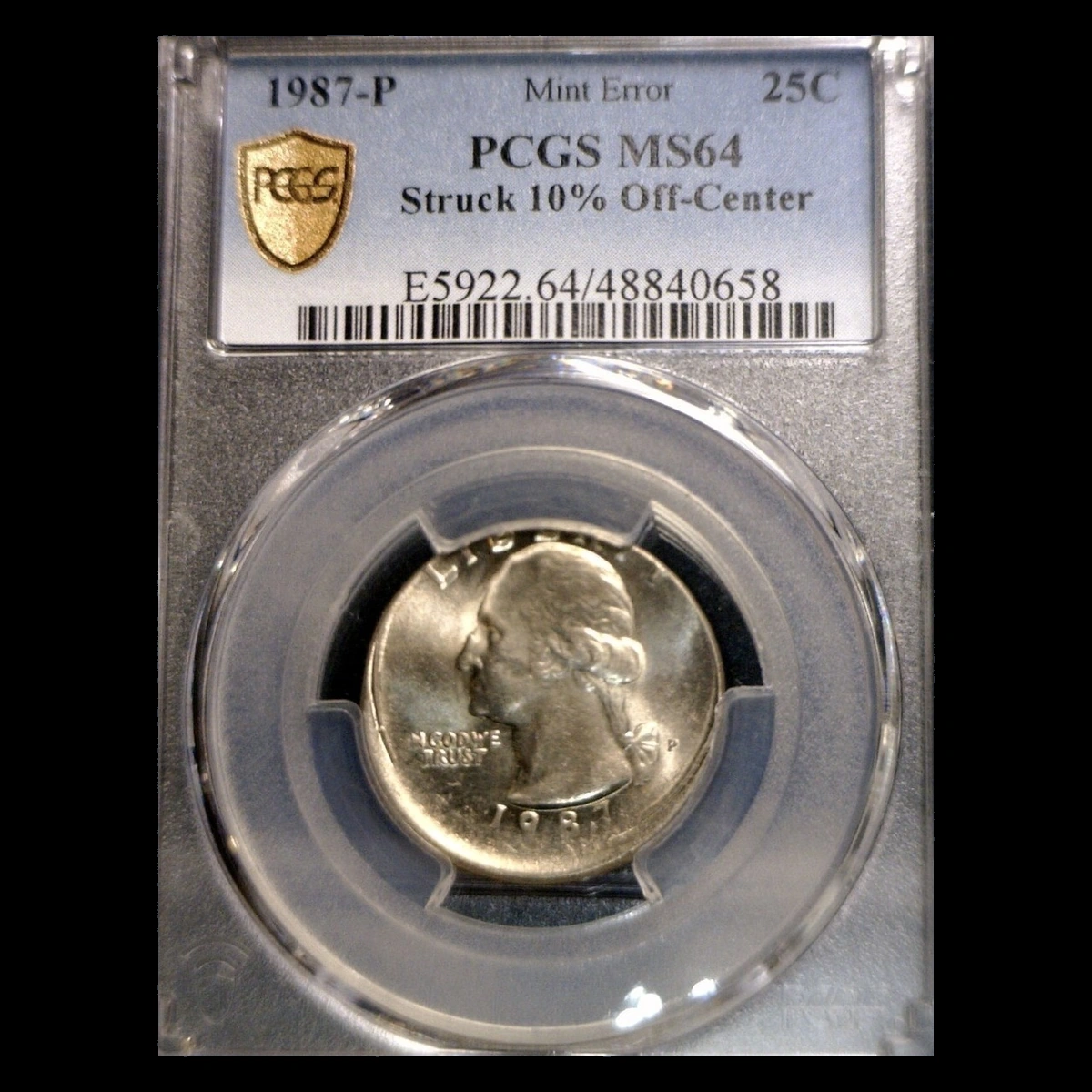
A smooth crescent beside an incomplete design shows where the blank missed the tools. This happens when the blank enters the press out of position.
Separate Philadelphia examples were described as 15% off center toward 4 o’clock and 10% toward 12 o’clock. A Denver example was reported at 25%, with no direction given.
How to Identify
Check both faces for matching unstruck areas, then see whether the year and mintmark remain readable. Do not use the position on one pictured coin as a requirement for every off-center quarter.
The 15% Philadelphia example has scratches from later handling. Those narrow cuts are damage; the broad blank crescent records the mint error.
What It’s Worth
$25–$300 is the estimated range for these off-center quarters. A visible date, a clear shift, and clean surfaces improve the comparison.
The scratched 15% example was part of a two-coin lot that sold for $65 in January 2022. That total also included a 1990-D partial-collar quarter, so it is not a separate $65 sale for the 1987 coin.
9. 1987 Quarter Two Images on an Expanded Coin: Double Strike with Broadstrike Error
Repeated details and an enlarged border appear together on a documented Philadelphia coin. It received more than one blow and spread without full restraint from the edge ring.
The coin was graded ICG MS64, meaning unworn with some marks. Its description gives no particular angle between the strikes.
How to Identify
Choose a detail that appears twice and follow both positions into nearby letters or design features. A later strike may flatten parts of the first image.
Next inspect the spread beyond the design. This separate clue supports the broadstrike part of the combination.
Flat shelves beside letters do not by themselves establish two full strikes.
What It’s Worth
$75–$500 is the estimated range for comparable combinations. The documented coin sold for $86.25 on December 30, 2008.
Well-separated images are easier to appreciate than heavy overlap. The two error features are priced together, not added as separate premiums.
10. 1987 Quarter Quarter Details on a Small Blank: Dime-Blank Strike Error
A dime blank is too small to hold the complete quarter design. Outer letters and parts of the date may fall beyond its edge.
The published Philadelphia example weighs 2.3 grams and is labeled (1987). Those parentheses show an attributed year, not a promise that all four digits are visible.
How to Identify
Use the weight and the natural edge together. A light coin with filing marks may simply be a quarter cut down after striking.
This example was graded NGC AU58, meaning nearly unworn. Its published auction illustration helps show the surviving design and year attribution.
An unused dime blank has no Roosevelt design to show through. That separates this category from a quarter struck over a finished dime.
What It’s Worth
$200–$1,000 is the estimated range for comparable dime-blank quarters. The published September 2010 Long Beach auction result was $253.
How much of the quarter design remains, the surface condition, and reliable year identification affect the value.
11. 1987 Quarter Two Coins Belong to One Accident: Mated Pair Error
A mated pair consists of two coins whose features connect them to the same minting event. The relationship between them is what makes the pair useful.
The documented pair has a 1987 coin graded NGC AU58 and a second labeled (1987), graded MS63. The first has slight wear; the second is unworn.
How to Identify
Study both faces of each coin alongside their holder descriptions. Look for complementary shapes or contact areas that explain the link.
The catalog does not establish that these coins are bonded together or show a particular mirror image. Two unusual quarters with matching years alone would not prove a mated pair.
Keep both pieces protected instead of pressing their surfaces together to test the fit.
What It’s Worth
$300–$1,500 is the estimated range for an authenticated pair of this kind. The complete pair sold for $411.25 on November 3, 2013.
Both the range and that result cover two coins together. Keeping their documentation with them preserves the evidence behind the pairing.
Conclusion
Start with the feature that stands out: a weak letter, a missing curve, an oversized border, or a second image. Then use the other face and the edge to test that first impression.
Sale descriptions matter too. A price for a pair or mixed lot cannot be assigned to one quarter, and a dealer’s asking price is different from a completed sale.