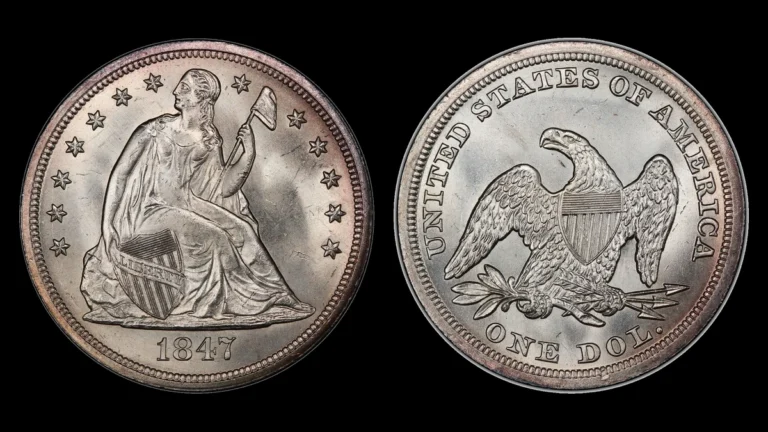
Rare 1799 Dollar Errors (List & Pictures)
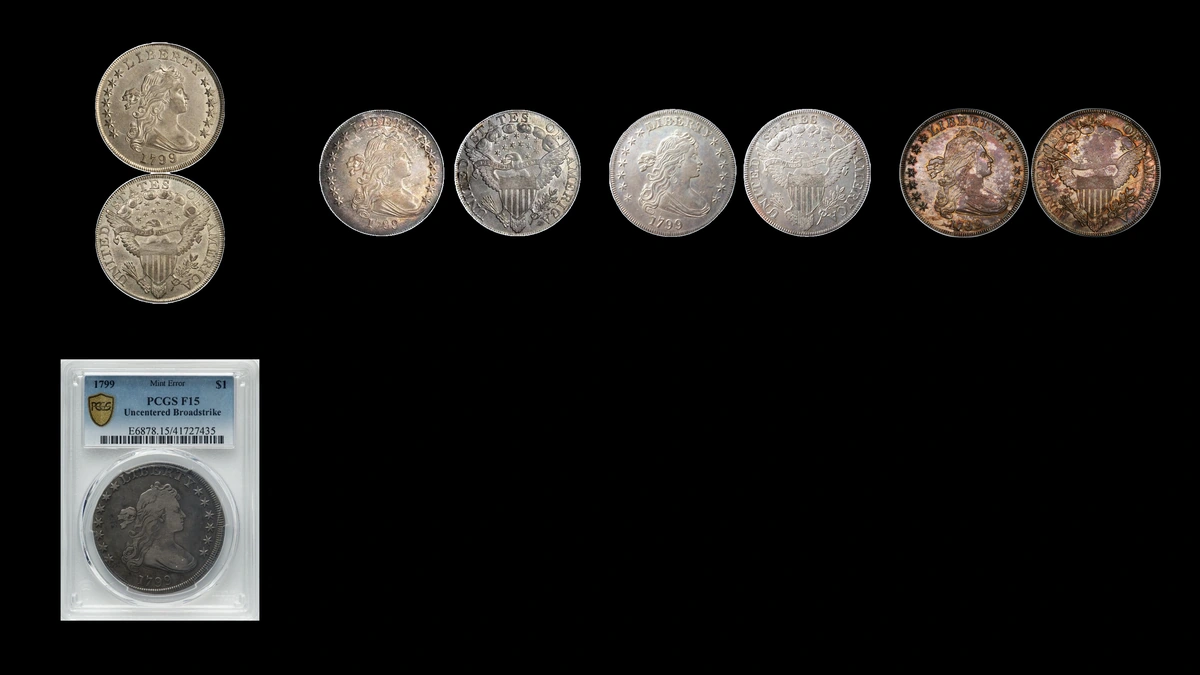
A 1799/8 dollar with the altered reverse star pattern sold for $120,750 in November 2012. The 1799 Draped Bust dollar errors and varieties below span estimated whole-coin values of $1,000–$150,000.
Read the final date digit, count the stars carefully, then examine raised cracks, transferred designs, and the original edge of any shifted strike.
| Clue | Category | Whole-coin range |
|---|---|---|
| Earlier 8 beneath the last 9 | 1799/8 overdate | $1,500–$150,000 |
| Unusual front count or hidden star points | Star-layout varieties | $1,500–$150,000 |
| Raised lines or border-connected break | Die cracks and breaks | $1,000–$50,000 |
| Cloud waves or reversed date traces | Die clash | $1,000–$60,000 |
| Complete shifted designs and unequal borders | Uncentered broadstrike or cataloged off-center strike | $2,000–$30,000 |
1. 1799 Dollar An earlier 8 within the final 9: overdate Error
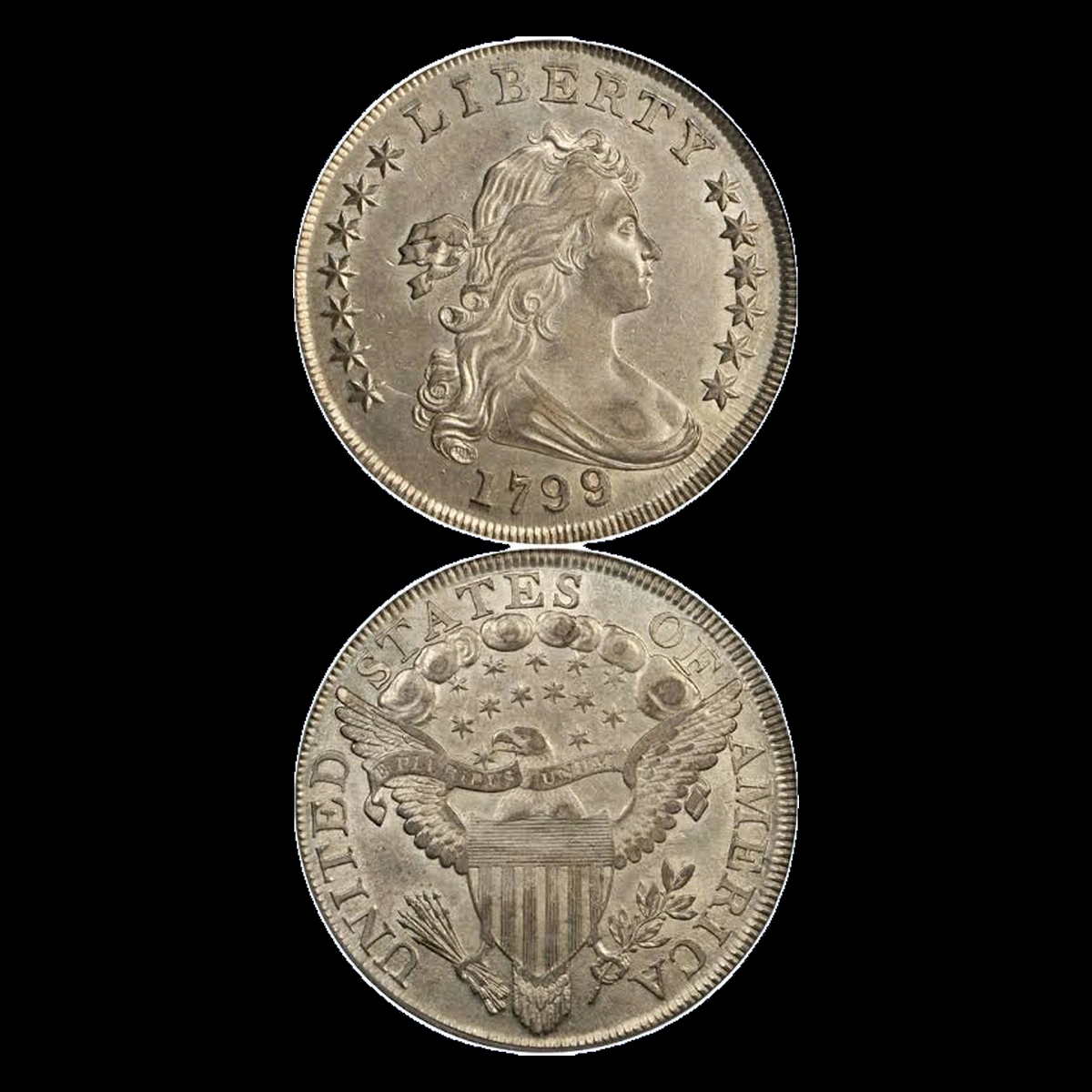
The last 9 of a 1799/8 dollar preserves curves from an 8 in the die. A worker changed the date in the steel tool before it struck the coin.
The dollar was not first minted as 1798 and then struck again. The same overdate front was paired with different reverses, including thirteen-star and altered fifteen-star designs.
How to Identify
Photograph the last two date digits sharply and inspect within and below the final 9. The surviving curves should match a genuine 1799/8 reference, not merely resemble a thick digit.
Look for later engraving, corrosion, or disturbed metal around the date. Identify the underlying 8 first, then use the reverse to determine the exact pairing.
What It’s Worth
Genuine 1799/8 dollars have an estimated whole-coin range of $1,500–$150,000.
PCGS records BB-141 in MS 64 at $120,750 in November 2012. That unworn example also has the reverse with hidden extra stars.
The high result includes exceptional preservation and the complete variety. A worn overdate with a clear 8 is still a different condition comparison.
2. 1799 Dollar Eight stars on the left or hidden reverse points: star varieties Error
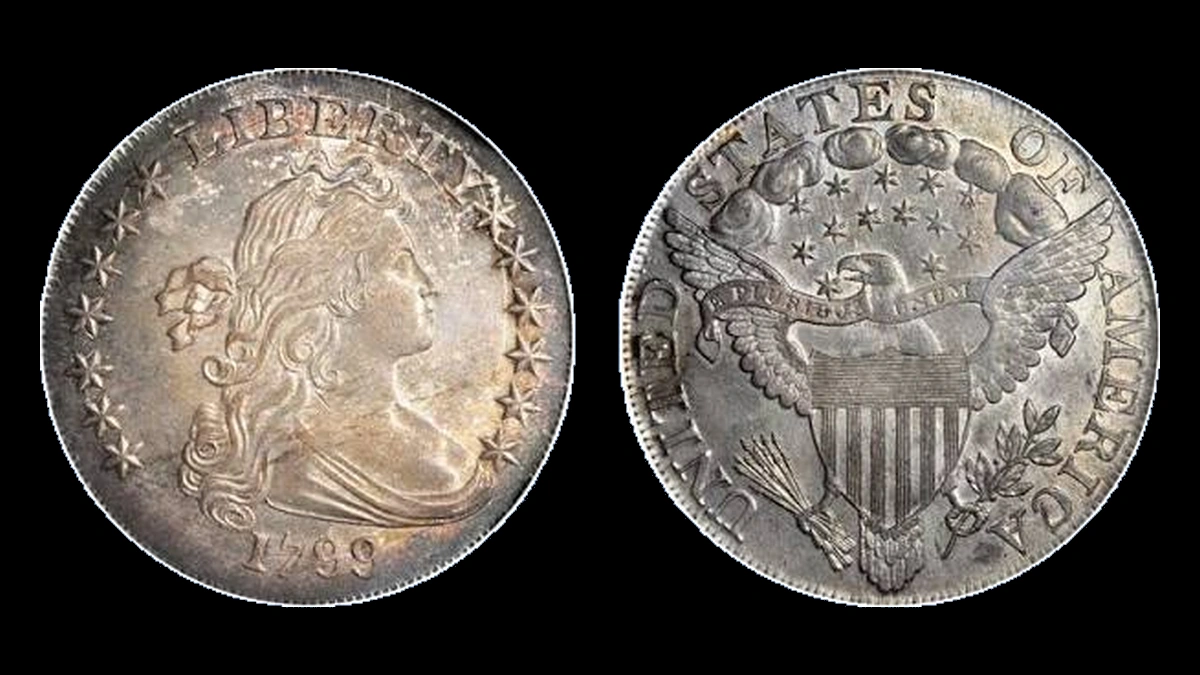
One front design arranges eight stars left of Liberty and five on the right. The normal arrangement is seven and six, so both totals remain thirteen.
A separate reverse began with fifteen stars, then concealed most of the extras beneath enlarged clouds at the two ends. Small points can remain visible below those clouds.
The unusual front arrangement and altered reverse are separate varieties. The fifteen-star reverse can pair with an overdate, but does not establish the date feature by itself.
How to Identify
Set Liberty upright and count each front side independently from the bottom. The eight-and-five arrangement changes placement without adding to the total.
On a suspected fifteen-star reverse, inspect beneath the first and last clouds for leftover points. Counting only thirteen exposed stars can miss the two mostly concealed ones.
Match the end-cloud shapes and protruding points to a reference. Do not combine the two different star tests into one required front-and-back configuration.
What It’s Worth
The combined estimate is $1,500–$150,000, with eight-and-five front examples around $1,500–$50,000 and the altered fifteen-star reverse around $1,500–$150,000.
The $120,750 November 2012 MS 64 sale above includes both the overdate and hidden-star reverse. It is one transaction, not a second full-price sale to add to the date feature.
3. 1799 Dollar Raised routes through lettering and eagle: die cracks and breaks Error
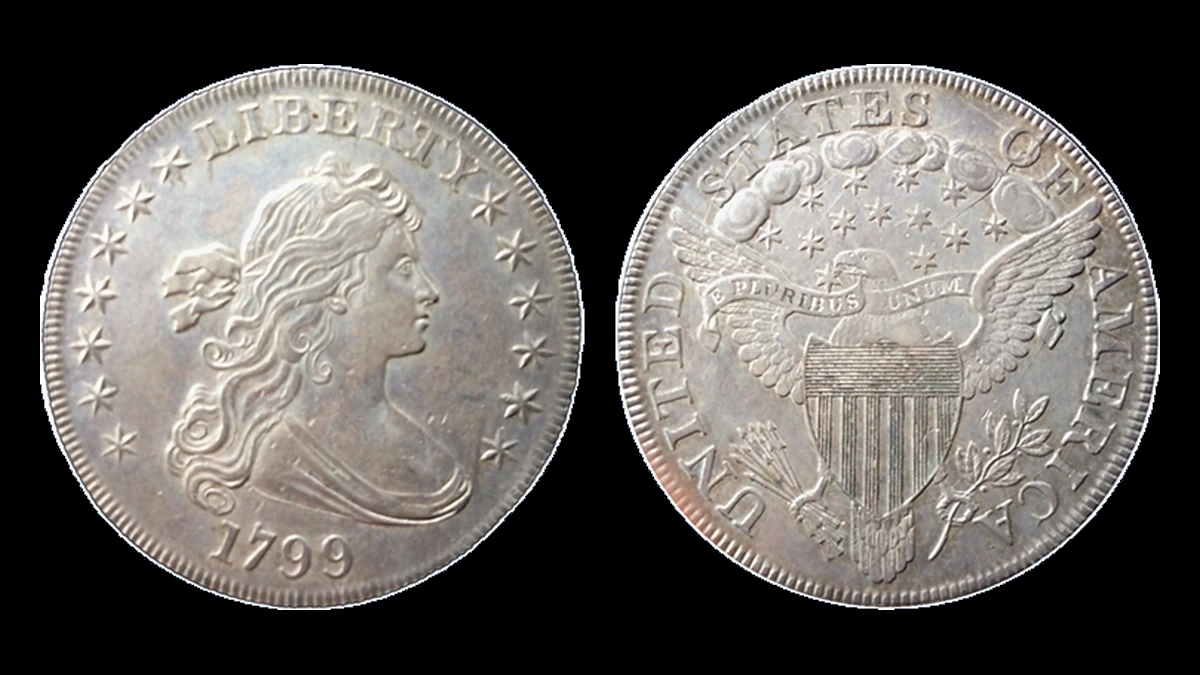
BB-154 has a strong reverse crack from the ED area of UNITED toward the shield. Later examples can show another heavy path below the left wing through STATES and the O in OF.
BB-166 is a different variety with a reported break beside the final S in STATES. A broad break connected to the border can form a raised patch called a cud.
How to Identify
Select ED in UNITED for the BB-154 comparison or the final S in STATES for BB-166. Follow the full raised route or patch against the surrounding design.
Side lighting helps separate metal copied from a die opening from a rim dent that pushed silver inward. Do not combine the two varieties’ routes into one universal crack map.
What It’s Worth
Most identified examples in worn through attractive nearly unworn grades have an estimated whole-coin range of $1,000–$50,000.
A BB-154 AU 55 brought $15,275 in May 2021, while a BB-166 MS 63 brought $33,350 in June 2004. These variety-level results do not prove identical die-break stages on every specimen.
4. 1799 Dollar Cloud waves above the date: die clash Error
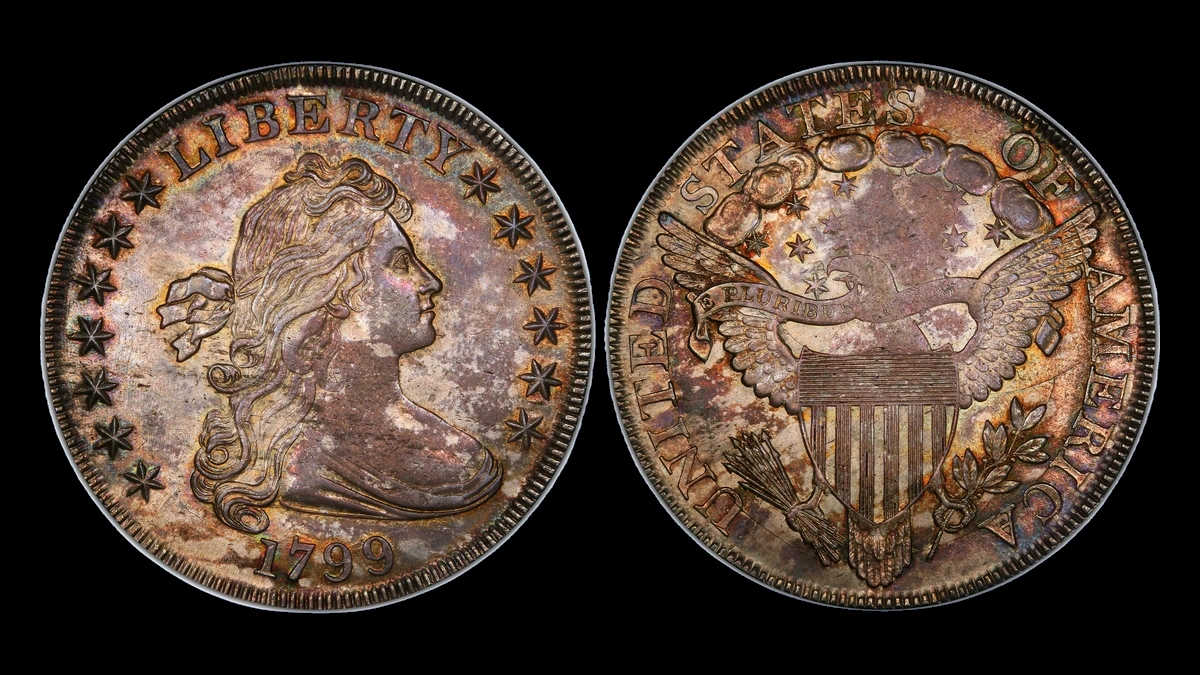
On BB-158, wavy traces above the front date can echo the reverse clouds. Other faint shapes appear near the low stars and Liberty’s bust.
The reverse can carry a reversed date trace between the end of STATES and OF. The dies acquired these marks by meeting without a blank, then copied them onto later coins.
How to Identify
Study the actual reverse clouds before comparing the waves above the front date. Their shape and placement should agree with a documented clashed BB-158.
Check the reverse space near STATES and OF for a backward date remnant. Wear may hide some traces, so do not complete indistinct digits by imagination.
Scratches crossing these areas are separate from shallow transferred design. A matching cloud pattern with supporting reverse evidence is stronger than an unexplained line.
What It’s Worth
A clearly identified clashed example has an estimated whole-coin range of $1,000–$60,000.
A BB-158 graded MS 63 realized $49,200 in March 2024. That variety-level comparison prices a preserved early dollar, not each faint cloud trace independently.
5. 1799 Dollar Complete designs pushed to one side: shifted strike Error
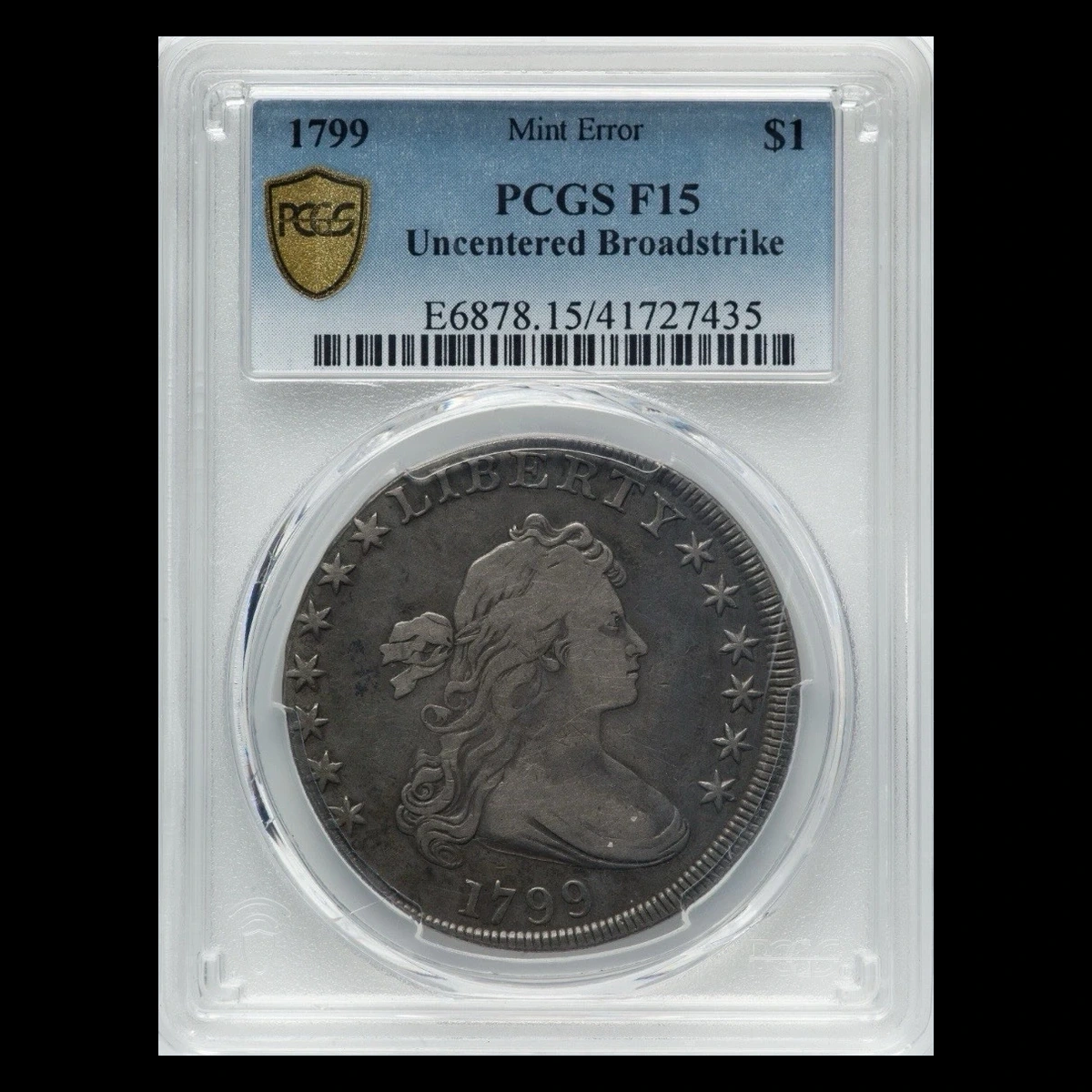
A PCGS Fine 15 coin described as an uncentered broadstrike has both complete main designs left of center. Border beads are missing on the left and stretched on the right.
A separate AU 58 example was auctioned as 5% off center while also retaining all design elements. These early dollars require comparison with their own production methods rather than a modern closed-collar failure explanation.
How to Identify
Compare the entire main design and both margins before deciding what is missing. On the Fine 15 coin, left-side stars and lettering approach the edge while right-side beads spread outward.
Inspect the lettered edge for filing, cuts, or flattening that could indicate later alteration. Normal early-dollar specifications were about 26.96 grams and roughly 39–40 millimeters across, not measured specifications for either auction specimen.
The useful match combines displaced complete designs, altered border formation, and an original edge. The two catalog descriptions should stay attached to their respective coins.
What It’s Worth
Comparable shifted examples have an estimated whole-coin range of $2,000–$30,000 across worn and nearly unworn grades.
The Fine 15 uncentered broadstrike sold for $3,416 on July 17, 2026. The separate AU 58 coin is less worn and cannot supply the cheaper specimen with its condition.
Conclusion
The final date digit and star layout identify different die features, even when they occur on one 1799 dollar. Cracks and clashes provide further comparisons without becoming separate full-price objects.
For shifted strikes, inspect the main design, border beads, and lettered edge together. Use the actual specimen’s catalog description and condition, and keep extraordinary unworn auction results separate from the expectations for a worn example.