Rare 1850 Dollar Errors (List & Pictures)
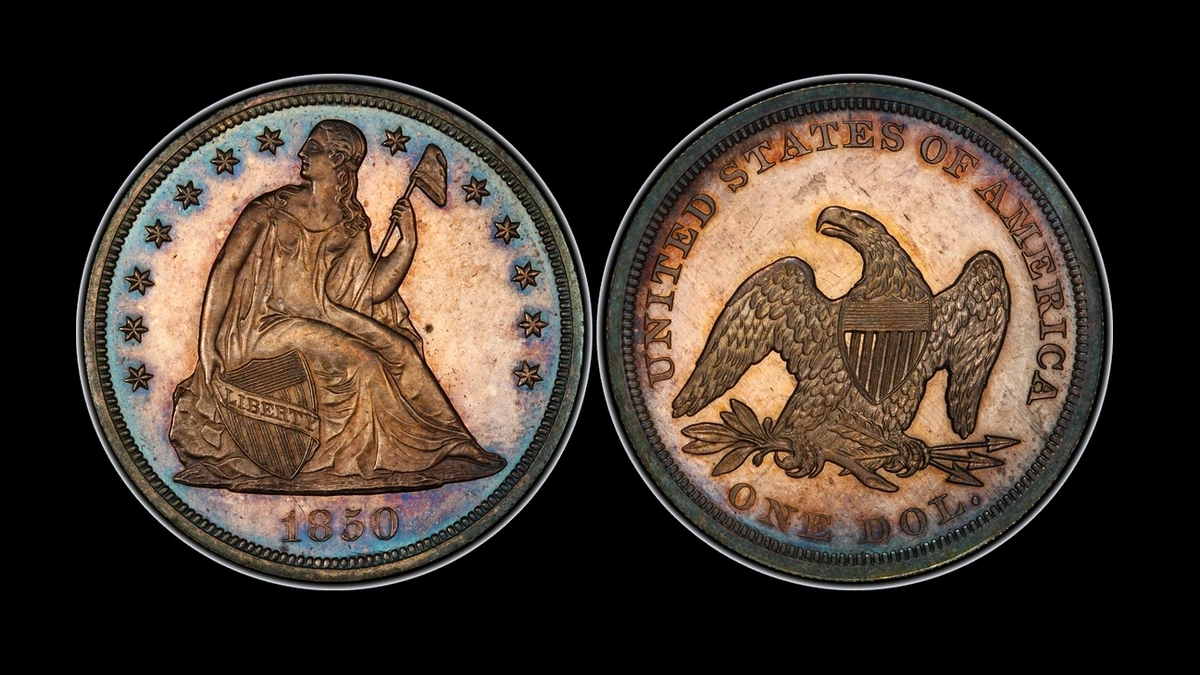
An 1850 Proof with a repunched date realized $49,200 in December 2025. Estimated whole-coin values in this 1850 Liberty Seated dollar errors guide range from $1,000–$75,000.
Begin beneath the date’s zero, then compare raised crack routes while keeping ordinary strikes and specially prepared Proofs in separate groups.
1850 Dollar A curved remnant below zero: repunched date Error
The lower edge of the zero can retain part of an earlier date impression. The punch entered the die more than once, with enough change in position to leave a small curved remnant.
This repunched date records work on the steel die before the dollar was struck. It does not mean the coin received two complete strikes.
The ordinary-strike combination is cataloged as OC-1, while the Proof variety is OC-P1. These names identify tool combinations, not grades.
How to Identify
Focus on the bottom of the zero and compare the extra curve with the numeral’s shape. A straight cut across the digit is not the same feature.
Vary the lighting to separate actual raised silver from a shadow or dark stain. Then compare the entire date with an identified example of the same ordinary or Proof variety.
The opening in the neighboring 5 does not establish repunching on its own. Keep that normal numeral shape separate from additional strokes at the zero.
Photograph both complete faces to preserve evidence of the coin’s manufacture. A reflective date close-up cannot establish Proof status.
What It’s Worth
The combined whole-coin estimate is $1,000–$75,000, including $1,000–$35,000 for ordinary strikes and $15,000–$75,000 for recognized Proofs.
PCGS records a CACG Proof-64 Cameo OC-P1 at $49,200 in December 2025. Cameo describes frosted designs against reflective fields.
That result belongs to a scarce collector Proof with its own level of preservation. A similar date curve on an ordinary dollar does not transfer the Proof’s value to it.
1850 Dollar Raised paths through words or beneath the date: die cracks Error
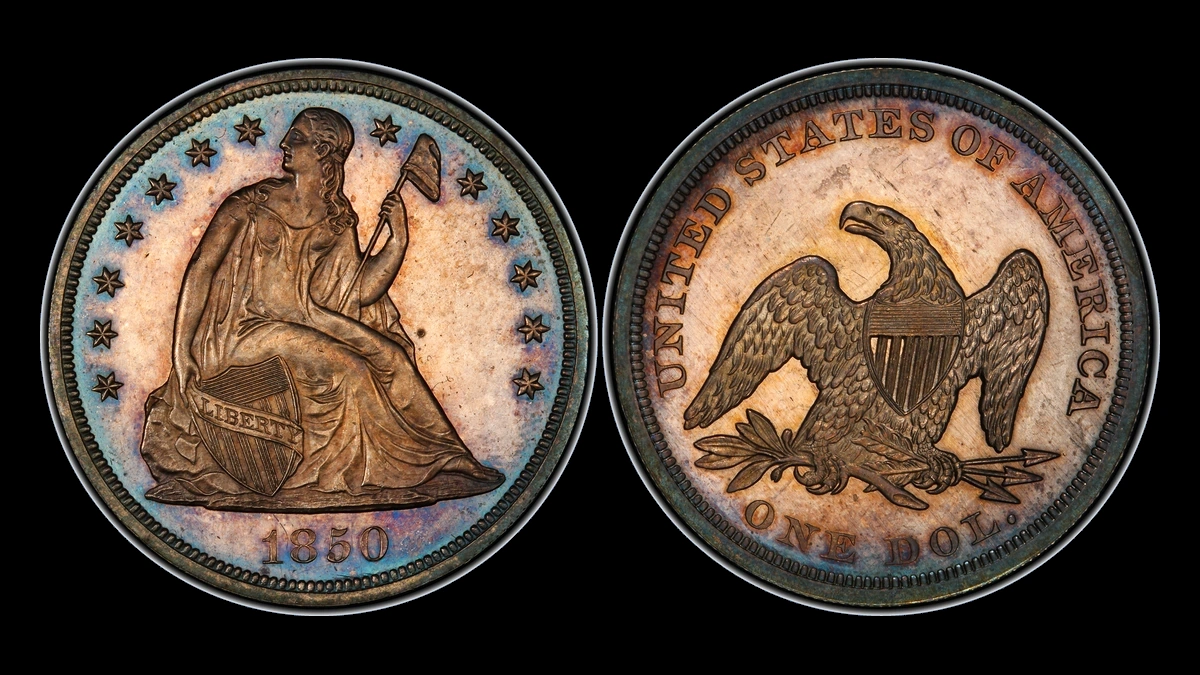
One reported reverse crack passes through the lower part of the O in ONE and reaches border teeth beneath N. Another crosses the tops of UNITED and returns to the border above ST in STATES.
Silver filled narrow openings in the die, reproducing those routes as raised lines. They should remain distinct from scratches added to the finished coin.
Some Proofs show a different crack along the base of the date on the front. That pattern belongs to a separate comparison from the ordinary dollar’s reverse routes.
How to Identify
On the reverse, follow the lower O in ONE toward the teeth below N. Keep the letters and border together in view to judge the route accurately.
Then inspect the tops of UNITED and the border above ST in STATES. Side lighting should reveal raised metal without requiring unrelated scratches to complete the path.
For an independently recognized Proof, examine the date’s base instead. Its front crack can help identify a die pattern but cannot alone determine whether the Proof was made in 1850 or later.
Do not use shine to choose between the two groups. Reflective ordinary dollars still require ordinary-strike comparisons.
What It’s Worth
The combined estimate is $1,000–$75,000: ordinary Philadelphia dollars with matching cracks are around $1,000–$35,000, while recognized Proofs with the date-base crack are around $15,000–$75,000.
PCGS records an ordinary MS64 at $32,200 in May 2003. This is a general issue and condition comparison, not a confirmed sale of a particular cracked specimen.
Much of the value belongs to the scarce date and preservation. Several cracks on the same dollar are not separate full-value objects.
Conclusion
The zero’s extra curve and the reported crack routes answer different questions about the dies used for an 1850 dollar. Match each feature in its actual location rather than treating every line as repunching.
Proof identity requires a whole-coin assessment, and a date-base crack cannot establish the year of manufacture by itself. Keep the Proof auction and ordinary-dollar comparison tied to their respective specimens and conditions.