Rare 1902 Dollar Errors (List & Pictures)
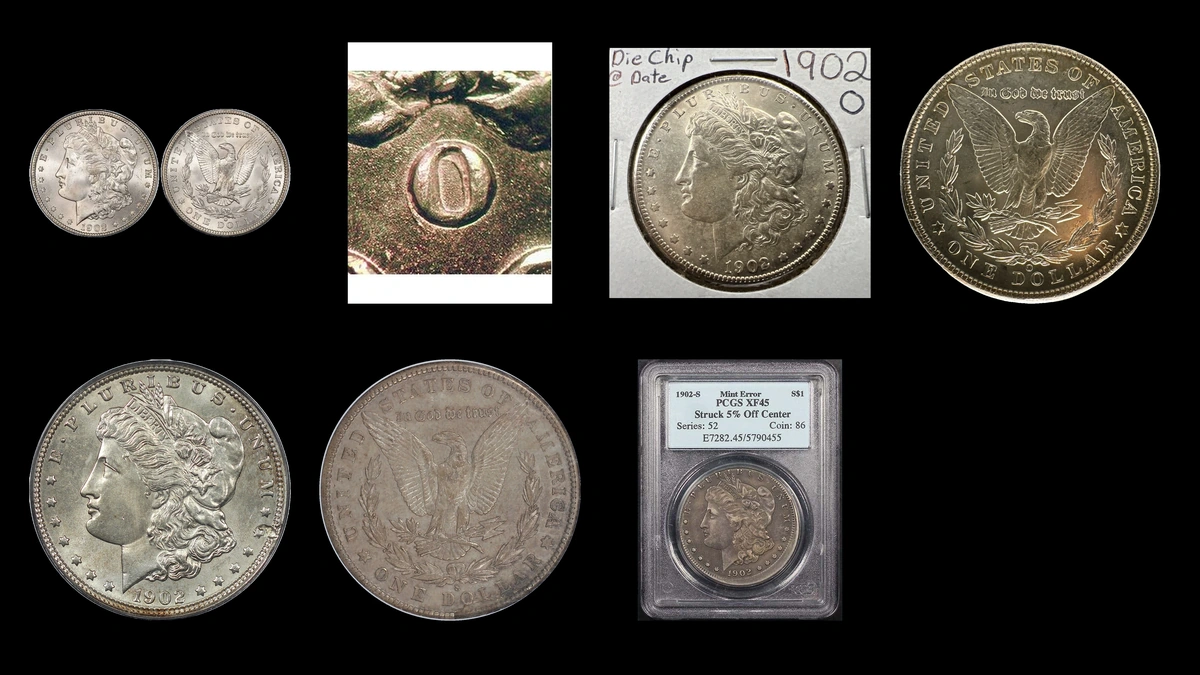
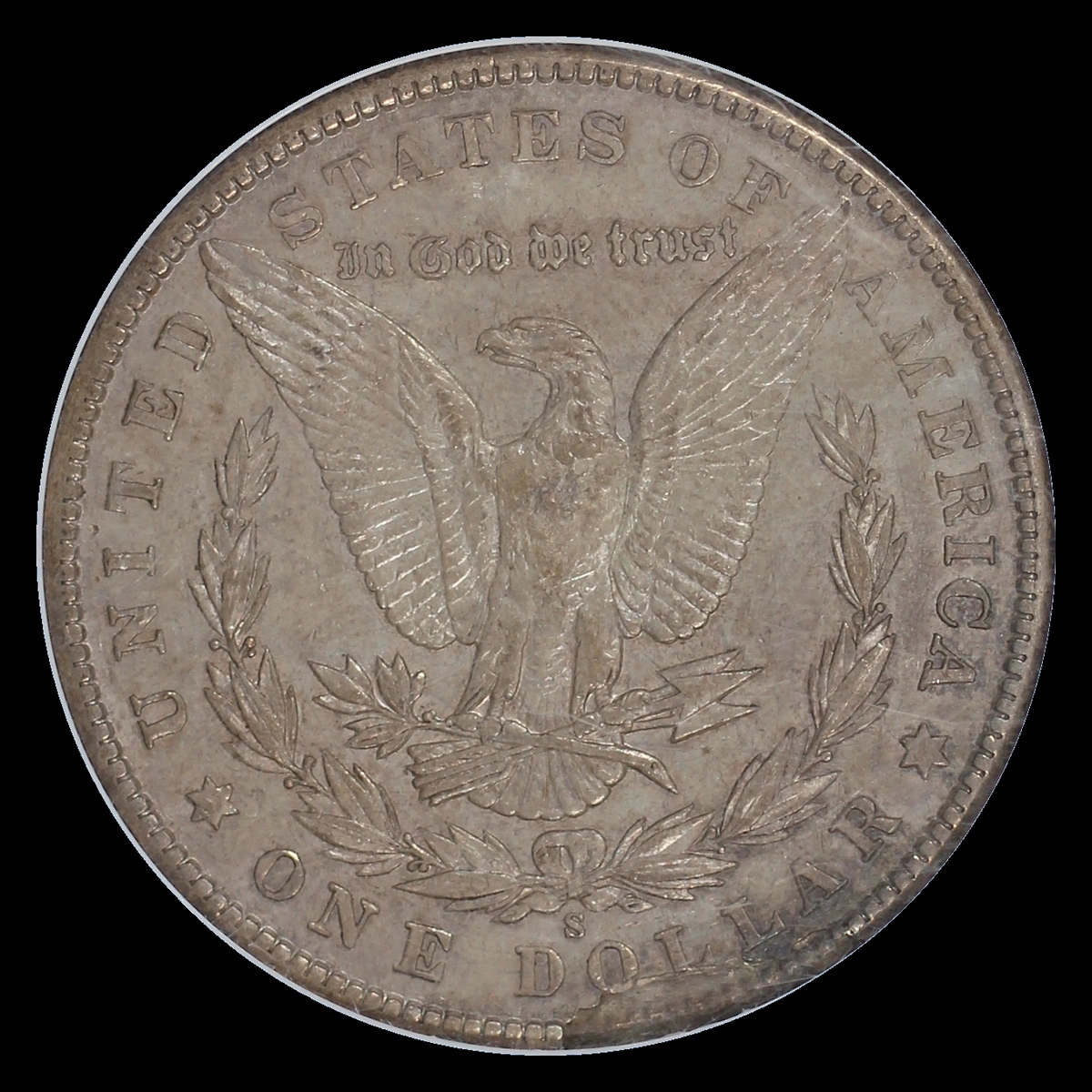
A small reverse depression appeared on a 1902-S dollar that sold for $17,037.50 in July 2020. Its exceptional grade drove that whole-coin result, and the depression’s cause remains debated.
These 13 groups of 1902 dollar errors span estimated values of $61–$25,000. Match the mint and the visible feature before comparing prices, starting with the date and small design details and ending at the edge.
1. 1902 Dollar Curved Digit Tops below 02: Misplaced Date Error
A New Orleans variety has extra tops of 2 in two neighboring border gaps beneath 02. A date punch landed too low in the die before the proper date position was completed.
The same variety group also includes doubled portrait details. Some later examples have transferred border impressions near the eagle’s wing.
How to Identify
Look beneath the normal 0 and 2, between the border teeth, for the curved remnants. Their spacing and numeral shape must match the New Orleans pattern.
Random rim points are not extra digits. Later wing marks can identify a stage, but their absence need not rule out an earlier coin with the misplaced date.
What It’s Worth
$150–$2,000 is the estimate for examples with recognizable extra 2 arcs. Wear and heavy marks can hide these small features.
Portrait doubling and later wing marks belong to the same coin. Do not add separate whole-coin prices for them.
2. 1902 Dollar Extra Ear, Portrait, or Reverse Outlines: Doubled Die Error
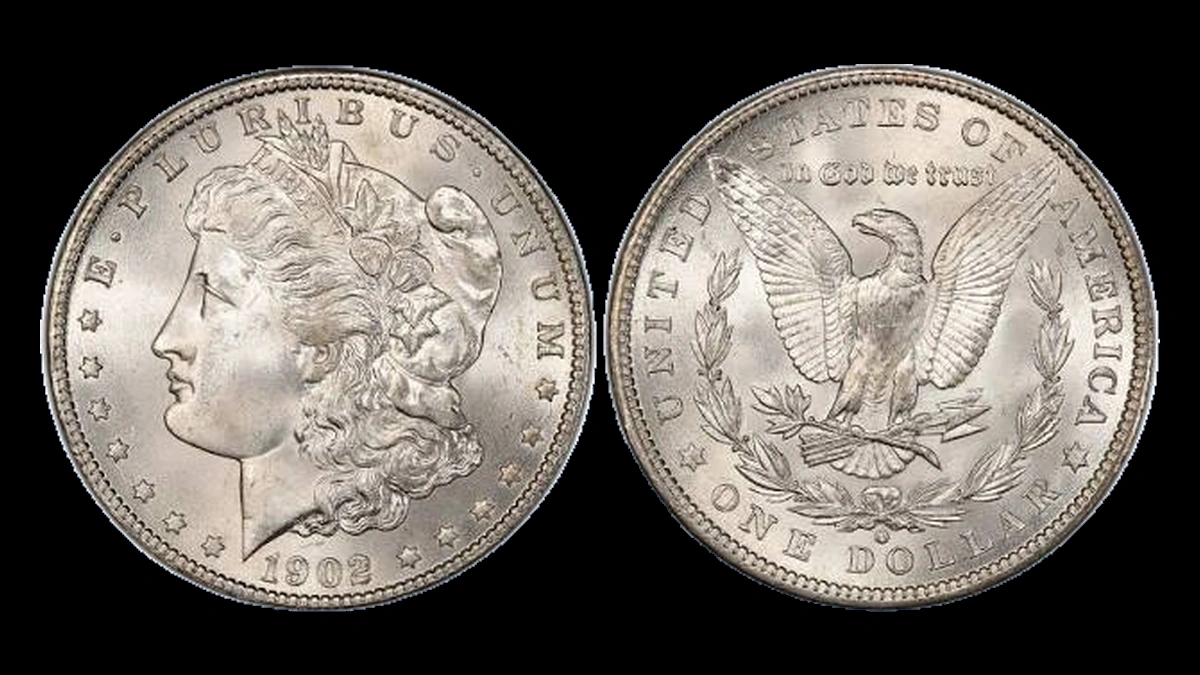
A die carrying repeated outlines can pass them to many coins. Philadelphia examples include ear and facial doubling, while New Orleans and San Francisco have their own date, portrait, and reverse patterns.
A Philadelphia proof variety also has doubled reverse detail. That specially prepared collector issue needs a separate finish and price comparison.
How to Identify
Choose the correct mint before inspecting individual features. On the Philadelphia doubled-ear example, compare the outer right and inner left ear edges.
Other varieties require their own locations and matching opposite face. Flat shelves from strike movement differ from the copied raised contours of a doubled die.
What It’s Worth
$90–$15,000 spans the group, with ordinary-strike varieties estimated at $90–$5,000 and identified proofs at $1,500–$15,000 in usual collector grades. A Philadelphia doubled-ear dollar graded MS64 brought $1,200 in June 2023.
A mirrorlike surface alone does not establish a proof. Minor shared doubling also need not carry the premium of a strong named ear variety.
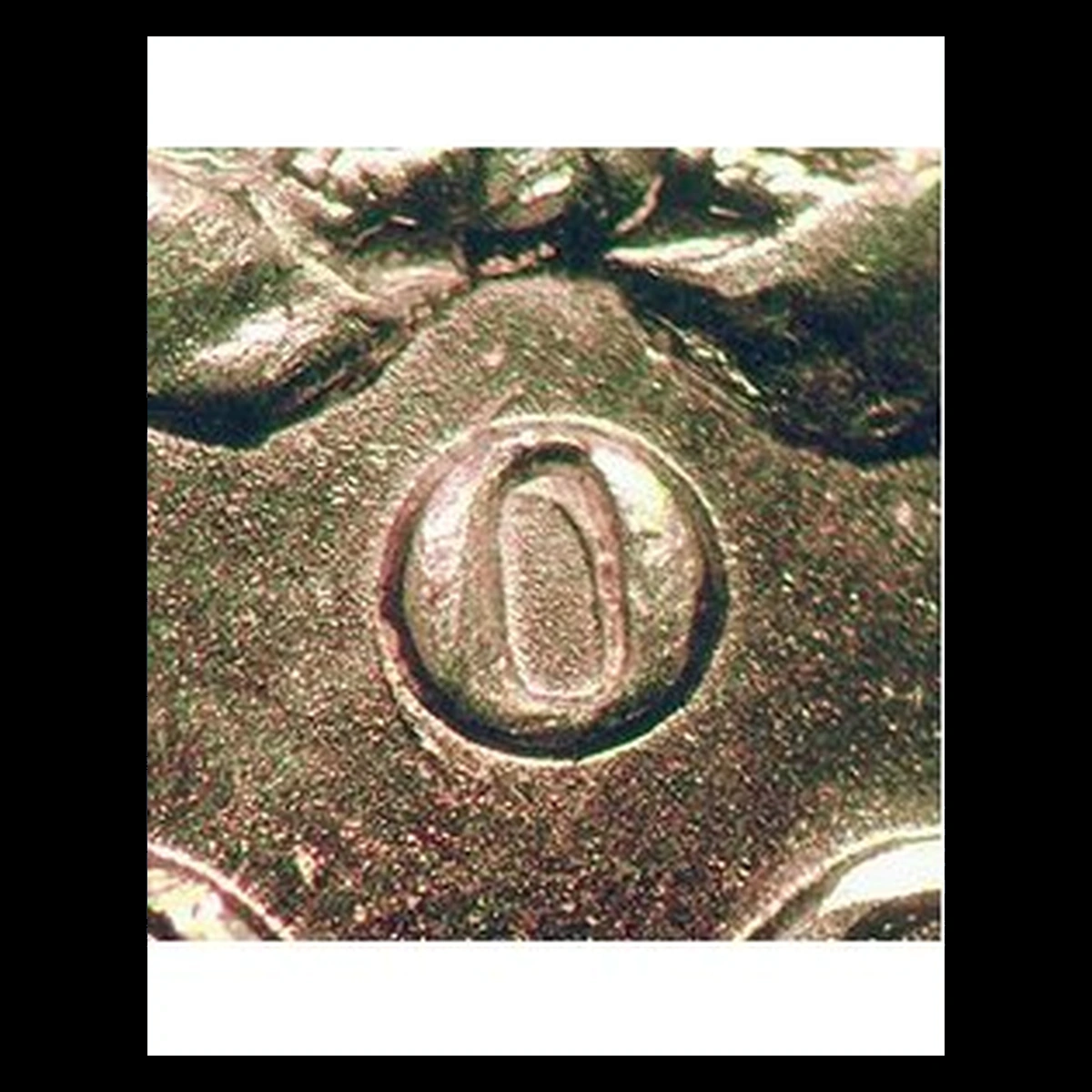
3. 1902 Dollar Two Overlapping O Curves: Repunched Mintmark Error
The New Orleans O was punched into the die by hand. A second placement could leave an earlier curved outline visible beside the final letter.
The documented repunched-O variety also has small front doubling and a doubled olive on the back. These support the complete variety rather than creating independently priced coins.
How to Identify
Trace the proposed earlier O around the opening and outer curve. A high, low, or tilted single O is only a position difference.
A horizontal bar inside O belongs to a separate die-line variety. Check the surrounding silver for disturbance before accepting an altered-looking mintmark.
What It’s Worth
$100–$1,500 is the estimate for identified repunched-O dollars. A clear separated curve is more useful than a vague thickened edge.
The condition of the complete dollar remains important. Companion details help the match but should not be priced again.
4. 1902 Dollar A Bar inside O or Lines through Leaves: Die Gouges Error
A cut in a die leaves a raised line on the coin as silver fills the hollow. One New Orleans pattern has a horizontal bar across the top of the O mintmark’s opening.
Separate patterns include a line through upper-left wreath leaves, a bow-to-tail line, and a broad shallow line near the wing’s top. They do not all belong to one dollar.
How to Identify
For Bar O, inspect the raised horizontal shape rather than searching for a second oval. A later cut into the coin makes a trench instead.
For other lines, match the precise endpoints and surrounding leaves, bow, or wing. Keep any linked doubling separate while identifying the complete die pattern.
What It’s Worth
$90–$1,000 is the working range for matched raised-line varieties. Recognizable shapes often display better than faint lines requiring unusual lighting.
Several lines on one coin do not create several full values. Cleaning scratches elsewhere can reduce appeal even when the die feature is genuine.
5. 1902 Dollar Roughly Redrawn Leaf Edges: Reworked Die Error
Some Philadelphia leaves were reworked in the die, giving their shapes a crude or thick appearance. The reported areas lie near ON in ONE and across from U in UNITED.
New Orleans also has reworked-leaf combinations with doubling. Those need their own references rather than the Philadelphia leaf pattern.
How to Identify
Compare the inner edge of the affected cluster near ONE with a normal reverse, then inspect the leaves across from UNITED. The shape change should repeat in a matching variety photograph.
Carving added to a finished coin may cut across its surface and push metal beside the line. Do not probe the leaves to test their height.
What It’s Worth
$90–$800 is the estimate for correctly matched reworked leaves. Clear surrounding detail helps establish the altered shapes.
Fine die work may interest specialists without creating a large premium. The figure covers the complete dollar, not a separate amount per leaf.
6. 1902 Dollar Raised Grainy Patches: Rusted Die Error
Rust pits in a steel die can fill with silver and leave tiny bumps on a coin. The dollar itself did not need to rust to receive that texture.
The Philadelphia description places patches near the bow’s right ribbon, above OL in DOLLAR, and above the left of N in ONE.
How to Identify
Match those locations together and use side lighting to see the raised peaks. General corrosion on a coin changes or removes its own surface instead.
Random roughness across both faces does not establish this repeated die pattern. Brushing or polishing can erase the delicate texture.
What It’s Worth
$90–$600 is the estimate for Philadelphia examples across worn and ordinary unworn grades. A clear recurring pattern is more useful than an unidentified dark patch.
These small features may add less than a dramatic striking error. Overall surface quality can outweigh their appeal.
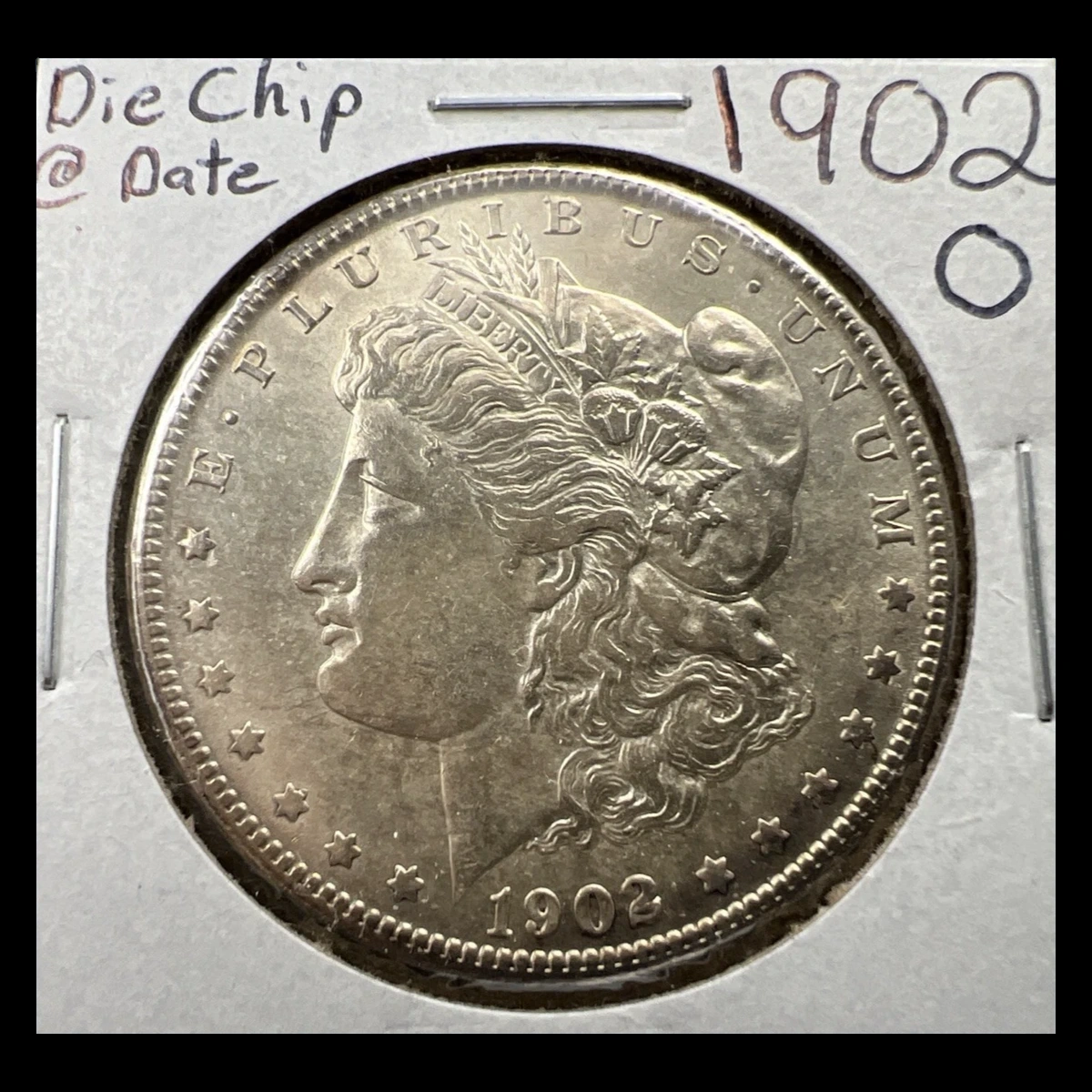
7. 1902 Dollar Raised Paths and Lumps: Die Cracks, Chips, and Breaks Error
Metal entering a cracked die forms a ridge, while a missing piece can leave a thicker lump. New Orleans patterns include chips near the date and stars, a neck-to-star crack, and a break around E and D in ONE DOLLAR.
A separate Philadelphia reverse crack runs from the arrow feathers through ON in ONE toward the rim. Some of these patterns occur with doubling.
How to Identify
Follow the actual raised route and its intersections with letters or stars. Later scratches cut into finished detail and may leave disturbed edges beside the groove.
A later die stage can join a fine crack to a larger break. Match the coin’s stage instead of requiring every example to show the largest known lump.
What It’s Worth
$90–$1,800 covers ordinary examples with identifiable cracks or chips. Larger breaks and recognized combinations can attract more interest than common fine lines.
Condition still matters, and each bump is not a separate premium. Price the full pattern on the complete dollar.
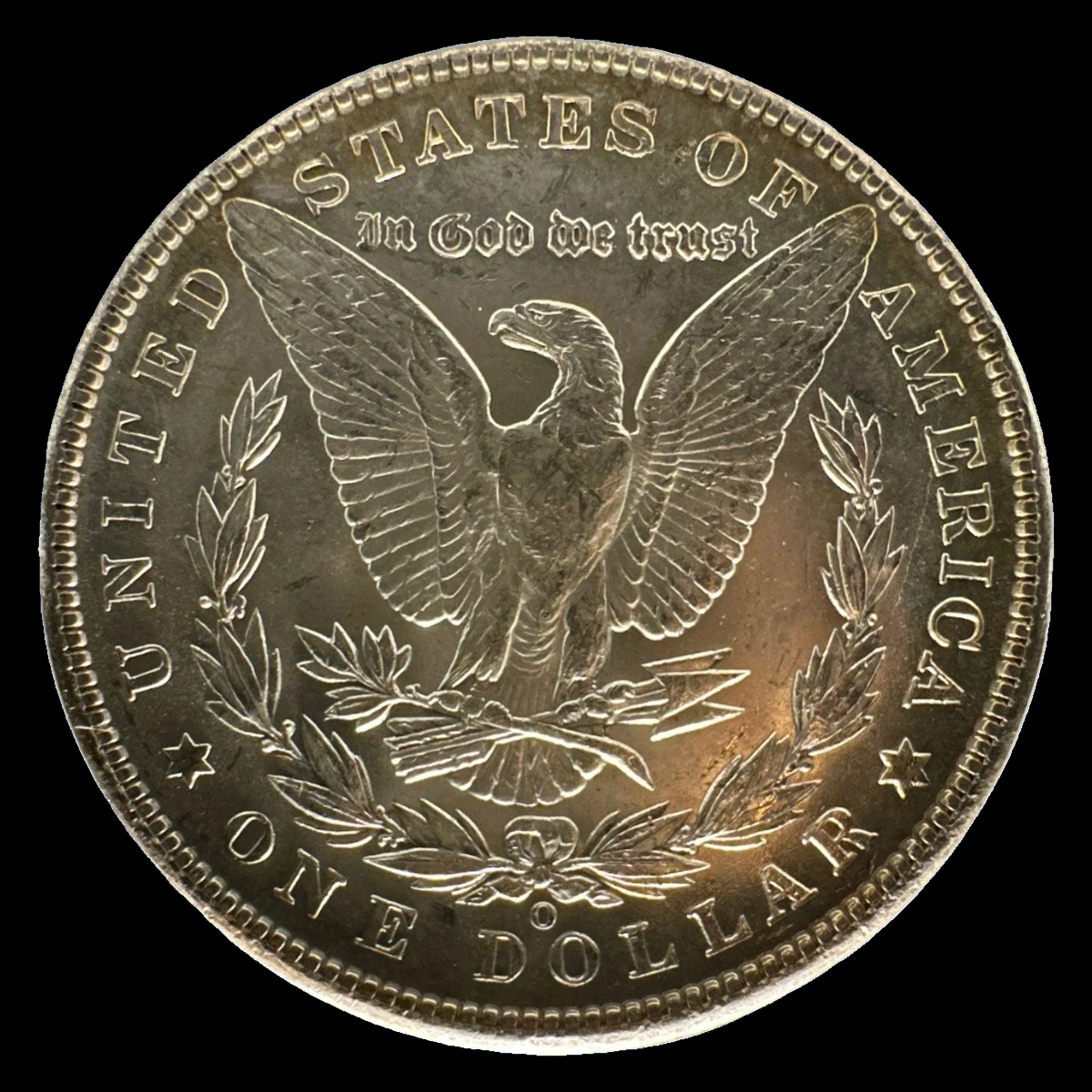
8. 1902 Dollar Unwanted Letter or Border Traces: Die Clash Error
Dies that meet without a blank can acquire traces of each other’s designs. Later coins may show letter fragments near Liberty’s neck or hair, an M near the reverse motto, or borderlike impressions around wings and tail.
These occur in different combinations. One repeatedly clashed New Orleans variety has a transferred G near the neck after a slight alignment change.
How to Identify
Match the fragment with its surroundings and companion marks on the other face. John Roberts describes the transferred G on the New Orleans example; it should not be renamed E from a suggestive line.
Some fragments are raised and others sunken, depending on formation. The documented shape and position matter more than a universal rule about height.
What It’s Worth
$90–$2,500 is the estimate for recognizable clash varieties. Clear transferred letters can appeal more strongly than faint unexplained traces.
Polishing the die can weaken later appearances. Compare the same surviving combination, mint, and condition.
9. 1902 Dollar Repeated Marks near the Border: Collar Clash Error
A die can contact the collar, the surrounding ring, and acquire damage that later appears near the coin’s border. This differs from the coin itself sitting partly outside that ring.
Philadelphia entries include one pattern and a later stage of another. The latter has front marks between twelve and two o’clock, together with ear and reverse-letter doubling.
How to Identify
Compare the border marks with the correct stage and check the companion doubling. The other reported Philadelphia pattern has no fixed clock position supplied here.
If the physical edge instead has a step between grooved and expanded metal, investigate a partial collar. Face marks copied from a die and a stepped coin edge are different evidence.
What It’s Worth
$100–$1,200 is the estimate for authenticated collar-contact varieties. A slightly uneven border or close date does not establish the feature.
Ear doubling and collar marks describe one complete variety when they occur together. Their combined clarity and preservation guide the comparison.
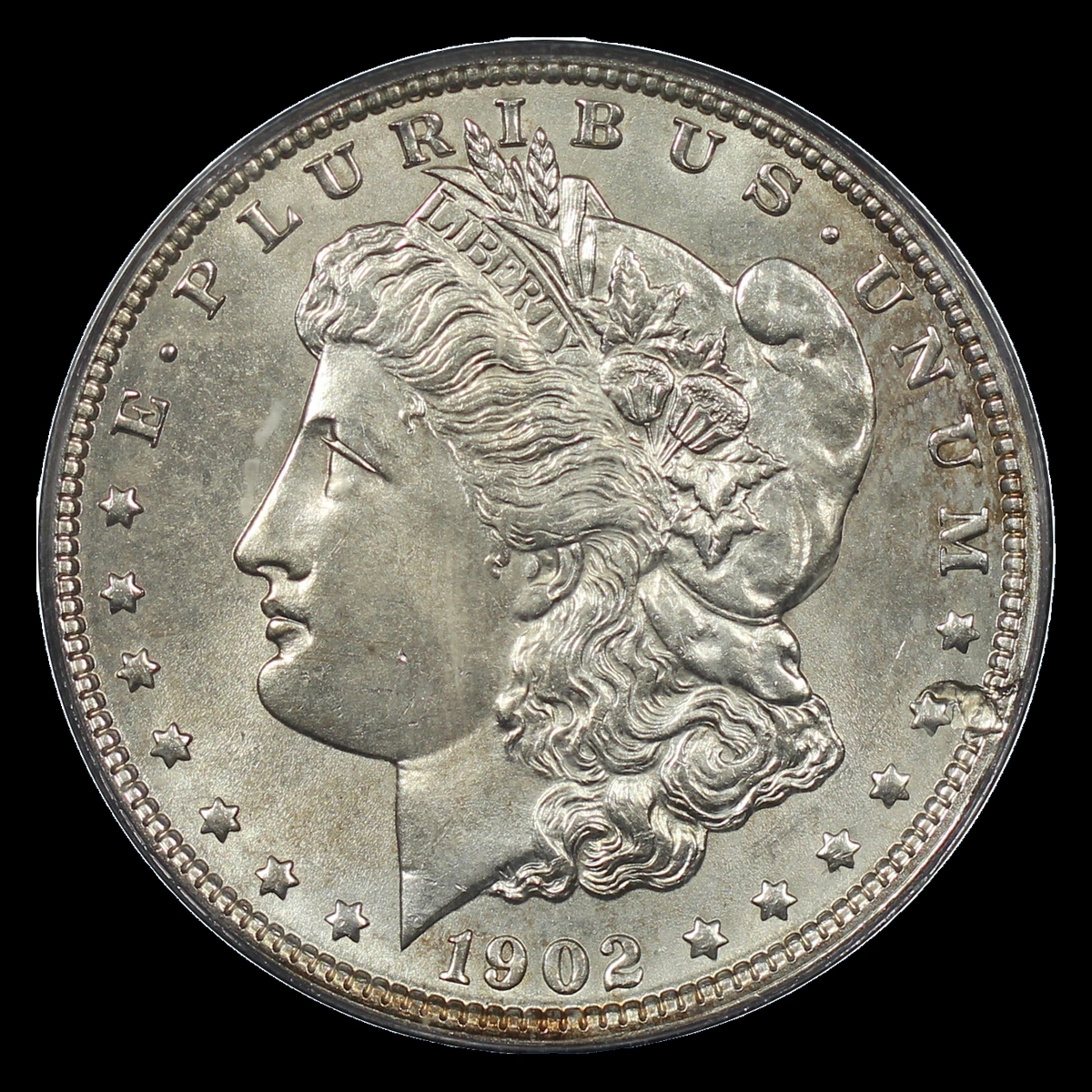
10. 1902 Dollar A Depression or Object Blocking the Design: Struck Through Error
A New Orleans NGC MS64 reverse example retains material that blocked the strike. A different New Orleans MS63 has a front impression, and a collector’s gallery reports a minor Philadelphia example.
The retained substance is not identified in the supplied description. These coins do not share one stated location or shape.
How to Identify
Leave any retained material in place and inspect where the struck design meets it. Removing it would destroy part of the evidence.
For an empty impression, check for pushed-up impact edges or scraping. A holder grade does not identify whether the obstruction was wood, cloth, metal, or another substance.
What It’s Worth
$61–$5,000 spans this group: minor impressions are estimated at $61–$700 and confirmed retained-material examples at $300–$5,000. The New Orleans front-impression MS63 sold for $61 in December 2016.
An empty depression should not receive a retained-object premium. The shape, survival of material, and coin condition determine the useful comparison.
11. 1902 Dollar Peeling Metal or a Patch above DOLLAR: Lamination Group Error
A gallery reports reverse lamination on a San Francisco dollar, where a weak layer of alloy separated. A separate high-grade 1902-S has a depression above R in DOLLAR, partly hidden by the wreath.
The auction called that depression a detached lamination. Collectors later questioned the cause after noting similar patches on other coins and proposed repeated material blocking the die.
How to Identify
Examine the boundary for a thin peeled edge, exposed internal texture, or a shaped obstruction impression. The listing’s label alone does not settle which explanation fits.
Compare repeated patches without assuming they prove a cause. Keep the gallery coin separate from the auction specimen unless full photographs establish they are the same.
What It’s Worth
$150–$25,000 spans ordinary laminations and exceptional-condition dollars in this group. Ordinary examples are estimated at $150–$2,000, while comparable superb unworn coins occupy roughly $12,000–$25,000.
The MS66+ coin with the depression brought $17,037.50 in July 2020, as recorded by PCGS. That is its whole-coin price, not a premium for the patch or proof of its origin.
12. 1902 Dollar A Changing Step along the Edge: Tilted Partial Collar Error
A blank seated unevenly in the collar can spread beyond the supported edge during striking. The resulting ledge may change height around the circumference.
Philadelphia auction descriptions record examples with ANACS Details labels mentioning cleaning, polishing, or scratches. Those are separate condition problems, not the cause of the collar error.
How to Identify
Use edge views to follow the transition between the grooved band and unsupported expanded metal. A wide rim seen only from the front is insufficient.
Keep certified coins in their holders and use available edge photographs. An obscured edge cannot be replaced with a guess based on border width.
What It’s Worth
$150–$3,000 is the estimate for authenticated partial-collar dollars. A clear original step gives a stronger display than a slight rim imbalance.
Cleaning and polishing can lower interest in an otherwise genuine error. Compare edge visibility and preservation together.
13. 1902 Dollar A Shifted Picture with Uneven Blank Space: Off-Center Strike Error
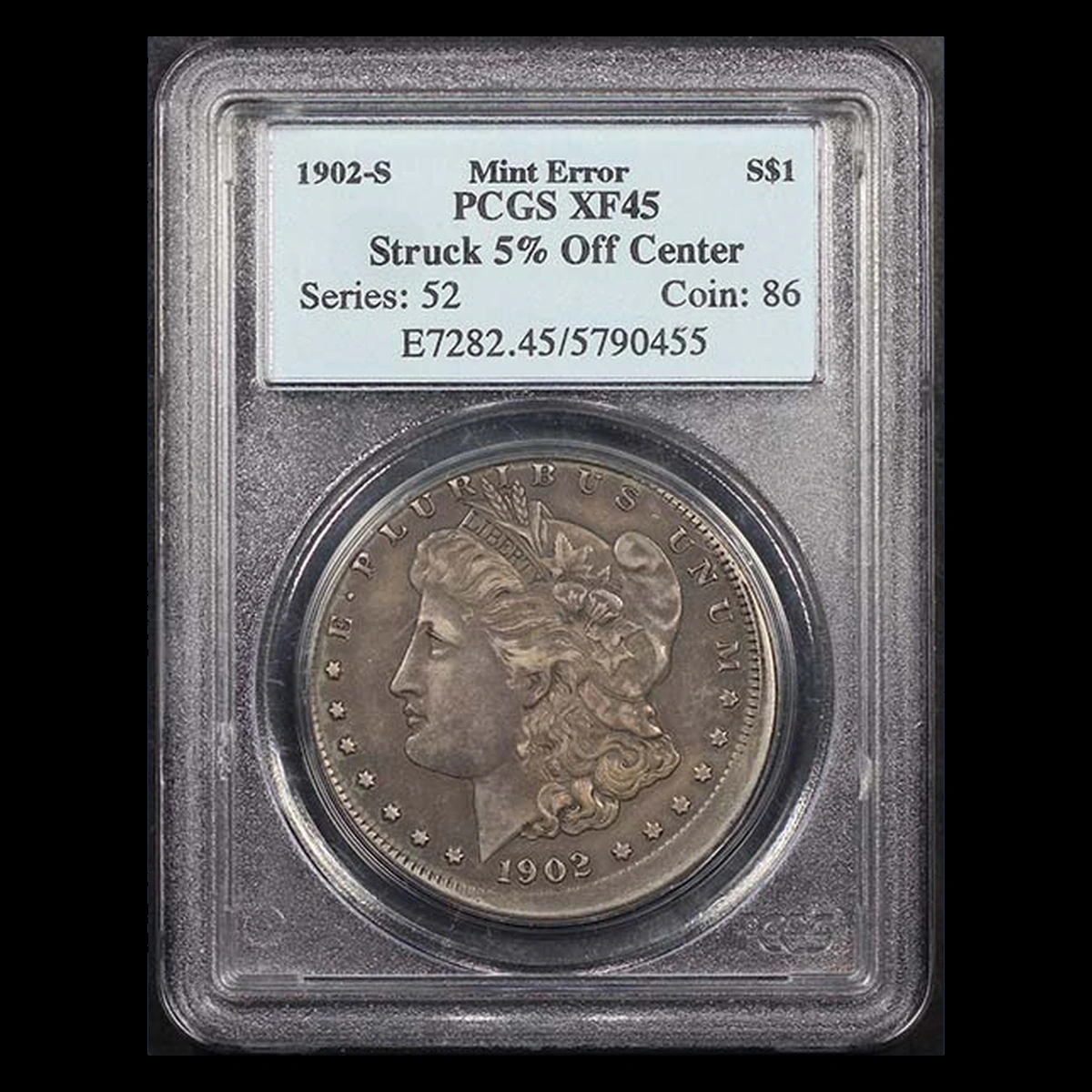
A documented Philadelphia dollar is 5% off center toward ten o’clock, with some border teeth still present at upper left and a wider lower-right margin. A separate San Francisco gallery example is also described as 5% off center.
The San Francisco report does not give the Philadelphia coin’s direction or grade. Those details must remain with their own specimens.
How to Identify
Center the physical outline in photographs of both faces, then compare the design’s displacement. On the Philadelphia coin, inspect upper left against the wider lower-right area.
Check the San Francisco example independently, including its S. One shifted die, later edge removal, and broadstriking need different explanations from the cataloged off-center coins.
What It’s Worth
$1,000–$8,000 is the estimate for authenticated 1902 off-center dollars. The Philadelphia PCGS AU58 example sold for $1,320 in April 2021 at Heritage.
AU58 describes only slight circulation wear. An identical percentage label does not make the different mint examples equally valuable.
Conclusion
The mint and full pattern matter when several small features share one dollar. A repunched O differs from Bar O, and copied border marks differ from a physically stepped edge.
Preserve delicate textures and retained material while comparing photographs. The highest values here reflect exceptional complete coins, so avoid treating a tiny mark as the sole reason for a large auction result.