Rare 2011 Presidential Dollar Errors (List & Pictures)
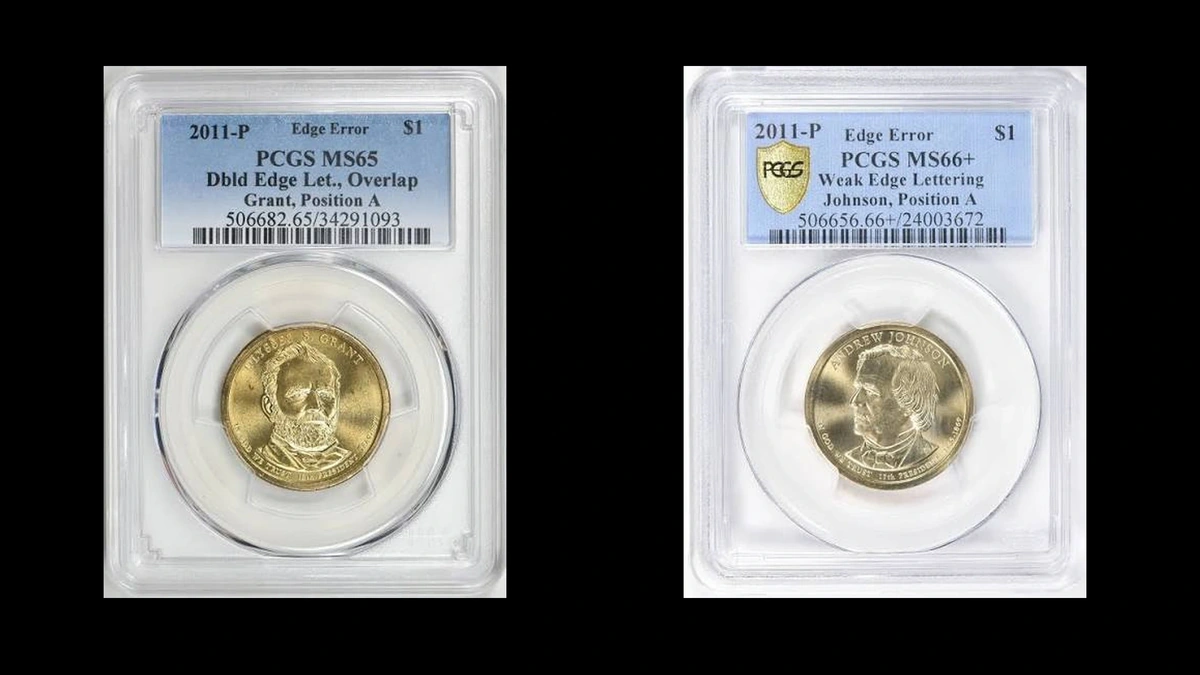
An inscription facing upside down is normal; two separate inscriptions on the same edge are a different matter. The 2011 Presidential dollar errors below have estimated values of $10–$4,000.
For a larger-strike comparison, a different-design 2000-P Sacagawea dollar struck 50% off center sold for $3,120 in April 2021. Start by mapping the edge, then inspect the faces for blocked or displaced designs.
1. 2011 Dollar Two Letter Sequences Share the Edge: Repeated Edge Lettering Error
A second pass through the edge-lettering equipment can press another inscription into the same narrow surface. The words may overlap or face opposite directions.
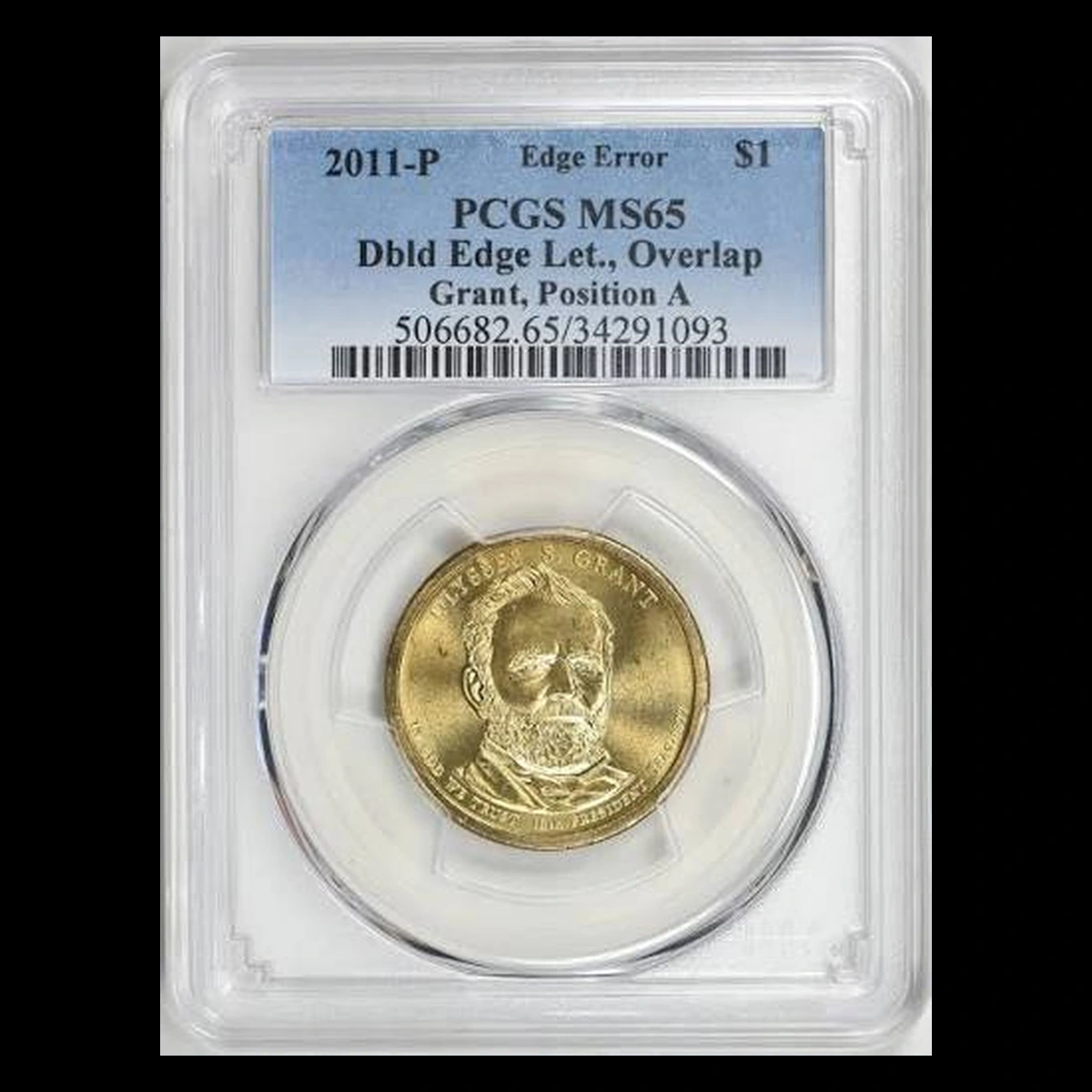
A Grant example was cataloged as PCGS MS65 with overlapping letters. Philadelphia Hayes and Garfield overlap examples are also listed.
The Hayes catalog separately includes two opposed inscriptions. Turning one normal inscription upside down does not create that feature.
How to Identify
Trace a repeated word rather than one doubled-looking stroke. Characters in the second sequence should continue with consistent spacing.
For opposed lettering, locate both directions on the metal at once. Merely turning the coin changes the viewing direction of a single normal set.
The Grant collection record provides one documented overlap example, while the Hayes catalog separates its edge forms. Keep each president and pattern with the correct photograph.
Take adjoining edge photographs in order, leaving a little shared area between frames. This helps avoid counting the same word twice when reviewing pictures.
What It’s Worth
$50–$600 is the estimated range for genuine repeated lettering. Long readable overlaps or two clearly opposed sequences are easier to display than isolated crowded marks.
A 2007-P John Adams overlapping-edge dollar sold for $59 in March 2010. It is an older mechanism comparison, not a sale price for a 2011 Grant or Hayes.
2. 2011 Dollar Letters Fade or Stop: Weak, Partial, or Missing Inscription Error
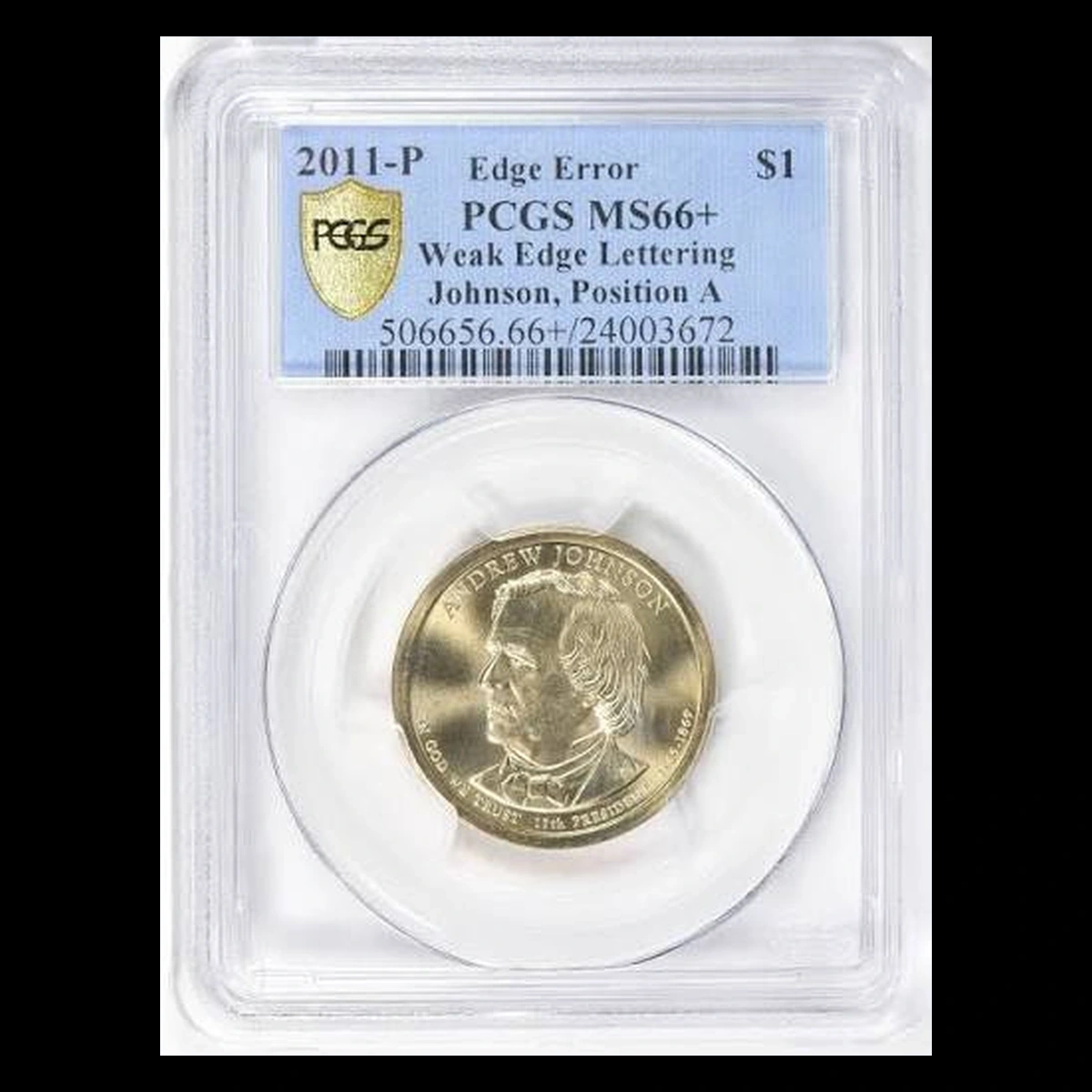
Weak lettering still leaves shallow character cuts, while partial lettering has gaps among surviving letters. Both can result from an incomplete edge-lettering operation after the faces were struck.
Reports cover Philadelphia Grant and Garfield and both Philadelphia and Denver Hayes weak edges. Separate Philadelphia Hayes and Garfield examples have PCGS MS65 partial-edge labels.
A 2015 NGC account reported no known completely missing 2011 inscriptions at that time. That historical record does not rule out a later discovery, but complete-loss claims need their own evidence.
How to Identify
Follow the entire edge and record where 2011, the mint letter, and E PLURIBUS UNUM survive. Check apparent gaps under several light angles.
One readable character rules out complete absence. Preserve faint cuts because they distinguish weak or partial lettering from a plain edge.
Inspect both rims for filing or polishing. If all edge letters are absent, the president identifies the design but the missing mint letter does not establish P or D.
What It’s Worth
$20–$150 is the estimated range for weak lettering, and $40–$400 for partial inscriptions. An authenticated complete-loss discovery has a conditional estimate of $100–$1,000.
A 2007 Madison dollar with missing lettering sold for $119 in July 2025. That different-year sale does not establish a complete-loss 2011 specimen.
3. 2011 Dollar One Part of the Face Is Faint: Grease-Blocked Design Error
Grease can fill recessed design in a stamping tool and prevent metal from forming a letter or portrait detail. The affected area may be shallow without a deep hole or retained object.
The 2011 report supplies no particular president or mint for this category.
How to Identify
Compare the patch with a normal dollar of the same president. Sharp nearby high points can support local blockage rather than wear across the whole coin.
Use low-angle light to look for shallow design remnants. Scraping or grinding can remove finished details while leaving disturbed surfaces or lines.
What It’s Worth
$10–$300 is the estimated range for confirmed grease-blocked detail. A broad interruption beside sharp design usually displays better than one faint stroke.
A 2014-P Native American dollar with a front strike-through sold for $31 in October 2016. It is a different dollar design and year.
4. 2011 Dollar The Picture Misses Part of the Metal: Off-Center Strike Error
A blank sitting partly outside the tools can lose design beyond one edge and retain a plain crescent on the other side. Both faces should fit that displaced position.
The reported 2011 category does not establish a particular president or mint. A wide rim around a complete design is not enough.
How to Identify
Compare the portrait and Statue of Liberty sides before judging the crescent. A centered back behind only a shifted front suggests another alignment problem.
Inspect the plain area for flattened letters or grinding. Read the president’s name and any surviving edge year to establish the issue.
What It’s Worth
$100–$4,000 is the estimated range for genuine identifiable examples. The shift, readable identity, and surfaces influence the comparison.
A 2000-P Sacagawea dollar struck 50% off center sold for $3,120 in April 2021 in NGC MS66. A smaller shift or worn 2011 coin requires a lower comparison.
Conclusion
Count actual letter sequences and surviving characters before choosing an edge-error name. A single upside-down inscription is normal, while a faint character means the edge is not completely unlettered.
For face errors, compare both sides and the same president’s normal design. Clear full-coin photographs preserve the identity that a close crop of an unusual mark can hide.