Rare 1800 Dollar Errors (List & Pictures)
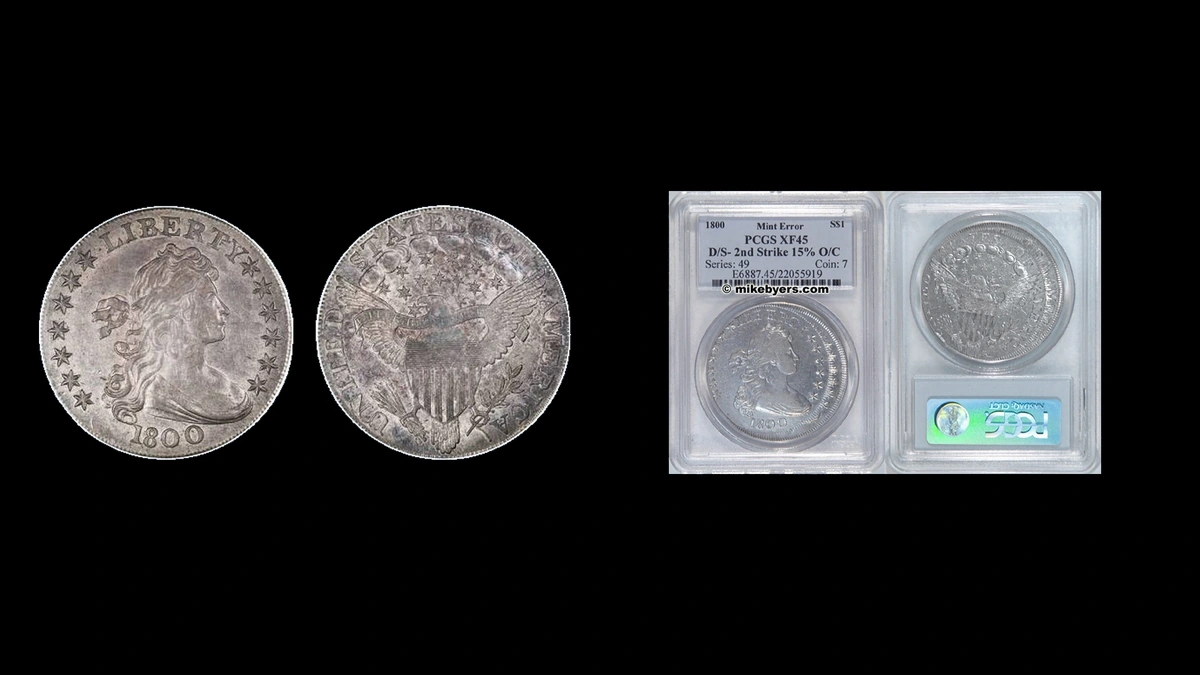
An apparent extra I after AMERICA gives one 1800 dollar variety its nickname. An exceptional example sold for $223,250 in November 2013, with preservation and history contributing to its value.
The three groups of 1800 dollar errors below range from small repeated letters to a displaced second strike. Estimated whole-coin values span $1,000–$250,000; compare the extent of the extra detail before choosing a category.
1. 1800 Dollar Extra Strokes within a Letter: Repunched Letters Error
Applying a letter punch more than once could leave earlier strokes in the die. A variety list reports a double-cut R in LIBERTY, a T in UNITED, and one or both Ts in STATES.
Those entries describe different examples rather than one required combination. A coin could copy the repeated letter from its die with a single strike.
How to Identify
Choose the reported letter on the correct face and keep its neighbors visible. The added stroke should fit part of that letter rather than run through the word as an unrelated line.
Compare the same pattern on an identified 1800 dollar. Reflections, flat shelves, or a scratch’s displaced edges do not become repunching simply because they thicken one side.
What It’s Worth
$1,000–$30,000 is the estimate across heavily worn through lower unworn examples. It prices an early silver dollar with an identified feature, not a fixed bonus for one stroke.
Deep marks, cleaning, or repairs can outweigh the appeal of a letter variety. Exceptionally preserved dollars may exceed this general range for other reasons.
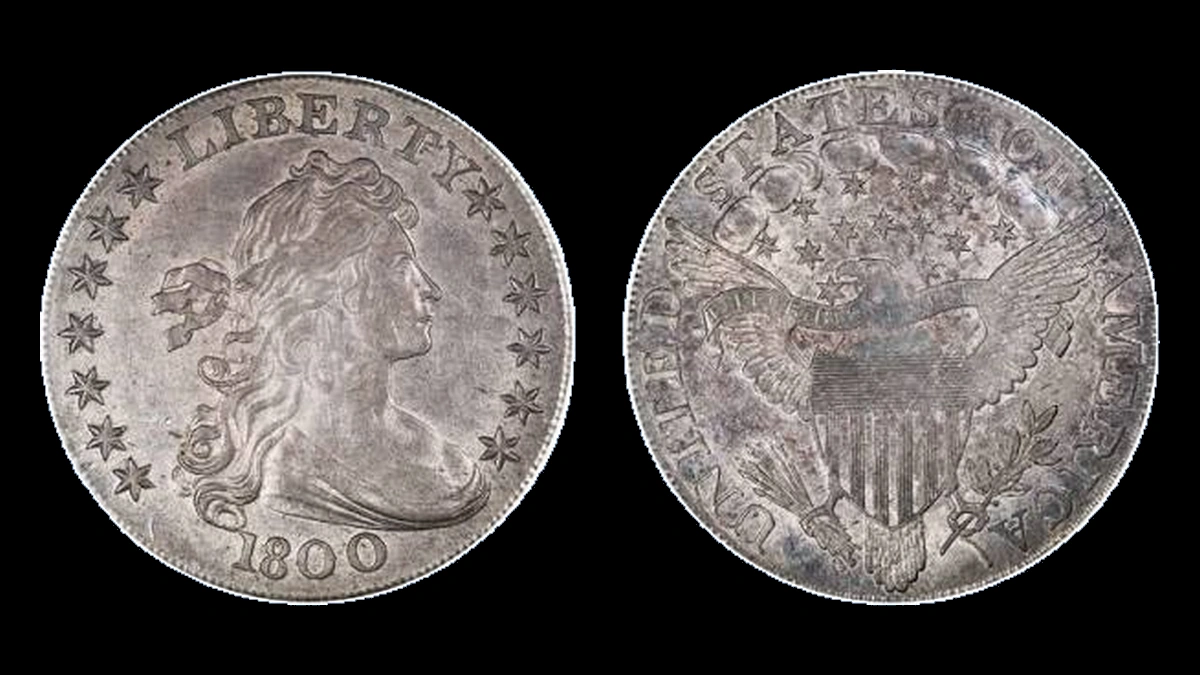
2. 1800 Dollar An I-Like Mark after AMERICA: AMERICAI Die Flaw Error
A raised defect after the final A makes the word appear to read AMERICAI. The extra shape comes from damage in the die, not an intended additional letter.
The same reverse die was paired with two different front dies. Both share the marker, although other details can differ.
How to Identify
Examine the space immediately right of the final A and compare the raised shape with a known AMERICAI reverse. Include the surrounding letters instead of cropping to a lone vertical line.
Look for a cut or added lump that could imitate the marker. The front and visible edge lettering also belong in the authentication record, since one copied feature cannot identify the whole coin.
What It’s Worth
$1,500–$250,000 spans the broad market, with many worn examples around $1,500–$25,000 and scarce unworn coins around $30,000–$250,000. PCGS records $223,250 for an exceptional example at Heritage in November 2013.
The highest results reflect the complete coin’s preservation and history. A clear marker on a cleaned or damaged dollar does not place it among the finest survivors.
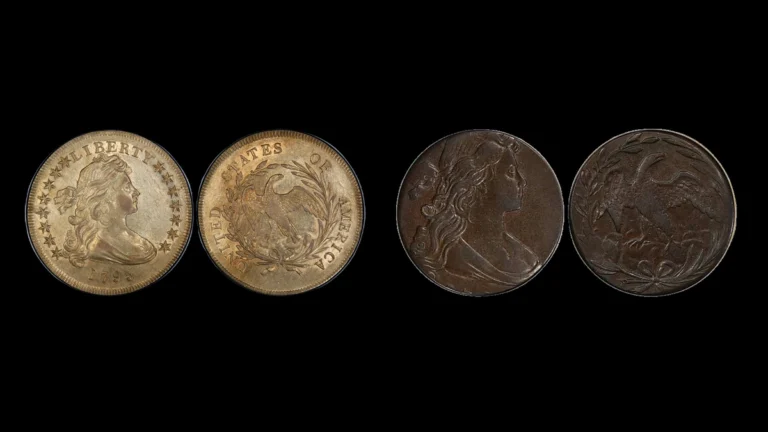
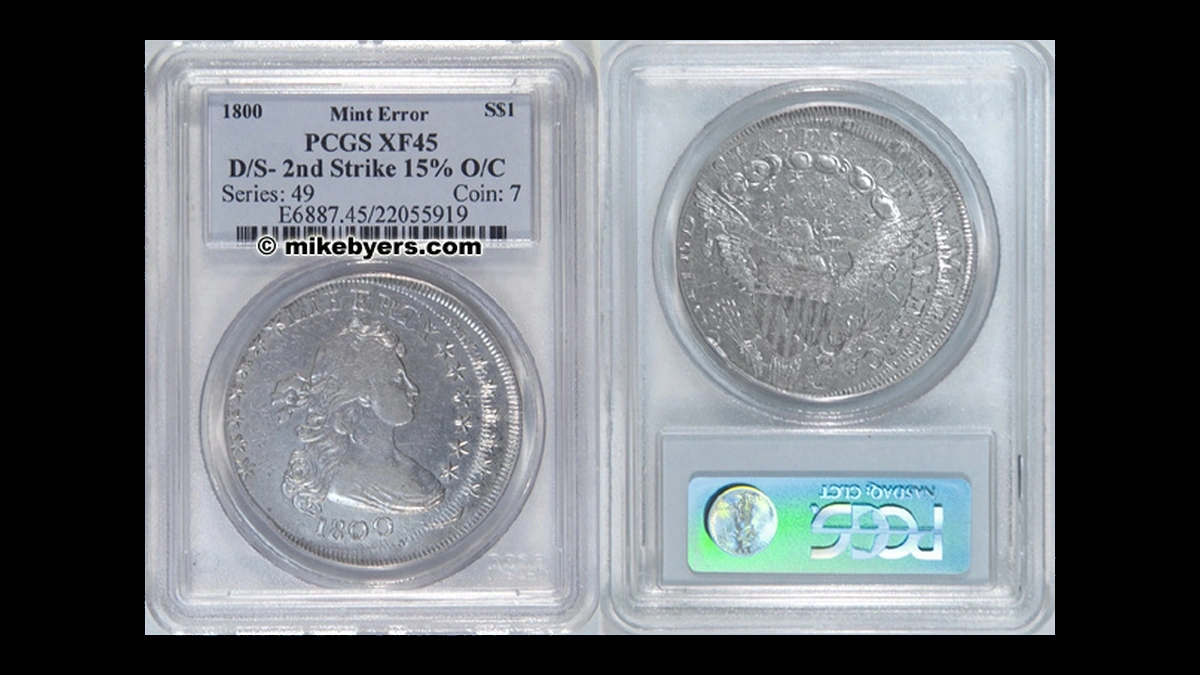
3. 1800 Dollar A Second Picture about 15% Off Center: Double Strike Error
A documented dollar moved before another blow, leaving much of the first design visible beneath an off-center second impression. The reported second strike is about 15% off center.
The coin graded PCGS XF45, indicating circulation wear with substantial detail remaining. Its double strike and off-center second blow describe one combined event.
How to Identify
Find two versions of a recognizable star or letter, then follow each into nearby detail. Several features should agree with the same displacement.
Compare both full faces with the certified example, including areas where the later blow flattened the first. Do not press another coin against a candidate to test the pattern.
What It’s Worth
$25,000–$100,000 is the estimate for a comparable authenticated double strike with clear overlap. A published error-coin book assigned the XF45 specimen a $50,000 value.
The dealer specimen page marks it sold without displaying a price. That status does not turn the book’s estimate into a confirmed sale amount.
Conclusion
A small earlier letter stroke, a raised flaw after AMERICA, and a displaced second design come from different processes. Match the scale and location of the feature before assigning its name.
Keep the AMERICAI auction record separate from the double-strike book estimate. Both concern complete early dollars whose condition and documented identity matter more than an isolated extra line.